Sunday, January 13, 2008

Artemis and the Stag


From The Buffalo News
'Artemis and the Stag' sculpture on display in NYC
by Colin Dabkowski - News Arts Writer

Updated: 01/07/08 4:26 PM

"Artemis and the Stag," the famous 2,000-year-old bronze sculpture sold in a controversial auction last year by the Albright-Knox Art Gallery is now on view in New York City's Metropolitan Museum of Art.

Albright-Knox director Louis Grachos confirmed that the sculpture is on loan to the museum from an unnamed private collector, though it is not part of its permanent collection.

"I'm absolutely pleased that the sculpture is on public view, and of course at the Metropolitan it'll be seen by tens of thousands of people on a monthly basis," Grachos said. "We're delighted that 'Artemis and the Stag' is on public view."

The sculpture, a late Hellenistic/early Roman bronze hailed as one of the most important statues ever sold at auction, went on view last week in the museum's new gallery for antiquities. It now stands among an impressive collection of Greek and Roman sculptures that ranks as one of the finest in the world.

The whereabouts of the sculpture had been unknown since it was sold last March at Sotheby's auction house in New York City to an anonymous European collector for $28.6 million. It set a record both for the most expensive sculpture and antiquity ever sold at auction, though both of those records have since been eclipsed. It also served as the biggest single sale in a series of auctions that bolstered the Albright-Knox's endowment for the acquisition of new art by $67.2 million.

Recreating a Viking Voyage


By Nathan Williams


Saturday, January 5, 2008


Six months ago I set out on the most unusual and the wettest journey of my life.
Graphic from article.

1. The crew of 65 men and women sleep on the open deck, as the Vikings did, and take turn keeping watch
2. Satellite navigation equipment makes sure the ship stays on course. Vikings had to rely on the position of the Sun and stars, the colour and movement of the sea and wind direction
3. Oak planks were cut radially for maximum strength, overlapped and nailed together. Axes and other tools used to make the planks were replicas of those used by the Vikings
4. The sail, mast, rigging and rudder on the original were missing so these have been copied from other finds
5. Shields, vital in battle, were tied over the oarports when the ship was in port
Sources: Viking Ship Museum, Denmark; National Maritime Museum, UK. Photos: Werner Karrasch and Erwan Crouan


I was on board a replica Viking longship, the world's largest and most authentic, which was attempting to sail from Denmark to Dublin. The aim of the voyage was to test the ship and gain an insight into how the Vikings would have fared when making the same journey.

One of the first lessons was just how dependent we were on the weather. With two days of strong winds in the right direction, we had managed to sail over 250 miles (400km) in one stretch. But once we reached Norway, the situation changed. For 10 days we were stuck on land with the wind blowing in the wrong direction or not at all.

A Viking ship is very poor at tacking (sailing into the wind by zigzagging).

Using the oars is possible for short distances but getting all the way to Scotland would take hundreds of hours of continuous rowing. So the only option was to wait for the wind to change.

At first it was a welcome relief after 48 hours in an open boat in the rain. But boredom soon turned out to be the biggest hazard. Faced with the same adverse winds, the Vikings would have faced an additional problem and I wonder if this could be at least part of the explanation for the Viking reputation for rape and pillage. They would soon have exhausted their own food supplies and so, naturally, they would turn to the local population to supply them - whether the local population wanted to or not.

Their voyages would also have been far more hazardous without the benefit of modern weather forecasts. When we did eventually set out into the North Sea, we were warned of a gale and reluctantly accepted a tow rather than face winds that would at best have blown us back to port.

Wind and waves
In fact the greatest test the Viking ship faced came towards the end of the voyage when too much wind, rather than too little, was the problem. The wind had appeared to be moderate as the Viking ship set off from Scotland heading for the Isle of Man. But as we reached open sea, the waves started to get larger and the wind rapidly increased.

Soon there were waves coming over the side of the ship and we were all ordered into our survival suits. We knew the situation was serious when we were suddenly ordered to take down the sail and bring the ship to a halt. The stability of the Viking longship depends on the flow of water over the hull. And the rudder is only effective when moving forward. Without control the ship was turning more side on to the waves and so more waves were crashing over the side. The noise from the wind and waves made communication very difficult and no one seemed to know why the sail was being taken down. Eventually I found the captain who was busy organising repairs. The strap holding the rudder in place had snapped. Until they could repair the rudder, the ship was helpless.

Meanwhile the life rafts were being prepared and it felt to me like there was a real chance the ship might not survive. Survive it did, however, and with a new rudder strap in place, we were able to sail once more and make it safely to the Isle of Man.

Viking design
The ship was made as far as possible using the original Viking construction methods but clearly something had gone wrong.

"We have this weak point - the rudder - but everything else seems to work very well," said Carsten Hvid, the skipper. "I think it has something to do with the materials we're using for the rope and the leather strap. We have to find a new way to make these things."

The ship builders have until this summer to work out a better way of attaching the rudder. In July, the ship will set off from Dublin on the return journey to Denmark. This time they will travel via the south coast of England and may even visit London, taking a week long detour to travel up the Thames.

"Just imagine the ship going through Tower Bridge - that would be a wonderful image," dreams Carsten.

He feels he now has a much better understanding of the characteristics of the ship. "We've learned how to handle the ship in different conditions," Carsten says. "The ship is so narrow and so long you have to sail it in its own way compared to other ships. For instance, in hard weather we have to reef down earlier than we're used to, because of the very long keel."

There is still a huge amount of data to sift through generated during the voyage. But already they have discovered that the longship is slower than expected. Overall though, Carsten is very impressed with how the ship performed and is confident it will make it back to Denmark safely. Basically it works!" he says.

The Sphinx of India


Information from the archaeologychannel.org

With a lion’s body and a human head, the sphinx is a well known symbol of ancient art and myth. For the ancients, it was an elevated spiritual being, embodying secret knowledge and wisdom, that guarded sacred places. The most famous example is the Great Sphinx of Egypt, guarding the pyramids. Though it usually is connected with the ancient civilizations of Greece and Egypt, many depictions are found also around the Mediterranean and in the Middle East. But as seen in this video, the sphinx (or purushamriga) is also part of Indian art and tradition.

For more information: The Living Tradition of the Sphinx in India.

Also see a post dated December 5, 2007 at Mary Harrsch’s Passionate About History blog. Her blog doesn’t provide a link-back option for individual posts, you’ll have to scroll down to find it at her site. It’s very interesting.

Saturday, January 12, 2008

Ancient Games: Mehen, the Game of the Serpent


From the British Museum:
Ivory gaming piece in the shape of a lion
From a tomb close to the complex of Djer at Abydos, Egypt1st Dynasty, around 3000 BC

How was the 'serpent game' played?
Board games were a very popular pastime in ancient Egypt. The most famous of these games was senet. This game is often depicted in tombs and boards were often included among the personal items of the wealthy.

Several examples were found in the tomb of Tutankhamun.
Senet was not the only game played by the ancient Egyptians, though it is the only one that the rules are known for. One of the earliest games to be depicted is the so-called serpent game. Evidence of this game has been found in tombs dating from the earliest dynasties of the Old Kingdom (about 2613-2160 BC). It was played on a circular board on which a coiled snake was shown, with the body divided into boxes. The gaming pieces consisted of marbles, often inscribed, and lions like this one, but it is not clear how the pieces were used. In a tomb scene of a pair of men playing the serpent game, captions suggest that the game involved the use of strategy, and that part of the game was to capture something, perhaps the opponent's pieces.
The base of this lion gaming piece is worn, probably from sliding it across the board. Some of the incised decoration of the figure is also worn, from being held in the hand during play.

W.M.F. Petrie, The royal tombs of the earlies (London, 1901)
E.R. Russmann, Eternal Egypt: masterworks of (University of California Press, 2001)
A.J. Spencer, Catalogue of Egyptian antiqu-4 (London, The British Museum Press, 1980)
A.F. Shore, 'A 'serpent-board' from Egypt', The British Museum Quarterly-2, 26 (1962)

Human Images Used in Islamic Art


Bowl
Central or northern Iran
Late 12th–early 13th century
Overglaze and gilded composite body
Purchase, Rogers Fund, and Gift of the Schiff Foundation 1957 (57.36.4)
Thank goddess this piece is in a museum; today if it was in Iran it might run the risk of being destroyed by radical Islamists who claim that any representation of a living thing in art work is forbidden by Islam.

But - that is just not true. Take a look at this piece in the Metropolitan Museum of Art's collection. I have seen many representations of human beings and animals in art from the middle east after Islam became the dominant religion. This incredibly beautiful piece was created in Iran about 600 years AFTER the time of Mohammed. There are probably thousands of pieces of this kind of art preserved in museums throughout the world, not to mention illustrations in surviving books that date from the 11th to the 16th centuries CE.

So, do not believe anyone who tries to tell you Islam prohibits the depiction of humans and animals in art work. Too much art has survived to prove without a doubt the fallacy of this assertion.

By the way - are those WOMEN riding the horses around the outer ring? Take at look at some of the figures in the inner ring - they have beards, so they are easily distinguishable as men. Many of the other riders sure look feminine to me. Iran DOES have a history of ancient female warriors, so I wouldn't be surprised if they were used as models in this depiction of the Zodiac.

At the center of this vessel, the sun appears circumscribed by the planets. Astrological imagery, originally derived from representations developed by Greek astronomers, became popular in Islamic art beginning in the twelfth century. It was believed that the zodiacal imagery endowed such works with cosmic powers that would protect and preserve the owner from sickness, bad luck, defeat, and loss of influence.
****************************************************************************************

Allah wasn't mentioned as all...

Here is a depiction of at least one Iranian female warrior (the woman on the right). I believe this is a Greek dish although it is not identified as such in the article and no date or identification of the plate is provided. The reason I name the woman on the right as the Iranian is because the style of dress and the pattern in the material of her clothing is very similar to depictions of male Iranians I have seen that date to the mid to late Sassanian Empire. The woman on the left seems to be dressed in Greek war regalia. From a Persian Journal story - FIRST IRANIAN QUEEN REGNANT WHO RULED IRAN OVER SASSANID EMPIRE, September 2, 2005. (The Sassanid Empire: 226–651 CE)

Shona Divination Dice

From the Metropolitan Museum website, the "Art and Oracle - African Art and Rituals of Divination" special exhibit. Notice the use of serpent iconography and its association with fertility.
Divination Dice (Hakata)Shona, ZimbabweWood; 12 x 4 cm (4 3/4 x 1 5/8 in.) 19th–20th century
The Horstmann Collection, Zug, Switzerland

Divination Dice (Hakata)
Sets of dice (hakata) are the quintessential Shona instruments used to divine the source of illness or personal misfortune. These consist of a series of four miniature tablets, made of wood, ivory, or bone, each with a distinct design motif inscribed on one side. According to Shona conceptions of experience, personal difficulties—ranging from unemployment or poor grades in school to the death of one's livestock—may all be attributed to some spiritual agency. Consequently, a distinction is made between medical treatment of certain ailments and a diviner's probing analysis and diagnosis of the ultimate cause of a client's problems.

To arrive at these insights, Shona diviners use one of two divination methods. The first involves spirit possession. Diviners who rely on this method to direct their inquiries enter into a trance at the beginning of a session. Any pronouncements they make while they are in this state are attributed to the spirits that they host. The same spirits that communicate to diviners in trance may also reveal knowledge about a client's welfare through the medium of the hakata. The divining dice are regarded as the physical embodiments of these insights, presented through the configuration in which they arrange themselves after being cast onto a surface by the diviner. In order to operate effectively and sharpen their visionary potential, dice must periodically be ritually purified or "medicated" by a diviner. Although dice sets are most commonly used for this form of divination, diviners may also employ collections of shells, seeds, or bones. This practice is also found among neighboring Venda, Tsonga, and Batoka peoples.

Family heads have their own set of hakata, used mostly for inquiries into matters that concern the family's interest and well-being. However, for investigations of more serious problems caused by sorcery, a professional diviner (nganga; plural, banganga) must be consulted. Although diviners are expected to be able to diagnose a client's problem without any advance knowledge of his or her case history, some of them experience revelatory dreams before the consultation takes place.

Before each casting, the diviner directs specific questions to the hakata. When the dice are cast, the ones that fall face up form a configuration through which affirmative or negative responses are articulated. There are sixteen possible throws, each of which has a name and a range of interpretations. Many highly skilled diviners throw four or eight sets of dice at a time in order to achieve a more complex and nuanced interpretation of a situation.

The earliest description of the use of hakata divination is documented by a Portuguese visitor to the region in 1586:

All these [people] before undertaking anything, whether it be a journey, business or planting, cast lots to discover if the issue will be fortunate or not, and if the lot is not favorable they put off their business for that day. . . . These pieces of wood, or lots, the [people] call "chacatas," and every [man] carries these "chacatas" with him threaded on a string in order to use them when any doubt arises. In such a case he throws them, as we throw dice, several times, and they say that they are thus shown whether a thing be good or evil.

The longevity of hakata designs and their widespread resonance are both suggested by the fact that divination instruments of this kind, as well as stonework displaying a similar aesthetic, have been found in various archaeological sites. Ivory palettes featuring carved lions, which may have been part of a set of divining dice, were uncovered among the hill ruins of Khami, the capital of the Torwa state (1450–1700). Furthermore, the design motifs that appear on most contemporary dice resemble those on the masonry of numerous architectural structures and on one of eight soapstone birds discovered at the site of Great Zimbabwe, dating from 1250–1500. In light of this, hakata symbolism and design have been proposed as relevant clues in interpreting the spatial layout of elite architectural structures built by Iron Age ancestors of the Shona.

The standardized motifs that appear on hakata implements correspond to four identities, representing different ages and genders and symbolizing essential aspects of the life force, such as wisdom and fertility. The set shown here consists of (from left to right) khami, representing old and senior women, in the form of a double-knot interlace; chitokwadzima, old and senior men, in the form of a crocodile; chirume, young and junior men, as two parallel bands of lozenges; and nhokwara, young and junior women, as a single band of interlace.

There is a wide range of formal variations on these basic design configurations. The "old man" form is often alluded to abstractly by a variety of circle and dot motifs and by pitted designs that may refer to crocodile skin. Crocodiles are associated with sacred leadership in part because of their dangerous, ferocious, and fearless behavior. Most important, they can communicate with the ancestral world at the bottom of deep pools of water. "Old woman" is always represented by a pair of small, identical designs that resemble portions of "old man" or "young woman" design elements and stands for the unity of the family. "Young woman," represented by twisted snakes or other interlaced designs, is associated with fertility. "Young man" is characterized as a python and is identified with rain and the fertility of the land.

The design and use of hakata reflect the convergence of diviners' and artists' sensibilities. Not only are diviners the primary patrons of artists in Shona society, but the two share the same source of divine inspiration in practicing their respective vocations. Some individuals may have dreams in which they are called on to become diviners by relatives who were themselves banganga, after which they are inhabited by a spirit (shave). Similarly, the careers of artists are often launched by a diagnosis of an affliction signifying that an ancestor desires them to develop the skills of a sculptor or blacksmith. The creativity involved in the design of traditional Shona forms of expression does not reflect an emphasis on originality on the part of the individual artist. Instead, it too is conceived of as the product of divine inspiration communicated by the shave.

Corus 2008 1st Round Results

Group "A": Ivanchuk, Vassily - Polgar, Judit ½-½ Group "B": Smeets, Jan - Koneru, Humpy 1-0 Hou Yifan - Bacrot, Etienne 0-1 Group "C": Li Shilong - Krush, Irina 1-0 Peng Zhaoqin - Caruana, Fabiano 0-1 Ushenina, Anna - Van der Wiel, John 0-1 Hmmmm, not an auspicious start.

Friday, January 11, 2008

DNA To Be Used To Identify Headless Killer

Oh, here we go, CSI type science being put to really good use :) LOL! DNA to Decide if Headless Killer Faked Her Death Dave Mosher LiveScience Staff Writer LiveScience.com Thu Jan 10, 3:46 PM ET Police found the headless body of Belle "the Black Widow" Gunness, perhaps the most infamous female serial killer in history, in the basement of her burned-out Indiana farmhouse in 1908. Yet nearly 100 years after the killer's corpse was buried, no one is certain that it belongs to Gunness; many think the Norwegian immigrant faked her own death and fled to California to continue her killing streak for another 23 years. To put the mystery to rest, University of Indianapolis researchers are comparing DNA from the now-exhumed body to cells stuck to letters that Gunness sent to cash-heavy male suitors — all of whom probably ended up buried behind the house, said Andrea Simmons, a graduate student in human biology leading the forensic investigation. "Gunness has got to be the most prolific female serial killer in history," Simmons told LiveScience. "She clearly killed 25 people, arguably 40, in less than a decade but we're not sure when she died. We're trying to put a lid on this case." Simmons explained that relatives of those Gunness allegedly killed for their money want to know exactly what happened to the legendary killer. She is said to have relied on poison for most of her crimes, which reportedly include offing both her husbands and all her children. "People who die at the hands of killers leave behind family who want answers to unsolved crimes," Simmons said. "There aren't many historical cases where we can get answers. This is unique. We now have the ability to solve this with modern forensics." Escape artist? Theories of famous people faking their deaths abound in popular culture, for instance tales have long circulated about John Gotti and Elvis, but Simmons said evidence of a possible Gunness con is compelling. "Days before the fire, she bought five gallons of kerosene and made a lot of noise in town about her farm hand plotting to kill her," Simmons said. Simmons noted that the suspect activities happened shortly after rumors of men showing up at Gunness' door and never being seen again started to circulate around her small town of La Porte, Indiana. But perhaps the strangest inconsistency in Gunness' story, Simmons explained, is that the body found in the basement had no head and rested next to the charred bodies of two children. "Without the head, the county coroner was uncomfortable pronouncing her dead," Simmons said. The convicted farm hand — Ray Lamphere — was locked away in prison for the rest of his life after the fire, but always maintained from his cell that Gunness had cheated authorities. The theory that she fled to California emerged after a woman matching Gunness' description was arrested in 1931 for poisoning a Norwegian man. "She would have been in her early seventies at the time, so it's not impossible," Simmons said. "Before Indiana authorities could get to California and see if they could identify her, she died of tuberculosis in prison and was buried." That's where DNA, the blueprint of life unique to each person, comes in handy. Genetic sleuth Simmons, a prosecutor who decided mid-career to pick up a biology education, said her team has collected bone samples from the bodies recovered from the basement of the Gunness farm, and expects to extract DNA from them. They plan to compare the samples to those extracted from cells stuck in the glue of envelopes Gunness mailed to her prey. "We have several original envelopes she sent to suitors, so that's our best shot for getting her DNA," Simmons said. She added that she and her colleagues also plan to sample DNA from an unidentified head thought to belong to Gunness' suspected body. The head has been "rolling around in a filing cabinet" at the local county museum for decades, Simmons said. Although Simmons is concerned that her team might not be able to get DNA from the envelopes, she's confident some one will be able to. "If we can't extract DNA, a commercial lab should be able to," she said, but noted that it's cheaper for her team to extract DNA for commercial sequencing at about $100 per sample than having some one else do it, which costs about $300 to $400 per sample. Simmons hopes to get the genetic results back by April, when she will help lead a ceremony to put headstones on the graves of Gunness' alleged victims. If the DNA from the body doesn't match that extracted from Gunness deadly love letters, she said the investigation will likely pick up in California with the other suspected body of the killer. "At this point, I'm just waiting for the science to tell whether or not the body belongs to Belle [Gunness]," Simmons said. "If she did die in that farmhouse fire, it raises a lot of questions of how it all happened. If not, we can say this serial killer fled in the night, faked her death and probably led a full life."

Stolen Antiquity To Be Returned To Italy


From The International Tribune

INSIDE ART
Ciao to a Met prize returning to Italy
By Carol Vogel
Published: January 11, 2008

In the coda to a long tug of war, the Metropolitan Museum of Art is bidding goodbye to the Euphronios krater, a 2,500-year-old vessel that has been a showpiece of its collection for more than three decades. Sunday is the last viewing day.

The krater, a Greek bowl for mixing water and wine, will be sent to Italy as part of an agreement reached nearly two years ago with that country's government, which has long contended that the artifact was illegally excavated from a tomb in Cerveteri, near Rome. The Met bought the krater in 1972 for $1 million from Robert Hecht, an antiquities dealer who is now on trial in Rome on charges of conspiring to traffic in looted artifacts. ( Hecht denies the charges.)

Under the terms of the pact, the Met is returning 21 objects that Italy said were looted, and the Italian government is lending the Met a series of rare ceramic antiquities. The first arrived in late 2006, and three more are to be installed by Wednesday in the Met's Greek and Roman galleries.
Two of the newly lent pieces have direct connections to the krater, which was painted by the Greek artisan Euphronios. A 26-inch-wide terra-cotta cup depicting an assembly of the Greek gods on Mount Olympus is signed by Euxitheos, a potter who also signed the Euphronios krater. A jug shaped like a woman's head was made by the potter Charinos, who is believed to have worked in Euphronios' workshop.

The third piece of ceramic art going on display next week, a krater made in southern Italy during the fourth century BC, is decorated with a spoof of one of the most serious episodes in Greek drama: Oedipus solving the riddle of the Sphinx.

The departing krater is to go on view later this month at the Quirinale, the presidential palace in Rome, where a show of other objects repatriated from foreign museums opened last month.

In a telephone interview on Thursday, Philippe de Montebello, the Met's director, praised the quality of the loan to the Met. "At the time during which the negotiations were under way, I brought a list prepared by the curators of the kinds of things we considered equivalents," he said. "We expected one object, but got three very beautiful objects. It shows on what a firm footing our future collaborations with Italy will be."

Montebello, who on Tuesday announced his retirement later this year, was asked whether he felt particularly emotional about the krater's departure.

Speaking from a cellphone, he said, "I can't hear you anymore" — a response he has occasionally deployed by land line to questions he would rather not answer.

Packers/Seahawks in a Chess Game

See prior post on Corus 2008 for background :) from Packers.com Chess Match Has A Few Key Pieces by Mike Spofford, Packers composted 01/10/2008 Game-planning is all about finding ways to exploit weaknesses in the other team, and having answers to the things the opponent does best. At playoff time, the former is harder to come by. Playoff teams have fewer weaknesses, therefore there's less to exploit. Which places all the more importance on the latter, and there are three significant strengths to Seattle's game the Packers are sure to be ready for on Saturday. Here they are, and what the Packers plan to do about them: Patrick Kerney The disruptive defensive end led the NFC in sacks with 14 1/2 this season, earned Pro Bowl and All-Pro honors, and garnered some votes for NFL Defensive Player of the Year. And then he went out last week in the Wild Card round and showed why, getting in Washington quarterback Todd Collins' face all day, registering four quarterback hits, and nearly getting a sack/fumble that may have been incorrectly ruled an incomplete pass. "He's a guy you've got to account for every time," Packers offensive coordinator Joe Philbin said. "You have to make sure, as we say, you have a hat for him every time. You've got a guy assigned to him and sometimes maybe you need two." The primary guy will be veteran right tackle Mark Tauscher, who should fare better than Washington rookie tackle Stephon Heyer last week just based on experience alone. Remember, when regular Washington right tackle Todd Wade left the game at Lambeau Field in Week 6 with a groin injury and was replaced by Heyer, Aaron Kampman abused the rookie to the tune of nine tackles (eight solo) and two big fourth-quarter sacks. Tauscher has held his own against Kampman in one-on-one training camp drills for years, and if any help is needed to limit Kerney's effectiveness, the Packers can keep a tight end or running back in to block as well. It's worth noting that Kerney had nine of his 14 1/2 sacks in three three-sack games (vs. Chicago, St. Louis and Arizona), and eight times in the regular season he was held without a sack, so teams have found ways to slow him down. Most likely, the plan will be to mix things up on Kerney, so he's not going one-on-one all the time and he's not being chipped by other blockers on every snap either. Changing what he's attacking will make him have to adjust on the fly, but Tauscher will go into the game planning to take on the responsibility, and if he gets any help, it's just a bonus. "I've learned you just go into a game expecting to block guys," Tauscher said. "You don't worry about help and all that stuff. You'd have to have little to no pride to go in and say, 'I need a ton of help.' If you go into a game thinking, 'I need a ton of help,' you're already behind the 8-ball. "I pride myself on trying to be consistent, trying to be the same player every week, and that's what I'm going to be looking for." Multiple-WR sets The Packers have done well with their "Big Five" formation this season, but the Seahawks may be in position to spread things out a little bit too with the return of wide receiver Deion Branch from injury. With Branch, Seattle boasts depth and explosiveness in its receiving corps that rivals Green Bay's. If Bobby Engram, D.J. Hackett, Nate Burleson and Branch are all on the field at the same time, they and veteran quarterback Matt Hasselbeck will test the depth of the Packers' secondary. But Green Bay feels confident in that depth, with backup cornerbacks Tramon Williams, Frank Walker and Jarrett Bush all getting extensive playing time this season, particularly late in the year when starters Charles Woodson and Al Harris were in and out of the lineup. Even if Will Blackmon is unable to help on defense, the Packers are confident their nickel (five defensive backs) and dime (six) packages, which require three and four cornerbacks, respectively, can match up against Seattle's multiple weapons. "We feel very comfortable with every one of those guys," Head Coach Mike McCarthy said. "Tramon has done an excellent job, Frank Walker has done a good job when he's in there. Jarrett Bush is healthy again (after a calf injury), so he finally looks like himself here last week and throughout the practice this week. We feel very good about our secondary." Active linebackers Seahawks middle linebacker Lofa Tatupu is the Pro Bowler, leading tackler and the center of attention, but those flanking him are active as well. Julian Peterson (tops in this group with 9 1/2 sacks) often will swing around to the line of scrimmage and rush the passer from a defensive end position, while Leroy Hill could blitz or drop into coverage. Seattle is effective at disguising what its linebackers are going to do, and the Packers may counter that by employing their four- and five-receiver sets to spread the Seahawks out. Not only will that send at least one linebacker to the sideline, but a defense stretched all the way across the field is easier for a quarterback to read, especially pre-snap, allowing Brett Favre to make sure the offense has called a good play. "It can sometimes clarify things," Philbin said of spreading things out, "as opposed to when you're in a tighter box and everybody's in there tighter (and) they probably have a little bit better opportunity to disguise some things. "When you spread the field initially they probably have to declare a little bit quicker in terms of what their intentions might be." With a clearer picture of what the defense is doing, Favre generally will know whether Seattle is coming with a straight four-man rush or a blitz. If it's the former, and the protection holds up, Favre will have time to deliver the ball downfield. If it's the latter, Favre knows he'll have to get rid of the ball right away. Either way, it's about recognizing what's coming and adjusting accordingly. "We're confident in our quarterback's ability to beat defenses and get rid of the ball if there is pressure," Philbin said. "Obviously you can't account for everybody when you have a five-man protection scheme (and they blitz more), but we're confident that our quarterback and receivers are on the same page."

Corus 2008

The mega-event that has started off the year in chess for as long as I've been online - CORUS - is back at Wijk aan Zee (The Netherlands), with games beginning today. I usually can't monitor the games at work and I won't be able to monitor any of the chess femmes' games tomorrow as I'll be at an investment club meeting with the ladies. We're meeting in Racine at one of the members' homes. It's imperative, of course, that we're all back in our own homes well before the Packers 3:15 p.m. tomorrow kick-off against the Seattle Seahawks, led by that ARCH TRAITOR Mike Holmgren - BOO HISS BOO. For those of you who may not remember, the ARCH TRAITOR Mike Holmgren is a former head coach of the Green Bay Packers and led them to two Super Bowls, in the 1996 and 1997 seasons, led by SUPERSTAR QUARTERBACK BRETT FAVRE, who should have won MVP for a FIFTH TIME this year - but was robbed! Well, SUPERSTAR QUARTERBACK BRETT FAVRE has had a great season - after many pundits (and I'm sure the ARCH TRAITOR, too) had written him off as an old has-been who should have retired at the end of 2006. HA! At the beginning of this season, the Packers, coming off a dismal 2006 season, were on nobody's radar screen, except for their faithful fans, for whom the flame burns ever-eternal. And here they are, NFC North Champions, well-rested and healthy (a key ingredient) after their first round bye, meeting Seattle tomorrow afternoon at legendary Lambeau Field. Oooooohhhh, I can hardly wait! Back to Corus. Six chess femmes are battling for position this year. In the "A" event is GM Judit Polgar (HUN 2707), one of the highest rated chess players in the world, and the highest rated woman chess player EVER (so far), Polgar is quite at home mixing it up with the other players in the "A" group (all at plus 2700 ELO). She is a chess legend, part of the trio of the equally legendary Polgar sisters, Susan and Sofia. Polgar is currently the 22nd ranked player in the world; her stated aim is to get back into the top 10 players, but she'll has her work cut out for her to do that! There are lots of up and coming youngsters out there now, all gunning for those top 10 spots. Some folks seem to think that perhaps Polgar's best chessplaying days are behind her. After all (I believe the reasoning goes) she is a married woman now, with two small children; she is now in her 30's, and has other interests that compete for her time. She has paid her dues, and let's face it, in one's 30's, one's energy is not the equal of what it was when one was 18, or 20, or 25... Are they right? I have no clue! A player's personal motivations cannot necessarily be measured by external means, and surely not by such means as mere age and number of years participating in the international tournament circuit. It is heart and willpower along with a relentless drive that powers the greatest champions - and those intangibles are not capable of being reduced to measurable quantities. In the "B" event are GM Koneru Humpy (IND 2612) and WGM Hou Yifan (CHN 2527). Humpy (I believe she turns 21 this year) is the second highest female chess player in the world, behind only Judit Polgar, and broke the 2600 ELO level for the first time this year. Yifan, who turns 14 this year, is a future potential star - and has already developed quite an international following. It's good to see that the Chinese authorities are carefully grooming Yifan, allowing her to take her lumps by playing against higher rated players in international events - not consigning her to playing only against women who are rated much lower than she is. The best learning experiences (and motivation, for those who have The Eye Of The Tiger), according to the experts, come from players mixing it up with those higher-rated than they are in the cauldron of intense competition. In the "C" event are WGM Anna Ushenina (UKR 2484), IM Irina Krush, who is the current U.S. Women's Chess Champion (USA 2473), and GM Peng Zhaoqin (NED 2461). Good luck to all the chess femmes. I'll be reporting on their results as time allows. I'm rooting for all of them to have an excellent showing.

Thursday, January 10, 2008

Deadly Cosmetics


Suffering for beauty has ancient roots
From lead eyeliner to mercury makeup, killer cosmetics over the decades

By Diane Mapes
MSNBC contributor
updated 7:51 a.m. CT, Thurs., Jan. 10, 2008

Painting: Maria Gunning, Countess of Coventry, James Macardell, artist, 1753)
Lead in your lipstick? Mercury in your mascara? Recent headlines about harmful ingredients hiding in beauty products are enough to make even the vainest among us want to go back to the good old days of rubbing strawberries on our lips to make them red.

But women (and men) have plastered a lot more than berry juice onto their skin in the never-ending quest to look hot (or extremely pallid, as was usually the case back in the day). Some beauty products of yesteryear contained high concentrations of lead, mercury, arsenic, even radiation, thanks to ignorance, indifference and narcissism.

For as long as humans have admired themselves in magazines, mirrors and murky pools of water, they’ve also had to contend with the ugly side of beauty.

Ancient Egyptians may have been the first to plaster on killer cosmetics. Their exaggerated eye makeup (which trumped even the late Tammy Faye) was made of malachite (a green ore of copper), galena (lead sulfide), and, most famously, kohl, a paste made of soot, fatty matter and metal (usually lead, antimony, manganese or copper).

What, aside from chronic pink eye, would this mean for the average Egyptian?

“The exposure would eventually lead to irritability, insomnia and mental decrease,” says Dr. Joel Schlessinger, a dermatologist in Omaha, Neb. “The ocular skin is most likely to absorb materials due to its thin, nearly transparent qualities. Couple this with the mucous membranes being a hop, skip and a jump away from the area where cosmetics are applied and you have a potentially serious problem.”

Men and women in ancient Greece took things a step further by slathering lead not just around their eyes, but all over their face. Their white lead face cream, according to a 2001 article in the journal Clinics in Dermatology, was designed to “clear complexions of blemishes and to improve the color and texture of the skin” and was such a big hit that lead-based face masks soon became all the rage.

‘Dead white’ Despite lead's health hazards, ranging from skin ruptures to madness to infertility, upper-crust Romans went on to use white lead (or cerussa, the key ingredient in those once-popular lead paints) to lighten their faces, then topped that off with a bit of red lead (or minium, currently used in the manufacture of batteries and rust-proof paint) for that “healthy” rose glow. Lead was also a major ingredient in the hair dyes of the day, either intentionally or otherwise. According to scholars, the place was lousy with lead and some have conjectured that lead-lined viaducts, cooking pots and wine vessels — and the resultant poisoning — helped bring about the fall of the empire.

Of course, the use of white lead in ancient Rome paled in parison to the workout it got during the 15th, 16th, 17th and 18th centuries. The “dead white” look was tres chic back then and as a result men and women painted their faces with a mixture of white lead and vinegar, peeled their skin with white lead and sublimate of mercury and used lead sulfate to remove their freckles (and hopefully nothing too vital, like a nose).

According to Kevin Jones, curator at the Fashion Institute of Design and Merchandising Museum in Los Angeles, the use of cosmetics packed with lead, mercury, arsenic and other dangerous elements made for a particularly vicious cycle. “People would put whitening on their skin and over time, it would eat the skin away, causing all sorts of scarring,” he says. “And the way they covered that up was to apply thicker amounts of the makeup, which would then exacerbate the situation. It was a horrible process — once you got started you couldn’t stop.”

Death by cosmetics
One way some people finally stopped was by dying, which eventually prompted members of the medical community and the press to sound the alarm about the dangers of certain cosmetics. When famous Irish beauty Marie Gunning (aka the Countess of Coventry) died in 1760, the press called her a “victim of cosmetics.”

Sadly, others would follow. In 1869, the American Medical Association published a paper entitled “Three Cases of Lead Palsy from the Use of a Cosmetic Called ‘Laird’s Bloom of Youth’” which outlined the symptoms (fatigue, weight loss, nausea, headaches, muscle atrophy, paralysis, etc.) caused by the regular use of the much-touted skin whitening lotion, advertised as a “delightful and harmless toilet preparation” which, incidentally, contained lead acetate and carbonate. Other popular blooms, balms, powders and potions of the 19th and early 20th century such as Berry’s Freckle Ointment, Milk of Roses, Snow White Enamel and Flake White contained mercury, lead, carbolic acid, mercuric chloride and a handful of other “delightful” corrosives.

The passage of the Pure Food and Drug Act of 1906 and the subsequent formation of the FDA was the first step in bringing a patently dangerous era of arsenic complexion wafers, asthmatic “health” cigarettes, and radium bath salts to a close, at least in the U.S.

Cream of rat poison
Unfortunately, cosmetic quackery continued to trudge on for 30 more years, filling the marketplace with all manner of untested, unregulated products. As a result, countless beauty mavens suffered serious health problems thanks to killer cosmetics like Lash Lure, an aniline eyelash dye introduced in the 1930s that caused 16 cases of blindness and one death and Koremlu, a depilatory cream of the same era that contained rat poison.

In 1936, Ruth DeForest Lamb, chief education officer of the FDA, published a collection of these tragic tales of botched beauty in her book “American Chamber of Horrors,” a move that helped bring about the eventual passage of the revamped Food, Drug and Cosmetic Act of 1938. Among other things, the new law brought cosmetics and medical devices under FDA control. Further safety measures followed, such as the FDA’s 1977 requirement that U.S. cosmetic manufacturers list ingredients on the label.

But in October of 2007, the question of cosmetic safety surfaced yet again when the advocacy group Campaign for Safe Cosmetics announced that a third of the 33 red lipsticks it had examined by an independent lab contained what the group considered a “hazardous level” of lead. The cosmetic industry has responded, for the most part, that lead — if present at all — is only in trace amounts; the FDA, which has not set a limit for lead in lipstick, is looking into the CSC’s findings.

In the meantime, U.S. marshals seized more than 12,000 tubes of Age Intervention Eyelash, a product designed to promote eyelash growth, after the FDA determined it was an “adulterated cosmetic” and potentially dangerous. (The product contained bimatroprost, a prescription drug used to to treat elevated pressure inside the eye). And the state of Minnesota took it upon itself to officially ban the use of mercury in mascara, eye liners and skin-lightening creams. (Most makeup companies have phased out use of mercury, but it's still used in some products as a preservative.)

So are we better off now — or is this déjà “bloom of youth” all over again?

“It’s hard to know,” says Teresa Riordan, author of “Inventing Beauty: A History of the Innovations That Have Made Us Beautiful.” “The U.S. Food and Drug Administration does oversee cosmetics, but it’s an after-the-fact kind of oversight, where unsafe products can be taken off the market once they have been proved to be unsafe. Unlike drugs, cosmetics don’t have to go through clinical trials before they go on the market.”

Overall, though, “the general public is definitely much more aware about potential dangers than it was a century ago.”

True, says Stacy Malkan, author of “Not Just a Pretty Face: The Ugly Side of the Beauty Industry,” but there’s plenty more to be aware of when it comes to harmful ingredients seeping into our skin via cosmetics and personal care products. According to her book, the Centers for Disease Control recently reported that American women had a higher “body burden” of phthalates, a set of industrial chemicals linked to birth defects and infertility.

“Back in the day, there were high acute exposures of lead in cosmetics because they didn’t know better,” says Malkan, cofounder of Campaign for Safe Cosmetics. “But we know better now and unfortunately, there’s still lead in lipstick and mercury in some mascaras. We’re also being exposed to chemicals like phthalates many times a day through personal care products like shampoos, face creams, fragrances, aftershaves, deodorants.”

The repeated cumulative exposures to multiple toxic chemicals is a “different way to look at it than back in the day,” Malkan says, but it’s “what we’re most worried about now.”

As for what consumers are worried about — or what they’re willing to risk in order to ensure flawless skin, luscious lips, and a long, longer, longest! lashes — that’s currently being sussed out by consumer advocates, lawmakers and Big Makeup.

Does she or doesn’t she have lead in her lipstick? Only time will tell.

Diane Mapes is a Seattle freelance writer and author of the recently released "How to Date in a Post-Dating World."

© 2008 MSNBC Interactive

Wednesday, January 9, 2008

Corpse Used in Check Cashing Attempt

I just have to publish this story from The New York Times. Corpse Wheeled to Check-Cashing Store Leads to 2 Arrests By BRUCE LAMBERT and CHRISTINE HAUSER Published: January 9, 2008 Even for the once-notorious Hell’s Kitchen neighborhood, it may have been a first: Two men were arrested on Tuesday after pushing a corpse, seated in an office chair, along the sidewalk to a check-cashing store to cash the dead man’s Social Security check, the police said. When Virgilio Cintron, 66, died at his apartment at 436 West 52nd Street recently, his roommate and a friend saw an opportunity to cash his $355 check, the police said. They did not go about it the easy way, the police said, choosing a ruse that resembled the plot of “Weekend at Bernie’s,” a film about two young men who prop up their dead employer to pretend that he is alive. “Hell’s Kitchen has a rich history,” said Paul J. Browne, a police spokesman, “but this is one for the books.” There was no sign of foul play in Mr. Cintron’s death, he added. The roommate, James P. O’Hare, and his friend, David J. Dalaia, both 65 and unemployed, placed Mr. Cintron’s body in the chair and wheeled it around the corner, south along Ninth Avenue on Tuesday afternoon, the police said. The men parked the chair with the corpse in front of Pay-O-Matic at 763 Ninth Avenue, a check-cashing business that Mr. Cintron had patronized. They went inside to present the check, but a clerk said Mr. Cintron would have to cash it himself, and asked where he was, the police said. “He is outside,” Mr. O’Hare said, indicating the body in the chair, according to Mr. Browne. The two men started to bring the chair inside, but it was too late. Their sidewalk procession had already attracted the stares of passers-by who were startled by the sight of the body flopping from side to side as the two men tried to prop it up, the police said. The late Mr. Cintron was dressed in a faded black T-shirt and blue-and-white sneakers. His pants were pulled up part of the way, and his midsection was covered by a jacket, the police said. While the two men were inside the check-cashing office, a small crowd had gathered around the chair. A detective, Travis Rapp, eating a late lunch at a nearby Empanada Mama saw the crowd and notified the Midtown North station house. Police officers and an ambulance arrived as the two men were trying to maneuver the corpse and chair into the check-cashing office. The two men were taken into custody and questioned. The police said they were considering charging them with check-cashing fraud. Mr. Cintron’s body was taken to a hospital morgue. The medical examiner’s office said its preliminary assessment was that he had died of natural causes within the past 24 hours. Al Baker contributed reporting.

Goddess Power Used to Promote Women's Fitness

Two stories caught my eye. I think Bambi Darlin and Candi Kane, the fabulous and famous Las Vegas Showgirls who write on occasion for Goddesschess, would approve. Reboot your body at 'boot' camps, now designed for many tastes The weeklong "Goddess Warrior" boot camp begins each day with a silent hike and includes yoga and strength training, explains founder Sierra Bender. But the women also dance, sing and choose their own individual goddess. Rest of story. Every woman is a goddess "Bellydancing" workout on video. Every woman is a goddess. This comes straight from the lips of belly-dance instructor Dolphina, who, according to her promotional material, “is a mademoiselle with a mission” to “make a difference in the world one goddess at a time.” Rest of story. Read more about those fabulous chess-loving Las Vegas Showgirls, Bambi and Candi!

Greece's Cultural Ministry Plunged Into Scandal

Poll: Culture ministry corruption probe hurts Greek conservatives © AP 2008-01-08 19:38:45 - ATHENS, Greece (AP) - Greece's newly re-elected conservatives have suffered a sharp drop in popular support following a corruption investigation into the country's Culture Ministry, a poll found Tuesday. The judicial probe was launched after the ministry's powerful general secretary resigned and attempted to commit suicide last month. Christos Zachopoulos remains hospitalized in critical condition after plunging from the fourth floor balcony of his apartment block. Prime Minister Costas Karamanlis' conservatives were re-elected in September with 41.83 percent of the vote. But a nationwide poll Tuesday for private Antenna television found support for the governing New Democracy party had plummeted to 27.6 percent, with main opposition Socialists at 26.3 percent. The Metron Analysis survey was conducted Jan. 4-7 and had a margin of error of plus or minus 2.9 percentage points.A female Culture Ministry employee has been charged with blackmailing Zachopoulos and taken into custody. A senior magistrate has also opened an investigation into dozens of Culture Ministry transactions concerning the appropriation of land of archaeological interest. Zachopoulos, an archaeologist and adviser to Prime Minister Costas Karamanlis, was the head of the ministry's powerful Central Archaeological Council, which shapes government policy on Greece's rich cultural heritage. Karamanlis served as culture minister between 2004 and 2006. ************************************************************************************ My only comment is - with so many seeming easier ways to do oneself in, why jump from a 4th story balcony???

What Will Win - Tradition or Money?

A Native American tribe confronts opposition from an archaeologist formerly in its emply to building a casino on a sacred Indian site. What will win out, greed ($$$) or preserving a traditional Native American site? How ironic that a tribe that fought so hard to prevent a mining operation from going to work on "sacred land" is now confronted with the same argument to halt construction of its casino. "Cha ching" cuts both ways... From News From Indian Country Archaeologists join opposition of new Yuma casino Archaeology/Remains - Sites Uncovered/Locations Yuma, Arizona (AP) 10-07 Archaeologists who surveyed an Indian casino site call it a significant cultural and religious site that would be destroyed if construction goes forward. The Quechan Indian Tribe’s $200 million casino and resort project outside Yuma has been criticized by some tribal members for the same reason. But building recently resumed after a majority of the tribe voted to continue work and not seek a new site. The archaeologists with the Imperial Valley College Desert Museum Society near El Centro have now petitioned the Quechan Tribal Council to stop construction, writing that, “To destroy this site runs counter to Quechan tribal policy of protecting the cultural past of its tribal lands.” Two archaeologists who surveyed the building site west of Yuma said they found numerous cultural artifacts. Jay von Werlhof, one of the archaeologists who wrote to the tribe, said the building zone contains one of the most important sacred Indian sites he has studied in his 52-year career. Von Werlhof also stressed that the historic site is located within the construction zone, despite tribal leaders’ arguments otherwise. “The only way they can build that casino there is to completely destroy that sacred site,” he said. “This site is too precious not to be preserved.” A call for comment from the Quechan Indian Tribe’s president, Mike Jackson, was not returned, but he has said in the past that the tribe conducted a “comprehensive cultural and archaeological study” of the site and is taking steps to protect artifacts there. Von Werlhof worked with the Quechan for five years in the tribe’s battle to protect Indian Pass from a gold mine project. He has written two books that include the Quechan Tribe and its history and has taught at the University of California and San Diego State University. The archaeologist surveyed the casino building site in October and says he found a major, ancient tool-making site, as well as a campsite and a large piece of pottery. He said all those findings were within the construction zone. The piece of pottery measured about a foot square and caused quite a storm of excitement among the surveyors.“It was the largest ceramic piece I’ve seen in a long time,” von Werlhof said.

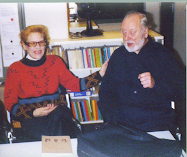
African Junior Chess Championships

From The Malawi Daily Times Egyptian, South African win Africa junior chess BY Mphatso Malidadi 12:05:21 - 08 January 2008 Egyptian top seed Kareim Wagein and South African Wiid Darleen on Sunday won this year’s Africa junior chess champions in boys and girls respectively during the week-long event that was staged at the elite Kamuzu Academy. Wagein, who accumulated 7.5 points, and Darleen were rewarded with international master title status. South African Calvin Klaasen finished as Wagein’s runner-up with 6.5 points while his compatriot Ryan Van Rensburg came third with 5.5 points. In the girls category, Carmen De Jarger emerged second while Rocha Valquiria was third. However, the three Malawian flag carriers failed to make it into the top three positions in the open category which saw South African girl Melisa Greef taking part in the boys group. Despite failing to make it into top three, the country’s ambassadors showed they had made strides in the competition as they occupied better positions unlike in the previous competitions where they had ended at the bottom. Chuma Mwale finished eighth with five points, national junior champion Chiletso Chipanga came 11th, national champion Joseph Mwale came 14th in the event that had 23 participants. It was not pleasant news for Malawi in girls’ category, which showed the country had work cut out for it to be on the same level with other countries. Junior ladies champion Ellyn Mpinganjira was 9th with Linda Jambo finishing 11th in the event which attracted 13 girls. Chess Association of Malawi vice-president Mark Chikoko said the event was a success and it revealed that the country was moving towards the right direction in the development of the sport. Chikoko noted that previously Malawians used to be table anchors but in this years championship the countries representatives squeezed themselves to better positions. “This championship has proved that Malawi has made tremendous progress. Hopefully we will continue to improve so that our players should also win the championship,” he said. Chessam publicity secretary Gilton Mkumbwa, while admitting that the championship was tough for Malawi, nevertheless, paid tribute to the players for putting up gallant fight against their well exposed counterparts. “Our players really fought very well,” he said. “They were never intimidated by their foreign counterparts who boast of international exposure. “One of the South African female players [Melisa Greef] is an international master title holder and opted to participate in the open group which was dominated by boys because she wanted to face tough opposition. “We congratulate our players for showing signs of progress. They need to participate in more championships to develop their skills rapidly,” he said. World Chess Federation (FIDE) vice-president Lewis Ncube graced the occasion.

Tuesday, January 8, 2008

2nd ACP World Rapid Cup

This 16 player knock-out event took place January 4-7, 2008 - wedged in close to the start of Corus' super tournament. Perhaps the sentimental favorite of the event, former World Champion GM Anatoly Karpov, was knocked out in his first round, losing to GM Alexander Grischuk 1.5/2.5. The sole chess femme in the event, GM Judit Polgar, who will be playing in the "A" Event at Corus, was knocked out in the first round by one of the kid-wonders, GM Sergey Karjakin, 0/2. This is shocking to me because Polgar cut her eye-teeth playing rapid chess, speed chess, blitz, etc. for fun and games! Teimour Radjabov overcame Alexander Grischuk in a blitz playoff to win the final 2.5-1.5. Now - about the money. Unfortunately, the official website, although promising to provide an English translation, does not provide English on anything other than what appears to be the "news" page! Oh well. I know that the total purse was $136,000 USD - a VERY nice pay day for the players. Here's what I found in Russian (Cyrillic alphabet): Общий призовой фонд турнира составляет 136000 USD. Призы распределяются следующим образом: 4,000 USD каждому игроку, выбывшему в первом туре; 6,000 USD каждому игроку, выбывшему в четвертьфинале; 10,000 USD каждому игроку, выбывшему в полуфинале; 20,000 USD занявшему второе место; 40,000 USD победителю. It thus appears that Radjabov won $40,000 USD. Polgar (and the other players knocked out in the first round) took home $4,000 USD. Not mentioned if what appearance fee, if any, she (and the others) may have earned for participating in this event. Publishing AFs is a big TABOO in the chess world - for obvious reasons :) It could very well be that with this big of a pay-off for relatively small effort in a short tournament, the prize money was sufficient and no AFs were needed to lure any of the big-name players who participated. How will Polgar do at Corus? I am an admirer, and hope springs eternal, but I'm not expecting her to have outstanding results. I'm not saying JP's time has passed, but there are many MORE hungry players out there than JP is these days. I'm very interested to see how Hou Yifan and Koneru Humpy perform in the "B" event.

Intact Old Kingdom Tomb Uncovered in Egypt

Czech Egyptologists uncover intact 4,500 year-old tomb [07-01-2008] By Jan Velinger It’s not everyday that archaeologists can boast a discovery such as this one: the finding of a fully-intact archaeological site dating back 4,500 years. That is exactly what happened in the pyramid fields of Abusir, Egypt, where Czech experts recently opened a tomb belonging to an Egyptian dignitary. Czech experts revealed the news just a few days ago, having first thoroughly documented the state of the chamber back in November. According to experts, such a find has not been seen in 50 years. Czech Egyptologists have long enjoyed an impressive reputation for their work in Abusir, Egypt, but even they admit one doesn’t make a find such as this one everyday: the uncovering of an intact tomb going back 24 centuries BC. The head of the on-site team, Miroslav Bárta, told journalists that the opening of the bricked-up chamber, found at the bottom of a 10-metre shaft, immediately brought to mind experiences of Indiana Jones, but he added that a feeling of responsibility for the site’s careful preservation immediately set in. Radio Prague spoke to the head of the Czech Institute of Egyptology, Ladislav Bareš, who confirmed the recent find was immense: “There are not so many finds of this type. Such finds, intact burial sites from the Old Kingdom from the 3rd millennium are very rare and they give very good insight into the behaviour and habits of Egyptians at that time. The burial chamber was found completely intact, that means the same state as when it was first sealed 4,500 years ago.” Rest of article.

The Hereford Mappa Mundi


Not to be confused with the Axis Mundi, but just as there are many axis mundi (what's the Latin plural for mundi???), there are also several Mappa Mundi - which is fascinating in and of itself. A Google search under "Mappa Mundi" and then clicking on "Images" reveals an amazing richness of the medieval maps.

I'm probably not explaining this too well, but as I understand it, the operating principal behind the Axis Mundi is to fix a center point out of which all other things flow outward. I recall reading that the May Pole represented the Axis Mundi (the pole through the center of the Earth, forming the center of the universe).

From Hereford Web Pages

The Mappa Mundi is unique in Britain's heritage - an outstanding treasure of the medieval age which reveals how 13th century scholars interpreted the world in spiritual and geographical terms. The map is undated but bears the name of "Richard de Haldingham e de Lafford", whom some historians have identified as Richard de Bello, Prebendary of Lafford in the diocese of Lincoln during the late 13th century. Together with evidence interpreted from the content of the map, a date of around AD 1290 is considered reliable.

Construction
The Mappa Mundi was drawn on a sheet of vellum 64 x 54 inches, supported by an oak frame, with the actual map contained within a circle 52 inches in diameter. Most of the writing was with black ink, with red and gold leaf used for emphasis, and blue or green for rivers and seas . The Red Sea however, was depicted in red. Mountain ranges were indicated by scalloped designs and towns by walls and towers.

Maps like the Mappa Mundi were produced in considerable numbers throughout the medieval period in "studios" dedicated to that purpose. A number of monks would have worked under a master such as Richard of Haldingham, making numerous copies of this and other manuscripts used by the Church for tuition.

Derivation
The map projection followed a convention derived from Roman times in which all parts of the known world were represented in relation to Rome. As was appropriate to the time, the Mappa Mundi world was similarly circular, but with Jerusalem at the centre. The map was based on the writings of Orosius, a scholar of the fifth century AD and a pupil of Saint Augustine, who wrote a great work to confute the pagans. The seventh book of the Ormesta, as it was known, contained a description of the world and the Mappa Mundi was intended to illustrate this "summa", or compendium of knowledge. This is indicated by the title in the right hand corner, "Descriptio Orosii de Ornesta [Ormesta] Mundi Sicut Ostenditur", which translated means Orosius' History of the World. This in turn relied on earlier writings, including the Bible and those of the Roman historian Pliny.

Content
Superimposed on the geographical elements can be seen drawings and descriptions illustrating man's history and the marvels of the natural world. The map contains descriptions of many of the imagined inhabitants of distant lands, such as the Phanesii who are represented as having huge ears in which they wrapped themselves against the cold. In other respects, the map is quite accurate. It shows the source of the River Oxus, an important landmark since classical times, situated correctly near Samarkand. However, it is shown flowing into the Caspian rather than the Aral Sea.. India is described lavishly as having "5000 cities", providing images of a land of fabulous wealth and diversity. Here, a multitude of mythological races, beasts and amazing phenomena jostle for space and we are indebted to the cartographer for finding enough room for his drawing of the Sciapod, an extraordinary being who sheltered himself from the heat of the sun with his single enormous foot. Hereford appears in the map alongside the River Wye, its location marked by a drawing of the Cathedral.

At the top of the map is depicted Christ in Majesty sitting at the Day of Judgement. To His Right and Left angels summon the blessed and turn away the unrepentant. At His Feet the Blessed Virgin intercedes for those who have shown devotion to her. Among the chosen is shown a king wearing a crown and a bishop with his mitre. Behind them come supplicants on their knees in prayer.

Purpose
To the modern mind much of the content seems so wildly fanciful that it is difficult to believe that the same people who created the vast stone cathedrals, abbeys and castles of the medieval period, should have been persuaded so easily by the map's incredible claims. We may be wrong in imagining that the users of such maps were so impressionable. The map's limited value as a geographical tool was more than compensated for by its worth as a means of instructing the largely illiterate laity. Above all the confusion, doubt and bewildering complexity of the world as shown in the map was the dependable figure of Christ. Here was shown something worth believing in, the remedy for doubt and despair, and the path to salvation.

An enlarged image (in black and white) can be found here.
Related Posts Plugin for WordPress, Blogger...