Sunday, August 14, 2011

Challenges to Claim That Mariemont is Largest Effigy Mound

Let the battle begin!

From The Columbus Disptach Online

Prof claims he’s found even greater serpent mound
By Dylan Tussel
Wednesday August 3, 2011 11:15 AM

There are more than 2,000 ancient earthworks in Ohio, including two effigy mounds. One of them is the Great Serpent Mound in Adams County, the largest of its kind in the world.

That could change if a University of Cincinnati anthropology professor has his way.

Ken Tankersley says a 2,952-foot-long mound that runs through Mariemont in Hamilton County is more than an embankment built by an ancient culture.

He believes the mound, first described more than 100 years ago, is a serpent mound, one that would dwarf the Adams County earthwork.

“It’s a snake,” Tankersley told the Cincinnati Enquirer.

He even wrote a paper published in the journal North American Archaeologist.

But some Ohio archaeologists say his findings are inconclusive.
“A lot of times you had embankments that run along edges of bluffs in places like Fort Ancient,” said Robert Genheimer, an archaeologist with the Cincinnati Museum Center.

“Naturally, bluffs aren’t straight. Is that what we actually refer to as serpentine or sinuous?"

Bradley Lepper, an archaeologist with the Ohio Historical Society, said no, it’s not.

“It looks to be an embankment, more or less, that follows the hill and then ends in an unusual, blobby enclosure,” he said. “I don’t see anything particularly serpentine about it.”

Lepper said if you want to see serpentine, go to Adams County.

“You can show Serpent Mound to anyone and they’ll recognize it’s a serpent,” he said. “The Mariemont serpent that Dr. Tankersley discovered is … probably a prehistoric wall.”

When reached yesterday by The Dispatch, Tankersley responded in an email: “I have no interest in helping you create conflict with a competing news story. ... Regardless of the subject, you will always be able to find an opposing side.”

The Mariemont earthwork is more than twice the size of the about 1,300-foot Serpent Mound.
“It’s a long wall, but ... there are a lot of bigger earthworks.”

The mound appears to function for controlling water, Genheimer said. Because of development around and disturbance to the earthwork, it is difficult to determine how it originally was constructed.

“The present contours don’t reflect the original contours,” Genheimer said.

The other recognized effigy in Ohio is the Alligator Mound in Licking County.

Both are believed to be the work of what archaeologists call the Fort Ancient culture about A.D. 1000.

Lepper said Native Americans likely made animal effigies as shrines to the spirits of the underworld. They were places, he said, where people would bring offerings.

2011-2012 Women's Grand Prix: Rostov

Hmmmm, well, the only shocker in the final round was that Tatiana Kosintseva lost to Alisa Galliamova!  Not that Galliamova isn't a fine player, but - come on!  I would call that an upset for sure, but other than that, things shook out rather tamely.
Results from the last round:
SNo.NameRtgRes.NameRtgSNo.
6GMKosintseva Nadezhda2560½ - ½WGMRuan Lufei247912
7GMDanielian Elina2521½ - ½IMMuzychuk Anna25385
8IMKovalevskaya Ekaterina24271 - 0GMKosteniuk Alexandra24974
9GMKosintseva Tatiana25570 - 1IMGalliamova Alisa24923
10GMLahno Kateryna2536½ - ½GMKoneru Humpy26142
11GMHou Yifan2575½ - ½GMStefanova Antoaneta25241

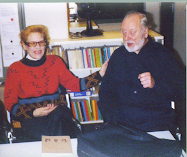
Here are the final standings - a non-combative draw between Hou and Stefanova. Sigh. Lahno drawing with Koneru?  I get it - but it sucks.
RankSNo.NameRtgFED123456789101112PtsSBRes.Rp
111GMHou Yifan2575CHN*01½½11½1½11840.0002697
210GMLahno Kateryna2536UKR1*0½1½1110½½738.7502628
35IMMuzychuk Anna2538SLO01*½½½1½½1½½34.2502591
49GMKosintseva Tatiana2557RUS½½½*½½01½11½33.5002589
56GMKosintseva Nadezhda2560RUS½0½½*½½½½½11629.7502560
62GMKoneru Humpy2614IND0½½½½*½½½10128.2502519
73IMGalliamova Alisa2492RUS0001½½*1011½26.7502530
81GMStefanova Antoaneta2524BUL½0½0½½0*1½1½525.2502491
97GMDanielian Elina2521ARM00½½½½10*011524.2502491
1012WGMRuan Lufei2479CHN½100½00½1*½½24.7502466
118IMKovalevskaya Ekaterina2427RUS0½½001000½*117.5002403
124GMKosteniuk Alexandra2497RUS0½½½00½½0½0*317.5002354


Twelfth Women's World Chess Champion GM Alexandra Kosteniuk was definitely off form the entire tournament. Pressing too much? She had five losses, no wins.  She hasn't lacked for tough competition, having played in several events against much higher rated male players and doing just fine. So, I don't think it's a case of the "yips" like Koneru Humpy seems to be suffering from for the past nine months or so. Some time off and rest may be what the doctor orders. She's been active since the first of the year.  I know she's a better player than her results showed in this event.

I'm very pleased for GM K. Lahno.  Definitely someone to watch.  I think she's got what it takes to become a world champion.

Is Hou unstoppable at this point?  Will she repeat as Women's World Chess Champion later in the year?  I'm sure she's holding back plenty in her arsenal. 

What to make of Koneru Humpy?  I am not even at the patzer level when it comes to playing chess and therefore, I cannot say what's going on with her games.  I play at such a different (low) level that what these players do is like me trying to decipher the Russian alphabet - impossible!  But there are plenty of people out there who can follow her play.  I would like to see some analysis of her games in this event.  Where did she go wrong?  Was she, as I suspect, playing not to lose, which is a sure-fire way to lose every time? 

The next Women's Grand Prix event is 6-20 September 2011, Shenzhen CHINA.  We will once see GM Hou Yifan in action, along with Anna Muzychuk, Ju Wenjun, Elina Danielian, Viktorija Cmilyte, Alisa Galliamova, Zhu Chen, Luan Rufei, Zhao Xue, Ekaterina Kovalevskaya, Munguntuul Batkhuyag, and Betul Cemre Yildiz.  [Players in bold played in 2011-2012 Women's Grand Prix Rostov]. 

As the old proverb proves, the race doesn't always go to the fastest out of the gate; slow and steady wins the race!  Who will be the 2011-2012 Women's Grand Prix Champion???

Challenges to the "Out of Africa" Theory of Human Evolution/Migration Continue

Here's the lastest in the ongoing battle:

from bloomberg.com
Caveman Zezva’s 1.8-Million-Year Grin Forces Rewrite of History
By Helena Bedwell - Aug 8, 2011 6:00 PM CT

The history of human evolution needs to be rewritten.

This is the view of David Lordkipanidze, who claims his discovery of the bones of a couple known as Zezva and Mzia puts the Black Sea country of Georgia at the center of the archaeological world.

The small-brained apelike creatures lived in the area at least 1.75 million years ago, making them the first proven residents of Europe and Asia, says Lordkipanidze. The find has thrown into question the theory that the first hominids to disperse from Africa were homo erectus, a species with large brains and bodies approaching human size.

“Now the news is that we have found stone tools,” says Lordkipanidze, the Georgian National Museum’s director. “Stone and bone samples are older than any other findings, proving we’ve had human presence in Georgia from at least 1.85 million years or more.”

The 49-year-old professor remains calm about the discovery, sitting in his office wearing a blue shirt and denims. The news is supported by 10 experts who have written a report to the National Academy of Science, he says. Lordkipanidze is also dismissive of skeptics who say the announcement is only intended to help Georgia to become a bigger tourist destination and global hub for archaeology.

The nation of 4.6 million people on the Silk Road has been trying to restore its economy after it fought a five-day war in 2008 over the breakaway Georgian region of South Ossetia. The Georgian government forecasts as many as 3 million tourist visits this year, rising to 5 million by 2015.

Human Jaw

Lordkipanidze’s room is bright and modest. Shelves are full of memorabilia of the findings from near the village of Dmanisi, southwest of the capital Tbilisi and near the Armenian border.

An international team found the first human jaw there in 1991. Between then and 2007, fossils from as many as six individuals have been found at the same site. Three are being reconstructed by artists -- Zezva and Mzia (typical old- fashioned Georgian names) and their possible offspring of a teenage female. The skulls can be covered with flesh and hair to give them simian smiles and protruding jaws. The excavations are funded by Georgia’s government and companies including BP Plc and Rolex Group.

National Geographic magazine, and Science, have both put Zezva and Mzia on their covers, noting that they hold the key to human evolution. Perhaps early humans took a detour into Eurasia before an epic journey out of Africa.

“Dmanisi humans are either the first representatives of homo erectus,” says Lordkipanidze. “Or ancestors of homo erectus.”

Tiger Skulls

These people were about 1.4 meters (4 feet 9 inches) tall, with small brains and legs more developed than their arms, showing that they were good runners. They lived alongside predators like saber-toothed tigers, whose skulls were also found.

“Their main lifestyle was to compete with big and dangerous animals,” Lordkipanidze says. “They lived in groups and they were taking care of each other.” They were on a site totaling no more than 10 square meters and their death was mostly natural.

Lordkipanidze’s museum’s collection dates back to 1852. After the Rose revolution in 2003, it was re-established the following year by a presidential decree. It unifies the Soviet Occupation Museum, the archives of the Ministry of State Security and Internal Affairs of Georgia, and the golden treasury, including objects from the ancient kingdom of Colchis from Vani, known as the destination of Jason and the Argonauts in their quest for the Golden Fleece.

Excavations continue at Dmanisi, while only 10 percent of the historical site has been explored, Lordkipanidze says.

“The world should know that we are preserving a world heritage, not just ours,” Lordkipanidze says. “It’s highly educational and has huge tourism potential.”

Information: http://www.museum.ge/web_page/

And this - not exactly related but it only goes to show that we have a lot yet to learn about what happened 50,000 to 40,000 years ago, let alone a couple of million years ago!

From newscientist.com
Stone Age toe could redraw human family tree
10 August 2011 by Colin Barras
Magazine issue 2825.

ON THE western fringes of Siberia, the Stone Age Denisova cave has surrendered precious treasure: a toe bone that could shed light on early humans' promiscuous relations with their hominin cousins.

New Scientist has learned that the bone is now in the care of Svante Pääbo at the Max Planck Institute for Evolutionary Anthropology in Leipzig, Germany, who revealed the first genetic evidence of interbreeding between ancient humans and other hominins (New Scientist, 30 July, p 34).

There are tantalising hints that the find strengthens the case for a third major group of hominins circulating in Eurasia at the same time as early humans and the Neanderthals. It might possibly even prove all three groups were interbreeding (see diagram).

The Denisova cave had already yielded a fossil tooth and finger bone, in 2000 and 2008. Last year, Pääbo's DNA analysis suggested both belonged to a previously unknown group of hominins, the Denisovans. The new bone, an extremely rare find, looks likely to belong to the same group.

It is a very exciting discovery, says Isabelle De Groote at London's Natural History Museum. "Hominin material from southern Siberia is rare and usually extremely fragmentary."

The primitive morphology of the 30,000 to 50,000-year-old Denisovan finger bone and tooth indicates that Denisovans separated from the Neanderthals roughly 300,000 years ago. At the time of the analysis, Pääbo speculated that they came to occupy large parts of east Asia at a time when Europe and western Asia were dominated by Neanderthals. By 40,000 years ago, Homo sapiens was also moving around much of the region. But the Denisovans remain known only from the finger and tooth fossils - not enough information to formally assign them to their own species.

That may change with analysis of the newly discovered toe bone. It was found in the same layer of the cave floor as the finger bone, by Maria Mednikova at the Russian Academy of Sciences in Moscow (Archaeology, Ethnology and Anthropology of Eurasia, vol 39, p 129).

Mednikova says this suggests it belonged to a contemporary individual, alive roughly 40,000 years ago. But her studies show the finger and toe bones belonged to distinct people. In addition, the toe bone is stocky and its shape is somewhere between that of a modern human and a typical Neanderthal.

Others are less convinced. Erik Trinkaus at Washington University in St Louis, Missouri, who has written extensively on hominin foot bone morphology, says the bone's sturdy appearance is interesting but inconclusive from a taxonomic perspective.

What's needed is DNA evidence. For now, though, Pääbo's team remain very tight-lipped about what, if anything, they have found. "We have no results we are ready to talk about yet," Pääbo told New Scientist. Mednikova saw some of the team's preliminary findings last month and promises a "wonderful result" will be published in the near future - although with the analysis still under review she can say no more.

Her enthusiasm suggests that Pääbo's team has successfully extracted DNA from the toe bone, and hints that it shows that this was no ordinary hominin. At the very least, one can presume it doesn't belong to a human or a Neanderthal.

"The Neanderthals came to the Altai mountains [in Siberia] about 45,000 years ago and were probably assimilated by the native Denisovan population," she says. "It cannot be excluded that the individual was Denisovan, Neanderthal or even a hybrid - why not?"

If the Stone Age toe really did belong to a Neanderthal-Denisovan hybrid, it would be a remarkable find. Pääbo is fast building a reputation for revealing Homo sapiens' promiscuous past. He has shown that humans and Neanderthals interbred, as did humans and Denisovans. Until the latest analysis is published, we can only speculate on what has been found. But the human family tree could be about to get even more complicated. If so, there may be a case for reclassifying all three as members of the same species.

1st Krystina Holuj-Radzikowska Memorial International Chess Tournament

Held August 6 - 14, 2011 in Warsaw, Poland.  Website.  Final standings cross-table:

TitleNameFed.EloR1R2R3R4R5R6R7R8R9R10R11TotalPlace
1WGMSzczepkowska-Horowska, KarinaPOL2339
3b=
6b1
10w1
8b1
2w=
9b=
7w1
12b1
4w0
11b1
5w=
8.01
2IMRajlich, IwetaPOL2436
4b=
11w1
5b=
3w=
1b=
10w1
8b=
6b=
9w1
7b1
12w1
8.02
3WGMMichna, MartaGER2397
1w=
10b1
8w1
2b=
9w=
7b=
12w1
4b=
11w=
5b1
6w=
7.53
4IMZozulia, AnnaBEL2381
2w=
9b=
7w=
12b=
6w0
11w1
5b1
3w=
1b1
10w1
8b=
7.04
5WIMWorek, JoannaPOL2306
10w1
8b=
2w=
9b1
7w1
12b=
4w0
11b=
6w=
3w0
1b=
6.05
6WFMIwanow, AnnaPOL2162
7b0
1w0
12b1
10w1
4b1
8w0
11b1
2w=
5b=
9w=
3b=
6.06
7IMFoisor, Cristina-AdelaROU2427
6w1
12w1
4b=
11w=
5b0
3w=
1b0
10w1
8b1
2w0
9b=
6.07
8WGMSharevich, AnnaBLR2344
11b1
5w=
3b0
1w0
10b0
6b1
2w=
9b=
7w0
12b=
4w=
4.58
9WGMKochetkova, JuliaSVK2319
12b0
4w=
11b=
5w0
3b=
1w=
10b0
8w=
2b0
6b=
7w=
3.59
10WCMLeks, MariaPOL2082
5b0
3w0
1b0
6b0
8w1
2b0
9w1
7b0
12w1
4b0
11w=
3.510
11WFMFoisor, Mihaela-VeronicaROU2217
8w0
2b0
9w=
7b=
12w=
4b0
6w0
5w=
3b=
1w0
10b=
3.011
12Gluszko, MonikaPOL2103
9w1
7b0
6w0
4w=
11b=
5w=
3b0
1w0
10b0
8w=
2b0
3.012

ChessArbiter Pro (v.4.27) (C) A.Curyłohttp://www.chessarbiter.com/
Lic:0120 Właściciel: FA Agnieszka Brustman

Misleading Title of Article Obscures Awful Truth

You have to read down into the article to get to the real meat of the article and the horrifying facts about female infanticide openly practiced in China, as well as persistent cultural sexual discrimination against females because "they aren't as good as boys":

Published at Fox News Online
One-child policy a surprising boon for China girls
Published August 14, 2011
| Associated Press

BEIJING – Tsinghua University freshman Mia Wang has confidence to spare. Asked what her home city of Benxi in China's far northeastern tip is famous for, she flashes a cool smile and says: "Producing excellence. Like me."

A Communist Youth League member at one of China's top science universities, she boasts enviable skills in calligraphy, piano, flute and pingpong.

Such gifted young women are increasingly common in China's cities and make up the most educated generation of women in Chinese history. Never have so many been in college or graduate school, and never has their ratio to male students been more balanced.

To thank for this, experts say, is three decades of steady Chinese economic growth, heavy government spending on education and a third, surprising, factor: the one-child policy. In 1978, women made up only 24.2 percent of the student population at Chinese colleges and universities. By 2009, nearly half of China's full-time undergraduates were women and 47 percent of graduate students were female, according to the National Bureau of Statistics. In India, by comparison, women make up 37.6 percent of those enrolled at institutes of higher education, according to government statistics.

Since 1979, China's family planning rules have barred nearly all urban families from having a second child in a bid to stem population growth. With no male heir competing for resources, parents have spent more on their daughters' education and well-being, a groundbreaking shift after centuries of discrimination.

"They've basically gotten everything that used to only go to the boys," said Vanessa Fong, a Harvard University professor and expert on China's family planning policy.

Wang and many of her female classmates grew up with tutors and allowances, after-school classes and laptop computers. Though she is just one generation off the farm, she carries an iPad and a debit card, and shops for the latest fashions online. Her purchases arrive at Tsinghua, where Wang's all-girls dorm used to be jokingly called a "Panda House," because women were so rarely seen on campus. They now make up a third of the student body, up from one-fifth a decade ago.

"In the past, girls were raised to be good wives and mothers," Fong said. "They were going to marry out anyway, so it wasn't a big deal if they didn't want to study."

Not so anymore. Fong says today's urban Chinese parents "perceive their daughters as the family's sole hope for the future," and try to help them to outperform their classmates, regardless of gender.

Some demographers argue that China's fertility rate would have fallen sharply even without the one-child policy because economic growth tends to reduce family size. In that scenario, Chinese girls may have gotten more access to education anyway, though the gains may have been more gradual.

Crediting the one-child policy with improving the lives of women is jarring, given its history and how it's harmed women in other ways. Facing pressure to stay under population quotas, overzealous family planning officials have resorted to forced sterilizations and late-term abortions, sometimes within weeks of delivery, although such practices are illegal. The birth limits are also often criticized for encouraging sex-selective abortions in a son-favoring society. Chinese traditionally prefer boys because they carry on the family name and are considered better earners.

With the arrival of sonogram technology in the 1980's, some families no longer merely hoped for a boy, they were able to engineer a male heir by terminating pregnancies when the fetus was a girl.

"It is gendercide," said Therese Hesketh, a University College London professor who has studied China's skewed sex ratio. "I don't understand why China doesn't just really penalize people who've had sex-selective abortions and the people who do them. The law exists but nobody enforces it."

To combat the problem, China allows families in rural areas, where son preference is strongest, to have a second child if their first is a girl. The government has also launched education campaigns promoting girls and gives cash subsidies to rural families with daughters. Still, 43 million girls have "disappeared" in China due to gender-selective abortion as well as neglect and inadequate access to health care and nutrition, the United Nations estimated in a report last year.

Yin Yin Nwe, UNICEF's representative to China, puts it bluntly: The one-child policy brings many benefits for girls "but they have to be born first."

Wang's birth in the spring of 1992 triggered a family rift that persists to this day. She was a disappointment to her father's parents, who already had one granddaughter from their eldest son. They had hoped for a boy.

"Everyone around us had this attitude that boys were valuable, girls were less," Gao Mingxiang, Wang's paternal grandmother, said by way of explanation — but not apology.

Small and stooped, Gao perched on the edge of her farmhouse "kang," a heated brick platform that in northern Chinese homes serves as couch, bed and work area. She wore three sweaters, quilted pants and slippers. Her granddaughter, tall and graceful and dressed in Ugg boots and a sparkly blue top, sat next to her listening, a sour expression on her face. She wasn't shy about showing her lingering bitterness or her eagerness to leave. She agreed to the visit to please her father but refused to stay overnight — despite a four-hour drive each way.

Fong, the Harvard researcher, says that many Chinese households are like this these days: a microcosm of third world and first world cultures clashing. The gulf between Wang and her grandmother seems particularly vast.

The 77-year-old Gao grew up in Yixian, a poor corn- and wheat-growing county in southern Liaoning province. At 20, she moved less than a mile (about a kilometer) to her new husband's house. She had three children and never dared to dream what life was like outside the village. She remembers rain fell in the living room and a cherished pig was sold, because there wasn't enough money for repairs or feed. She relied on her daughter to help around the house so her two sons could study.

"Our kids understood," said Gao, her gray hair pinned back with a bobby pin, her skin chapped by weather, work and age. "All families around here were like that."

But Wang's mother, Zheng Hong, did not understand. She grew up 300 kilometers (185 miles) away in the steel-factory town of Benxi with two elder sisters and went to vocational college for manufacturing. She lowers her voice to a whisper as she recalls the sting of her in-law's rejection when her daughter was born.

"I sort of limited my contact with them after that," Zheng said. "I remember feeling very angry and wronged by them. I decided then that I was going to raise my daughter to be even more outstanding than the boys."

They named her Qihua, a pairing of the characters for chess and art — a constant reminder of her parents' hope that she be both clever and artistic. From the age of six, Wang was pushed hard, beginning with pingpong lessons. Competitions were coed, and she beat boys and girls alike, she said. She also learned classical piano and Chinese flute, practiced swimming and ice skating and had tutors for Chinese, English and math. During summer vacations, she competed in English speech contests and started using the name Mia.

In high school, Wang had cram sessions for China's college entrance exam that lasted until 10 p.m. Her mother delivered dinners to her at school. She routinely woke up at 6 a.m. to study before class. She had status and expectations her mother and grandmother never knew, a double-edged sword of pampering and pressure.

If she'd had a sibling or even the possibility of a sibling one day, the stakes might not have been so high, her studies not so intense. Beijing-based population expert Yang Juhua has studied enrollment figures and family size and determined that single children in China tend to be the best educated, while those with elder brothers get shortchanged. She was able to make comparisons because China has many loopholes to the one-child rule, including a few cities that have experimented with a two-child policy for decades.

"Definitely single children are better off, particularly girls," said Yang, who works at the Center for Population and Development Studies at Renmin University. "If the girl has a brother then she will be disadvantaged. ... If a family has financial constraints, it's more likely that the educational input will go to the sons."

While her research shows clearly that it's better, education-wise, for girls to be single children, she favors allowing everyone two kids.

"I do think the (one-child) policy has improved female well-being to a great extent, but most people want two children so their children can have somebody to play with while they're growing up," said Yang, who herself has a college-age daughter.

Ideally, she said, China should relax the policy while also investing more in education so that fewer families will be forced to choose which child to favor when it comes to schooling.

While strides have been made in reaching gender parity in education, other inequalities remain. Women remain woefully underrepresented in government, have higher suicide rates than males, often face domestic violence and workplace discrimination and by law must retire at a younger age than men. It remains to be seen whether the new generation of degree-wielding women can alter the balance outside the classroom.

Some, like Wang, are already changing perceptions about what women can achieve. When she dropped by her grandmother's house this spring, the local village chief came by to see her. She was a local celebrity: the first village descendent in memory to make it into Tsinghua University.

"Women today, they can go out and do anything," her grandmother said. "They can do big things."

Chess Femme News!

98th British Chess Championships 2011

2011 U.S. Open Cash Prize Winners

Full list of cash prize winners.  I'm only reporting the chess femmes.  The U.S. Open was held July 30 - August 7, 2011.

Class A - 3rd to 4th [Tie]     Gologorsky, Rachel            $94.55
Class A - 3rd to 4th [Tie]     Wiener, Alexandra             $94.55
Class B - 2nd to 4th [Tie]     Tsai, Amy                        $666.67
Class C - 2nd to 3rd [Tie]     Zhao, Audrey Jin Nin      $640.00
Class D - 2nd to 3rd [Tie]     Suich, Victoria                $480.00
Class D - 4th [Tie]                Li, Sophia                          $34.29
Class D - 4th [Tie]                Hellwig, Hannah M           $34.29
Unrated - 1st to 2nd [Tie]     Huttl, Sofie                      $480.00

2011 World Girls U-20 Chess Championship

Standings after R12 (top players) - one more round to go!  The big battle will be for third place, as several players are within 1 point striking distance.  Olga Girya and Deysi Cori have locks on the top two spots, it remains to be seen if the switch places as a result of the final game.  None of the players in third place and below can touch them, even if both should lose their respective on Monday (8/15).  Neither player will have an "easy" final game.  Stay tuned!
Rk.NameFEDRtgPts.TB1 TB2 TB3 Rpwwew-weKrtg+/-
1RUSWGMGirya OlgaRUS237110.5226022772294257910.57.932.571025.7
2PERWGMCori T DeysiPER237610.02256227222892513108.051.951019.5
3GEOWGMPaikidze NaziGEO24168.522632279229424058.58.54-0.0415-0.6
4ROUWIMBulmaga IrinaROU22938.522602279229923978.56.801.701525.5
5INDWGMPadmini RoutIND23488.0221422282241232488.26-0.2615-3.9
6TURWIMOzturk KubraTUR22588.0219922252242229887.200.801512.0
7AZEWIMMammadova Gulnar Marfat QiziAZE22947.521992218224022747.57.67-0.1715-2.5
8RUSDogodkina JuliaRUS21937.521492174220122237.56.910.59158.9
9AZEWFMFataliyeva Ulviyya Hasil QiziAZE21077.521462174220122147.55.841.661524.9
10INDWIMKulkarni BhaktiIND23177.521092117212421897.59.31-1.8115-27.1
11RUSWGMSavina AnastasiaRUS23987.520872108212021647.510.21-2.7110-27.1
12VIEWIMHoang Thi Nhu YVIE22047.520742093211321877.57.300.20153.0
13GEOWGMTsatsalashvili KetiGEO23187.520562077209621727.58.85-1.3515-20.3

Here are the top board pairings:
Bo.No.NameFEDRtgPts. ResultPts. NameFEDRtgNo.
14RUSWGMGirya Olga RUS237110½ 8 WGMPadmini Rout IND2348IND5
26GEOWGMTsatsalashvili Keti GEO2318 10 WGMCori T Deysi PER2376PER3
39ROUWIMBulmaga Irina ROU2293 8 WIMOzturk Kubra TUR2258TUR13
42RUSWGMSavina Anastasia RUS2398 WGMPaikidze Nazi GEO2416GEO1
518RUSDogodkina Julia RUS2193 WIMKulkarni Bhakti IND2317IND7
68AZEWIMMammadova Gulnar Marfat Qizi AZE2294 WIMHoang Thi Nhu Y VIE2204VIE17
729AZEWFMFataliyeva Ulviyya Hasil Qizi AZE2107 7 WIMNakhbayeva Guliskhan KAZ2222KAZ15
Related Posts Plugin for WordPress, Blogger...