Sunday, January 27, 2013

Would It Be Ethical to Clone a Neanderthal Child?

Wanted: 'Adventurous woman' to give birth to Neanderthal man - Harvard professor seeks mother for cloned cave baby

  • Professor George Church of Harvard Medical School believes he can reconstruct Neanderthal DNA
  • His ambitious plan requires a human volunteer willing to allow the DNA to be put into stem cells, then a human embryo
|


They're usually thought of as a brutish, primitive species.

So what woman would want to give birth to a Neanderthal baby?

Yet this incredible scenario is the plan of one of the world’s leading geneticists, who is seeking a volunteer to help bring man’s long-extinct close relative back to life.
Professor George Church of Harvard Medical School believes he can reconstruct Neanderthal DNA and resurrect the species which became extinct 33,000 years ago.  His scheme is reminiscent of Jurassic Park but, while in the film dinosaurs were created in a laboratory, Professor Church’s ambitious plan requires a human volunteer.

He said his analysis of Neanderthal genetic code using samples from bones is complete enough to reconstruct their DNA. He said: ‘Now I need an adventurous female human.

‘It depends on a hell of a lot of things, but I think it can be done.’

Professor Church’s plan would begin by artificially creating Neanderthal DNA based on genetic code found in fossil remains. He would put this DNA into stem cells.  These would be injected into cells from a human embryo in the early stages of life.  It is thought that the stem cells would steer the development of the hybrid embryo on Neanderthal lines, rather than human ones.

After growing in the lab for a few days, the ‘neo-Neanderthal’ embryo would be implanted in the womb of a surrogate mother – the volunteer. Professor Church, 58, is a pioneer in synthetic biology who helped initiate the Human Genome Project that mapped our DNA.
He says Neanderthals were not the lumbering brutes of the stereotype, but highly intelligent. Their brains were roughly the same size as man’s, and they made primitive tools.
He believes his project could benefit mankind. He told German magazine Der Spiegel: ‘Neanderthals might think differently than we do. They could even be more intelligent than us.

‘When the time comes to deal with an epidemic or getting off the planet, it’s conceivable that their way of thinking could be beneficial.’

Scientists say that his plan is theoretically possible, although in Britain, like most countries, human reproductive cloning is a criminal offence.  But Professor Church’s proposal is so cutting-edge that it may not be covered by existing laws.  However, experts worry that neo-Neanderthals might lack the immunity to modern diseases to survive, and some fear that the process might lead to deformity.

There is also uncertainty over how they would fit into today’s world. Bioethicist Bernard Rollin of Colorado State University said: ‘I don’t think it’s fair to put people... into a circumstance where they are going to be mocked and possibly feared.’

In a scathing reaction, Philippa Taylor of the Christian Medical Fellowship said:  ‘It is hard to know where to begin with the ethical and safety concerns.’

****************************************************
Sounds to me like this crazy professor wants to breed Neanderthals to use as guinea pigs -- any protests coming from the anti-animal abuse interest group on this?  I can see what this man and others like him -- and even worse than him -- are thinking in addition:  slaves; harvesting organs; programmed soldiers to act as non-stop killers.  After all, they're not really human beings, are they. 

2013 Tradewise Gibraltar Chess Festival

Top standings among the ladies (top 50 players) after R5 -- with top men listed by way of comparison.  247 players in the Masters!

Rk.NameFEDRtgPts.TB1 Rpwwew-weKrtg+/-
1GMLe Quang LiemVIE27055.03294327653.751.251012.5
2GMVitiugov NikitaRUS26945.03282326453.751.251012.5

13GMStefanova AntoanetaBUL25164.02680268042.901.101011.0
19GMDzagnidze NanaGEO25554.02629262843.470.53105.3
27IMZatonskih AnnaUSA24914.02560256043.500.50105.0
29IMPaehtz ElisabethGER24824.02544254443.540.46104.6
30GMCramling PiaSWE25184.02469245044.14-0.1410-1.4
38IMMelia SalomeGEO24033.5253325333.52.471.031010.3
39IMMuzychuk MariyaUKR24713.5252325223.53.010.49104.9
41GMCmilyte ViktorijaLTU25153.5250825083.53.410.09100.9
44GMMuzychuk AnnaSLO25823.5249724923.53.90-0.4010-4.0
45WGMJu WenjunCHN25053.5249324933.53.450.05100.5
48GMHarika DronavalliIND25143.5247624763.53.58-0.0810-0.8

This is good right now -- 22% of the top 50 players are women.

Some of the results from R5:

1069IMMelia Salome 2403 0 - 1 GMJones Gawain C B 263217
137GMShirov Alexei 27083 1 - 03 GMHoang Thanh Trang 246952
1929GMDzagnidze Nana 25553 1 - 03 IMKjartansson Gudmundur 240866
2035GMCramling Pia 25183 1 - 03 IMNezad Husein Aziz 239474
2137GMStefanova Antoaneta 25163 1 - 03 FMDittmar Peter 233086
2371IMTania Sachdev 24033 0 - 13 IMLarino Nieto David 249745
24109Amato Andrea 22593 0 - 13 IMZatonskih Anna 249146
25117Hommerson Paul 22373 0 - 13 IMPaehtz Elisabeth 248248
2978FMGeorgiadis Nico 2369 0 - 1 GMMuzychuk Anna 258226
3083FMOrtega Ruiz Jose Miguel 2349 0 - 1 GMZhao Xue 255430

Friday, January 25, 2013

Sweet Potato DNA Shows Early Polynesian-South America Contact

Oh, those ancient navigators!   Thor Heyderdahl may have had it backwards when he suggested it was travellers from Peru (South America) who settled some of Polynesia, but he showed in 1947 that the trans-Pacific voyage could be done using technology available at the time. 

From sciencemag.org

Clues to Prehistoric Human Exploration Found in Sweet Potato Genome

on 21 January 2013, 3:00 PM
 
Europeans raced across oceans and continents during the Age of Exploration in search of territory and riches. But when they reached the South Pacific, they found they had been beaten there by a more humble traveler: the sweet potato. Now, a new study suggests that the plant's genetics may be the key to unraveling another great age of exploration, one that predated European expansion by several hundred years and remains an anthropological enigma.
 
Humans domesticated the sweet potato in the Peruvian highlands about 8000 years ago, and previous generations of scholars believed that Spanish and Portuguese explorers introduced the crop to Southeast Asia and the Pacific beginning in the 16th century. But in recent years, archaeologists and linguists have accumulated evidence supporting another hypothesis: Premodern Polynesian sailors navigated their sophisticated ships all the way to the west coast of South America and brought the sweet potato back home with them. The oldest carbonized sample of the crop found by archaeologists in the Pacific dates to about 1000 C.E.—nearly 500 years before Columbus's first voyage. What's more, the word for "sweet potato" in many Polynesian languages closely resembles the Quechua word for the plant [linguistic "borrowing"].
 
Studying the genetic lineage of the sweet potato directly has proved difficult, however. European traders exported varieties of sweet potato from Mexico and the Caribbean to the Pacific, and those breeds mixed with the older Polynesian varieties, obscuring their genetic history. Therefore, it's difficult to apply information culled from modern samples to older varieties without a prehistoric control.
 
Now a team of researchers working with France's Centre of Evolutionary and Functional Ecology and CIRAD, a French agricultural research and development center, has identified one such temporal control: sweet potato samples preserved in herbariums assembled by the first European explorers to visit many Polynesian islands. The study, which is published online today in the Proceedings of the National Academy of Sciences, provides strong evidence for prehistoric contact between Polynesia and South America.
 
By analyzing genetic markers specific to sweet potatoes in both modern samples of the plant and older herbarium specimens, the researchers discovered significant differences between varieties found in the western Pacific versus the eastern Pacific. This finding supports the so-called tripartite hypothesis, which argues that the sweet potato was introduced to the region three times: first through premodern contact between Polynesia and South America, then by Spanish traders sailing west from Mexico, and Portuguese traders coming east from the Caribbean. The Spanish and Portuguese varieties ended up in the western Pacific, while the older South American variety dominated in the east, which would explain the genetic differences the French team saw.
 
The decision to analyze herbarium specimens is "innovative" and provides another piece of strong evidence for the tripartite hypothesis, says archaeologist Patrick Kirch, of the University of California, Berkeley, who was not involved in the study. Lead author Caroline Roullier emphasizes that although her genetic analysis alone doesn't prove that premodern Polynesians made contact with South America, it strongly supports the existing archaeological and linguistic evidence pointing to that conclusion. "It's the combination of all different kinds of proof" that's really convincing, she says. Anthropologist Richard Scaglion of the University of Pittsburgh in Pennsylvania agrees, "All the lines of evidence coming together … really strengthens the case" for Polynesian contact with South America.

Geodesic Marker Discovered on App

At Discovery.com

Roman Marker Used to Measure Earth Found

//
 

2013 Tradewise Gibraltar Chess Festival

Here are the top female players after R4 (247 players in the Masters).  For comparison, have also included the top male players, who are tied for first place with 4.0:

Rk.
NameFEDRtgPts.TB1 Rpwwew-weKrtg+/-
1GMLe Quang LiemVIE27054.03255323343.170.83108.3
2GMVitiugov NikitaRUS26944.03246322343.160.84108.4
3GMSwiercz DariuszPOL26274.03234321942.861.141011.4
4GMIturrizaga EduardoVEN26504.03225320743.070.93109.3

18IMMelia SalomeGEO24033.5265826583.52.261.241012.4
22GMStefanova AntoanetaBUL25163.02660266032.160.84108.4
29GMDzagnidze NanaGEO25553.02577257632.770.23102.3
34IMZatonskih AnnaUSA24913.02528252832.710.29102.9
36IMPaehtz ElisabethGER24823.02514251432.740.26102.6
40GMHoang Thanh TrangHUN24693.02496249232.750.25102.5
49IMTania SachdevIND24033.02396237632.840.16101.6
52GMCramling PiaSWE25183.02381235733.47-0.4710-4.7

As you can see, many of the ladies are, at present keeping up pretty right and tight with the male players, who are interspersed in and around them with 3.5 and 3.0 points. 

I am SO happy to see Salome Melia as the top female after 4 rounds!  After having had a very good year in 2009, her play leveled off -- guess she was busy being romanced because she got married a few years ago :)  I have seen her name showing up in more events during the latter part of 2012.  Keeping my fingers crossed she has a great showing at Gibraltar!  The female competition will be fierce, because the first price will not be shared (all other prizes below will be totaled and split up among players with tied scores):

Open to all Women
1st Prize
£12,000
2nd Prize
£8,000
3rd Prize
£5,000
4th Prize
£3,500
5th Prize
£2,500
6th Prize
£2,000
7th Prize
£1,500
8th Prize
£1,000
9th Prize
£600
10th Prize
£400

Yesterday in R3, Stefanova showed her mettle by defeating GM Radoslaw Wojtaszek (POL 2723).  Way to go, Girl! 

No reports from today at the official website yet -- but I see at Chess-Results.com that Stefanova was black today against USA's Gata Kamsky, who took the full point, moving his score to 3.5 and it looks like all of the ladies playing the higher rated players fell to defeat today.  Boooooo!

Wednesday, January 23, 2013

Interesting Genetic Study out of China

A Relative from the Tianyuan Cave: Humans Living 40,000 Years Ago Likely Related to Many Present-Day Asians and Native Americans

Jan. 21, 2013 — Ancient DNA has revealed that humans living some 40,000 years ago in the area near Beijing were likely related to many present-day Asians and Native Americans.

An international team of researchers including Svante Pääbo and Qiaomei Fu of the Max Planck Institute for Evolutionary Anthropology in Leipzig, Germany, sequenced nuclear and mitochondrial DNA that had been extracted from the leg of an early modern human from Tianyuan Cave near Beijing, China. Analyses of this individual's DNA showed that the Tianyuan human shared a common origin with the ancestors of many present-day Asians and Native Americans. In addition, the researchers found that the proportion of Neanderthal and Denisovan-DNA in this early modern human is not higher than in people living in this region nowadays.

Humans with morphology similar to present-day humans appear in the fossil record across Eurasia between 40,000 and 50,000 years ago. The genetic relationships between these early modern humans and present-day human populations had not yet been established. Qiaomei Fu, Matthias Meyer and colleagues of the Max Planck Institute for Evolutionary Anthropology in Leipzig, Germany, extracted nuclear and mitochondrial DNA from a 40,000 year old leg bone found in 2003 at the Tianyuan Cave site located outside Beijing. For their study the researchers were using new techniques that can identify ancient genetic material from an archaeological find even when large quantities of DNA from soil bacteria are present.

The researchers then reconstructed a genetic profile of the leg's owner. "This individual lived during an important evolutionary transition when early modern humans, who shared certain features with earlier forms such as Neanderthals, were replacing Neanderthals and Denisovans, who later became extinct," says Svante Pääbo of the Max Planck Institute for Evolutionary Anthropology, who led the study.

The genetic profile reveals that this early modern human was related to the ancestors of many present-day Asians and Native Americans but had already diverged genetically from the ancestors of present-day Europeans. In addition, the Tianyuan individual did not carry a larger proportion of Neanderthal or Denisovan DNA than present-day people in the region. "More analyses of additional early modern humans across Eurasia will further refine our understanding of when and how modern humans spread across Europe and Asia," says Svante Pääbo.

Parts of the work were carried out in a new laboratory jointly run by the Max Planck Society and the Chinese Academy of Sciences in Beijing.

Tuesday, January 22, 2013

2013 Wijk aan Zee

Standings after R9 (Group A):

75th Tata Steel GpA Wijk aan Zee (NED), 12-27 i 2013cat. XX (2732)
12345678901234
1.Carlsen, MagnusgNOR2861*½½.11½½1...1172943
2.Anand, ViswanathangIND2772½*1½½.½11.½.½.62870
3.Aronian, LevongARM2802½0*.½½1.½..½112793
4.Nakamura, HikarugUSA2769.½.*.½½.½1½½½12783
5.Harikrishna, PentalagIND26980½½.*½½½1.1.½.52797
6.Karjakin, SergeygRUS27800.½½½*.½.1½½.152777
7.Leko, PetergHUN2735½½0½½.*1.½½½..2753
8.Caruana, FabianogITA2781½0..½½0*.½.11½2721
9.Van Wely, LoekgNED267900½½0...*1.11½2727
10.Wang, HaogCHN2752...0.0½½0*½1½142663
11.Giri, AnishgNED2720.½.½0½½..½*½½02631
12.L'Ami, ErwingNED2627..½½.½½000½*.½32610
13.Sokolov, IvangNED26630½0½½..00½½.*.2593
14.Hou, YifangCHN26030.00.0.½½01½.*2586

Group B had no female players, therefore not relevant.

75th Tata Steel GpC Wijk aan Zee (NED), 12-27 i 2013cat. X (2476)
12345678901234
1.Brunello, SabinogITA2572*½½111.½1..1.12751
2.Peralta, FernandogARG2617½*1.½.½11..1½172684
3.Swinkels, RobingNED2508½0*.½½.½½..1112566
4.Klein, DavidmNED24450..*1.½0110.112536
5.Mekhitarian, Krikor SevaggBRA25430½½0*½1..½1..152526
6.Kovchan, AlexandergUKR25790.½.½*½1½½..½152520
7.Burg, TwanmNED2492.½.½0½*.01½½1.2488
8.Bitensky, IgormISR2400½0½1.0.*.½½1.042430
9.Gretarsson, Hjorvar SteinnmISL251600½0.½1.*1½.½.42457
10.Romanishin, Oleg MgUKR2521...0½½0½0*1½1.42417
11.Admiraal, MiguoelfNED2321...10.½½½0*0½½2371
12.Goryachkina, AleksandrawgRUS2402000...½0.½1*½½32339
13.Van Der Werf, MarkmNED2450.½00.½0.½0½½*.2323
14.Schut, LisawmNED2295000000.1..½½.*22267

What I do not understand is how the organizers, who have in prior years hosted several strong female players in the B and C groups, failed so miserably this time around.  I mean - really?  Yeah, I get that they want to feature players from the home country.  Okay, but NO FEMALE PLAYERS IN GROUP B?  One female player in Group C rated 2402 when there are dozens to choose from in the wider world rated 2500 and above, who would surely be more competitive.  And Hou Yivan for Group A?  What?  GM Antoneta Stefanova would give a better result in the A Group, for one!  Geez.  Wonder what went on.  Was it a matter of money?  Did they not offer enough up front to the best female players in the world to make it worthwhile for them to come to Wijk aan Zee?  Was it, instead, a deliberate decision to shut out the best female players and set up the THREE that are playing for total, abject failure? 

I won't be covering the rest of this event.  I mean, I only care about the female players and the tournament the organizers put together this year that used to feature top female players is just - bullshit!

Monday, January 21, 2013

Unplundered Tomb of Celtic Princess Discovered

Care to translate, anyone? 

Ausgabe: 8/2012, Seite 62 - Kultur & Gesellschaft

DIE SENSATION VOM BETTELBÜHL

Das ungeplünderte Grab einer keltischen Fürstin – ein spektakulärer Fund. Wer war die Frau, die vor 2600 Jahren mit Gold und anderen Kostbarkeiten bestattet wurde?

Text: Cornelia Varwig und Dirk Krausse (Grabungsleiter), Fotos: Wolfram Scheible

So eine Adelsdame ist nicht einfach im Umgang. Ihre Versorgung ist aufwendig, bisweilen kostspielig. Sie braucht viel Aufmerksamkeit und hat spezielle Bedürfnisse. Letzten Sommer etwa produzierte eine Maschine täglich 200 Kilogramm zerstoßenes Eis, eigens um ihr Kühlung zu verschaffen. Will man der Hoheit ihre Geheimnisse entlocken, muss man sich ihr bäuchlings nähern, zentimeterweise. Und das alles, obwohl – oder vielmehr weil – sie längst unter der Erde ist.

Die zimmergroße Grabkammer wurde vor gut anderthalb Jahren im oberen Donautal zwischen Herbertingen und Hundersingen entdeckt. Der durch jahrzehntelange Landwirtschaft planierte Grabhügel gehörte zur sogenannten Bettelbühl-Nekropole in Sichtweite der Heuneburg, einem der frühesten und bedeutendsten Fürstensitze der Kelten (siehe Kasten S. 65 „Die erste Stadt Mitteleuropas“). Das Grab stammt aus dem 6. Jahrhundert v.Chr. und damit aus der späten Hallstattzeit – der glanzvollen Ära erster Machtzentren unter keltischer Herrschaft.

Zunächst war die Befürchtung groß, das Grab sei – wie so viele andere Zentralgräber um die Heuneburg – längst geplündert worden. Doch Gold- und Bernsteinschmuck mitsamt weiteren üppigen Beigaben und allerlei Überraschungen begruben die Sorge der Archäologen bald.

Fürstin? Prinzessin? Priesterin?

Die Bestattete gehörte unverkennbar der damaligen Adelsschicht an. War sie eine Fürstin, eine Prinzessin, eine Priesterin? Und: Wer lag da noch mit im Grab? Für die Archäologen ist dieses bisher älteste Prunkgrab einer keltischen Frau in jedem Fall der bedeutendste südwestdeutsche Fund seit der Entdeckung des „Fürsten von Hochdorf“ in den 1970er-Jahren.

Schnell stand fest: So weit vom nächsten Ort in der Donauebene entfernt, war an eine systematische Freilegung nicht zu denken. Außerdem musste verhindert werden, dass der kostbare Fund Neugierigen und Grabräubern ausgeliefert war. Die Lösung lautete: Blockbergung. Zwei Kräne waren nötig, um den 80 Tonnen wiegenden „Keltenblock“ aus dem Maisacker zu heben (siehe Beitrag „22 Monate Nervenkitzel“ ab S. 71). Dann verfrachtete ein Schwertransporter den Koloss aus Erde, Donaukies, Eichenplanken, stützenden Stahlrohren und -wänden – flankiert von Polizeieskorten – an einen geheimen und unscheinbaren Ort in Ludwigsburg. Der 7,5 mal 5,6 Meter messende Quader verschwand unter einem abschließbaren Industriezelt.

Eingeweihte erreichen die verpflanzte Grabungsstätte, indem sie eine kleine Treppe zur hölzernen Plattform hinaufsteigen, die den mehr als zwei Meter hohen Aufbau umgibt. Der Clou daran sind zwei bewegliche Arbeitsbühnen, die direkt über der Kammer installiert sind. So können die Ausgräber über der 42-Quadratmeter-Fläche, quasi schwebend, jeden Flecken Erde untersuchen.

Und hier liegen sie nun, die Archäologen, Restauratoren und Grabungstechniker, seit April 2011 fast jeden Tag und schauen hinab in die Vergangenheit. Die anfänglichen Nackenschmerzen haben mittlerweile nachgelassen, doch die Augen schwellen nach Stunden in der Bauchlage jedes Mal aufs Neue. Für die Chef-Restauratorin Nicole Ebinger-Rist und das Grabungsteam sind das nur Wehwehchen, die sie nicht daran hindern, ihren Dienst am Keltenblock mit Hingabe, wenn nicht mit einer Portion Besessenheit zu verrichten. Millimeter für Millimeter tragen die Forscher mithilfe von Feinspatel, Stachelschweinborste, Lupenlampe und Mikroskop die Erde ab. Auf dem freien Feld wäre so viel Behutsamkeit nicht möglich gewesen.

Wie sich bald herausstellte, waren zwar keine Grabräuber am Werk gewesen – die Kammer war wohl irgendwann eingestürzt und damit unzugänglich geworden. Dafür hatte sich aber ein „natürlicher Feind“ an dem Kulturgut im Boden zu schaffen gemacht. Denn das Grab war zu nah am Wasser gebaut. Jahrhundertelang hatte es der Bettelbühlbach immer wieder geflutet, wenn er über die Ufer trat. Für archäologisch wertvolle Materialien wie Bronze und Eisen war das pures Gift. Die Feuchtigkeit allein war allerdings nicht das Problem. Was besonders zerstörerisch wirkte, war das wechselnde Milieu. Das Wasser kam und ging – und jedes Mal, wenn wieder Luft ins Grab drang, bekam der Verfall einen neuen Schub.

Wasser und Eis gegen Schimmel

Die Nässe hatte aber auch ihr Gutes. Für organische Reste, etwa Fell und Pflanzenfasern, sowie für die hölzernen Kammerwände war sie sogar ein Glücksfall: Nur aufgrund der Feuchtigkeit sind die massiven Eichen- und Tannenbalken überhaupt erhalten geblieben. Allein sie machen den Fund für die Archäologen äußerst wertvoll. Denn über die Jahresringe im Holz können Dendrochronologen Fundstücke auf wenige Jahre genau datieren. Erste Proben deuten an: Die Eichen für die Bodendielen wurden bereits im frühen 6. Jahrhundert v.Chr. gefällt. Damit wäre die Fürstin im ältesten belegten Schachtgrab bestattet worden. Bisher nahmen die Forscher an, dass solche Gräber bei der frühkeltischen Elite erst ab etwa 540 v.Chr. üblich waren. Um zu verhindern, dass das Holz und die anderen empfindlichen Materialien jetzt anfangen zu schimmeln, gehört es zum täglichen Geschäft der Grabungsmannschaft, den Block mit viel Wasser und Eis zu befeuchten und zu kühlen.

Auch Gold und Bernstein überstanden die regelmäßigen Flussbäder unbeschadet. Schon früh stießen die Ausgräber auf eine Fibel. Die Gewandbrosche ist elf Zentimeter lang und besteht bis in die Nadelspitze aus Massivgold. Zur ersten Fibel gesellte sich alsbald eine zweite – zur Freude, aber nicht zur Verwunderung der Experten, denn die schmucken Stücke wurden üblicherweise paarig an der Kleidung getragen.

Fünf Christbaumkugeln

Nach und nach kamen außerdem fünf goldene, kunstvoll verzierte Kugeln ans Licht von je 2,3 Zentimeter im Durchmesser. Zusammen mit zahlreichen goldenen Röhrchen und Bernsteinperlen, die auf Brusthöhe der Toten lagen, bildeten die Kugeln vermutlich ein auf Lederbänder gefädeltes Collier. Da zwei der Goldkugeln kurz vor Weihnachten 2011 aus der Erde blitzten, erhielt das goldene Quintett scherzhaft den Namen „Christbaumkugeln“.

Mit diesem Brauchtum hat der Goldschmuck freilich nichts zu tun. Anleihen aus einer anderen Kultur sind für die Experten aber unverkennbar: der etruskischen. Das Volk der Etrusker bevölkerte seit dem 8. Jahrhundert v.Chr. die andere Seite der Alpen in den heutigen Regionen Toskana, Umbrien und Latium. So wie die italienische Lebensart heute auf viele Nord- und Mitteleuropäer anziehend wirkt, hatten wohl auch die Kelten ein Faible für das Mediterrane und pflegten intensive Kontakte zu den südlichen Nachbarn. Keltische Keramikschalen, Bronzegefäße, goldene Schmuckstücke und sogar Bauwerke – am deutlichsten die Lehmziegelmauer der Heuneburg – haben ihre Vorbilder dort. Bis nach Sizilien und Griechenland reichte das Handels- und Ideennetz. Letztlich bedienten sich die frühen Kelten bei allen, die etwas konnten. Doch sie ahmten die anderen Kulturen nicht einfach nach, sondern kreierten aus den fremden Einflüssen und eigenen Traditionen etwas Neues (siehe Beitrag „Kelten konnten Kunst“ ab S. 74).

Was die Goldbearbeitung anbelangt, waren die Etrusker damals führend. Heißt das: Ein etruskischer Goldschmied war zur Schmuckfertigung an der Heuneburg angestellt? Oder hatte ein einheimischer Kunsthandwerker das Know-how von einer „Bildungsreise“ in den Süden mitgebracht? Die Kostbarkeiten könnten auch als Gastgeschenk ans Dekolleté der vornehmen Dame gelangt sein.

Ringe aus schwarzem Bernstein

Die Adelige trug noch mehr Schmuckstücke auf ihrem Totenbett: sieben Ringe aus Gagat (auch „schwarzer Bernstein“ genannt) an den Armen und je zwei Bronzeringe an den Füßen. Die Feuchtigkeit hat ihnen stark zugesetzt. Welche hohe handwerkliche Qualität die Bronzebeigaben einst hatten, belegt das verzierte Gürtelblech, das die Adelige um die Hüfte trug. Daran muss eine drei Zentimeter große Bernsteinkugel gehangen haben, die ebenfalls dort lag. Der Bernstein stammt wahrscheinlich aus dem Nord- oder Ostseeraum.

Doch die schmückende Tracht war längst nicht alles, was die Keltendame in ihrem Totenzimmer bei sich hatte. Links von ihrem Fußende präparierten die Experten zwei geschwungene Hauer von Wildschweinkeilern frei – in Bronze gefasst und so zueinander gelegt, dass sie fast einen Ring ergeben. Kurz darauf tauchte ein zweites solches Paar auf. In der Nähe liegt zudem ein Haufen kleiner dreieckiger „Klapperbleche“ aus Bronze mit Ösen. Dabei könnte es sich um Teile eines Pferdegeschirrs handeln. Die wurden manchmal als Pars pro Toto für einen Wagen mit ins Jenseits gegeben.

Wagenausstattungen oder komplette Gefährte waren Statussymbole. Sie zeigten die hohe gesellschaftliche Stellung eines Verstorbenen an. Der Fürst von Hochdorf etwa hatte einen Wagen mit im Grab, genau wie andere Keltenmänner von hohem Rang. Neue Untersuchungen der Münchner Archäologin Carola Metzner-Nebelsick sprechen dafür, dass auch Frauen, die mit einem Wagen bestattet wurden, eine politische Funktion inne hatten. Wagen oder nicht Wagen, das ist die Frage bei der Frau vom Bettelbühl. Archäologisch nachweisbar ist derzeit keiner – und das könnte auch schwierig werden: Die filigranen Hölzer und die Beschläge aus Eisen könnten sich im Laufe der Zeit verflüchtigt haben.

Und was ist mit dem Trinkservice – eine häufig aus Bronze gefertigte Beigabe, die in Gräbern dieses Kalibers fast zur Standardausstattung gehört? Es charakterisierte die Bestatteten als Gastgeber für Gelage. In einigen Fällen haben sich in den Gefäßen sogar Reste von Met erhalten. Die Überbleibsel von ein paar verzierten Bronzeblechen, die sich zu Füßen der vornehmen Dame von der Heuneburg befanden, könnten von einem solchen Trinkservice stammen.

Suppenfleisch von alten Kühen

Auch ein anderer Fund lässt sich als Symbol üppiger Gastmahle deuten: der Schädel eines jungen Schweins. Das Fleisch von Schweinen war damals sehr begehrt. Nur die Oberschicht konnte sich diesen Luxus leisten. Die weniger Privilegierten mussten sich – sofern überhaupt tierische Kost auf ihrem Speisezettel stand – mit „Suppenfleisch“ von alten Kühen begnügen, die zum Milchgeben nicht mehr taugten.

Bevor der Schweineschädel zutage trat, hatte ein anderer Gegenstand die Aufmerksamkeit der Forscher auf diese Stelle im Grab gelenkt: ein filigran verziertes Band aus Gold, 28 Zentimeter lang, mit einem linsenförmigen goldenen Anhänger. Es wurde vermutlich wie eine Kreole als Ohrring getragen. Sogar der Verschluss ist noch intakt.

Warum der Ohrschmuck dann nicht am Kopf-, sondern am Fußende der Bettelbühlerin gefunden wurde, lässt sich womöglich durch den sonderbaren Umstand erklären, dass auch ihr Schädel nicht mehr am rechten Fleck lag, sondern rund drei Meter entfernt – vorausgesetzt, der Schädel gehört zum kopflosen Skelett der Fürstin. Anzunehmen ist es, doch „das wissen wir erst, wenn das Grab komplett geräumt ist“, sichert sich der Konstanzer Anthropologie-Professor Joachim Wahl vom Landesamt für Denkmalpflege Baden-Württemberg ab. Vielleicht taucht dann auch noch ein zweiter Ohrring auf.
Zwei Szenarien für die „Wanderung“ des Schädels sind denkbar. Das erste: Nachdem der Körper verwest war, wurde der hohle Schädel vom eindringenden Wasser fortgetragen – das setzt allerdings eine intakte Grabkammer voraus. Als Joachim Wahl im Computertomografen Bruchkanten am Schädel entdeckte, kam er auf das zweite mögliches Szenario: „Die Kammerdecke stürzte ein, ein Balken versetzte dem Schädel einen starken Drall und beschädigte ihn dabei.“ Es wäre auch eine Verletzung vor dem Tod denkbar, denn „es könnte auch eine Fraktur am frischen Knochen sein.“

katastrophal Mürbe Knochen

Untersuchungen am restlichen Skelett sind kaum möglich. „Im Vergleich zu anderen Funden aus der vorrömischen Eisenzeit ist der Erhaltungszustand der Knochen eine Katastrophe“, bedauert Wahl. Er finde kaum ein solides Knochenstück, das meiste zerfalle bei Berührung. Ein paar Erkenntnisse konnte der Experte dem maroden Skelett dennoch entlocken: Neben dem Schmuck spricht auch der grazile Körperbau für eine Frau. Sie war ungefähr 1,62 Meter groß und – nach den Abkauspuren an den Zähnen zu urteilen – zwischen 30 und 40 Jahre alt. Das Körpergewicht und sogar den Body-Mass-Index will Wahl noch über Messungen an den Oberschenkelknochen ermitteln. „Doch für eine DNA-Analyse ist kein brauchbares Dentin mehr in den Zähnen erhalten“, bedauert der Anthropologe.

Dabei hätten Gen-Daten die Sache noch interessanter machen können – vor allem was die Verwandtschaftsverhältnisse betrifft. Denn die Adelige war in ihrem Grab nicht allein.

Im August 2011 stieß das Grabungsteam in einer Ecke der Kammer auf ein zweites Skelett. Irritation Nummer eins: Doppelbestattungen von Paaren sind zwar bekannt, doch üblicherweise liegt dann der Mann im Zentrum des Grabs. Nach den ersten Untersuchungen kam es zur Irritation Nummer zwei: Es handelt sich wahrscheinlich gar nicht um einen Mann, sondern um eine zweite Frau. Irritation Nummer drei: Sie wurde deutlich ärmer bestattet, trug – soweit ersichtlich – nur einen bronzenen Armreif. Schließlich Irritation Nummer vier: Sie war höher gebettet als die Fürstin, vielleicht auf einer Liege.

Die rätselhafte Begleiterin

War die Frau eine Magd und musste ihrer Herrin auch im Totenreich zu Diensten sein? Doch wieso sollte eine Dienerin den höheren Platz einnehmen? Sie wurde nachträglich im Grab beigesetzt, wäre eine Antwort. Doch geklärt ist dieses Rätsel nicht. Und auch das ist noch nicht alles. Es gab offenbar noch jemanden in der Nähe, der der Adelsfrau bei ihrer Totenruhe Gesellschaft leistete. Eine kurze Rückblende: Fünf Jahre vor der Entdeckung des Prunkgrabs hatte der Tübinger Archäologe Siegfried Kurz auf dem Maisacker eine Begehung mit Studenten gemacht. Plötzlich bemerkte ein Student einen Gegenstand unter seinem Schuh, der im ersten Moment wie der Schraubverschluss einer Saftflasche aussah. Doch es war eine goldene Fibel.

Zu behaupten, er hätte damit eine Bestattung entdeckt, wäre zu viel gesagt, denn gefunden wurden nur neun Zähne. Sie genügten dem Anthropologen Wahl jedoch, das Alter des Menschen zu bestimmen: Es war ein kleines Kind, etwa drei Jahre alt, wahrscheinlich ein Mädchen.
Zu der vergoldeten Bronzefibel, die in der Nähe des Prunkgrabs gelegen hatte, gesellte sich bald eine zweite. Auch zwei filigran verzierte massiv-goldene Anhänger schmückten die Überreste des Kindes.

Eine Gen-Analyse ist auch hier mit den heutigen Mitteln nicht möglich. Doch fest steht: Zwischen dem Mädchen und der Mächtigen gibt es eine Verbindung. Denn die beiden Kinderfibeln sind Miniaturausgaben jener Stücke in der Grabkammer. Und die kleinen Anhänger finden ihre Entsprechung im Anhänger des großen Ohrrings. Hatte ein Goldschmied ein Ensemble für Mutter und Tochter geschaffen?

Der Gedanke hat enorme Tragweite. Denn er gibt einem alten Streit neuen Zunder: Wie wichtig war so etwas wie Erbfolge in der damaligen Gesellschaft, und welche Bedeutung kam dabei den Frauen zu? Überließen sie als Heimchen am Herd den Häuptlingen das Sagen? Oder mischten sie als Teil der herrschenden Familie in der Führungselite mit?

Für die Zeit um 500 v.Chr., also rund 100 Jahre später, ist die Frage weitgehend beantwortet. In Burgund legten Archäologen 1953 das enorm reiche Grab einer keltischen Dame frei. Ein goldener Halsring, eine Spendenschale und weitere Insignien der Macht weisen die „Prinzessin von Vix“ deutlich als den Männern ebenbürtige Herrscherin aus.

wichtige mütterliche Linie

Zu Lebzeiten der Bettelbühlerin bildete sich gerade erst eine Adelsgesellschaft heraus. Die Macht lag in den Händen einzelner Clans. Dabei gewannen auch die Frauen der herrschenden Familien an Bedeutung. Nicht unbedingt als aktive Politikerinnen – eher als Garantinnen für die Weitergabe von Ansehen und Identität der offenbar wichtigen mütterlichen Linie.

Es dürfte kein Zufall gewesen sein, dass der Keltenkönig Ambigatus ausgerechnet die beiden Söhne seiner Schwester und nicht seine eigenen Söhne zur Besiedlung neuer Gebiete entsandte. Das berichtet der römische Historiker Livius und liefert damit möglicherweise den Schlüssel zum Verständnis frühkeltischer Machtstrukturen. In der Onkelherrschaft (Avunkulat) ging das Erbe eines Mannes nicht auf die Söhne seiner eigenen Frau, sondern auf die seiner Schwester über. Als Mütter der erbberechtigten Neffen erlangten die Frauen dadurch eine gesellschaftlich starke Position.

Verhaltensbiologen gehen davon aus, dass dieses Prinzip vor allem in Gemeinschaften mit ausgeprägter Promiskuität der Frauen praktiziert wurde: Der Herrscher konnte auf die Weise sicherstellen, dass seine eigenen Verwandten an die Macht kamen und nicht etwa Kuckuckskinder. Man würde Livius’ Textstelle allerdings überstrapazieren, wollte man daraus auf die eheliche Treue frühkeltischer Frauen schließen.

Die Schwester des Herrschers?

Wenn die Bettelbühlerin nicht selbst regierte – war sie vielleicht die einflussreiche Schwester eines Herrschers? Auf jeden Fall liefert sie den Beleg, dass es in dieser frühen Phase der Keltenkultur nicht nur ranghohe Männer gab. Und sie stützt zusammen mit dem Kind die These, dass Adelsdynastien existierten, die qua Geburt den Anspruch auf eine hohe gesellschaftliche Stellung versprachen: Das Mädchen bekam den Schmuck ins Grab gelegt, der ihm von seinem sozialen Rang her im späteren Leben zugestanden hätte. Jetzt vereint er die Generationen im Totenreich. ■

Für DIRK KRAUSSE, Landesarchäologe von Baden-Württemberg und Leiter der Grabung (Bild oben), ist der „Keltenblock“ seine bisher größte Entdeckung. Nachdem die bdw-Redakteurin CORNELIA VARWIG (unten) die Ausgräber meist in Bauchlage mit gesenktem Kopf antraf, weiß sie ihren „Schreibtisch-Job“ richtig zu schätzen. Der Fotograf WOLFRAM SCHEIBLE (rechts) empfand die Ausgrabung wie eine Auferstehung, bei der die Fürstin zu einer zweiten Existenz erweckt wurde.

Wednesday, January 16, 2013

Likely Shaman's Stones Date to 2800-2000 BCE

Smithsonian Tropical Research Institute

4,000-year-old shaman's stones discovered near Boquete, Panama

Archaeologists working at the Smithsonian Tropical Research Institute in Panama have discovered a cluster of 12 unusual stones in the back of a small, prehistoric rock-shelter near the town of Boquete. The cache represents the earliest material evidence of shamanistic practice in lower Central America.


Ruth Dickau, Leverhulme Post-doctoral Fellow at the University of Exeter in England, unearthed the cache of stones in the Casita de Piedra rock-shelter in 2007. A piece of charcoal found directly underneath the cache was radiocarbon dated to 4,800 years ago. A second fragment of charcoal in a level above the cache was dated to 4,000 years ago.

"There was no evidence of a disturbance or pit feature to suggest someone had come along, dug a hole and buried the stones at a later date," Dickau said. "The fact that the stones were found in a tight pile suggests they were probably deposited inside a bag or basket, which subsequently decomposed."

Based on the placement and the unusual composition of the stones in the cache, Richard Cooke, STRI staff scientist, suggested they were used by a shaman or healer. Consulting geologist Stewart Redwood determined that the cache consists of a small dacite stone fashioned into a cylindrical tool; a small flake of white, translucent quartz; a bladed quartz and jarosite aggregate; a quartz crystal aggregate; several pyrite nodules that showed evidence of use; a small, worn and abraded piece of chalcedony; a magnetic andesite flake; a large chalcedony vein stone; and a small magnetic kaolinite stone naturally eroded into an unusual shape, similar to a flower.

"A fascinating aspect of this find is that these are not ordinary stones but are rocks and crystals commonly associated with gold deposits in the Central Cordillera of Panama and Central America," Redwood said. "However, there are no gold artifacts in the rock-shelter, and there's no evidence that the stones were collected in the course of gold prospecting as the age of the cache pre-dates the earliest known gold artifacts from Panama by more than 2,000 years. But the collector of the stones clearly had an eye for unusual stones and crystals with a special significance whose meaning is lost to us."

Indigenous groups who lived near this site include the Ngäbe, Buglé, Bribri, Cabécar and the now-extinct Dorasque peoples. Shamans or healers (curanderos) belonging to these and other present-day First Americans in Central and South America often include special stones among the objects they use for ritual practices. Stones containing crystal structures are linked to transformative experiences in many of their stories.

Anthony Ranere, from Temple University in Philadelphia, first identified and excavated Casita de Piedra in an archaeological survey of western Panama in the early 1970s. He found that the small rock-shelter had been repeatedly occupied over thousands of years and used for a variety of domestic activities such as food processing and cooking, stone-tool manufacture and retouch, and possibly woodworking. Dickau returned to the site to expand excavations from December 2006 to January 2007.

Dickau's group radiocarbon dated charcoal from the base levels of the shelter and discovered it was first occupied more than 9,000 years ago, much earlier than Ranere originally proposed. Her research also showed that the people who would have benefitted from the shaman's knowledge practiced small-scale farming of maize, manioc and arrowroot, and collected palm nuts, tree fruits and wild tubers. They also probably hunted and fished in the nearby hills and streams, but the humid soils in the shelter destroyed any evidence of animal bones. Other Preceramic peoples in Panama who lived in small, dispersed communities across the isthmus by 4,000 years ago commonly practiced these activities.

**********************************************

For further information click article title for link back.  I confess to being totally confused looking at the photograph of the stones.  I can see nine different stones quite easily, but when it comes to looking at the cluster of stones at the right hand side, which are the other three stones that make up "12 unusual stones?"  Just one of those things I will never know, I guess. 

Of course when I saw the photograph of the stones and saw the word "shaman" I immediately thought of divination rituals and how they lead the ancients to gradually invent board games using stones, boards scratched into the dirt or on convenient rocks.  Think about the ancient Egyptian game of Senet, for instance.  It was a symbolic work-out  of the soul of a deceased person playing with the help of good gods and against the obstacles of bad gods that were interposed between the soul and the Land of the Dead that lay, traditionally, in the western desert, ruled over by a powerful goddess.  If the soul was successful in his (or her) play, it entered into the peaceful land of the dead.  In many cultures, in fact, the earliest goddesses were goddesses of death/rebirth who sometimes ruled over a land in the west, often called the land of the dead. 

So, around about the time that the Egyptian game of Senet was taking hold in ancient Egypt and displacing a far older game called MHN ("Mehen"), which some games scholars suggest was a game of lions and marbles racing around the back of a serpent (oh, really?), in this cave in Boquete half a world away, someone's stones were left behind.  I wonder - why - and how did they come to be there?  These would have been incredibly valuable and meaningful objects to their owner! 

Lots of War (and Bullshit) in this Article!

What I find most interesting about this article is that, except for the location and the (evidently) "ancient" time period of which he is, perhaps, speaking, this could be a commentary on the United States today.  War, war, war, permeates everything, even the air we/they breath and the food we/they eat and the poop we/they flush down our toilets.  In other words, the Minoans ate, shit and slept war war war and according to some people who have very powerful vested interests in making us all think so, so do Americans.  All for the better good, of course, darlings! 

I think he is very misguided in his thinking and is exhibiting serious push-back against what he perhaps perceives is an unfair bias toward the feminine/goddess in prior research. In doing so, he is evidently either ignoring or totally discounting ALL of that research. Wonder if he's a fan of H.J.R. Murray...  Just because someone has earned the title of "Doctor" doesn't mean they're immune to -- well, you know!

You can find further information on his paper at the end of the article, not published here.

15 January 2013

War was central to Europe’s first civilisation - contrary to popular belief

Research from the University of Sheffield has discovered that the ancient civilisation of Crete, known as Minoan, had strong martial traditions, contradicting the commonly held view of Minoans as a peace-loving people.

The research, carried out by Dr Barry Molloy of the University of Sheffield’s Department of Archaeology, investigated the Bronze Age people of Crete, known by many as the Minoans, who created the very first complex urban civilisation in Europe.

“Their world was uncovered just over a century ago, and was deemed to be a largely peaceful society,” explained Molloy. “In time, many took this to be a paradigm of a society that was devoid of war, where warriors and violence were shunned and played no significant role.

“That utopian view has not survived into modern scholarship, but it remains in the background unchallenged and still crops up in modern texts and popular culture with surprising frequency.

“Having worked on excavation and other projects in Crete for many years, it triggered my curiosity about how such a complex society, controlling resources and trading with mighty powers like Egypt, could evolve in an egalitarian or cooperative context. Can we really be that positive about human nature? As I looked for evidence for violence, warriors or war, it quickly became obvious that it could be found in a surprisingly wide range of places.”

Building on recent developments in the study of warfare in prehistoric societies, Molloy’s research reveals that war was in fact a defining characteristic of the Minoan society, and that warrior identity was one of the dominant expressions of male identity.

Molloy continued: “The study shows that the activities of warriors included such diverse things as public displays of bull-leaping, boxing contests, wrestling, hunting, sparring and duelling. Ideologies of war are shown to have permeated religion, art, industry, politics and trade, and the social practices surrounding martial traditions were demonstrably a structural part of how this society evolved and how they saw themselves.”

Even the famous Mycenaeans, heroes of the Greek Trojan War, took up the Minoan way of war – adopting its weaponry, practices and ideologies. “In fact,” said Molloy, “it is to Crete we must look for the origin of those weapons that were to dominate Europe until the Middle Ages, namely swords, metal battle-axes, shields, spears and probably armour also.”

Molloy found a “staggering” amount of violence in the symbolic grammar and material remains from prehistoric Crete. Weapons and warrior culture were materialised variously in sanctuaries, graves, domestic units and hoards. It could also be found in portable media intended for use during social interactions, for example, administration, feasting, or personal adornment. “There were few spheres of interaction in Crete that did not have a martial component, right down to the symbols used in their written scripts.” said Dr Molloy.

Molloy’s research looks at war as a social process – looking at the infrastructural and psychological support mechanisms that facilitated the undertaking of war and the means through which it was embedded in social logic. This approach, argues Molloy, leads to a deeper understanding of war in the Minoan civilisation: “When we consider war as a normative process that had cross-references and correlates in other social practices, we can begin to see warriors and warriorhood permeating the social fabric of Cretan societies at a systematic level.

“The social and institutional components of war impacted on settlement patterns, landscape exploitation, technological and trade networks, religious practices, art, administration and more, so that war was indirectly a constant factor in shaping the daily lives of people in prehistoric Crete…understanding the social aspects of war ‘beyond the battle’ is essential if we are to better understand how elites manipulated economics, religion and violence in controlling their worlds. By identifying the material results of warrior lifeways in all of their disparity and disorder, we gain insights into what war meant in ancient Crete.”

*****************************************************
So-called "strong martial traditions", heh?  What about the female bull-leapers depicted in the paintings on the walls of ruins excavated on Crete?  Was it really WAR that wiped out the Minoans, or a series of very destructive earthquakes?  Of course, not all of the people died, they just moved elsewhere and started over again and became --- who knows?  Do we know, really?  Holy Hathor!

Monday, January 14, 2013

Board Game Invented by Homeless

Board game captures real life of the homeless


TRAVERSE CITY, Mich. (AP) — More than two years ago, a retired educator challenged homeless people at the Goodwill Inn to come up with a board game that captured the reality of their lives.  The game took months and ultimately hundreds of players to refine. The final board game — Home Sweet Homelessness: The Housing Reality Game That Will Open Your Eyes — was to be introduced to the community, along with an invitation to play the game with Goodwill Inn homeless shelter residents.


It isn't the kind of game you'll see it at Toys R Us. In fact, participants really have to play it with a homeless person to get true insights, said photographer Alan Newton, who was to introduce the game at his Dec. 3 photo exhibit of area homeless people.
  "I was playing and a woman drew a question card, 'What if you lose your children?' She was dealing with exactly that problem," he said.
  The game starts with the premise of renting an apartment and doing the right things to get into a home.  Players progress or regress to different squares, depending on "challenges" such as a babysitter not showing up and "opportunities."
  Lynn Cifka, who helped design the game when she was homeless during the summer of 2010, said the game changed her life.  "Becoming homeless was earth-shattering to me, but the game totally turned that whole experience around for me," she said.
  Cifka, 56, was a stay-at-home mom who made crafts on the side. After her marriage of 33 years ended, she couldn't find a job, she said.  "The game forces you to look at your life. It's like a still-life painting," she said.


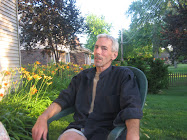
  Cifka said she is taking online classes with hopes of marketing the game.
  John Daniels inspired Goodwill Inn residents to create the game, and drew on his experience at the University of Detroit Mercy.  "I told them to get into their stories. 'What do you hear, what do feel, what do you smell, what do you see? Be there.' That's what I challenged them with. The degree to which they ran with it delighted and surprised me," Daniels said.
  Most heart-wrenching are the "question" cards they wrote. All begin with the assertion, "You are homeless." How do you interview for a job if you stink? What will you do with your dog? Where do you go to the bathroom?
  "These are tough questions they've had to answer themselves along the way," Daniels said. Street Outreach Coordinator Ryan Hannon of the Goodwill Inn said the game gives players some needed distance and objectivity.  "When I was in a math class, my teacher told me the best way to learn something is to teach it to someone else. The homeless person is teaching someone else to get out of homelessness," he said.
    Fred Schaafsma, a retired car executive who recently died, was so impressed he applied for a patent, Daniels said.
 

Saturday, January 12, 2013

Patti Page Has Died

Oh my.  I just saw the news.  She was one of Dad's (and Mom's, too) favorite singers.  She is an icon of a long-gone era, and the generation of which she was a part is fast dying now. I still remember hearing "How Much Is That Doggie In The Window" over and over and over again, on Mom's portable record player she kept in the living room where she would bop around in stocking feet on the linoleum floor with the aunties when they visited.   I was born in 1951 so it wouldn't have been a "hit" by the time I was old enough to remember it (about age 7) but it remained vastly popular years after it was a "hit."  Here is the beautiful Miss Patti Page (looks rather like Grace Kelly, I think), singing her big hit "The Tennesssee Waltz" in a clip from some (unknown) television show circa 1950:


Obituary at The New York Times:

Patti Page, Honey-Voiced ’50s Pop Sensation, Dies at 85

Ms. Page had briefly been a singer with Benny Goodman when she emerged at the end of the big band era, just after World War II, into a cultural atmosphere in which pop music was not expected to be challenging. Critics assailed her style as plastic, placid, bland and antiseptic, but those opinions were not shared by millions of record buyers. As Jon Pareles wrote in The New York Times in 1997, “For her fans, beauty and comfort were one and the same.”
      
“Doggie in the Window,” a perky 1952 novelty number written by Bob Merrill and Ingrid Reuterskiöld, featured repeated barking sounds and could claim no more sophisticated a lyric than “I must take a trip to California.” It is often cited as an example of what was wrong with pop music in the early ’50s, a perceived weakness that opened the door for rock ’n’ roll. But if that is true, and if the silky voice of “the singing rage, Miss Patti Page,” as she was introduced during her heyday, was mechanical or sterile, she had significant achievements nonetheless.
      
“Tennessee Waltz,” from 1950, sold 10 million copies and is largely considered the first true crossover hit; it spent months on the pop, country and rhythm-and-blues charts.
      
Ms. Page was believed to be the first singer to overdub herself, long before technology made that method common. Mitch Miller, a producer for Mercury Records, had her do it first on “Confess,” in 1948, when there were no backup singers because of a strike.
      
The height of her career predated the Grammy Awards, which were created in 1959, but she finally won her first and only Grammy in 1999 for “Live at Carnegie Hall,” a recording of a 1997 concert celebrating her 50th anniversary as a performer. Her career was also the basis of recent, short-lived Off Broadway musical, “Flipside: The Patti Page Story.”
In the early days of television Ms. Page hosted several brief network series, including “Scott Music Hall” (1952), a 15-minute NBC show that followed the evening news two nights a week, and “The Big Record,” which ran one season, 1957-58, on CBS. “The Patti Page Show” was an NBC summer fill-in series in 1956.
      
Ms. Page defended her demure, unpretentious style as appropriate for its time. “It was right after the war,” she told The Advocate of Baton Rouge, La., in 2002, “and people were waiting to just settle down and take a deep breath and relax.”
      
She was born Clara Ann Fowler on Nov. 8, 1927, in Claremore, Okla., a small town near Tulsa, one of 11 children of a railroad laborer.
      
Having shown talent as an artist, Clara took a job in the art department of the Tulsa radio station KTUL, but an executive there had heard her sing and soon asked her to take over a short country-music show called “Meet Patti Page” (Time magazine called it “a hillbilly affair”), sponsored by Page Milk. She adopted the fictional character’s name and kept it.
      
The newly named Ms. Page broke away from her radio career to tour with Jimmy Joy’s band and was shortly signed by Mercury Records. She had her first hit, “With My Eyes Wide Open, I’m Dreaming,” in 1950. Other notable recordings were “Cross Over the Bridge,” “Mockin’ Bird Hill,” “Allegheny Moon” and her last hit, “Hush ... Hush, Sweet Charlotte,” which she recorded as the theme for the Bette Davis movie of the same name. That song was nominated for an Oscar, and Ms. Page sang it on the 1965 Academy Awards telecast.
      
Ms. Page briefly pursued a movie career in her early 30s, playing an evangelical singer alongside Burt Lancaster and Jean Simmons in “Elmer Gantry” (1960), David Janssen’s love interest in the comic-strip-inspired “Dondi” (1961) and a suburban wife in the comedy “Boys’ Night Out” (1962), with Kim Novak and James Garner. She had one of her earliest acting roles in 1957 on an episode of “The United States Steel Hour.”
      
In later decades her star faded, but she continued to sing professionally throughout her 70s. Early in the 21st century she was performing in about 40 to 50 concerts a year. In 2002 and 2003 she released an album of children’s songs, a new “best of” collection and a Christmas album.
      
Ms. Page married Charles O’Curran, a Hollywood choreographer, in 1956. They divorced in 1972. In 1990 she married Jerry Filiciotto, a retired aerospace engineer, with whom she founded a New Hampshire company marketing maple syrup products. He died in 2009. Survivors include her son, Danny O’Curran; her daughter, Kathleen Ginn; and a number of grandchildren.
      
Ms. Page’s nice-girl image endured. In 1988, when she was 60, she told The Times: “I’m sure there are a lot of things I should have done differently. But I don’t think I’ve stepped on anyone along the way. If I have, I didn’t mean to.”
Related Posts Plugin for WordPress, Blogger...