Saturday, March 16, 2013

India: Rape Capital of the World?

Hola, darlings.  Well, you may have already read about another horrific gang rape that occurred in India, this time, of a married tourist.

Swiss tourist gang-raped in central India


NEW DELHI (AP) — Indian media are reporting that a Swiss tourist was gang-raped in the central state of Madhya Pradesh and that 13 men are being questioned.
 
Local police superintendent C. S. Solanki told the Press Trust of India that the woman and her husband had camped out for the night in a forest after bicycling from the temple town of Orchha on Friday when they were attacked by a group of eight men.

He said the couple were beaten and had their belongings stolen, and that the woman was gang-raped.
Solanki said police were questioning 13 men in connection with the attack.

India has seen outrage and protests against rape and attacks on women since the fatal gang-rape of a young woman in a moving bus in New Delhi in December.

*********************************************************

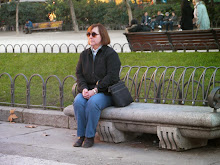
I was filled with horror reading this article this evening, and then I realized just what the photograph that accompanied the article was depicting!  At first glance I did not read the caption, I assumed it was one of the perpetrators of this horrible repugnant crime being led to a justice center for questioning.  But then, I read the caption and it made me sick to my stomach, literally.  I ran to the bathroom gagging and puked.  Yeah.  This sick sick sick SICK fucking society actually paraded the victim of a horrific crime in front of HORDES of males -- you can see them all around her.  And it sure looks to me like those Indian "police women" are pulling an unwilling victim to a "medical examination."  Just what will THAT entail, I wonder?  More males -- this time disguised as DOCTORS? 

Associated Press - A Swiss woman, center, who, according to police, was gang-raped by a group of eight men
 while touring by bicycle with her husband, is escorted by policewomen for a medical examination at a hospital in
Gwalior, in the central Indian state of Madhya Pradesh, Saturday, March 16, 2013. Thirteen men were detained
and questioned in connection with the attack, which occurred Friday night as the couple camped out in a forest
 after bicycling from the temple town of Orchha, local police officer R.K. Gurjar said. The men beat the couple
 and gang-raped the woman, he said. They also stole the couple's mobile phone, a laptop computer and
10,000 rupees ($185), Gurjar said. (AP Photo)

WTF is going on in this country?  How could they possibly be so clueless as to parade the victim, tugging her all the way, through a crowd of paparazzi and men?  Are the fucking CRAZY?  Don't they have vehicles in India that could whisk a victim to a hospital for the "examination?"  Why parade her through the fucking streets like this?  SICK SICK SICK SICK, PERVERTED SOCIETY.  I thought the USA (where I live) was bad, evil!  But let me tell you, darlings, I was wrong.

Friday, March 15, 2013

Was Jesus a Shape Shifter?

I wouldn't be surprised that Jesus was a shape-shifter, but I don't think Rome would be very happy to acknowledge such tales, as it would place Jesus Christ in a long line of predecessor and contemporaneous priestesses, priests and shamans (female and male) who could, reputedly, do the same.  What would make Jesus special then, hmmm, if pagan practitioners could do the same thing...  And yet canonical biblical accounts recount that, especially after his resurrection from the dead, that many of Jesus' closest followers, including Mary Magdalene, did not recognize him as Jesus until he spoke!  What's up with that?

From science.nbcnews.com

1,200-year-old Egyptian text describes a shape-shifting Jesus
March 12, 2013

By Owen JarusLiveScience
A newly deciphered Egyptian text, dating back almost 1,200 years, tells part of the crucifixion story of Jesus with apocryphal plot twists, some of which have never been seen before.

Written in the Coptic language, the ancient text tells of Pontius Pilate, the judge who authorized Jesus' crucifixion, having dinner with Jesus before his crucifixion and offering to sacrifice his own son in the place of Jesus. It also explains why Judas used a kiss, specifically, to betray Jesus — because Jesus had the ability to change shape, according to the text — and it puts the day of the arrest of Jesus on Tuesday evening rather than Thursday evening, something that contravenes the Easter timeline.

The discovery of the text doesn't mean these events happened, but rather that some people living at the time appear to have believed in them, said Roelof van den Broek of Utrecht University in the Netherlands, who published the translation in the book "Pseudo-Cyril of Jerusalem on the Life and the Passion of Christ" (Brill, 2013).

Copies of the text are found in two manuscripts, one in the Morgan Library and Museum in New York City and the other at the Museum of the University of Pennsylvania. Most of the translation comes from the New York text, because the relevant text in the Pennsylvania manuscript is mostly illegible.

PontiusPilate has dinner with JesusWhile apocryphal stories about Pilate are known from ancient times, van den Broek wrote in an email to LiveScience that he has never seen this one before, with Pilate offering to sacrifice his own son in the place of Jesus.

"Without further ado, Pilate prepared a table and he ate with Jesus on the fifth day of the week. And Jesus blessed Pilate and his whole house," reads part of the text in translation. Pilate later tells Jesus, "well then, behold, the night has come, rise and withdraw, and when the morning comes and they accuse me because of you, I shall give them the only son I have so that they can kill him in your place."

In the text, Jesus comforts him, saying, "Oh Pilate, you have been deemed worthy of a great grace because you have shown a good disposition to me." Jesus also showed Pilate that he can escape if he chose to. "Pilate, then, looked at Jesus and, behold, he became incorporeal: He did not see him for a long time ..." the text read.

Pilate and his wife both have visions that night that show an eagle (representing Jesus) being killed.
In the Coptic and Ethiopian churches, Pilate is regarded as a saint, which explains the sympathetic portrayal in the text, van den Broek writes.

The reason for Judas using a kissIn the canonical Bible ]not put together by "God" but by men], the apostle Judas betrays Jesus in exchange for money by using a kiss to identify him leading to Jesus' arrest. This apocryphal tale explains that the reason Judas used a kiss, specifically, is because Jesus had the ability to change shape.

"Then the Jews said to Judas: How shall we arrest him (Jesus), for he does not have a single shape but his appearance changes. Sometimes he is ruddy, sometimes he is white, sometimes he is red, sometimes he is wheat coloured, sometimes he is pallid like ascetics, sometimes he is a youth, sometimes an old man ..." This leads Judas to suggest using a kiss as a means to identify him. If Judas had given the arresters a description of Jesus he could have changed shape. By kissing Jesus, Judas tells the people exactly who he is.

This understanding of Judas' kiss goes way back. "This explanation of Judas' kiss is first found in Origen (a theologian who lived A.D. 185-254)," van den Broek writes. In his work "Contra Celsum," the ancient writer Origen stated that "to those who saw him (Jesus) he did not appear alike to all." [This mirrors one of the apostle's accounts of Jesus rising from the tomb, when Mary Magdalene, having gone to the tomb to annoint Jesus's body with herbs, found the tomb empty and, hysterical, ran from the tomb in tears, saw a "stranger" whom she did not recognize, and then he said Mary, do you not recognize me?  And it was only then that she did recognize him - as Jesus Christ.]

St. Cyril impersonationThe text is written in the name of St. Cyril of Jerusalem who lived during the fourth century. In the story Cyril tells the Easter story as part of a homily (a type of sermon). A number of texts in ancient times claim to be homilies by St. Cyril, and they were probably not given by the saint in real life, van den Broek explained in his book.

Near the beginning of the text, Cyril, or the person writing in his name, claims that a book has been found in Jerusalem showing the writings of the apostles on the life and crucifixion of Jesus. "Listen to me, oh my honored children, and let me tell you something of what we found written in the house of Mary ..." reads part of the text.

Again, it's unlikely that such a book was found in real life. Van den Broek said that a claim like this would have been used by the writer "to enhance the credibility of the peculiar views and uncanonical facts he is about to present by ascribing them to an apostolic source," adding that examples of this plot device can be found "frequently" in Coptic literature. [Well, I'm not so ready to dismiss that this book did not once exist, but was destroyed, and all memory but for a few whisps disappeared.]

Arrest on Tuesday
Van den Broek says that he is surprised that the writer of the text moved the date of Jesus' Last Supper, with the apostles, and arrest to Tuesday. In fact, in this text, Jesus' actual Last Supper appears to be with Pontius Pilate. In between his arrest and supper with Pilate, he is brought before Caiaphas and Herod. [So what? Pilate was not one of the TWELVE apostles, so what he did with Pilate doesn't count in the eyes of Roman Catholic tradition Christians.  Ask yourself why Coptic and Eastern tradition Christians believe differently. And whose tradition is closest to the truth, if indeed, there is any truth to be found in the canonical biblical narrative?]

In the canonical texts, the last supper and arrest of Jesus happens on Thursday evening, and present-day Christians mark this event with Maundy Thursday services. It "remains remarkable that Pseudo-Cyril relates the story of Jesus' arrest on Tuesday evening as if the canonical story about his arrest on Thursday evening (which was commemorated each year in the services of Holy Week) did not exist!" van den Broek wrote in the email.

A gift to a monastery ... and then to New YorkAbout 1,200 years ago the New York text was in the library of the Monastery of St. Michael in the Egyptian desert near present-day al-Hamuli in the western part of the Faiyum. The text says, in translation, that it was a gift from "archpriest Father Paul," who, "has provided for this book by his own labors."
The monastery appears to have ceased operations around the early 10th century, and the text was rediscovered in the spring of 1910. In December 1911, it was purchased, along with other texts, by American financier J.P. Morgan. His collections would later be given to the public and are part of the present-day Morgan Library and Museum in New York City. The manuscript is currently displayed as part of the museum's exhibition "Treasures from the Vault" running through May 5.

Who believed it? Van den Broek writes in the email that "in Egypt, the Bible had already become canonized in the fourth/fifthcentury, but apocryphal stories and books remained popular among the Egyptian Christians, especially among monks."

Whereas the people of the monastery would have believed the newly translated text, "in particular the more simple monks," he's not convinced that the writer of the text believed everything he was writing down, van den Broek said.

"I find it difficult to believe that he really did, but some details, for instance the meal with Jesus, he may have believed to have really happened," van den Broek writes. "The people of that time, even if they were well-educated, did not have a critical historical attitude. Miracles were quite possible, and why should an old story not be true?"

FIDE World Women's Team Chess Championship 2013

Hola darlings!  Here are the final standings. 

RankTeam12345678910MPPts.Res.SB.
1UKRAINE*3233241624½0136,25
2CHINA1*233341525½0118,00
3RUSSIA22*23413240104,75
4GEORGIA112*2331221½087,50
5INDIA12*232918062,25
6USA½½2*222815½063,00
7KAZAKHSTAN1112*23615½036,00
8ROMANIA21½1222*22614½047,25
9FRANCE0½½½22*412024,00
10TURKEY00112½*1907,25

Team USA, well, what can I say? Are there any bright new rising US chess femmes on the horizon who can compete with the Chinese, Russians and Ukranians?  Not any that want to play chess as adults, unfortunately.  They're going off to be doctors, researchers, lawyers, future CEOs, etc, etc.  That's where the SURE money is, and putting up with misogyny and MCPs (an old term from the 1970's, darlings, for those of you who weren't around back then, it's short for Male Chauvenist Pigs) and crushing the occasional male neck along the way is par for the course for the course in reaching BIG MONEY.  It's not available for women who play chess for a living and, we (females), being rational creatures generally, go into professions where we know we'll be able to support ourselves.  Playing chess ain't it, except for a very few chess femmes.

I am very happy, though, that someone other than China finished in first place, YAY! 

Sorry to be late with them.

Ancient Chinese Coin Found on Manda Island, Kenya

To quote Mr. Spock: Fascinating.  Now, I'm not sure exactly what this may mean; it could be evidence of ancient trade, but it doesn't necessarily mean that Admiral Zheng He or any of his vast armada actually landed on and/or traded with the natives of Manda when he was on his journey in the 1400s that eventually led to his circumnavigating the world  (well before any European did it); it could mean that someone with a penchant for old coins visited Manda at some time a hundred or more years after Zheng He came and went, and that someone might not necessarily have been Chinese.  Or perhaps the coin was a family piece, handed down on a sea-faring family from generation to generation, and some WWI or post-WWII visitor lost it (quel horreur!)  But when viewed as a whole along with other evidence of trade and contact between Africa and China, the discovery of this 600-some year old coin sure is interesting.

Public release date: 13-Mar-2013
Contact: Nancy O'Shea
media@fieldmuseum.org
312-665-7100
Field Museum

Ancient Chinese coin found on Kenyan island by Field Museum expedition

A joint expedition of scientists led by Chapurukha M. Kusimba of The Field Museum and Sloan R. Williams of the University of Illinois at Chicago has unearthed a 600-year-old Chinese coin on the Kenyan island of Manda that shows trade existed between China and east Africa decades before European explorers set sail and changed the map of the world.

The coin, a small disk of copper and silver with a square hole in the center so it could be worn on a belt, is called "Yongle Tongbao" and was issued by Emperor Yongle who reigned from 1403-1425AD during the Ming Dynasty. The emperor's name is written on the coin, making it easy to date. Emperor Yongle, who started construction of China's Forbidden City, was interested in political and trade missions to the lands that ring the Indian Ocean and sent Admiral Zheng He, also known as Cheng Ho, to explore those shores.

"Zheng He was, in many ways, the Christopher Columbus of China," said Dr. Kusimba, curator of African Anthropology at The Field Museum. "It's wonderful to have a coin that may ultimately prove he came to Kenya," he added.

Dr. Kusimba continued, "This finding is significant. We know Africa has always been connected to the rest of the world, but this coin opens a discussion about the relationship between China and Indian Ocean nations."

That relationship stopped soon after Emperor Yongle's death when later Chinese rulers banned foreign expeditions, allowing European explorers to dominate the Age of Discovery and expand their countries' empires.

The island of Manda, off the northern coast of Kenya, was home to an advanced civilization from about 200AD to 1430AD, when it was abandoned and never inhabited again. Trade played an important role in the development of Manda, and this coin may show trade's importance on the island dating back to much earlier than previously thought.

 "We hope this and future expeditions to Manda will play a crucial role in showing how market-based exchange and urban-centered political economies arise and how they can be studied through biological, linguistic, and historical methodologies," Dr. Kusimba said.

###
 
Other researchers who participated in the expedition to Manda include Dr. Janet Monge from the University of Pennsylvania, Mohammed Mchulla, staff scientist at Fort Jesus National Museums of Kenya and Dr. Amelia Hubbard from Wright State University. Also involved was Professor Tiequan Zhu of Sun Yat-Sen University, who identified the coin. The researchers also found human remains and other artifacts that predate the coin.

Photos available upon request.

***********************************************


I noted the description of the coin (photo from article at smithsonian.com) -- it had the square opening in the center, which I believe in ancient Chinese iconography represented the four "corners" of the square plane of the earth in its earliest representations, and also the four directions and the four winds, all contained within the circle of the coin, which represented the great expanse of the heavens encircling the Earth (whether the Earth was perceived as a flat plane or a sphere, or something in-between). 

So, did Zheng He imagine that he was traveling in a large circle around the outer-most edges of the plane of the Earth when he embarked on his travels, and if he veered too far off course his ship and those of his fleet would fall off the Earth?  That seems to fly in the face of China's very early discovery of the properties of magnetism and its early use by their navigators to point ships in a certain direction.  Indeed, herstory shows us that the Chinese, like the ancient Egyptians (pre-Muslim invasion), were not ones to throw out old knowledge and "dictum" when new knowledge and "dictum" came along.  They just kept using the same symbols and incorporated the old into new concepts with a gloss of new intepretation, blending all that came before and all that was known now into a (more or less) harmonious whole.  These were people who did not suffer from cognitive dissonance :) 

One final note, sometimes, it is very difficult to tell ancient Chinese gaming pieces from ancient Chinese coins, and I believe there have been instances where the two have been mistaken for each other. 

Some more coverage (lots of repeat articles out there!) on the discovery of this coin:

Science Daily, March 13, 2013
Smithsonian, March 15, 2013
The Chicago Tribune, March 14, 2013

Way to go, Gavin Menzies :)  It's only a matter of time, methinks, before his theory is accepted seriously by a majority of historians and archaeologists. 

Sunday, March 10, 2013

2013 FIDE Women's World Team Chess Championship

Hola darlings!

It's raining here today, but since we have a foot or more of snow on the ground, and the earth is still frozen, we are having flooding. Sigh.  Another typical March in southeastern Wisconsin.  My house is higher up, and my entire city block of homes is built on the crest of a hill that peaks here, so we are safe from flooding.  OHMYGODDESS!  It is raining very hard outside right now.

The FIDE Women's World Team Chess Championship is being held in Astana, Kazakhstan, between March 2 - 13, 2013. Here are the standings after Round 7:

RankTeam12345678910MPPts.Res.SB.
1UKRAINE*333241320082,75
2CHINA1*23331119067,75
3RUSSIA2*2341019½056,00
4INDIA1*2223915046,75
5GEORGIA1122*3816044,75
6USA½2½*22712044,75
7ROMANIA21½2*222511½031,00
8KAZAKHSTAN11122*3411½020,25
9FRANCE0½½½22*27011,75
10TURKEY0121*105,75

Team Composition.


Saturday, March 9, 2013

2013 U.S. Chess Championships

The U.S. and U.S. Women's Chess Championships (invitational) will be held once again in lovely St. Louis, Missouri at the Chess and Scholastic Center, May 2 - 13, 2013.

The fields have yet to be fully set, because most of the players are issued what have to be "conditional" invitations based on the USCF March, 2013 ratings lists!  But, we do know some of the invitees (scroll down toward bottom).

Now darlings, you probably understand if you've read here for any length of time that I give a hoot about men's chess in general, although I do have some favorites among male players.  It's the chess femmes I'm concerned about, and once again St. Louis proves that despite a generous prize fund of $65,000 for a field of 10 female players, the men get preferential treatment with a GUARANTEED prize fund of $180,000 for 24 male players -- cuz you can be sure no female player is going to show up in the top 24 list of overall U.S.  players.

Well, that just fricking sucks, but such is life in the 21st century for a female chessplayer in the United States of America, and in all other countries in the world today.  Sigh.  And we think of ourselves as soooo advanced in this country...

I found a link at the St. Louis Chess Club website that  thought would provide cogent information about the 2013 Championships (after all, it is the host!) but it wasn't working just a little while ago when I clicked on it - several times over the course of many minutes.  Kept getting 404 errors.  Hint:  Darlings, please do not put up a link to a non-existent story!!!

The info below in italics is from the USCF's website January 22, 2013 story by Mike Wilmering, read it in full

The 2012 [2013, not 2012] U.S. Women’s Championship will feature 10 players and a guaranteed prize fund of $65,000. Invitations for the 2012 [2013, not 2012] U.S. Women’s Championship are as follows:

(1) 2012 U.S. Women’s Champion: IM Irina Krush
(7) The seven remaining highest-rated players according to the March supplement: TBD
(2) Two wildcard invitations: TBD
Check www.uschesschamps.com for the latest updates, info about past U.S. Championships and news about the top players in the U.S.
 
Tsk, tsk.  The dating error (2012 versus 2013) was not made in respect of the Men's U.S. (Invitational) Chess Championship.  That just shows you how much the USCF and writers in general appreciate "women's chess" in this country. 
 
The comments posted AFTER the USCF article were much more informative than anything else I found (after a brief search) on the internet, including the website of the host of the 2013 U.S. Chess Championships.  It seems that Nakamura (current U.S. Male Chess Champion), is listed to play in one or possibly more (?) events overlapping the dates of the U.S. Chess Championship.  Really bad form, darling. 
 
February, 2013 ratings lists indicate that personal favorites Sam Shankland (he's cute) and GM Alex Lenderman (wonderful player and such heart) are probably going to be in relatively the same positions on the March, 2013 ratings list, and thus will receive invites.  Hope they play, just so I have two male players to root for!  Oh, I will also add GM Gata Kamsky, he has, as far as I know, always conducted himself with dignity and decorum, unlike some other male players...  And he's a damn good chess player, too. 
 
Working through this as I'm writng:  Interestingly, at US Chess Champs website at the present time (I mean, like right now - 12:46 p.m. Milwaukee time), the #1 player on the list of players is GM Gata Kamsky, not Nakamura. Shankland has received an invite but not, evidently, accepted it, and Lenderman isn't even mentioned.  WTF?  Has Nakamura become persona non grata with St. Louis money?  Hmmm.....
 
The USCF Women's Ratings List for February, 2013 -- you can assume that many of these players will receive invitations for the Championship.  But - I wonder - would Anjelina B. consider playing?  Ohmygoddess!  Would just love to see her in action!
 
Women's top players (Feb 2013 list):
1 Zatonskih, Anna (12873912) NY USA 2531
2 Krush, Irina (12543137) NY USA 2514
3 Abrahamyan, Tatev (12851435) CA USA 2433
4 Foisor, Sabina-Francesca (14012260) MD USA 2391
5 Baginskaite, Camilla (12716466) SD USA 2358
6 Ni, Viktorija (14449677) IL USA 2353
7 Goletiani, Rusudan (12807449) NY USA 2338
8 Belakovskaia, Anjelina (12559824) AZ USA 2334
9 Zenyuk, Iryna (12846035) PA USA 2330
10 Rohonyan, Katerina (12973020) WA USA 2317
11 Melekhina, Alisa (12726115) PA USA 2303
12 Kats, Alena (12980885) NY USA 2237
13 Grinfeld, Alla (12717614) NY USA 2234
14 Chiang, Sarah (13091081) TX USA 2223
 
A note:  Rohonyan (#10 on the list above), is the top-rated female player and at the present time, the #2 overall player registered to play in the 2013 Grand Pacif Open that will be held in beautiful Victoria, B.C. (Canada) over the Easter weekend.  Rooting for her to take the top money prize!  Goddesschess provides sponsorship for this event. 
 
And, according to U.S. Chess Champs website, female players in the 2013 U.S. Women's Chess Championship are:
 
Zatonskih - accepted (#1 rated)
Krush - accepted (Yes, she has class)
Abrahamyan - accepted
Sabina Foisor - accepted
Baginskaite - accepted (Yes! another personal favorite.  Day in and day out, this chess femme works with children and others to teach them chess, something I consider a very worthy and worthwhile calling)
V. Ni - accepted
Zenyuk - accepted (Iryna and Irena will once again be facing off, as they have done in several past U.S. Women's CCs)
Alena Kats - accepted (18 years old)
Sarah Chiang - invited (15 years old)
 
S. Chiang is #14 on the February 2013 USCF Top Women's Ratings List, so I guess Anjelina B. (#8 on February, 2013 Top U.S. Women's Ratings List) did not receive an invitation.  So, I will not get to see her play, after all.  Sigh. 
 
Okay, so if the 2013 U.S. Women's CC is featuring 10 players, according to the USCF article, who's the 10th player?  As you can see, U.S. Chess Champs website only lists 9 players (accepted and invited) -- so what gives?  Is that just another mistake?  What's it going to be - 10 players, or 9 players?
 
Let's hope the errors are corrected...
 

Human Ancestors Were Fashion Conscious

Article at Science Magazine online.

on 6 March 2013, 2:10 PM

The 2013 Academy Awards were, as always, as much about making appearances as about making films, as red carpet watchers noted fashion trends and faux pas. Both Jessica Chastain and Naomi Watts wore Armani, although fortunately not the same dress. And Best Supporting Actress Anne Hathaway switched from Valentino to a controversial pale pink Prada at the last minute because her original dress looked too much like someone else's. Of course, no actress would be caught dead wearing the same style 2 years in a row. A new study of ancient beaded jewelry from a South African cave finds that ancient humans were no different, avoiding outdated styles as early as 75,000 years ago.

Personal ornaments, often in the form of beads worn as necklaces or bracelets, are considered by archaeologists as a key sign of sophisticated symbolic behavior, communicating either membership in a group or individual identity. Such ornaments are ubiquitous in so-called Upper Paleolithic sites in Europe beginning about 40,000 years ago, where they were made from many different materials—animal and human teeth, bone and ivory, stone, and mollusk shells—and often varied widely among regions and sites.


Image above: Keeping up with fashions. A close examination of shell beads from Blombos Cave (top) suggests that ancient humans there started off with one style of jewelry (bottom) and then shifted to another (middle) over the course of 3000 years.  Credit: Marian Vanhaeren.

Even more ancient personal ornaments go back to at least 100,000 years ago in Africa and the Near East. But this earlier jewelry seems less variable and was nearly always made from mollusk shells. So some archaeologists have questioned whether these earlier ornaments played the same symbolic roles as the later ones, or even whether they were made by humans at all.

In a new study in press at the Journal of Human Evolution, a team led by archaeologist Marian Vanhaeren of the University of Bordeaux in France claims to have found evidence of a relatively sudden shift in the way that shell beads were strung. The beads were found at Blombos Cave in South Africa in archaeological layers dated between 75,000 and 72,000 years ago, during a time period marked by four distinct layers of artifacts called the Still Bay tradition. This tradition includes bone awls and sophisticated stone spear points and knives, as well as beads from jewelry: sixty-eight specimens of the southern African tick shell, Nassarius kraussianus, most found clustered together and thought to be part of individual necklaces or bracelets. All the shells are perforated with a single hole, and the team's microscopic studies—as well as experiments with shells of the same species collected near the site—have suggested that they were punctured with a finely tipped bone point.

To get an idea of how the shell beads were worn, Vanhaeren and her colleagues examined the wear (smoothing) around the perforations and on other parts of the shells. They then carried out additional experiments in which N. kraussianus shells were shaken together for many hours at a time and exposed to a diluted vinegar solution meant to mimic human sweat, among other tests, while strung together in various ways.

By stringing the shells themselves in various configurations, the team identified six possible ways that the beads could have been worn, including tying a knot around each shell, stringing them in a continuous row, braiding them with two strings at a time, and reversing the orientations of the shells to each other. Then, by analyzing the wear on the shells caused by these arrangements, Vanhaeren and colleagues determined just how the beads were strung. "In the lower [older] layers, the shells hang free on a string with their flat, shiny [sides] against each other," Vanhaeren says. But like all fashions, that one didn't last long: In the two upper, younger layers, "the shells are knotted together two by two, with their shiny side up" (see photos).

The team concludes that this is the earliest evidence of a shift in "social norms" or "customized style," a change that "parallels the many similar changes in symbolic norms observed among more recent and historically known human societies." It is not yet clear whether the earlier residents of Blombos changed their own fashion ideas, or if they were later replaced by another group of early humans who liked to wear their beads differently. Either way, the findings suggest that these beads, like jewelry today, served a fully symbolic function, the team concludes.

It's an "impressive in-depth study" filled with "fascinating detail," says Olaf Jöris, an archaeologist at the MONREPOS Archaeological Research Centre in Neuwied, Germany. Stanley Ambrose, an archaeologist at the University of Illinois, Urbana-Champaign, adds that the team's "basic
conclusions"—that there was a change in style, or at the very least a change in technique, during the Still Bay period—"seem sound." He adds that the shell beads come from a time when overall cultural innovation among early humans appears to have been speeding up, as evidenced by the short-lived nature of the Still Bay itself, which was soon replaced with other stone and bone tool styles.

But Jöris and some other archaeologists caution against drawing too many firm conclusions from the work. Randall White, an archaeologist at New York University in New York City, has questioned—on the basis of experiments that he and his students carried out—whether the perforations in the Blombos beads were actually made by humans. He suggests that the holes were the result of burial damage, trampling, or even erosion by acidic soils. Jöris says the researcher's assumption that the shell beads were strung as necklaces or bracelets could be wrong, because they did not consider the possibility that they were sewn onto clothing, a cultural style often found in the European Upper Paleolithic. That arrangement could have caused wear patterns that the team did not consider, he says.

"Stone Age" Skeletons Excavated in the Sahara

Compare the underlying assumptions in this story to the one in the previous post, about Poggio Civitate.

Stone-Age Skeletons Unearthed In Sahara Desert

Date: 07 March 2013 Time: 07:19 AM ET


Archaeologists have uncovered 20 Stone-Age skeletons in and around a rock shelter in Libya's Sahara desert, according to a new study.  The skeletons date between 8,000 and 4,200 years ago, meaning the burial place was used for millennia.

"It must have been a place of memory," said study co-author Mary Anne Tafuri, an archaeologist at the University of Cambridge. "People throughout time have kept it, and they have buried their people, over and over, generation after generation."

About 15 women and children were buried in the rock shelter, while five men and juveniles were buried under giant stone heaps called tumuli outside the shelter during a later period, when the region turned to desert.

The findings, which are detailed in the March issue of the Journal of Anthropological Archaeology, suggest the culture changed with the climate.

Millennia of burials
From about 8,000 to 6,000 years ago, the Sahara desert region, called Wadi Takarkori, was filled with scrubby vegetation and seasonal green patches. Stunning rock art depicts ancient herding animals, such as cows, which require much more water to graze than the current environment could support, Tafuri said.

Tafuri and her colleague Savino di Lernia began excavating the archaeological site between 2003 and 2006. At the same site, archaeologists also uncovered huts, animal bones and pots with traces of the earliest fermented dairy products in Africa.

To date the skeletons, Tafuri measured the remains for concentrations of isotopes, or molecules of the same element with different weights. The team concluded that the skeletons were buried over four millennia, with most of the remains in the rock shelter buried between 7,300 and 5,600 years ago.
The males and juveniles under the stone heaps were buried starting 4,500 years ago, when the region became more arid. Rock art confirms the dry up, as the cave paintings began to depict goats, which need much less water to graze than cows, Tafuri said.

The ancient people also grew up not far from the area where they were buried, based on a comparison of isotopes in tooth enamel, which forms early in childhood, with elements in the nearby environment.

Shift in culture?
The findings suggest the burial place was used for millennia by the same group of people. It also revealed a divided society.

"The exclusive use of the rock shelter for female and sub-adult burials points to a persistent division based on gender," wrote Marina Gallinaro, a researcher in African studies at Sapienza University of Rome, who was not involved in the study, in an email to LiveScience.

One possibility is that during the earlier period, women had a more critical role in the society, and families may have even traced their descent through the female line. But once the Sahara began its inexorable expansion into the region about 5,000 years ago, the culture shifted and men's prominence may have risen as a result, Gallinaro wrote.

The region as a whole is full of hundreds of sites yet to be excavated, said Luigi Boitani, a biologist at Sapienza University of Rome, who has worked on archaeological sites in the region but was not involved in the study.

"The area is an untapped treasure," Boitani said.

The new discovery also highlights the need to protect the fragile region, which has been closed to archaeologists since the revolution that ousted dictator Moammar el Gadhafi.

Takarkori is very close to the main road that leads from Libya into neighboring Niger, so rebels and other notorious political figures, such as Gadhafi's sons, have frequently passed through the area to escape the country, he said.

Debate Over Infants' Bones Continues

My comments are made after the article:

The discarded infants of ancient Poggio Civitate horrify, provoke and fascinate 2,500 years later
March 6, 2013

(Phys.org) —More than 2,500 years after tiny infant bones were scattered, perhaps offhandedly, amid animal remains on the floor of an Etruscan workshop, recently-discovered fragments of those bones are causing a stir far beyond Italy's Poggio Civitate Archaeological Project.

University of Massachusetts Amherst archaeologist Anthony Tuck recently told an Archaeological Institute America annual meeting in Seattle that the bones discovered in the ancient Etruscan town of Poggio Civitate were "simply either left on the floor of the workshop or ended up in an area with a heavy concentration of other discarded remains of butchered animals."

 It is an image that has, in ensuing weeks, resonated powerfully, if not always accurately, in the international press as everyone from religious fundamentalists to luridly invasive tabloids has scrambled to assemble narratives for the baby bones that might be either more or less appalling to modern sensibilities – narratives, notes Tuck, that tell us more about ourselves than they do about perinatal death in ancient Italy.

"Romans may have dumped remains of dead kids with their rubbish," screamed an Asian News International headline; "Grisly discoveries reveal unsympathetic attitudes," wrote a Daily Mail reporter. Other news outlets placed the excavated site on a timeline that might have associated it either with BCE cave dwellers or alternatively in the path of seventh century CE invaders.

 In fact, Poggio Civitate, notes Tuck, was located about 10 miles south of the Tuscan city of Siena, and was neither Roman nor primitive. It was inhabited from approximately 900 - 550 BCE, and is characterized by the remains of lavish aristocratic dwellings and highly stylized fine ceramics and carvings. Particularly significant, was the discovery of a workshop pavilion built in mid-seventh century BCE and measuring over 150 feet in length – "considerably longer," says Tuck, "than anything known in the contemporary Greek world" and decorated with opulent terracotta. While no kiln has been discovered, ceramics appear to have been produced there, along with other manufactured goods.

And then, beginning about two years ago came the discovery of human bones among the detritus, the arm bones and ilium of what appears to be several newborn or perinatal infants. "The fact is simply this," says Tuck. "We found elements of neo-natal human skeletons in refuse areas."

"One element of a human pelvis comes from an area with an exceptionally high concentration of butchered animal remains, suggesting that an infant corpse was thrown into an area already filled with discarded, decaying animal parts. Other portions of a skeleton were found resting directly on the floor of a workshop area and elements of a third child were found pushed or swept up against the interior wall of an aristocratic residence."

This is where Tuck and his team started to encounter pushback following January's AIA presentation in Seattle. How could Tuck so casually treat infant mortality, or, even worse, infanticide, asked some evangelicals? Why not just describe the bones and leave it at that, asked some paleoanthropologists? Couldn't the bones have been placed at the site as a result of some later catastrophe or disruption, asked a biological anthropologist? Wasn't this just another example of how nasty, brutish and short life was in the savage past, declared the tabloids? Let's not go blaming the Romans, demanded Roman archaeologists.

The bones themselves, says Tuck, limit the possible narratives. It remains highly likely that the bodies "were simply discarded within the debris associated with other bone and unused animal material." As in much of the ancient world, infants in Poggio Civitate – and especially the infants of slaves and workers – were not accorded the death rituals accorded to adults, and do not generally appear in cemetery plots.

"Troubling though it may be to modern sensibilities, it seems probable that a rigidly hierarchical social system at Poggio Civitate is reflected in the discarding of this infant's remains," Tuck told the Seattle gathering. "If workers there were slaves or even a free population drawn from elements of the community's lowest social orders, it is entirely possible that an infant born to a woman within that class group would not have merited even the limited ritual treatment reserved for perinatal deaths."

The only narrative that Tuck rejects categorically is the one that dismissively ascribes superiority to modern societies. We may be more like the Etruscans than we like to believe to disparate value to we attach to the lives of children. "Any modern discomfort at treatment of these infants at Poggio Civitate is a little misplaced," Tuck says. "What we should find more offensive to our modern sensibilities is really the profound manner in which societies maintain systems of caste and ranking that allow one group to effectively dehumanize another. This is exactly what happens when an infant's corpse is discarded in the trash – the child is treated in a manner that reflects the communities' perception of it as something other or less than fully a person.

"It's hard to argue that we don't place different cultural values on children's lives and assign greater or lesser value upon their deaths - for any number of subtle, nuanced and culturally complex reasons. We just don't like to admit it."
************************************************************
"One element of a human pelvis comes from an area with an exceptionally high concentration of butchered animal remains, suggesting that an infant corpse was thrown into an area already filled with discarded, decaying animal parts. Other portions of a skeleton were found resting directly on the floor of a workshop area and elements of a third child were found pushed or swept up against the interior wall of an aristocratic residence."

 So, the entire article discusses reasons why infant corpses may have been discarded, but scant attention is paid to WHERE THEY SHOWED UP.  Three infant remains amidst thousands of bones and refuse?  So perhaps, like today, some desperate girl or woman left a new-born baby to die.  Dumpsters are popular places in the United States, for instance, in disposing of an unwanted live child. 

We know it happens. But the question that should be asked is - why would the remains of a baby be found within the confines of the workshop itself?  Surely someone didn't just dump a baby's body there and it rotted away while people worked around it?  That is just too ridiculous a scenario to believe.  The same for the infant remains found "against the interior wall of an aristocratic residence."  And one day the mistress of the residence happens to stroll by on her way to a party and spies a half-rotted baby's corpse and says "sweep that out of the way, somebody please.  I just don't know what is wrong with the help around here these days, I have to tell them to do everything."  Yeah, right. 

Let's look at the underlying assumptions implicit in many of the statements quoted in the article.  Why does Tuck assume that finding the remains of three infants means there are many more?  That is the implication in everything he said, isn't it?  But that is a bad assumption to make based on the current evidence.  In a city area occupied for some 400 years, wouldn't one assume, instead, that if putting a baby's body into the garbage was a common practice there should be evidence of hundreds, maybe even thousands of such remains.  Where are they? 

Point of fact is, not a word was written about how long those bones may have been there.  The underlying assumption appears to be that the deposit of those infant bones was contemporaneous with occupancy of the city.  But do we know this for a fact?  What if the bones were deposited after the city ceased to be occupied but wasn't covered over by the centuries?  What if they are remains carried there and left by wild animals after the population moved to other areas, or remains of babies abandoned by the aforesaid desperate mothers who came from Sienna, gave birth, and then left the newborns to die in a "ghost" city?  Awful as that is, it certainly does not demonstrate the wholesale degree of callousness of the Etruscan residents of Poggio Civitate that Tuck and others are ascribing to them! 

People haven't changed throughout all of written history.  There have always been, and will always be, people who are kind, empathetic, and compassionate, there will always be concepts of justice and fairness, and there will always be those who lack that significant essence of what makes us a human being, and not a monster.  I will not call those people animals, because animals do not harbor our concepts of good and evil.  They act out of instinct and the drive to survive.  It is only humans who can be monsters. 

Tuck is right about the focus of the press and the religionists being skewed and misguided, those people expressing shock and horror over the bones of three infants found scattered amongst acres of ruins.  The truth is that all around the world today there are millions of children who would probably be better off dead, because at least when you're dead, you do not feel pain, you do not feel hunger, you do not feel despair, desperation, fear and hatred for the human beings around you who are supposed to be nurturing and guiding you to adulthood but instead ignore you like you do not exist or, even worse, abuse you.  Do an internet search for "street children."  Do an internet search for "infanticide."  Do an internet search for "foster child."  Do an internet search for "child sex slaves."  Hell, read the news in your local newspaper.

Wednesday, March 6, 2013

"Sun Stone" Recovered from 16th Century Wreck

This is fascinating.  I do not believe I've read about these "sun stones" before (or if I did, I don't remember!)  What a clever use for the discovery of the qualities of the stone.  I wonder who first discovered the stone's qualities, and put it to use?  And how long ago was it?  Did it spread from mariner to mariner?  Or was it simultaneously discovered in many sea-faring cultures?

ScienceShot: Sunstone Unearthed From Shipwreck

on 5 March 2013, 7:30 PM
 
In 1592, a British ship sank near the island of Alderney in the English Channel carrying an odd piece of cargo: a small, angular crystal. Though cloudy and scuffed up from 4 centuries at the bottom of the sea, its precise geometry and proximity to the ship's navigation equipment caught the eye of a diver exploring the wreckage. Once it was brought back to land, a few European scientists began to suspect the mysterious object might be a calcite crystal, which they believe Vikings and other European seafarers used to navigate before the introduction of the magnetic compass.


A previous study showed that calcite crystals reveal the patterns of polarized light around the sun and, therefore, could have been used to determine its position in the sky even on cloudy days. That led researchers to believe these crystals, which are commonly found in Iceland and other parts of Scandinavia, might have been the powerful "sunstones" referred to in Norse legends, but they had no archaeological evidence to support their hypothesis—until now. After subjecting it to a battery of mechanical and chemical tests, the team determined that the Alderman crystal is indeed a calcite and, therefore, could have been the ship's optical compass, they report online today in the Proceedings of the Royal Society A. Today, similar calcite crystals are used by astronomers to analyze the atmospheres of exoplanets—perhaps setting the stage for a whole new age of exploration.

*******************************************************

Whoa, wait a minute! This type of crystal was used for navigation before the introduction of the magnetic compass?  But wasn't that used by the ancient Chinese navigators centuries before - like in the 1200s? Wasn't it the Chinese, in fact, who first discovered the qualities of magnetism?  Or at the very least, the first culture to write about it in a comprehensive manner, and investigate the lodestone further?

Khufu's Pyramid Boat Threatened by - Raw Sewage

OOHMYGODDESS.  Egypt, oh Egypt.  What has happened to you?  What the hell is wrong with those Islamists who have taken over the country?  Can they not run ANYTHING except their stupid mouths?

Story at bikyanews.com

Breaking: Ancient Egypt “pyramid” boat threatened after sewage burst
Robert Gordon
Posted date: March 04, 2013
In: Culture, Egypt, Latest News


Khufu's Solar Barque
CAIRO: Egyptian antiquities officials have confirmed to Bikyanews.com that a pipe has burst inside the museum holding one of pyramid builder Khufu’s boat. The ancient boat has been restored and is a major pull for tourists heading to the Giza Pyramids.

Khufu is also the 4th dynasty King who erected the largest of the three pyramids, which has been named after him.

One official said late Monday night that the “sewage pipe in the building has exploded. We are looking into the situation and are not sure if any damage has happened.”

Activists and archaeologists have begun spreading the message on Twitter and other social media networks as they fear for the destruction of the ancient boat.


******************************************************************
 
"They're looking into the situation?"  What - can they not SMELL the situation?  OHMYGODDESS!  Holy Mother Hathor, if you are still listening to us silly humans after all this time, can you please do a little warpath dance on these dudes and wake them up?  Please!

Tuesday, March 5, 2013

2013 Grand Pacific Open

Hola darlings!

This is Goddesschess' third year providing sponsorship to the Grand Pacific Open.  It's coming up soon!  Begins March 29th - April 1st, 2013 at the beautiful Grand Pacific Hotel in Victoria, BC.

As of today, 78 players are pre-registered in the "Premier" and U-1800 Sections.  As noted in prior posts about the 2013 GPO, WGM Katerina Rohanyan is the highest-rated registered female player and right now, the second-highest rated registered player.  WFM Chouchanik Airapetian (USA 2088) is the second-highest rated pre-registered chess femme and #14 on the pre-registered list.  Would love to see two femmes in the top 10...  Just saying, darlings!  Chouchanik has played in U.S. Chess Chamionships (2005, 2008) - not exactly a stranger to high-stakes play. 
2088
Goddesschess' sponsorship includes prizes for the five best female player finishers:  $80, $70, $60, $50, $40, awarded in addition to any other prizes the players may win.

We're hoping for many more players and the highest-attendance yet GPO, and may the best chess femme win first place!  Woo woo!

Priceless Manuscripts Saved from Malian Islamists

Sadly, this is not the number one news story on front pages around the globe, although it fricking should be!

From link at Archaeology Magazine News

TIMBUKTU, MALI—German diplomats provided invaluable assistance with the rescue of more than 200,000 historic books and manuscripts from Timbuktu’s libraries before they could be destroyed by Islamist rebels. The most important documents were smuggled to safety in secure storage boxes, hidden with shipments of lettuce and fruit.

“Now we need to preserve them for posterity,” said Guido Westerwelle, Germany’s Foreign Minister. [Yes, we do.]

Germans helped to rescue ancient Islamic scripts
by: David Charter
From: The Times March 05, 2013 1:51PM

AN audacious rescue of hundreds of thousands of ancient handwritten books and manuscripts from Islamist rebels in Mali was made possible by secret help from German diplomats, it emerged yesterday.

Abdel Kader Haidara, the Malian academic who oversaw the operation to smuggle the documents to safety before rebels torched Timbuktu's libraries, relied on the Germans for expert help and funding. Embassy staff paid for numerous private car trips to ferry the 4000 most important manuscripts dating back to the 9th Century to safety in Bamako, the capital, concealed under cargos of lettuce and fruit.

Monday, March 4, 2013

Evidence of World's Oldest Horse Domestication?

This is absolutely fascinating.  Just like no life without wife (Bride and Prejudice), no chess without horse...


Desert finds challenge horse taming ideas


Related Posts Plugin for WordPress, Blogger...