Showing posts with label Bibi Nani. Show all posts
Showing posts with label Bibi Nani. Show all posts
Sunday, April 27, 2008
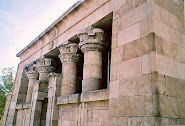
Temple of Cybele at Balchik
More Unique Findings Unearthed in Cybele Temple in Bulgaria's Balchik
23 April 2008, Wednesday
A total of four antique statues were unearthed in the temple of the Phrygian Goddess Cybele in Bulgaria's coastal town of Balchik on Wednesday.
The team of the archaeologists Igor Lazarenko, Elina Mircheva and Radostina Encheva discovered two Cybele's statues and two other, believed to be statues of Aphrodite and Dionysus.
During the excavation works, there have been found also two relieves and a limestone slab with a lion embossment.
The first finding in the temple, believed to be the biggest one in Bulgaria, was discovered at the end of April last year, when archaeologists found a 30-centimeter-long marble statue of Cybele.
"The statue has no head and part of the goddess' palm is also missing," the curator of the local museum Radostina Encheva said. It emerged that a column with a Latin inscription and an architectural element with bulls' heads were discovered on the same spot.
Among the other precious findings, discovered on the spot is a 50-centimeter-high Doric column with a well-preserved inscription addressed to the Roman emperor Valerius Licinianus Licinius. The temple's walls were at least 2.5 meters high, and the base of the building is huge, compared to other important buildings of the same age. A huge fire or a disastrous earthquake destroyed the temple, the archaeologists believe.
Originally a Phrygian goddess, Cybele was a deification of the Earth Mother who was worshiped in Anatolia from Neolithic times. Like Gaia (the "Earth") or her Minoan equivalent Rhea, Cybele embodies the fertile earth, a goddess of caverns and mountains, walls and fortresses, nature, wild animals. Her title "potnia theron", which is also associated with the Minoan Great Mother, alludes to her ancient Neolithic roots as "Mistress of the Animals".
She becomes a life-death-rebirth deity in connection with her consort, her son Attis.
***********************************************************************************
From Barbara Walker's "A Woman's Encyclopedia of Myths and Secrets."
Cybele
Great Mother of the Gods from Ida - Magna Mater Deum Idea - brought to Rome from Phrygia in 204 B.C. Her triumphal procession was "later glorified by marvelous legends, and the poets told of edifying miracles that had occurred during Cybele's voyage."(1)
Her holy aniconic image was carried to Rome by order of the Cumaean Sybil, a personification of the same cave-dwelling Goddess herself. As the Great Mother of all Asia Minor, she was worshipped especially on Mt. Ida, Mt. Sipylus, Cyzicus, Sardis, and Pessinus in Galatia.(2)
Her festivals were called ludi, "games."(3) A highlight of her worship was the Taurobolium, baptism in the blood of a sacred bull, who represented her dying-god consort, Attis. Her temle stood on the Vatican, where St. Peter's basilica stands today, up to the 4th century A.D. when Christians took it over.(4) She was one of the leading deities of Rome in the heyday of the mystery cults, along with Hecate and Demeter of Eleusis.(5)
Variations of Cybele's name - Kubaba, Kuba, Kube - have been linked with the Ka'aba stone at Mecca, a meteoric "cube" that bore the Goddess's symbol and was once known as the Old Woman.(6) Other names for Cybele assimilated her to every significant form of the Great Goddess. She was the Berecynthian Mother (genetrix Berecynthia). She was Rhea Lobrine, Goddess of sacred caves, known as her "marriage bowers."(7) She was called Augusta, the Great One; Alma, the Nourishing One; Sanctissima, the Most Holy One. Roman emperors like Augustus, Claudius, and Antoninus Pius regarded her as the supreme deity of the empire. Augustus established his home facing her temple, and looked upon his wife, the empress Livia Augusta, as an earthly incarnation of her.(8) The emperor Julian wrote an impassioned address to her:
Who is then the Mother of the gods? She is the source of the intellectual and creative gods, who in their turn guide the visible gods; she is both the mother and the spouse of the mighty Zeus; she came into being next to and together with the great crator; she is in control of every form of life, and the cause of all generation; she easily brings to perfection all things that are; she is the motherless maiden, enthroned at the side of Zeus, and in very truth is the Mother of all the Gods.(9)
Fathers of the Christian church vehemently disagreed. St. Augustine called Cybele a harlot mother, "the mother, not of the gods, but of the demons."(10)
One of her names, Antaea, made her the mythical mother of the earth-giant Antaeus, who was invincible as long as his feet remained in contact with his Mother's body, the earth. Heracles conquered him by holding him up in the air. Churchmen believed the powers of witches came from the same sort of contact with Mother Earth. Arresting officers often carried witches to prison in a large basket, so their feet would not touch the ground.(11)
There was a Christian sect founded in the 2nd century A.D. by Montanus (Mountain man), a priest of Cybele, who identified Attis with Christ. [Indeed, the similarities in the myths of both gods are compelling]. Montanus maintained that women were agents of the Goddess, and could preach and prophesy as well as men. This contradicted the orthodox Pauline sect, which followed St. Paul's rule that women must never speak publicly on holy subjects.(12) During the 4th century, Montanist Christianity was declared a heresy, and many of its adherents were slain. Some Montanists in Asia Minor were locked in their churches and burned alive.(13)
Notes:
(1) Cumont, O.R.R.P., 47.
(2) Encyc. Brit., "Great Mother of the Gods."
(3) James, 246.
(4) Clodd, 79; Frazer, G.B., 408.
(5) Angus, 143.
(6) Vermaseren, 22; Harding, 41.
(7) Gaster, 609.
(8) Vermaseren, 27, 53, 83, 85, 177-78.
(9) Vermaseren, 86-87.
(10) Vermaseren, 181.
(11) Robbins, 334; Lea unabridged, 814.
(12) Reinach, 278.
(13) Chamberlin, A.M., ch. 1.
Related: Bibi Nani (Cult of Nania).
Compare: Kubaba.


Sunday, January 27, 2008
The Cult of Nania
Or "Give Us Our Nana Back." Rashid suggests that Nania or Nana was imported into ancient Mesopotamia from the Indus civilization, where she was Eanna or Inanna and, to the Assyrians, Ishtar. Perhaps the "unnamed brother" who may be a water god (see article) is Enki, and not a brother at all.
From the Daily Times of Pakistan
January 25, 2008
Footloose: Bibi Nani —Salman Rashid
The cult of Nania, or Bibi Nani as we know her, is thus one of the oldest in the world: it has survived for over four thousand three hundred years. And so over the millenniums, caravans carrying trade and philosophy back and forth between Mesopotamia and the cities of the Sindhu Valley dispersed the name of this goddess across the countries
Below a road bridge across a usually dry stream at the bottom end of the Bolan Pass there is a simple grave thickly draped with the prescription green satin of a holy burial. An untidy scrawl on a nearby rock tells visitors that this is Bibi Nani — Venerated Old Lady. For some peculiar reason, Bibi Nani never made it to the stardom of sainthood and remains a rather obscure sort of figure: there are no yarns of the miracles she wrought or the heathens she converted to the true faith.
There is just one, rather insipid, tale, however. It was in the time of the Fire Worshippers that Bibi Nani and her brother (whose name remains unknown) came to this country to spread the word of Islam. But the kafir king would have none of that and he sent out his soldiers to bring in the pair in chains. As the holy brother and sister saw the kafir army bearing down, they fled. But at one point, despairing of ever getting away, they decided to split up. The soldiers chased the brother into the Bolan Pass and then when he was but a sword’s length from his pursuers, he calmly walked into the rock wall.
Since that day he has been called Pir Ghaib — the Invisible Saint. An ancient spring of copious, tepid and slightly sulphurous water is believed to mark the spot where the saint walked into solid rock. This outflow cascades over a rock wall richly festooned with brown, blue and green lichens and splashes into a limpid pool below. Ten kilometres southwest of Mach, this setting is what any film producer would die for. Muslims attribute the water to Pir Ghaib and the Hindus to Mahadev or Shiva. On holidays adherents of both faiths co-mingle to celebrate their own deities.
The nameless brother is celebrated because of the spring and has over time become a giver of sons. A tree outside the domed shrine near the spring is adorned with dozens of miniature cribs donated by parents whose prayers for sons were answered. Bibi Nani, buried under a road bridge some ten kilometres to the south of the spring, on the other hand, has no miracles attached to her. Nor indeed do we know how she died. Her tomb is simple and open to the sky. Only the sheets of green signify its importance.
Several hundred miles to the south, on the Balochistan seaboard, there is another shrine once again worshipped by Hindus and Muslims alike. For the former Sri Mata Hinglaj is where one part of goddess Durga is buried; for the latter, it is the last resting place of Bibi Nani. Like Pir Ghaib, Hinglaj too is one delightful little spot on a subsidiary stream of the Hingol River. Here too palm and mulberry trees grow and birds sing in an otherwise arid setting.
For the curious mind, there is no legend concerning Bibi Nani at either of the two places: she is simply the Venerated Lady. It is very interesting that both these Nani shrines lie athwart of ancient east-west highways connecting the subcontinent with Mesopotamia. One ran through Moen jo Daro and Mehrgarh, the other along the coast; the ancient precursor of the modern Coastal Highway. These were roads that we now know were in use as far back as the 9th millennium BCE.
For the learned mind, the identity of Bibi Nani is no enigma: she is Nana or Nania, the goddess worshipped in ancient Mesopotamia and Persia. Back in the year 2280 BCE, Kudur-Nankhundi, king of Elam (southwest Persia), sacked the city of Erech in the kingdom of Ur (Mesopotamia). Among other treasures the victor carried away from Erech to his capital city of Susa was the highly revered idol of the goddess Nania. This was duly installed in an Elamite temple and worshipped. Such was the esteem for Nania among the people of Mesopotamia that for no less than one thousand six hundred years successive Mesopotamian kings smarting under the humiliation of that defeat and theft, vainly sought the recovery of the idol.
It was only in the year 645 BCE that king Assurbanipal, taking advantage of the weakness of the Elamite kingdom, set out to right that ancient wrong. A bitter contest followed and after fourteen Elamite cities had been sacked, Susa fell to the Mesopotamians. The city was pillaged and trashed, but before that came to pass, the idol of Nania was preserved and restored to the temple of Erech.
The cult of Nania, or Bibi Nani as we know her, is thus one of the oldest in the world: it has survived for over four thousand three hundred years. And so over the millenniums, caravans carrying trade and philosophy back and forth between Mesopotamia and the cities of the Sindhu Valley dispersed the name of this goddess across the countries. The name persisted in human memory in our part of the world (albeit with a slight modification) while in the west it was confined only to cuneiform tablets. The question then is why it was not forgotten in the Sindhu Valley.
Mark Kenoyer, the renowned archaeologist who has worked on the Indus Civilisation tells us of the great traffic of trade, art, crafts and culture between our part of the world and Mesopotamia. And that the Sindhu Valley had some superior arts and culture to transfer to the west. I suspect that long before the king of Elam stole her statue from the temple at Erech, traders and craftsmen from the Sindhu Valley were carrying the cult of Nania westward to Mesopotamia.
She was favoured there, became deeply entrenched in their pantheon and around her an entire cult grew. Of the cult we know from the multitude of cuneiform tablets that have been discovered and deciphered. But in her own home, the written word has been so scant as to defy interpretation. I tend to believe that Nania was known by the same name in her original temples in the cities of the Sindhu Valley. Over time as the great cities crumbled and were smothered by dust and a new culture took over, Nania changed form. Her name nonetheless persisted in a tiny corner of the collective human memory. And so the goddess of the unknown name who was worshipped thousands of years ago on the banks of the Sindhu became Nania or Nana to the ancient Mesopotamians and Bibi Nani to modern Pakistanis.
As for Bibi Nani’s sibling whose name we do not know, he too seems to be an ancient deity worshipped for protecting sources of water. Eight thousand years ago, caravaners bound for Mesopotamia would have taken the six-kilometre detour off the Bolan Pass road to pay homage to this nameless saint at the spring that has never ceased to spew. Long afterwards the Hindus and then the Muslims appropriated the ancient god to call him Mahadev or Pir Ghaib.
Subscribe to:
Posts (Atom)