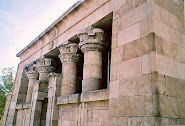
An appropriate article, given the talk that dondelion and I attended at the Met on May 13th about ancient Egyptian medical practices! (Photo: Taken at the Met on May 13, 2009, this was one of the stops during the lecture on ancient Egyptian medicine. The green and yellow jars on the right are shaped after the poppy plant and would have held medicinal drafts using poppy).
Story at toledoblade.com
Article published May 04, 2009
Scientists use chemistry to identify herbs in Egyptian medicines
By TOM AVRILPHILADELPHIA INQUIRER
PHILADELPHIA - Ancient Egypt was renowned for its prowess in the field of medicine, so much so that sick people went there from abroad in search of herbal remedies.
Archaeologists know that the herbs were administered in a potent blend with wine. But the identity of many of those medicinal additives is a mystery - their names recorded in hieroglyphics that have resisted modern efforts at translation.
Now, two University of Pennsylvania scientists have begun to crack the puzzle with chemistry.
In research published in April, the pair reported some of the earliest evidence of just what those long-ago physicians were prescribing.
One Egyptian clay jar, estimated to be more than 5,000 years old, yielded flaky residue that suggests a veritable apothecary of possible ingredients: coriander, senna, germander, balm, and savory, among others. Samples scraped from the inside of a newer jar, just 1,500 years old, yielded compounds that likely came from rosemary.
The research, done in collaboration with a chemist from the U.S. Treasury Department, is more than a quest for history. Senior author Patrick McGovern, an "archaeochemist" at Penn's Museum of Archaeology and Anthropology, wants to know if the ancient herbalists came up with anything that really works.
Researchers at Penn's Abramson Cancer Center are similarly intrigued, and already are studying herbs identified in some of Mr. McGovern's previous experiments. A derivative of the wormwood plant, found in a 3,200-year-old fermented beverage from China, has shown some promise against tumor cells in preliminary lab studies.
"I think people should be open-minded" about ancient remedies, said Wafik S. El-Deiry, a Penn professor of medicine, genetics, and pharmacology, "because there may be hidden treasures."
The Egyptians and Chinese of old weren't trying to use their herbs against cancer, as far as Mr. McGovern knows. But some of their medicines are used today for the same purposes as long ago.
One such example is fennel, to combat indigestion, said Lise Manniche, an assistant professor of Egyptology at the University of Copenhagen. The Penn study found no evidence of fennel, but it is among those plants whose names have been translated from the ancient texts.
Ms. Manniche said the new evidence, published in the online edition of Proceedings of the National Academy of Sciences, represented an ideal marriage of chemistry and archaeology.
"It's absolutely fascinating that such a small amount [of residue] can give us so much information," said Ms. Manniche, who was not involved with the study.
Both clay jars came from Egyptian tombs. The 1,500-year-old vessel is owned by the Royal Ontario Museum in Toronto; the one that dated back five millennia was excavated by German archaeologists from the tomb of ruler Scorpion I.
In both cases, the wine residue was scraped from the jars and simply sent to Mr. McGovern by mail.
The chemist can't say exactly which herbs were used in the wine. The analysis of the older jar revealed only that the residue contained certain "terpenoid compounds" - the presence of which could be explained by one or more herbs.
It is also unclear which diseases they might have been used for.
Egyptian physicians recorded diseases and their treatments in hieroglyphics on papyrus documents that have survived to this day. But with many of the remedies, modern scholars know only that they consisted of some sort of plant - signified by a picture of a leaf at the end of the name, Ms. Manniche said.
Mr. McGovern's co-authors were Penn research associate Gretchen Hall and Armen Mirzoian, a senior chemist at the Treasury Department's Alcohol and Tobacco Tax and Trade Bureau.
Here is the link to the article at the PNAS website. For general information about ancient Egyptian medical practices, see Medicine in Ancient Egypt.
An appropriate article, given the talk that dondelion and I attended at the Met on May 13th about ancient Egyptian medical practices! (Photo: Taken at the Met on May 13, 2009, this was one of the stops during the lecture on ancient Egyptian medicine. The green and yellow jars on the right are shaped after the poppy plant and would have held medicinal drafts using poppy).
Story at toledoblade.com
Article published May 04, 2009
Scientists use chemistry to identify herbs in Egyptian medicines
By TOM AVRILPHILADELPHIA INQUIRER
PHILADELPHIA - Ancient Egypt was renowned for its prowess in the field of medicine, so much so that sick people went there from abroad in search of herbal remedies.
Archaeologists know that the herbs were administered in a potent blend with wine. But the identity of many of those medicinal additives is a mystery - their names recorded in hieroglyphics that have resisted modern efforts at translation.
Now, two University of Pennsylvania scientists have begun to crack the puzzle with chemistry.
In research published in April, the pair reported some of the earliest evidence of just what those long-ago physicians were prescribing.
One Egyptian clay jar, estimated to be more than 5,000 years old, yielded flaky residue that suggests a veritable apothecary of possible ingredients: coriander, senna, germander, balm, and savory, among others. Samples scraped from the inside of a newer jar, just 1,500 years old, yielded compounds that likely came from rosemary.
The research, done in collaboration with a chemist from the U.S. Treasury Department, is more than a quest for history. Senior author Patrick McGovern, an "archaeochemist" at Penn's Museum of Archaeology and Anthropology, wants to know if the ancient herbalists came up with anything that really works.
Researchers at Penn's Abramson Cancer Center are similarly intrigued, and already are studying herbs identified in some of Mr. McGovern's previous experiments. A derivative of the wormwood plant, found in a 3,200-year-old fermented beverage from China, has shown some promise against tumor cells in preliminary lab studies.
"I think people should be open-minded" about ancient remedies, said Wafik S. El-Deiry, a Penn professor of medicine, genetics, and pharmacology, "because there may be hidden treasures."
The Egyptians and Chinese of old weren't trying to use their herbs against cancer, as far as Mr. McGovern knows. But some of their medicines are used today for the same purposes as long ago.
One such example is fennel, to combat indigestion, said Lise Manniche, an assistant professor of Egyptology at the University of Copenhagen. The Penn study found no evidence of fennel, but it is among those plants whose names have been translated from the ancient texts.
Ms. Manniche said the new evidence, published in the online edition of Proceedings of the National Academy of Sciences, represented an ideal marriage of chemistry and archaeology.
"It's absolutely fascinating that such a small amount [of residue] can give us so much information," said Ms. Manniche, who was not involved with the study.
Both clay jars came from Egyptian tombs. The 1,500-year-old vessel is owned by the Royal Ontario Museum in Toronto; the one that dated back five millennia was excavated by German archaeologists from the tomb of ruler Scorpion I.
In both cases, the wine residue was scraped from the jars and simply sent to Mr. McGovern by mail.
The chemist can't say exactly which herbs were used in the wine. The analysis of the older jar revealed only that the residue contained certain "terpenoid compounds" - the presence of which could be explained by one or more herbs.
It is also unclear which diseases they might have been used for.
Egyptian physicians recorded diseases and their treatments in hieroglyphics on papyrus documents that have survived to this day. But with many of the remedies, modern scholars know only that they consisted of some sort of plant - signified by a picture of a leaf at the end of the name, Ms. Manniche said.
Mr. McGovern's co-authors were Penn research associate Gretchen Hall and Armen Mirzoian, a senior chemist at the Treasury Department's Alcohol and Tobacco Tax and Trade Bureau.
Here is the link to the article at the PNAS website. For general information about ancient Egyptian medical practices, see Medicine in Ancient Egypt.
Showing posts with label Egyptian medicine. Show all posts
Showing posts with label Egyptian medicine. Show all posts
Friday, May 22, 2009
Analyzing Herbs in Egyptian Medicine
An appropriate article, given the talk that dondelion and I attended at the Met on May 13th about ancient Egyptian medical practices! (Photo: Taken at the Met on May 13, 2009, this was one of the stops during the lecture on ancient Egyptian medicine. The green and yellow jars on the right are shaped after the poppy plant and would have held medicinal drafts using poppy).
Story at toledoblade.com
Article published May 04, 2009
Scientists use chemistry to identify herbs in Egyptian medicines
By TOM AVRILPHILADELPHIA INQUIRER
PHILADELPHIA - Ancient Egypt was renowned for its prowess in the field of medicine, so much so that sick people went there from abroad in search of herbal remedies.
Archaeologists know that the herbs were administered in a potent blend with wine. But the identity of many of those medicinal additives is a mystery - their names recorded in hieroglyphics that have resisted modern efforts at translation.
Now, two University of Pennsylvania scientists have begun to crack the puzzle with chemistry.
In research published in April, the pair reported some of the earliest evidence of just what those long-ago physicians were prescribing.
One Egyptian clay jar, estimated to be more than 5,000 years old, yielded flaky residue that suggests a veritable apothecary of possible ingredients: coriander, senna, germander, balm, and savory, among others. Samples scraped from the inside of a newer jar, just 1,500 years old, yielded compounds that likely came from rosemary.
The research, done in collaboration with a chemist from the U.S. Treasury Department, is more than a quest for history. Senior author Patrick McGovern, an "archaeochemist" at Penn's Museum of Archaeology and Anthropology, wants to know if the ancient herbalists came up with anything that really works.
Researchers at Penn's Abramson Cancer Center are similarly intrigued, and already are studying herbs identified in some of Mr. McGovern's previous experiments. A derivative of the wormwood plant, found in a 3,200-year-old fermented beverage from China, has shown some promise against tumor cells in preliminary lab studies.
"I think people should be open-minded" about ancient remedies, said Wafik S. El-Deiry, a Penn professor of medicine, genetics, and pharmacology, "because there may be hidden treasures."
The Egyptians and Chinese of old weren't trying to use their herbs against cancer, as far as Mr. McGovern knows. But some of their medicines are used today for the same purposes as long ago.
One such example is fennel, to combat indigestion, said Lise Manniche, an assistant professor of Egyptology at the University of Copenhagen. The Penn study found no evidence of fennel, but it is among those plants whose names have been translated from the ancient texts.
Ms. Manniche said the new evidence, published in the online edition of Proceedings of the National Academy of Sciences, represented an ideal marriage of chemistry and archaeology.
"It's absolutely fascinating that such a small amount [of residue] can give us so much information," said Ms. Manniche, who was not involved with the study.
Both clay jars came from Egyptian tombs. The 1,500-year-old vessel is owned by the Royal Ontario Museum in Toronto; the one that dated back five millennia was excavated by German archaeologists from the tomb of ruler Scorpion I.
In both cases, the wine residue was scraped from the jars and simply sent to Mr. McGovern by mail.
The chemist can't say exactly which herbs were used in the wine. The analysis of the older jar revealed only that the residue contained certain "terpenoid compounds" - the presence of which could be explained by one or more herbs.
It is also unclear which diseases they might have been used for.
Egyptian physicians recorded diseases and their treatments in hieroglyphics on papyrus documents that have survived to this day. But with many of the remedies, modern scholars know only that they consisted of some sort of plant - signified by a picture of a leaf at the end of the name, Ms. Manniche said.
Mr. McGovern's co-authors were Penn research associate Gretchen Hall and Armen Mirzoian, a senior chemist at the Treasury Department's Alcohol and Tobacco Tax and Trade Bureau.
Here is the link to the article at the PNAS website. For general information about ancient Egyptian medical practices, see Medicine in Ancient Egypt.


Thursday, May 14, 2009
New York Adventures 2
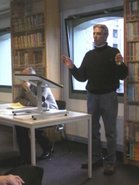
 Yesterday we spent the entire day at the Met. (The Great Hall at the Met, shot from the balcony overlooking the main entrance) There was a walking tour with lecture on ancient Egyptian medicine that dondelion and I wanted to do at 10:00 a.m. We arrived about 10 minutes before the start and were the first ones waiting in the gathering area for the group. Dr. David Minninberg of the staff was to give the presentation. There was an older gentleman standing in the same area and dondelion, who never listens to a word I say, asked him if this was the place to wait for the Egyptian tour, and the gentleman said yes, it was.
It seemed that we three were going to be the only ones on the tour. I had a sneaking suspicion that the older gentleman was, in fact, Dr. Minninberg, but I didn't mention this to Mr. Don, who would not have listened to me anyway. But, about 1 minute before the tour was to start, several other people showed up. In all, I'd say there were perhaps 10 of us. About 1 minute after 10, the older gentleman stepped forward and introduced himself - he was Dr. Minninberg - and he escorted us across the great hall into the Egyptian wing. The tour was underway.
Yesterday we spent the entire day at the Met. (The Great Hall at the Met, shot from the balcony overlooking the main entrance) There was a walking tour with lecture on ancient Egyptian medicine that dondelion and I wanted to do at 10:00 a.m. We arrived about 10 minutes before the start and were the first ones waiting in the gathering area for the group. Dr. David Minninberg of the staff was to give the presentation. There was an older gentleman standing in the same area and dondelion, who never listens to a word I say, asked him if this was the place to wait for the Egyptian tour, and the gentleman said yes, it was.
It seemed that we three were going to be the only ones on the tour. I had a sneaking suspicion that the older gentleman was, in fact, Dr. Minninberg, but I didn't mention this to Mr. Don, who would not have listened to me anyway. But, about 1 minute before the tour was to start, several other people showed up. In all, I'd say there were perhaps 10 of us. About 1 minute after 10, the older gentleman stepped forward and introduced himself - he was Dr. Minninberg - and he escorted us across the great hall into the Egyptian wing. The tour was underway.
 It was a fascinating hour. The group being small, we were all able to ask questions and our guide was entertaining as well as informative. I learned quite a bit I did not know before about ancient Egyptians and their practice of medicine, both practi cal and what we would call magic, and it was fascinating. (The yellow and green vases are shaped like pommegranites and were used for a special elixir made out of the seeds) The time flew by. Afterward Don and I stayed behind and had a chance to ask Dr. Minninberg a few more questions, and spoke with him for about another 15 minutes. Then I pulled Mr. Don away (he could talk about Egypt 24/7) and steered him back toward the rest of the Egyptian Wing, where we happily spent time until about 2:30 when we ran outside for a quick lunch break (New York hot dogs from one of the street vendors) and were entertained by a very talented street singer.
We were back inside by 3 p.m., where we took in the exhibits of second floor balcony area that include Islamic art and artifacts from all along the Silk Road. Mr. Don took 115 photos yesterday - I don't remember how many I snapped. Mr. Don stayed on his feet longer than I did so he had more. I finally could not stand up another second more and I went back to the great hall, hoping to find a seat, while Mr. Don finished taking his photos. I was luck to snag a corner seat on one of the large high-backed benches, and was able to rest for about 15 minutes with my head back, eyes closed, ignoring the din around me, until Mr. Don reappeared at my side.
It was a fascinating hour. The group being small, we were all able to ask questions and our guide was entertaining as well as informative. I learned quite a bit I did not know before about ancient Egyptians and their practice of medicine, both practi cal and what we would call magic, and it was fascinating. (The yellow and green vases are shaped like pommegranites and were used for a special elixir made out of the seeds) The time flew by. Afterward Don and I stayed behind and had a chance to ask Dr. Minninberg a few more questions, and spoke with him for about another 15 minutes. Then I pulled Mr. Don away (he could talk about Egypt 24/7) and steered him back toward the rest of the Egyptian Wing, where we happily spent time until about 2:30 when we ran outside for a quick lunch break (New York hot dogs from one of the street vendors) and were entertained by a very talented street singer.
We were back inside by 3 p.m., where we took in the exhibits of second floor balcony area that include Islamic art and artifacts from all along the Silk Road. Mr. Don took 115 photos yesterday - I don't remember how many I snapped. Mr. Don stayed on his feet longer than I did so he had more. I finally could not stand up another second more and I went back to the great hall, hoping to find a seat, while Mr. Don finished taking his photos. I was luck to snag a corner seat on one of the large high-backed benches, and was able to rest for about 15 minutes with my head back, eyes closed, ignoring the din around me, until Mr. Don reappeared at my side.
 As usual, the walk back to the hotel did not seem as long as the walk to the museum that morning. It was only 4 miles round trip plus all the walking we did inside, but to me it felt like 40 miles! (Our feet - Mr. Don's are the long skinny ones, mine are the short fat ones) We got back to the hotel about 5:30 where we both promptly collapsed on the sofa; but I later ventured forth for food, located a grocery store and got some goodies, a drug store where I picked up a few items and stopped at McDonalds. We spent the rest of the evening watching t.v. I was too tired to do anything else. Goddess, that Big Mac sure tasted good! I haven't had one in a long time.
I noticed last night that I got sunburnt on the "v" of my neckline, and my face was definitely pink! So much for the supposed sunscreen protection in my face cream and makeup!
When we get back home I'll put up lots of the photos we took at Goddesschess.
As usual, the walk back to the hotel did not seem as long as the walk to the museum that morning. It was only 4 miles round trip plus all the walking we did inside, but to me it felt like 40 miles! (Our feet - Mr. Don's are the long skinny ones, mine are the short fat ones) We got back to the hotel about 5:30 where we both promptly collapsed on the sofa; but I later ventured forth for food, located a grocery store and got some goodies, a drug store where I picked up a few items and stopped at McDonalds. We spent the rest of the evening watching t.v. I was too tired to do anything else. Goddess, that Big Mac sure tasted good! I haven't had one in a long time.
I noticed last night that I got sunburnt on the "v" of my neckline, and my face was definitely pink! So much for the supposed sunscreen protection in my face cream and makeup!
When we get back home I'll put up lots of the photos we took at Goddesschess.
Subscribe to:
Posts (Atom)