Showing posts with label Goddess Car. Show all posts

Monday, May 30, 2011

Goddess Demeter - in the Christian Form

We've seen this in other cases of ancient goddesses (particularly) incorporated into the Christian pantheon (although Church Fathers would never describe it that way!) as "saints."

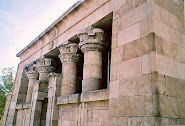
Fragment of "Demeter" stolen from Eleusis in 1801 CE, now residing in the
Fitzwilliam Museum, Cambridge University, England.  According to the
Fitzwilliam, this is not a bust of Demeter, per se, but part of a pair of colums
that flanked the entrance into the sanctum sanctorium of Demeter's Temple at Eleusis.
 It supposedly represents one of the daughters of Appius Claudius Pulcher, the
Roman consul who dedicated the gateway that they supported, between 54 and 48 BC."
 From Barbara G. Walker, The Woman's Encyclopedia of Myths and Secrets

Demetra, Saint [not to be confused with Saint Demetria]
[This is the entry directly under Demeter, the Goddess]

As was the rule with other manifestations of the Great Goddess, there was an attempt to Christianize Demeter by making a saint of her.  Though the church refused to canonize "St. Demetra" officially, yet she remained a great favorite of the people, who told miracle-tales abou her and prayed to her as fervently as if she were a certified member of the canon.

The classic myth of Kore-Persephone and Demeter was retold as a popular fairy tale centering on St. Demetra.  The saint's daughter {Kore} was kidnapped by "a wicked Turkish wizard" {Hades} and locked up in a tower.  A young hero rescued her, but perished miserably, chopped in pieces by the wizard and hung from the tower's walls "between heaven and earth."  Guided by a stork {her ancient toemic bird of  birth}, St. Demetra arrived on the scene, reassembled the hero, and brought him back to life.(1)  Several elements of this story were repeated in the Germanic fairy tale of Rapunzel.

A masculinized version of Demeter - or perhaps one of her Demetreroi - was accepted into the canon as a "St. Demetrius," of no known date, and no real biograpny.  His legend, established in the late Middle Ages, made him a warrior saint like the equally mythical St. George.  The basic story was invented to publicize his healing relics preserved at Salonika.(2)

Notes:
(1)  Lawson, 80-84.
(2)  Attwater, 102.
   *****************************************************************

The Cabinet of Curiosities has further information and historical background to fill in the legend of Saint Demetra.  It recalled to my mind something I knew but had forgot - that the Turks (Muslims) in the form of the Ottoman Empire ruled Greece from the 15th century CE until 1821 CE!  The updating of the legend of Demeter and Kore/Persephone was thus updated very late, indeed, to satisfy the mandates of the Greek Christian Orthodox Church.  Wink, wink. 

I found Lawson (see Note 1 from Walker, above) online at Google booksModern Greek Folkore and Ancient Greek Religion: A Study in Survivals, 1909.  John Cuthbert Lawson.  You can read the entire updated tale that has the "Turkish" villain/kidnapper/ravisher of Kore/Persephone there.

According to the Cabinet of Curiosities, the tower-like structure on this maiden's head is called a cista and it may have held sacred artifacts used in the Eleusinian rights.  That may be correct, but I think it could also be a representation of the "tower" that the "archaic" Goddess Kar wore on her head.  Kar was an important Goddess in "walled cities" such as Carthage and was, like Demeter, a primal Mother Goddess. Kar - was a manifestation of walled fortifications that the earliest "cities" used to protect themselves against raids and unwanted visitors, and the custom was copied down through the ages - indeed, into cities built in the Dark and Middle Ages in Europe.  The "Old City" of Jerusalem is just one example of a city using Kar's walled fortifications.  Many cities today still survive with this remnant of the Goddess' name of "KAR" or "CAR" in their names.   

Sunday, April 4, 2010

Car, Oh Car, Forgotten by These Infidels...

I find a few things about this article interesting, including the absence of any references to the origins of the word "kar" or "car" referring to the ancient Moon Goddess Herself who, I believe, was once worshipped most fervently in this area of Anatolia.  Well, read it for yourself and come to your own conclusions:

From Al-Ahram Weekly
Published in Cairo by AL-AHRAM established in 1875
1 - 7 April, 2010
Issue No. 992

In the footsteps of the Bronze Men
Nevine El-Aref finds out who the Bronze Men were, and how they helped boost Egypt's power to reunite the country 2,700 years ago

When Herodotus toured the known world during the fifth century BC to compile his international history, he did not forget his hometown Caria, now Bodrum in Turkey.

Caria (the name means "the steep country") stood in the western part of Anatolia, whose coast, according to the ancient world map, stretched from mid-Ionia to Lycia and east to Phrygia. Mountains and valleys were the main features of the country's scenery, and it was poor in agriculture in comparison with its counterparts at the time: Egypt and Babylonia. Its hilltops were fortified, while villages were scattered in valleys and it was hard to find a city of any size. There was thus little similarity between the inhabitants, the Carians, as each village had its own version of the Phoenician alphabet, its own customs and tradition. The only thing in common among all Carians was their religion. One of the ritual centres was Mylasa, where their supreme deity the Carian Zeus. They also had other deities such as Hecate, the goddess responsible for, among other things, magic and road crossings.

The first mention in history of Caria and its inhabitants was in the cuneiform texts of the Old Assyrian and Hittite Empires, who called the area Karkissa. History forgot about it for almost four centuries until the second citation by the legendary Greek poet Homer in his catalogue of ships.

The Carian language belonged to the Hittite-Luwian subfamily of Indo-European languages, and was related to Lycian and Lydian. Those who lived in the west of the country spoke a language closer to Greek.

According to Herodotus the inhabitants of Miletus spoke Greek with a Carian accent, which implies that during the dark ages, between about 1200 and 800 BC, the Greeks settled on the coast of Caria. Herodotus himself was a good example of the close ties between the Carians and Greeks: his father is called Lyxes, which is the Greek rendition of a good Carian name, Lukhsu.

Because of the hard and poor nature of Caria's land, Carians, like many other mountain people at the time, hired themselves out as mercenaries and military specialists. According to Herodotus, the Greeks were indebted to the Carians for three military inventions: making shields with handles; putting devices on shields; and fitting crests on helmets. Because of this last invention, the Persians called the Carians "cocks".

What, however, was the relationship between the Carians and the Egyptians? And how did they help Egypt?

Turkish archaeologist Canan Kèçèkeren, who has devoted herself to following the tracks of the Carians, the original inhabitants of her hometown of Bodrum, says that the Carians were working for the Egyptian army mainly during the 26th Dynasty and were known the most loyal of soldiers to the Pharaohs. Ancient Egyptian sources described them as "the bronze men who came from the sea".

Kèçèkeren told Al-Ahram Weekly that they were living in Egypt between the eighth and fourth centuries BC and evidently felt at home there, as they settled first in the eastern Delta northeast of Bubastis before spreading to other parts of the Nile Valley.

"My project is to follow up their footsteps along the Nile and document in detail the remains of their cultural heritage," Kèçèkeren says, adding that: "I am sure that if I have a chance of realising my project in a good way, this will establish a cultural bridge between Caria's capital Bodrum and Egypt with the help of archaeology."

From Herodotus, who was also a Carian citizen, we learn that Carians made their appearance as mercenaries in Egypt in the seventh century BC when they teamed up with Ionians to help Psammetik I assume power as founder of the 26th (Saite) Dynasty.

Kèçèkeren relates that Psammetik I visited an oracle where he was told that one day the "bronze men" would come from the sea and would help him. This vision became true and the Carians, who were pirates and wore metal suits of armour, came from the sea, and he opened his heart to them and took them into his army and reunited Egypt, which at that time was divided into 12 parts. Later Pharaoh Amasis, one of Psammetik's descendants, recruited his bodyguard from among the Carians, whom he resettled in Memphis; one of this city's quarters bore the name Caricon, while its inhabitants were called Caromemphites.

Several texts written in the Carian language have survived and been found in the Memphite cemetery near modern Saqqara, where Caromemphites were buried. Carians were also attached to the campaign of Psammetik II, and Carian soldiers who immortalized their names at Abu Simbel Temple participated in the invasion of Nubia.

When the Persian king Cambyses invaded Egypt in 525 BC, the Carian contingents were still there, serving Psammetik II. According to Herodotus, they sacrificed children before they went into battle against the invaders. They managed to switch sides, however. (They were not the only ones: even the commander of the Egyptian navy, Wedjahor-Resne, deserted his king.) In Egyptian sources from the Persian age we still find Carians, now serving a new lord. One of the latest examples is an Aramaic papyrus from a date equivalent to 12 January, 411 BC. Seven years later the Egyptians became independent again; this time, the Carians were unable to switch sides, and it appears that the collaborators were found out and dismissed. ["Dismissed?"  What does this mean, exactly?]

Kèçèkeren told the Weekly that the largest number of inscriptions in the Carian language was in the form of graffiti written by mercenaries on rocks, temples and tombs, mostly in Egypt and Sudan. More than 300 inscriptions in Carian have been found, with about 200 of them located in Egypt, namely in Memphis, Sais, Buto, north Saqqara, Luxor, Elephantine Island, Abu Simbel, Silsilis, Buhen, Gebel Al-Sheikh Suleiman and Khartoum.

"It is interesting that more were found abroad than in their homeland," Kèçèkeren says. "My aim is to visit these settlements for documentation and photographs [of the inscriptions]. I have already visited some of the towns or places like Luxor, Edfu, Kom Ombo, Tel Aswan and Abu Simbel, and I have found some graffiti written in the Carian language on the knee of Pharaoh Ramses II's colossus at Abu Simbel Temple.'" She explained that the Tomb of Maussolus, which gave rise to the word "mausoleum", was the best known of Carian buildings and one of the seven wonders of the ancient world. Sadly, it no longer exists.

Her purpose is to contribute to a study that will add new dimensions and promote the Carian civilisation, as well as ensuring the Carians' place on the upper level in culture. "I also hopes that this will establish a cultural bridge and a platform between the Carian capital, Bodrum, and Egypt with the help of archaeology, as they share the same Mediterranean Sea and have a long, shared and friendly past," she said.

Kèçèkeren has been greatly encouraged by her friends and colleagues in Egypt. "They have supported my project and helped me in every way," she said.

Tuesday, April 15, 2008

Goddess Tanit

From Barbara Walker's "A Woman's Encyclopedia of Myths and Secrets."

Tanit
Carthaginian name of the Phoenician Great Goddess, Astarte - the biblical Ashtoreth or Asherah. Her temple in Carthage was called the Shrine of the Heavenly Virgin. Greek and Roman writers called it a temple of the moon.(1)

Another of her titles was Astroarche, Queen of the Stars. Her priestesses were famous astrologers, whose prophecies were circulated throughout the Roman empire and even rivaled the pronouncements of the Cumaean sybils.(2)

Though Romans destroyed Carthage in the Punic Wars, Roman legend traced the very origin of Rome to the Carthanginian mother-city, as shown by the story of Aeneas, who came directly across the Mediterranean from there, to found Rome.(3) The primitive Roman queen Tanaquil, who conferred sovereignty on the "fatherless" Latin kings, the Tarquins, was none other than the Lybyan Goddess Tanit. She was also known as Libera, Goddess of Libya, whose festival the Liberalia was celebrated each year in Rome during the Ides of March.(4) An alternative name for the festival was Bacchanalis, dramatizing the love-death and resurrection of Bacchus Liber, or Dionysus, or Consus, which were various names for the same fertility god.(5)

The distinctive symbol of Tanit was a pyramidal shape, like a woman in a very full skirt, topped by a dis-shaped full-moon head, with upraised arms in the manner of the Egyptian ka.(6) Similar smbols represented such goddesses as Aphrodite, Athene, Venus, and Juno.

Notes:
(1) Reinach, 42.
(2) Lindsay, O.A., 327.
(3) Reinach, 106.
(4) G.R. Scott, 165.
(5) Graves, W.G., 399.
(6) Larousse, 84.
****************************************************************************************
Some personal observations: Tanit is on the order of the "Hannah/Anna" goddesses, great mother goddesses, previously posted about - I've got to get some kind of search engine installed at this blog! Think of the ka shape as a referee's arms signalling "touchdown!" That's the form.

Was Car the goddess of Carthage - that is, the same as the goddess Tanit?
Related Posts Plugin for WordPress, Blogger...