In Alaska, a Frenchman Fights to Revive the Eyak's Dead Tongue
Natives Take Dialect Lessons From Guillaume Leduey; Blurting Out 'Keełtaak'
August 10, 2010
By JIM CARLTON
CORDOVA, Alaska—Mona Curry recently stared teary-eyed at a film of her late mother speaking in the native-Alaskan language of Eyak at a tribal ceremony. Then she turned to a 21-year-old Frenchman for translation.
"She said that it's beautiful," Guillaume Leduey explained without hesitation. "It's a pleasure to be here. Thank you God."
Mr. Leduey, a college student from Le Havre, France, has made it his mission to bring the Eyak tongue back from extinction. Eyak tribe membership once numbered in the hundreds in south central Alaska, then dwindled over the past two centuries as other tribes and Western settlement encroached.
Ms. Curry's mother, Marie Smith Jones, was considered by Alaska historians the last native Eyak speaker when she died in 2008. Her descendants and others didn't become fluent in the language because of a stigma around speaking anything other than English in Alaska's native villages.
 |
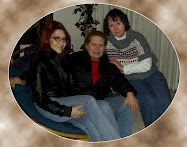
| Photo: Jim Carlton. Guillaume Leduey (center) gives an Eyak lesson to Dune Lankard (left) and Mona Curry. |
Versed in French, English, German, Chinese and Georgian, and able to sing at least one song in Lithuanian, Mr. Leduey says he can't fully explain why he took on the defunct tongue. "It's like I have an inner voice that tells me I have to do that," he says.
More than a thousand years ago, the Eyaks are believed to have settled in Alaska's interior before migrating to the coast, hunting and fishing along the way, historians say. They passed down their language through storytelling. While as many as 20 native dialects remain in Alaska, Mr. Krauss says Eyak is considered extinct because there are no fluent, native speakers.
Mr. Leduey's preservation quest is littered with linguistic stumbling blocks. Eyak bears little similarity to English or the Russian spoken by some Alaskan natives. Sounds for letters often are uttered from the back of the mouth, rather than the middle as with European languages. Eyak's vowels followed by an "n" are nasalized, while the "m" sound rarely is used. It wasn't until academics began studying it that the language was formally put in writing.
There are no obscenities. "If you want to insult someone, you call them a 'nik'da'luw,'" Mr. Leduey says, using the Eyak expression for "big nose," which means nosy. And there are a number of one-word sentences. "If you want to say, 'I'll kill you," it is 'ige'xsheh,'" he says.
To understand more about Eyaks, Mr. Leduey also learned to cook salmon in the ground, a native tradition. On an overcast day here last month, he dug a shallow pit in the front yard of Eyak descendant Pam Smith, a niece of Ms. Jones's. He tended a crackling fire to roast two red salmon, each wrapped in giant skunk cabbage leaves. After 90 minutes, the fish were warm but still raw, so Ms. Smith threw them into an oven.
Mr. Leduey's Eyak odyssey began at age 12, when he happened on the language while trolling through an online dictionary of languages in his hometown of Le Havre. By searching more online, he discovered Eyak appeared to have only one native speaker, Ms. Jones.
"I was like, 'Wow, one speaker left. I must do something to learn the language'," Mr. Leduey says. His parents were less than thrilled. "They don't think it's useful," he says.
With little online material on Eyak, Mr. Leduey obtained one of Mr. Krauss's texts on the subject, and turned to Laura Bliss Spaan, a filmmaker in Anchorage, Alaska, who directed a documentary about Ms. Jones. Ms. Spaan sent Mr. Leduey the film and some more of Mr. Krauss's Eyak texts.
In April 2009, Mr. Leduey showed off his Eyak skills to Ms. Spaan while she was visiting France. "We were outside one of the most beautiful cathedrals in Paris and Guillaume showed me some graffiti of an octopus," she says. "He instantly told me three different ways to say 'octopus,'" which is "tsaaleexoquh" in Eyak.
Earlier this year, Ms. Spaan suggested Mr. Leduey visit Mr. Krauss in Fairbanks, Alaska, where he teaches. After Mr. Leduey's June arrival, Mr. Krauss cloistered him in a room for up to five hours a day to pore over Eyak documents. To break the monotony, Mr. Leduey sang songs in Eyak to Scamper, the professor's Norwich Terrier.
Mr. Leduey also traveled to Cordova, where the Eyaks made their last stand against being swallowed up by civilization. Cordova boasts Eyak Corp., a legal entity for native groups in Alaska, with about 400 members. Membership is dominated by rival Tlingits, who helped take over the Eyak territory, along with white settlers, says Dune Lankard, one of about 50 in the corporation with Eyak blood. Bits of the language remain alive even though its fluent, native speakers have died.
"There are people talking like they're Eyaks but they're not Eyaks," says Mr. Lankard, a commercial fisherman.
In Cordova last month, some part-Eyaks showed Mr. Leduey a demolished village site and took him to a natural attraction called Child's Glacier, where a harbor seal leapt out of the icy water. "Keełtaak," Mr. Leduey blurted out, using the Eyak word for the animal.
Later stopping to inspect a roadside sign about Eyaks, Mr. Leduey caught a barely perceptible error. The sign uses the Eyak word "saqehl" for people who go by boat; Mr. Leduey said it should be "saqehł," with a bar through the "l."
About 10 to 15 people have shown interest in Eyak lessons, he says. Mr. Leduey recently huddled at a kitchen table with Mr. Lankard, 50, and Ms. Curry, 53, for a lesson. "Adate'ya," Mr. Leduey said for "silver salmon." Mr. Lankard struggled with the guttural sound. "I can't even say that," he says.
Despite the early stigma about their language, "it feels right to learn now," Ms. Curry says. "This will help keep my mom's memory and spirit alive."