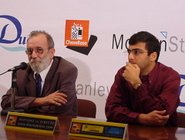
I remember a few months back when 'Sis first mentioned to me the possibility that Fischer's body might be exhumed I told her it was an April Fool's joke perpetrated by chess gadfly Sam Sloan and dismissed it.
Just goes to show - 'Sis knows all.
For those who do not follow the game of chess, Robert James Fischer is American's greatest chess hero. He became the only American in the modern era of chess to become the World Chess Championship, by defeating Russian opponent Boris Spassky (or is that Spaasky?) in 1972 in a World Chess Championship match held over the course of weeks in Raikjevik, Iceland. I'm tired and I'm not checking my spelling, hope you can figure out the correct versions of the names. Fischer was probably already half insane back then, but by 1975 he was totally over the bend and for various reasons decided not to defend his title. The Russians promptly reclaimed the title by default when Fischer did not appear for the scheduled match, and it went to GM Anatoly Karpov, who held it until he was, in turn, defeated in a match by GM Garry Kasparov, a Russian by citizenship but a renegade at heart.
Anyway, to make a long story short, Fischer died in 2008 while living in Iceland. His heirs were (1) a Japanese woman who says she is Fischer's wife (2) a young girl purported to be Fischer's daughter of a woman of Philippine descent and (3) the two sons from the legitimate marriage of Fischer's older sister, who predeceased him. Oh, and I believe the U.S. Government is claiming probably all of the money in whatever Fischer's actual estate is value wise, for back taxes, plus penalties, plus interest -- long story. For those of you interested in more back-story, just google Bobby Fischer and the 1992 Yugoslavia 're-match' against Boris Spassky (or Spaasky).
Hocus pocus beanie focus, etc. etc. The Icelandic version of the U.S. Supreme Court has come down with a ruling that says the parties may have Fischer's body exhumed to extract DNA for testing to determine paternity of the alleged Filippina daughter.
I don't understand why they couldn't have just tested DNA in items that survived Fischer's death. Surely Fischer left some personal articles after he died that had sufficient DNA of his for testing. I mean, come on - a comb, a hairbrush, or a toothbrush? For that matter, what about scraping for skin flakes from his bed sheets? What about his used underwear? He died wearing something, after all. Come on, folks. We have the tchnology to "grab" that DNA today.
So what is with this exhumation baloney? Is this just a grab for publicity by a bankrupt country? It sounds pretty stinky-cheesy to me.
Best headline about the whole brou-ha ha: Body of chess champion Bobby Fischer to be exhumed to check if he mated. From Daily Grail, Daily News Scan, posted by Turner Young, June 18, 2010.
Saturday, June 19, 2010


Friday, June 18, 2010
Friday Night Miscellany
Hola darlings! I haven't done one of these in a long time - and I'm dodging thunderstorms right now - I've got a clear spot but I don't know how long; the weather radar looks ominous!
A real mixed bag of items this evening:
This is interesting. If these findings hold up to scrutiny (and I'm sure there will be intense scrutiny because there are a lot of vested interests at stake), this new evidence that helps in pin-pointing the dates for ancient Egyptian dynasties is block-buster news in the world of archaeology. From Science Daily:
Constraining the Reign of Ancient Egypt: Radiocarbon Dating Helps to Nail Down the Chronology of Kings, Researchers Say
ScienceDaily (June 18, 2010) — For several thousands of years, ancient Egypt dominated the Mediterranean world -- and scholars across the globe have spent more than a century trying to document the reigns of the various rulers of Egypt's Old, Middle and New Kingdoms. Now, a detailed radiocarbon analysis of short-lived plant remains from the region is providing scientists with a long and accurate chronology of ancient Egyptian dynasties that agrees with most previous estimates but also imposes some historic revisions.
From politifi.com: GA Sen. Isakson apologizes for 'unwashed' remark
Source: Atlanta Journal-Constitution
Amid rising heat over recent comments in which he referred to voters as the "unwashed," Sen. Johnny Isakson issued an apology Thursday, saying he meant no harm.
"It was a poor choice of words," Isakson said in a statement Thursday. "I didn't mean anything derogatory by it, and I sincerely apologize."
The apology came two days after Isakson, an incumbent who's up for re-election, made an off-the-cuff remark about a speech that Republican Senate candidate Sharron Angle of Nevada gave to him and other Republican senators on Capitol Hill.
"It wasn't the kind of speech you would give to the unwashed back home," Isakson said of Angle's talk. His comments first appeared on a Fox News Web site. "She was talking to her colleagues." . . .
Yeah, right, Mr. Senator Incredibly Stupid Jerk! We really believe you.
Taming the Night Mare
Posted by Greg at 12:30, 18 Jun 2010
by Ryan Hurd
Personally, I don't think being visited by a "uistache" (various spellings) - Night Mare also known as a Water Horse in the old Celtic legends - is meant to be a terror-inducing experience. But because we are not familiar with the ancient symbolism, we don't know what the hell is happening and we fall back on half-remembered whisperings from childhood about demons and such. If we have no frame of reference within which we can interpret an experience, yeah, it may very well be terror-inducing! In psychological terms, a visit from a uistache is simply receiving a visit from our unconscious mind. Unfortunately, in today's western societies, this is terra incognita!
It's our loss; for the most part, we've lost the ability to appreciate chess as a meeting of those seen-and-unseen worlds meeting on a neutral plane of existence, where the elements of each reality can interact and play with each other freely, without pre-conception or constraint.
A real mixed bag of items this evening:
This is interesting. If these findings hold up to scrutiny (and I'm sure there will be intense scrutiny because there are a lot of vested interests at stake), this new evidence that helps in pin-pointing the dates for ancient Egyptian dynasties is block-buster news in the world of archaeology. From Science Daily:
Constraining the Reign of Ancient Egypt: Radiocarbon Dating Helps to Nail Down the Chronology of Kings, Researchers Say
ScienceDaily (June 18, 2010) — For several thousands of years, ancient Egypt dominated the Mediterranean world -- and scholars across the globe have spent more than a century trying to document the reigns of the various rulers of Egypt's Old, Middle and New Kingdoms. Now, a detailed radiocarbon analysis of short-lived plant remains from the region is providing scientists with a long and accurate chronology of ancient Egyptian dynasties that agrees with most previous estimates but also imposes some historic revisions.
*************************************************************
I haven't written much about idiot politicians - that's not our primary focus despite their giving us constant fodder! But geez - I literally spit out a mouthful of coffee earlier today at the office while perusing The Wall Street Journal (I actually read it, darlings!) when I came across an article about a politician who called his constituents "unwashed" as in "the great unwashed masses...". LOL! Found plenty of commentary about this story this evening. Here is one report:From politifi.com: GA Sen. Isakson apologizes for 'unwashed' remark
Source: Atlanta Journal-Constitution
Amid rising heat over recent comments in which he referred to voters as the "unwashed," Sen. Johnny Isakson issued an apology Thursday, saying he meant no harm.
"It was a poor choice of words," Isakson said in a statement Thursday. "I didn't mean anything derogatory by it, and I sincerely apologize."
The apology came two days after Isakson, an incumbent who's up for re-election, made an off-the-cuff remark about a speech that Republican Senate candidate Sharron Angle of Nevada gave to him and other Republican senators on Capitol Hill.
"It wasn't the kind of speech you would give to the unwashed back home," Isakson said of Angle's talk. His comments first appeared on a Fox News Web site. "She was talking to her colleagues." . . .
Yeah, right, Mr. Senator Incredibly Stupid Jerk! We really believe you.
***********************************************************
From the Daily Grail, here's a sort of over-view of what psychologists call "sleep paralysis" and other people (mostly NOT psychologists) call lots of other things, and it's pretty good:Taming the Night Mare
Posted by Greg at 12:30, 18 Jun 2010
by Ryan Hurd
Personally, I don't think being visited by a "uistache" (various spellings) - Night Mare also known as a Water Horse in the old Celtic legends - is meant to be a terror-inducing experience. But because we are not familiar with the ancient symbolism, we don't know what the hell is happening and we fall back on half-remembered whisperings from childhood about demons and such. If we have no frame of reference within which we can interpret an experience, yeah, it may very well be terror-inducing! In psychological terms, a visit from a uistache is simply receiving a visit from our unconscious mind. Unfortunately, in today's western societies, this is terra incognita!
It's our loss; for the most part, we've lost the ability to appreciate chess as a meeting of those seen-and-unseen worlds meeting on a neutral plane of existence, where the elements of each reality can interact and play with each other freely, without pre-conception or constraint.
Exhumed Bones Confirmed to Be Queen Eadgyth
From BBC News:
14:04 GMT, Friday, 18 June 2010 15:04 UK
German cathedral bones 'are Saxon queen Eadgyth'
Scientists have revealed that they think bones found in a German cathedral are those of one of the earliest members of the English royal family.
 The remains of Queen Eadgyth, who died in 946, were excavated in Magdeburg Cathedral in 2008.
The granddaughter of Alfred the Great, King of Wessex, the Saxon princess married Otto I, Holy Roman Emperor, in 929.
The findings were presented at the University of Bristol on Thursday. A spokesman from the university said the bones were the oldest surviving remains of an English royal burial.
As the half sister of Athelstan, who is considered to have been the first king of all of England, Eadgyth had at least two children with Otto and lived most of her married life in Magdeburg, in what is now the state of Saxony-Anhalt. She died aged about 36.
She was buried in the monastery of St Maurice but her bones were moved at least three times. She was finally interred in an elaborate tomb at Magdeburg Cathedral in 1510, wrapped in silk in a lead coffin.
A study of the bones at the University of Mainz confirmed that the remains were those of a woman who died aged between 30 and 40.
Professor Kurt Alt found evidence that she was a frequent horse rider and ate a high-protein diet, including a lot of fish, hinting at her high status.
Director of the project Professor Harald Meller, of Germany's State Office for Heritage Management and Archaeology, said: "Medieval bones were moved frequently and often mixed up, so it required some exceptional science to prove that they are indeed those of Eadgyth.
"It is incredible that we have been able to do this using the most recent analytical techniques."
Banished to a monastery
Crucial evidence came from the study of teeth in Eadgyth's upper jaw.
Researchers at the University of Bristol's Department of Archaeology and the Institute of Anthropology at Mainz University studied strontium and oxygen isotopes that mineralise in the teeth when they form. Dr Alistair Pike, from the University of Bristol, explained: "By micro-sampling, using a laser, we can reconstruct the sequence of a person's whereabouts, month by month up to the age of 14."
They found the isotope results exactly matched records of Eadgyth's childhood and adolescence in Wessex.
Professor Mark Horton said: "Eadgyth seems to have spent the first eight years of her life in southern England, but changed her domicile frequently, matching quite variable strontium ratios in her teeth. Only from the age of nine, the isotope values remain constant.
"Eadgyth must have moved around the kingdom following her father, King Edward the Elder, during his reign.
"When her mother was divorced in 919 - Eadgyth was between nine and 10 at that point - both were banished to a monastery, maybe Winchester or Wilton in Salisbury."
Her bones will be reburied in Magdeburg Cathedral later this year, 500 years after they were interred there in 1510.
Prior stories from early 2010:
Tomb of the Saxon Queen: Discovered, Alfred's granddaughter
By David Derbyshire
Last updated at 10:13 AM on 21st January 2010
Unearthed: the remains of England's first princess
By Tom Clarke
Updated on 20 January 2010
Bristol University professor has a bone to pick with Saxon queen
Wednesday February 10, 2010
It must have been a lonely journey, as the two young sisters travelled through the night leaving behind the land they called home, knowing they would never return.
The year is AD929, and Eadgyth and Eadgifu, two Saxon princesses – the granddaughters of Alfred The Great, and daughters of Edward the Elder – have been sent away from the Wessex kingdom of their childhood, which is now ruled by their powerful half-brother King Athelstan.
In the kind of ruthless diplomatic move that would give him a place in the history books as the first true king of all England, Athelstan has sent his half-sisters to Germany in the hope that Otto, Duke of Saxony, will choose one to be his wife.
As a future king of the Germans and Holy Roman Emperor, Otto is destined to be one of the key figures in European royalty.
After careful consideration Otto chooses the 19-year-old Eadgyth (pronounced Edith), leaving her sister to travel on to the Alps to successfully woo her way into another European royal family – most likely, the French.
But for Eadgyth it is the start of her new life in Saxony, where she will go on to provide Otto with two heirs before her death in AD946 at the age of 36 – certain in the knowledge that she would never again see her native Wessex.
But now, more than a thousand years on, the Saxon queen is to make a return to the land of her birth.
Archaeologists in Germany recently opened a 16th century tomb in Magdesburg Cathedral and found a plaque inside claiming that the bones at rest there were those of Queen Eadgyth.
Experts have confirmed the skeleton is that of a woman in her 30s, but next week parts of the skeleton will be brought to Bristol University for expert analysis.
The head of the university's Department of Archaeology and Anthropology, Professor Mark Horton, will lead the project to try to identify the remains as those of Eadgyth.
I catch up with Mark – who is known to millions as a TV presenter on programmes such as Coast and Time Team – as he busily prepares the dusty archaeology laboratory for a royal visitor.
"This is one of the most exciting historical discoveries in recent years," he says. "After all, if this is Eadgyth, these will be the oldest bones of an English royal – given that she was the half-sister of the first king of all England.
"Athelstan himself has a tomb at Malmesbury, but it is believed to have been emptied during the Dissolution of the Monasteries.
"But even without Henry VIII's drastic reforms, royal relics tended to be moved around a lot in the Middle Ages anyway.
"But it's wonderful to bring Eadgyth back to Bristol – which would have been on the edge of the kingdom of Wessex that we believe she would have known from her childhood."
Specifically it will be a sample of her teeth and a leg bone that will be borrowed from Eadgyth's tomb and transported across Europe to the Bristol lab,
Mark and his team have been tasked with analysing the samples to try to pinpoint the place of upbringing of the mystery skeleton.
"If we can prove that this person grew up in Wessex rather than in Saxony, then we stand a good chance of it being Eadgyth," Mark says. "But it might be that when this tomb was built in 1510, nobody knew where Eadgyth's actual bones where, so they simply used the skeleton of another 30-something woman from the city.
"DNA testing wouldn't get us anywhere, because we don't know what Eadgyth's DNA would have been anyway," he says, as he rearranges countless boxes of human remains to clear a space on the central table.
"What we need to do is to carry out isotope testing using a technique called laser ablation on the enamel of the teeth and bones.
"The isotopes that build up in your teeth around your early teenage years leave telltale traces of the geology of your local area, because the minerals in drinking water differ. The geology here in south-west England is very different from the geology over in eastern Germany, so it would give a very clear indication that these truly are the remains of a woman who may have been raised in Wessex and later moved to Saxony. "
Mark says there is more to the project than correctly identifying the body in the tomb as Eadgyth.
"The other great benefit of this sort of study is that it inspires people to learn more about history," he says. "If you like, we're illuminating a little corner of the Dark Ages.
"When you're being taught at school, it can seem like English history didn't begin until 1066. People often don't know the first thing about the Saxons. So I hope this project will encourage others to make the effort to learn more."
The testing process is expected to take a few months. But Mark hopes Eadgyth will be returned and laid to rest in her tomb once again in July.
"She must have thought she would never find her way back to Wessex, even for a brief visit such as this," he says. "It's a great honour for us to play host to such a special guest."
14:04 GMT, Friday, 18 June 2010 15:04 UK
German cathedral bones 'are Saxon queen Eadgyth'
Scientists have revealed that they think bones found in a German cathedral are those of one of the earliest members of the English royal family.

The granddaughter of Alfred the Great, King of Wessex, the Saxon princess married Otto I, Holy Roman Emperor, in 929.
The findings were presented at the University of Bristol on Thursday. A spokesman from the university said the bones were the oldest surviving remains of an English royal burial.
As the half sister of Athelstan, who is considered to have been the first king of all of England, Eadgyth had at least two children with Otto and lived most of her married life in Magdeburg, in what is now the state of Saxony-Anhalt. She died aged about 36.
She was buried in the monastery of St Maurice but her bones were moved at least three times. She was finally interred in an elaborate tomb at Magdeburg Cathedral in 1510, wrapped in silk in a lead coffin.
A study of the bones at the University of Mainz confirmed that the remains were those of a woman who died aged between 30 and 40.
Professor Kurt Alt found evidence that she was a frequent horse rider and ate a high-protein diet, including a lot of fish, hinting at her high status.
Director of the project Professor Harald Meller, of Germany's State Office for Heritage Management and Archaeology, said: "Medieval bones were moved frequently and often mixed up, so it required some exceptional science to prove that they are indeed those of Eadgyth.
"It is incredible that we have been able to do this using the most recent analytical techniques."
Banished to a monastery
Crucial evidence came from the study of teeth in Eadgyth's upper jaw.
Researchers at the University of Bristol's Department of Archaeology and the Institute of Anthropology at Mainz University studied strontium and oxygen isotopes that mineralise in the teeth when they form. Dr Alistair Pike, from the University of Bristol, explained: "By micro-sampling, using a laser, we can reconstruct the sequence of a person's whereabouts, month by month up to the age of 14."
They found the isotope results exactly matched records of Eadgyth's childhood and adolescence in Wessex.
Professor Mark Horton said: "Eadgyth seems to have spent the first eight years of her life in southern England, but changed her domicile frequently, matching quite variable strontium ratios in her teeth. Only from the age of nine, the isotope values remain constant.
"Eadgyth must have moved around the kingdom following her father, King Edward the Elder, during his reign.
"When her mother was divorced in 919 - Eadgyth was between nine and 10 at that point - both were banished to a monastery, maybe Winchester or Wilton in Salisbury."
Her bones will be reburied in Magdeburg Cathedral later this year, 500 years after they were interred there in 1510.
Prior stories from early 2010:
Tomb of the Saxon Queen: Discovered, Alfred's granddaughter
By David Derbyshire
Last updated at 10:13 AM on 21st January 2010
Unearthed: the remains of England's first princess
By Tom Clarke
Updated on 20 January 2010
Bristol University professor has a bone to pick with Saxon queen
Wednesday February 10, 2010
It must have been a lonely journey, as the two young sisters travelled through the night leaving behind the land they called home, knowing they would never return.
The year is AD929, and Eadgyth and Eadgifu, two Saxon princesses – the granddaughters of Alfred The Great, and daughters of Edward the Elder – have been sent away from the Wessex kingdom of their childhood, which is now ruled by their powerful half-brother King Athelstan.
In the kind of ruthless diplomatic move that would give him a place in the history books as the first true king of all England, Athelstan has sent his half-sisters to Germany in the hope that Otto, Duke of Saxony, will choose one to be his wife.
As a future king of the Germans and Holy Roman Emperor, Otto is destined to be one of the key figures in European royalty.
After careful consideration Otto chooses the 19-year-old Eadgyth (pronounced Edith), leaving her sister to travel on to the Alps to successfully woo her way into another European royal family – most likely, the French.
But for Eadgyth it is the start of her new life in Saxony, where she will go on to provide Otto with two heirs before her death in AD946 at the age of 36 – certain in the knowledge that she would never again see her native Wessex.
But now, more than a thousand years on, the Saxon queen is to make a return to the land of her birth.
Archaeologists in Germany recently opened a 16th century tomb in Magdesburg Cathedral and found a plaque inside claiming that the bones at rest there were those of Queen Eadgyth.
Experts have confirmed the skeleton is that of a woman in her 30s, but next week parts of the skeleton will be brought to Bristol University for expert analysis.
The head of the university's Department of Archaeology and Anthropology, Professor Mark Horton, will lead the project to try to identify the remains as those of Eadgyth.
I catch up with Mark – who is known to millions as a TV presenter on programmes such as Coast and Time Team – as he busily prepares the dusty archaeology laboratory for a royal visitor.
"This is one of the most exciting historical discoveries in recent years," he says. "After all, if this is Eadgyth, these will be the oldest bones of an English royal – given that she was the half-sister of the first king of all England.
"Athelstan himself has a tomb at Malmesbury, but it is believed to have been emptied during the Dissolution of the Monasteries.
"But even without Henry VIII's drastic reforms, royal relics tended to be moved around a lot in the Middle Ages anyway.
"But it's wonderful to bring Eadgyth back to Bristol – which would have been on the edge of the kingdom of Wessex that we believe she would have known from her childhood."
Specifically it will be a sample of her teeth and a leg bone that will be borrowed from Eadgyth's tomb and transported across Europe to the Bristol lab,
Mark and his team have been tasked with analysing the samples to try to pinpoint the place of upbringing of the mystery skeleton.
"If we can prove that this person grew up in Wessex rather than in Saxony, then we stand a good chance of it being Eadgyth," Mark says. "But it might be that when this tomb was built in 1510, nobody knew where Eadgyth's actual bones where, so they simply used the skeleton of another 30-something woman from the city.
"DNA testing wouldn't get us anywhere, because we don't know what Eadgyth's DNA would have been anyway," he says, as he rearranges countless boxes of human remains to clear a space on the central table.
"What we need to do is to carry out isotope testing using a technique called laser ablation on the enamel of the teeth and bones.
"The isotopes that build up in your teeth around your early teenage years leave telltale traces of the geology of your local area, because the minerals in drinking water differ. The geology here in south-west England is very different from the geology over in eastern Germany, so it would give a very clear indication that these truly are the remains of a woman who may have been raised in Wessex and later moved to Saxony. "
Mark says there is more to the project than correctly identifying the body in the tomb as Eadgyth.
"The other great benefit of this sort of study is that it inspires people to learn more about history," he says. "If you like, we're illuminating a little corner of the Dark Ages.
"When you're being taught at school, it can seem like English history didn't begin until 1066. People often don't know the first thing about the Saxons. So I hope this project will encourage others to make the effort to learn more."
The testing process is expected to take a few months. But Mark hopes Eadgyth will be returned and laid to rest in her tomb once again in July.
"She must have thought she would never find her way back to Wessex, even for a brief visit such as this," he says. "It's a great honour for us to play host to such a special guest."
Wednesday, June 16, 2010
Computer Labs for Kids: A New Los Angeles Initiative!
Shira Evans' Computer Labs for Kids has a new program on schedule and right now is training her volunteers. Here is what she wrote on June 10th:
This month we are starting a brand new three month program for illiterate kids of all ages in South Central LA.
Values that last...
As part of our new course program, the children will be sharing with us how they plan on improving their environments. Plan on checking with us to hear the exciting news they have to share.
And this update on June 15th:
I am happy to say that our training on Saturday went great. The ladies from Messiah Full Gospel Bible Fellowship have generously volunteered their time to serve as mentors to kids who really need help.
We went over the program outline including The Way to Happiness topics we will be covering as well as the software programs designed to increase literacy and boost IQ.
The volunteers came up with many good recommendations. For example, I'm off to the store to find headphones (which will help provide a distraction free environment).
The story of how this project came to be is quite remarkable in itself....
Just I few weeks ago I had the idea to go to California Pizza Kitchen. While there I started talking to a wonderful lady who turned out to be one of the clergy for All Saints Church in Pasadena. When hearing of our work, she wanted to connect me up with the minister of Messiah Full Gospel Bible Fellowship as they minister to young in need in South Central LA.
From there I met with the Pastor of MFGBF and started coordinating our project. Then, like a miracle, the funds came in from a college sorority far way in Atlanta, Georgia (Alpha Kappa Alpha at Howard University) who heard of our work around the world. They held a fundraiser and raised the exact amount of funds we needed to buy the laptops for these kids.
Thank you for your interest in our charity.
Sincerely,
Shira
New Course Starting this Month!
This month we are starting a brand new three month program for illiterate kids of all ages in South Central LA.
Values that last...
As part of our new course program, the children will be sharing with us how they plan on improving their environments. Plan on checking with us to hear the exciting news they have to share.
And this update on June 15th:
I am happy to say that our training on Saturday went great. The ladies from Messiah Full Gospel Bible Fellowship have generously volunteered their time to serve as mentors to kids who really need help.
We went over the program outline including The Way to Happiness topics we will be covering as well as the software programs designed to increase literacy and boost IQ.
The volunteers came up with many good recommendations. For example, I'm off to the store to find headphones (which will help provide a distraction free environment).
The story of how this project came to be is quite remarkable in itself....
Just I few weeks ago I had the idea to go to California Pizza Kitchen. While there I started talking to a wonderful lady who turned out to be one of the clergy for All Saints Church in Pasadena. When hearing of our work, she wanted to connect me up with the minister of Messiah Full Gospel Bible Fellowship as they minister to young in need in South Central LA.
From there I met with the Pastor of MFGBF and started coordinating our project. Then, like a miracle, the funds came in from a college sorority far way in Atlanta, Georgia (Alpha Kappa Alpha at Howard University) who heard of our work around the world. They held a fundraiser and raised the exact amount of funds we needed to buy the laptops for these kids.
Thank you for your interest in our charity.
Sincerely,
Shira
Chess News!
It's been awhile since I looked at the tournaments at The Week in Chess, etc. I've been so hung up working on the family tree stuff (now working on Mr. Don's family and his family is sure a lot more interesting than mine...)
First up - a chess acquaintance dating back to 2001, NM Brian Wall of Colorado, took clear first place at the NAO Oklahoma held over Memorial Day Weekend (May 29 - 31, 2010) (29th North American FIDE Open, held in Stillwater, Oklahoma). [Not to be confused with the North American Open promoted by CCA each year]. Brian scored 8.5/10 in a field of 74 players. Great playing, Brian, congratulations! From the website of the Oklahoma Chess Federation:
May 28-31, 2010 - 29th North American FIDE Open - Stillwater - 20 GPP 10-SS G/90+30 sec, Quality Inn - 2515 W. 6th Ave (Hwy-51) Stillwater, OK 1-405-372-0800. HR: 65-65-65. One section open to all. EF: $50 at door. $10 OCF membership required from all players. Reg: Fri 10:30-11:45; Rds: Fri 12, 4:30, Sat-Sun 9-1:30-6:00, Mon 9-1:30. $$G 2,250 will not be lowered. $$G, $400, 300, 200. 100 $$G $300 each class ($150-100-50) A,B,C,D & below. Unr. competes in D & below. $50 - upset, Three (3) half pt byes rds 1-8; Free Parking. Ent: Frank Berry, 402 S. Willis, Stillwater, OK 74074. fkimberry@AOL.com NC, CMV, LS, W, USCF, OCF, FIDE.
There is a cross-table -- go to the website, click on "Cross Tables" in the left-hand column, scroll down to 29th North American FIDE Open, click.
Cramling and Cori are having a tough time. Cramling seems off form this year; Cori is gaining tons of experience and insight playing against this field where the next rated player is more than 100 ELO points above hers. Cramling stands at 1.5/5, Cori at 1.0/5. With only 2 rounds to go the ladies will both go home with negative scores.
Nr Naam Rating 1 2 3 4 5 6 Score
1 GM Peng, Zhaoqin 2397 x 1 1 1 11 1 6.0
2 Haast, Anne 2220 0 x ½ ½ ½ 11 3.5
3 IM Lanchava, Tea 2364 0 ½ x 0½ 1 1 3.0
4 WGM Muhren, Bianca 2295 0 ½ 1½ x ½ ½ 3.0
5 WFM Slingerland, Caroline 2080 00 ½ 0 ½ x ½ 1.5
6 Dirksen, Marieke 1976 0 00 0 ½ ½ x 1.0
First up - a chess acquaintance dating back to 2001, NM Brian Wall of Colorado, took clear first place at the NAO Oklahoma held over Memorial Day Weekend (May 29 - 31, 2010) (29th North American FIDE Open, held in Stillwater, Oklahoma). [Not to be confused with the North American Open promoted by CCA each year]. Brian scored 8.5/10 in a field of 74 players. Great playing, Brian, congratulations! From the website of the Oklahoma Chess Federation:
May 28-31, 2010 - 29th North American FIDE Open - Stillwater - 20 GPP 10-SS G/90+30 sec, Quality Inn - 2515 W. 6th Ave (Hwy-51) Stillwater, OK 1-405-372-0800. HR: 65-65-65. One section open to all. EF: $50 at door. $10 OCF membership required from all players. Reg: Fri 10:30-11:45; Rds: Fri 12, 4:30, Sat-Sun 9-1:30-6:00, Mon 9-1:30. $$G 2,250 will not be lowered. $$G, $400, 300, 200. 100 $$G $300 each class ($150-100-50) A,B,C,D & below. Unr. competes in D & below. $50 - upset, Three (3) half pt byes rds 1-8; Free Parking. Ent: Frank Berry, 402 S. Willis, Stillwater, OK 74074. fkimberry@AOL.com NC, CMV, LS, W, USCF, OCF, FIDE.
There is a cross-table -- go to the website, click on "Cross Tables" in the left-hand column, scroll down to 29th North American FIDE Open, click.
********************************************
IM Irina Krush tried for her second GM norm again playing in Group A at the Copper State International. Krush didn't get her norm, but McKenzie Molnar did. Molnar finished in 2nd overall (10 players in the A Group) with 6.0, tied with GM Timur Gareev (UZB 2599); Krush finished in 7th with 4.0. Standings for all groups. **********************************************
The 2010 Ruy Lopez International Chess Festival is going on, and in the Masters Group GM Pia Cramling (SWE 2536) and WIM Deysi Cori (PER 2409) are battling for first place with six chess dudes. GM Ivan Cheparinov is running away with the event, scoring 4/5, and his last two games are against Cramling and Cori. Cramling and Cori are having a tough time. Cramling seems off form this year; Cori is gaining tons of experience and insight playing against this field where the next rated player is more than 100 ELO points above hers. Cramling stands at 1.5/5, Cori at 1.0/5. With only 2 rounds to go the ladies will both go home with negative scores.
*************************************************
The Dutch Women's Championship (June 11 - 20, 2010) is taking place at the moment. Here's the website. Sorry, I do not read Dutch so I cannot tell you very much. I'm not sure, but it looks like the six women are playing something like a double-round robin. So far, GM Pen Zhaoqin is on cruise control, scoring 6.0/6! None of the other players are close to her.Nr Naam Rating 1 2 3 4 5 6 Score
1 GM Peng, Zhaoqin 2397 x 1 1 1 11 1 6.0
2 Haast, Anne 2220 0 x ½ ½ ½ 11 3.5
3 IM Lanchava, Tea 2364 0 ½ x 0½ 1 1 3.0
4 WGM Muhren, Bianca 2295 0 ½ 1½ x ½ ½ 3.0
5 WFM Slingerland, Caroline 2080 00 ½ 0 ½ x ½ 1.5
6 Dirksen, Marieke 1976 0 00 0 ½ ½ x 1.0
Tuesday, June 15, 2010
Ancient Female Figurine 'Factory' Uncovered
Reported at the Cyprus Mail (online):
Ancient figurine ‘factory’ uncovered
Published on June 10, 2010
 A BRITISH archaeology team has located evidence for the production of cruciform figurines such as the Idol of Pomos (image, left, not from the article), which is depicted on the Cypriot one and two euro coins, the Antiquities Department said yesterday.
The evidence comes from a settlement of 3000 BC located at Souskiou near Palaepaphos. The Pomos sculpture represents a woman with her arms spread. It was probably used as a fertility symbol.
“This is the first time that such detailed information on this subject has come to light in Cyprus,” a statement from the Department said.
“Among the remnants of a house lay the tools for making the figurines together with abundant fragments or chippings from the initial stages of production. These come from pebbles and blocks of raw material which the sculptors obtained, ultimately from the Troodos Mountains. A further production stage is evident from roughouts in which the figures begin to emerge from the parent rock. Also present were nearly finished figurines that were discarded because of imperfections.”
This unique evidence will allow archaeologists to reconstruct the techniques used by the prehistoric artisans and to see how the craft was organised within the Chalcolithic community. They said it was already clear that the workshop functioned in a building where domestic tasks were also carried out.
“There were many such houses at Souskiou which must have been a vibrant centre for the production of these iconic images. Eventually it may be possible to establish the characteristics of the Souskiou style and so to source some of the many figurines in museums,” the announcement added.
In another part of the settlement, the team investigated “rich economic data” such as animal bone, ceramics, charcoal and bone needles. “Normally washed away by erosion, the material here was trapped beneath buildings that were constructed over this ashy dump of food remains. It may have been deposited by temporary visitors to Souskiou before it was formally settled,” it said.
The four-week field work at the site was conducted by a team from the Lemba Archaeological Research Centre and the University of Edinburgh under the direction of Professor Edgar Peltenburg.
Ancient figurine ‘factory’ uncovered
Published on June 10, 2010

The evidence comes from a settlement of 3000 BC located at Souskiou near Palaepaphos. The Pomos sculpture represents a woman with her arms spread. It was probably used as a fertility symbol.
“This is the first time that such detailed information on this subject has come to light in Cyprus,” a statement from the Department said.
“Among the remnants of a house lay the tools for making the figurines together with abundant fragments or chippings from the initial stages of production. These come from pebbles and blocks of raw material which the sculptors obtained, ultimately from the Troodos Mountains. A further production stage is evident from roughouts in which the figures begin to emerge from the parent rock. Also present were nearly finished figurines that were discarded because of imperfections.”
This unique evidence will allow archaeologists to reconstruct the techniques used by the prehistoric artisans and to see how the craft was organised within the Chalcolithic community. They said it was already clear that the workshop functioned in a building where domestic tasks were also carried out.
“There were many such houses at Souskiou which must have been a vibrant centre for the production of these iconic images. Eventually it may be possible to establish the characteristics of the Souskiou style and so to source some of the many figurines in museums,” the announcement added.
In another part of the settlement, the team investigated “rich economic data” such as animal bone, ceramics, charcoal and bone needles. “Normally washed away by erosion, the material here was trapped beneath buildings that were constructed over this ashy dump of food remains. It may have been deposited by temporary visitors to Souskiou before it was formally settled,” it said.
The four-week field work at the site was conducted by a team from the Lemba Archaeological Research Centre and the University of Edinburgh under the direction of Professor Edgar Peltenburg.
The Peopling of the Americas: Skull Studies Say Done in Two Migrations
What I want to know is - how did these scientists determine that both waves of settlers arrived here THE SAME WAY? Also not mentioned in the article, how long was it between the waves, and what happened to the earlier settlers? Did they all die out? Were they subsumed into the later wave of migrants? Does any of this research answer the questions raised by other evidence of settlers via one or more Pacific Ocean routes or from an Atlantic Ocean ice-age sea route?
An AFP report at Yahoo News
Skulls show New World was settled twice: study
Mon Jun 14, 6:51 pm ET
WASHINGTON (AFP) – Two distinct groups from Asia settled in the New World and not one single migration as suggested by previous genetic studies, experts said Monday after comparing the skulls of early Americans.
Paleoanthropologists from Brazil, Chile and Germany compared the skulls of several dozen Paleoamericans, dating back to the early days of migration 11,000 years ago, with the more recent remains of more than 300 Amerindians.
"We found that the differences between Early and Late Native American groups match the predictions of a two-migration scenario far better than they do those of any other hypothesis," they said.
"In other words, these differences are so large that it is highly improbable that the earliest inhabitants of the New World were the direct ancestors of recent Native American populations."
Their landmark research found differences in the cranial morphology that could only be explained by the fact that the last common ancestor of the Early and Late Native American groups came from outside the continent.
The experts agreed the differences were best explained by a scenario in which a first wave of settlers came across the Bering Strait from Northeast Asia followed by a second group from East Asia much later via the same route.
"We conclude that the morphological diversity documented through time in the New World is best accounted for by a model postulating two waves of human expansion into the continent originating in East Asia and entering through Beringia," they said.
"This disparity between our results and those of most genetic studies points to a large gap in our understanding of the peopling of the New World."
GEE! Ya think so? Duh - OF COURSE IT DOES. Glad to finally read a scientist admitting it in print to the general public!
An AFP report at Yahoo News
Skulls show New World was settled twice: study
Mon Jun 14, 6:51 pm ET
WASHINGTON (AFP) – Two distinct groups from Asia settled in the New World and not one single migration as suggested by previous genetic studies, experts said Monday after comparing the skulls of early Americans.
Paleoanthropologists from Brazil, Chile and Germany compared the skulls of several dozen Paleoamericans, dating back to the early days of migration 11,000 years ago, with the more recent remains of more than 300 Amerindians.
"We found that the differences between Early and Late Native American groups match the predictions of a two-migration scenario far better than they do those of any other hypothesis," they said.
"In other words, these differences are so large that it is highly improbable that the earliest inhabitants of the New World were the direct ancestors of recent Native American populations."
Their landmark research found differences in the cranial morphology that could only be explained by the fact that the last common ancestor of the Early and Late Native American groups came from outside the continent.
The experts agreed the differences were best explained by a scenario in which a first wave of settlers came across the Bering Strait from Northeast Asia followed by a second group from East Asia much later via the same route.
"We conclude that the morphological diversity documented through time in the New World is best accounted for by a model postulating two waves of human expansion into the continent originating in East Asia and entering through Beringia," they said.
"This disparity between our results and those of most genetic studies points to a large gap in our understanding of the peopling of the New World."
GEE! Ya think so? Duh - OF COURSE IT DOES. Glad to finally read a scientist admitting it in print to the general public!
Oldest Cave Paintings Yet in Europe?
A new discovery - up to 35,000 year old cave paintings!!! I did a quick search but could not find any drawings or photographs of the cave painting/drawings. Here is the article:
Physorg.com
Ancient cave paintings found in Romania
June 13, 2010 Romanian experts have discovered the most ancient cave paintings found to date in Central Europe, aged up to 35,000 years old, Romanian and French scientists said Sunday.
The pictures show animals including a buffalo, a horse and even a rhinoceros.
"It is for the first time in Central Europe that... art this old has been found and confirmed", said a joint statement from the Romanian Federation of Speleology -- the scientific study of caves -- and Jean Clottes, an expert working with UNESCO.
It is a "major discovery" and "its authenticity is certain", Clottes, a specialist in prehistoric art, told AFP. He was called on by Romanian specialists to certify the discovery.
His team included cavers, a paleontologist, an archaeologist and two cave art specialists and estimated the drawings were "attributable to a period of ancient rock art, the Gravettian or the Aurignacian (between 23,000 and 35,000 years ago)."
Carbon tests must confirm these estimates, they said.
The black-paint drawings, discovered three or four months ago in the Coliboaia cave in northwestern Romania, depict animals, including a buffalo, a horse, bear heads and rhinoceros, federation chief Viorel Traian Lascu said.
(c) 2010 AFP
Physorg.com
Ancient cave paintings found in Romania
June 13, 2010 Romanian experts have discovered the most ancient cave paintings found to date in Central Europe, aged up to 35,000 years old, Romanian and French scientists said Sunday.
The pictures show animals including a buffalo, a horse and even a rhinoceros.
"It is for the first time in Central Europe that... art this old has been found and confirmed", said a joint statement from the Romanian Federation of Speleology -- the scientific study of caves -- and Jean Clottes, an expert working with UNESCO.
It is a "major discovery" and "its authenticity is certain", Clottes, a specialist in prehistoric art, told AFP. He was called on by Romanian specialists to certify the discovery.
His team included cavers, a paleontologist, an archaeologist and two cave art specialists and estimated the drawings were "attributable to a period of ancient rock art, the Gravettian or the Aurignacian (between 23,000 and 35,000 years ago)."
Carbon tests must confirm these estimates, they said.
The black-paint drawings, discovered three or four months ago in the Coliboaia cave in northwestern Romania, depict animals, including a buffalo, a horse, bear heads and rhinoceros, federation chief Viorel Traian Lascu said.
(c) 2010 AFP
9 Queens Action Thursday June 17, 2010 in Tucson!
Summer Chess Extragavanza
 Join 9 Queens and the Youth Volunteer Corps of Southern Arizona as we host an afternoon of free chess lessons, games and contests. Beginners: learn how to play a game of chess (using chess passports provided by Bookmans) and get a free slice of pizza! Intermediate and advanced players come by for pizza, casual games and fun.
This event is free and open to the public.
Note: This is a family friendly event; no alcohol will be served during the event.
Location: Sky Bar, 536 North 4th Avenue, Tucson, Arizona
http://www.skybartucson.com/

This event is free and open to the public.
Note: This is a family friendly event; no alcohol will be served during the event.
Location: Sky Bar, 536 North 4th Avenue, Tucson, Arizona
http://www.skybartucson.com/
Monday, June 14, 2010
Mommie and Daughter: Crow and Kitten
I have seen some interesting animal and bird relationships during my 20 years here at Maison Newton, so I believe this 100%, particularly knowing how intelligent crows are.
Video - Unlikley Friends from UTube
Video - Unlikley Friends from UTube
Sunday, June 13, 2010
The Cult of Mithras
Interesting article about this ancient cult - even more interesting that it is at a website that advertises the John Birch Society. I didn't know those dudes were still around. Wow. The comments after the article made me spit out my coffee laughing - geez! But now I have to clean up this computer, yechy...
Iran Halts Production of ‘Neda’ Figures
This is what happens when religious zelots and the cynics who back them (raping their country in the meantime for all the money they can get) run a country. Watch out America, if certain right wing-nuts get their way, we'll end up being a North American 'Iran' - with moose-hunting, to boot.
From The New York Times
By WILLIAM YONG
Published: June 9, 2010
 TEHRAN — A factory in Iran has been closed down after trying to mass-produce statuettes of people who were killed in the protests that followed last year’s disputed presidential election, among them Neda Agha-Soltan, the 26-year-old who became an icon of the opposition when a video of her shooting was broadcast around the world.
The pro-government Aty News Web site reported on Wednesday that the factory, in the northern province of Semnan, was closed after just one month, though officials denied the closure.
The Web site reported that the managing director, identified only by his initials, H. M., had intended to produce figurines of Ms. Agha-Soltan and had campaigned for one of the defeated candidates in last year’s presidential election.
It also states that the factory’s 40 female employees were discovered working without the head coverings and loose-fitting clothes required by Iranian law, and that they were mixing freely with male staff members.
Ms. Agha-Soltan became a martyr for Iran’s opposition, after her death from a gunshot wound was captured on a video that circulated widely on the Internet. Government security forces killed around 70 people in their effort to suppress the protests last year, according to human rights groups.
Neda Agha-Soltan’s memory was revived in a 70-minute HBO documentary, which was broadcast last week over the Voice of America’s satellite news channel, days before the June 12 anniversary of the presidential election, which the opposition says was stolen. Opposition leaders have called for mass rallies to observe the anniversary, though the government is assembling an enormous security force to prevent them.
Mass-produced statuettes of Ms. Agha-Soltan would have been intolerable for the Iranian government, which has continued to deny that members of the government-financed Basij militia were responsible for her death last June. Iran’s state-controlled media have issued various explanations for her death, including the allegation that a BBC correspondent had arranged for her to be shot as part of a news media war against the country.
In January, Iran’s international English-language news channel, Press TV, carried a report claiming that Ms. Agha-Soltan faked her death with the aid of accomplices who later killed her on her way to the hospital.
Last month, the semiofficial Fars news agency reported that the Intelligence Ministry had produced a new documentary on Ms. Agha-Soltan that would include further evidence that her death was part of a “Western plot.”
From The New York Times
By WILLIAM YONG
Published: June 9, 2010

The pro-government Aty News Web site reported on Wednesday that the factory, in the northern province of Semnan, was closed after just one month, though officials denied the closure.
The Web site reported that the managing director, identified only by his initials, H. M., had intended to produce figurines of Ms. Agha-Soltan and had campaigned for one of the defeated candidates in last year’s presidential election.
It also states that the factory’s 40 female employees were discovered working without the head coverings and loose-fitting clothes required by Iranian law, and that they were mixing freely with male staff members.
Ms. Agha-Soltan became a martyr for Iran’s opposition, after her death from a gunshot wound was captured on a video that circulated widely on the Internet. Government security forces killed around 70 people in their effort to suppress the protests last year, according to human rights groups.
Neda Agha-Soltan’s memory was revived in a 70-minute HBO documentary, which was broadcast last week over the Voice of America’s satellite news channel, days before the June 12 anniversary of the presidential election, which the opposition says was stolen. Opposition leaders have called for mass rallies to observe the anniversary, though the government is assembling an enormous security force to prevent them.
Mass-produced statuettes of Ms. Agha-Soltan would have been intolerable for the Iranian government, which has continued to deny that members of the government-financed Basij militia were responsible for her death last June. Iran’s state-controlled media have issued various explanations for her death, including the allegation that a BBC correspondent had arranged for her to be shot as part of a news media war against the country.
In January, Iran’s international English-language news channel, Press TV, carried a report claiming that Ms. Agha-Soltan faked her death with the aid of accomplices who later killed her on her way to the hospital.
Last month, the semiofficial Fars news agency reported that the Intelligence Ministry had produced a new documentary on Ms. Agha-Soltan that would include further evidence that her death was part of a “Western plot.”
Oldest Evidence of Beekeeping
I'm sure I've read about this before - some time ago, actually. Hmm.... Sent by Isis, and all over the news:
Story at the csmonitor.com
Archaeologists discover beehives from ancient Israel
Archaeologists discover beehives from ancient Israel 3,000 years ago. They appear to be the oldest evidence for beekeeping ever found, scientists reported.
By Clara Moskowitz, LiveScience Senior Writer / June 9, 2010
Recently discovered beehives from ancient Israel 3,000 years ago appear to be the oldest evidence for beekeeping ever found, scientists reported.
Archaeologists identified the remains of honeybees — including workers, drones, pupae, and larvae — inside about 30 clay cylinders thought to have been used as beehives at the site of Tel Rehov in the Jordan valley in northern Israel. This is the first such discovery from ancient times.
"Although texts and wall paintings suggest that bees were kept in the Ancient Near East for the production of precious wax and honey, archaeological evidence for beekeeping has never been found," the researchers, led by Guy Bloch of Israel's Hebrew University of Jerusalem, wrote in a paper in the June 8 issue of the journal Proceedings of the National Academy of Sciences.
IN PICTURES: Insect swarms
The hives have a small hole on one side for the bees to come and go, and on the other side is a lid for the beekeeper to use to access the honeycomb. The archeologists used carbon dating on grains that had spilled from a broken storage jar next to the hives to estimate that they were about 3,000 years old.
"The exceptional preservation of these remains provides unequivocal identification of the clay cylinders as the most ancient beehives yet found," the researchers wrote.
The scientists used a high-resolution electron microscope to study the bee remains, and found that their legs and wings suggest they belonged to a different subspecies than the bees currently found in Israel. In fact, the ancient bees most closely resemble those found in modern-day Turkey. That suggests the ancient people may have imported a specialized bee species for its superior characteristics, such as a milder temper or better honey production.
The researchers found three rows of these hives in a courtyard that used to be part of a large architectural complex during the 10th to 9th centuries B.C.
"The location of such a large apiary in the middle of a dense urban area is puzzling because bees can be very aggressive, especially during routine beekeeping practices or honey harvesting," the researchers wrote. They speculate that maybe the honey was so valuable it was worth placing in such a congested area to keep it safe.
Overall, the findings "suggest that beekeeping already was an elaborate agricultural practice in Israel 3,000 years ago," Bloch and colleagues wrote.
***************************************************************
Aha! I knew it. This discovery was reported in September, 2008 at about.com and may be several years old. Note the reference to the similarity of the hives found in Israel to hives depicted in ancient Egyptian tomb art. So, perhaps the Tel Rehov hives are the oldest (yet) discovered in Israel, but they aren't the oldest on record.
Here is another report, a blog account dated September 5, 2008.
Story at the csmonitor.com
Archaeologists discover beehives from ancient Israel
Archaeologists discover beehives from ancient Israel 3,000 years ago. They appear to be the oldest evidence for beekeeping ever found, scientists reported.
By Clara Moskowitz, LiveScience Senior Writer / June 9, 2010
Recently discovered beehives from ancient Israel 3,000 years ago appear to be the oldest evidence for beekeeping ever found, scientists reported.
Archaeologists identified the remains of honeybees — including workers, drones, pupae, and larvae — inside about 30 clay cylinders thought to have been used as beehives at the site of Tel Rehov in the Jordan valley in northern Israel. This is the first such discovery from ancient times.
"Although texts and wall paintings suggest that bees were kept in the Ancient Near East for the production of precious wax and honey, archaeological evidence for beekeeping has never been found," the researchers, led by Guy Bloch of Israel's Hebrew University of Jerusalem, wrote in a paper in the June 8 issue of the journal Proceedings of the National Academy of Sciences.
IN PICTURES: Insect swarms
The hives have a small hole on one side for the bees to come and go, and on the other side is a lid for the beekeeper to use to access the honeycomb. The archeologists used carbon dating on grains that had spilled from a broken storage jar next to the hives to estimate that they were about 3,000 years old.
"The exceptional preservation of these remains provides unequivocal identification of the clay cylinders as the most ancient beehives yet found," the researchers wrote.
The scientists used a high-resolution electron microscope to study the bee remains, and found that their legs and wings suggest they belonged to a different subspecies than the bees currently found in Israel. In fact, the ancient bees most closely resemble those found in modern-day Turkey. That suggests the ancient people may have imported a specialized bee species for its superior characteristics, such as a milder temper or better honey production.
The researchers found three rows of these hives in a courtyard that used to be part of a large architectural complex during the 10th to 9th centuries B.C.
"The location of such a large apiary in the middle of a dense urban area is puzzling because bees can be very aggressive, especially during routine beekeeping practices or honey harvesting," the researchers wrote. They speculate that maybe the honey was so valuable it was worth placing in such a congested area to keep it safe.
Overall, the findings "suggest that beekeeping already was an elaborate agricultural practice in Israel 3,000 years ago," Bloch and colleagues wrote.
***************************************************************
Aha! I knew it. This discovery was reported in September, 2008 at about.com and may be several years old. Note the reference to the similarity of the hives found in Israel to hives depicted in ancient Egyptian tomb art. So, perhaps the Tel Rehov hives are the oldest (yet) discovered in Israel, but they aren't the oldest on record.
Here is another report, a blog account dated September 5, 2008.
Interesting Dog Burial in Orange County, California
Published: June 10, 2010
Updated: 10:00 a.m.
Prehistoric pet? Dog burial found in O.C.By PAT BRENNAN
THE ORANGE COUNTY REGISTER
 It might have been a treasured pet, or the victim of traditional destruction of property after its owner's death. The reason for its burial remains a mystery.
But 18 centuries ago, someone carefully positioned the body of a small dog in what was likely a shallow grave in the marshlands of Laguna Canyon, then turned over a stone grinding bowl to cover the animal.
Four years ago, the dog's burial place was discovered by archaeologists keeping watch for artifacts during the widening of Laguna Canyon Road.
On Thursday night, scientists will give a talk on the discovery of the dog burial, among fewer than 10 ever found in Orange County. The talk, hosted by the Pacific Coast Archaeological Society, is free and open to the public.
The dog was a techichi, or "small Indian dog," of a type that was about the size of a terrier and that is now extinct. But the scientists involved in the discovery know little else, including why it was buried at all.
"It might have been just a pet burial," said Paul E. Langenwalter II, a research archaeologist who teaches archaeology at Biola University. "But it could be destruction of property. It was common to kill the dog along with burning or destroying any other personal property upon the death of the owner."
The dog would have had erect ears and tail and stood about 15 inches high at the shoulder. A radiocarbon date places it at about 1,790 years ago, Langenwalter said.
Ancient pet burials are uncommon, he said; fewer than 10 have been found in Orange County, an area rich in Native American artifacts, and only a few dozen are known statewide.
Even more intriguing are the positioning of the dog and the placement of a "cairn" — a rock marker, in this case a large acorn grinding-bowl or metate — on top of it.
"The cairn is rare, and the burial position — having been folded sideways — is entirely new to archaeological knowledge within California,"Langenwalter said.
While dog burials are usually associated with Native American villages, the area where the dog was found likely served only as a frequently used campsite.
Langenwalter, archaeologist Roderick McLean of LSA Associates, Inc., and Joyce Perry, an Acjachemen scholar and manager for the Juaneño Band of Mission Indians, will give a talk on the find at the Irvine Ranch Water District, 15600 Sand Canyon Ave., Irvine, beginning at 7 p.m. Thursday.
Updated: 10:00 a.m.
Prehistoric pet? Dog burial found in O.C.By PAT BRENNAN
THE ORANGE COUNTY REGISTER

But 18 centuries ago, someone carefully positioned the body of a small dog in what was likely a shallow grave in the marshlands of Laguna Canyon, then turned over a stone grinding bowl to cover the animal.
Four years ago, the dog's burial place was discovered by archaeologists keeping watch for artifacts during the widening of Laguna Canyon Road.
On Thursday night, scientists will give a talk on the discovery of the dog burial, among fewer than 10 ever found in Orange County. The talk, hosted by the Pacific Coast Archaeological Society, is free and open to the public.
The dog was a techichi, or "small Indian dog," of a type that was about the size of a terrier and that is now extinct. But the scientists involved in the discovery know little else, including why it was buried at all.
"It might have been just a pet burial," said Paul E. Langenwalter II, a research archaeologist who teaches archaeology at Biola University. "But it could be destruction of property. It was common to kill the dog along with burning or destroying any other personal property upon the death of the owner."
The dog would have had erect ears and tail and stood about 15 inches high at the shoulder. A radiocarbon date places it at about 1,790 years ago, Langenwalter said.
Ancient pet burials are uncommon, he said; fewer than 10 have been found in Orange County, an area rich in Native American artifacts, and only a few dozen are known statewide.
Even more intriguing are the positioning of the dog and the placement of a "cairn" — a rock marker, in this case a large acorn grinding-bowl or metate — on top of it.
"The cairn is rare, and the burial position — having been folded sideways — is entirely new to archaeological knowledge within California,"Langenwalter said.
While dog burials are usually associated with Native American villages, the area where the dog was found likely served only as a frequently used campsite.
Langenwalter, archaeologist Roderick McLean of LSA Associates, Inc., and Joyce Perry, an Acjachemen scholar and manager for the Juaneño Band of Mission Indians, will give a talk on the find at the Irvine Ranch Water District, 15600 Sand Canyon Ave., Irvine, beginning at 7 p.m. Thursday.
Saturday, June 12, 2010
Emerald "Pearl" Found in Cao Cao's Mouth?
Well, I'm not sure exactly what this headline means, as the text of the artitcle said nothing about this emerald bead (it is not a green-colored pearl, it is a polished emerald bead) being found in the mouth of Cao Cao's mummified remains!
Rare emerald pearl inserted in Cao Cao's mouth found
13:12, June 12, 2010
 Archaeologists have found an emerald pearl in Cao Cao's tomb with an estimated value of more than 10 million yuan, according to Chengdu Business.
The first 100-square-meters chamber of Cao Cao's tomb has been ransacked by thieves many times, but archaeologists still unearthed nearly 300 complete artifacts from it. Of those, the most special and valuable is the emerald pearl. According to an expert on collection, the pearl could be the only one in the world and nobody has ever seen it except in history books.
 In addition, they also found a complete iron sword at the tomb passage. Archaeologists said they have found iron swords before, but none of those was as complete as this one.
Rare emerald pearl inserted in Cao Cao's mouth found
13:12, June 12, 2010

The first 100-square-meters chamber of Cao Cao's tomb has been ransacked by thieves many times, but archaeologists still unearthed nearly 300 complete artifacts from it. Of those, the most special and valuable is the emerald pearl. According to an expert on collection, the pearl could be the only one in the world and nobody has ever seen it except in history books.

Tuesday, June 8, 2010
Southwest Chess Club: Early Summer Events!
A reminder of action starting this Thursday, June 10, 2010:
Summer Steamy Humid Swiss: June 10, 17 & 24
3-Round Swiss in Two Sections (Open and U1600). Game/100. USCF Rated.
EF: $5. (One ½-Point Bye Available for any round (except round 3) if requested at least 2-days prior to round).
TD is Fogec; ATDs Grochowski & Becker.
Games begin at 7:00 sharp this Thursday night, so please arrive early enough to register.
Contact allenbecker@wi.rr.com if you would like to play in the event, but want to request a Round 1, 1/2-point Bye.
EXTRA: "David's Endgame Prize"
There will be a $5.00 "Endgame" prize for this tournament, which will be awarded by David Dathe. This prize will be awarded for the most interesting endgame played in the tournament. Mr. Dathe will be the judge of any games submitted, and he will annotate the endgame for the Southwest Chess Club Blog. Mr. Dathe plans to continue this for all our longer time control tournaments this year (not rapid or blitz games), and one of the rules is that no one can receive the prize two tournaments in a row. All tournament players are encouraged to submit a game. Please submit the game to the TD. The game needs to be legible (readable) so the endgame can be properly analyzed.
The Southwest Chess Club will be at Polish Fest again this year, hooray!
Come out Saturday night, June 19 to play 4-time Wisconsin State Champion, NM Bill Williams.
Southwest Chess Club at Polish Fest, June 18-20 (Milwaukee Summerfest Grounds - at the Lakefront - just go east until you can't go anymore, and ask for directions - Milwaukeeans are happy to point you in the right direction :))
Here is the schedule of Southwest Chess Club Simuls at Polish Fest:
FRIDAY, June 18
12-4 NM SheldonGelbart
4-8 NM Mike LaBudde
7-11 Allen Becker
SATURDAY, June 19
12-4 Nolan Hendrickson
4-8 David Dathe
7-11 NM Bill Williams
SUNDAY, June 20
12-4 Ray Hayes
4-8 TBA
7-11 Tommy Schneider
Visit the Southwest chess Club blog to learn more about their activities.
Visit the Polish Fest website - one of the oldest ethnic festivals in Milwaukee held during our "Summer of Festivals" at the Henry W. Maier Festival Park (popularly called the Summerfest Grounds, after the very first summer festival established by our long-time mayor, Henry Maier, back in the 1960's) on our gorgeous Lake Michigan shoreline.
Summer Steamy Humid Swiss: June 10, 17 & 24
3-Round Swiss in Two Sections (Open and U1600). Game/100. USCF Rated.
EF: $5. (One ½-Point Bye Available for any round (except round 3) if requested at least 2-days prior to round).
TD is Fogec; ATDs Grochowski & Becker.
Games begin at 7:00 sharp this Thursday night, so please arrive early enough to register.
Contact allenbecker@wi.rr.com if you would like to play in the event, but want to request a Round 1, 1/2-point Bye.
EXTRA: "David's Endgame Prize"
There will be a $5.00 "Endgame" prize for this tournament, which will be awarded by David Dathe. This prize will be awarded for the most interesting endgame played in the tournament. Mr. Dathe will be the judge of any games submitted, and he will annotate the endgame for the Southwest Chess Club Blog. Mr. Dathe plans to continue this for all our longer time control tournaments this year (not rapid or blitz games), and one of the rules is that no one can receive the prize two tournaments in a row. All tournament players are encouraged to submit a game. Please submit the game to the TD. The game needs to be legible (readable) so the endgame can be properly analyzed.
The Southwest Chess Club will be at Polish Fest again this year, hooray!
Come out Saturday night, June 19 to play 4-time Wisconsin State Champion, NM Bill Williams.
Southwest Chess Club at Polish Fest, June 18-20 (Milwaukee Summerfest Grounds - at the Lakefront - just go east until you can't go anymore, and ask for directions - Milwaukeeans are happy to point you in the right direction :))
Here is the schedule of Southwest Chess Club Simuls at Polish Fest:
FRIDAY, June 18
12-4 NM SheldonGelbart
4-8 NM Mike LaBudde
7-11 Allen Becker
SATURDAY, June 19
12-4 Nolan Hendrickson
4-8 David Dathe
7-11 NM Bill Williams
SUNDAY, June 20
12-4 Ray Hayes
4-8 TBA
7-11 Tommy Schneider
Visit the Southwest chess Club blog to learn more about their activities.
Visit the Polish Fest website - one of the oldest ethnic festivals in Milwaukee held during our "Summer of Festivals" at the Henry W. Maier Festival Park (popularly called the Summerfest Grounds, after the very first summer festival established by our long-time mayor, Henry Maier, back in the 1960's) on our gorgeous Lake Michigan shoreline.
Spain to Reopen Altamira Caves to Tourists Despite Warnings
Oh my Goddess. Is Spain really that hard up for tourist money that they are willing to most likely inflict irreparable harm and ruin on an irreplaceable sacred place of early mankind? Un-fricking-believable. What the hell are those dudes thinking?

Story from The New York Times
By THE ASSOCIATED PRESS
Published: June 8, 2010
Filed at 1:30 p.m. ET
MADRID (AP) -- A cave complex boasting prized prehistoric paintings will reopen after eight years of closure, despite scientists' warnings that heat and moisture from human visitors damage the site known as the Sistine Chapel of Paleolithic Art.
The Culture Ministry and the site's board of directors said Tuesday that visits to the Caves of Altamira in the northern Cantabria region will resume next year, although on a still-unspecified, restricted basis.
The main chamber at Altamira features 21 bison painted in red and black, which appear to be to charging against a low, limestone ceiling. The site was declared a UNESCO world heritage site in 1985. The paintings are estimated to be 14,000 to 20,000 years old.
Discovered in 1868, the cave complex became a tourist magnet and by the 1970s received 3,000 visitors a day. Body heat and moisture from people's breath were blamed for a gradual deterioration of the images, and from 1982-2002 only a handul of visits were allowed each day.
The cave was completely shut off to most visitors after scientists detected green mold stains on the paintings in the main chamber.
A replica of the caves was built in a museum in 2001.
In April of this year, the government's main scientific research body, called the CSIC, recommended that the caves remain closed. ''The people who go in the cave have the bad habit of moving, breathing and perspiring,'' CSIC researcher Mariona Hernandez-Marine wrote then.
The site's board voted to reopen, however, calling the caves too valuable to keep closed.
''Altamira is an asset we cannot do without,'' the Cantabria region's president, Miguel Angel Revilla, said.
He said he had had the misfortune of saying no to Jacques Chirac when the former French president once asked to see the caves, and more recently to the visiting president of Mexico, Felipe Calderon.
''The other day I suggested we could even invite (Barack) Obama. The important thing is that at least somebody can see this symbol,'' Revilla said.
A committee has been appointed to set the new rules for how many people can visit the caves each day and will meet for the first time next week.

Story from The New York Times
By THE ASSOCIATED PRESS
Published: June 8, 2010
Filed at 1:30 p.m. ET
MADRID (AP) -- A cave complex boasting prized prehistoric paintings will reopen after eight years of closure, despite scientists' warnings that heat and moisture from human visitors damage the site known as the Sistine Chapel of Paleolithic Art.
The Culture Ministry and the site's board of directors said Tuesday that visits to the Caves of Altamira in the northern Cantabria region will resume next year, although on a still-unspecified, restricted basis.
The main chamber at Altamira features 21 bison painted in red and black, which appear to be to charging against a low, limestone ceiling. The site was declared a UNESCO world heritage site in 1985. The paintings are estimated to be 14,000 to 20,000 years old.
Discovered in 1868, the cave complex became a tourist magnet and by the 1970s received 3,000 visitors a day. Body heat and moisture from people's breath were blamed for a gradual deterioration of the images, and from 1982-2002 only a handul of visits were allowed each day.
The cave was completely shut off to most visitors after scientists detected green mold stains on the paintings in the main chamber.
A replica of the caves was built in a museum in 2001.
In April of this year, the government's main scientific research body, called the CSIC, recommended that the caves remain closed. ''The people who go in the cave have the bad habit of moving, breathing and perspiring,'' CSIC researcher Mariona Hernandez-Marine wrote then.
The site's board voted to reopen, however, calling the caves too valuable to keep closed.
''Altamira is an asset we cannot do without,'' the Cantabria region's president, Miguel Angel Revilla, said.
He said he had had the misfortune of saying no to Jacques Chirac when the former French president once asked to see the caves, and more recently to the visiting president of Mexico, Felipe Calderon.
''The other day I suggested we could even invite (Barack) Obama. The important thing is that at least somebody can see this symbol,'' Revilla said.
A committee has been appointed to set the new rules for how many people can visit the caves each day and will meet for the first time next week.
*************************************************
See the Altamira Museum in Spain.
Iranians Fake Video of Defector and Say He Was Kidnapped
Yeah, so according to the official script of the Iranians, this dude was abducted by the Great Satan's Agents of Evil and forced to spill all of the Iranian government's nuclear development secrets. He was mercilessly tortured and drugged - they would know all of the intimate details, of course, since the Iranians are so good at torturing their own citizens. And lo and behold, this kidnapped, abused and tortured scientist just happens to have free and easy access to a computer with a camera and headset so he can make a video of himself to tell everyone in Iran that he was abducted and tortured, and now he's living in the American Southwest and doing just fine (presumably after the Agents of Evil turned him loose). Oh - almost forgot -- and the fabulous Agents on the Side of the Angels, Allah's Raiders, somehow managed to get hold of this video and it is now being broadcast on Iran's official news network. Right... Well, I suppose there are some Iranians who may believe it, no matter what. Remember what P.T. Barnum said...
From BBC News:
Videos deepen mystery over Iran nuclear scientist Amiri
Tuesday, 8 June 2010 20:02 UK
From BBC News:
Videos deepen mystery over Iran nuclear scientist Amiri
Tuesday, 8 June 2010 20:02 UK
Monday, June 7, 2010
Ark of the Covenant: Interesting Twist!
Story from Haaretz.com:
Published 15:36 30.05.10
Latest update 15:36 30.05.10
Scholar's Ark of the Covenant claims spark African storm
Tudor Parfitt claims 700-year-old bowl-shaped relic is a copy of the sacred object made by one of Israel's lost tribes that may have wound up in Southern Africa.
By The Associated Press
 HARARE, Zimbabwe — Tudor Parfitt has spent years chasing a theory that a lost tribe of Jews wound up in Southern Africa. But his latest leap has landed him in a minefield.
The subject at hand is this British scholar's contention that the remains of a 700-year-old bowl-shaped relic which he tracked down in a Zimbabwe museum storeroom in 2007 could be a replica of the Ark of the Covenant that carried the Ten Commandments. (Image source).
According to African legend, white lions of God and a two-headed snake guarded the "drum that thunders" in a cave in southwestern Zimbabwe's sacred Dumbwe mountains. Parfitt's theory has sparked fierce reactions from some Zimbabwean scholars, who suspect a plot to superimpose foreign origins on what is purely a product of African culture.
Having long disappeared from public view since its discovery in the 1940s, the artifact is now on display at the Harare Museum of Human Sciences. It is about 45 inches by 24 inches in diameter and 27 inches tall with a pattern of shallow engraving on the outside that could have held gold threads. Scorch marks on the base inside were possibly left by primitive gun powder.
Parfitt, a professor of Modern Jewish Studies at the University of London's prestigious School of Oriental and African Studies, says he first heard of the vessel during his two-decade search for Jewish tribes lost in Africa.
At the center of that research is a southern African ethnic group variously called Lemba, Remba or waLemba. Parfitt says 52 percent of them carry a Y chromosome known as the Cohen Modal Haplotype (CMH) - unique to ancient priestly Jewish communities and raising the possibility they are descended from Aaron, Moses' brother. Other groups in Zimbabwe have no CMH.
The waLemba are also set apart from other tribes by such Jewish customs as observing a weekly Sabbath, practicing circumcision, shunning pork and slaughtering animals by methods similar to Jewish kosher rules.
Parfitt acknowledges that theories counter to his are "wholly plausible," and the museum is careful not to take sides. The materials accompanying the exhibit that opened this year outline both the theories behind the relic.
One says the original Ark of the Covenant may have been destroyed when the Babylonians invaded Jerusalem in 586 B.C., that several copies likely were made and that one was taken to Ethiopia by Prince Menelik, the son of Solomon and the Queen of Sheba. Another could have found its way to ancient Zimbabwe, says the exhibit.
The other posits that it is a purely African relic, and that according to legend, was made by waLemba craftsmen for royal elders to give them magical powers.
In the Zimbabwean Shona language, the artifact is called "Ngoma Lungundu," the "drum that thunders," while the waLemba call it "the voice of God." Parfitt says that according to oral tradition, the waLemba could have been among peoples who left Judea in biblical times and migrated through Yemen to east Africa, Ethiopia and beyond, bringing the ark with them.
Eminent Zimbabwean historian Rob Burrett disputes Parfitt's theories.
"He is on the wrong track. Wooden drums - ceremonial drums and war drums with great powers similar to those attributed to the ark — are an integral part of African culture," Burrett said. The genetic test "doesn't prove anything," he said, noting that early European explorers of the east African coast found a strong presence of Arab and Jewish traders moving into the African interior. "These people were certainly not celibate and would have created mixed-blood communities along the way," Burrett said.
African traditionalists believe the Ngoma is a royal drum so powerful that it imploded and was rebuilt on the original wooden base 700 years ago. Indeed, a splinter from the top of the artifact has been carbon-dated to about 1300, making it probably the oldest surviving wooden object in southern Africa.
Only carbon-dating of the entire object, including its scorched base, would resolve the debate, but Zimbabwe authorities are reluctant to let that happen. In a nation striving to eradicate tribalism, a result favoring Parfitt's claims might stir tribal divisions by implying the waLembas' origins are not truly African.
"Everyone has placed this object in a context of their own," conceded Giles Mutsekwa, co-minister of home affairs, the body in charge of archives and antiquities.
One context that arouses anger in Zimbabwe is race. During the colonial era, Europeans defended white-supremacist ideas by arguing - wrongly - that Africans could not have built advanced civilizations such as the massive citadel of stone houses called Great Zimbabwe. Harald von Sicard, the Swedish-German missionary who discovered the Ngoma, theorized in the same vein — that the artifact couldn't have been crafted by Africans. Burrett describes von Sicard as "an old-fashioned, Old Testament" preacher whose views bordered on racism.
Parfitt says he spent weeks living in a waLemba community looking for clues about the ark and getting nowhere. He says he was about to give up when he met a retired train driver in a bar in the southern city of Bulawayo. The man said he recalled hauling a boxcar of artifacts 440 kilometers (275 miles) from Bulawayo to the capital, Harare, for safekeeping during the country's war of independence.
Parfitt searched the Harare museum in 2007, and there it was - in a dusty storeroom littered with mouse droppings. But after he published his findings a year later, controversy flared.
"Some people thought it was all a sinister plot and I was interfering. There was open hostility," he said.
Tempers erupted at a February meeting on the topic at the main Zimbabwe university, with one Zimbabwean academic, historian and former education minister Aenias Chigwedere, storming out of the discussion, denouncing the presence of the British scholar.
Ken Mufuka, a professor of history from Zimbabwe who teaches at Lander University in South Carolina, called Parfitt a "publicity-monger" and "a charlatan" in a newsletter published in Harare.
Burrett, who is also an associate researcher at the Bulawayo museum, said the furor is rooted in the nation's more recent political history.
"There is a fear of undermining the post-independence myth that we are one people, not divided by tribe or origin," he said. "It's as though we are in denial of having a multicultural society."
Published 15:36 30.05.10
Latest update 15:36 30.05.10
Scholar's Ark of the Covenant claims spark African storm
Tudor Parfitt claims 700-year-old bowl-shaped relic is a copy of the sacred object made by one of Israel's lost tribes that may have wound up in Southern Africa.
By The Associated Press

The subject at hand is this British scholar's contention that the remains of a 700-year-old bowl-shaped relic which he tracked down in a Zimbabwe museum storeroom in 2007 could be a replica of the Ark of the Covenant that carried the Ten Commandments. (Image source).
According to African legend, white lions of God and a two-headed snake guarded the "drum that thunders" in a cave in southwestern Zimbabwe's sacred Dumbwe mountains. Parfitt's theory has sparked fierce reactions from some Zimbabwean scholars, who suspect a plot to superimpose foreign origins on what is purely a product of African culture.
Having long disappeared from public view since its discovery in the 1940s, the artifact is now on display at the Harare Museum of Human Sciences. It is about 45 inches by 24 inches in diameter and 27 inches tall with a pattern of shallow engraving on the outside that could have held gold threads. Scorch marks on the base inside were possibly left by primitive gun powder.
Parfitt, a professor of Modern Jewish Studies at the University of London's prestigious School of Oriental and African Studies, says he first heard of the vessel during his two-decade search for Jewish tribes lost in Africa.
At the center of that research is a southern African ethnic group variously called Lemba, Remba or waLemba. Parfitt says 52 percent of them carry a Y chromosome known as the Cohen Modal Haplotype (CMH) - unique to ancient priestly Jewish communities and raising the possibility they are descended from Aaron, Moses' brother. Other groups in Zimbabwe have no CMH.
The waLemba are also set apart from other tribes by such Jewish customs as observing a weekly Sabbath, practicing circumcision, shunning pork and slaughtering animals by methods similar to Jewish kosher rules.
Parfitt acknowledges that theories counter to his are "wholly plausible," and the museum is careful not to take sides. The materials accompanying the exhibit that opened this year outline both the theories behind the relic.
One says the original Ark of the Covenant may have been destroyed when the Babylonians invaded Jerusalem in 586 B.C., that several copies likely were made and that one was taken to Ethiopia by Prince Menelik, the son of Solomon and the Queen of Sheba. Another could have found its way to ancient Zimbabwe, says the exhibit.
The other posits that it is a purely African relic, and that according to legend, was made by waLemba craftsmen for royal elders to give them magical powers.
In the Zimbabwean Shona language, the artifact is called "Ngoma Lungundu," the "drum that thunders," while the waLemba call it "the voice of God." Parfitt says that according to oral tradition, the waLemba could have been among peoples who left Judea in biblical times and migrated through Yemen to east Africa, Ethiopia and beyond, bringing the ark with them.
Eminent Zimbabwean historian Rob Burrett disputes Parfitt's theories.
"He is on the wrong track. Wooden drums - ceremonial drums and war drums with great powers similar to those attributed to the ark — are an integral part of African culture," Burrett said. The genetic test "doesn't prove anything," he said, noting that early European explorers of the east African coast found a strong presence of Arab and Jewish traders moving into the African interior. "These people were certainly not celibate and would have created mixed-blood communities along the way," Burrett said.
African traditionalists believe the Ngoma is a royal drum so powerful that it imploded and was rebuilt on the original wooden base 700 years ago. Indeed, a splinter from the top of the artifact has been carbon-dated to about 1300, making it probably the oldest surviving wooden object in southern Africa.
Only carbon-dating of the entire object, including its scorched base, would resolve the debate, but Zimbabwe authorities are reluctant to let that happen. In a nation striving to eradicate tribalism, a result favoring Parfitt's claims might stir tribal divisions by implying the waLembas' origins are not truly African.
"Everyone has placed this object in a context of their own," conceded Giles Mutsekwa, co-minister of home affairs, the body in charge of archives and antiquities.
One context that arouses anger in Zimbabwe is race. During the colonial era, Europeans defended white-supremacist ideas by arguing - wrongly - that Africans could not have built advanced civilizations such as the massive citadel of stone houses called Great Zimbabwe. Harald von Sicard, the Swedish-German missionary who discovered the Ngoma, theorized in the same vein — that the artifact couldn't have been crafted by Africans. Burrett describes von Sicard as "an old-fashioned, Old Testament" preacher whose views bordered on racism.
Parfitt says he spent weeks living in a waLemba community looking for clues about the ark and getting nowhere. He says he was about to give up when he met a retired train driver in a bar in the southern city of Bulawayo. The man said he recalled hauling a boxcar of artifacts 440 kilometers (275 miles) from Bulawayo to the capital, Harare, for safekeeping during the country's war of independence.
Parfitt searched the Harare museum in 2007, and there it was - in a dusty storeroom littered with mouse droppings. But after he published his findings a year later, controversy flared.
"Some people thought it was all a sinister plot and I was interfering. There was open hostility," he said.
Tempers erupted at a February meeting on the topic at the main Zimbabwe university, with one Zimbabwean academic, historian and former education minister Aenias Chigwedere, storming out of the discussion, denouncing the presence of the British scholar.
Ken Mufuka, a professor of history from Zimbabwe who teaches at Lander University in South Carolina, called Parfitt a "publicity-monger" and "a charlatan" in a newsletter published in Harare.
Burrett, who is also an associate researcher at the Bulawayo museum, said the furor is rooted in the nation's more recent political history.
"There is a fear of undermining the post-independence myth that we are one people, not divided by tribe or origin," he said. "It's as though we are in denial of having a multicultural society."
**********************************************************
Here is an article on the subject from a few years ago: article from Time Magazine, published on February 21, 2008.
The Oriental Institute Has a Blog!

The Oriental Institute: Fragments for a History of an Institution
Tres cool, check it out. BTW, great graphic!
Subscribe to:
Posts (Atom)