Wednesday, February 5, 2014

"Hogback" Stone On Route to British Museum for Exhibition

I'd never heard of a hogback stone before this article.  I've included information on the hogback stones of Govan and Penrith at the end of the post for those of you (like me) who are curious about them.  Unfortunately, the article did not include a photograph of which of the five Govan "hogback" stones is going to the exhibition! 

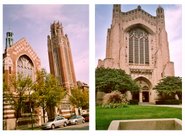
Here is a photo (2 views) of one of the famous Govan Stones (hogback stone) referred to in the article below:

Source

From the Glasgow Evening Times
Ancient stone on the move

ONE of Scotland's most important cultural artefacts will leave Glasgow today for the first time in a millennium. 

By Caroline Wilson
January 27, 2014

ONE of Scotland's most important cultural artefacts will leave Glasgow today for the first time in a millennium.

The 'Hogback Stone', an early-medieval gravestone, will be moved from Govan Old Church and transported 403 miles to London for the opening of a new exhibition at the British Museum.
It is one of the five famous 'Govan Stones', the largest collection of early-medieval burial markers kind in the UK.

The stone will form part of a new exhibition called 'Vikings: Life and Legend' that will run at the museum until June 2014. It will be returned once the exhibition finishes.

In the Ninth Century AD Govan was the political, administrative and spiritual capital of the ancient Britons, the seat of the kings of Strathclyde and one of the most important centres in the UK.

The ornately carved gravestone marked the resting place of one of the ancient kings of Strathclyde.
Around the time that the Vikings were conquering much of northern Europe, the kingdom of the Britons covered a large part of southern Scotland and northern England.

The easily recognisable carved designs on the Govan Stones are thought to represent stylised Viking houses for the dead.

Stephen Driscoll, Professor of Historical Archaeology at the University of Glasgow, said: "The Govan Stones are central to our understanding of the important but poorly documented kingdom of Strathclyde.

"Their presence gives us clues towards the complex and evolving society that existed within the region at this time."

The stone will feature in the first exhibition in the new British Museum's new Sainsbury Gallery.


Information on the Hogback stones can be found at the Heart of the Kingdom April 6, 2012 post:

Hogbacks at Govan and Penrith

Ancient Trade: Wreck Off Sri Lanka Coast

From Live Science

Indian Ocean's Oldest Shipwreck Set for Excavation

Tuesday, February 4, 2014

Temple to Goddess Minerva Found Underneath Milan Cathedral

Yet another example of a later day church planting itself over the ruins of a sacred place from an earlier time. 

Pagan temple remains unearthed under Milan Cathedral

Presented alongside Mediolanum Forum finds

29 January, 16:17

ANSA) - Milan, January 29 - The remains of a pagan temple believed to have been devoted to the goddess Minerva have been found under the Milan Cathedral.

The announcement was made Wednesday during the presentation of other archaeological finds, the remains of the ancient Mediolanum Forum discovered recently under the basement of the building housing the Pinacoteca Ambrosiana and the Biblioteca Ambrosiana.

Archaeological excavations to unearth the remains of the large city that, beginning in 292 A.D., was the capital of the Western Roman Empire for over a century continue despite funding difficulties. So far, part of the floor made out of what is known as 'Verona stone' has been found. The base of a section of an arcade can also be seen. The entire forum occupied an estimated surface area of 166 by 55 square meters. While waiting to be able to extend the excavations, the zone has been fitted with a special entrance on the side of the building, walkways, and illustrative signs to make visits by the public possible. The works were conducted with funding from the Cariplo foundation and the Lombardy regional government and are part of the project for a 'Milan Archaeology' route being readied for the 2015 Milano Expo, said regional culture councillor Cristina Cappellini.


*********************************************************************
Information on the Milan Cathedral from Wikipedia:

Milan Cathedral (Italian: Duomo di Milano; Lombard: Domm de Milan) is the cathedral church of Milan, Italy. Dedicated to Santa Maria Nascente (Saint Mary Nascent), it is the seat of the Archbishop of Milan, currently Cardinal Angelo Scola.

The Gothic cathedral took nearly six centuries to complete. It is the fifth largest cathedral in the world[1] and the largest in the Italian state territory.[2]

Milan's layout, with streets either radiating from the Duomo or circling it, reveals that the Duomo occupies what was the most central site in Roman Mediolanum, that of the public basilica facing the forum. Saint Ambrose's 'New Basilica' was built on this site at the beginning of the 5th century, with an adjoining basilica added in 836. The old baptistery (Battistero Paleocristiano, constructed in 335) still can be visited under the Milan Cathedral, it is one of the oldest Christian buildings in Europe.[3] When a fire damaged the cathedral and basilica in 1075, they were later rebuilt as the Duomo.[4]
As you can see, the start of the "Christians" building over the Minerva temple site dates all the way back to 335 CE! "Paleocristiano," indeed.  The "New Basilica" began to be added just after the turn of the century, in circa 400 CE!  By way of comparison, at that time many Egyptian temples to the "old" goddesses and gods were still in service. 

As far as I can determine, since I was not able to find a single entry online (not even in the Catholic encyclopedia) on the meaning of "St. Mary Nascent" -- is that this identifes Mary, Jesus' physical mother on Earth, as the bearer of Jesus and thus, as the mother of the "nascent" church (remember Jesus' words, referring to himself, NOT to the Apostle Peter:  Upon this rock I shall build my church).  That is merely an educated guess, however. 

Monday, February 3, 2014

Who Is Buried In Charlemagne's Tomb?

Shock shock!  It may actually be the man himself!

Yes, according to SECRET RESEARCH that has gone on since 1988 - like, take your time dudes - conclusion is it is probably Charlgnagne.  Don't you just love that little bit of hedging...

From the local.de (German news in English)

Charlemagne's bones are (probably) real

Published: 31 Jan 2014 08:04 GMT+01:00
Updated: 31 Jan 2014 08:04 GMT+01:00
 
German scientists have announced after almost 26 years of research that the bones interred for centuries at Aachen Cathedral are likely to be those of Charlemagne.
 
Researchers confirmed on Wednesday evening - 1,200 years to the day since Charlemagne died - that the 94 bones and bone fragments taken from the supposed resting place of the King of the Franks and founder of what was to become the Holy Roman Empire came from a tall, thin, older man.
 
Bust of Charlemagne, Aachen Cathedral.
 
The team first opened the sarcophagus of the first emperor in western Europe since the fall of the Roman Empire in secret in 1988 and presented their results for the first time on Wednesday.

Moscow Open - Women's Events

The Moscow Superfinal Women Rapid took place January 30 and 31, 2014 in Moscow, Russia, as part of the Moscow Open.

Final Ranking after 9 Rounds

Rk.SNoNameFEDRtgPts. TB1  TB2  TB3 Rp
19WGMCharochkina DariaRUS23937.028.250.052599
210GMGunina ValentinaRUS25976.524.250.052523
36GMKosteniuk AlexandraRUS25666.022.250.052485
47WGMGirya OlgaRUS23796.021.250.052506
52WGMKashlinskaya AlinaRUS23705.020.000.042425
65WGMMirzoeva ElmiraRUS22474.516.000.042396
71IMVasilevich IrinaRUS23723.514.500.042302
83IMKovalevskaya EkaterinaRUS23953.511.250.042299
98WIMDrozdova DinaRUS22472.05.750.052176
104WFMGvanceladze AnnaRUS22421.03.500.042045
Annotation:
Tie Break1: Sonneborn-Berger-Tie-Break variable
Tie Break2: Direct Encounter (The results of the players in the same point group)
Tie Break3: Most black.
 
The Women's Cup of Russia, an Amateur event and an Veterans Event, among others, are all part of the Moscow Chess Festival, which runs through February 10th.

ASOR Qualifies for $475,000 Pledge!!!

Whoop whoop!  They did it, folks.  Actually, you did it, and lots of people like you (and me, albeit just a small amount).  Numbers do count!  Prior post.  BTW, ASOR stands for the American Schools of Oriental Research at Boston University :)

Here is the official announcement:

Letter From President Susan Ackerman Announcing that ASOR Qualifies for Legacy Gift

January 31, 2014
 
We did it!!!

Four months ago, an anonymous ASOR trustee gave ASOR a legacy gift of a transformative nature—its current market value is $475,000. But ASOR was also given a challenge in order to qualify: raise $200,000 from 300 different donors by January 31, 2014. Today, we’re thrilled to announce that we did it! In fact, we more than “did it”: we raised an astonishing $258,775—29% over our goal—with donations from 321 of ASOR's devoted members and friends.

Truth be told, just two weeks ago, I wasn't so sure that we would make it. On January 15, we had received contributions from only 199 donors, considerably fewer than the 300 we needed, and even by January 24, one week before the deadline, we still needed 79 more people to give. It wasn't looking good. But I never should have doubted. You—our members, our associates, and our friends—care deeply about ASOR, and when we needed your help, you were right there.

And I really mean “right there.” One night, I e-mailed one of you at 6:33 pm, and by 8:23, you had given a donation. That same night, late, I sent an e-mail to another potential donor; by the next morning, there was a gift. Every member of our Board of Trustees stepped forward to help us meet this challenge, as did every chair of our several standing committees. Many, many of our committee members, our annual meeting session chairs, and the editors of our various publications–people who already give so much to ASOR in terms of their time and effort–gave generously from their pocketbooks as well. And over and over, when you wrote to me agreeing to make a donation, you told me how happy you were to do so, because ASOR meant so much to you–professionally, intellectually, and socially.

So, to all 321 of you, thank you so much, and I know that all of us want also to thank the donor who made the $475,000 gift that set us forth on this challenge in the first place. Not only is the gift itself transformative—and we can all now begin to dream about the future for ASOR that it will make possible—but in meeting the challenge with which the gift came, we have been transformed, as we have been called to be the best we can be: a community of loyal and dedicated members, associates, and friends who share a deep and abiding commitment to our extraordinary organization. 

With profound gratitude,
Susan Ackerman
ASOR President

Ancient Step Pyramid Excavated (Finally)

4,600-Year-Old Step Pyramid Uncovered in Egypt

LiveScience.com

TORONTO — Archaeologists working near the ancient settlement of Edfu, in southern Egypt, have uncovered a step pyramid that dates back about 4,600 years, predating the Great Pyramid of Giza by at least a few decades.
The step pyramid, which once stood as high as 43 feet (13 meters), is one of seven so-called "provincial" pyramids built by either the pharaoh Huni (reign ca. 2635-2610 B.C.) or Snefru (reign ca. 2610-2590 B.C.). Over time, the step pyramid's stone blocks were pillaged, and the monument was exposed to weathering, so today, it's only about 16 feet (5 m) tall.

The site.

Scattered throughout central and southern Egypt, the provincial pyramids are located near major settlements, have no internal chambers and were not intended for burial. Six of the seven pyramids have almost identical dimensions, including the newly uncovered one at Edfu, which is about 60 x 61 feet (18.4 x 18.6 m). [See Photos of the Newly Uncovered Step Pyramid]

Sunday, January 26, 2014

So Close! ASOR Needs More Donors to Meet Challenge by January 31, 2014!

Can you contribute $25?  If you can, I urge you to become one of ASOR's donors to meet the challenge -- it is worth $475,000 to ASOR.  There are only a few more days left, time is running out.  Hell, even I forked over a $25 donation tonight to increase the number of donors.  ASOR (American Schools of Oriental Research at Boston University) needs 300 donors.  Right now they have 250 (not counting me):

ASOR Needs 50 Donors Before January 31st
to Qualify for a Major Legacy Challenge Gift ($475,000)

Campaign Logo
As ASOR moves into the final five months of our Building a Foundation for ASOR Campaign, we are pleased to report that we are close to qualifying for a major legacy gift. An anonymous ASOR trustee has pledged to make a legacy gift that has a current market value of $475,000 and has given ASOR two challenges. We have five days left!
    1. Donor Participation: 300 donors in this fiscal year by January 31, 2014. As of January 26, we have received gifts from 250 separate donors, so we need 50 more people to make a gift of $25 or more to meet this challenge (see graph below).
    2. Total Contributions to ASOR this fiscal year: Receive $200,000 in total gifts and pledges by January 31, 2014. As of January 26, we have received $251,700. We have met and exceeded our challenge goal!

2014 Tata Steel Wink aan Zee

Final standings in Challengers Group (Group B), where two chess femmes competed:

Tata Steel Challengers Wijk aan Zee (NED), 11-26 i 2014cat. XIV (2579)
12345678901234
1.Saric, IvangCRO2637*½½½1½111½11½110.02785
2.Timman, Jan HgNED2607½*½½1½01½1½1½18.52686
3.Jobava, BaadurgGEO2710½½*½011½10½1118.52678
4.Muzychuk, AnnagSLO2566½½½*½½01½11½½18.02666
5.Reinderman, DimitrigNED2593001½*½101011118.02664
6.Bok, BenjaminmNED2560½½0½½*1½½1½01½7.02609
7.Yu, YangyigCHN2677010100*1½0½1117.02600
8.Duda, Jan-KrzysztofgPOL255300½01½0*½11½117.02609
9.Wojtaszek, RadoslawgPOL27110½0½0½½½*1½1117.02597
10.Brunello, SabinogITA2602½01010100*½½1½6.02547
11.Troff, Kayden WmUSA24570½½00½½0½½*½104.52478
12.Zhao, XuegCHN2567000½010½0½½*½14.52469
13.Van Delft, MerijnmNED2430½½0½0000000½*13.02379
14.Goudriaan, EtiennemNED243100000½000½100*2.02294

2014 Tradewise Gibraltar Chess Festival

It is that time of year once again.  Someday I should very much like to travel to Gibraltar and enjoy the balmy Mediterranean breezes.  Right now we're being battered with strong winds, yet more snow (6 inches fell last night but fortunately, it was the light fluffy stuff so it only took me an hour and 15 minutes to clear my driveway with a shovel), and overnight and tomorrow windchills down to 45 below zero F.  Yikes! 

Tradewise Gibraltar Chess Festival (official website)

Checking out the line-up for the Masters (Open) with 244 players, I am trying to pick out chess femmes along with American players and stopped after the first 100, LOL!

  7 2000024Kamsky, GatagUSA2709
33 8601283Zhao, XuegCHN2567
35 14111330Muzychuk, AnnagSLO2566
 37 2021285Lenderman, AleksandrgUSA2562
45 1700030Cramling, PiagSWE2525
49 12801259Cmilyte, ViktorijagLTU2515
51 12400149Hoang, Thanh TranggHUN2511
52 8600031Xu, JungCHN2510
53 14114550Muzychuk, MariyamUKR2503
54 617822Sebag, MariegFRA2501
57 4147855Pogonina, NataliawgRUS2495
60 2902257Stefanova, AntoanetagBUL2486
61 8603642Tan, ZhongyiwgCHN2483
63 8600546Zhu, ChengQAT2481
72 4641833Paehtz, ElisabethmGER2458
73 8604002Guo, QiwgCHN2450
75 14101513Zhukova, NataliagUKR2449
78 5007844Sachdev, TaniamIND2442
79 4900758Munguntuul, BatkhuyagmMGL2438
82 13601458Javakhishvili, LelamGEO2430
89 405094Houska, JovankamENG2415
93 4196872Savina, AnastasiamRUS2402
97 623725Milliet, SophiemFRA2390


Action starts at 8:00 p.m. on January 27th.   GM Irina Krush, reigning U.S. Women's Champion, will be providing commentary along with GM Simon Williams. 

As you can see from the line-up, some of the best female chessplayers in the world will be competing against top level male talent at Gibraltar.  May the hand of the Goddess be upon the chess femmes and bring them all victory! 

This great tournament always attracts top female chess talent because of the prizes.  There are separate prizes awarded to women and they are also eligible to compete for the Open prizes.  Should you win, you take the best and leave the rest on the table for another player.

Women's Prizes: If there is a tie for the top women’s prize, the tie is resolved in favour of the woman with the highest performance rating, who will receive the prize of £15,000. All other prizes will not be subject to a tie-break and prize money other than the first prize will be divided equally amongst the players.

Open to all Women
1st Prize
£15,000
2nd Prize
£10,000
3rd Prize
£5,000
4th Prize
£3,500
5th Prize
£2,500
6th Prize
£2,000
7th Prize
£1,500
8th Prize
£1,000
9th Prize
£600
10th Prize
£400

Settlement of European Sea Peoples

From Science Daily

Cultural connections with Europe found in ancient Jordanian settlement

January 23, 2014
Source:  University of Gothenburg
Summary:  Swedish archaeologists in Jordan have excavated a nearly 60-metre long well-preserved building from 11000 B.C. in the ancient settlement of Tell Abu al-Karaz.  The building is from an era characterized by major migration.

Reconstruction of the building from 1100 B.C.  Credit: University of Gothenburg
 
Swedish archaeologists in Jordan led by Professor Peter M. Fischer from the University of Gothenburg have excavated a nearly 60-metre long well-preserved building from 1100 B.C. in the ancient settlement Tell Abu al-Kharaz. The building is from an era characterized by major migration.
 
New finds support the theory that groups of the so-called Sea Peoples emigrated to Tell Abu al-Kharaz. They derive from Southern or Eastern Europe and settled in the Eastern Mediterranean region all the way to the Jordan Valley.

Dr. Irving Finkel on The Great Flood

I wasn't even going to read this story (yawn...another flood story...) until Irving Finkel's name caught my eye.  He's the real deal.  I first became familiar with his name many years ago in connection with my study of ancient board games.


The Ark Tablet in the hands of its decipherer, Dr Irving Finkel (Benjamin McMahon)                                        
From The Telegraph Online

Irving Finkel: reader of the lost Ark

Tom Chivers meets the man who deciphered a 4,000-year-old blueprint – for the original Noah’s Ark

7:00AM GMT 19 Jan 2014
 
Four thousand years ago, a millennium and a half before the first Jewish scholars put pen to parchment on the Book of Genesis, a scribe in what is now Iraq carved the story of a great flood on to a clay tablet, in the strange and beautiful script known as cuneiform. The story told of how a god came and warned a great man to build a boat, and to take his family on that boat, and two animals of every kind, because the world was to be cleansed with a flood.
 
About 30 years ago, one Douglas Simmonds wandered in to the British Museum, and handed the tablet to a man called Irving Finkel, who immediately recognised it as one of the most important archaeological finds of recent years. Dr Finkel, an Assyriologist or student of the civilisations of ancient Mesopotamia, begged Simmonds to leave it with him, but he would do no such thing. It took him until 2009 to convince Simmonds to let him have it; when he did, what he discovered was a piece of the flood story – the Assyrian story of the Ark, centuries before Noah.

They Were Making STEEL in Iron Age Scotland

This is absolutely fascinating, because it is so unexpected (article after break).  I was under the impression that steel manufacturing did not begin until the 800-900s CE.  I know Wikipedia has its critics, but when I want to get some quick information about a subject with which I am not familiar, that is where I go to get initial information, and research from there. 

The section of the Wikipedia entry on "Steel" about its early history is very informative:

Ancient steel

Steel was known in antiquity, and may have been produced by managing bloomeries, or iron-smelting facilities, in which the bloom contained carbon.[15]

The earliest known production of steel is a piece of ironware excavated from an archaeological site in Anatolia (Kaman-Kalehoyuk) and is about 4,000 years old.[16] Other ancient steel comes from East Africa, dating back to 1400 BC.[17] In the 4th century BC steel weapons like the Falcata were produced in the Iberian Peninsula, while Noric steel was used by the Roman military.[18]

Steel was produced in large quantities in Sparta around 650BC.[19][20]

The Chinese of the Warring States (403–221 BC) had quench-hardened steel,[21] while Chinese of the Han Dynasty (202 BC – 220 AD) created steel by melting together wrought iron with cast iron, gaining an ultimate product of a carbon-intermediate steel by the 1st century AD.[22][23] The Haya people of East Africa invented a type of furnace they used to make carbon steel at 1,802 °C (3,276 °F) nearly 2,000 years ago.[24]

Wootz steel and Damascus steel

Evidence of the earliest production of high carbon steel in the Indian Subcontinent was found in Samanalawewa area in Sri Lanka.[25] Wootz steel was produced in India by about 300 BC.[26]
[not in citation given]

However, the steel was an old technology in India when King Porus presented a Steel sword to the Emperor Alexander in 326 BC[citation needed]. The steel technology obviously existed before 326 BC as steel was being exported to the Arab World at that time. Since the technology was acquired from the Tamilians from South India, the origin of steel technology in India can be conservatively[vague] estimated at 400-500 BC[citation needed].

Along with their original methods of forging steel, the Chinese had also adopted the production methods of creating Wootz steel, an idea imported into China from India by the 5th century AD.[27] In Sri Lanka, this early steel-making method employed a unique wind furnace, driven by the monsoon winds, capable of producing high-carbon steel.[28]

Also known as Damascus steel, wootz is famous for its durability and ability to hold an edge. It was originally created from a number of different materials including various trace elements. It was essentially a complicated alloy with iron as its main component. Recent studies have suggested that carbon nanotubes were included in its structure, which might explain some of its legendary qualities, though given the technology available at that time, they were produced by chance rather than by design.[29] Natural wind was used where the soil containing iron was heated by the use of wood. The ancient Sinhalese managed to extract a ton of steel for every 2 tons of soil,[28] a remarkable feat at the time. One such furnace was found in Samanalawewa and archaeologists were able to produce steel as the ancients did.[28][30]

Crucible steel, formed by slowly heating and cooling pure iron and carbon (typically in the form of charcoal) in a crucible, was produced in Merv by the 9th to 10th century AD.[26] In the 11th century, there is evidence of the production of steel in Song China using two techniques: a "berganesque" method that produced inferior, inhomogeneous steel and a precursor to the modern Bessemer process that used partial decarbonization via repeated forging under a cold blast.[31]
Related Posts Plugin for WordPress, Blogger...