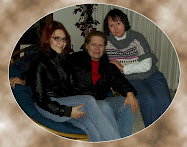
Ohmygoddess! I posted this photograph here on 6/24/09 because of my comment, which you'll be able to read below, about "babushkas." This is a photo from around 1960, and I remember that coat (it had brown velvet-covered buttons and brown velvet corded trim), so it was winter and very cold! That is my three younger sisters and me (I'm on the right, second row, my taller cousin Cookie is to my left, slightly behind), and two of my cousins - Cookie and Tootsie, daughters of one of my mother's sisters, Aunt Diane a/k/a Aunt Christine. Five of us are wearing babushkas. Notice the old television set to the far left and the very contemporary 1950's style drapes, LOL!
Juliette Frette is back at Examiner.com with an article about the Goddess Baba Yaga, "Wild Woman:"
Baba Yaga (pronounced bah-bye yegg-ah) is known as the Slavic "wild woman," a sacred old hag who is otherwise considered a goddess of birth and death. Although many goddesses cross-culturally seem to have some sort of reign over the beginnings and endings of life, this one has a unique image all her own. . . .
Barbara Walker's "The Woman's Encyclopedia of Myths and Secrets" does not have an entry under "Baba Yaga," "babau" or "Wild Woman." However, she does have an entry under HAG:
Originally "Holy Woman," the Hag was a cognate of Egyptian heq, a predynastic matriachal ruler who knew the words of power, or hekau.(1) In Greek she became Hecate, the Crone or Hag as queen of the dead, incarnate on earth in a series of wise-women or high priestesses.
Hebrew "wisdom" in Proverbs 8 is Hokhmah, from Egyptian heq-maa or Heka-Maat, the underworld Mother of widsom, law, and words of power.(2) Greek and Roman cognate hagia meant holy, especially as applied to the principle of female widsom, Hagia Sophia (see Sophia, Saint). Similarly in Israel, a haggiah was a holy day. Certain Jewish religious literature dating back to Israel's matriarchal period was probably written by wise-women, since it was called the Haggadah. Later patriarchal rabbis declared this material "not legal."(3)
In northern Europe, the Hag was the death-goddess corresponding to Hecate, like the Hag of the Iron Wood whose daughter or virgin form was Hel.(4) Old Norse hagi meant a sacred grove, the Iron Wood, a place of sacrifice. Haggen meant to chop in pieces, which is what happened to sacrificial victims dismembered for a feast. [EEK! This gives entirely new meaning to Robert Graves' discussions about "king sacrifice" and the maenads I was reading about yesterday who participated in the Dionysian "orgies" where men were literally torn apart. Compare also the horse-Valkyries or horse-masked priestesses of Freya, known as volvas, who tore part the acient kings of Sweden in ritual sacrifice.] "Hags" may have been priestesses of sacrifice, like the Scythian matriarchs who butchered for their sacred cauldrons and read omens in entrails.(5) Northmen colonized Scotland, where a haggis or "hag's dish" was made of internal organs. Until the 19th century, people kept the New Year festival of Hagmena, Hag's Moon, going in disguise from house to house, begging cakes. A chronicler said: "On the last night of the old year (pecularliarly called Hagmenai), the visitors and company made a point of not separating till after the clock struck twelve, when they rose, and mutually kissing, wished each other a happy New Year." This is still the custom. But a contemproary clergyman said the Hagmena meant the Devil was in the house.(6)
Devilish qualities were attributed to stone idols of the Hag, such as the famous Stone of Scone, still used at each British monarch's coronation. This stone once represented the Hag and her spinning wheel - i.e., Arianrhod, Goddess of the Wheel of Fate. A danish ballad said the Hag of Scone led the "swarthy Elves;" but she was turned to stone by an incantation of the missionary St. Olave: "Thou Hag of Scone, stand there and turn to granite stone."(7) Helvetian converts to Christianity were compelled to batter to pieces sacred stones in which their Goddess dwelt, reciting her formula, "Once I was the Goddess and now I am nothing at all."(8)
In the 16th century, "hag" was synonymous with "fairy."(9) Old High German called a wise-woman Hagazussa, that is, a moon-priestess.(10) Though "hagiology" still means the study of holy matters and saints, the root word hag declined in its meanings. Shakespeare's verb hagged meant to be bewitched. His noun haggard meant a hawk, a harpy, or an intractable woman.(11)
The Hag as death-goddess, her face veiled to imply that no man can know the manner of his death, was sometimes re-interpreted as a nun. Christianized legends were invented for these veiled figures.(12)
Notes:
(1) Book of the Dead, 351.
(2) Budge, G.E. 1, 296.
(3) Encyc. Brit. "Haggdah."
(4) Sturlson, 39.
(5) Wendt, 137.
(6) Hazlitt, 296.
(7) Wimberly, 36.
(8) Thorsten, 336.
(9) Scot, 550.
(10) J.B. Russell, 16.
(11) Potter & Sargent, 70.
(12) Graves, W.G., 409.
Ohmygoddess! I posted this photograph here on 6/24/09 because of my comment, which you'll be able to read below, about "babushkas." This is a photo from around 1960, and I remember that coat (it had brown velvet-covered buttons and brown velvet corded trim), so it was winter and very cold! That is my three younger sisters and me (I'm on the right, second row, my taller cousin Cookie is to my left, slightly behind), and two of my cousins - Cookie and Tootsie, daughters of one of my mother's sisters, Aunt Diane a/k/a Aunt Christine. Five of us are wearing babushkas. Notice the old television set to the far left and the very contemporary 1950's style drapes, LOL!
Juliette Frette is back at Examiner.com with an article about the Goddess Baba Yaga, "Wild Woman:"
Baba Yaga (pronounced bah-bye yegg-ah) is known as the Slavic "wild woman," a sacred old hag who is otherwise considered a goddess of birth and death. Although many goddesses cross-culturally seem to have some sort of reign over the beginnings and endings of life, this one has a unique image all her own. . . .
Barbara Walker's "The Woman's Encyclopedia of Myths and Secrets" does not have an entry under "Baba Yaga," "babau" or "Wild Woman." However, she does have an entry under HAG:
Originally "Holy Woman," the Hag was a cognate of Egyptian heq, a predynastic matriachal ruler who knew the words of power, or hekau.(1) In Greek she became Hecate, the Crone or Hag as queen of the dead, incarnate on earth in a series of wise-women or high priestesses.
Hebrew "wisdom" in Proverbs 8 is Hokhmah, from Egyptian heq-maa or Heka-Maat, the underworld Mother of widsom, law, and words of power.(2) Greek and Roman cognate hagia meant holy, especially as applied to the principle of female widsom, Hagia Sophia (see Sophia, Saint). Similarly in Israel, a haggiah was a holy day. Certain Jewish religious literature dating back to Israel's matriarchal period was probably written by wise-women, since it was called the Haggadah. Later patriarchal rabbis declared this material "not legal."(3)
In northern Europe, the Hag was the death-goddess corresponding to Hecate, like the Hag of the Iron Wood whose daughter or virgin form was Hel.(4) Old Norse hagi meant a sacred grove, the Iron Wood, a place of sacrifice. Haggen meant to chop in pieces, which is what happened to sacrificial victims dismembered for a feast. [EEK! This gives entirely new meaning to Robert Graves' discussions about "king sacrifice" and the maenads I was reading about yesterday who participated in the Dionysian "orgies" where men were literally torn apart. Compare also the horse-Valkyries or horse-masked priestesses of Freya, known as volvas, who tore part the acient kings of Sweden in ritual sacrifice.] "Hags" may have been priestesses of sacrifice, like the Scythian matriarchs who butchered for their sacred cauldrons and read omens in entrails.(5) Northmen colonized Scotland, where a haggis or "hag's dish" was made of internal organs. Until the 19th century, people kept the New Year festival of Hagmena, Hag's Moon, going in disguise from house to house, begging cakes. A chronicler said: "On the last night of the old year (pecularliarly called Hagmenai), the visitors and company made a point of not separating till after the clock struck twelve, when they rose, and mutually kissing, wished each other a happy New Year." This is still the custom. But a contemproary clergyman said the Hagmena meant the Devil was in the house.(6)
Devilish qualities were attributed to stone idols of the Hag, such as the famous Stone of Scone, still used at each British monarch's coronation. This stone once represented the Hag and her spinning wheel - i.e., Arianrhod, Goddess of the Wheel of Fate. A danish ballad said the Hag of Scone led the "swarthy Elves;" but she was turned to stone by an incantation of the missionary St. Olave: "Thou Hag of Scone, stand there and turn to granite stone."(7) Helvetian converts to Christianity were compelled to batter to pieces sacred stones in which their Goddess dwelt, reciting her formula, "Once I was the Goddess and now I am nothing at all."(8)
In the 16th century, "hag" was synonymous with "fairy."(9) Old High German called a wise-woman Hagazussa, that is, a moon-priestess.(10) Though "hagiology" still means the study of holy matters and saints, the root word hag declined in its meanings. Shakespeare's verb hagged meant to be bewitched. His noun haggard meant a hawk, a harpy, or an intractable woman.(11)
The Hag as death-goddess, her face veiled to imply that no man can know the manner of his death, was sometimes re-interpreted as a nun. Christianized legends were invented for these veiled figures.(12)
Notes:
(1) Book of the Dead, 351.
(2) Budge, G.E. 1, 296.
(3) Encyc. Brit. "Haggdah."
(4) Sturlson, 39.
(5) Wendt, 137.
(6) Hazlitt, 296.
(7) Wimberly, 36.
(8) Thorsten, 336.
(9) Scot, 550.
(10) J.B. Russell, 16.
(11) Potter & Sargent, 70.
(12) Graves, W.G., 409.
Showing posts with label Hagia Sophia. Show all posts
Showing posts with label Hagia Sophia. Show all posts
Monday, June 15, 2009
Goddess: Baba Yaga
Ohmygoddess! I posted this photograph here on 6/24/09 because of my comment, which you'll be able to read below, about "babushkas." This is a photo from around 1960, and I remember that coat (it had brown velvet-covered buttons and brown velvet corded trim), so it was winter and very cold! That is my three younger sisters and me (I'm on the right, second row, my taller cousin Cookie is to my left, slightly behind), and two of my cousins - Cookie and Tootsie, daughters of one of my mother's sisters, Aunt Diane a/k/a Aunt Christine. Five of us are wearing babushkas. Notice the old television set to the far left and the very contemporary 1950's style drapes, LOL!
Juliette Frette is back at Examiner.com with an article about the Goddess Baba Yaga, "Wild Woman:"
Baba Yaga (pronounced bah-bye yegg-ah) is known as the Slavic "wild woman," a sacred old hag who is otherwise considered a goddess of birth and death. Although many goddesses cross-culturally seem to have some sort of reign over the beginnings and endings of life, this one has a unique image all her own. . . .
Barbara Walker's "The Woman's Encyclopedia of Myths and Secrets" does not have an entry under "Baba Yaga," "babau" or "Wild Woman." However, she does have an entry under HAG:
Originally "Holy Woman," the Hag was a cognate of Egyptian heq, a predynastic matriachal ruler who knew the words of power, or hekau.(1) In Greek she became Hecate, the Crone or Hag as queen of the dead, incarnate on earth in a series of wise-women or high priestesses.
Hebrew "wisdom" in Proverbs 8 is Hokhmah, from Egyptian heq-maa or Heka-Maat, the underworld Mother of widsom, law, and words of power.(2) Greek and Roman cognate hagia meant holy, especially as applied to the principle of female widsom, Hagia Sophia (see Sophia, Saint). Similarly in Israel, a haggiah was a holy day. Certain Jewish religious literature dating back to Israel's matriarchal period was probably written by wise-women, since it was called the Haggadah. Later patriarchal rabbis declared this material "not legal."(3)
In northern Europe, the Hag was the death-goddess corresponding to Hecate, like the Hag of the Iron Wood whose daughter or virgin form was Hel.(4) Old Norse hagi meant a sacred grove, the Iron Wood, a place of sacrifice. Haggen meant to chop in pieces, which is what happened to sacrificial victims dismembered for a feast. [EEK! This gives entirely new meaning to Robert Graves' discussions about "king sacrifice" and the maenads I was reading about yesterday who participated in the Dionysian "orgies" where men were literally torn apart. Compare also the horse-Valkyries or horse-masked priestesses of Freya, known as volvas, who tore part the acient kings of Sweden in ritual sacrifice.] "Hags" may have been priestesses of sacrifice, like the Scythian matriarchs who butchered for their sacred cauldrons and read omens in entrails.(5) Northmen colonized Scotland, where a haggis or "hag's dish" was made of internal organs. Until the 19th century, people kept the New Year festival of Hagmena, Hag's Moon, going in disguise from house to house, begging cakes. A chronicler said: "On the last night of the old year (pecularliarly called Hagmenai), the visitors and company made a point of not separating till after the clock struck twelve, when they rose, and mutually kissing, wished each other a happy New Year." This is still the custom. But a contemproary clergyman said the Hagmena meant the Devil was in the house.(6)
Devilish qualities were attributed to stone idols of the Hag, such as the famous Stone of Scone, still used at each British monarch's coronation. This stone once represented the Hag and her spinning wheel - i.e., Arianrhod, Goddess of the Wheel of Fate. A danish ballad said the Hag of Scone led the "swarthy Elves;" but she was turned to stone by an incantation of the missionary St. Olave: "Thou Hag of Scone, stand there and turn to granite stone."(7) Helvetian converts to Christianity were compelled to batter to pieces sacred stones in which their Goddess dwelt, reciting her formula, "Once I was the Goddess and now I am nothing at all."(8)
In the 16th century, "hag" was synonymous with "fairy."(9) Old High German called a wise-woman Hagazussa, that is, a moon-priestess.(10) Though "hagiology" still means the study of holy matters and saints, the root word hag declined in its meanings. Shakespeare's verb hagged meant to be bewitched. His noun haggard meant a hawk, a harpy, or an intractable woman.(11)
The Hag as death-goddess, her face veiled to imply that no man can know the manner of his death, was sometimes re-interpreted as a nun. Christianized legends were invented for these veiled figures.(12)
Notes:
(1) Book of the Dead, 351.
(2) Budge, G.E. 1, 296.
(3) Encyc. Brit. "Haggdah."
(4) Sturlson, 39.
(5) Wendt, 137.
(6) Hazlitt, 296.
(7) Wimberly, 36.
(8) Thorsten, 336.
(9) Scot, 550.
(10) J.B. Russell, 16.
(11) Potter & Sargent, 70.
(12) Graves, W.G., 409.


Subscribe to:
Posts (Atom)