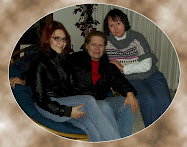
Ohmygoddess! I posted this photograph here on 6/24/09 because of my comment, which you'll be able to read below, about "babushkas." This is a photo from around 1960, and I remember that coat (it had brown velvet-covered buttons and brown velvet corded trim), so it was winter and very cold! That is my three younger sisters and me (I'm on the right, second row, my taller cousin Cookie is to my left, slightly behind), and two of my cousins - Cookie and Tootsie, daughters of one of my mother's sisters, Aunt Diane a/k/a Aunt Christine. Five of us are wearing babushkas. Notice the old television set to the far left and the very contemporary 1950's style drapes, LOL!
Juliette Frette is back at Examiner.com with an article about the Goddess Baba Yaga, "Wild Woman:"
Baba Yaga (pronounced bah-bye yegg-ah) is known as the Slavic "wild woman," a sacred old hag who is otherwise considered a goddess of birth and death. Although many goddesses cross-culturally seem to have some sort of reign over the beginnings and endings of life, this one has a unique image all her own. . . .
Barbara Walker's "The Woman's Encyclopedia of Myths and Secrets" does not have an entry under "Baba Yaga," "babau" or "Wild Woman." However, she does have an entry under HAG:
Originally "Holy Woman," the Hag was a cognate of Egyptian heq, a predynastic matriachal ruler who knew the words of power, or hekau.(1) In Greek she became Hecate, the Crone or Hag as queen of the dead, incarnate on earth in a series of wise-women or high priestesses.
Hebrew "wisdom" in Proverbs 8 is Hokhmah, from Egyptian heq-maa or Heka-Maat, the underworld Mother of widsom, law, and words of power.(2) Greek and Roman cognate hagia meant holy, especially as applied to the principle of female widsom, Hagia Sophia (see Sophia, Saint). Similarly in Israel, a haggiah was a holy day. Certain Jewish religious literature dating back to Israel's matriarchal period was probably written by wise-women, since it was called the Haggadah. Later patriarchal rabbis declared this material "not legal."(3)
In northern Europe, the Hag was the death-goddess corresponding to Hecate, like the Hag of the Iron Wood whose daughter or virgin form was Hel.(4) Old Norse hagi meant a sacred grove, the Iron Wood, a place of sacrifice. Haggen meant to chop in pieces, which is what happened to sacrificial victims dismembered for a feast. [EEK! This gives entirely new meaning to Robert Graves' discussions about "king sacrifice" and the maenads I was reading about yesterday who participated in the Dionysian "orgies" where men were literally torn apart. Compare also the horse-Valkyries or horse-masked priestesses of Freya, known as volvas, who tore part the acient kings of Sweden in ritual sacrifice.] "Hags" may have been priestesses of sacrifice, like the Scythian matriarchs who butchered for their sacred cauldrons and read omens in entrails.(5) Northmen colonized Scotland, where a haggis or "hag's dish" was made of internal organs. Until the 19th century, people kept the New Year festival of Hagmena, Hag's Moon, going in disguise from house to house, begging cakes. A chronicler said: "On the last night of the old year (pecularliarly called Hagmenai), the visitors and company made a point of not separating till after the clock struck twelve, when they rose, and mutually kissing, wished each other a happy New Year." This is still the custom. But a contemproary clergyman said the Hagmena meant the Devil was in the house.(6)
Devilish qualities were attributed to stone idols of the Hag, such as the famous Stone of Scone, still used at each British monarch's coronation. This stone once represented the Hag and her spinning wheel - i.e., Arianrhod, Goddess of the Wheel of Fate. A danish ballad said the Hag of Scone led the "swarthy Elves;" but she was turned to stone by an incantation of the missionary St. Olave: "Thou Hag of Scone, stand there and turn to granite stone."(7) Helvetian converts to Christianity were compelled to batter to pieces sacred stones in which their Goddess dwelt, reciting her formula, "Once I was the Goddess and now I am nothing at all."(8)
In the 16th century, "hag" was synonymous with "fairy."(9) Old High German called a wise-woman Hagazussa, that is, a moon-priestess.(10) Though "hagiology" still means the study of holy matters and saints, the root word hag declined in its meanings. Shakespeare's verb hagged meant to be bewitched. His noun haggard meant a hawk, a harpy, or an intractable woman.(11)
The Hag as death-goddess, her face veiled to imply that no man can know the manner of his death, was sometimes re-interpreted as a nun. Christianized legends were invented for these veiled figures.(12)
Notes:
(1) Book of the Dead, 351.
(2) Budge, G.E. 1, 296.
(3) Encyc. Brit. "Haggdah."
(4) Sturlson, 39.
(5) Wendt, 137.
(6) Hazlitt, 296.
(7) Wimberly, 36.
(8) Thorsten, 336.
(9) Scot, 550.
(10) J.B. Russell, 16.
(11) Potter & Sargent, 70.
(12) Graves, W.G., 409.
Ohmygoddess! I posted this photograph here on 6/24/09 because of my comment, which you'll be able to read below, about "babushkas." This is a photo from around 1960, and I remember that coat (it had brown velvet-covered buttons and brown velvet corded trim), so it was winter and very cold! That is my three younger sisters and me (I'm on the right, second row, my taller cousin Cookie is to my left, slightly behind), and two of my cousins - Cookie and Tootsie, daughters of one of my mother's sisters, Aunt Diane a/k/a Aunt Christine. Five of us are wearing babushkas. Notice the old television set to the far left and the very contemporary 1950's style drapes, LOL!
Juliette Frette is back at Examiner.com with an article about the Goddess Baba Yaga, "Wild Woman:"
Baba Yaga (pronounced bah-bye yegg-ah) is known as the Slavic "wild woman," a sacred old hag who is otherwise considered a goddess of birth and death. Although many goddesses cross-culturally seem to have some sort of reign over the beginnings and endings of life, this one has a unique image all her own. . . .
Barbara Walker's "The Woman's Encyclopedia of Myths and Secrets" does not have an entry under "Baba Yaga," "babau" or "Wild Woman." However, she does have an entry under HAG:
Originally "Holy Woman," the Hag was a cognate of Egyptian heq, a predynastic matriachal ruler who knew the words of power, or hekau.(1) In Greek she became Hecate, the Crone or Hag as queen of the dead, incarnate on earth in a series of wise-women or high priestesses.
Hebrew "wisdom" in Proverbs 8 is Hokhmah, from Egyptian heq-maa or Heka-Maat, the underworld Mother of widsom, law, and words of power.(2) Greek and Roman cognate hagia meant holy, especially as applied to the principle of female widsom, Hagia Sophia (see Sophia, Saint). Similarly in Israel, a haggiah was a holy day. Certain Jewish religious literature dating back to Israel's matriarchal period was probably written by wise-women, since it was called the Haggadah. Later patriarchal rabbis declared this material "not legal."(3)
In northern Europe, the Hag was the death-goddess corresponding to Hecate, like the Hag of the Iron Wood whose daughter or virgin form was Hel.(4) Old Norse hagi meant a sacred grove, the Iron Wood, a place of sacrifice. Haggen meant to chop in pieces, which is what happened to sacrificial victims dismembered for a feast. [EEK! This gives entirely new meaning to Robert Graves' discussions about "king sacrifice" and the maenads I was reading about yesterday who participated in the Dionysian "orgies" where men were literally torn apart. Compare also the horse-Valkyries or horse-masked priestesses of Freya, known as volvas, who tore part the acient kings of Sweden in ritual sacrifice.] "Hags" may have been priestesses of sacrifice, like the Scythian matriarchs who butchered for their sacred cauldrons and read omens in entrails.(5) Northmen colonized Scotland, where a haggis or "hag's dish" was made of internal organs. Until the 19th century, people kept the New Year festival of Hagmena, Hag's Moon, going in disguise from house to house, begging cakes. A chronicler said: "On the last night of the old year (pecularliarly called Hagmenai), the visitors and company made a point of not separating till after the clock struck twelve, when they rose, and mutually kissing, wished each other a happy New Year." This is still the custom. But a contemproary clergyman said the Hagmena meant the Devil was in the house.(6)
Devilish qualities were attributed to stone idols of the Hag, such as the famous Stone of Scone, still used at each British monarch's coronation. This stone once represented the Hag and her spinning wheel - i.e., Arianrhod, Goddess of the Wheel of Fate. A danish ballad said the Hag of Scone led the "swarthy Elves;" but she was turned to stone by an incantation of the missionary St. Olave: "Thou Hag of Scone, stand there and turn to granite stone."(7) Helvetian converts to Christianity were compelled to batter to pieces sacred stones in which their Goddess dwelt, reciting her formula, "Once I was the Goddess and now I am nothing at all."(8)
In the 16th century, "hag" was synonymous with "fairy."(9) Old High German called a wise-woman Hagazussa, that is, a moon-priestess.(10) Though "hagiology" still means the study of holy matters and saints, the root word hag declined in its meanings. Shakespeare's verb hagged meant to be bewitched. His noun haggard meant a hawk, a harpy, or an intractable woman.(11)
The Hag as death-goddess, her face veiled to imply that no man can know the manner of his death, was sometimes re-interpreted as a nun. Christianized legends were invented for these veiled figures.(12)
Notes:
(1) Book of the Dead, 351.
(2) Budge, G.E. 1, 296.
(3) Encyc. Brit. "Haggdah."
(4) Sturlson, 39.
(5) Wendt, 137.
(6) Hazlitt, 296.
(7) Wimberly, 36.
(8) Thorsten, 336.
(9) Scot, 550.
(10) J.B. Russell, 16.
(11) Potter & Sargent, 70.
(12) Graves, W.G., 409.
Showing posts with label babau. Show all posts
Showing posts with label babau. Show all posts
Monday, June 15, 2009
Goddess: Baba Yaga
Ohmygoddess! I posted this photograph here on 6/24/09 because of my comment, which you'll be able to read below, about "babushkas." This is a photo from around 1960, and I remember that coat (it had brown velvet-covered buttons and brown velvet corded trim), so it was winter and very cold! That is my three younger sisters and me (I'm on the right, second row, my taller cousin Cookie is to my left, slightly behind), and two of my cousins - Cookie and Tootsie, daughters of one of my mother's sisters, Aunt Diane a/k/a Aunt Christine. Five of us are wearing babushkas. Notice the old television set to the far left and the very contemporary 1950's style drapes, LOL!
Juliette Frette is back at Examiner.com with an article about the Goddess Baba Yaga, "Wild Woman:"
Baba Yaga (pronounced bah-bye yegg-ah) is known as the Slavic "wild woman," a sacred old hag who is otherwise considered a goddess of birth and death. Although many goddesses cross-culturally seem to have some sort of reign over the beginnings and endings of life, this one has a unique image all her own. . . .
Barbara Walker's "The Woman's Encyclopedia of Myths and Secrets" does not have an entry under "Baba Yaga," "babau" or "Wild Woman." However, she does have an entry under HAG:
Originally "Holy Woman," the Hag was a cognate of Egyptian heq, a predynastic matriachal ruler who knew the words of power, or hekau.(1) In Greek she became Hecate, the Crone or Hag as queen of the dead, incarnate on earth in a series of wise-women or high priestesses.
Hebrew "wisdom" in Proverbs 8 is Hokhmah, from Egyptian heq-maa or Heka-Maat, the underworld Mother of widsom, law, and words of power.(2) Greek and Roman cognate hagia meant holy, especially as applied to the principle of female widsom, Hagia Sophia (see Sophia, Saint). Similarly in Israel, a haggiah was a holy day. Certain Jewish religious literature dating back to Israel's matriarchal period was probably written by wise-women, since it was called the Haggadah. Later patriarchal rabbis declared this material "not legal."(3)
In northern Europe, the Hag was the death-goddess corresponding to Hecate, like the Hag of the Iron Wood whose daughter or virgin form was Hel.(4) Old Norse hagi meant a sacred grove, the Iron Wood, a place of sacrifice. Haggen meant to chop in pieces, which is what happened to sacrificial victims dismembered for a feast. [EEK! This gives entirely new meaning to Robert Graves' discussions about "king sacrifice" and the maenads I was reading about yesterday who participated in the Dionysian "orgies" where men were literally torn apart. Compare also the horse-Valkyries or horse-masked priestesses of Freya, known as volvas, who tore part the acient kings of Sweden in ritual sacrifice.] "Hags" may have been priestesses of sacrifice, like the Scythian matriarchs who butchered for their sacred cauldrons and read omens in entrails.(5) Northmen colonized Scotland, where a haggis or "hag's dish" was made of internal organs. Until the 19th century, people kept the New Year festival of Hagmena, Hag's Moon, going in disguise from house to house, begging cakes. A chronicler said: "On the last night of the old year (pecularliarly called Hagmenai), the visitors and company made a point of not separating till after the clock struck twelve, when they rose, and mutually kissing, wished each other a happy New Year." This is still the custom. But a contemproary clergyman said the Hagmena meant the Devil was in the house.(6)
Devilish qualities were attributed to stone idols of the Hag, such as the famous Stone of Scone, still used at each British monarch's coronation. This stone once represented the Hag and her spinning wheel - i.e., Arianrhod, Goddess of the Wheel of Fate. A danish ballad said the Hag of Scone led the "swarthy Elves;" but she was turned to stone by an incantation of the missionary St. Olave: "Thou Hag of Scone, stand there and turn to granite stone."(7) Helvetian converts to Christianity were compelled to batter to pieces sacred stones in which their Goddess dwelt, reciting her formula, "Once I was the Goddess and now I am nothing at all."(8)
In the 16th century, "hag" was synonymous with "fairy."(9) Old High German called a wise-woman Hagazussa, that is, a moon-priestess.(10) Though "hagiology" still means the study of holy matters and saints, the root word hag declined in its meanings. Shakespeare's verb hagged meant to be bewitched. His noun haggard meant a hawk, a harpy, or an intractable woman.(11)
The Hag as death-goddess, her face veiled to imply that no man can know the manner of his death, was sometimes re-interpreted as a nun. Christianized legends were invented for these veiled figures.(12)
Notes:
(1) Book of the Dead, 351.
(2) Budge, G.E. 1, 296.
(3) Encyc. Brit. "Haggdah."
(4) Sturlson, 39.
(5) Wendt, 137.
(6) Hazlitt, 296.
(7) Wimberly, 36.
(8) Thorsten, 336.
(9) Scot, 550.
(10) J.B. Russell, 16.
(11) Potter & Sargent, 70.
(12) Graves, W.G., 409.


Friday, September 28, 2007
Friday Late Afternoon Miscellany
As of last night I'm without DSL at home although I'm sure by now the telephone company has received and cashed my check - the bloody bandits - and I am shopping for new service and plotting my revenge against AT&T. I have to sit down and do some benefit/cost analysis among the competing options, which I cannot do here at the office. Actually, I should be working right now, ahem…
This will be short and sweet.
I found this story about the babau festival, a fascinating legend about a monster (who sounds an awful lot like descriptions of the Loch Ness monster) that invaded the town one deep dark February night in 1290 CE from the river the town fronts and evidently made away with six children (presumably eaten, eek!) As the legend developed over the years the monster changed shape and size and in at least one account I read online is actually not a monster at all but bandits led by a very bad man who were causing problems for the town. Eventually the leader of this bad bunch was caught and done away in the town square in front of numerous witnesses. Anyway, check it out. I much prefer the “nessy” version of the story myself.
Infoplease.com gives this definition of a babau: “The bogie with which nurses in Languedoc terrify unruly children." Perhaps the legend of the babau spread outside of the town and was used elsewhere to scare the you-know-what out of kids. For that matter, when we were kids our teenaged baby-sitters used to scare the stuffing out of us with tales of the boogey man. Must be a pretty universal thing – scaring kids half to death with horror stories!
I’m fascinated by all forms of ancient writing and the development of alphabets. Nova has an excellent article on runes. Runes are interesting not only because they were used for communication but were also used for divination (and divination is connected to some ancient board games – perhaps connected to all original ancient board games – sounds like that song “the thigh bone is connected to the knee bone, the knee bone is connected to the – what bone was that??? – well, you get the idea). Nova online has a very good article/overview on the history of runes for your reading pleasure.
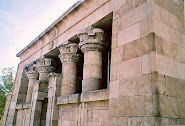
Have you heard the one about the singing stones? No – this is not a joke about Mick Jagger and the Rolling Pot-Heads, darlings! I have heard about the colossi at Memnon in Egypt – I think I need to learn more about this fascinating phenomenon.
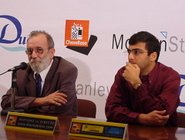
Friday night wouldn’t be complete without at least some mention of chess. I’m glad to see my man Moro at 5.5 – it would be nice to see him make 50% but in any event he (and indeed all of the players) will be taking home a very nice paycheck for his Mexico City efforts. I have to say I thought most of the players dressed themselves very well and made an effort to look presentable – well, Anand, Leko and Kramnik always are well groomed but some of the other guys it’s been touch and go at times. I’m looking forward to an Anand-Kramnik match and an Anand victory!
And will Garry Kasparov really accept a nomination to run for office in Russia? The man REALLY must have a death wish. Everyone who has half a brain knows that Putin is a cold-blooded murderer and wouldn't hesitate to order Kasparov's removal through a convenient 'accident' - I don't think even Putin would be so stupid as to use radioactive poison again, though. Although, come to think of it, heads of state aren't so bright these days, are they...
Subscribe to:
Posts (Atom)