Monday, June 30, 2008
This and That
I almost got it all finished too - whew! But I ran out of gas - didn't put quite enough in to finish. I think I need to give the mower an oil transfusion too.
I think I shamed my next store neighbors into cuting their grass tonight - it's dark out now and they're out there shoving the mower around, lol! Well, they didn't cut last week at all and with all the rain we've had and the sun and the humidity, their grass is tall! Particularly in contrast to the line I cut along the lot line tonight, ha!
Tomorrow I'm having the rain gutters cleaned out. They are absolutely clogged and the back deck has been under Niagra Falls during all the rain this month. And I'm finally going to get some of those gutter covers, the permanent kind that supposedly are guaranteed to keep all the crap out FOREVER!
Tonight, though, I'm taking a bubble bath and going to dreamland early. 'night.
Chess News Update
The Sirius Lore
26 June - 2 July 2008
Issue No. 903
To the earliest Egyptians, Sirius/Sothis was the home of departed souls. Assem Deif* shows how the triad Osiris-Isis-Nephthys affected other cultures
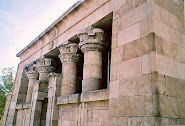
The place is the Isis-Hathor Temple of Denderah, where the priests hasten along the columned aisle to witness an important event. The principal temple is dedicated to Hathor, whereas a small adjacent one is dedicated to Isis in which a statue of the goddess is located at the end of the aisle.
It is a little before 5am on 22 July, 700 BC, the summer solstice; the priests wait to watch Sirius rise and its rays penetrate the temple to fall on Isis's gem. As they arrive the sun is still below the horizon, and they gaze impatiently for the apparent heliacal rising of the Dog Star. For the priests already knew that the appearance of Sepdet lasts only for a brief moment before Ra brightens the sky.
When the star begins to flicker low on the horizon it marks the beginning of a New Year in Ancient Egypt. The festivities will soon begin. The Egyptians referred to the heliacal rising and its associated festival as prt spdt, "the going forth of Sepdet". The star hid for 70 days, and now it has returned from the duat (underworld) to bring welfare to the land and to allow its people to bury their dead.
The 70 days of the star's invisibility is due to the dominance of sunlight in this period. When it starts its heliacal rise from the east it is ahead of the sun by about 11 degrees, moving across the celestial sphere to set in the west. On subsequent nights, it distances itself from the sun by appearing earlier and spending longer in the night sky until it eventually becomes out of phase with the sun, rising just when the sun is setting over the western horizon. It again approaches the sun on successive nights until it disappears totally from view, obscured by the sun's brilliance for 70 days before reappearing again for a few minutes just before sunrise -- the heliacally rising.
Not only does the star herald the flooding of the Nile, but the shade of the blue-white star is also important. If the star appears bright and clear, the Egyptians expect an abundant harvest. If it is dull and reddish, a poor harvest results. In the second century AD the Egyptian astronomer Ptolemy described the star as being red, and the less red it was the better the harvest.
The Arabs too revered the star ,which they called "Al-Shi'ra Al-Yamaniyyah", referring to Yemen, south of Mecca; for it was this star which guided them in this direction. Many nations paid homage to its goddess, Isis. Her fame spread to all corners of the Roman Empire, and the last recorded festival of Isis took place in Rome in 394 AD. There was even a temple of Isis on the River Thames in London. To the Egyptians she was the caring mother and the symbol of fertility. She also owned magical powers; as she restored her husband to life after he was murdered by his brother Set. Some scholars believe the River Nile took its name, Siris, from Sirius. Not only was it the foundation of the Egyptian religious system, but its celestial movement determined the Egyptian calendar.
Another bright star is Canopus (Arabic Suhayl), the second brightest star in the sky after Sirius and similarly located in the southern hemisphere. It is used nowadays to guide spaceships. Both stars disappear for an almost equal amount of time and rise heliacally at the summer solstice.
Sirius is the brightest star in the night sky, 20 times brighter than our Sun and twice as massive. It is called the Dog Star because of its prominence in the constellation of Canis Major . Since it is the star of Isis, it was supposedly married to Orion, or her brother Osiris. The Arabs, however, made Sirius the sister as well as the wife of Canopus, "Alpha Carina" rather than Orion. Scholars say "Sah" in the Pyramid Texts, with whom the soul of the king was to be united, resembles the name Suhayl. They also say that Sirius, as a star, was married to another star and not to a constellation.
Rest of article.
11th Vins du Medoc International Open
51 players (results reported only through player 27 at The Week in Chess)
1 FOMICHENKO Eduard m RUS 2492 8.0/9
4 FOMICHENKO Svetlana gf UKR 2269 6 – wife of #1? Sister?
8 TRABERT Bettina gf GER 2272 5,5
12 ARMAS Lara-Maria FRA 1891 5,5
18 ZICKELBEIN Eva-Maria ff GER 2135 5
24 ARMAS Lena FRA 1748 4,5
Sunday, June 29, 2008
Supporting Local Chess: Some Announcements
The Katonah Library in Lewisboro, New York is sponsoring chess classes this summer:
Reading, chess programs at Katonah Library
Written by Matt Dalen
Sunday, June 29, 2008
“Learn How to Play Chess” is for second grade students and older. John Gallagher will teach the basic rules and strategies of chess. All levels of experience are welcome and there will be a number of practice games.
The library is at 26 Bedford Road in Katonah. There is some street parking and, on weekends, nearby municipal parking.
Information: 232-3508 or katonahlibrary.org.
******************************************************************************************
The Aiken County Chess Club (Aiken, South Carolina) was featured in the Carolina Chronicle:
Aiken County Chess Club
Special
Sunday, June 29, 2008
MEETS: Every other Saturday from 10 a.m. to 3 p.m. at the Stoplight Deli on Laurens Street in downtown Aiken.
MEMBERSHIP: Anyone may join the group; membership is free.
MISSION: The Aiken County Chess Club is a forum where chess enthusiasts can participate in friendly competition. Anyone interested in the game of chess is urged to come out and play.
QUOTE: "Chess brings back the art of conversation," said David Whatley, the secretary of the club.
INFORMATION: Contact Mr. Whatley at whatleydavid@bellsouth.net.
Here is the website for the Aiken County Chess Club!
************************************************************************************************
Want to pick up a casual game of chess in Portland, Oregon? Visit Anna Banannas. Love the name! Here are the details from the PortlandMercury.com:
Anna Bannanas
1214 NW 21st Avenue
Portland, OR 97209
503.274.2559
Website
Hours: Mon-Thu 7:30am-11pm, Fri 7:30am-midnight, Sat 8am-midnight, Sun 8am-11pm
Women Who Ruled: Salome Alexandra
As I read the BAR article, in the back of my mind was the information I've learned from Barbara Walker and her "A Woman's Encyclopedia of Myths and Secrets" so I cast a jaundiced eye on the patriarchal gloss given to the history of Salome Alexandra and her feminine compatriots. Still and all, I think this article shows without a doubt just how important it was in the Middle East (just before Roman times) to be married to a female of rank in order to exercise power as a king - and how women of rank could and did change the course of history by exercising their own inherent power at strategic points. There is no doubt that these women were king-makers.
BAR 34:04, Jul/Aug 2008
The Salome No One Knows
Long-time Ruler of a Prosperous and Peaceful Judea Mentioned in Dead Sea Scrolls
When people hear the name Salome, they immediately think of the infamous dancing girl of the Gospels. Herod Antipas—the man Jesus denounced as a “fox”—had married his brother’s wife, Herodias. When John the Baptist denounced this illicit union, Herod Antipas cast him into prison. It was Herodias’s daughter, Salome, who danced before Herod at his drunken birthday gala. Her performance so pleased Herod that he promised her anything she wished: up to half his kingdom! At her mother’s urging, Salome asked for the head of Herod’s most famous prisoner on a platter. Fearful of breaking his word before his guests, Herod granted Salome’s request and ordered John the Baptist beheaded.1
In antiquity there was a considerably more famous Salome, however, who was revered for centuries. She was so admired that generations of mothers, Herodias apparently among them, named their daughters Salome in her honor. This Salome was the only woman ever to govern Judea as its sole ruler. She is even mentioned in the Dead Sea Scrolls: the sole woman, and one of only 18 people named in the scrolls.2 She presided over a number of religious reforms that shaped the Judaism of Jesus’ day as well as our own. During a time of chaos, men chose her to lead their nation and fight their battles. Centuries later, the authors of the Talmud regarded her reign as a golden age. Yet this remarkable woman has been largely erased from history. Her name is Queen Salome Alexandra.a
Salome Alexandra’s world was a time of uncertainty and confusion. It had been this way since the conquests of the great Macedonian general Alexander the Great (356–323 B.C.E.), who brought Greek culture, foreign ways and new religions to the Middle East. Alexander spread Greek civilization throughout the territories he conquered. As a result, many people in Salome Alexandra’s Judea had adopted Greek culture: a phenomenon known as Hellenism, whose chief hallmark is not only cultural but also religious tolerance. For many pious Jews, Hellenism constituted nothing less than a threat to Judaism’s very survival, since God had commanded, “You shall have no other gods before me.”5
In 167 B.C.E. Antiochus IV Epiphanes, the Hellenistic Greek king of Syria and heir to a portion of Alexander’s empire, in effect declared war against Judaism. Forsaking the tolerance that had come to define Hellenism, Antiochus banned circumcision, Sabbath observance, dietary laws and Temple sacrifices. In reaction, a Jewish priest named Mattathias ignited a resistance movement to expel the Syrians. His son Judas—nicknamed Maccabee (“the Hammer”)—eventually recaptured Jerusalem and rededicated the Temple. After Judas’s death, his brothers Jonathan and Simon continued the struggle for independence. Each became not only Judea’s secular ruler, but also its high priest. They and their descendants became known as the Hasmoneans, a name that refers to Mattathias’s great-grandfather, Hasmon. These were Salome Alexandra’s illustrious ancestors, whose deeds are still recounted at the Jewish festival of Hanukkah.6
Mattathias’s son Simon was followed by his son John Hyrcanus (Hyrcanus I). With Hyrcanus a new, less-illustrious chapter of Judean history begins that involves palace intrigues, dysfunctional families and even matricide.
Most of what we know of this period comes from the first-century Jewish historian Josephus (37–100 C.E.), a contemporary of New Testament figures like Paul and Jesus’ brother James. But as regards our heroine Salome Alexandra, Josephus is often uncharacteristically brief, omitting important details and even providing contradictory accounts in his two great works, The Antiquities of the Jews and The Jewish War (about the great Jewish revolt against Rome in 66–70 C.E.). Although he is not particularly sympathetic to Salome Alexandra (unlike the later rabbis of the Talmud), even he had to acknowledge her remarkable achievements.
Salome Alexandra’s story really begins with John Hyrcanus, son of Simon, son of Mattathias. Hyrcanus had four sons (actually five, but we don’t even know the name of the fifth son, and he does not figure in our story), whether by more than one wife we are not told. Hyrcanus’s two elder sons, warriors like him, were named Judah Aristobulus (Aristobulus I) and Antigonus. At some point in his life, Hyrcanus intended them to succeed him. In the end, however, he designated his wife (whose name we don’t know) to be his successor.
Upon his death, however, John Hyrcanus’s son Judah Aristobulus ignored his father’s will and proclaimed himself both king and high priest. According to Josephus, his mother “disputed [Judah Aristobulus’s] claim to authority,” which suggests that she had considerable support. So Aristobulus had her imprisoned, where he allowed his mother to die of starvation.
Next, Aristobulus turned to his brother Antigonus, ordering him to appear before him unarmed—a test of loyalty to determine whether there was any truth to the persistent rumors that Antigonus was about to seize power. Aristobulus’s wife, Salina Alexandra, intercepted the message, however, and changed its contents: Antigonus is ordered to appear before the king arrayed in his new armor. Antigonus literally walked into a trap. Aristobulus’s bodyguards, acting upon standing orders to prevent anyone carrying weapons from approaching the king, killed him.
Upon hearing this news, Aristobulus was consumed with remorse. The physical symptoms from which he had been suffering worsened. He became weakened by intense pain; he vomited blood. Aristobulus died shortly afterward, ending a reign of less than a year. [He killed his brother and felt remorse, yet he starved his mother to death and felt nothing. From his symptoms it sounds to me that someone close to him poisoned him to death with arsenic - good riddance. It is said that poison is a woman's weapon... Perhaps his own wife knocked him off - ]
At this point, unloved Alexander Jannaeus, the other brother and son of John Hyrcanus, becomes the focus of the story. Hyrcanus never saw his son Jannaeus. When Jannaeus was still in utero Hyrcanus had a dream or a vision in which God told him that neither of his two beloved sons, Aristobulus and Antigonus, would be his successor. Instead, his future son (Alexander Jannaeus) would become heir to all his possessions. When Jannaeus was born, Josephus tells us, Hyrcanus (hoping to thwart his dream) ordered the young child to be raised in the distant Galilee while his family lived in Jerusalem.
Aristobulus’s death left a power vacuum in the state. What happens next is truly remarkable. Aristobulus’s wife, Salina Alexandra, takes charge of the situation. She quickly frees Jannaeus, who had been imprisoned by her husband, and selects him as Judea’s new king and high priest. Never before had a woman chosen the monarch and high priest!
Alexander Jannaeus subsequently reigned for 27 years.
Upon his death, his wife and our heroine, Salome Alexandra, became Judea’s sole ruler for nine years (76–67 B.C.E.): the most prosperous and peaceful time in her nation’s history. Within four years of her death, however, Judea lost its independence. Long under Roman influence, Judea was now ruled by Rome directly. It would not become a sovereign nation again for more than two thousand years. [The article does not say and so I am left to wonder: was Salina Alexandra, wife of the late Aristobulus, related to Salome Alexandra, wife of Alexander Jannaeus?]
But that was four years after Salome Alexandra died. In her lifetime, she defied the odds to become the most powerful woman in Judea’s history.
Salome Alexandra’s marriage to Alexander Jannaeus, through whom she acquired the throne, was a September-May match. If the dates Josephus gives are correct, she was 29 years old at the time and he was between 14 and 16.7
It is highly unlikely that a young man of 14 or 16 would have chosen a 29-year-old woman as his wife. The marriage of Salome Alexandra and Alexander Jannaeus was almost surely arranged by their parents, which was the custom of the time. It was clearly an unhappy union. [No evidence is given for this statement, and for all we know, young Alexander J. may have been quite eager to get his hands on a hot, older experienced woman, who clearly also came with "extras" - such as familial power to rule.]
Salome Alexandra’s rule contrasted sharply with that of her late husband Alexander Jannaeus, who was one of the most ruthless kings in Judea’s history. His youth and inexperience nearly brought his nation to ruin. His foolish attack on the Mediterranean port city of Ptolemais (Acco) led to an invasion of Judea by an Egyptian pretender, Ptolemy Soter, whose forces were in Cyprus. Soter easily defeated Jannaeus’s forces and wiped out between 30,000 and 50,000 Judeans. According to Josephus, as Soter’s men ravaged Judea they boiled women and children—and ate them.8 [Yeah, right. A classical example of media bias!]
Jannaeus’s reign continued to be filled with violence and endless warfare. Although he considerably expanded his kingdom in nearly every direction, his people abhorred him. Josephus reports a telling episode that occurred on Sukkoth (the Feast of Tabernacles), one of the three pilgrim festivals when Jews flocked to Jerusalem in droves. Sukkoth observance involves waving a palm frond and carrying a lemon-like fruit called a citron (etrog in Hebrew). As high priest, Jannaeus presided over the Temple ceremonies. On this occasion, the festival pilgrims pelted Jannaeus with their etrogim.
Jannaeus’s retaliation was brutal. Over the next six years he killed more than 50,000 of his own people. Once, while he publicly feasted with his concubines, he crucified 800 Jews after slaughtering their children and wives before their eyes. The people of the Dead Sea Scrolls viewed this atrocity as such an unprecedented act of cruelty that, as was their custom, they looked to Scripture for an explanation. How could God allow this to happen? The commentaries they wrote looking to Scripture for an explanation of current events are called pesharim (plural of the Hebrew pesher, meaning “interpretation”). A pesher cites a scriptural verse and then connects the sacred text to a current event. The pesharim rarely name individuals, however; they prefer epithets that describe the personalities of the people they denounce.
The Nahum Pesher contains a number of historical allusions that allow us to identify Alexander Jannaeus as “the Lion of Wrath.” The pesher also alludes to his wife Salome Alexandra as a prostitute. For the author of the pesher, Scripture had predicted the deeds of both Salome and her husband. The pesher mentions by name the Syrian king Demetrius who, with the support of the Pharisees, had invaded Judea in an ill-fated effort to remove Alexander Jannaeus from power. The pesher then quotes the Book of Nahum 2:12: “The lion catches enough for his cubs, and strangles prey for his mates.” The ancient reader would know that Nahum continued, “?‘I am going to deal with you,’ declares the Lord of Hosts” (Nahum 2:14 [verse 13 in English]). The pesher text then refers to the lion in the Nahum text as “the Lion of Wrath” who kills some of his people by “hanging them alive” (i.e., crucifixion). Because Alexander Jannaeus crucified the Pharisees who had invited Demetrius to invade Judea, it is clear that Jannaeus must be the “Lion of Wrath.”
In subsequent passages the Nahum Pesher quotes additional verses from Nahum to describe a change in government and the reign of a woman: “Because of the countless fornications of the prostitute, the alluring mistress of sorcery, who ensnares nations with her harlotries and people with her sorcery” (Nahum 3:4). Again the ancient reader would know that this passage was followed by: “?‘I am going to deal with you,’ declares the Lord of Hosts” (Nahum 3:5). The pesher is clearly alluding to Salome Alexandra and her reign. The Dead Sea Scroll sectarians denounce her simply because they rejected all Hasmonean monarchs. The pesher also seems to have had difficulty accepting the reign of a woman since they wanted the reader to equate the evil “prostitute” denounced by Nahum with Salome Alexandra.
Josephus tells us very little about Salome Alexandra during her husband’s reign of terror. In Jannaeus’s last three years in power (79–76 B.C.E.), he suffered from the effects of a lifetime of heavy drinking and quartan fever or malaria, yet he continued to wage war to expand Judea. At this time, and during the many years he spent campaigning outside Judea, Salome Alexandra must have acted as regent. This is suggested by the manner in which she became queen. When Jannaeus was across the Jordan besieging the city of Ragaba, she was there.9 Jannaeus realized he was dying. In Josephus’s words:
Alexander [Jannaeus therefore] bequeathed the kingdom to his wife [Salome] Alexandra, being convinced that the Jews would bow to her authority as they would to no other, because by her utter lack of his brutality and by her opposition to his crimes she had won the affections of the populace. Nor was he mistaken in these expectations; for this frail woman firmly held the reigns of government, thanks to her reputation for piety.10
When Jannaeus died, Salome Alexandra continued his military campaign, successfully captured Ragaba and returned home to Jerusalem as the nation’s new monarch. Judea’s future was now in the hands of a woman. The Judeans willingly accepted a female ruler even though Salome Alexandra had two grown sons!
Salome Alexandra appears to have made peace with her husband’s enemy, the Nabatean king Aretas, and apparently undertook a military expedition to help him regain Damascus from a strongman named Ptolemy Mennaeus. By this action, Salome Alexandra brought peace to Judea’s eastern and northern frontiers, long a scene of conflict during her husband’s reign.
Salome Alexandra realized that she had to adopt some of her husband’s policies and keep a strong military, lest neighboring powers seek to annex Judea now that a woman held the reins of power. According to Josephus:
[She] took thought for the welfare of the kingdom and recruited a large force of mercenaries and also made her own force twice as large, with the result that she struck terror into the local rulers round her.11
Josephus also remarks that she “proved to be a wonderful administrator in larger affairs,” doubling the size of Judea’s army and hiring additional foreign troops. In a later expedition to Ptolemais—scene of her husband’s disastrous expedition—she confronted the Armenian king Tigranes, who abandoned his plan to invade Judea and left the region. He apparently realized that a fight with the powerful Queen Salome Alexandra, and her considerable military force, was not worth the trouble. Unlike her husband, Salome Alexandra successfully used the mere threat of violence to prevent conflict and bring peace and stability to the region.
Salome Alexandra not only made peace with her husband’s foreign enemies, but also with his religious foes. It was during the Hasmonean period that the Pharisees and Sadducees—both familiar to readers of the New Testament for their encounters with Jesus—became prominent religious parties. Both struggled for the hearts and minds of ordinary Judeans. Unfortunately, we do not have any document that we can definitively say was written by a Pharisee or a Sadducee of Salome Alexandra’s day. Scholars must rely upon later, often-inaccurate, sources to learn about them. According to the New Testament: “The Sadducees say that there is no resurrection, or angels, or spirit; but the Pharisees acknowledge all three” (Acts 23:8). Although Jesus called the Pharisees “hypocrites” (Matthew 12:13) and “a brood of vipers” (Matthew 23:23), these references are unfair. Because Jesus and the early Christians believed in resurrection, they viewed the Pharisees as their greatest rivals; for this reason, the New Testament accounts cannot always be trusted to present a fair and balanced portrayal of the Pharisees.
The Pharisees were greatly respected by the people of Jesus’ day. This was because they promised the masses the hope of an afterlife. Moreover, unlike the aristocratic Sadducees, a group largely composed of upper-class priestly families, the Pharisees were ordinary Judeans. In keeping with their common roots, the Pharisees emphasized simple, pious living and devotion to the Torah. Most important, the Pharisees believed in the Oral Law: teachings that were purportedly passed down from the time of Moses until their day. They considered these laws binding along with the written laws of Scripture. The Oral Law was popular among the masses since it often made life easier. This was especially true of the Sabbath. For example, in Salome Alexandra’s day the Sadducees taught a more rigid adherence to the prohibition against work on the Sabbath.
The Hasmoneans had once been Pharisees. But Salome Alexandra’s father-in-law, John Hyrcanus, became a Sadducee. When the Pharisees challenged his right to serve a high priest, he not only abrogated the Pharisaic interpretation of the Law, he persecuted those who continued to observe and teach it. The people had no choice but to accept the Sadducean way; otherwise they would be banned from worshiping in the Temple. When the Sadducees took control of the Temple, they disregarded the Oral Law. This made them very unpopular with most Judeans who already distrusted them for their ties to the government. Salome Alexandra alone among the Hasmoneans recognized that the Sadducees were immensely unpopular and that the Hasmonean monarchy faced an uncertain future until it made peace with the Pharisees.
Although Hyrcanus’s sons Judah Aristobulus, Antigonus and Salome Alexandra’s husband, Jannaeus, remained Sadducees, Salome Alexandra was a committed Pharisee.
The Talmud, the compendium of Jewish Law and lore, preserves several stories about Salome Alexandra that suggest she openly supported the Pharisees during her husband’s reign. During her own reign, with the help of a leading Pharisee named Simeon ben Shetah, the court system was reformed, and the ketubah—the woman’s marriage contract that specified the obligations of the groom toward his bride—was introduced. A continuous stream of tradition from the first century B.C.E. to the redaction of the Mishnahb at the end of the second century C.E. associates wealthy influential women with the Pharisees. In exchange for their financial support, the Pharisees gave these women greater religious and legal rights than the Saducees did. Also during her reign, children were required to attend school, a decree that presumably included young girls.
The Talmud preserves a charming story about Salome’s reign that reflects the high regard in which she was held:
The story is told that in the days of Simeon b[en] Shetah and in the days of Salome the Queen, that the rains would come down from Sabbath eve to Sabbath eve, until the wheat became like kidneys, the barley like olive pits, and the lentils like golden denars. The sages gathered some of them and put them aside for the coming generations.12
Because the rabbis who wrote the Talmud were the spiritual heirs of the Pharisees, modern Judaism is, to a great extent, the direct descendant of the Pharisaic Judaism developed in part through Salome Alexandra’s patronage of the Pharisees.
What about Salome Alexandra’s children—Hyrcanus (II) and Aristobulus (II)? After all, in the normal course of things, they could expect to succeed their father. Again, we rely on Josephus:
Of these sons, the one, Hyrcanus [II], was too weak to govern and in addition much preferred a quiet life, while the younger, Aristobulus [II], was a man of action and high spirit. As for the queen [Salome] herself, she was loved by the masses because she was thought to disapprove of the crimes committed by her husband.
[Salome] Alexandra appointed Hyrcanus [II] as high priest because of his greater age but more especially because of his lack of energy; and she permitted the Pharisees to do as they liked in all matters, and also commanded the people to obey them; and whatever regulations, introduced by the Pharisees in accordance with the tradition of their fathers, had been abolished by her father-in-law Hyrcanus [I], these she again restored. And so, while she had the title of sovereign, the Pharisees had the power.13
Although Josephus wanted to portray Salome Alexandra as a pawn of the Pharisees, a close reading of his accounts suggest that she was a strong-willed and independent monarch. She had, after all, remained a Pharisee at the time when her husband had persecuted, and even crucified, members of this religious movement!14
Salome Alexandra’s only failure was, perhaps, her younger son Aristobulus. She apparently never won his loyalty. He was too much like his father; he was a military man and a Sadducee. Moreover, the two sons hated one another.
When archaeologists excavated the magnificent winter palace of the Hasmoneans in the warm desert oasis of Jericho, they uncovered two identical adjacent complexes that Salome Alexandra had built: one for her son Hyrcanus, the other for her son Aristobulus.15 Salome Alexandra must have loved both of her sons, but she apparently realized that she had to keep her two sons apart from one another even in their leisure time!
Although she sought to provide both with the same comforts and amenities, the elder one, Hyrcanus, was clearly her favorite: She had chosen him to be Judea’s high priest. According to Josephus, the younger Aristobulus, “let it be plainly seen that if only he should get the opportunity, he would not leave his mother any power at all.”16
In 67 B.C.E., Salome Alexandra became ill. She was 73 years old and had ruled Judea for nine years. Aristobulus took advantage of her physical limitations and staged a coup. She ordered her son Hyrcanus and her officials to use any means necessary to quell the rebellion. Salome Alexandra spent her final hours leading the nation. Before her death, she likely appointed Hyrcanus as king. His reign lasted only three months, however, before he relinquished the throne to his bellicose brother. Unfortunately, at the urging of his friend Antipater—father of Herod the Great—the inept Hyrcanus tried to regain his former titles. The Romans took advantage of this sibling rivalry and, in 63 B.C.E., invaded Judea. Hyrcanus was restored to his position as high priest, but not as king. Judea was now declared a Roman possession. The Hasmonean age was over. Direct Roman rule had begun.
The last word belongs to Josephus:
[Salome Alexandra] was a woman who showed none of the weakness of her sex; for being one of those inordinately desirous of the power to rule, she showed by her deeds the ability to carry out her plans, and at the same time she exposed the folly of those men who continually fail to maintain sovereign power.17
Although largely forgotten today, Salome Alexandra was likely the greatest Hasmonean ever to have sat upon the throne.
Additional Reading from the BAS Library:
Salome’s Dance
BR 18:01, Feb 2002
Footnotes:
I'm not going to copy all of them here, but I wanted to make sure this gets translated. It's footnote 'a', about Salome's name:
But she is also known by several other names—Shel-Zion, Shalmonin, Shalmza and Shlamto. The esteemed historian of ancient Judaism Jacob Neusner has called her “a queen whose name no one can get straight.”3 The Dead Sea Scrolls have now revealed for the first time in more than 2,000 years her real name: Shelamzion. Its shorter version is Salome.4.
Supporting Local Chess with $$$: Houston Chess Club
Glenn was much struck with delion's idea for and funding of a $100 prize at the 2008 Canadian Open to the first player (no class or rating limitation) to promote a pawn, and he has taken it one step further with his funding of two prizes for the Houston Chess Club event. Hey darlings, that just goes to show, the old song lyrics are right "it's never too late, never too late, baby..."
Here are the particulars about the special Pawn Promotion Prize for the Houston Chess Club's July 4th event, from Glenn's chess blog.
Here's some information about the Houston Chess Club.
Friday, June 27, 2008
Jael
I was looking in Barbara Walker's "A Woman's Encyclopedia of Myths and Secrets" for other information when I came across an entry on Jael!
Jael (var. Jaala)
"Wild She-Goat," alternate name for the Israelite queen Deborah as a mate of the scapegoat-god, Baal-Gad or Pan. Ja-El was the same as the Persians' primal Goddess Jahi, adopted by tribal queens of the pre-patriarchal period. Jael sacrificed Sisera in a strange way, nailing his head to the ground (Judges 4:21), which may be likened to the priestesses of Artemis Tauropolos nailing the head os their victims to crosses.(1)
Notes:
(1) Graves, G.M., 2, 78.
*************************************************************************************
Hmmmm, well, I don't know about that. I'm skeptical of the definition Walker gives for Ja-El. "El" is "god" - but no "god" is mentioned in "Wild She Goat." If "El" means god, than Ja means goat woman (as "Ba" means goat man)? So Jehovah (Jah) was actually a female goat goddess - or some hybrid form of goat and woman? Well, that's an interesting supposition, but I'd like to know more about the meanings of these words.
The conflating of Deborah and Jael is also interesting. In the biblical account they are definitely two distinct women, although it certainly is possible that the death of Sisera was at the hands of Deborah, the "queen," rather than Jael. Deborah, it will be recalled, prophesied the death of Sisera at the hands of a woman rather than her general, Barach, who evidently showed some doubt about Deborah's prophecy that the Israelite army would be victorious over Sisera's forces!
Walker's Encyclopedia also has an entry on Jahi the Whore. What a title, oh my!
Persian patriarchal epithet for the Great Mother who brought forth, then mated with, the serpent Ahriman, as Lilith or the pre-Adamic Eve was supposed to have done with the biblical serpent. Zoroastrian scriptures said Jahi brought menstruation into the world, for she menstruated for the first time after mating with her serpent. Jahi also brought sex into the world by seducing the first man in the primal gardne. Jewish patriarchs probably derived their notions of the sinfulness of women (by virtue of their descent from Eve) from Persian ascetics who claimed all women were "whores" because they were descendants of Jahi. [Would this have been during the 70-Year Exile in Babylonia?]
Oddly enough, some of the earliest forms of the name of the Jewish God seem to have been masculinized versions of the name of Jahi. Variations included Jahu, Jah, Yahu, Yahweh, Iau, Jaho. Some myths indicate that this God like Ahriman once had a serpent form and may have played the part of the Great Mother's serpent.
***************************************************************************************
A serpent and a mother-creator-goddess are among the oldest deities (if not the oldest) in Chinese iconography and myth. The pre-dynastic serpent goddess of Egypt is also extremely old. I'm not too familiar with the religious legends of Sumer, but she's probably there, too.
Supporting Local Chess: Some Announcements
I have a vacation day today - a three day weekend stretches before me like the Promised Land, ahhhhh....
I have lots to do around this house. I am seriously thinking about hiring a cleaning service. I have hired a landscape contractor to come in and tame the wilderness that is my back yard, now even more overgrown than usual due to the record rains we had this month. Today I must cut the grass, vacuum, visit the supermarket and do some laundry. Yech. Normally I don't mind yard work, but with the record rainfall came a record crop of mosquitoes, and they are all thirsting for my blood. They bite even through the strongest insect repellant - and the way I sweat in this heat and humidity the stuff runs off of me in rivulets anyway, leaving me unprotected. Oh, I forgot, I'm not supposed to mention that I sweat - har :) A retirement to Las Vegas (despite the lack of potable water issues) is looking more and more appealing all the time...
By choice, I spend so much time doing Goddesschess-related things (including this blog) that the normal things in life (such as housework and grocery shopping and sleeping) fall by the wayside. But - what the heck. Once the trees have been trimmed and the weeds whacked out of the flower beds and everything properly edged and half a ton of mulch laid down, things will begin to look semi-civilized around here, and my economic stimulus check will pay for it all... I'm also seriously considering buying one of those large screened tents and affixing it so that I can once again sit on my deck without a spray can of RAID in hand.
So, as I'm girding myself and building up the resolution to go outdoors and face the swarming hungry hordes of skeeters, I'm checking out the chess news.
- Susan Polgar blogged on June 26th about giving a plug for your local chess club and (thus far) 15 people have posted about their chess clubs. Robin posted about the Hales Corners, Wisconsin Southwest Chess Club.
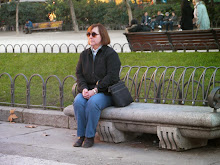
- The SWCC has a convenient email service that announces upcoming events. Casual chess was hosted last night at the Barnes & Noble bookstore not too far from where I live - I can actually get to it from here using public transportation and footpower (I don't own an automobile and never learned to drive - talk about being an ANTIQUE!) I've yet to meet any of the folks from the SWCC and would love to do so - and there's a perfect opportunity coming up September 4th when Barnes & Noble will once again be the site of an evening of SWCC chess. If you see a gorgeous slightly-overweight woman of a "certain age" with dark chin length hair (I had my Xena length tresses chopped off for the summer) in sunglasses - that's me.
I love libraries. For some strange reason - strange since none in my family were great readers - I developed a love of reading as a wee child and as far back as I can remember, made heavy use of the local book mobiles that used to regularly visit the neighborhoods when I was a kid; later, when I was old enough to venture out several blocks away from home, I walked to neighborhood branch libraries (all of which, sadly, were closed over the years due to budgetary constraints and the often wonderful buildings with rotundas and corinthian columns were sold off, one by one) to spend blissful hours in the card catalogs and the stacks. This was when I first developed a taste for science fiction, historical romances and tomes on ancient history!
Those local library branches that have survived to this day are the situs of much chess activity, which is logical given that the distinctive smell of books and the generally quite atmosphere is conducive to concentration and thought, two hallmarks of chess. Here are some announcements of local chess activities centered in libraries:
- The Batavia Library in Batavia, Illinois is hosting a summer series of chess events as part of a reading promotion program, a great idea and sounds like a lot of fun:
"Chess Knights" will be offered from 7 to 8:30 p.m. Tuesdays through Aug. 5 at the library, 10 S. Batavia Ave.
Participants may attend as many game nights as they'd like. Tables will be set up in different areas on the library's lower level, including the outdoor Reading Garden, weather permitting. Players are welcome to bring a friend or relative, or they may come alone. Library staff will make sure everyone who wants to play has an opponent.
Participants may bring their own chess set, or use one provided by the library. The program is free and registration is not required.
"After July 4, the library will host a chess tournament with prizes. Tournament play is optional," Zillman said. Tournament information will be available at the end of June. For details, call (630) 879-4775. - The Burlinginton, Massachusetts Public Library is also featuring Chess Basics for children and teens begins Monday, June 23, 7 to 8:45 p.m. Burlington High School graduate, Peter Hovey, teaches chess. Registration encouraged but drop-ins welcome. Also, July 7 and 21, and Aug. 4.
This program is sponsored by The Friends of the Burlington Public Library and is free and open to the public. - From Berkeley, California - aaaahhhhh, Berkeley, Goddess bless you! An announcement in the Berkeley Daily Planet: The Berkeley Chess Club meets every Sun. at 7 p.m. at the Hillside School, 1581 Le Roy Ave. 843-0150.
- From Tuscon, Arizona, an announcement at AZstarnet.com (Community Calendar): Chess Club — Oro Valley Public Library, 1305 W. Naranja Drive. For adults and serious youth players. 1-5 p.m. Fridays except July 4. Free. 229-5300.
Thursday, June 26, 2008
Egypt: Continuing Discoveries
From AFP Egypt archaeologists find ancient painted coffins8 hours ago
CAIRO (AFP) — A team of Egyptian archaeologists have discovered several painted wooden coffins, including some dating back to the 13th century BC rule of pharaoh Ramses II. (Photo: 19th Dynasty Beauty: The remains of a painted sarcophagus belonging to Maayi).
"These coffins were found in the tombs of senior officials of the 18th and 19th dynasties," near Saqqara, Zahi Hawass, the director of Egypt's Supreme Council of Antiquities said on Thursday.
"Some coloured unopened coffins dating back to the sixth century BC were found as well as some coffins dating back to the time of Ramses II," who ruled from 1279 to 1213 BC, he said.
Several statues were also found in the tombs which represent the owners of the coffins, said Ahmed Said who heads the Cairo University archaeological team that found the coffins.
The Saqqara burial grounds which date back to 2,700 BC and are dominated by the massive bulk of King Zoser's step pyramid -- the first ever built -- were in continuous use until the Roman period, three millenniums later.
The vast cemeteries have yielded numerous discoveries from the Old and New Kingdoms.
There is NOTHING Sacred Anymore...
From news aggregator Archaelogy News
(Story from Al-Ahram online
26 June - 2 July 2008
Issue No. 903
Unholy thefts
Squabbles between the Supreme Council of Antiquities and the Ministry of Awqaf (religious endowments) are wreaking havoc on the fate of Egypt's Islamic monuments, reports Nevine El-Aref
Thefts from Islamic monuments in the Darb Al-Ahmar area have highlighted the problem of security at Cairo's historic mosques. Inlaid wooden panels from the minbars of Ganim Al-Bahlawan and Altinbuga Al-Maridani mosques have been stolen, and a marble relief from the Blue Mosque. Thieves were also caught red handed, attempting to make off with a magnificent ironwork grill window from the sabil kuttab of Rokaya Dudu.
Residents of Darb Al-Ahmar suspect a professional local gang, which operates at night, between night and dawn prayers. Ahmed Hassan, who owns a perfume shop in the vicinity of several targeted mosques, said the minbar at Al-Maridani was removed in three phases over 10 days, raising questions as to how seriously the authorities take their responsibility to guard historic sites. The theft of the minbar 's right hand panel was discovered at the time of dawn prayer. A week passed before the left hand panel was removed, and a further two days before the thieves returned to remove the ivory inlaid hood of the minbar.
At Ganim Al-Bahlawan robbers removed the decorative elements of the minbar, leaving a plain wooden frame. At Rokaya Dudu sabil kuttab they succeeded in dismantling the iron grill from a window only to be apprehended by local residents who alerted the police. The window is now being held by the Supreme Council of Antiquities (SCA) inspectorate, to be returned to its original location following restoration work.
"It's a terrible loss," says Gamal Abdel-Rehim, professor of Islamic monuments at Cairo University's Faculty of Archaeology. The minbar of Ganim Al-Bahlawan was among the most important in any of Cairo's monumental mosques.
Abdel-Khaleq Mokhtar, director of monuments in south Cairo, told Al-Ahram Weekly that the SCA was able to abort the theft of the window at the sabil kuttab of Rokaya Dudu because the monument is under the complete supervision of the SCA, which provides a 24-hour security, while the mosques are under the control of the Ministry of Awqaf.
"Securing archaeological sites is the responsibility of the authority to which the site is affiliated," he says. Quite how 24-hour security allowed the window to be dismantled in the first place remains a mystery. Yet Abdel-Khaleq insists the SCA secures its own site round the clock, while monuments such as mosques, under bilateral supervision, are guarded only until 4pm.
Abdel-Khaleq says the SCA has repeatedly requested that the Ministry of Awqaf tighten security at mosques or else hand over responsibility to the SCA. "Currently the role of the SCA is to restore mosques and then hand them back to the Awqaf. The SCA then makes only periodic checks on the buildings' archaeological features."
Sheikh Kamal Abdel-Nasser, director of Awqaf in Cairo, argues that the SCA is shirking its responsibilities. "Why does the SCA refuse to admit responsibility for their own security shortcomings and seek, instead, to blame the mosque guards?" he asks.
Abdel-Nasser points out that legally monuments and archaeological sites are all the responsibility of the SCA and not the Awqaf. Furthermore, he adds, the mosque of Ganim Al-Bahlawan has been closed now for two years while restoration work is carried out under the supervision of the SCA and its contractors. "These accusations addressed to the Ministry of Awqaf are an attempt by the SCA to deny its responsibility for what happened."
Zahi Hawass, secretary-general of the SCA, will hold a meeting next week with the head of the Awqaf to draw up a security plan for archaeological mosques.
"Millions of pounds have been spent restoring these mosques which are then handed back to the Ministry of Awqaf," says Hawass. To tighten security, Hawass believes that the Ministry of Awqaf must provide the names of guards to both the SCA and security forces, and the SCA and Ministry of Awqaf need to cooperate more closely in an attempt to provide 24-hour security.
"Securing and preserving Egypt's Islamic monuments is not only the responsibility of the ministries of culture, awqaf, interior, the SCA and the relevant governorate. It is the responsibility of all Egyptians who want to protect their heritage and their history," says Hawass.
Mary Ann Gomez Scalps a GM
Mary outwits Abhijeet
Friday June 27, 2008
NEW DELHI: Mary Ann Gomes stunned Grandmaster Abhijeet Gupta in the second round of the Sort Open chess tournament on Wednesday.
The results (involving Indians):
Second round: Nidjat Mamedov (Aze, 2) bt Swapnil Dhopade (1); Vishnu Prasanna (1.5) drew with Rasul Ibrahimov (Aze, 1.5); Abhijeet Gupta (1) lost to Mary Ann Gomes (2); M. Shyam Sundar (1.5) drew with Manuel Leon Hoyos (Mex, 1.5); Aryam Abreu Delgado (Cub, 1.5) drew with K. Priyadarshan (1.5); Soumya Swaminathan (1) lost to Rashad Babaev (Aze, 2); Sergey Kasparov (Blr, 1.5) drew with M. R. Lalith Babu (1.5).
Prasanna Rao (1) lost to Deep Sengupta (2); Matthias Roeder (Ger, 2) bt P. Uthra (1); Tatiana Kasparova (Blr, 1.5) drew with S. P. Sethuraman (1.5); C. P. Aatirah (1) lost to B. Adhiban (2); S. Nitin (1.5) bt Kruttika Nadig (0.5); S. V. Sathya Priya (0) lost to T. Abhay (1); Josep Ferrer Dalmau (Esp, 0) lost to R. Preethi (1); Aaron Rodriquez Adell (Esp, 0.5) drew with Bhakti Kulkarni (0.5); Pon N. Krithika (1) bt Ricardo Menchon Lopez (Esp, 0); Antonio Viani D’cunha (1) bt Javier Fernandez Alvarez (Esp, 0); Yeva Kasparova (Blr, 0) lost to Shalmali Gagare (1); Jordi Corominas Garrido (Esp, 1) bt Devangi Patankar (0); A. Niji (1) bt Oscar Vela Martinez (Esp, 0).
Wednesday, June 25, 2008
Supporting Local Chess with $$$
One of the things Godesschess would like to do more on is supporting local chess initiatives. We thought it would be a fitting thing to support some local chess events in each of the respective hometowns of the three mainstays that keep things at Gchess running: Montreal (delion), Las Vegas (Isis), and Milwaukee (Jan).
To that end, Goddesschess has cooked up some modest monetary prizes for the following local events:
FIRST: The Canadian Open Chess Championship will be held in Montreal, Quebec (Canada) this year from July 19-27, 2008. Goddesschess has funded a $100.00 CAD special prize that is open to all players in all sections. However, the local chess federation has now requested (as of July 7, 2008) that we keep it a secret until after the tournament is completed. dondelion would have loved to attend the Canadian Open - but he's going to be in Milwaukee with yours truly, instead :) That's just the way it worked out. The vacation was planned months ago; the Goddesschess prizes for local chess events was of recent origin. Okay, quit smirking. We are engaged.
The Canadian Open isn't exactly a "local" event with total prizes of $25,000 CAD, but it is being held in Montreal and it seemed a natural fit for what delion had in mind prize wise.
More information about the 2008 Canadian Open can be found at the website for the Quebec Chess Federation.
SECOND: The Southwest Chess Club headquartered in Hales Corners, Wisconsin (a small community just to the southwest of where I live, in southwest Milwaukee County, Wisconsin) will be hosting a USCF Grand Prix event:
Hales Corners Challenge VIII USCF (on page 2 of Bulletin)
Grand Prix Points: 10. October 4, 2008. 4SS, G/60. 2 Sections: Open & Reserve (under 1600). Village Hall, 5635 S. New Berlin Rd., Hales Corners, WI (Milwaukee Area). EF: $35-Open, $25-Reserve, both $5 more after 10/1. Comp EF for USCF 2200+, contact TD for details. $$ Open (b/25)=1st-$325 (guaranteed), 2nd-$175 (guaranteed), A-$100, B & Below-$75; $$ Reserve b/25) =1st-$100, 2nd-$75, D-$50, E & Below-$40. Reg: 8:30-9:30, Rds: 10-1-3:30-6. Ent: Payable to SWCC, c/o Allen Becker, 6105 Thorncrest Drive, Greendale, WI 53129 ( allenbecker@wi.rr.com ). Questions to TD Gary Wright 414-226-5753.
Goddesschess is funding $100 worth of special prizes as part of the Hales Corners Challenge VIII: $50 to the top female finisher; $25 to the game selected as the best woman's game; and $25 to the game selected as the best man's game.
THIRD: Las Vegas, Nevada. Well - this is a bit disturbing, since I haven't been able to find much information online about local chess in Las Vegas. We know that people play chess in Las Vegas, but it's mostly either in organized casino teams (none of which advert for themselves) or totally casual meetings at restaurants and bookshops. It seems the events in Las Vegas are either mega events that seem out of our league, or are so small and casual they don't award prizes. The Nevada state chess organization's website has not been recently updated. I could not locate a separate website for Nevada scholastic chess.
Soooo - readers out there, can you help us out? Goddesschess wants to fund $100 in prize(s) for a local Las Vegas chess event. Any information you can give and particularly contacts will be appreciated!
Just like with the Goddesschess prize for the U.S. Women's Chess Championship, we intend to fund these local initiative prizes annually, so stay tuned!!!
Frozen Scythian Mummies May Melt Away
Geographer Frank Lehmkuhl from the University of Aachen in Germany has been studying lake levels in the Altai region for a decade. “According to our research, the glaciers are retreating and the lake levels are rising,” Lehmkuhl says. With no increase in the region’s rainfall, the change “can only come from melting permafrost and glaciers.”
As the permafrost thaws, the ice that has preserved the Scythian mummies for so many centuries will thaw too. In the Olon-Kurin-Gol grave, the ice that once crushed the mummy against the roof of the burial chamber had receded nine inches by the time the chamber was opened. Within a few decades, the ice lenses may be completely gone. “Right now we’re facing a rescue archaeology situation,” Parzinger says. “It’s hard to say how much longer these graves will be there.”
You can read the entire article at Discover Magazine Online:
06.25.2008
Frozen Siberian Mummies Reveal a Lost Civilization
Global warming may finally do in the bodies of the ancient Scythians
By Andrew Curry
Albanian Custom Fades: Woman as Family Man
By DAN BILEFSKY
Published: June 25, 2008
KRUJE, Albania — Pashe Keqi recalled the day nearly 60 years ago when she decided to become a man. She chopped off her long black curls, traded in her dress for her father’s baggy trousers, armed herself with a hunting rifle and vowed to forsake marriage, children and sex.
For centuries, in the closed-off and conservative society of rural northern Albania, swapping genders was considered a practical solution for a family with a shortage of men. Her father was killed in a blood feud, and there was no male heir. By custom, Ms. Keqi, now 78, took a vow of lifetime virginity. She lived as a man, the new patriarch, with all the swagger and trappings of male authority — including the obligation to avenge her father’s death.
She says she would not do it today, now that sexual equality and modernity have come even to Albania, with Internet dating and MTV invading after the fall of the Berlin Wall. Girls here do not want to be boys anymore. With only Ms. Keqi and some 40 others remaining, the sworn virgin is dying off.
“Back then, it was better to be a man because before a woman and an animal were considered the same thing,” said Ms. Keqi, who has a bellowing baritone voice, sits with her legs open wide like a man and relishes downing shots of raki. “Now, Albanian women have equal rights with men, and are even more powerful. I think today it would be fun to be a woman.”
The tradition of the sworn virgin can be traced to the Kanun of Leke Dukagjini, a code of conduct passed on orally among the clans of northern Albania for more than 500 years. Under the Kanun, the role of a woman is severely circumscribed: take care of children and maintain the home. While a woman’s life is worth half that of a man, a virgin’s value is the same: 12 oxen.
The sworn virgin was born of social necessity in an agrarian region plagued by war and death. If the family patriarch died with no male heirs, unmarried women in the family could find themselves alone and powerless. By taking an oath of virginity, women could take on the role of men as head of the family, carry a weapon, own property and move freely.
They dressed like men and spent their lives in the company of other men, even though most kept their female given names. They were not ridiculed, but accepted in public life, even adulated. For some the choice was a way for a woman to assert her autonomy or to avoid an arranged marriage.
“Stripping off their sexuality by pledging to remain virgins was a way for these women in a male-dominated, segregated society to engage in public life,” said Linda Gusia, a professor of gender studies at the University of Pristina, in Kosovo. “It was about surviving in a world where men rule.”
Taking an oath to become a sworn virgin should not, sociologists say, be equated with homosexuality, long taboo in rural Albania. Nor do the women have sex-change operations.
Known in her household as the “pasha,” Ms. Keqi said she decided to become the man of the house at age 20 when her father was murdered. Her four brothers opposed the Communist government of Enver Hoxha, the ruler for 40 years until his death in 1985, and they were either imprisoned or killed. Becoming a man, she said, was the only way to support her mother, her four sisters-in-law and their five children.
Ms. Keqi lorded over her large family in her modest house in Tirana, where her nieces served her brandy while she barked out orders. She said living as a man had allowed her freedom denied other women. She worked construction jobs and prayed at the mosque with men. Even today, her nephews and nieces said, they would not dare marry without their “uncle’s” permission.
When she stepped outside the village, she enjoyed being taken for a man. “I was totally free as a man because no one knew I was a woman,” Ms. Keqi said. “I could go wherever I wanted to and no one would dare swear at me because I could beat them up. I was only with men. I don’t know how to do women’s talk. I am never scared.”
When she was recently hospitalized for surgery, the other woman in her room was horrified to be sharing close quarters with someone she assumed was male.
Being the man of the house also made her responsible for avenging her father’s death, she said. When her father’s killer, by then 80, was released from prison five years ago, Ms. Keqi said, her 15-year-old nephew shot him dead. Then the man’s family took revenge and killed her nephew. “I always dreamed of avenging my father’s death,” she said. “Of course, I have regrets; my nephew was killed. But if you kill me, I have to kill you.”
In Albania, a majority Muslim country in the western Balkans, the Kanun is adhered to by Muslims and Christians. Albanian cultural historians said the adherence to medieval customs long discarded elsewhere was a byproduct of the country’s previous isolation. But they stressed that the traditional role of the Albanian woman was changing.
“The Albanian woman today is a sort of minister of economics, a minister of affection and a minister of interior who controls who does what,” said Ilir Yzeiri, who writes about Albanian folklore. “Today, women in Albania are behind everything.”
Some sworn virgins bemoan the changes. Diana Rakipi, 54, a security guard in the seaside city of Durres, in west Albania, who became a sworn virgin to take care of her nine sisters, said she looked back with nostalgia on the Hoxha era. During Communist times, she was a senior army officer, training women as combat soldiers. Now, she lamented, women do not know their place.
“Today women go out half naked to the disco,” said Ms. Rakipi, who wears a military beret. “I was always treated my whole life as a man, always with respect. I can’t clean, I can’t iron, I can’t cook. That is a woman’s work.”
But even in the remote mountains of Kruje, about 30 miles north of Tirana, residents say the Kanun’s influence on gender roles is disappearing. They said erosion of the traditional family, in which everyone once lived under the same roof, had altered women’s position in society.
“Women and men are now almost the same,” said Caca Fiqiri, whose aunt Qamile Stema, 88, is his village’s last sworn virgin. “We respect sworn virgins very much and consider them as men because of their great sacrifice. But there is no longer a stigma not to have a man of the house.”
Yet there is no doubt who wears the trousers in Ms. Stema’s one-room stone house in Barganesh, the family’s ancestral village. There, on a recent day, “Uncle” Qamile was surrounded by her clan, dressed in a qeleshe, the traditional white cap of an Albanian man. Pink flip-flops were her only concession to femininity.
After becoming a man at the age of 20, Ms. Stema said, she carried a gun. At wedding parties, she sat with the men. When she talked to women, she recalled, they recoiled in shyness.
She said becoming a sworn virgin was a necessity and a sacrifice. “I feel lonely sometime, all my sisters have died, and I live alone,” she said. “But I never wanted to marry. Some in my family tried to get me to change my clothes and wear dresses, but when they saw I had become a man, they left me alone.”
Ms. Stema said she would die a virgin. Had she married, she joked, it would have been to a traditional Albanian woman. “I guess you could say I was partly a woman and partly a man,” she said. “I liked my life as a man. I have no regrets.”
Queen Strips Mugabe of Knighthood
June 25, 2008
Queen Elizabeth II has stripped Robert Mugabe, Zimbabwe’s strongman president for nearly 30 years, of his honorary knighthood as a “mark of revulsion” at the human rights abuses and “abject disregard” for democracy over which he has presided, the British Foreign Office announced Wednesday.
The rebuke showed the extent of international frustration over Mr. Mugabe’s insistence to go ahead with a presidential runoff on Friday, even though his sole opponent, Morgan Tsvangirai, pulled out of race on Sunday because of the persistent violence and intimidation against him, his party and their supporters.
Mr. Mugabe’s government has had a long history of human rights abuses, but he was granted an honorary knighthood during an official visit to England in 1994 when, the foreign office contends, “the conditions in Zimbabwe were very different.”
But with the widespread attacks against the opposition, the foreign office said the honor could no longer be justified. Stripping a dignitary of an honorary knighthood is exceedingly rare. A foreign office spokesman could think of only one other time it had been done — in 1989 to the Romanian dictator Nicolae Ceaucescu.
Mr. Tsvangirai, the beleaguered opposition leader, called on the United Nations on Wednesday to send a peacekeeping force to bring calm to the country and help pave the way for new elections in which he could participate as a “legitimate candidate.”
“Zimbabwe will break if the world does not come to our aid,” he said in an op-ed in The Guardian newspaper in London. After weeks of mounting political violence against the opposition and its supporters, Mr. Tsvangirai withdrew from Friday’s runoff and took refuge Sunday in the Dutch Embassy in Harare.
He emerged from the embassy briefly on Wednesday to hold a news conference at his home in which he challenged President Robert Mugabe to cancel the runoff and open negotiations.
But, he said, he was not prepared to deal with a government validated by an election in which Mr. Mugabe is by default the only candidate. Mr. Mugabe has insisted Friday’s voting will go ahead.
“We have said we are prepared to negotiate on this side of the 27th, not the other side of the 27th,” Mr. Tsvangirai said, according to Reuters.
He listed four demands: an end to political violence; the resumption of humanitarian aid; the swearing in of legislators elected in the first round of voting on March 29; and the release of political prisoners.
“We have always maintained that the Zimbabwean problem is an African problem that requires an African solution,” he said, referring to continent-wide and regional African bodies including the Southern African Development Community.
“To this end, I am asking the African Union and S.A.D.C. to lead an expanded initiative, supported by the United Nations, to manage the transitional process.
“The transitional period would allow the country to heal,” he said. “Genuine and honest dialogue amongst Zimbabweans is the only way forward.” He said he wanted the African Union to endorse his proposals at a forthcoming summit meeting in Egypt.
Mr. Tsvangirai’s demands coincided with a scramble of regional and international diplomacy with many African and Western institutions saying the vote on Friday will be neither free nor fair. A critical group of southern African countries opened a meeting Wednesday in Swaziland to seek a way out of the crisis.
The meeting grouped leaders or ministers from Swaziland, Angola and Tanzania — the so-called troika charged with responsibility for the region’s political, defense and security issues. The group said it had also invited the leaders of Zambia and South Africa to attend, but President Thabo Mbeki of South Africa, the regional mediator on the crisis in Zimbabwe, said through a spokesman that he would not attend.
The spokesman, Mukoni Ratshitanga, said in a telephone interview that South Africa was not a member of the troika and had not been invited.
Amid the international outcry over his government’s handling of the crisis, Mr. Mugabe, 84, was reported Tuesday as hinting that he might be open to talks with the opposition, but only after Friday’s vote confirmed his power.
He remained defiant about going ahead with the runoff. “They can shout as loud as they like from Washington or from London or from any other quarter,” Mr. Mugabe said in televised broadcasts. “Our people, our people, only our people will decide and nobody else.”
Taken together, his remarks were the most explicit affirmation that he intended to go through with an election widely condemned as illegitimate.
Rest of article.
Tuesday, June 24, 2008
Goddess Kamkhaya
Story reported at Daily India.com
Ambubasi Mela at Kamakhya Temple draws a huge turnout of devotees
(Image: Queen Mahamaya, dreamed that a young white elephant entered her womb, and later she gave birth to Prince Siddhartha, who became Buddha.)
Guwahati, June 24: Tens of thousands of devotees from different parts of the country thronged the Kamakhya Temple for the three-day traditional fair, 'Ambubasi Mela' held here.
As per ritual, during the Ambubasi Mela, the main door of the temple remained closed for three days and all the religious activities were brought to a standstill.
The temple priests are forbidden to step into the temple leave alone the sanctum sanctorum following the belief that during this period, the presiding deity Goddess Kamkhaya undergoes her menstrual cycle.
"During this time all Hindu temples remain closed during this time. At this time no kind of farming work is undertaken. Be they Shudras, Kshatriya, Vaishyas or Brahmins, none of them cooks food at home and remain on a fruit diet. This is the significance of the Ambumasi," said Nayan Sharma, the priest of the Kamhakya Temple.
At the conclusion of three days, the temple's doors are reopened after Devi Kamakhya is bathed and other rituals are performed religiously by the priests. It is described as the Mother Earth retrieving her purity.
The devotees are allowed to enter the temple to worship Devi Kamakhya only on the fourth day.
The ceremony that lasted till Tuesday this year is believed to be purely a ritual of the Tantrik cult and observed to fulfill certain obligations.
Sadhu Surpanj Baba, a hermit said: "Some visit the temple for devotion, some come to fulfill their promises and to all the Devi Kamhakya showers Her blessings for their aspirations to come true."
Kamakhya is an aspect of the Goddess Sati or the wife of Lord Shiva. The temple in her honour exists in the Kamrup district here. The temple is one of the 51 holy Shakti Peethas related to Sati.
Copyright Asian News International
***********************************************************************************
The following information is from Barbara Walker's "A Woman's Encyclopedia of Myths and Secrets" under Sati. There was no separate entry under "Kamkhaya."
Sati
Kali as the dangerous Virgin Bride of India's svayamara ceremony. The same name was applied to Egypt's similarly archaic Virgin Huntress, once the ruler of the first nome of Upper Egypt (on modern maps, this means southern Egypt), called "The Land of Sati." Her holy city was Abu, the City of the Elephant (the Greeks' Elephantine), where she was worshipped in conjunction with the elephant god, who also mated with the Hindu version of Sati under her "magic" name of Maya, to beget the Enlightened Son of God, Buddha.(1)
India still has pilgrimage centers known as Footprints of Sati, memorials of the time when the Goddess waled the earth.(2)
Notes:
(1) Larousse, 37, 348.
(2) Ross, 49.
************************************************************************************
Ah ha! Enter the elephant - ancient playing piece of the Indian game Chaturanga, ancient playing piece of the Persian game Chatrang, and ancient playing piece in the Chinese game Xiang-qi - which to this day some people insist is called "Elephant Game." In modern Western chess, the elephant piece became our Bishop.
The two tusks depicted on 1000 year old (and older) Islamic chess pieces of the "vizier," "farzin" or "wazir" evolved into the Bishop's mitre (in Western chess) as the Arabic version of chess spread into Europe and was adopted by the European royal courts.
The history of the Bishop's mitre and its symbolism adapted from the ancient sacred "horn" is interesting in and of itself! Suffice to say for purposes of this post, it also represents an ancient symbol of authority and power. If you can visualize what a modern Bishop's headdress (Mitre) looks like, you can readily find examples in the great White Crown of ancient Egypt and in simultaneously ancient (and perhaps even earlier) representations of the elongated pointed crown (sometimes shown as a pointed "fish head") in Sumerian iconography.
Keep your eyes on the tusks and horns...
In archaic Egypt, sacred structures of worship were constructed of wood and woven reeds/grass. Elephant tusks were hung above the primary entrance. These structures were called (working from memory so this may not be 100% accurate) per-u, per-wu, per-wer, from which the term "Pharaoh" was later derived. It means something like "house of ..." or "house."
Is there a connection between ancient Egypt and the ancient Indian civilizations as Walker confidently asserts in her information about Sati? Consider this:
Ancient Egyptian (extinct Afro-Asiatic language family) word(s) for elephant: abu, ebu, yebu
Sanskrit: ibha
Notice the similarity in the ancient Egyptian word abu, ebu, yebu (Coptic ebou, from ancient Egyptian ‘bw) and Sanskrit ibha. This lends credence to Walker’s assertion that the Indian Goddess Sati (an aspect of Kali) was also the Goddess of Egyptian Elephantine! According to Easton’s 1897 Bible Dictionary, the word _habbim_ is derived from the Sanscrit _ibhas_, meaning "elephant," preceded by the Hebrew article (ha); and hence it is argued that Ophir, from which it and the other articles mentioned in 1 Kings 10:22 were brought, was in India.
Sati is also Kali. And I found two separate sources that state another Sanskrit word for elephant is kali, kari, karii. As I’ve no knowledge of ancient Sanskrit, this is just a guess – that the distinction between ibha and kali/kari/karii may be the distinction between male elephant (ibha) and female elephant (kali). This makes sense, since it would take a female elephant (kali) to give birth to a savior god in the form of a white elephant – thus kali (female elephant) also known as Maya, gives birth to Buddha.
Microwaves Frying Brains?
I don't know - what's the truth? We know now that plastics poison and kill us, as does the water we drink, the food we eat and the very air we breathe. Why not radio waves and microwaves?
Story from The Daily Express, the World's Greatest Newspaper
(Okay...)
SUICIDES ‘LINKED TO PHONE MASTS’
Sunday June 22,2008
By Lucy Johnston
THE spate of deaths among young people in Britain’s suicide capital could be linked to radio waves from dozens of mobile phone transmitter masts near the victims’ homes.
Dr Roger Coghill, who sits on a Government advisory committee on mobile radiation, has discovered that all 22 youngsters who have killed themselves in Bridgend, South Wales, over the past 18 months lived far closer than average to a mast.
He has examined worldwide studies linking proximity of masts to depression. Dr Coghill’s work is likely to trigger alarm and lead to closer scrutiny of the safety of masts, which are frequently sited on public buildings such as schools and hospitals.
It is also likely to fuel more campaigns against placing masts close to public places on health grounds.
Dr Coghill said last night there was strong circumstantial evidence that the masts may have triggered depression in those from Bridgend who took their lives.
They include Kelly Stephenson, 20, who hanged herself from a shower rail in February this year while on holiday in Folkestone, Kent.
Dr Coghill said: “There is a body of research that has over the years pointed to the fact that exposure to mobile radiation can lead to depression. There is evidence of higher suicide rates where people live near any electrical equipment that gives off radio or electrical waves.”
Rest of story.
Update on Esther Elizabeth Reed Criminal Case
Lawyers for woman charged in ID theft seek change of venue
By Eric Connor • STAFF WRITER • June 24, 2008
Attorneys for a high-school dropout accused of assuming a missing Upstate woman's identity and several others to con her way into prestigious universities asked a Greenville federal judge today to either dismiss charges that she submitted fraudulent loan applications or move her high-profile case to Columbia or Atlanta.
Esther Elizabeth Reed, 30, is accused in a federal indictment of stealing the identity of 20-year-old Brooke Henson, who disappeared in 1999 from her Travelers Rest home, to swindle at least $40,000 in student loans to attend Columbia University. Henson is believed to be dead, though police have said they don't believe Reed had a hand in her disappearance.
Prosecutors say the Reed assumed other women's identities to secure more than $100,000 in student loans and used her intellect to claim a false career as a chess champion and dupe professors into helping her attend prestigious universities across the country.
Reed's case has attracted the attention of both local and national media -- and Reed's attorneys argue in a motion to dismiss filed that the connection with Henson's highly publicized disappearance has spawned "extreme" Upstate publicity before the trial that makes it difficult for a judge to seat an impartial jury in Greenville.
In arguing to have the case moved to either Columbia or Atlanta from the Greenville division of South Carolina district court, attorneys Ann Marie Fitz of Atlanta and Ryan Beasley of Greenville wrote that "the inherently prejudicial pre-trial publicity will deprive the defendant of her right to a fair trial."
Rest of article.
2008 New England Checkers Championship
My Grandpa Newton taught me to play when I was about 6, and we played lots of games while listening to Cubs games on the radio until he died in 1964, when I was 13.
While chess reminds me of being a girl turning into a woman (as I was 18 when I first learned the game), checkers reminds me of being and kid, and lazy summer days on Grandma and Grandpa Newton's truck farm in Sturtevant, WI, sleeping in the attic bedroom with the windows wide open, listening to the crickets and the distant whine of train whistles in the night, of incredibly starry skies and the smell of fresh-mown grass, of cow-pie fights on the 40 acre dairy farm of one of my best childhood friends in Sturtevant, of watching Grandma Newton make the most incredible food from scratch (all from memory) on a square butcher's block table at which I sat on a bar stool and watched - with awe and respect.
How I miss those days. How glad I am I had them.
And so, this news about checkers caught my eye tonight:
Championship draws checkers fans to Dover
By Bev Wax/Correspondent
Tue Jun 24, 2008, 05:11 PM EDT
Dover -
Dover was home to the 2008 New England Checkers Championship last Saturday with more than a dozen people competing. Playing the classic game in tournament play means following a set of strict rules designed to challenge and encourage strategic play.
Many of those attended had traveled from New York or New Jersey to have the chance to play with some of their talented peers at the home of Richard and Catherine White. Since it was an open tournament, anyone was able to participate, but only New England players were able to win a title.
Turns out the overall winner was Jimmy O’Grady of Yonkers. The 53-year-old Grady has been playing for about 15 years and says the game “keeps the mind alert.” The oldest player there that day, 88-year-old Gordon Sharp couldn’t agree more. Other players joked he must have really wanted to play checkers … he was in a wheelchair and had gotten up quite a steep driveway with the help of his daughter.
O’Grady said his checkers history comes in two sections. As a young boy, he learned the game in Scotland playing with an ill boyhood friend who lived next door: “Checkers took his mind off his sickness.” He moved to the United States in 1937 and played checkers with a Russian barber. Quick-witted, he chuckled, “He wasn’t busy. There was no work at the time!” After getting discharged from the Navy, he didn’t rediscover the game until three years ago when he started playing online.
While online games hone his skills, O’Grady said, “Once you start winning, they walk away.” He along with everyone else prefers playing face-to-face.
White’s wife, Catherine, agreed, “There is nothing that substitutes sitting across the table.”
Her husband, a three-time New England champion and five-time Massachusetts champion, plays every year at Dover’s Old Home Day while she co-chairs the event.
“One year, 22 kids played with him, including a boy who had a broken arm,” she said.
Catherine White said checkers is wonderful for the children who are not interested in or cannot play sports due to physical limitations, such as her nephew with cerebral palsy: “All you need is a board and a flat surface.”
The couple met at Dickinson College playing competitive chess. However, they became more interested in the game of checkers. In fact, Richard wrote “How to Lose at Checkers” in 1994. The book describes lessons from the masters and what the top-notch players did wrong. The Whites have a whole collection of books on the game’s history and strategy. Richard brings up the quote from Marion Tinsley, considered to be the greatest checkers player who ever lived, “Playing chess is like looking out over a limitless ocean; playing checkers is like looking into a bottomless well.”
Players enjoyed socializing with each other during breaks at the full-day event, but were silent when facing each other across the board. The first round began at 10 a.m. and the event continued into the early evening. The format was round-robin with no entry fee or prize money. According to the Whites, “The first-place finisher gets bragging rights and their name on the championship plaque.”
Mike Magnelli’s name is listed on the traveling plaque many times. He again is this year’s co-New England champion with Steve Kelly. “Checkers is a great hobby. It takes you away from the day-to-day world. Playing face-to-face is much more congenial” than playing online against a computer,” said Magnelli.
Richard chimed in, “It’s pretty clear that we are all real people here!”
One of the younger players, 39-year-old Alex Weaver, came up from New Jersey to strengthen his skills. Wearing Red Sox gear, he noted he was brought up “with flying kings. I needed to learn this particular style and lost a lot of games when I first started.” A friend of O’Grady’s, Bill Hozak, admitted he was a novice and was there playing for fun “and making the same mistakes over again.” He did learn a trick was to keep pieces in a triangle as a defense so that your competitor “was not able to double jump.”
The tournament was dedicated to renowned checkers player Freeman T. Frank, a high school history teacher in Melrose, who died in October 2007.
Checkers or draughts, as it is called in Great Britain, has a long history. It is believed that the earliest form of checkers was a similar game discovered in an archeological dig in the Middle East dating around 3000 B.C. Around for centuries, it has been enjoyed by billions.
According to the New York Times, in July 2007, Jonathan Schaeffer, a computer scientist at the University of Alberta in Canada, “announced that after running a computer program almost nonstop for 18 years, he had calculated the result of every possible endgame that could be played, all 39 trillion of them. He also revealed a sober fact about the game: checkers is a draw. As with tic-tac-toe, if both players never make a mistake, every match will end in a deadlock.”
This seems unlikely to happen in an imperfect world playing against fallible human beings. If last weekend is any indication, checkers will continue to be a popular social activity for generations to come for children and adults of all ages.
And the winners are…
Richard emailed me saying he might have a slight change…I need to go out but maybe he will send directly to you!
Overall winner - Jimmy O’Grady of New York
Co-New England champions - Mike Magnelli and Steve Kelly
Massachusetts champion - Steve Kelly
Rhode Island champion - Mike Magnelli
Connecticut champion - Al Darrow
Monday, June 23, 2008
Business as a "Chess Game"
Article is from the Arizona Republic online
A king's view of business as chess game
Dale DautenKing Features Syndicate
Jun. 23, 2008 12:00 AM
Today we have a special guest commentary from Gerald "Genghis" Cone, CEO here where I work, Mundane Industries, offering his latest thoughts on leadership.
Running a corporation is like playing chess. Not that I play chess, but my decorator put a teak and ivory chess set next to the fireplace in my office and it reminded me of my college days when I used to play with my roommate, who I'd feel sorry for because he thought being smart would make him successful.
Dauten tells me there are several business books with a chess theme, but I only read business books by people whose companies are bigger than mine, so I haven't read any of them. And I don't want any niggling from you chess nerds, either, unless you make more than I do.
OK. Chess. I am, of course, the King, and the game revolves around protecting me and my wealth.
As for the little people, the pawns, there are some execs who like to outsource everything including employees, but I think that's foolish. Why let some other company make money on your people? No, the shrewd corporate leader knows the beauty of having pawns who are "independent contractors." Many people misunderstand the meaning of that term, supposing that "independent" refers to the freedom of such people to do their jobs as they and their professional standards see fit. HA! No, the "independent" in "independent contractor" really stands for independent of power, independent of benefits and independent of job security. This makes them cheap and expendable, like having paid foreign mercenaries in your army - losing them doesn't really count. The perfect pawns, in other words.
Next come the rooks. In my thinking, these are the people in Engineering and HR. They can move only in straight lines, but they can be useful in battle if you force them to get off their backsides (backlines) and make a difference.
Then there are the knights. In my company, these would be the folks in New Products and R&D. If you give them the whip, they can surprise you by leaping ahead, going off at an angle. I like to send them out ahead to do battle, and if they fail, well, they're failures and thus, good riddance.
Next are the bishops, representing the company's "religion," which is how I think of both our Strategy and Marketing departments. But it's important for every King to remember the example of Henry V and feel free to get a new religion. After all, who better to blame than Strategy or Marketing?
That leaves only the queen of the chessboard, and for me, that's Sales. They dash about the country, taking on the enemy and winning the big battles. That's the one piece you can't afford to lose. But when it comes to business, you can never let the queen know she's the queen. Let those egomaniacs in Sales start to believe they own the customers and before you know it, they own you.
And that's where the real chess game of business comes in. The real challenge in business is picking the right opponent. In chess, you do battle and you and your opponent are both going to lose most of your pieces. In business, you skip all the losing. You simply pay off the opponent's king and then he hands over all his pieces/assets to you.
Maya Mysteries
Article from USAtoday.com
The mystery story of the Maya slowly reveals new twists
Science Snapshot/Dan Vergano
Don't tell Indiana Jones, but most archaeologists pack spades, not bullwhips, and big discoveries usually come after lots of digging, not looting. Maya discoveries in Mexico that are rewriting the history of this classic civilization, for example, are coming from years of careful digging, not looted idols.
The classic Maya were part of a Central American civilization best known for stepped pyramids, beautiful carvings and murals and the widespread abandonment of cities around 900 A.D. in southern Mexico, Guatemala, Belize and El Salvador, leaving the Maya only the northern lowlands of the Yucatan peninsula. The conventional wisdom of this upheaval is that many Maya moved north at the time of this collapse, also colonizing the hilly "Puuc" region of the Yucatan for a short while, until those new cities collapsed as well.
But that story of the Maya is wrong, suggests archaeologist George Bey of Millsaps College in Jackson, Miss., who is co-leading an investigation of the abandoned city of Kiuic with Mexican archaeologist Tomas Gallareta of Mexico's National Institute of Archaeology and History. "Our work indicates that instead the Puuc region was occupied for almost 2,000 years before the collapse in the south," says Bey, by e-mail.
Over the last five years, Bey and his colleagues have started unearthing Maya cities in the Puuc region dating back to more than 800 B.C. "It is both the number of sites we are finding as well as that some of them produced large-scale monumental architecture — pyramids and an acropolis — while others have ball courts." At Kiuic, Bey's team has found a large platform that held at least two large ceremonial structures with ceramics. The cities dated back more than a millennium earlier than anyone had thought Maya cities existed in the region.
"This is interesting stuff. The northern lowlands usually get the short end of the stick because all the well-known classic sites are in the southern lowlands," says Maya archaeologist Lisa Lucero of the University of Illinois at Urbana-Champaign, whose own research is in Belize. "There is no doubt that many people went north after the collapse, but, there is a fuller, longer story to the northern lowlands."
The buildings, ceramics and trade items, such as Guatemalan obsidian and Olmec jade, found at Kiuic indicate these early cities of the Puuc were tied to Maya centers further south. Archaeologists had known that people lived in the region for a long time, he adds, but the complexity — large cities with hundreds of thousands of people living nearby — was unknown until recently. In 1980, only one site, Komchen, was known in the Puuc, and now there are hundreds, says Bey. "Part of the problem was that people didn't think it existed, so we were not, until recently, looking for it."
The research paints a picture of the classic Maya civilization as one big connected society from antiquity, and the "collapse" looks more like a series of local catastrophes, rather than a single apocalyptic event (apologies to Mel Gibson for the Apocalypto reference.) "The public needs to understand that the so-called Maya collapse was not an overnight affair that resulted in the total disappearance of the Maya people. The collapse took place over a period of more than 200 years," says Bey. "The result was the breakdown of elite culture and the abandonment of their cities. However, millions of Maya continued to live in Mesoamerica, especially in the northern Maya lowland, as they do so today."
Kiuic's abandonment sometime in the 10th Century is also part of the collapse story. Bey and his colleagues have found large grinding stones turned on their sides at the site, a regular practice for farmers planning to return to them — but more ominously, a large number of spear points as well.
They plan to keep on digging into the mystery. "I believe there is an even earlier occupation than what we have defined thus far," Bey says, perhaps dating back before 1000 B.C. "I may be optimistic, but I think now that we are looking for it, it is only a matter of time."
700,000 Year Old "Earl Humans"?
Article from www.thepeninsulaqatar.com
Prehistoric settlement found in Qatar
Tuesday, June 24, 2008-->Web posted at: 6/23/2008 2:25:18
Source ::: Agencies
DOHA • A prehistoric settlement in what is now Qatar may confirm alternative theories on how early humans emigrated from the African continent, a report in a Danish newspaper said.
Danish archaeologists have uncovered a settlement they believe may be over 700,000 years old, making it the oldest organised human community ever found, reported Berlingske Tidende newspaper.
Eight dwellings in the desert region of Qatar indicate that an early human species crossed what is now the Red Sea to leave their origins in Africa, according to the scientists. There is still uncertainty within the scientific community as to which routes early humans used to migrate out of Africa.
The new discovery has only been tentatively dated by the archaeologists, who have estimated the age from types of artefacts found at the site, which include axes and knives.
Other dating tests are necessary to confirm the estimates, but the find can only be carbon-dated with accuracy if organic material, such as bones, are found.
Sunday, June 22, 2008
Random Round-Up
RR at Goddesschess has been updated by delion, the master web magician. This week he takes a look at a HOT HOT HOT topic - the Devil and chess. From the old tale about Paolo Boi and the Devil (image) to dreams of chess-playing incubi, he covers a wide spread of entertaining and enlightening information. Enjoy! Random Round-Up can be found in the right-hand column at Goddesschess under the Access Mundae.We did not consult this week about RR; sometimes I make suggestions and provide links to articles and information I found interesting (sometimes he uses that info, sometimes he doesn't); sometimes we're so busy doing our respective "things" we don't talk or email at all! It's interesting, therefore, that delion picked a "devilish" theme for RR this week, as it was also the theme of my June 1, 2008 coverage of the U.S. Women's Chess Championship at Chessville. Just another one of those little synchronicities that makes life so interesting...
And now, darlings, I'm going to take a break and cut the grass in the back yard. And then sit on the deck and enjoy a few glasses of wine while I catch up on some reading!
Exhibit of Rare Vani (Colchis) Artifacts!
Would love to see these, but second best is buying the exhibition catalog - I'll have to check online to see if one is available for purchase. (Image: Gold Phiale Mesomphalos, Vani, Achaemenid influence, 400-350 B.C. Georgian National Museum.)Article from ArtDaily.org
Sunday, June 22, 2008
HOUSTON.- Just as Pompeii: Tales from an Eruption closes, the Museum of Fine Arts, Houston, will open another show of treasures from antiquity that shed light on a long-forgotten culture. Wine, Worship, and Sacrifice: The Golden Graves of Ancient Vani, beginning June 21, 2008, presents exquisite jewelry, sculpture, pottery, and funerary items excavated from the principal sanctuary and four tombs in Vani, once a part of the ancient kingdom of Colchis—home of the Golden Fleece in Greek mythology—and now the modern-day Republic of Georgia. The exhibition will be on view through September 1, 2008 in the Caroline Wiess Law Building.
The exhibition comprises more than 100 objects, dating from the 8th to the 2nd century B.C., all uncovered during the last 60 years. The objects reveal the artistic ability of the Colchian craftsmen, who developed a metal working expertise even before those skills were evident elsewhere in Europe. The graves also contained a variety of goods from other lands offering proof that Colchis was a crossroads for many ancient peoples.
“Through this exhibition, visitors will get a glimpse into an ancient corner of the world where art and craftsmanship were so prized that their owners couldn’t bear to part with favored items even in death,” said Peter C. Marzio, director of the MFAH. “By taking these objects to their graves, residents of Colchis saved them from destruction and helped to further our understanding of man’s past. The museum is pleased to bring this show to Houston.”
Archaeologists have excavated about one-third of the ancient temple city of Vani, which functioned as an urban center from the 6th century B.C. until its destruction about 50 B.C. The burial sites there have yielded an abundance of golden jewelry, silver and bronze adornments, pottery,and luxury items. The earliest evidence of wine and wine-making also comes from Vani—drinking vessels, decorated cauldrons, and a shrine dedicated to the god of wine have been found—an indication that the land that was not only rich in gold and precious metals, but agriculturally fertile.
Highlights of the exhibition include a Colchian gold necklace with 31 pendant tortoises, a bronze torso in a 5th-century Greek style and pose, libation bowls of Persian style, and red-figure pottery from Greece. A number of objects illustrate how Colchian artists were influenced by cultural interactions: a polychrome enamel-and-gold pectoral is notable for its Egyptian, Persian, and Colchian decorative motifs; a silver belt shows scenes of banqueting and animal processions reflecting Persian and nomadic iconography; and a gold diadem in a uniquely Colchian design incorporates Near Eastern imagery.
“Evidence of the complex interrelations of ancient cultures shown in this exhibition is especially fascinating,” said Frances Marzio, curator of The Glassell Collections at the MFAH, who is overseeing the Vani exhibition in Houston. “Wealthy Colchians collected the art of faraway lands and Colchian artists incorporated their imaginative iconography in highly skillful works. The result is an array of stunningly beautiful objects.”
This exhibition was organized by the Institute for the Study of the Ancient World at New York University; the Ministry of Culture, Monuments Protection, and Sport of Georgia; the Georgian National Museum; and the Vani Archaeological Museum. Generous funding is provided by Lynn Wyatt; Judy and Rodney Margolis; and Frances and Peter Marzio.
Churches Ban Filming of "Angels and Demons"
From The New York Times
Churches Off Limits to Angels Demons
Compiled by MIKE HALE
Published: June 17, 2008
In the continuing battle between Dan Brown and the Roman Catholic Church, this round goes to the church. Two years after Vatican officials urged a boycott of the film “The Da Vinci Code,” based on Mr. Brown’s blockbuster novel, the Rome diocese said Monday that two churches had been declared off limits to film crews for “Angels & Demons,” the “Da Vinci Code” prequel, The Associated Press reported.
Msgr. Marco Fibbi, a spokesman for the diocese, said that the film “does not conform to our views” and “treats religious issues in a way that contrasts with common religious sentiment.” Permission to film inside Santa Maria del Popolo, above, and Santa Maria della Vittoria, both in central Rome, was denied in 2007, but the situation did not become crucial until now because production of the movie was delayed by the writers’ strike.
“Angels & Demons” reunites the director of “The Da Vinci Code,” Ron Howard, and its star, Tom Hanks, with Mr. Hanks reprising his role as the Harvard symbologist Robert Langdon in a story that involves a papal conclave, the cult of the Illuminati and a high-tech threat to the Vatican. Mr. Brown, an executive producer of both films, published “Angels & Demons” three years before “The Da Vinci Code.”
“This is a prequel to ‘The Da Vinci Code,’ and it’s clear that the theme is similar,” Monsignor Fibbi said. The ban will not stop crews from filming the exteriors of the churches.
Chinese Honor Legendary Emperor Huangdi
A fascinating story from ChinaDaily.com. I believe it is Emperor Huangdi who is credited with the discovery a 3x3 perfect magic square (all rows and both diagonals sum to 15) on the back of a turtle. The numbers in the magic square are:4 - 9 - 2 (first row)
3 - 5- 7 (second row)
8 - 1 = 6 (third row)
The image above is from Tony Smith's website that I found in years ago. I don't know if Smith's website still exists but if you can find it through googling, it's definitely worth an extended visit! The image on the left shows the traditional arrangement of the markings on the turtle; the image on the right shows their modern arrangement.
This arrangement of numbers either is or led to the invention of the Lo Shu pattern of the I Ching. I don't exactly understand all of this - after reading about numbers for a few minutes my eyes start to cross! I can, however, see from Tony Smith's images (above) how the numbers of the magic square were derived from the markings on the turtle.
This Huangdi is not to be refused with the Huangdi a couple thousand years later who founded the Han Dynasty, whose tomb at Xian contained all of those terra cotta warriors.
China remembers nation's ancester Huangdi on Tomb Sweeping Festival
2008-04-04 21:55:45.0
Xinhua)Updated: 2008-04-04 21:55
XI'AN - More than 8,000 Chinese from home and abroad gathered Friday morning at the tomb of Huangdi, the legendary "Yellow Emperor" who is considered the common ancestor of all Chinese.
The memorial ceremony started in Huangling County, Shaanxi Province at 9:50 a.m. That's an auspicious time because of the digits' association with the imperial line in ancient Chinese culture. The number nine is the biggest single-digit number, while five lies in the middle.
A drum was struck 34 times, once for each of China's 34 provinces, municipalities, autonomous regions and special administrative regions.
Yuan Chunqing, the governor of Shaanxi, delivered an memorial speech.
"May the Olympics promote the Chinese spirit. May the Chinese mainland and Taiwan reunite soon," he read. The address was followed by traditional dances in tribute to the Yellow Emperor.
Hua Jianmin, the vice-chairman of the Standing Committee of the 11th National People's Congress (NPC), Zhang Rongming, the vice-chairwoman of the 11th National Committee of the Chinese People's Political Consultative Conference (CPPCC), Gu Xiulian, the president of the All-China Women's Federation and Edmund Ho Hau Wah, the Chief Executive of the Macao Special Administrative Region, also took part in the ceremony.
The Yellow Emperor, a sovereign and cultural hero in Chinese mythology, is believed to have reigned from 2,697 BC to 2,598 BC. Although he was an actual ruler, his deeds have been embellished with time: for example, he has been credited with introducing the systems of government and law to human kind, civilizing the Earth, teaching people many skills and inventing all manner of items.
China has commemorated the Yellow Emperor since the Spring and Autumn Period around 8 BC.
"Kindred or family lines are especially honored in Chinese culture," said Zhang Jingkui, a former professor at Xiamen University who now lives in Hong Kong. "Each spring when smoke from joss sticks rises in Chinese communities around the world, it is a unique event."
Chen Shaochun, with the veterans' association of Taoyuan county, Taiwan, left his hometown in Xingping, Shaanxi in 1949.
Recalling his first return visit to his hometown in 1985, Chen noted that it was a difficult journey. "I had to travel by way of Japan," he said.
During the past two decades, Chen has made the trip a dozen times.
"My hometown has changed a lot. The buildings are taller, the roads are better. The only thing unchanged is the spirit of the people," he said.
This time, old Chen flew back via Hong Kong. "It is more convenient, but I hope next time I can fly back directly from Taiwan," he said.
"It is the responsibility of the descendants of the Yellow Emperor to come and commemorate him," said a Taiwanese named is pronounced as Jia Xiaobao. "It is really exciting to see so many overseas Chinese get together in the year of the Olympics. I hope this event will go on for ever and become an eternal bond among all Chinese people around the world."
Saturday, June 21, 2008
A Happy Ending
Check out this "modern romance." Ahhh, it's so wonderful, and all the more so because they first met 30 years ago and she's now in her late 50's and not "slim" and he's 65 and no longer "Robert Redford." It's never too late to find love. This story would make a fine movie!
Marriage of Michelle Mead and John Armour
From The New York Times
By DEVAN SIPHER
Published: June 22, 2008
Hungry American Families
Children are going hungry - maybe children in your neighborhood - kids you would never dream in a million years their families couldn't afford to buy enough groceries to feed them... But - have you noticed - their second car disappeared from the driveway? Harry and Sue look a little thin these days - they claim it's because they're following "The Biggest Loser" on the television? They turn down invitations to the neighborhood monthly pot-lucks after the last time, some months ago, when Sue showed up with a not too tasty tuna casserole instead of her signature Angus Beef Burgers?
Harry has taken a second job at a local super market doing the 12 to 4 a.m. shift stocking shelves. Sue has taken over the health insurance for the family at her secretarial job because Harry's company, where he's worked for 18 years, eliminated all of those benefits, claiming the expense was just too great and it was either stay in business or provide health insurance and benefits for the employees and go bust. Yet, the boss and his sons and daughters-in-law are still driving their Mercedes and SUVs while claiming dire poverty. Sue elected the highest deductible health insurance plan available through her employer, but it's still costing $650 a month. That's a big chunk out of her gross salary of $45,000 (she nets about two-thirds of that after deductions for federal and state income taxes, Social Security taxes and Medicare taxes. This does not, of course, include deductions for the cost of Sue's family plan health insurance coverage and the monthly bus pass she buys, since Harry needs the van to go to and form work.) In 2008 Sue's employer gave her a 2.9% raise. She will not receive another salary adjustment until 2009. Harry and Sue's property taxes increased by 8.9% last year. We all know what's happened with the prices of gasoline, electricity, water, natural gas - all keep increasing by rates far exceeding 2.9%. Sue is lucky, though. Harry didn't get a raise at all.
At this point, they are just barely hanging on. But lately Harry's been feeling sick. He's afraid - he's afraid he might have a form of cancer that runs in his family, but he doesn't want to go to the doctor - they can't afford the out of pocket cost with that high deductible plan. His group life insurance lapsed because he couldn't afford to pay the premiums after his employer stopped paying for the group policy. He can't talk to Sue about this. She already has enough to worry about. The gas-guzzling van needs work that they can't afford and they can't trade it in because no one wants a gas-guzzling van these days. The kids need dental work but they won't get it because Sue couldn't afford to continue to pay the monthly premiums for family dental coverage. They opted for an occasional pound of hamburger (on sale), instead. It's just stress, Harry thinks, that's making him feel sick to his stomach all the time. Just stress.
By the way, Harry and Sue don't qualify for food stamps. They "make too much money."
From The New York Times
Food Stamps Buy Less, and Families Are Hit Hard
By LESLIE KAUFMAN
Published: June 22, 2008
Making ends meet on food stamps has never been easy for Cassandra Johnson, but since food prices began their steep climb earlier this year, she has had to develop new survival strategies.
She hunts for items that are on the shelf beyond their expiration dates because their prices are often reduced, a practice she once avoided.
Ms. Johnson, 44, who works in customer service for a medical firm, knows that buying food this way is not healthy, but she sees no other choice if she wants to feed herself and her 1-year-old niece Ammni Harris and 2-year-old nephew Tramier Harris, who live with her.
“I live paycheck to paycheck,” said Ms. Johnson, as she walked out of a market near her home in Hackensack, N.J., pushing both Ammni and the week’s groceries in a shopping cart. “And we’re not coping.”
The sharp rise in food prices is being felt acutely by poor families on food stamps, the federal food assistance program.
In the past year, the cost of food for what the government considers a minimum nutritional diet has risen 7.2 percent nationwide. It is on track to become the largest increase since 1989, according to April data, the most recent numbers, from the United States Department of Agriculture. The prices of certain staples have risen even more. The cost of eggs, for example, has increased nearly 20 percent, and the price of milk and other dairy products has risen 10 percent.
Rest of article.
**************************************************************************************
Harry and Sue aren't real people - but I do know people like Harry and Sue. I work with them; I ride the bus to and from work with people like them.
India's Growth Outstrips Crops
But we'd better be coming up with some answers - quick. By 2012 there will be 7 billion people on the planet. Where will they all live? In already crowded India and China? What will they eat? How will they live?
So here we are, reading articles about the lack of food supply because of "increased demand" etc. etc. But no one is talking about what is really going on.
The Food Chain
By SOMINI SENGUPTA
Published: June 22, 2008
JALANDHAR, India — With the right technology and policies, India could help feed the world. Instead, it can barely feed itself.
India’s supply of arable land is second only to that of the United States, its economy is one of the fastest growing in the world, and its industrial innovation is legendary. But when it comes to agriculture, its output lags far behind potential. For some staples, India must turn to already stretched international markets, exacerbating a global food crisis.
It was not supposed to be this way.
Forty years ago, a giant development effort known as the Green Revolution drove hunger from an India synonymous with famine and want. Now, after a decade of neglect, this country is growing faster than its ability to produce more rice and wheat.
The problem has grown so dire that Prime Minister Manmohan Singh has called for a Second Green Revolution “so that the specter of food shortages is banished from the horizon once again.”
And while Mr. Singh worries about feeding the poor, India’s growing affluent population demands not only more food but also a greater variety.
Today Indian agriculture is a double tragedy. “Both in rice and wheat, India has a large untapped reservoir. It can make a major contribution to the world food crisis,” said M. S. Swaminathan, a plant geneticist who helped bring the Green Revolution to India.
India’s own people are paying as well. Farmers, most subsisting on small, rain-fed plots, are disproportionately poor, and inflation has soared past 11 percent, the highest in 13 years.
Experts blame the agriculture slowdown on a variety of factors.
The Green Revolution introduced high-yielding varieties of rice and wheat, expanded the use of irrigation, pesticides and fertilizers, and transformed the northwestern plains into India’s breadbasket. Between 1968 and 1998, the production of cereals in India more than doubled.
But since the 1980s, the government has not expanded irrigation and access to loans for farmers, or to advance agricultural research. Groundwater has been depleted at alarming rates.
The Peterson Institute for International Economics in Washington says changes in temperature and rain patterns could diminish India’s agricultural output by 30 percent by the 2080s.
Family farms have shrunk in size and quantity, and a few years ago mounting debt began to drive some farmers to suicide. Now many find it more profitable to sell their land to developers of industrial buildings.
Among farmers who stay on their land, many are experimenting with growing high-value fruits and vegetables that prosperous Indians are craving, but there are few refrigerated trucks to transport their produce to modern supermarkets.
A long and inefficient supply chain means that the average farmer receives less than a fifth of the price the consumer pays, a World Bank study found, far less than farmers in, say, Thailand or the United States.
Surinder Singh Chawla knows the system is broken. Mr. Chawla, 62, bore witness to the Green Revolution — and its demise.
Once, his family grew wheat and potatoes on 20 acres. They looked to the sky for rains. They used cow manure for fertilizer. Then came the Mexican semi-dwarf wheat seedlings that the revolution helped introduce to India. Mr. Chawla’s wheat yields soared. A few years later, the same happened with new high-yield rice seeds.
Increasingly prosperous, Mr. Chawla finally bought his first tractor in 1980.
But he has since witnessed with horror the ills the revolution wrought: in a common occurrence here, the water table under his land has sunk by 100 feet over three decades as he and other farmers irrigated their fields.
By the 1980s, government investment in canals fed by rivers had tapered off, and wells became the principal source of irrigation, helped by a shortsighted government policy of free electricity to pump water.
Here in Punjab, more than three-fourths of the districts extract more groundwater than is replenished by nature.
Between 1980 and 2002, the government continued to heavily subsidize fertilizers and food grains for the poor, but reduced its total investment in agriculture. Public spending on farming shrank by roughly a third, according to an analysis of government data by the Center for Policy Alternatives in New Delhi.
Today only 40 percent of Indian farms are irrigated. “When there is no water, there is nothing,” Mr. Chawla said.
And he sees more trouble on the way. The summers are hotter than he remembers. The rains are more fickle. Last summer, he wanted to ease out of growing rice, a water-intensive crop.
Rest of article.
Funding Cuts Threaten Community Centers in New York City
From "The Week in Pictures" at The New York Times.Bill Wall's Column on the Krush/Zatonskih Armageddon Game
Sun-Sentinel.com
June 22, 2008
Move, Slap, Move!: That sequence, repetitively duplicated at breakneck speed, describes the final moments of the deciding tie-break game played last month in Tulsa, Okla., for the title of U.S. Woman's Chess Champion. Moving pieces at split-second pace and instantly slapping their clocks to preserve time, then-current champion Irina Krush, 24, of New York, and former champion Anna Zatonskih, 29, of Ohio, were engaged in a type of chess appropriately called Armageddon.
The scene was prepared when each had scored 7 ½ points in the 9-round main event in which games could take many hours to complete. Two 15-minute "rapid" encounters were split followed by two five-minute "speed" games, also split. Then came one world-ending Armageddon, where there could be no tie. Krush was given the white pieces with six minutes while her opponent commanded black with only four-and-a-half minutes . Counterbalancing the time disadvantage, black possessed draw odds where a draw would ironically win for her.
After a blurred confusion of hands, pieces, and clock slaps, Zatonskih stopped, and pointed at the clock. Her foe looked, protested, angrily slapped her king off the board, and left. Krush's time had run out! Zatonskih had regained her title.
Controversy erupts: Later, Krush claimed she had been fouled. With the game video supporting her, she could prove that she had lost precious seconds when Zatonskih started her moves early before Krush had actually finished making her own move and stopping the clock. Internet blogging erupted on the subject and the general consensus was instructive. If you have taken your hand off of a piece, your move is over. Once your move is over, your opponent may start theirs even though you may not have yet punched your clock. If this seems unjust, consider that the video did reveal that Krush herself had clearly violated another rule. She had knocked over a man without resetting it.
What's Really Going On In Burma - Eye Witness Accounts
Ad Hoc Groups Formed In Cyclone's Aftermath, But Causes May Widen
Washington Post Foreign Service
Saturday, June 21, 2008; Page A01
RANGOON -- Seven weeks after huge swaths of Burma were savaged by a cyclone and tidal wave, a new and remarkable citizen movement is delivering emergency supplies to survivors neglected by the military government's haphazard relief effort.
The scores of ad hoc Burmese groups, many of them based here in the country's largest city, are not overtly political. But they are reviving a kind of social activism that has been largely repressed by successive military rulers here.
Defying roadblocks and bureaucratic obstruction, volunteers have reached devastated villages in many parts of the Irrawaddy Delta, dropping off food, drinking water and other essentials and bringing back photos that contradict claims in the state media that life is returning to normal.
Some members of the groups say they hope to keep working together when the cyclone damage is finally repaired and turn toward other activities that carry shades of political activism in this tightly controlled state.
With residents' frustration over the official relief effort mounting, pledges of support and donations to the National League for Democracy, the main opposition group in Burma, also called Myanmar, have doubled since the cyclone, according to a student leader of the league.
The storm, which came ashore on the night of May 2-3, killed an estimated 134,000 people and created severe hardship for 2.4 million more. The country's deeply xenophobic junta turned aside many offers of foreign help, agreeing to let in substantial numbers of international aid workers only after U.N. Secretary General Ban Ki-moon flew to the country May 22 with a personal appeal.
By then, however, homegrown groups were already mobilized, working to offset the tragic shortcomings of the government operation.
Down a street lined with gold and ruby merchants, where dealers charm clients over tiny tables set with tea and chess, employees in the back room of a gem shop one recent morning were swapping evidence: photos of rotten government food handouts.
A week earlier, people in the shops said, more than a dozen local jewelers had loaded 100 bags of rice, 20 bags of beans, tarpaulins and blankets onto a truck donated by a supplier and set off at midnight for the storm-ravaged town of Labutta.
They returned with photos of homeless villagers lining up for tins of food at a makeshift camp, a tear-stained boy who, they said, had lost his entire family to the storm's fierce tidal surge, and rotten rice -- yellow, fist-size chunks of it, piled like rocks in bags donated by the government-affiliated Myanmar Red Cross.
"When I saw what they were being fed, I was shaking I was so angry," said a shop assistant, 26, narrating each photo as she passed it to a customer.
The informal organizations are often based on occupation. Artists, doctors, students and the gem dealers have formed separate groups. In other cases, the groups are made up of friends coming together to help.
Rest of article.
Rice Grain Effect - in Advertising?
Folks familiar with the "ancient history" of chess have most likely heard the tale, with variations, of the wise man in an Indian raja's court who, after earning the gratitude of the raja, was offered anything he wanted, up to half the raja's kingdom. The wise man asked for a measure of grain using a chessboard as an analogy, such that one grain on the first square became 2 grains on the second square, became 4 grains on the 3rd square, became 16 grains on the 4th square, and doubling and doubling so on, until the 64th square was reached. The raja said of course you shall have this, privately thinking to himself that perhaps his wise man wasn't so wise after all, for this was surely a small reward!
But it turned out, after the calculations were done, that all the grain in the world would not suffice to fulfill the amount needed. The 64th square alone would be worth 2 to the 63rd power! Add all the other grains to this amount from the other 63 squares. Oh my.
According to H.J.R. Murray's "A History of Chess" (a chess historian's Bible), this person was named Sassa (or Sissa or Susa) b. Dahir, from accounts derived from various Arabic sources.
That is the idea (sort of) behind this new advertising venture: Small Rice Grain Big Effect: Physicists Use Ancient Model to Sell Advertisement Chess Fields on the Internet.
Friday, June 20, 2008
Friday Night Miscellany
Tomorrow is the longest day of the year - the summer solstice. Isn't that when pagans do all sorts of weird things at Stonehenge?
Thunderstorms are threatening but so far - no rain. My basement has alllmmmoooossstttt stopped leaking water but the dehumidifier is making very strange noises. I believe it may be contemplating passing to the next world, where all worthy appliances go when they die. I'm not going to give it passing marks though. I bought this top of the line Sears model in 2002, so it's not even six years old, and mostly sits unused! Now I ask it to perform the relatively modest task of extracting a kajillion gallons of water from the air in my basement and it's balking! Must have been made in China. Ha!
Okay - returning after a bit of a break to make some Kraft mac n cheese. Yeah, I know, not exactly gourmet, but it's easy and quick and I'm starving! So, while the mac is bubbling away in the pot I run downstairs because I don't hear the dehumidifier humming. It's stopped. But the red light signalling a full container of water isn't lit. I check the container - not even a quarter full. I empty it anyway. As I'm putting the container back in it's spot I notice for the first time this filter thingy on the back of the dehumidifier. It looks clogged up with lots of gunk. So I grab a rag and start scrubbing at the gunk. It comes off! Lots of it. I turn the dehumidifier back on and it's no longer making strange laboring noises. Praise the Goddess! Maybe the basement will be dried out before Labor Day after all...
About the RAIN...
You know, all the news stories about our "unprecedented" rain a few weeks ago keep referring to it as a "100 year flood." Now, of course, the water is still causing disasters and headlines as it makes it way downstream on various rivers. Iowa has been especially hard hit, as has Missouri. Rivers are cresting at levels never seen before - new records are being set even as I type this. Thousands upon thousand of acres of planted croplands have been wiped out for the season. If you think food is expensive now, just wait until harvest time, when there is no harvest...
I have a real problem with calling this latest event a "100 year flood," because on August 6, 1986, we got six inches of rain in a matter of about 8 hours and the basement of my parent's house was blown out by water - not from sewer backup in their house but from the storm sewers in the street literally blowing their round heavy metal tops and tons of water beating against the house from the street - several feet deep in a matter of moments The basement windows in that big old duplex were about a foot above grade, but the waters smashed through the windows and poured into the basement.
That rain was called a "100 year flood."
In the spring of 1993, we got a lot more rain. So much rain, the Mississippi River and most of its tributaries were flooded over. So much rain, my sump pump could not keep up with the water pouring into the drain tile. The sump crock overflowed and I had a foot of clean storm water in my basement in no time at all - with the sump pump continuing to work! That was the year I first heard the term "cryptosporidium." This house was was not quite three years old.
That rain was called a "100 year flood."
After the sump pump experience, I had my handy brother-in-law Fred install a super-duper industrial strength sump pump that can suck up 2500 gallons of water a minute. I had a dry basement for the next 3 years.
And then the end of June, 1996 happened. It rained for about 48 hours non-stop. And not just rain - buckets and downpours, constant. I had a seminar to attend in Madison on a Saturday, about 24 hours after the rain began. I left the house at 7:30 a.m., my basement was dry. I was confident the super-duper sump pump would keep me dry.
I was wrong. When I got home about 9:30 that evening, the house was quite. So quiet, I could hear the distinct sounds of running water coming from somewhere - it took me a few moments to realize that it was coming from...THE BASEMENT! EEEK EEEK EEEK EEEK!
I collapsed into bed about 2:30 a.m. the next day, after having attempted - unsuccessfully - to mop up the water. It was a hopeless task. I had a river flowing from the overflowing sump crock to the drain, and the water just kept recirculating...
That rain was also called a "100 year flood."
So, let's see, we've had three "100 year floods" in 22 years. Do you think there is something wrong with the definition of "100 year floods" that the National Weather Service is using???
Okay - the thunder is now getting much louder - the last blast shook the house, so I'm going to shut down for now. 'night!
Chess Princess: Claudia Munoz
10-year-old seeking international chess title
By Claudia Hill
Published June 20, 2008
10-year-old Claudia Muñoz (photo, Ciudad Acuna, Mexico, June, 2008) will be representing the United States in the upcoming Pan-American Youth Festival International Championship Chess tournament in Argentina next week.
Competing against talented chess players from dozens of other countries has Muñoz a little worried, although she believes she can bring home another gold medal to add to her existing collection.
Winner of several gold and bronze medals at a national level throughout Mexico and the U.S., Muñoz first began to play chess at the age of six when her father, a chess coach, taught her the game.
At the present time, Muñoz has already been offered college scholarships due to the success she has obtained throughout her chess career. Muñoz is thrilled to be traveling to Cordoba, Argentina where she will be competing for nine days in the tournament.
The Pan-American Youth Festival International Chess tournament begins June 29 and continues through July 6. The tournament, a part of the Confederation of Chess for America, will enable Muñoz to compete in her respective category based on gender and age.
The rewards of winning such a prestigious tournament are very valuable, according to Muñoz."If I win first place at this tournament, I will receive the 'Woman Fita Master' title," said young Muñoz. "Also, I will automatically be given the opportunity to compete in the upcoming world-level chess tournament in Vietnam," she added.
Throughout the month, Muñoz has been preparing to make the journey to Argentina with her mother Claudia, and the community has helped make it possible. "I have received contributions from Wal-Mart, Ashley Furniture and the 10-minute Oil Change," said Muñoz. "I am very excited that the community is supportive of my dreams," she added.
What caught the heart of Muñoz and her entire family is when Florencio Abrajan, owner of Abrajan's Mexican Restaurant, decided to help in a large way. For weeks, Abrajan collected tips and sold burritos specifically to benefit Muñoz's upcoming trip to Argentina. "My wife heard about little Claudia Muñoz at Wal-Mart and came home and told me about her upcoming trip to Argentina to play in such a big tournament," said Abrajan. "I knew I wanted to help. It's so great to see children do these kinds of things at a young age," he added.
On Thursday evening, Muñoz, along with her mother and sister, met Abrajan at Abrajan's Mexican Restaurant, where she was given a monetary contribution collected by the restaurant to assist with her trip. "I feel very excited because I know God will help me win," said Muñoz.
For more information on Claudia Muñoz and her journey to Argentina, you may log on to http://www.womancandidate.blogspot.com/.
Local Chess: Southwest Chess Club
The Southwest Chess Club (Hales Corners, Wisconsin) has been invited to have a chess booth at this weekend's Polish Fest. Several local masters and experts will be giving simultaneous exhibitions as part of their activities over the weekend.
If you're in the area, stop by for a game of chess.
More Southwest Chess Club news (received via email):
Due to some water damage at the Hales Corners Village Hall, here is our schedule the next 2 weeks:
Tonight: 1-night Action Chess event, at Layton State Bank, Moorland & Beloit, New Berlin.
June 26: Casual Chess at Barnes & Noble Bookstore, 76th Street, Greenfield.
Club Championship starts JULY 10 (we should be back in our usual Hales Corners Village Hall location by then).
Thursday, June 19, 2008
Lakshmi Tatma Back in the News
I've written about her in previous posts. Today I saw this recent news. She's so cute (see photo in article!)
From Metro.co.uk
Eight-limbed goddess girl takes first steps
Sunday, June 15, 2008
Lakshmi Tatma - the girl worshipped as a goddess after she was born with four arms and four legs - has taken her first steps since the extra limbs were removed.
The two-year-old, who was sent into hiding after a circus tried to buy her, was all smiles as she shuffled around in a baby walker.
But this does not mark the end of the struggle for the young girl, named after the eight-limbed Hindu goddess of wealth and fortune.
Despite a gruelling eight months of rehabilitation she will need more surgery on her spine and feet.
Lakshmi was born joined at the spine to a headless, 'parasitic' twin in Bihar, north-eastern India. She could not use the twin's arms and legs but the conjoined body fed on hers for oxygen and nutrition.
For more than a year she was linked to the twin because her parents feared an operation on the goddess 'reincarnation' would bring bad luck. But doctors warned that their little girl would probably not survive into her teens unless they acted.
She travelled thousands of kilometres to Bangalore, southern India, where 30 neurosurgeons worked for 27 hours to remove the extra limbs and separate her spinal column and kidney. The toddler now attends a school for the disabled.
Fear of the Goddess Becharji
Office boy who robbed bank arrested
Thursday, 19 June , 2008, 20:50
Ahmedabad: An office boy suspected of robbing valuables worth Rs 6 million from a bank in Gujarat's Mehsana district has been arrested, the police said on Thursday.
The theft took place on Saturday night at Becharji Nagrik Sahakari Bank, a co-operative bank, in the temple town of Becharji, about 90 km from here.
The bank's office boy, Hardik Darji, was arrested from Ahmedabad on Wednesday night following a tip-off. Darji had broken open 14 lockers on Saturday night and decamped with valuables worth Rs 6 million.
His involvement in the theft came to light when the bank opened on Monday morning. Bank manager Natubhai Haribhai Patel, found that 14 lockers, including those of the Becharji Temple Trust, were broken open and valuables stolen.
Darji was missing since the day of the theft.
A police official said that the ornaments of Goddess Becharji were found untouched, lying in the broken locker. "It seems the culprit fearing the wrath of the goddess had changed his mind at the last moment," a police official said. "It was the first case of this kind in the temple town of Becharji," said Patel soon after the incident.
On Sunday, the police rounded up Darji's brother and his friends for questioning. Darji was nabbed from Ahmedabad on Wednesday night.
Queen Control
From TheStarOnline.com
Friday June 20, 2008
Queen control
Women chess players are a force to reckon with
CHESS by QUAH SENG SUN
I RECEIVED an e-mail during the weekend from a reader who signed himself off simply as Jefri. He was commenting on my coverage of the national chess closed championships which ended recently.
I will just relate this pertinent part where he said: “Why was there almost no coverage of the women’s championship? You wrote so much on the men’s event but you only gave a brief mention of the women’s tournament.”
Obviously, he was referring to this paragraph where I said: “The winner of the women’s event was never in doubt. Alia Anin Bakri was simply too good. She powered her way to win the national closed women’s championship rather easily.”
Jefri, you are correct, of course. The women’s championship only got a one-paragraph mention last week but it was not because I had anything against women’s chess. If you have been reading this column closely in the past weeks, you would have seen that there was no slight to the women chess players in this country. In fact, I have written a lot about them.
. . .
[G]etting back to the women’s championship, Alia . . . won it almost at will. That was how good she was. The women’s field included two former women’s champions but in this event, they were against an irresistible force.
Just consider this. As early as the end of the fourth round, Alia was already the sole leader of the tournament, a full point ahead of her closest rivals. In this round, she had beaten former champion Nurul Huda Wahiduddin.
While her rivals struggled throughout the tournament, Alia simply breezed her way through her first five games. It was only in the sixth and seventh rounds that she eased off on the pedal and conceded two draws in succession.
Still, there was a 1½-point gap between Alia and her closest rivals. For a seven-round event, 1½ points is a wide margin. It’s like the difference between the first and last runners in the 100m dash in athletics.
Even then, the results could have been closer and less flattering to the winner. After her draw in the seventh round, Latifah Shamini Latib missed a good chance to be the undisputed runners-up. All that she had to do was to avoid a loss to the former national women’s champion, Khairunissa Wahiduddin.
A draw would have been enough to guarantee Latifah sole second place in the standings but the wily Khairunissa showed why, despite her lack of consistency and form, she was a former national women’s champion and still a force to be reckoned with.
At the end, there were six players who all ended up in shared second place. Initially, I couldn’t believe it that in a 20-player field, it was still possible to get almost a third of the players finishing joint second (4½ points each) but there you are, it happened right here, in Malaysia, in our own national women’s closed championship.
"The Indian Defense" by Vishy Anand!!!
First, the news about Katherine Neville's long awaited sequel to "The Eight" and now this!!!! Am I in Heaven?
Er, I don't agree with Anand's take on "The Official HIStory of Chess," based on old chess history crap from 19th century Germans and Englishmen who fancied themselves historians and ethnographers (yeah, we all know where that led us - World War I), but I give Anand a great deal of credit for even knowing about the "accepted" origins of chess line of @%&* and its early history and actually writing about it. Just don't be sucked into the @%&*, darlings. But then, that's why Goddesschess exists. We offer a counter view and some much-needed fresh air...
From Time (Magazine online) in Partnership with CNN:
The Indian Defense
By VISWANATHAN ANAND
June 19, 2008
Where did chess begin? For many who play the sport at its highest, most obsessive levels, that's not just a question of history — it's a matter of ownership, of dominion. We're so completely lost in our universe of 64 black and white squares that we like to think every move we make changes the way the world exists. So it's easy for Russians to imagine that chess began when they started to play it. In 1991, at my first international tournament, in Reggio Emilia in northern Italy, a Russian grandmaster condescendingly told me I could at best be a coffee-house player because I had not been tutored in the Soviet school of chess, which then dominated the sport. With the arrogance of youth — I was 21 — I thought to myself, "But didn't we Indians invent chess? Why shouldn't I have my own route to the top of the sport?"
It would take me 17 years to find that route, and along the way I've had hundreds of conversations about the origins of chess — with players, fans, officials, taxi drivers, barbers and who knows how many people who sat next to me on a plane. I've heard the ownership of chess being claimed by Russians, Chinese, Ukrainians, Arabs, Iranians, Turks, Spaniards and Greeks. My own view is that the sport belongs to everybody who plays it, but the question of its origins is easy enough to answer: chess comes from India.
Our claim is based not on dominance — although the Indian school is now producing lots of high-quality players, including (ahem) the world No. 1. Some of the oldest references to the sport are found in ancient Indian texts. In the great epic Ramayana (which, according to some sources, was orally transmitted sometime between 750 B.C. and 500 B.C.), the demon king Ravana invents chess to amuse his wife Mandodari. A brilliant mind, she promptly beats him at it. My grandmother told me that story when I first began to play the game at age 6. Chess also features in the Arthashastra (3rd century B.C.), perhaps the world's oldest political treatise. Its author, Chanakya, describes chess as a game of war strategy, known as chaturanga, played on an 8-by-8 board. Think of it as the world's first virtual war game.
I believe chess traveled westward out of India, through what is now Afghanistan into Persia, where it arrived during the Sassanid Empire — an Indian king is believed to have sent a chessboard as a gift to his Persian counterpart. At the royal court in Ctesiphon, the game was known as chatrang. The Arabs learned it (they called it shatranj) when they conquered Persia in the 6th century A.D. and carried it across northern Africa. They introduced the game to Europe when the Moors crossed the Mediterranean into the Iberian peninsula. It grew immensely popular in Moorish Spain, where it was played in the street — a practice still seen in parks and other squares in cities around the world.
Iberia underwent a major change after the 15th century reconquista by Catholic forces led by Queen Isabella I — and chess changed, too. On the board, the queen became the most important piece; the bishop replaced the camel and flanked the king and queen. (Modern chess is still played by rules formalized under Isabella's reign.) Around this time, the Spanish player Luis RamÍrez de Lucena wrote what may have been the first book about chess theory — the Lucena Position remains to this day the cornerstone of rook and pawn endings.
Ironically, Russia may have been one of the last places in the Old World to receive chess, likely through the Volga trade route. It became popular there during the reign of Peter the Great. The late introduction didn't stop the Russians from becoming the game's superpower, though, and it wasn't until 2000 that an Indian — yours truly — finally brought the title of world chess champion back to the land of the sport's birth.
I like to think that the arc of my own career has in some ways mirrored the journey of chess. I learned to play in India, then moved to Spain so I could play the European circuit, and won my first world championship in Iran. It's nice when your place in chess history has something to do with the bigger picture.
Viswanathan Anand, 39, is an Indian chess grandmaster and the current world chess champion
Katherine Neville "The Eight" Sequel Soon!
I won't go on and on yet again about how it was "The Eight" that brought me to chess - I would say "back to chess" but, you see, I'd never been "in chess" to begin with, so there was nothing to which to be brought back!
Suffice to say that I was pleased as punch to read this evening (after a long, hard day at the office, and after two glasses of wine out on the deck after I got home, just decompressing) at Susan Polgar's blog that the long-awaited sequel to "The Eight" will be released in October!
Of course I pre-ordered my copy IMMEDIATELY, lol! It's called "The Fire" and picks up 30 years after the sequence of events that transpired in "The Eight."
I hope it turns into a series. KN must therefore live at least another 40 years - I think we're about the same age and I want her to continue writing sequels as long as I live, and I intend to live into my nineties.
Here's the info from the publisher. For fans of Katherine Neville, no further explanation is necessary. For people unfamiliar with "The Eight," I recommend reading through some of my postings of materials related to chess from the novel (see search info above). You'll either find it intriguing - or boring. It's up to you, darlings.
But before you dismiss it - "The Eight" has everything that's worthwhile: intelligence, sex, beautiful men, sex, beautiful women, sex, love, sex, chess, chess, chess, sex sex sex, an all involving-mystery, sex, did I say chess? - and, not least, the Great White Goddess in all her untold glory. All done with exquisite taste and balance. No raunch, no porn, no cheap shots.
Did I mention I can't wait for the sequel?
Wednesday, June 18, 2008
Panamerican Girls Chess Championship
WFM Cori Deysi won the event with 7.5/9. She came to my attention last month by her performance in the Benidorm Open (April 25 - May 4, 2008), finishing in 23rd place (tied with 16 other players) with 7.0/10, the top female finisher out of 198 players.
Here are the final standings:
Rk. Name FED Rtg Pts. TB1 TB2
1 WFM Cori T Deysi PER 2208 7,5 40,5 48,0
2 WIM Chirivi Yenny COL 2168 7,0 35,0 48,0
3 WIM Rivera Ingris COL 2144 6,0 28,5 49,5
4 WFM Herrera Milena COL 2007 5,5 29,5 45,5
5 Orozco Luz Elena COL 1946 5,5 25,5 42,0
6 Orozco Lina Yomayra COL 1955 5,0 27,0 44,0
7 Castrillon Melissa COL 1946 5,0 26,5 48,0
8 WFM Aliaga Fernandez Ingrid Y PER 2097 5,0 25,0 45,0
9 Guarin Daniela COL 1846 5,0 22,0 40,0
10 Aguilar Natalia Andrea COL 1966 4,5 19,0 33,0
11 Cardona Carolina COL 1919 4,0 20,5 40,5
12 Ocampo Garcia Derly COL 0 4,0 20,0 40,0
13 Galvis Maryory COL 0 3,5 18,5 32,0
14 Galvis Pedraza Selene COL 0 3,0 14,5 32,0
15 Rodriguez Sofia COL 1998 2,5 10,0 31,0
16 Chavez Diana Maria COL 1850 2,0 10,0 37,5
17 Cuervo Mendoza Lina COL 0 1,0 6,0 32,5
Cherokee Nation Chieftans' Camp
Story from Rome News Tribune.com (Rome, Georgia, USA)
Children study the past at Chieftains camp
06/18/08By Kevin Myrick / RN-T staff writer
For the past five years, children such as 9-year-old Ruth Ann Freeman have been spending a week’s worth of days experiencing the history of the Cherokee at the Chieftains Museum Camp.
Ruth Ann, a big archaeology and history buff, started the camp Monday and was excited at today’s lesson in archaeology given by Dave Davis, who works at the museum’s lab.
“I love to dig up stuff and learn about the past,” Ruth Ann said. “I just think it’s interesting.”
Ruth Ann listened intently while Davis explained all the tools that are used in his profession and about the history of the area at the camp, which according to camp director Debby Brown, explores Cherokee history and tradition.
“They’re making all sorts of arts and crafts, from Cherokee masks, medicine bags and jewelry,” Brown said. “And a lot of the things we make are done the same way they did it and with the same materials.”
Brown also regales the campers with Cherokee stories and legends, and on Friday at 1 p.m. the children will perform some of these legends on stage for friends and family to watch.
“This is always a big highlight because the kids get to make the Cherokee legends their own,” Brown said.
Brown sincerely hopes that her campers have fun, but also takes some history away with them.
“We try to teach them as much as we can about Major Ridge and the Cherokees,” Brown said. “I hope that they can come to appreciate the part that Major Ridge played in this area and how important a person he was for an entire people.”
Like Brown, Davis hopes that the campers will come away with some knowledge of archaeology. His biggest hope is that interest gained from this camp into his profession will lead to an archaeology camp that would have a simulated dig site.
“I would love to have an archaeology camp,” Davis said. “It would teach the children, like this camp, more about the past, so they could appreciate the past and become good stewards of the past.”
The camp ends Friday with the animal legends play being presented at 1 p.m. at the Chieftains Museum.
Tuesday, June 17, 2008
Capture the Queen Update
Follow-up story.
She's baaacccckkkkk! Story from the Missoulian Online.
Tuesday, June 17 2008
Attorney wants ID theft trial for Montana woman moved
Posted on June 17
By MEG KINNARD of the Associated Press
COLUMBIA, S.C. - A Montana woman accused of stealing a missing woman's identity to get into an Ivy League school can't get a fair trial in South Carolina because of intense media attention, her attorney said Tuesday.
The attorney for Esther Elizabeth Reed of Townsend, Mont., said she plans to ask a judge to move the trial to New York, Chicago or Atlanta."Greenville is such a small area and so closely connected to Brooke Henson," said Atlanta attorney Ann Fitz, who took Reed's case pro bono after the woman contacted her from jail. "Brooke Henson's family has said that they want Esther Reed to get the maximum, that she should never see the light of day again."
Reed, arrested Feb. 3 in Chicago, was indicted last year on federal charges that she used Henson's identity to obtain false identification documents, take a high school equivalency test and get into Columbia University.
Investigators have said they do not think Reed had anything to do with the disappearance of Henson, who was last seen in 1999.Fitz also said she is looking for mental health experts to evaluate her new client.
"There's an underlying mental condition that has plagued Ms. Reed for many, many years," Fitz said. She did not specify what condition that may be. "It's my theory that she did this more as a survival technique for circumstances that occurred in her younger life.
"Prosecutors have said that, starting in March 2001, Reed juggled six false identities to attend California State University at Fullerton and Columbia University. She concocted various stories about herself, including that she earned her living as a chess champion and had to change her name because she was in the witness protection program.
Reed began attending Columbia in August 2004, using Henson's name to get student loans. When authorities caught up to her in New York two years later, Reed insisted she was Henson and even answered some personal family questions correctly. But she stopped cooperating and disappeared when asked to take a DNA test, according to prosecutors.
U.S. Attorney Walt Wilkins said he believes South Carolina is the most appropriate place to hold Reed's trial. Wilkins also said that he expected a judge would grant Fitz's request that jury selection, scheduled for next month, be delayed to give her more time to prepare her case.
Stone of Scone a Fake?
Story at The Telegraph.co.uk:
Stone of Destiny is fake, claims Alex Salmond
By Auslan Cramb, Scottish Correspondent
Last Updated: 1:41PM BST 16/06/2008
Scottish, English and British monarchs have been crowned on the ancient coronation stone since the ninth century.
It spent 700 years under the chair in Westminster Abbey after it was seized in 1296 by King Edward I, and was finally returned to Scotland 12 years ago.
It has since been viewed at Edinburgh Castle by tens of thousands of people, and is regarded as a symbol of Scottish independence.
According to legend, Jacob used the ancient stone as a pillow when he dreamt of a ladder to heaven.
But Scotland's First Minister is convinced that it may be no more than a worthless lump of Perthshire sandstone.
He believes it was passed off as the real coronation stone when Edward stormed Scone Abbey in 1296.
Mr Salmond said: "If you're the abbot of Scone and the strongest and most ruthless king in Christendom is charging toward you in 1296 to steal Scotland's most sacred object and probably put you and half of your cohorts to death, do you do nothing and wait until he arrives or do you hide yourself and the stone somewhere convenient in the Perthshire hillside? I think the second myself."
He is not even convinced that the "fake" stone plundered from Scone was the same one that was returned to Scotland by Michael Forsyth, the then Tory Scottish Secretary, in 1996.
Rest of story.
Monday, June 16, 2008
Genetic DNA Markers Create an Intricate Chessboard
The infinite beauty of the chessboard of creation. It's old but true - a picture is worth a thousand words! Too bad the doctor who put this together used only 62 individual's sequences, not 64! Story from The New York Times.In the Art of a DNA Graph, the Colors of Uniqueness
By BINA VENKATARAMAN
Published: June 17, 2008
“DNA Collage 1” is on the cover of the new issue of Connecticut Medicine. Dr. Ruaño called it a “snapshot” of variations in the genome sequences of 62 people, one to a column, from blood samples taken in clinical studies at the hospital.
Tiny rectangles, making up what appears more a grid than a collage, are each a “fingerprint’’ showing how a person’s DNA sequence varies and what makes the person unique — or not. Differences in the sequences could affect, for example, how likely a person is to have heart problems or suffer side effects from a cholesterol drug.
All people have in common more than 99 percent of our gene sequences. Yet the type of sequence variation portrayed here, caused by a single altered nucleotide, accounts for most of the genetic differences among humans.
The colors show the DNA type inherited from a father, mother or both parents. Red signals a “genetic mosaic” of the parents, with different sequence variants from each. Black and white rectangles show that a person inherited the same sequence variant from both parents.
“We wanted to synthesize variability into a clear pattern,” said Dr. Ruaño, who is president of Genomas Inc., which is developing genomics-based tools for diagnosis and drug prescription. “The eye is the most important pattern recognition instrument that humans have.”
2008 Indian Women's National "B" Chess Championship
Story from hinduonnet.com:
Maiden title for Eesha Karvade

Principal Correspondent
— Photo: PTI Eesha.
KOZHIKODE: Eesha Karvade won her maiden title in the National women’s ‘B’ chess championship, which concluded at Hotel Sana Tower here on Saturday. She finished with 8.5 points from 11 games after drawing with Pon N. Krithika in the final round.
Mary Ann Gomes, who beat Alka Das, secured the second place, while top seed Nisha Mohota, who drew with Kruttika Nadig, finished third.
The trio and six others — Bhakti Kulkarni, Swati Ghate, Kruttika Nadig, Pon N. Krithika, Padmini Rout and Amruta Mokal — scored eight points each and their progressive scores were applied to break the ties.
They, along with Eesha, qualified for the next National women’s ‘A’ championship (the top nine from the National women’s ‘B’ make the grade).
Important results: 11th round: Pon N. Krithika 8 drew with Eesha Karvade 8.5; Kruttika Nadig 8 drew with Nisha Mohota 8; Bhakti Kulkarni 8 drew with Padmini Rout 8; Aarthie Ramaswamy 7.5 drew with Swati Ghate 8; Mary Ann Gomes 8 bt Alka Das 7; Swati Mohota 7 drew with R. Bharathi 7; A. Niji 6.5 lost to Ch. Divyasri 7.5; Mitali Patil 7 drew with N. Raghavi 7; J. Mohana Priya 7 drew with Devangi Patankar 7; B. Taraswini 6.5 lost to Supriya Maji 7; Saimeera 7 bt Bindu K. Saritha 6; Nimmy A. George 7 bt C.H. Savetha 6; Pallabi Roy 6 lost to M.R. Sangetha 7; Anuprita Patil 6.5 drew with E. Sheena 6.5; Baisakhi Das 7 bt A. Sithalachumi 6; J. Sahari 6.5 drew with Madhuri Patil 6.5; Shalmali Gagare 6.5 bt Teenu Thomas 6; S.V. Sathyapriya 6 drew with K. Shruthi 6; P.K. Jayasree 6.5 A. Akshaya 5.5; Shaati Majumdar 6 drwe with Aparajita Gochikar 6; Shikha Shah 6 drew with Agnihotri Ghosh 6; G. Sandhya 5.5 lost to J. Saranya 6.5.
The standings: 1. Eesha 8, 2-9. Mary, Nisha, Bhakti, Swati Ghate, Kruttika Nadig, Pon N. Krithika, Padmini and Amruta 8; 9-11. Aarthie and Divyasri 7.5.
© Copyright 2000 - 2008 The Hindu
It's Not New and It's Not a Pyramid!
TELEVISION
TV’s Not-So-Great Pyramid
A documentary discovers 'The Lost Pyramid' of Giza. It turns out that 'Lost' is a relative term.
By Rod Nordland NEWSWEEK
Jun 23, 2008 Issue
"The Lost Pyramid" is one of those rare documentaries with a revelation so stunning, it's made headlines before anyone has seen it. The film, debuting next week on the History Channel, follows a team of archeologists as they unearth Egypt's fourth Great Pyramid at Giza, which, as the title says, has been lost for years to the desert sands. Even more amazing, this new pyramid (built by the Fourth-dynasty Pharaoh Djedefre) is actually the highest one of all—27 feet higher than the Great Pyramid of Cheops. "I'm a pyramid man, and what I've seen now has made me change many things," says Zahi Hawass, the head of Egypt's Supreme Council of Antiquities. "Every history book in every language is going to be rewritten."
The only problem is that statement—indeed, the entire documentary—is arguably as solid as the crumbling pyramid itself. Egyptologists have known about Djedefre's pyramid for years. It was discovered a century ago—or rediscovered, since tomb raiders and stonemasons had been picking it over for centuries. If it hasn't been explored until recent years, that's in part because the pyramid sits close to a military exclusion zone, probably the site of nearby surface-to-air missiles. For the record, the structure isn't really on the Giza plateau, which is five miles to the south, and while it may appear larger than Cheops, that's only because Djedefre's hill is so high—the Great Pyramid is more than twice as tall in absolute terms. Some Egyptologists say that the slope of Djedefre's walls—60 degrees, as opposed to the 52-degree slope of the major pyramids—mean that the star of "The Lost Pyramid" is really just a sun temple. "It has never been lost," says Vassil Dobrev of Cairo's French Institute of Archaeology, "and it is not even a pyramid."
How could this happen? Very easily. "The Lost Pyramid" is just the latest entry in the competition among documentary makers to find the latest new old thing, especially in Egyptology. Atlantic, the producers of "The Lost Pyramid," is also working on an eight-part series for the National Geographic Channel on Egypt, and has done three King Tut documentaries and at least three others on ancient Egypt, with "several more" in production, says Atlantic CEO Anthony Geffen. Among them, "Egypt's Lost Tomb" and "Nefertiti Resurrected" speculate that Nefertiti, who may or may not have been Tut's stepmother, may be in a new tomb, known as KV63, found near his. The Discovery Channel has "Egypt's New Tomb Revealed," about a find in the Valley of the Kings, but its own experts concede there's "nothing definitive" to say that it is even a tomb—though there is the supposedly suggestive evidence of a fragment of an inscription reading PA-ATEN, which could possibly be part of the former name given to Ankhesanamun, Tut's presumed wife. Anyway, you get the idea. The pyramids may have been picked clean by tomb raiders and archeologists of yore, but put them on TV and there's still gold to be found in them.
Not surprisingly, the producers of "The Lost Pyramid" say they've got the real deal. "We don't do films on Egypt unless there is something new to say," says Geffen, who maintains that the Djedefre discoveries are not generally known while also discounting the results from a 1995 excavation of the site because there is no final published report. "When we do something new, these things get four times the ratings than normal. You make it right and it will do well." "The Lost Pyramid" certainly looks like a high-ticket item. It opens with an attractive blond narrator, Tessa Dunlop, intoning "assassination, incest, megalomania, feuding families" to a dramatic soundtrack. (Identified on the program as a historian, she's a British TV and radio host working on her master's degree in history.) The film is filled with ambitious, computer-generated reconstructions of what the temple might have looked like in 2500 B.C., give or take a few years. Standing on the rubble-strewn hillock of Abu Rawash, an observer can see that Djedefre's pyramid is in an impressive position, with a view of the three Great Pyramids and, on a clear day, other pyramids even farther away, at Saqqara. The burial chamber, now fully excavated, had been dug deep into bedrock, and seeing it fully exposed is a window into ancient engineering feats that are possibly the most enduring mystery of the pyramids.
If that's what you'd call this pile of rocks. Dobrev ticks off a list of reasons "The Lost Pyramid" doesn't measure up to its billing. There is only one pit for burial of the sun boats that take the resurrected pharaoh to the afterworld; nearly all pyramids come equipped with two of them. No inscriptions of Djedefre have been found inside, just objects—which could have been brought by cult worshipers to a sun temple—and the objects are of quartzite, which the ancients associated with the sun. Though interviewed on camera for "The Lost Pyramid," Dobrev's contrary views are given short shrift in the program; he says he suspects Djedefre's pyramid is at another place altogether, Zawyet el-Aryan, south of Giza, where the remains of a pyramid with a 420,000-square-foot base has been found, far bigger than the thing at Abu Ruwash, and also with Djedefre's name on a foundation stone, he claims. Most archeologists wouldn't dare to contradict Hawass, the pharaoh of Egyptian archeology, who participates in most of these TV documentaries (he's National Geographic's "explorer in residence"). "I was born in Bulgaria and moved to France, so I know what it is to be free, and I didn't come to Egypt not to be," Dobrev says. "It's clear, clear, clear, this is not a pyramid; it's a complete perversion of archeological fact to say it is."
Name-calling isn't likely to stop the filmmakers. Hawass reckons only a third of Egypt's monuments have been discovered, and the record box-office take from last year's King Tut traveling exhibition has inspired a second show, now in the planning stages. New excavation tools have become available, too: ground-penetrating radar, miniature cameras on robots to penetrate the unexplored interiors of Cheops' burial chambers, nonintrusive CT scanners to use on fragile mummies. "It's a whole new era where we start to look under the sand where you couldn't before," says Geffen. "It's almost like 'Egypt CSI'." And with any luck, these shows will pull in "CSI"-size ratings, too.
© 2008
Sunday, June 15, 2008
Jane, Jane, Jane

Jane Austen's First Love?
From The Times
June 11, 2008
Tom Lefroy, the real-life inspiration behind Darcy
Carol Midgley: Wednesday profile
“Skinny geek”. “Pale wimp”. “Wispy-haired girlie”. Thank goodness none of these could apply to that rugged hero of many a female fantasy - Mr Darcy, from Pride and Prejudice, eh? When Colin Firth emerged dripping from a lake in the BBC's adaptation of Jane Austen's novel, a nation of women swooned that, yes, that is exactly how we'd imagined Darcy to look. As the novel says, he was a “fine, tall person”, with “handsome features” and “noble mien” and a sexy swagger of superiority.
But, oh dear, look what's happened. A 3in watercolour of Thomas Langlois Lefroy, the man thought to be the real-life inspiration behind Darcy, has just been made public and - how can we put this kindly? - we doubt that he'll be setting many hearts a-flutter. Though Lefroy, an Irish-born politician and judge who had enjoyed a flirtation in his early twenties with Austen, has a perfectly pleasant face in the picture; there's just no way that he has a six-pack. His features are so delicate that he looks like he might even weigh less than Elizabeth Bennet. Less sex god, more Lib Dem MP.
The portrait, painted by the English miniaturist George Engleheart in 1798 two years after Lefroy and Austen were forced to part because his family didn't consider her to be marriage material, will be on sale at the Grosvenor House Art and Antiques Fair next week with an asking price of £50,000. It is one of only two portraits of Lefroy known to exist. Austen was a rector's daughter and still 13 years away from her first success, Sense And Sensibility, so didn't fit the bill.
Lefroy later described his feelings for her as “boyish love”. Just before they separated Austen wrote: “At length the day is come on which I am to flirt my last with Tom Lefroy... My tears flow as I write at the melancholy idea.” Three years later Lefroy married the heiress Mary Paul and had a successful legal career, becoming chief justice of Ireland and dying at 93. He named his eldest daughter Jane - scant compensation for Austen, who never married.
As for the rest of us, they say you should never get too close to your heroes. Sweet-faced Lefroy may prove the point.
**********************************************************************************
There was one comment made on the story at the time I read it (earlier this evening):
Er - should a 19 year old Georgian-era Irish boy look like a 1990's 30+ Colin Firth? Tom Lefroy's first daughter was called Mary. There are at least 4 other paintings of him in existence, one in a very prominent place in UK law, and 2 marble busts, one on very prominent show in an Irish University.
Edward Lefroy, Marazion, UK
If this isn't a novel, it should be! Is this "Edward Lefroy" real - and if so, is he a descendant of THE Tom Lefroy??? And what's this about Tom Lefroy's oldest daughter being named Mary? So her name was actually MARY CHRISTMAS LEFROY? Oh Please - even the most idiotic parents would not do that to a kid, would they? On the other hand, that may be why reports say she never married...
According to Wikipedia (yeah, I know, everyone says Wiki entries should be taken with a grain of salt, but for my part, every single one of the entries I've ever checked in my admittedly obscure searches for information has - upon subsequent research - turned out to be accurate! So please, give Wiki a break, okay?) Tom Lefroy's oldest daughter was named Jane Christmas Lefroy, although she was most likely named after Tom's rich's wife's mother - a happy coincidence shall we say...
Unlike in novels, people don't die of broken hearts. Instead, they suck it up and carry on, because life is to be lived, unless one commits suicide. To put it bluntly, we continue to eat, poop and sleep day in and day out, and unless one is born independently wealthy, after a certain age we all have to make a living. A sad fact of life, not the stuff of romantic melodrama, perhaps, but true nonetheless. I love a sob story as much as anyone, but in the cold hard light of tomorrow morning, when I have to get up, scrub up, feed my critters and head off to the office on a foul, filthy, over-crowded bus, any "romance" in my soul goes temporarily underground, so to speak. Otherwise, one would never be able to give an "EXCUSE me" elbow in the ribs to an obnoxious hip-hopper as one is squeezing off the rear exit. As a woman of a "certain age," I can now get away with that now, tee hee. One of my life's little joys...
So, what about Tom? Of COURSE The Times did NOT publish the portrait of the wimpy 19 year old Tom Lefroy. However, Wiki did have a portrait of a very distinguished looking Tom at age 79 (if the caption is to be believed, as it was said to have been painted in 1855, and he died at age 93 in 1869). He's a handsome man, given his age - and sure doesn't look like 79 - at least, not what I'm certain 79 would have looked like 150 years ago! So perhaps the portrait artist was just a "wee bit kind" as the saying goes. He's a handsome man, nonetheless. Ditch the wig and put the dude in a 21st century Wall Street suit and he'd fit right in - he's got a modern-looking face and, obviously, while he lived, he had an eye to the main event...

Added at 8:45 p.m. What ho! I have found an image of the young Tom Lefroy. I don't think he looks wimpy at all, not according to the fashion of the times. The eyes and eybrows, especially, are quite sexy. Sort of reminds me of a man I had the hots for back in the 1980's -
Chess News Update, This and That, Etc.
- Susan Polgar's latest column has been published at the online version of the Lubbock Avalanche-Journal (June 15, 2008)
- I updated Chess Femme News last night. I'm terribly behind the times and just started putting together the June, 2008 news! I blame press of other business (such as unrelenting rain from Mother Nature) and exhaustion from covering the recently-concluded U.S. Chess Championships. I added information about the post-Armageddon events following the awarding of the women's champion title to WGM Anna Zatonskih at the 2008 Frank K. Berry U.S. Women's Chess Championship.
- Speaking of Anna Zatonskih, if I didn't post about this earlier, Tom Braunlich (one of the organizers of the 2008 U.S. Chess Championships) did an interview with AZ that has been published at Chess Life Online because he did not want to wait for the print version (good for him and great for us!) Overall impression: highly favorable. She is one classly lady.
- dondelion has updated Random Round-Up at Goddesschess for the week of June 15th! You'll find it posted just below "Access Mundae" on the right-hand side of the page (scroll down a bit). As always, Mr. Don has done a fantastic job of putting together bits and pieces of archaeology and whatever-ology to present a beautiful work of art!
Philippines Chess News
Chess champion draws praises
JOHN Ray Batucan drew praises from sports officials and supporters in Davao City for his conquest in the 9th Asean Age-Group Chess Championships.
"We are proud that a Dabawenyo has made a mark in youth chess. We are also happy that we are able to help him because we believe that he has something to prove not only to himself, to his family but also to his fellow young Dabawenyos," said Christopher "Bong" Go, city sports coordinator.
"We congratulate him for bringing honor to our country and to Davao City," Go added.
Engineer Enrico Vanta of the Chadric Builders Construction and Supply also admired the 11-year-old Batucan for his victory against top-rated opponents. "This calls for a celebration. He made Davao City proud and we are happy he got the gold," said Vanta, who helped Batucan and another Davao player, Rowelyn Joy Acedo, in the Vietnam campaign.
Batucan won the gold in the boy's 12-under category after scoring 7.5 points in nine rounds. He also powered the country to the team gold with his sterling performance.
Go also thanked National Chess Federation of the Philippines (NCFP) president Prospero "Butch" Pichay for his support to the Davao players.
"We are thankful to him (Pichay) for giving our young players the chance to represent our country to the Asean tournament," he said.
City officials and other well meaning private individuals had donated cash to help Batucan, a student of Don Juan dela Cruz Elementary School.
Chess Princess: Seshni Govindsamy
Suthentira Govender
Published:Jun 15, 2008
A Chatsworth teenager is brushing up on her chess moves to represent South Africa at a prestigious international tournament in Spain.
Kharwastan Secondary pupil Seshni Govindasamy is one of four girls selected by Chess South Africa and the South African Women’s Chess Association to participate in the St. Augustine chess tournament later this year.
Govindasamy, the only KwaZulu-Natal representative, told the Sunday Times Extra she was “honoured and excited” about being selected.
The Grade 10 pupil, who is a member of the Durban Chess Club, became hooked on the game after being introduced to it by her father. “My dad bought my brother and I a chess set as a Christmas gift and taught us a few moves. I didn’t find it a difficult game to grasp and eventually developed my own strategies,” she said.
Since her introduction to the game, the shy 15-year-old has played the competitive chess circuit and has won a number of interschool tournaments.
“I play tournaments every Saturday. I love the challenge of the game and it also allows me to develop my problem- solving skills, which I use in all aspects of my life. It also allows me to make friends and to socialise,” she said.
Govindasamy was selected to represent South Africa in Spain after her impressive performance in the national chess tournament in Bloemfontein last year. She won the majority of the nine rounds she played.
“I am really excited about Spain. I haven’t been there before and it will be a new experience. I have been to Greece for the World Chess Games in April last year. I won five out of the nine games I played there,” she said.
While Govindasamy prepares for her tournament, her parents are hard at work trying to raise R14000 before the end of June to fulfil their daughter’s dream.
Team manager Jacqueline Fritz said in a letter that Govindasamy’s achievement was a “remarkable” one.
Fritz said chess was not a “major sport code in South Africa” and that Chess South Africa relied on businesses to provide financial help to champions to compete at this level.
“It would be unfortunate if these exceptionally talented, hard-working junior chess champions were to be denied this opportunity due to a lack of finance.”
Fritz said experience has shown “that many of the most productive professionals in the world first proved themselves as champions on the competitive chess circuit.”
5,000 Year Old Figurines Found Near Caral, Peru
5000-year-old anthropomorphic figures found in Huaura, LimaFigure: Iconic mother nursing child from Huaura excavation; compare to figures of Isis and the Virgin Mary)
Lima, Jun. 08 (ANDINA).- In the last days, a team of archaeologists headed by Ruth Shady has discovered a number of anthropomorphic figures believed to be some five thousand years old near the district of Vegueta in the province of Huaura on the coast north of Lima.
These relics have been unearthed in the archeological site of Vichama, or "hidden city", a place that belongs to the same civilization of Caral and which is located 159 kilometers north of Lima. Caral is considered the oldest city of America with around 5000 years old.
The figures represent a woman nursing and a person of high social status. It was reported that Carbon 14 dating will soon determine how old these relics are.
This discovery occurs almost a year after the start of archaeological Works on this site headed by Dr. Ruth Shady.
These objects, along with others found at the scene, will be exhibited at the Communitarian Museum of Vegueta starting this weekend.
A Find Announced...and the Site is Then Looted
The find announced:
Local Archaeologists Found Statuette of Venus Near Ruse Town
Updated on: 11.06.2008, 11:51
Published on: 11.06.2008, 11:39
Author: Blaga Bangieva
An extremely precious statuette of Venus - 15 cm high was found in archaeological excavations in Rome's Trimamium.
This was announced by Nikolay Nenov, director of Regional History Museum in Ruse.
The bronze figure was found in a pit from Roma's period, where before that were discovered 36 coins that dates from I-III century.
According to archaeologist Vurbin Vurbanov the statuette has been made in local workshop. The find will be conservative and restored because is covered with coating.
Then the looting occurred:
Treasure Hunters Destroy Roman Fortress Site in Bulgaria's Ruse
12 June 2008, Thursday
Treasure hunters destroyed the work of an archeological team at the exploration of the Roman fortress Trimamium close to Bulgaria's northeast city of Ruse, the Bulgarian National Television reported.
The treasure hunters searched the site after it was announced that a unique 15-cm tall statute of the goddess Venus had been discovered there by the archeologists on Wednesday.
The treasure hunters destroyed everything the researchers had accomplished including all preparations for taking pictures of the archeological site. They also destroyed layers, which had no been studied so it is unclear whether they found anything valuable during their raid.
The artifacts found at Trimanium were not at the site so none of them got stolen. The Venus statue that was discovered there is made of bronze and is dated back to the second half of the third century A.D.
5,000 Site Discovered in Iran
5000-year-old site discovered in southeastern IranTehran Times Culture Desk
June 8, 2008
TEHRAN -- A broad site dating back to the third millennium BC was discovered during the latest excavations in Bampur region in Sistan-Baluchestan Province, southeastern Iran.
“In the Bampur valley, there is an ancient site covered with sand mounds, which is as large as the Burnt City and may belong to a civilization as great as the civilization of that the city,” Mehdi Mortazavi, an archaeologist of the University of Sistan-Baluchestan, told the Persian service of CHN on Saturday. According to Mortazavi, the site measures 1x1.5 kilometer. “I feel sure that there are a large number of sites like this here. Such sites may even exist in nearby regions like Saravan,” he stated.
Mortazavi refused to give more details about the location of the site for security reasons. “It’s better for the site to remain covered for the time being, because it will be plundered by illegal excavations if the precise location of the site is revealed,” he argued. [Psssst...it probably already has been discovered by the looters...]
Twenty sites -- mostly prehistoric -- have been discovered by the archaeologists of the University of Sistan-Baluchestan over the past few years. Covering an area of 152 hectares, the Burnt City, located 57 kilometers from the city of Zabol in Sistan-Baluchestan Province, is the largest prehistoric site of the province. It was one of the world’s largest conurbations at the dawn of the urban era and was well developed during the third millennium BC. It thus constitutes one of the country’s most important prehistoric sites. The city, which was burnt down three times, shows evidence of four stages of civilization. Since it was not rebuilt after the last conflagration, it has been named the Burnt City.
**********************************************************************************
Water, Water Everywhere....
This morning I ventured into the basement for the first time since the tornado sirens went off last Saturday. Mother Nature did not spare me - I have water in my basement. Not a lot - but definitely more than a little. It appears to be seeping in from the walls and not due to the sump crock overflowing. The sump pump continues to work just fine. With as much water as I've had in the yard, I suppose I shouldn't be surprised, and count myself lucky it wasn't worse...
I swept the water to the drain and then mopped up the rest as best I could and sprayed bleach water around, put on the dehumidifier. But it's going to take weeks for the concrete block to dry out. Arggghhhh!
The good news is that I've been up since 5 a.m. and right now, after some rather onimous looking clouds passing over today, the sun is shining and it's not extremely humid, just regular humid. Yesterday was a gorgeous day, sunny and breezy and the air was dry dry dry (my knees finally stopped aching), until the storms came through around 4:30 and dumped another half inch of rain on us. But until that time, I spent hours on the deck relaxing and I finished Michael Weinreb's "The Kings of New York." I also took about a three hour nap - fortunately under the umbrella so I didn't get sunburnt!
Today the smell of rotting vegetation can be sniffed outdoors when the winds shift a certain way, and while the grass looks great out front (cut fresh yesterday), it already needs another cut out back (I finished it up Wednesday night after work). The rains are making everything grow grow grow. We're already being warned about the bumper crop of mosquitoes to expect, carrying the Nile virus. No more running outside for even a minute without bug spray on. Yech. I hate bug spray, but I'm not going to stay inside until the first frost kills the buggers! Most of my chores are already done, including the Sunday trek to the supermarket, so I'll be getting back out to the deck and enjoying the sun while I can. Supposedly the wet weather pattern is moving on after today - I'll believe it when it actually happens! For now, this June has distinguished itself as the wettest month EVER in Wisconsin since they started keeping records more than 100 years ago. Gee, isn't that nice to know.
Friday, June 13, 2008
Friday Night Miscellany
I did not do a FNM last week, and I'm not doing one tonight, either. I'm just not in a very light-hearted or ironic mood, both of which I need to see the news in a certain light and convey it that way to you.
As you know if you read here, starting last week we had horrid weather. There are floods all over, rivers cresting their banks that never flooded before; in the past week I think we've had more than a foot of rain in Greenfield, WI where I live, and we're by no means the worst hit. There were more storms last night, horrible storms. I'm terrified of lightning, after having witnessed a telephone receiver struck out of my mom's hand when I was just a wee little lass. Wouldn't you know it, the house was constantly lit up with lightning last night during storms 1 and 2 (they came through in sequence, five altogether, from about 7:00 p.m. through about 5:00 a.m. this morning). I didn't get much sleep.
I had off today - good thing. I'd have not been much good at the office!
Since I got up late this morning (after 7:00 a.m.) it has not rained, and we are promised a mostly rain-free day tomorrow. I will try and get the grass cut then, but frankly, the ground is so soggy and mushy it's unpleasant to be out on the lawn!
One piece of good news: Goddesschess has now lined up two of three local events for our latest project (more about this at a later time). Now we're looking for a local event in Las Vegas to be held this year. It can be a state event with local players, an international event with local players, a scholastic event, an event hosted by a club that regularly hosts tournaments. Any suggestions, please let me know by emailing me at jlnatty "at" yahoo.com. So far, I haven't had much luck finding information about chess in Las Vegas on the internet - except for the expected "Las Vegas Open", etc.
2008 Indian Women's National "B" Chess Championship
Saturday, Jun 14, 2008
Eesha in sole lead
Principal Correspondent
KOZHIKODE: Fourth seed Eesha Karvade regained the sole lead with eight points going into the final round of the 35th National women’s ‘B’ chess championship here on Friday.
The Pune girl needs just a draw in the final round on Saturday to clinch the title. The ninth round saw the fifth seed, Aarthie Ramaswamy, going down to Padmini Rout.
Padmini is among six players with 7.5 points after 10 rounds; the others are Nisha Mohota, Bhakti Kulkarni, Swati Ghate, Pon N. Krithika and Kruttika Nadig. In the final round, Pon N. Krithika takes on Eesha, Krutttika Nadig meets Nisha, Bhakti Kulkarni plays Padmini Rout and Aarthie faces Swati Ghate.
Important results (10th round):
Nisha Mohota 7.5 drew with Bhakti Kulkarni 7.5;
Swati Ghate 7.5 bt Mary Ann Gomes 7;
Eesha Karvade 8 bt Mohana Priya 6.5;
Padmini Rout 7.5 bt Aarthie Ramaswamy 7;
Pon N. Krithika 7.5 bt A. Niji 6.5;
M.R. Sangeetha 6 lost to Kruttika Nadig 7.5;
Alka Das 7 bt Nimmy A. George 6;
R. Preethi 7 bt Pallabi Roy 6
Teenu Thomas 6 lost to Amruta Mokal 7;
N. Raghavi 6.5 drew with Taraswini 6.5;
Seetha Lakshmi 6 lost to Swati Mohota 6.5;
Supriya Maji 6 drew with Baisakhi Das 6;
Ch. Divyasri 6.5 bt P.K. Jayasree 5.5;
Devangi Patankar 6.5 bt Shalmali Gagare 5.5;
Ch. Savetha 6 drew with Anuprita Patil 6;
S.V. Sathyapriya 5.5 lost to R. Bharathi 6.5
S. Aruni 5 lost to Mitali Patil 6.5;
C.P. Athira 5 lost to Saimeera Ravi 6;
J. Sahari 6 bt Nabeela Farheen 5;
Madhuri Patil 6 bt Bhavana 5;
Bindu Saritha 6 bt Sahajasri 5;
K. Shruthi 5.5 drew with Shaadi Majumdar 5.5;
Anjana Krishna 5.5 drew with Shikha Shah 5.5;
E. Sheena 6 bt N. Akshaya 5;
Aparajita 5.5 bt Pooja Kanth 4.5
Pushpalata Mangal 5 drew with Nandini 5;
Sharanya 5.5 bt Supriya Joshi 4.5;
S. Anushya 5 drew with Prathyusha Bodda 5;
Agnihotri Ghosh 5.5 bt V. Chaithanya 4.5;
Priya Sandhya 4.5 lost to G. Sandhya 5.5;
A. Akshaya 5.5 bt Sitali Shetty 4.5.
From Chess King to Pauper
Abdul Jabbar: Chess King to pauper
Manisha Mohite
Once, he was hailed as a King.
Today, the frail 59-year-old can be seen fetching files or making his way across tables with a tray of water glasses in the corridors of the Nagpur Municipal Corporation.
Meet Abdul Jabbar, who represented India in international chess tournaments for two consecutive years in the seventies.
The Chess giant won many National Open tournaments and had beaten the then stalwarts in India including the country's first IM Manuel Aaron twice.
Jabbar was also the Maharashtra State champion thrice and the first chess player to receive the "Chhatrapati Award', the highest award for excellence in sports in the State.
Is this the sorry state that former sportspersons with achievements that merit applause are reduced to?
Hailed as a 'King' for his power-packed performances in the royal game of Kings and Queens, Jabbar today is more a pauper. Working as a peon since 1967, he retires in the same position this year. This job has been his only means of livelihood.
. . .
Bogged down by backache, needing a major eye-surgery for his deteriorating vision, this ex-player, who would see way ahead of the others on the board, is forced to lead a hand-to-mouth existence after his retirement. Though coaching is one of the most lucrative options for former players, Anup Deshmukh quickly dismisses it: "He (Jabbar) has been playing and coaching a few youngsters but does not believe in charging money for his efforts".
A fact which Thipsay quickly endorses. "As far as I remember, he had lot of pride and never believed in asking any favours. Perhaps, had he been living in Mumbai, he would have been a big name as chess was a well-liked and appreciated game here then."
However, the chess players and the Nagpur District Chess Association (NDCA) are organising an Abdul Jabbar Benefit Maharashtra State tournament, as a benefit event. Most of the leading chess players from Maharashtra have pitched in with donations, while a few politicians and other sportspersons from Nagpur have also contributed, according to a release by the NDCA.
Jabbar, who lived his life without asking for any favours either from his office or society, cannot help becoming emotional. "This benefit tournament appears like a dream."
Full story.
Supporting Local Chess: Fédération québécoise des échecs
I complement the webmaster of the website for the Chess Federation of Canada, for having an up-to-date website! From that website we easily located the Quebec Chess Federation and also learned about the upcoming 2008 Canadian Open Chess Championship, which is being held in Montreal, Quebec this year!!!
Dates for this event are July 19 - 27, 2008. Here is some information about the event:
Absolutely Guaranteed prizes : 25 000$
Dates : July 19-27, 2008
Place : Cegep du Vieux-Montréal, 255 Ontario st. east, Montreal
5 sections : Open, U2400, U2000, U1700, U1400 +UR
Rated CFC and FQE. Membership required : CFC and FQE (Quebec only).
Information : 514-252-3034
email : info@fqechecs.qc.ca
Guaranteed Prizes: Open: $15,000 total; Under 2400: $2,400 total; Under 2000: $2,000 total; Under 1700: $1,380, under 1500 $150, $150 junior; Under 1400: $1,175, under 1200 $125, Cadet $100.
Stay tuned for further information...
Thursday, June 12, 2008
Raising Money for 2008 Chess Olympiad Teams
And then compare their approach to the approach of the United States Chess Federation, which I found totally underwhelming and unconvincing - I mean, why would anyone contribute money to THIS when they could be part of an exciting fund-raising event for the Canadians!
Kudos to whomever put together the fund-raising portion of the website for the 2008 Olympiad - well done! I'll contribute a few dollars myself, just because it was such an excellent solicitation.
Supporting Local Chess: The Southwest Chess Club, Hales Corners, WI
I'm once again dodging downpours, lightning strikes and tornado warnings. I'll stay online as long as I can.
Tonight I want to blog a little about supporting local chess. Every now and then I do some searching online to see if I can find out anything about local chess clubs. Scholastic chess has an online presence in Wisconsin, but not so much local adult chess. The website for our state chess association is hit-or-miss and not up to date in many sections. Milwaukee, which used to host some premiere events back in the 1950's, has been out of the loop for years. The most recent prestigious event we hosted here was a few years ago, when the Midwest Airlines Convention Center was the site for the U.S. Scholastic Chess Championships.
The thing is, I know that people get together here and play chess - everywhere. But it's all informal, and the locations are in the corners of bars, church basements and a few tables at local eateries in back rooms, out of the way and out of view. And none of these groups are formal "clubs", and no one has a website, so I can't find out about them!
I was therefore highly gratified to find the website of a purely local chess club in Hales Corners, Wisconsin: The Southwest Chess Club. The club has been active for a number of years and hosts regular events. It also hosts USCF Grand Prix events - this year sponsored by World Chess Live with total prizes of $20,000!
Yeah, it's website could use some work; on the other hand, it's run entirely by volunteers (hey, I know how that works, being a Goddesschess draftee myself) and some sections are very up-to-date, which is good news for me!
I'll be posting more about this club and one of its upcoming events: The Hales Corners Challenge VIII, on October 4, 2008, which qualifies for 10 Grand Prix points. It's four rounds in a single day (eek!). Here's some info from the website:
4SS, G/60. 2 Sections: Open & Reserve (under 1600). Village Hall, 5635 S. New Berlin Rd., Hales Corners, WI (Milwaukee Area).
EF: $35-Open, $25-Reserve, both $5 more after 10/1. Comp EF for USCF 2200+, contact TD for details.
$$ Open (b/25)=1st-$325 (guaranteed), 2nd-$175 (guaranteed), A-$100, B & Below-$75; $$ Reserve b/25) =1st-$100, 2nd-$75, D-$50, E & Below-$40.
Reg: 8:30-9:30, Rds: 10-1-3:30-6. Ent: Payable to SWCC, c/o Allen Becker, 6105 Thorncrest Drive, Greendale, WI 53129 ( allenbecker@wi.rr.com ).
Questions to TD Gary Wright 414-226-5753.
Goddesschess has cooked up a little something special for this club and this event. Stay tuned!
Wednesday, June 11, 2008
Stunning Horse and Chariot Burial Uncovered in Greece
From correspondents in Athens
June 12, 2008 04:33am
ARCHAEOLOGISTS have dug up the skeletons of 16 horses and a two-wheeled chariot in a grave dating back to the Roman Empire in north-east Greece, the culture ministry announced today.
Half of the horses were buried in pairs, whilst two human skeletons were also discovered in a dig near Lithohori, in the Kavala region.
Near to the remains of six of the horses archaeologists found a shield, weapons and various other accessories.
Ten of the horse skeletons were complete, and in addition to the horses, diggers found a grave and four tombs covered with a ceramic lid, which contained four bronze coins dating back to the fourth century AD.
The chariot, dating from the first or second century AD, was "undoubtedly designed to be used in war or hunting", the ministry said.
The chariot was decorated with a frieze relief in bronze, depicting three of Hercules' labours: namely, the Cerberus dog, the wild boar of Erymanthian, and the Stymphalian birds.
The ministry said that in 2007 archaeologists discovered a chariot wheel placed underneath two horse skeletons in the same area.
These excavations were begun to mark the beginning of work on a new motorway linking the Ionian Sea in the west with the Greek-Turkish border.
2008 Indian Women's National "B" Chess Championship
From The Hindu Online
Thursday, June 12, 2008
Mohota, Gomes catch up with Eesha Karvade
KOZHIKODE: Nisha Mohota and Mary Ann Gomes caught up with overnight leader Eesha Karvade after round eight of the 35th National women’s ‘B’ chess championship on Wednesday with 6.5 points each.
Aarthie Ramaswamy, Swati Ghate, Kruttika Nadig, R. Preethi, Mohana Priya, Bhakti Kulkarni and Alka Das are in joint second with six apiece.
Important results (eighth round):
Eesha Karvade 6.5 drew with Aarthie Ramaswamy 6
Nisha Mohota 6.5 bt Nimmy George 5.5
Swati Ghate 6 drew with Kruttika Nadig 6
Pon N. Krithika 5.5 lost to Mary Ann Gomes 6.5
A. Niji 5.5 lost to R. Preethi 6
Saimeera Ravi 5 lost to Mohana Priya 6
Seetha Lakshmi 5 lost to Bhakti Kulkarni 6
Alka Das 6 bt Anuprita Patil 5
Padmini Rout 5.5 bt R. Bharathi 4.5
Amruta Mokal 5 drew with Pallabi Roy 5
Devangi Patankar 4.5 lost to Swati Mohota 5.5
Shalmali Gagare 5.5 bt P.K. Jayasree 4.5
Baisakhi Das 5.5 bt Ch. Savetha 4.5
N. Raghavi 5.5 bt Prathyusha Bodda 4.5
Ch. Divyasri 4.5 drew with Taraswini 5
C.P. Athira 4 lost to M.R. Sangeetha 5
P.V. Nanditha 4 lost to Nabeela Farheen 5
S. Harini 5 bt Sahajasri 4
Madhuri Patil 4 lost to S.V. Sathyapriya 5
Bindu Saritha 5 bt Sitali Shetty 4
K. Shruthi 5 bt Vanessa D’Souza 4
E. Sheena 4 lost to Teenu Thomas 5
Anjana Krishna 4 lost to V. Bhavana 5
Pushpalata Mangal 4.5 drew with G. Sandhya 4.5
J. Sharanya 4.5 drew with Akshaya 4.5
Supriya Maji 4.5 bt J. Janani 4.5
Aparajita Gochikar 3.5 lost to Nandini 4.5
Mahashweta Kumar 3.5 lost to Mitali Patil 4.5
Shaadi Majumdar 4 drew with Nirupama 4
S. Anushya 4.5 bt V. Chaithanya 3.5
Priya Sandhya 3.5 lost to Supriya Joshi 4.5
— Principal Correspondent
Get Over It!
Personally, I'm very glad Zatonskih chose not to respond to Krush's baseless allegations and bad sportsmanship. Get over it. You are an adult, not a baby. Stop acting like a spoiled brat who didn't get her way.
2008 Sri Lanka National Championships
Thursday June 12, 2008
The top five players in the Sri Lanka Men's and Women's championships will represent the country at the Dresden Chess Olympiad. Here are the top five women:
Vineetha Wijesuriya
Lihini Walallawita
Anjana Perera
Dilini Umesha
Supeshala Thilakawardena
Unfortunately, a full player list was not given, or final standings. Congratulations to the winnrs!
Tuesday, June 10, 2008
Central Park Blessings of Marriages
Blessing of the Brides and Grooms This Saturday in Central Park, June 14
From Wedlok.com
Join us for our annual Wedding Goddess Blessing of the Brides and Grooms in Central Park on June 14, 2008, at 4 PM. This is the only event of its kind for engaged couples in New York City. Brides and their grooms, of all faiths and backgrounds, join us each year in one of the most sacred parts of Central Park. The blessing is in a place blessed by the hundreds of weddings that are held their each year. Space is limited so you must RSVP to let us know you want to attend, and for location information.
The Blessing of the Brides and Grooms is a ceremony before your ceremony, to help you feel more relaxed, centered and confident …show you how to visualize your wedding going your way … and empower you to be present and there for one another on your big day!
It is a blessing meant to help give your marriage the best possible start.
The Blessing of the Brides and Grooms is offered by husband and wife officiants, Rev. Laurie Sue Brockway and Rev. Vic Fuhrman.
Rev. Laurie Sue Brockway is a leading interfaith and non-denominational wedding officiant. She creates unique ceremonies for couples of all backgrounds and faiths, and is also widely recognized as a bridal stress expert. She is editor of Wedlok.com and author of Wedding Goddess and Your Perfect Wedding Vows.
Rev. Victor Fuhrman is an ordained Interfaith Minister. He was officiant for “The Knot Presents My Celebrity Wedding” in 2007. He has been a Reiki Master Teacher since 1996 and heals with both his touch and his voice. He’s a meditation expert for Beliefnet.com and co- author of Pet Prayers and Blessings. [Oh, well, that makes him a real expert on marriage, then...]
Our wish for all brides and grooms is that your journey to the altar be blessed! And that their marriages have the best start ever.
This blessing is our gift to you each year!
PLEASE RSVP to Rev. Laurie Sue ASAP!
Chess Life June 2008 Edition
There was an interesting "letter to the editor" this month:
Women in chess
It is with great disdain I read the sidebar, "What is the USCL" (April Chess Life, page 30). I cannot begin to express the insulting, offensive, feelings overwhelming me after reading that if teams have a female member they are granted "extra" points. Regardless of the amount awarded it's not right. If a woman is a good enough player to make the rating to join the team she should be considered for her ability and not her gender.
Personally, I am about to embark on entering my first nationals chess tournament this summer. And though I cannot beat every male member of the USCF, I can hold my own over a chesboard. Somewhere in last month's edition, your magazine mentioned trying to invite women to become interested in chess; articles like this are not going to help your cause.
- Betty L. Cooper
Elma, Washington
Here is the response, which Chess Life asked IM Greg Shahade (commissioner of the USCL) and the article's author, to provide:
The reason that female players get extra points on teams is to encourage teams to use females on their roster. It's clear that the image of chess gains whenever more women are involved, especially given the 90%+ ratio of men to women. We understand quite clearly that a woman who is rated 2200 is as strong as a man who is rated 2200. The only purpose of this rule is to ensure as much female participation as possible.
While these bonus points are a relatively small amount, they definitely encourage teams to go out of their way to put females on their roster. In fact many of the top female players in the national have been involved in the USCL. Because of the flexibility these bonus points give to some teams, it also means they are involved in the matches more than they would be allowed to, if they didn't receive this small bonus. All of this is good for the league, as fans really enjoy watching women play. Despite these bonuses, the league is still overwhelmingly male.
Liz Vicary, who has written several pieces for Chess Life and Chess Life Online, was also asked for her thoughts:
I always find it hard to explain to people, especially non-chessplayers, why women have separate events or are treated differently in the chess world. Theoretically, it would be fantastic if this wan't necessary. However, the reality is that very few women play and organizers help the game greatly when they encourage underrepresented groups to participate more. To reupdiate a possible solution just because it suggests the problem exists doesn't help anyone.
What exactly should be done about the lack of women depends on which specific goals you want ot achieve, but offering teams incentives for fielding women seems like it has been very effective. New York had three women on its team last year Baltimore as [Katerine] Rohonyan, Miami had [Yulia] Cardona, and last year's big winner, Dallas, played Bayaaa Zorigt frequently. I don't think there's any need to be offended by someone who's honestly and effectively trying to be part of the solution.
My take: I agree. I agree. I agree.
Hiding in Plain Sight: Human Figure in Stone Age Ax
This is a great story! From The Local (Sweden), in English:Stone Age axe holds hidden human figure
Published: 10 Jun 08 17:37 CETOnline:
An artifact from the Stone Age has been hiding in the plain sight of museum visitors and researches in western Sweden.
But no one noticed until archaeologist Bengt Nordqvist suddenly discovered the form of a human body on a stone axe.
“The axe has been in the museum’s collection for more than 100 years. Anyone could have found the image,” said Nordqvist, who had a hard time containing his excitement.
The stone axe was found in connection with the building of a road near Stala in the municipality of Orsut in Bohuslän region of western Sweden in 1875.
The ancient tool is a prized archaeological in and of itself, and has been seen by a considerable of visitors to the Gothenburg City Museum and the Stone Age Museum in Orust.
The axe is about 9,000 years old and in the shape of a cross.But it is the inscribed image of a headless human figure which has turned the axe into a sensation.
Similar artifacts found earlier haven’t been so old.
“It is seldom we come so close to figurative shapes of Stone Age people. OF we have a single national treasure in the country from this period, it is this object,” said Nordqvist, who is an expert on the Stone Age from the Swedish National Heritage Board.
The figure’s missing head could be explained by wear, but the image could also be a symbolic picture of a shaman or medicine man in a trance during which his mind in another place, according to Nordqvist.
The axe and other artifacts are included in an exhibit “Orust’s hidden treasures (Orust glömda skatter) which opens at the Stone Age Museum in Orust next week.
Stonehenge Cursus Predates Stone Circle
From Science Daily
'Cursus' Is Older Than Stonehenge: Archeologists Step Closer To Solving Ancient Monument Riddle
ScienceDaily (Jun. 10, 2008) — A team led by University of Manchester archaeologist Professor Julian Thomas has dated the Greater Stonehenge Cursus at about 3,500 years BC – 500 years older than the circle itself.
They were able to pinpoint its age after discovering an antler pick used to dig the Cursus – the most significant find since it was discovered in 1723 by antiquarian William Stukeley.
When the pick was carbon dated the results pointed to an age which was much older than previously thought – between 3600 and 3300 BC – and has caused a sensation among archeologists.
The dig took place last summer in a collaborative project run by five British universities and funded by the Arts and Histories Research Council and the National Geographic Society.
Professor Thomas said: “The Stonehenge Cursus is a 100 metre wide mile long area which runs about 500 metres north of Stonehenge.
“We don’t know what it was used for – but we do know it encloses a pathway which has been made inaccessible.
“And that suggests it was either a sanctified area or for some reason was cursed.”
Professor Thomas believes that the Cursus was part of complex of monuments, within which Stonehenge was later constructed.
Other elements include the ‘Lesser Stonehenge Cursus’ and a series of long barrows - all built within a mile of Henge.
He added: “Our colleagues led by a team from Sheffield University have also dated some of the cremated human remains from Stonehenge itself.
“That’s caused another sensational discovery and proves that burial cremation had been taking place at Stonehenge as early as 2900 BC – soon after the monument was first built.
“But what is still so intriguing about the Cursus is that it’s about 500 years older than Henge – that strongly suggests there was a link and was very possibly a precursor.
“We hope more discoveries lie in store when we work on the Eastern end of the Cursus this summer.
“It will be a big step forward in our understanding of this enigmatic monument.”
2008 Las Vegas Open
1 GM Kamsky, Gata NY 2782 5.0 W 77 W 28 W 12 W 14 D 2 D6
2 GM Fressinet, Laurent FRA 2706 5.0 W 27 W 73 W 4 D 11 D 1 W13
3 GM Petrosian, Tigran L ARM 2666 5.0 W 56 W 29 D 17 W 19 D 11 W16 4 GM Kolev, Atanas BGR 2620 5.0 W 43 W 21 L 2 W 34 W 17 W19
5 IM Finegold, Ben MI 2594 5.0 W 87 W 74 L 19 W 46 W 27 W11
6 IM Friedel, Josh NH 2504 5.0 W 50 W 76 D 10 W 35 W 24 D1
7 GM Erenburg, Sergey ISR 2613 4.5 W 59 D 32 D 35 W 45 D 9 W28 8 GM Khachiyan, Melikset CA 2566 4.5 W 39 D 86 D 44 W 76 D 22 W29 9 IM Robson, Ray FL 2433 4.5 W 52 W 36 D 24 D 13 D 7 W30 10 10 GM Nakamura, Hikaru NY 2747 4.0 W 57 W 22 D 6 D 17 L 16 W37
Chess femme final standings:
45 WIM Tuvshintugs, Batchimeg CA 2290 3.0
72 WCM Hurtado, Daniela D MEX 1479 2.5 L 36 W100 L 57 L 50 D 89 W95
81 WIM Haring, Ruth Inez CA 2018 2.0 L 31 L 58 D 90 L 70 W 96 D78
The Lake That Disappeared!
While in China the authorities are struggling to drain quake-created lakes behind rockfalls and mudslides, in Wisconsin Lake Delton, a man-made lake, washed through a narrow band of land separating it from the Wisconsin River and drained itself of 90% of its water, taking several houses with it and damaging others! Story from jsonline.comSwollen by rain, Lake Delton nearly empties, wrecking homes, damaging tourism hopes
By RICK ROMELL and PATRICK MARLEY
rromell@journalsentinel.com
Posted: June 9, 2008
Lake Delton - It was Tom and Tina Pekar's dream home - set on a little bay notched in the northeast corner of Lake Delton, just a couple of hundred yards from the Wisconsin River.
They moved there from Cudahy three years ago after retiring - Tom taught math, Tina worked as a recruiter for Midwest Airlines - and it sat on a beautiful spot.
On Monday, the house was a wreck, ripped from its site and tipped at a crazy angle where rain-swollen Lake Delton burst open, washing away three homes, shearing another in two and turning the once-sparkling body of water into a vast mud flat.
"It's unbelievable," Tom Pekar said, struggling for words Monday evening as he prepared to return once more to what had been his home. "I never in my wildest dreams thought that was going to happen. Never."
Who would have guessed it?
On Sunday, man-made Lake Delton covered 267 acres and held more than 600 million gallons of water.
On Monday, it was all but drained within two hours after the shore gave way, less than a quarter-mile from the dam that controls the lake. The breach created a ferocious current as the water tumbled into the Wisconsin River 40 feet below. The failure destroyed homes and dealt a blow to an important piece of the Wisconsin Dells-area tourism industry just as the high season was about to open.
"We have nothing but mud in front of us now," said Tom Diehl, operator of the Tommy Bartlett Show, which features acrobatic water skiing on the lake. "No water. Just mud."
Owners of the dozen or so resorts that ring the lake, offering hundreds of rooms to visitors, were wondering what would become of their summer seasons.
"I called all my guests who were booked for the month of June, and I canceled out," said Linda Allessi, owner of the Sandrift Resort.
"Can you imagine families showing up here, coming down to the beach and wondering where the lake is?"
'Lake Delton's not there'
Among the larger properties affected is Wilderness on the Lake, a shoreline complex of 108 upscale resort condo units featuring lake views.
"The property's still fine," spokeswoman Heidi Fendos said, "but Lake Delton's not there."
Wilderness on the Lake is a relatively small part of the larger Wilderness Territory resort, the great majority of which sits apart from Lake Delton.
That's true for the Dells tourism sector generally. By far the largest part of Dells attractions, which line Highway 12 and downtown Wisconsin Dells, are unaffected. The same can be said for the area's many water parks and the natural rock formations along the Wisconsin River that first drew tourists to the Dells.
But for those on Lake Delton, it's another story.
"It's going to be a devastating impact on all the resorts (on) Lake Delton," said Diehl, who has long been a leader in the state tourism industry.
"It's going to be a devastating impact on the boat-rental operations. . . . It's going to be devastating for the Tommy Bartlett Show. It's pretty hard to put a water ski show on when there's no water on the lake."
Gov. Jim Doyle, speaking near where the homes were washed away, said he would work to make sure affected residents get help needed from private insurers and state and federal government.
"We'll do everything we can," Doyle promised.
Meanwhile, Diehl, who is also a trustee on the Lake Delton Village Board, said village engineers were already studying how best to repair the gash in the lake.
"We're going to try to get that breach repaired as soon as possible and try to get water back in the lake," Diehl said.
Just how that might be accomplished - or when - is another question, and Diehl acknowledged Monday evening that he didn't have the answers.
"The breach is mammoth. It's probably 400 feet across. A lot of it is going to depend on what the DNR is going to require," he said, referring to the Department of Natural Resources.
Rain weakened sand
Although sandstone - the stone that forms the famed dells of the Wisconsin River - rings most of Lake Delton, it is absent at the spot where the shore gave way, Diehl said.
Instead, he said, the soil there is "100% sand" from the lake to the river a couple of hundred yards to the northeast. The heavy rains of the weekend turned the sand into a soggy mass that finally gave way about 10 a.m. Monday.
"What was mind-boggling was how quick it happened," said, Bob Wrzesinski, 74, who lives near where the lake washed out. "It makes Niagara Falls look like a backyard pond."
Wrzesinski was exaggerating, but this isn't the first time the geography of the Dells region has been reshaped dramatically over a short period.
Some 15,000 years ago, University of Wisconsin-Madison geography professor Jim Knox said, the Dells themselves were formed when an ice dam failed on glacial Lake Wisconsin, draining the huge lake in about a week and sending an incredible torrent of water surging down the course of the Wisconsin River.
"It's just like pulling the plug on the bathtub," Knox said of the deluge that cut the deep, curving gorges in the sandstone and created the Dells.
But those hit hardest on Monday, people such as the Pekars and their neighbors, Don and Darlene Kubenik, whose vacation home was sliced in two, weren't thinking about geologic history.
"We can't even rebuild because all of the land is gone," Darlene Kubenik, of West Allis, said as she stared at a kitchen wall that still held a framed but crooked picture.
The Kubeniks and the Pekars said they were unable to purchase flood insurance.
"We were told by the city that it wasn't needed because the lake is dam-controlled," Tina Pekar said. The dam held firm.
A 14-foot seawall that rose 3 feet above the water line "was supposed to protect us," Tom Pekar said. He said he and his wife followed DNR recommendations in siting their home.
For many years during their working lives, the couple vacationed in the Dells.
"We just loved it," Tom Pekar said, "and when my wife found a lot that we could afford, we built. Sold everything and built. It was a beautiful spot. . . . It was just a wonderful spot to sit and relax."
Don Walker, Meg Jones, Mark Johnson, Lee Bergquist, Erin Richards and Paul Gores of the Journal Sentinel staff contributed to this report.
Monday, June 9, 2008
Government by Spiritism and Astrology
From The Nation/Opinion
CHANG NOI
Thai Politics are still in the grip of the spirits and the stars
Published on June 9, 2008
Astrologers compete to predict the timing of the next coup.
The ex-premier tours 99 temples to improve his fortune. Generals gather in Chiang Mai to channel the spirit of a Himalayan rishi. Ritualists vandalise an ancient monument. Thai politics have long been subject to the stars and the spirits.
Still, the desecration of Phanom Rung was startling. This is a major historical sight of stunning grandeur. The damage was spread throughout the complex, and involved many different types of images. The intention seemed highly aggressive.
Of course, the desecration might have nothing to do with the current political situation. But the knee-jerk reaction was to make that association. Some soldiers had used the site for a politically inspired rite a few months earlier. As the monument is of Khmer origin, the trail quickly led to Newin Chidchob - Thaksin Shinawatra's lieutenant for politics and magic.
Access to mysterious forces is a form of power. In the past, kings tried to monopolise this important asset. But now, access has become more open and democratic. Politicians now compete to use them.
Astrologists claim that the movement of the planets determine events, especially great events. To understand these movements and be able to predict the future offers advantage over rivals.
In the past, Thai kings imported an astrological system from Sri Lanka, and hired Indian Brahmans expert in its use. They used their advice to find the propitious times for wars and other great events.
The exclusiveness and exoticness of this astrological service was an important part of royal power. The government's astrological department still existed until less than a century ago. Astrologers still provide services to the palace and the state.
Today access to this knowledge is not so exclusive. Astrologers write newspaper columns and offer fee-based consultancies. Politicians compete to find those with the greatest expertise. Hon Warin rose to prominence because he specialised in politics, and made a few good predictions. If the military had succeeded in their plan to form a governing party last year, he was set to become a member.
Theoretically, astrology offers nothing more than prediction. It is passive. But people who want to know about the future also want to influence it. For this reason, astrologers have often tended to offer a portfolio of services beyond prediction. The court Brahmans were happy to conduct all sorts of ceremonies. Now politicians seek experts who can mobilise the gods and spirits in their favour.
Although Thailand has long been technically Buddhist, in practice a vast panoply of gods and spirits comes into play. Much of India's prodigal assembly of gods and goddesses has been imported, redefined a bit, and rearranged somewhat. On top, there's a deep and ancient belief that the spirits of some people linger in the world and can influence events. Great figures from the past and prominent ancestors can be very powerful. So too can anyone who has had the misfortune to die a violent and untimely death.
Old royal and state ceremonies called upon all these for assistance. Some old legal processes began by invoking all the gods and spirits to ensure a fair and just outcome.
The list, including Hindu gods, saint-figures from early Buddhist history, semi-mythical kings, and sundry ancestors took almost twenty minutes to read.
Again, in the modern era, access is no longer so exclusive. Anybody can find a monk willing to call on all the gods and spirits for luck. But politicians want the best and most efficient service.
Thaksin likes quantity, especially magical quantity. A few years ago he organised synchronised chanting in 108 temples all over the country. Recently he has toured around 99. Other people put their faith in quality, hoping for access to a single god or spirit with exceptional influence. Spirit mediums have boomed over the last twenty years. Many of them claim access to major historical figures, including the first and fifth kings of the Chakri dynasty. Hon Warin has established the reputation of an obscure Himalayan rishi.
Besides the stars and the spirits, there are the more mysterious forces of saiyasat or supernaturalism. Again there is probably an Indian origin. Three thousand years ago, Indian sages compiled a manual of methods to protect oneself against all kind of dangers, especially illness, wild animals, and the malice of one's fellow man. The name of this collection still survives in the Thai word arthan. The scope and methods of Thai supernaturalism today are still very close to this old manual. Mantras, talismanic protective devices, and magical diagrams are used to ward off danger and bring good fortune. Nowadays, the old wide range of talismans has been replaced by the convenient amulet. It is much easier to buy an amulet over the Internet rather than searching in the forest for scraps of ivory lodged in trees by charging elephants.
Old royal governments had a department to distribute protective devices to troops. The use of these supernatural devices is also now democratised. Chanting formulas, blessing amulets, and perform arthan ceremonies for a new house, business, or political party is probably the major activity of the monkhood. The police hand out yantra cloths to officers sent to the South.
Most politicians have many amulets. But again too there's competition for quality. Thaksin seems impressed by the Khmer reputation for special expertise.
In saiyasat, there is a clear distinction between defence and attack. Using these methods for protection is widely accepted and practised. Using them to harm someone else is not. That distinction was written into the old laws, in force until a century ago.
That is why the Phanom Rung incident is significant. Not only did it damage a historical treasure, but it seemed to indicate a shift from defence to attack. To counter this, someone found a suspiciously sleek rishi wearing what looked like a fake Louis Vuitton version of a tiger-skin toga.
Wish him luck.
Sunday, June 8, 2008
Female Burial and Dogs-Head Earrings Discovered
This is a very interesting burial, dating to about 300 BCE. This woman must have been of very high status - buried with four golden wreaths (!!!!) plus dog-head, gem-encrusted earrings!!!! (Unfortunately, no photos of the earrings, I would love to see what they look like). The dog-head earrings provide a possible clue; maybe she was a priestess of the Great Goddess in her aspect of Hecate, whose totemic companions were dogs (guardians of the gates to the after-world and, in some religions, accompanied the souls of the deceased into the after-world).
Story from PhysOrg.com
Published: 11:25 EST, June 07, 2008
Ancient Greek grave found during subway work
Photos: In this undated handout photo provided by the Greek Culture Ministry on Friday, June 6, 2008, a 2,300-year-old gold wreath is seen beside two ancient clay pots in a newly-discovered grave in Thessaloniki, northern Greece. The grave, found during work for a new subway, contained four gold wreaths, earrings, as well as clay and copper vases. (AP Photo/Greek Culture Ministry)
The 2,300-year old grave contained a female skeleton, accompanied by four gold wreaths and gold earrings in the shape of dogs' heads set with semiprecious stones. A Culture Ministry statement said Friday that the grave goods included a bronze mirror, a bronze vase and six clay pots.
The woman had been buried in a wooden coffin, traces of which survived. The ministry said part of the grave had been destroyed by a modern sewage pipe. The Thessaloniki subway is scheduled for completion in 2012.
©2008 The Associated Press. All rights reserved. This material may not be published, broadcast, rewritten or redistributed.
Oy! A Scary Day!
I believe Greenfield, where I live, has received something like 9 plus inches over the last 2 days, and it's forecasted to rain through Wednesday. Right now I'm getting hammered again - lots of thunder and lightning and I should shut down -- but you know what, after dodging tornado warnings in the basement yesterday and cleaning up from the tree fire today (more about that below), I'm feeling pretty damn jaded at the moment, so screw it! If Lighting Wants To Strike This Computer, Go Right Ahead - And I'll Send Persephone After You, Bugger!
Aside from very worrisome reports of 200 year old trees along Lake Drive being torn out of the ground by their roots earlier today (when the first micro-burst winds came through) and Lake Drive being closed down (that's the high rent district - I live very far far away from there...) miraculously once again we had no deaths, no injuries reported (knock on wood). It just so happens that I have an 80 foot tall Chinese Elm tree hovering over my house in the back yard. Let me tell you, this tree survived the wicked 100 mile per hour downburst straight-line winds in storms at the end of May, 1998 and the end of May, 1999. So this is nothing new - except the tree is much taller now, and regularly sheds branches during rain and shine at the slightest provocation.
Which leads me to today's tree incident - the tree fire! EEK!
Sometime during the fury of this morning's storm blowing over the house on its eastward trek toward Lake Michigan, a large branch broke off of the giant Chinese Elm and crashed down on the wires leading from the power pole at the north end of my lot. It's rather close to the house - about 18 feet maybe from my kitchen window. Power lines run across the yard to the next power pole on the other side of my neighbor's yard to the south. I've gotten so used to them, I hardly even see them there anymore, but there are 7 separate wires, some as thick as my wrist, running from that north pole across the yard south to the next pole over. They run in a hierarchy from really thin (at the far top, I can hardly make it out) to the three middle "wires" which are thick, and the bottom three "wires" which are VERY thick bundles of who knows what, one of which was somehow mysteriously cut, I noticed it a few weeks ago when I got home from work one night. The end of it is now dangling against the pole at the end of my yard.
Calling the electric company is useless. They say it's not their wire. So who's fricking wire is it? They don't come with labels, you know!
Okay - back to the tree fire! The first tree fire I've ever had. About 20 minutes after the first storm of the day passed through this morning, I opened up the patio door and stepped out to see what the latest damage was. Yep, the nature-formed swimming pool in the northeast corner of the yard was back and yep, lots of downed twigs and smaller branches from my mini-forest, but overall things looked okay. I threw some peanuts out for the squirrels and an extra ration of seeds and nuts for the birds, cuz their regular feeding spot was under about a foot of water. So, as I turn about to go back into the house, I notice sparks and "arcing" from the power pole, near its top. Seems a branch from the Chinese Elm had crashed down onto the second tier of wires, and it was on fire, and sparks, lots of smoke and etc. were issuing forth from whatever the hell is up there - all kinds of electric contraptions and connections, I have no idea what they are.
I nearly have a heart attack seeing this, and then I pull myself together, run into the house and pull out the phone book to look up the emergency number for the electric company. I find it, and with trembling fingers punch it in - to get one of those DAMN electronic voice things. Goddess, I hate those those electronic voice things.
So, I have to select an option - after first listening to a recording about the horrid weather we've been having lately (yeah, like I didn't know) and how many downed wires there are, and how our local electric company wants to serve us, but it will be at least a day before anyone will answer the telephone blah blah blah. After that ends, I have to listen to a list of options and choose one. None of the options fits my situation: I do not have a downed wire, I do not have a power outage, I am not reporting someone else's power outage. What I have is a tree branch on fire on top of a wire that has not fallen (yet). So, which option do I choose?
Finally, I get to the bottom of the list and get to "other". So I hit "other" and have to speak clearly and loudly into the phone which is, supposedly (somehow) translating my English language into something that the telephone understands (probably a call center in Myanmar). By this point my heart is beating about 200 a minute and I'm hyperventilating and scared to death the whole damn thing is going to fall into my house and set me on fire! EEK! The telephone says "your call will be answered in the order in which it was received. At this time, we estimate that you call will be answered in five minutes."
I hang up the fricking phone and dial 911. The very first time in my life I ever dialed 911. My 911 operator (Chuck), was so nice. We evidently have this new-fangled system so he knew instantly my address and after I'd said (as calmly as I could, with panic tears now gushing from my eyes) that I had a power situation with a tree branch on fire on top of a power wire just outside my house, Chuck had a fire truck to my house in less than 7 minutes. The fire guys calmed me down and sat on my chairs on the deck until the electric company came much later. I invited them to come through the house (the shortest path from front yard to back yard), but they said they had muddy boots (fire guys with manners) and so I led them through the rain to the side gate and tried to get it open against an uber-growth of day lilies that cover half the walkway and block the path. After struggling for a little, the fire guys climb over the fence. LOL! I run back up the walk to the front porch, into the house and to the patio door at the dinette in the back of the house. The fire guys call for the back-up right away, since they were not equipped to deal with this particular type of fire (which by that point was smoking and arcing/sparking but no longer with flames, thank Goddess, because of all the wet) and I heard the dispatcher say over one of their walkie-talkies that the electric company would be here in 30 minutes. Thirty minutes stretched into 90 minutes, but eventually a guy showed up with these long thingies to cut down branches and the fire guys left. Nice guys, thank you Greenfield fire guys.
I thought, I must be dreaming, cuz how is this electric company guy with the cut down thingies going to get that branch off of the wire (I'd say it was about 25 feet overhead, maybe even higher), put out the smoke and sizzling noise (that was scary, let me tell you, that sizzling, "z z z z z z z z" noise!) and do whatever else needed to be done? He walks past the deck and I step out and he says "Nice morning, heh?" LOL! I say "Yah, watch out for the tree on fire." He says (just like the fire guys earlier), "Please go about your daily business, ma'am." So I go back into the house.
So, there I am, faking washing dishes at the sink which has a double window above it overlooking the backyard, and I'm watching the electric company guy do his thing with the cutting thingies. I then started cleaning the kitchen, just for an excuse to stay near the window - I didn't want to look like I was spying, after all... I wash the rust off the bottom of the fridge, I scrub the floor - by hand - I start washing the cabinets dors. Somewhere when I was away from the window for a microsecond (probably scrubbing a corner of the floor under the kitchen cabinets), he brings down the offending burnt branch with the cutting thingies (somewhere along the line he produced TWO cutting thingies). All I know is, the next time I looked out the window, the cutting thingies are telescoped back down into 10 foot poles with saws on the end, and he's climbing over the fence to go back to his truck.
The fire was out - but he didn't climb up the pole to check the electric thing up there that was causing the arcing/sparking and set the tree on fire.
But - as no more fires have show up, he must have known what he was doing.
I was left to clean-up all of the cut-down branches and the burnt-up branches from the tree fire. I've got a pile of cut-off branches about a foot high - and that does not include the really big branch that caused all of the problemes in the first place. That branch is upside down below the retaining wall the shelters part of the giant Chinese Elm, up against the fence. It's bigger than I am. It should be an interesting exercise trying to get that out to the curb by Tuesday when the yard waste disposal people can haul it away - if I can somehow first manage to get it cut into four foot lengths. Right now, it's inaccessible unless I rent a pair of hip waders, as the low ground below the retaining wall is under water at the moment, and may be for the entire summer...
How does one man manage to maneuver two cutting thingies at the same time? Those thingies must weigh a lot - and the size of the tree limb - it's taller than I am - how did he get it down all by himself without bringing down the wires too?
Okay, so now more tornadoes are passing overhead, it's pouring rain outside AGAIN, I can see just fine in the dark because the lightning is keeping me company as I type and is lighting up the house just fine. Well, that's one way to save on my utility bills... There's flooding all over the place. I saw earlier today through the frantic activity around the house that my immediate neighbor to the south must have a flooded basement...
Oy, on the news just now (updating at 10:38 p.m.) that the Governor has declared 29 counties in the state, including my county, as a disaster area. Yeah, it's a disaster all right. Please Goddess, keep my sump pump running and no more rain!
Except it's supposed to rain all night, and one more severe storm center is forming to the southwest of us, headed our way. Will I get any sleep tonight?
Magic Amulet, hey?
THE POWER OF
Wearers say the pendant gets their energy on the right frequency
Amy Moon, Chronicle Staff Writer
Sunday, June 8, 2008
Jimmy Page, one of rock's all-time guitar heroes, is featured on the cover of this month's Rolling Stone sporting his from way back. Lindsay Lohan was photographed wearing hers after she checked out of rehab. And more than 300 golfers in the PGA wear theirs; 120 championships on the links have been won with them, and many on the tour say it's all because of the Q-link.
Bruce Fleisher, 2001 U.S. Senior Open Champ said, "The week after I put it on, I won the Senior Open. Was it luck? Absolutely. Destiny? You better believe it."
There's more. "It was amazing. In the space of a few weeks, the guy pitching the opener of the World Series, Josh Beckett, flying out of his shirt was the Q-Link and then Alex Shabalov, the U.S. chess champ, was wearing it," said Richard Gray, president and CEO of Clarus Transphase Scientific Inc., maker of Q-Link. "In a chess blog, he said he put it on and it helped him to win the tournament."
Is this just the latest cool object of the hour or is there something to this supposed magical amulet that celebrities and sports figures alike - supposedly Madonna, Sarah Jessica Parker and Anthony Hopkins are on the list - have gone gonzo for?
The Q-link is a pendant that, adherents claim, increases energy, improves focus and concentration, reduces stress, enhances stamina and endurance, and protects against electromagnetic radiation from cell phones, power lines and computers.
A random pick from the alphabet led to the Q. Only later did the founders attach meaning to it. "We started to think about the Q-Link as being the 'Quantum Link,' " said Gray over the phone from his Larkspur company. "Quantum means an 'indivisible unit of energy,' something that supports the notion of the whole or holistic body."
What started as a funky pendant sold by alternative practitioners at trade shows has evolved into pieces designed by well-known artists in a range of precious metals.
So what about its supposed powers? According to Gray, everyone has an energetic field - known as a biofield - a term coined by the National Institutes of Health in 1994. "If you put the physical body into states of stress, the biofield goes out of balance," he said. "What the Q-link does is resonate sets of natural frequencies with the biofield, returning it to balance."
He gives an example: If you hit a tuning fork and hold it near another, the other will start to ring with the same note. It's the same principle with the Q-Link and your biofield.
Gray said that the Q-link is powered by a proprietary system he called Sympathetic Resonance Technology, a process of infusing materials with frequency-specific patterns of energy. Bay Area inventor and musician Robert Williams claims to have created the technology. He had been studying subtle energy since 1979 and in 1991 co-founded Clarus, a company committed to improving and enhancing quality of life by working with energy fields.
William Tiller, former chair of material science and engineering at Stanford University, was the senior scientist at Clarus for three years until he retired in 1994. According to Gray, inside the Q-Link is crystalline matter imbued with frequencies that exist outside of the electromagnetic spectrum. This realm of subtle energies is a new area of science and controversial because there is no way to prove the energies exist.
"It's really no different than a yoga teacher talking about balance," said Gray. "What's so interesting is if you look back over the last 20 years at anyone who ever talked about chakras, meridians, 1,000 years ago it was the basis of science."
Although there has been some independent research on the supposed effects of the Q-Link that are listed on the Clarus Web site, the scientific evidence is scant. Gray said the company hopes to do more research.
"We cannot make any health claims, nor do we," said Gray, "we'd be shut down in a second. The Q-Link operates by interacting with energy systems of the body, not directly on the body. All we're doing is providing a clearer pathway between the body's energy system and physical body itself."
Golf pro Fleisher got his Q-Link in the late '90s when the company gave the objects to select players on the PGA. "They show you numbers, your body makeup. I don't understand the molecules, the yin-yang," said Fleisher from his cell phone. "I don't understand any of that, but whatever it does, it mellows you out. It holds you in a neutral pattern of well-being. I don't really know how to explain it."
The company is glad for all the attention it's received thanks to celebrities who use Q-Link. "We've never paid anybody to wear the product," said Gray. "We're happy to have people wearing our products - we're never quite sure if they're doing it because it's the latest thing."
It doesn't hurt that two years ago, typeface king Neville Brody designed a Q-link. "He was fascinated by the technology and he's a visionary," said Gray, "He offered to help us out. We don't tend to be able to afford design fees that Neville charges.
"It's like the old saying, it's all about the company you keep."
But Gray also believes the interest is more than superficial. "People are understanding that if we look after the energetic, holistic body, that is the way to a more sustainable health," he said, "That's why we're seeing this resurgence - in yoga, meditation - it's all linked to the idea that the energy body performs an important function in every day life. "
He added, "The wellness market is changing. When I first started 10 years ago, it was enormously disparate - mostly services - alternative health practitioners, yoga studios. Now what's changing is there's a lot more consideration of products. Clarus is a big part of that. Wellness is here to stay. It's not a fad."
Pendants cost between $100 and $1,000 depending on whether you want acrylic or platinum. New to the mix is a bracelet. Tom Williams, PR/branding director of Buffalo Communications, which is helping to get the new product into the golf marketplace, says, "It helps that the bracelet looks good. It's not just performance and wellness product, it's a lifestyle product. For those who want to look good, it works as a fashion and lifestyle accessory."
Local Chess News: Waukesha, Wisconsin
By KATHERINE MICHALETS - GM Today Staff
June 7, 2008
WAUKESHA - Before the chess tournament pitting children against adults began Wednesday night, Roshan Wijetunge, 10, was not practicing his moves on a chess board, but playing with the other youngest members of the Waukesha Chess Club in the parking lot of the Eagles Club.
“It’s fun and it’s challenging playing in long games,” said Wijetunge, of Wauwatosa. “When you’re playing different kids, you can make different friends.”
Jim Nickell, president of the Waukesha Chess Club, said he is happy for the “influx” of children in the club.
“We’re glad to see these youngsters because this is the future of the club,” he said as he processed paperwork for Wednesday’s tournament, which will last several weeks. “It helps us and it helps them.”
Wijetunge learned how to play chess three years ago from his parents, and he said the game has helped him in school.
“I connect more things in school to chess, like math,” Wijetunge said.
The full story is available at The Freeman online, but I don't have a subscription (not free).
Susan Polgar On Chess
Polgar: Whether live or Internet, everyone can improve their chess
Lubbock Avalanche-Journal
Sunday, June 08, 2008Story last updated at 6/8/2008 - 1:37 am
Here are some of the most interesting questions of the week:
Q: What do you suggest for a beginner to improve and become a better player?
A: One of the first things I suggest you do is study middlegame tactics and endgame techniques. There are many tactical puzzle books that you can learn from. For the beginning level, I would recommend "World Champion's Guide to Chess." For the intermediate level, "Chess Tactics for Champions" would be more suitable. My recommendation is to start with 5-10 puzzles daily. As you get better and more efficient, you can increase to maybe 15-20 puzzles a day. These puzzles can be checkmate in 1 or 2 or tactics that involve pins, forks, discovered attacks, etc. If you have time, the more puzzles you solve, the better you will become. You should also work with basic endgames. This should help you tremendously. Good luck.
Q: Do you recommend chess players play on the Internet? Does it help or hurt your chess?
A: This is a very common question that has been asked many times. There are pros and cons in Internet chess. The Internet is a great blessing for many young players, players who do not live near a big city or players who do not have much time to play over the board due to various circumstances.
Many top young players became very good partly because they had a chance to play hundreds of games against top-level competition daily. The same goes with the older players. They have a chance to practice new opening lines, learn new things, gain self confidence daily at their convenience and improve rapidly. That is very important.
Some chess clubs are open only one day a week. Internet chess is 24/7. You can play against people around the world. That is quite exciting. These are some of the good things.
However, with every benefit there's a flip side. Internet chess takes away the personal touch, the personal face-to-face interaction. Some people prefer to play over the board.
In my opinion, if you use internet chess properly, you can benefit a great deal. However, you have to weigh the pros and cons of Internet chess and come to your own conclusion. Different servers offer different kinds of play. Sample them and choose what is best for you.
Q: Will computers rule chess in the future?
A: In my opinion, the answer is not a matter of if but a matter of when. Right now, the computer is already so much better than human in blitz chess and fast-time controls. It is like trying to outdo a calculator. But computers still need to improve in the area of positional chess and complex endgames. When those areas are perfected, there will no longer be any competition anymore. I don't think we should worry so much about that now. Even with the best computers in the world, it won't take anything away from chess. It will only enhance the game. If you are worried about that, you can always try random chess.
Keep those questions coming by sending me an e-mail at a susan.polgar@ttu.edu. You can also find a lot of information on the SPICE Web site www.spice.ttu.edu or my daily chess blog www.susanpolgar.blogspot.com.
Albinos Hunted in Africa
Albinos, Long Shunned, Face Threat in Tanzania
By JEFFREY GETTLEMAN
Published: June 8, 2008
DAR ES SALAAM, Tanzania — Samuel Mluge steps outside his office and scans the sidewalk. His pale blue eyes dart back and forth, back and forth, trying to focus.
The sun used to be his main enemy, but now he has others.
Mr. Mluge is an albino, and in Tanzania now there is a price for his pinkish skin.
“I feel like I am being hunted,” he said.
Discrimination against albinos is a serious problem throughout sub-Saharan Africa, but recently in Tanzania it has taken a wicked twist: at least 19 albinos, including children, have been killed and mutilated in the past year, victims of what Tanzanian officials say is a growing criminal trade in albino body parts.
Many people in Tanzania — and across Africa, for that matter — believe albinos have magical powers. They stand out, often the lone white face in a black crowd, a result of a genetic condition that impairs normal skin pigmentation and strikes about 1 in 3,000 people here. Tanzanian officials say witch doctors are now marketing albino skin, bones and hair as ingredients in potions that are promised to make people rich.
As the threats have increased, the Tanzanian government has mobilized to protect its albino population, an already beleaguered group whose members are often shunned as outcasts and die of skin cancer before they reach 30.
Police officers are drawing up lists of albinos in every corner of the country to better look after them. Officers are escorting albino children to school. Tanzania’s president even sponsored an albino woman for a seat in Parliament to show that “we are with them in this,” said Salvator Rweyemamu, a Tanzanian government spokesman.
Mr. Rweyemamu said the rash of killings was anathema to what Tanzania had been striving toward; after years of failed socialist economic policies, the country is finally getting development, investment and change.
“This is serious because it continues some of the perceptions of Africa we’re trying to run away from,” he said.
But the killings go on. They have even spread to neighboring Kenya, where an albino woman was hacked to death in late May, with her eyes, tongue and breasts gouged out. Advocates for albinos have also said that witch doctors are selling albino skin in Congo.
The young are often the targets. In early May, Vumilia Makoye, 17, was eating dinner with her family in their hut in western Tanzania when two men showed up with long knives.
Vumilia was like many other Africans with albinism. She had dropped out of school because of severe near-sightedness, a common problem for albinos, whose eyes develop abnormally and who often have to hold things like books or cellphones two inches away to see them. She could not find a job because no one would hire her. She sold peanuts in the market, making $2 a week while her delicate skin was seared by the sun.
When Vumilia’s mother, Jeme, saw the men with knives, she tried to barricade the door of their hut. But the men overpowered her and burst in.
“They cut my daughter quickly,” she said, making hacking motions with her hands.
The men sawed off Vumilia’s legs above the knee and ran away with the stumps. Vumilia died.
Yusuph Malogo, who lives nearby, fears he may be next. He is also an albino and works by himself on a rice farm. He now carries a loud, silver whistle to blow for help.
“I’m on the run,” he said.
He is 26, but his skin is thick and leathery from sun damage, making him look 20 years older.
Many albinos in Tanzania are turning to the Tanzanian Albino Society for help. But the nonprofit advocacy group operates on less than $15,000 a year. That’s not enough for the sunscreen, hats and protective clothing that could save lives.
Mr. Mluge, 49, is the society’s general secretary. He grew up with children pelting him with chalk in class. He said he had learned to live with being constantly teased, pinched and laughed at.
“But we have never feared like we do today,” he said.
Al-Shaymaa J. Kwegyir, Tanzania’s new albino member of Parliament, said, “People think we’re lucky. That’s why they’re killing us. But we’re not lucky.”
Saturday, June 7, 2008
Well, Duh!
Water-Starved California Slows Development
By JENNIFER STEINHAUER
Published: June 7, 2008
PERRIS, Calif. — As California faces one of its worst droughts in two decades, building projects are being curtailed for the first time under state law by the inability of developers to find long-term water supplies.
Water authorities and other government agencies scattered throughout the state, including here in sprawling Riverside County, east of Los Angeles, have begun denying, delaying or challenging authorization for dozens of housing tracts and other developments under a state law that requires a 20-year water supply as a condition for building.
California officials suggested that the actions were only the beginning, and they worry about the impact on a state that has grown into an economic powerhouse over the last several decades.
The state law was enacted in 2001, but until statewide water shortages, it had not been invoked to hold up projects.
While previous droughts and supply problems have led to severe water cutbacks and rationing, water officials said the outright refusal to sign off on projects over water scarcity had until now been virtually unheard of on a statewide scale.
“Businesses are telling us that they can’t get things done because of water,” Gov. Arnold Schwarzenegger, a Republican, said in a telephone interview.
On Wednesday, Mr. Schwarzenegger declared an official statewide drought, the first such designation since 1991. As the governor was making his drought announcement, the Eastern Municipal Water District in Riverside County — one of the fastest-growing counties in the state in recent years — gave a provisional nod to nine projects that it had held up for months because of water concerns. The approval came with the caveat that the water district could revisit its decision, and only after adjustments had been made to the plans to reduce water demand.
“The statement that we’re making is that this isn’t business as usual,” said Randy A. Record, a water district board member, at the meeting here in Perris.
Shawn Jenkins, a developer who had two projects caught up in the delays, said he was accustomed to piles of paperwork and reams of red tape in getting projects approved. But he was not prepared to have the water district hold up the projects he was planning. He changed the projects’ landscaping, to make it less water dependent, as the board pondered their fate.
“I think this is a warning for everyone,” Mr. Jenkins said.
Also in Riverside County, a superior court judge recently stopped a 1,500-home development project, citing, among others things, a failure to provide substantial evidence of adequate water supply.
In San Luis Obispo County, north of Los Angeles, the City of Pismo Beach was recently denied the right to annex unincorporated land to build a large multipurpose project because, “the city didn’t have enough water to adequately serve the development,” said Paul Hood, the executive officer of the commission that approves the annexations and incorporations of cities.
In agriculturally rich Kern County, north of Los Angeles, at least three developers scrapped plans recently to apply for permits, realizing water was going to be an issue. An official from the county’s planning department said the developers were the first ever in the county to be stymied by water concerns. Large-scale housing developments in Santa Barbara and San Luis Obispo Counties have met a similar fate, officials in those counties said.
Throughout the state, other projects have been suspended or are being revised to accommodate water shortages, and water authorities and cities have increasingly begun to consider holding off on “will-serve” letters — promises to developers to provide water — for new projects.
“The water in our state is not sufficient to add more demand,” said Lester Snow, the director of the California Department of Water Resources. “And that now means that some large development can’t go forward. If we don’t make changes with water, we are going to have a major economic problem in this state.”
The words “crisis” and “water” have gone together in this state since the 49ers traded flecks of gold for food. But several factors have combined to make the current water crisis more acute than those of recent years.
Rest of article.
Just Plain Acrobats - or a Wild West Show???
So, when I read this story about "hu'b", I thought to myself - Wild Bill Hickok and Buffalo Bill Cody and those "riders of the Wild West" that did all of those mind-boggling acrobats on and off horses. Flash-back 4300 years ago...
From Science News.org
Acrobat's last tumble
By Bruce Bower
June 6th, 2008
Web edition
Text Size
A 4,300-year-old building in Syria reveals an unusual human sacrifice
Sometimes it’s just good fortune to find a headless acrobat’s skeleton sprawled on the floor near the remains of two other people, several mules and an array of valuable metal objects. That, at least, is the opinion of archaeologists who have identified just such a scene, apparently the result of a ritual sacrifice, at an ancient city in northeastern Syria.
This discovery offers a unique view of the social world nearly 4,300 years ago at Nagar, a city that belonged to Mesopotamia’s Akkadian Empire, say Joan Oates of the University of Cambridge in England and her colleagues. Nagar’s remnants lie within layers of mud-brick construction known collectively as Tell Brak (SN: 2/9/08, p. 90). The earliest layers date to more than 6,000 years ago.
Evidence suggests that this Nagar sacrifice immediately followed a brief abandonment of the site because of some sort of natural disaster. Residents appeased their gods by surrendering valued individuals, animals and objects in a building formerly used for breeding and trading mules that pulled kings’ chariots and war wagons. Following the sacrifice, the structure was closed to further activity.
Acrobats apparently ranked high enough in Nagar’s social sphere to serve as sacrificial offerings, the researchers report in the June Antiquity. Cuneiform texts from Ebla, a nearby site from the same time period, refer to individuals from Nagar known as húb. Scholars have variously defined húb as a term for acrobats, jugglers or horsemen.
An analysis of the most complete human skeleton found in the Nagar structure supports a translation of húb as acrobats, Oates says. The specimen’s leg, foot and toe bones display signs of enlarged muscles and energetic activity associated with acrobatics, her team finds.
In further support of that hypothesis, cylinder seals found earlier at Nagar depict processions of spiky-haired acrobats bending over backwards. Ebla documents contain separate terms for dancers and singers, whom Oates regards as unlikely sources of the Nagar skeleton.
“The húb at Nagar were well-known, maybe even famous entertainers, so perhaps their fame was a reason for choosing one of them to sacrifice,” Oates says.
Rest of article.
Stormy Weather!
So, I put the lawn mower in the garage and run inside and put on the radio, and they're telling me to GET DOWN INTO THE BASEMENT THIS INSTANT, YOU STUPID WOMAN! So, I go down into the basement - after I sweep the stairs (don't want to be sitting in ick). Stay there all of 2 minutes, maybe less. Curiosity killed the cat - now I understand that saying completely!
I won't go into all of the gory details of the past 2.5 hours. I ran around and around and around the kitchen and dinette cleaning up stacks of papers and putting away the knife block and utensils attached to the wall on racks (LOL!), piles of research, checkbooks - and I stuffed my high blood pressure medication into a plastic bag and tied it to a loop in my jeans! Suffice to say I tried to take photos of the flooding in the road out front and in my back yard - thank Goddess my house is built on a small rise! Unfortunately, they didn't turn out - I'm just not skilled enough with this camera. I tried to take them through the screens and pouring rain and all I ended up with was a big blur! We got about 4 inches of rain - it slacked off for all of 5 minutes, now it's deluge time again and I expect a flooded basement soon, because the sump pump, the super-duper model I had my brother-in-law Fred install in 1993 after I got flooded-out the first time, won't be able to keep up. We had this kind of weather system at the end of June/beginning of July, 1996 and I had a flooded basement again. Power never went out mind you, the pump just couldn't keep up with the thousands of gallons of water gushing into the pit.
We are now in something call "back storms?" Well, something like that - although the "super-cell" that spawned the earlier tornadoes has now blown out over Lake Michigan toward the east, the weather system has redeveloped to the west and is blowing this way. More lightning, more thunder, "white" rain - it's raining so hard I can't see anything outside except white. I hope the water level doesn't rise another five feet, I'll be flooded on my first floor if it does. The basement - probably a lost cause...
Auction Results
Art, Furniture and Exotic Chess Sets Lead The Way in a Fast Paced Spring in West Palm Beach
West Palm Beach, FL (OPENPRESS) June 7, 2008 -- Brian Kogan, owner of Auction Gallery of the Palm Beaches, certainly met his goal of the skillful merger of art and commerce in the three sales in his Gallery in March and May.

Then the Gallery executed a complete change of direction and went from a broad based art form to a narrowly focused event to conduct the biennial auction of Chess Collectors International on May 1.
This sale featured exotic chess sets, memorabilia and related ephemera from around the world. It was the first CCI sale to be held in the United States since 2002 and was conducted in conjunction with U.S. Seniors Open Chess Tournament held in Boca Raton. The 137 lots attracted 50 bidders to the room and had 82 online through LiveAuctioneers.
The top lot was a unique Japanese 20th century carved ivory set. The two 3¼in tall kings were each signed with a red seal. One set of competitors was lightly stained and the other left natural ivory. Each figure represented an activity in traditional Japanese life. The king was a warlord, the queen held a box, the bishops were ninjas and the knights were samurai. With fitted box and carrying case, the set sold for $15,210. It was followed closely by a rare French/German “Dieppe” style carved bone figural set, 18th/19th century. Each figure was fitted with a leather hat and all figures were in period costume. Estimated at $6,000/$8,000, this popular set brought 20 bids and was a nice surprise closing online at $13,420. Most of the remainder of the lots sold in the $1,500 - $2,500 range.
Friday, June 6, 2008
USCF Seeks Money to Fund Olympiad "Team"
Notice that the linked page does not specify that contributions will be made to US Chess Trust, which DOES qualify under s. 501 IRC as a non-profit organization (therefore contributions are tax-deductible). So, why would a person make a contribution of $$$ that is not tax-deductible?
This raises a separate question: why does the USCF need a separate arm to receive tax-deductible contributions anyway? Why does the USCF not remake itself into a tax-exempt institution? I mean, really, how much money could it possibly be making from the sale of books and chess equipment? If sales were good, wouldn't USCF be making money hand over fist instead of being (again) in the red some $200,000 this year?
A further troubling aspect - how does someone who makes a contribution KNOW FOR CERTAIN that the $$$ contributed to send teams to the Olympiad will actually, in fact, be used to send teams to the Olympiad???