Thursday, March 24, 2011

II: What Will the Future Be for the Women of Egypt?

23 March 2011 Last updated at 05:26 ET
A woman's place in the new Egypt
By Leana Hosea
BBC News, Cairo

Women were out in force during the popular uprisings that toppled Egyptian President Hosni Mubarak, but their future in post-revolutionary Egypt is not so certain.

The role of women in the Egyptian revolution was vital to its success - from smuggling food and medical supplies into the square under their clothing, to ripping up the pavement for rocks and facing a barrage of Molotov cocktails.

Egyptian women proved to the world that they were not voiceless and oppressed. Many Egyptians saw Tahrir Square, the focus of the revolution, as a microcosm of the perfect Egyptian society. Strict Muslim Salafis shared stories and food with girls wearing tight jeans and smoking cigarettes.

Up until the day Hosni Mubarak stepped down, there were no reported cases of sexual harassment - a big problem in Egypt - and women slept safely next to men in makeshift tents.

Fresh violence

But the shine was tarnished with the shocking sexual assault of CBS reporter Lara Logan during the celebrations in Tahrir Square.

Any hopes there may have been that this was an anomaly were dashed when a protest by hundreds of women demanding equal rights and an end to sexual harassment turned violent last week. A group of men attacked the demonstrators, telling them to go home where they belong.

So how much have things changed for women and what are their demands in the new Egypt?

Women's rights activist Engy Ghozlan says that what happened on International Women's Day shows that the revolution has not changed any of Egypt's social problems.

"We were faced by abusive men making fun of our demands, saying that a woman should never run for president," she said.

With no police present and the army initially keeping their distance, the women were sexually harassed, beaten and even threatened with knives.

"Around 100 religious extremists were screaming at us to get out of Tahrir and started to chase us out. It was really chaotic," says Ms Ghozlan. "In the revolution we were all united and we all wanted the system to go, but our social behaviour hasn't changed."

But Fatma Adel, a 22-year-old singer and Tahrir revolutionary, says she does see some changes in social attitudes.  In a recent incident, a group of men intervened to protect her from being harassed.

"This would never happen before, but now people have lost their fear and regained their dignity. Before the revolution, men didn't have their rights and would take out the injustice they felt on women. If all Egyptians have their human rights, women's rights will be achieved."

New confidence

Even if many men haven't yet changed their attitude towards women since the revolution, journalist Shaimaa Abul Kheir believes women's self worth has increased.

"As a result of taking part in the revolution, Egyptian women now see themselves as equal to men and have the confidence to demand their rights. We've proved that we can organise and effect change and the challenge for us and all Egyptians is to make sure extremists don't take control."

This is a challenge Engy Ghozlan believes will be difficult unless there is more female inclusion in the political process.

"There are no women in the transition government and not many are represented in the opposition parties, so I don't see how we can move towards a real democracy."

Last year, parliament passed a law mandating the creation of 64 new seats in the house that must go to women.

But journalist Shaimaa Abul Kheir wants this quota to be cancelled.

"This takes away our dignity. We don't need to be forced anywhere, we can make it on our own merit."

But singer Fatma is more hopeful.

"Women will play a bigger role in parliament and the cabinet now. Perhaps we can't have a female president yet, but as our education and awareness improves, so do the chances."

All this means nothing, however, to 25-year-old Hemmat Ahmed, who sells vegetables on a wooden cart at the side of a busy Cairo road.

"I stand here from 0600 every day to feed my children and I earn more money than my husband, who doesn't have a regular job. I left school and went to work when I was eight years old, but I'll make sure my children get an education, even if I have to beg for it."

She has no faith in the political system and thinks that the new president, whoever it may be, will continue to steal the country's riches.

"At least Hosni Mubarak was full from 30 years of robbery.

"People will soon be back in Tahrir because nothing will change. There are no jobs, no good salaries, I can't even afford oil and sugar anymore.

"All I dream of is to have a home and some new clothes for my children."

Squirrel Snatches Life from the Jaws of Death!

VIDEO: Zoo tigers chase squirrel
Updated: Thursday, 13 Jan 2011, 8:41 AM EST
Published : Thursday, 13 Jan 2011, 6:41 AM EST

BUFFALO, NY (WOFL FOX 35) - Caught on tape a squirrel enters the danger zone.

Anna Haumesser recorded this video on her cell phone during a visit to the Buffalo Zoo last week.

A squirrel got inside the tiger exhibit there and the two tigers then started chasing the squirrel around the structure. During the chase, one of them even climbed a tree to try to shake the rodent from the top. Zoo officials got the tigers back inside and the squirrel got out of the cage and was not harmed.

The squirrel (either very crazy or very brave) played dead - several times! - and fooled the big cats!


Wednesday, March 23, 2011

Is It Real - Is It Fake?

Millions are riding on the question...

23 March 2011 Last updated at 11:47 ET
Mayan statue sold at Paris auction for $4m is 'fake'

A Mayan sculpture that fetched 2.9m euros ($4.2m, £2.5m) at a Paris auction is a fake, Mexican officials believe.

The sculpture is 5'4" tall!

The French auction house Drouot maintains that the statue, of a masked figure carrying a shield, is genuine and more than 1,000 years old.

But Mexico's National Institute of Anthropology and History says it does not match the style of the period it was supposedly from.

Another 66 pieces at Monday's auction were also fakes, the institute said.

The Mexican foreign ministry has informed French authorities.

"The figure tries to recreate the Pre-Columbian features of the Maya region in southeastern Mexico, but the height, the posture and the flexed legs and the boot straps are not characteristic of this culture," the institute said.

The institute suggested that it had been carefully carved to give an ancient appearance

But the expert in Pre-Columbian art at Drouot, Jacques Blazy, told AFP news agency: "Mexico's accusations are totally ridiculous. They are completely baseless. It is a well-known artefact that has been thoroughly analysed."

The 1.65m (5ft 4in) statue, sold by a private collector to an anonymous European buyer, was the most expensive item at the sale.

100 Years Ago: 146 Women Killed in Triangle Fire in New York

The year was 1911.

Story from AP
100 years after Triangle fire, horror resonates
By KAREN MATTHEWS, Associated Press Karen Matthews, Associated Press – Tue Mar 22, 5:36 am ET
NEW YORK – It was a warm spring Saturday when dozens of immigrant girls and women leapt to their deaths — some with their clothes on fire, some holding hands — as horrified onlookers watched the Triangle Shirtwaist factory burn.

The March 25, 1911, fire that killed 146 workers became a touchstone for the organized labor movement, spurred laws that required fire drills and shed light on the lives of young immigrant workers near the turn of the century.

The 100th anniversary comes as public workers in Wisconsin, Ohio and elsewhere protest efforts to limit collective bargaining rights in response to state budget woes. Labor leaders and others say one need only look to the Triangle fire to see why unions are crucial.

"This is a story that needs to be told and retold," said Cecilia Rubino, the writer-director of "From the Fire," an oratorio inspired by the Triangle fire. "We don't have that many moments in our history where you see so clearly the gears of history shift."

To mark the centennial, hundreds of theatrical performances, museum exhibits, lectures, poetry readings, rallies and panel discussions are taking place nationwide. Two documentaries have aired on TV; PBS' "Triangle Fire" premiered Feb. 28 and HBO's "Triangle: Remembering the Fire" on Monday.

Descendants of victims and survivors of the fire will gather Friday for a procession to the site in Manhattan's Greenwich Village. The building now houses New York University classrooms and labs.

Suzanne Pred Bass, a Manhattan psychotherapist and theater producer, is the great-niece of Katie Weiner, who survived the Triangle fire, and of Rose Weiner, who did not.

Bass ticked off the reasons why people remain fascinated by the Triangle fire after 100 years.

"It's the youth of these women," she said. "It's the tragedy, it's the changes it spawned and it's the immigrant experience."

The fire started at end of the workday and raced from the eighth floor to the ninth and 10th. As hundreds of workers — mainly Jewish and Italian immigrant women and girls, the youngest 14 — tried to escape, they found a crucial door apparently locked.

"They were panic-stricken," said Eileen Nevitt, whose grandmother Annie Sprinsock survived. "It was hellacious, and they ran for their lives the best they could."

Firefighters rushed to the scene and raised their ladders, which reached only to the sixth floor. The fire was under control in 18 minutes — too late.

At the trial later that year of Triangle owners Max Blanck and Isaac Harris on manslaughter charges, survivors testified that their escape had been blocked by a locked door on the ninth floor. Some said the door was kept locked to prevent theft.

Katie Weiner said she felt for the door, which she could not see in the smoke, and turned the knob.

"I pushed it toward myself and I couldn't open it and then I pushed it inward and it wouldn't go and I then cried out, 'The door is locked!'" she testified.

Meanwhile, the elevator shuttled up and down carrying as many workers as could cram into it. Weiner joined the crush for the last elevator but was pushed back. She testified that she grabbed the elevator cable and threw herself in, landing on girls' heads. She was the last person out of the burning building.

The jury heard from 155 witnesses before returning a verdict of not guilty.

"I believed that the door was locked at the time of the fire," one juror said. "But we couldn't find them guilty unless we believed they knew the door was locked."

Workers' advocates continued to blame Blanck and Harris, who had resisted a union drive in 1909.

Blanck's granddaughter Susan Harris said she is saddened when people demonize her grandfather, who died before she was born

"It's really important for them, I think, to have a villain," she said.

Blanck and Harris were on the 10th floor when the fire started and were able to escape to the roof. But several of Susan Harris' relatives died in the fire, including Jacob, Essie and Morris Bernstein, members of Blanck's wife's family who worked at Triangle.

Harris lives in Los Angeles but is spending March in New York to take part in Triangle commemorations. An artwork she created to honor the fire victims — made of antique shirtwaists and handkerchiefs — will be displayed at the New York City Fire Museum for a month.

One witness to the Triangle workers' death plunges was Frances Perkins, who later became the first female Cabinet member when President Franklin Roosevelt appointed her secretary of labor. Perkins was having tea nearby and heard the commotion. She ran to the scene as the first body hit the ground.

"That fire is the event that changed her life and that really changed the course of American history," said Kirsten Downey, author of a book about Perkins, "The Woman Behind the New Deal."

Perkins was appointed to the Factory Investigating Commission, convened in response to the Triangle fire, and the panel held hearings all over New York state before drafting 20 laws aimed at improving workplace safety. Some of the new laws required fire drills, set occupancy limits in buildings and required exit signs to be clearly posted.

"Policies that were enacted because of that fire permeate American workplaces now," Downey said.

Days after the Triangle fire, 100,000 mourners marched in a funeral procession through the streets of New York, while another 250,000 lined the route. Their grief built support for the right of garment workers to unionize.

"It created a strong garment workers union," said Bruce Raynor, president of Workers United, the 21st-century heir to the International Ladies Garment Workers Union. "It helped to really start the modern labor movement."

He said the Triangle fire commemoration resonates strongly today, given the labor struggles across the country and in Wisconsin, where a law passed this month limits public workers' collective bargaining rights.

"One hundred years later, 150,000 people are protesting in Madison, Wis., over the same issue," he said: "the right of working people to organize."


My grandfather, Frank C. Newton, was one of the workers who participated in the 1934 strike against J.I. Case Co. in Racine, Wisconsin. 

Monday, March 21, 2011

Chess Princess: Mahalakshmi

She is ten years old and rising in the Indian ranks of chess players.  Meet Mahalakshmi:

From the hindu.com
Making the right moves
ARCHANA SUBRAMANIAN
March 21, 2011

Her interest in chess has not only won her many prizes but also helped her travel to many lands.

She became interested in playing chess while watching her sister play. Since then Mahalakshmi has come a long way.

A Std VII student of Velammal School, she has been playing chess from the age of five. Professionally trained for five years now, Mahalakshmi has won several championships.

She won the gold at the state level in 2004 in the 17th Tamil Nadu State Under-7 Chess Championship.

In the 24th Tamil Nadu State Under-13 Chess Championship in 2010 once again she walked off with the gold. Both these tournaments were held in Chennai.

“Hard work pays” and this is what Mahalakshmi believes in. “I juggled between studies and chess,” she says.

Mahalakshmi came first in the National Under-7 tournament held at Aurangabad in 2005.

In 2008, all her hard work paid off when she was place first in the Asian Youth Chess Championship U-10 held in Iran.

The International Championships held in 2006 — World Youth Chess Championship U-8 held in Georgia and the most recent one — World Youth Chess Championship U-12, 2010 held in Greece have placed her in the third position both times.

She has ambitions of becoming a Grand Master. She trains at the Chess Gurukul in T Nagar. Besides chess, Mahalakshmi also loves reading. When asked about how the school helps her, she says her school occasionally sponsors her tournaments and her teachers help her with the lessons she has missed out on.

However the one thing she wishes for is a full time sponsor who will help her in her coaching and her competitions.

Sunday, March 20, 2011

The Goddesschess Fighting Chess Award

For the 2011 U.S. Women's Chess Championship that will be held once again in St. Louis, Missouri at the beautiful complex of the Chess Club and Scholastic Center of St. Louis April 15 - 29, 2011, Goddesschess is sponsoring a Fighting Chess Award.  We are pleased to carry on the tradition established in 2007!

The 2007 prize of $300 was a "brilliancy prize" and was ultimately awarded to Elizabeth Vicary for her win against Camille Baginskaite. 

2008 saw the name of the prize changed to the Fighting Chess Award, in honor of the kind of chess exemplified by the play of the Polgar sisters.  We increased the prize fund to $350 but not known to us at the time (but suspected), another $150 was contributed to the prize money, for a total of  $500.  Turns out those chess dudes over at Chessville.com threw in the extra money, which was a very nice gesture as I was working as a columnist for them at the time, writing on women's chess events and female chess players.  Thanks, guys!  Tatev Abrahamyan won the award that year for her performance of 6 wins and 3 losses - no draws!

In 2009, Anna Zatonskih not only swept away the entire field of players and finished the Championship with an oustanding 8.5/9, she also won the Fighting Chess Award.  She did not sit back in the later stages of play and coast to victory, even after it was clear that no one would be able to catch her. 

In 2010, Goddesschess teamed with 9 Queens and offered a Fighting Spirit Award (which I kept calling a Fighting Chess Award) of $1,000!  The winner was Tatev Abrahamyan for her uncompromising play: she finished in 3rd place, although tied with Anna Zatonskih (who finished in 2nd place overall) with an incredible 7.5/9.  Tatev had 7 wins, 1 draw, and 1 loss.

Our judges have been GM Susan Polgar (Women's World Champion 1996-1999) and GM Alexandra Kosteniuk (Women's World Champion 2008-2010). We are so grateful to have obtained the judgment of these outstanding chessplayers in awarding the Goddesschess prize!

GM Kosteniuk has agreed to be our judge again this year. The Fighting Chess Award is back for 2011, this year $600. 

Who will win it this year?

Pointing Queen Chess Pieces

From Marilyn Yalom's Birth of the Chess Queen: A History


The image quality is not the best - the image in the book that I took the scan from was not the best and my scanner is just a work-a-day one, not top notch professional, but you can see that the queen is pointing her right index toward her shoulder area.  Her left hands rests on her lap.  This is how Yalom describes her:

An ivory chess queen carved in Italy during the early twelfth century makes me think of Matilda [Matilda of Tuscany].  This imposing figure sits openly on a massive arch-backed throne that still bears traces of the original red paint.  She wears huge disks on her ears and a hoop crown on her head.  Her right hand is raised to her breast with its index finger extending upward, and her left hand falls downward into her lap.  When I was lucky enough to have had a private audience with this queen in Berlin, I realiced (once again) the collosal difference between seeing a phot of a work of art and the original of that same work.  In her presenced, this amazing figure exudes an air of regla self-assurance, almost as palpable as the throne she sits on. 

Compare this 12th century chess piece to the de Cessolis image of the 14th century "chess queen" and I think you will see many similarities. 

You will probably recognize this queen - she is one of the queens from the cache of Walrus-ivory carved chess pieces discovered on the Isle of Lewis that date to about the 11th century, probably carved in Norway.  She is one of my favorite pieces - I call her the "OY VEY" queen.  The question is - is her left hand doing something more than supporting her right arm? Is that index finger coyly pointed? 

The Book of Chess - King Alfonso X

You can find text and illustrations from the folios Alphonso X Book of Games, A Game Researcher's Resource. 

Here are a small number of illustrations from the work in which you can clearly see the pointing fingers and particular position of hands appearing in the illustrations.  I'm sure it's not just coincidence but that they way the fingers and hands of the characters are positioned mean something.

Here are six ladies, two of whom are playing.  As you can see, each of the ladies has her hands and in some cases her fingers in a certain position.  The lady on the far left gives away the least - she has her hands one on top of the other, in lap! 

In this two game, two ladies are again playing each other.  Notice the positions of each players' hands and fingers!  It's almost as if the ladies are playing two separate games - the one on the board and the one with their hand signals.

Here, two nuns are giving instruction in the finer points of the game to two girls.  The nun on the right has her left hand on the shoulder of the girl who is playing the game.  I was struck by how much the arrangement of these two figures reminded me of Northcote's painting "The Chessplayers" that I posted about a few days ago.

A game of the ladies against the gentlemen.  You can see in this image that the "language of the hands" was not restricted to women!  Am I wrong, or do the black pieces (the ladies) have the white king in checkmate?

A New Award for Promising Female Chess Players in Canada

I don't often visit what's going on in the chess world of our great neighbor to the north, but invariably I find something interesting there when I to take the time to vist.  It was through visiting ChessTalk, a popular chess bulletin board in Canada, that Goddesschess first found out about the City of Montreal Chess Championships - and decided to offer a modest amount of money for separate prizes for the chess femmes playing in that event.  That was in 2009.  The rest, as the saying goes, is herstory :)

On this cold and rainy morning (my rain gutters are clogged with branches and twigs from my mini-forest in the backyard and are currently overflowing with the downpour - my own view of Niagra Falls outside my patio door.  Ahh, yes, spring in Wisconsin...) I checked in at ChessTalk and came across some very interesting news:

On March 17th (St. Paddy's Day and an excuse for all Wisconsinites but especially Milwaukeeans, who do love their beer and booze, to party hearty) it was reported by Hazel Smith that an anonymous donor has undertaken a five-year commitment to fund a $100 a year "Youth Girls Award" for a promising female junior chessplayer.  The first player selected for the Youth Girls Award is Nicole Birarov (currently 68th rated female player in Canada with an ELO of 1050). I want to make special note that as a result of winning this award, Nicole will also receive free entry to the Ontario Girls' Chess Championship, if she enters to play. 

Congratulations to Ms. Birarov! 

Every dollar received to assist with training and expenses, every entry fee that does not have to be paid, is a boon to chessplayers (female and male) in a sport/art/craft where money is always short and recognition is scant unless you're in the ranks of the elite 20 or so players in the world (and even many of them struggle to make a decent living).   

After Hazel Smith made the announcement, some interesting discussion ensued - you can check it out if you're interested.  Overall response has been positive. 

For myself, I think it's a great idea. Nope, it's not Goddesschess who is the anonymous donor - we've got our hands full funding our commitments here in the states and in Canada to give support to female chessplayers - and in most cases we want it known that we're out there funding prizes and other initiatives for chess femmes!  Yes, it's true, we're just a bunch of hopeless egomaniacs!

So, to whoever the Anonymous was who decided to fund the "Youth Girls Award" - kudos to you.  Until there is parity in the world of chess between male and female players, both in terms of numbers and relative performance, well, our audience knows how Goddesschess feels - chess femmes need what help we can give to achieve those goals!

About Hazel Smith (if you read the message board entries you will see that she is the person who first posted the news of the "Youth Girls Award" at ChessTalk on March 17) - I was not familiar with her but she posted a link to her blog so I checked it out. (You can check out a small number of Hazel Smith's chess games at Chessgames.com).
Hazel Smith earned a WFM title and my Goddess, she looks very young!   I checked at the FIDE website and learned that Ms. Smith was born in 1991 (so she's 19 or 20 years old) and has a current FIDE rating of 2037.  Ms. Smith has not played any FIDE rated games since January 2009 - has she given up active play?  Ms. Smith does not presently appear on the top Canadian female players, which I belive is restricted to "active" players.

Ms. Smith is administrator of the Elaine Howie Fund for Chess Juniors, which she established privately in honor of her aunt, Elaine Howie.  It is a new endeavor that I believe was established in late 2010.  From what I've read, I understand the Elaine Howie Fund will make annual monetary grants to promising junior chess players in Canada, not gender specific.  The separately funded "Youth Girls Award" is being administered under the auspices of the Elaine Howie Fund for Chess Juniors, but is limited to female chess players. 

I'm so happy to see these exciting private chess initiatives in Canada.  It's very inspiring!

WIM Yuanling Yuan Promotes Chess in the Library!

WIM Yuan Yuanling
She is one of the top female chessplayers in Canada and I followed her performances at the 2010 City of Montreal Chess Championships and the 2010 Chess Olympiad, where she was a member of the Canadian Women's Team, with keen interest.  Yuanling is a junior in high school, so she and a few friends are working on CITL (Chess in the Library)  in their "spare" time.

Yuanling's chess in libraries idea is a great one and we're glad to see it getting some promotion in the press - in this case, the Italian press.  Thanks to Bob Armstrong of the Canadian Chess Federation for posting these items on the Federation's message board.  Links are below - unfortunately an English translation is available only for the second article - an interview of Yuanling, posted below.

http://www.chesscanada.info/forum/showthread.php?t=1445

http://blogchess.blogosfere.it/2010/12/yuanling-yuan-porta-gli-scacchi-in-biblioteca-1.html

02-11-2011, 12:30 AM
Bob Armstrong
CFC Governor Join Date: Aug 2008
Posts: 2,687

Follow-up Interview with Yuanling ( English Translation )

--------------------------------------------------------------------------------

English Translation:

Giovanni Ornaghi (questions) – Yuanling Yuan (answers) : http://blogchess.blogosfere.it

1) Hello Yuanling! Could you tell us how did you become interested in chess?
- my dad was a chess coach at a summer camp when I was 7
- I took dance classes at the camp so it was convenient for me to try my dad's chess class as well
- I enjoyed the classes and since I was improving quickly, I decided to continue

2) How popular is chess in Canada? Looking at the CFC's website I'd say: not so much. But then it seems there are a lot of people interested in it, donating money and chess material for both projects and outstanding players...
- HAHA, I laughed at your first sentence (the CFC website sucks and all the chess players here know it
- the main reason to why I started CITL was because of the lack of popularity of chess in Canada; it really can't compare with the European countries
- no, you're wrong, the donations for the Olympiad teams gets less and less each year and all the donations come from the chess players
- we SO DON'T have lots of donations for projects and outstanding players
- CITL gets a modest amount of donations because chess players here know that it is pretty much the only positive chess related thing around here
- we have no government support, no corporate support (excluding a few for large tournaments like the Canadian Open) and the CFC has about 3000 active members? haha, it's quite sad...

3) A lot of people, and FIDE itself actually, are very focused in getting chess into schools. In a recent post we've read how Justin Bieber used to be in the Chess Team of his middle school! Is chess well spread in canadian schools?
- I'm actually surprised to hear that Justin Bieber used to play chess!
- um, I would say that some schools have chess clubs, but definitely less than 50% of all schools (in Toronto that is)
- I believe that in Quebec, the Chess 'N Math Association has spread to many schools, especially primary school
- not sure if it's in a form of a club or actually a part of the curriculum

4) Let's get to the point, the "Chess in the Library" started about a year ago. How did you get this great idea?
- I've always wanted to give back to the Canadian chess community for always supporting and encouraging me to continue to improve my game
- considering that chess is not very popular here, I wanted to help promote chess
- I feel that as the top female player in Canada, it is a part of my duties to help promote chess here
- libraries have very quiet environments, surrounded by books of knowledge - perfect for playing chess
- so yeah, I just went and talked to my local librarian about starting up such a program and that's how it started

5) Now "Chess in the Library" (CITL) is a national program and it seems you've already achieved your 2010 objectives. However your new goal is to have at least a library in every province with a chess program available. Any progress so far? How much time do you think this would take?
- unfortunately, no progress so far
- we plan to begin with Quebec & Alberta, the provinces that are slightly more popular in chess
- the new goal it's not only just the spread of the program to other provinces but also in new cities in Ontario; we already have made some progress in Hamilton (a small city in Ontario), however, nothing has been finalized
- I'm in grade 11 right now so I have 1.5 years left before I'm off to university
- the plan is to have this goal achieved by the time I graduate

6) Do you have a marketing plan to help the CITL spread? How you get the word out there?
- posting on chesstalk is a very efficient marketing strategy - pretty much all Canadian chess players read it
- I'll also be emailing all the CFC governors that represent each province
- if that doesn't work, then we'll google the websites of the public libraries in every province and contact them directly
- once CITL has been firmly established in one city (with at least 2 -3 locations like in Toronto & Ottawa), it spreads by itself because the librarians talk to each other and they help us spread the word; by then, the libraries will contact us, instead of the other way around

7) After only one year from its start, you had a big tournament which turns out to be an Annual Festival. Considering the spread of your program since June, the second Festival would promise to be even more successful. Are you already planning it? Is there anything you can tell us about it?
- yes, we are currently planning the location, deciding whether to stick to last year's location (which had a lot of limitations) or to spend some money and rent a larger space
- also, the annual trophy that will be given to the winning library team at this festival has already been settled - one of our donors agreed to fund the trophy and we'll purchase it when it gets closer to the date

8) It looks to me that CITL is appealing to a lot of young chess enthusiasts in Canada. Was that your age-target from the beginning or it just happened to turn out this way?
- the program was intended to target people of all ages because the purpose was to promote chess, not promote chess to JUST kids
- library programs attract more kids with ages 7-12 and that is a general trend, not just with CITL

9) You mentioned once on your blog that kids in the CITL program started to borrow chess books from the library and then engaged in other kind of readings. On this blog we often talk about the benefits, often academic, that chess can bring. Did you see this happen? Is it something you tell parents interested in the program?
- oh yeah, the reason why the librarians love this program so much is because it brings a lot of traffic to the libraries, especially the small local ones that usually don't have a lot of patrons
- the kids will often borrow books after the program, which means that they will read more books and increase their knowledge
- chess itself is very beneficial to people who engage in the game
- academic wise, it is directly connected with math & science (subjects that requires logical thinking), philosophy (obviously!) and language courses as well (when you're playing chess you have to think ahead and thus visualize the position - that helps ameliorate your memory) since language is a lot about memorizing vocabulary
- also, it helps build a great personality (patience, good sportsmanship, persistence, etc)
- I saw this happen on myself but it takes time to realize the benefits as the kids themselves
- parents who want their kids to join the program already know all of these benefits so we don't really have to explain

10) I imagine a lot of people asking themselves "how can she find the time?!". How can a high school student manage to find the time for school, her own chess career, some well deserved leisure and something like the CITL?
- yeah, not only am I in high school but also in a very tough program called the International Baccalaureate (IB) program. I'm sure that Italy has this program too - it's an international one.
- if you don't know much about it, I'll give you a sense of what it's like to be in this program:
* for my school, 200 kids are granted admission in grade 9 through an interview and by grade 12, there are about 65 kids left - drop out rates are 60-70% each year
* comparing to the Ontario curriculum, we are compile 5 years of academic study (from grade 9 - first year university) into 4 years
* the workload is a lot more compared to the normal curriculum and we have IB exams at the end & 2 mandatory essays to write (one of them is like 5000 words)
- well, basically I try to manage my time well - I focus more in class so I don't have to study as much for tests and I put enough time into school so that I get decent marks but not the best in the grade. I value being a well rounded student over one that gets 100% on everything (although I really wish I could do both!).

11) Thank you so much for your time and dedication to chess! Do you have anything you would like to add? A word to your readers: If you've been wondering how you could help promote chess in your country, whether you're in Italy, USA or even El Salvador, please don't hesitate to contact me (yuanling_1@yahoo.com)! We could definitely work together to get the Chess in the Library program started in your local library and expose more more people to this wonderful game!

Thanks Bob Armstrong, CFC Public Relations Coordinator P.S,

Thanks to Scarborough CC member Pino Verde, who drew these articles to my attention.
--------------------------------------------------------------------------------
Last edited by Bob Armstrong; 02-12-2011 at 12:06 AM.

Saturday, March 19, 2011

Spring Equinox on March 20, 2011

And, per usual in Wisconsin, crappy weather follows!  Thunderstorms - and up to half an inch not needed rain, as with the spring melt-off the sewer treatment plants are claiming they are being overwhelmed with waste because of "leakage" of storm water (and melt-off from our snow) into sanitary sewer pipes.  Yeah, right.  Like, if such leakage was actually occurring, it only goes one way?  Oh please - water doesn't only leak in, it also leaks out.  So why is Milwaukee County NOT floating in a gigantic pool of people's poop if the Sewerage District is telling the truth, heh?  It's not rocket science, folks, but apparently some politicians in my home town buy this b.s. because it's coming from "experts."  Well, you all know what I think of "experts."

But I am happy for Spring to spring, although my poor old body has yet to have adapted to Daylight Savings Time.  I lost an hour of sleep and I'm still feeling it - badly!  Until the level of sunlight in the morning peeking through my window says TIME TO GET UP IT'S 5:30 A.M., I struggle out of bed as close to 7 a.m. as I dare - and I HATE that because then I don't have time to make my coffee, feed the squirrels, and sit down and read the news like a civilized human being.  I'm out the door by 7:25 a.m. regardless in order to catch my bus to downtown and make it to the office by 8:30.  For 21 years, I've not yet shown at the office with pajama bottoms still on instead of dress slacks - but it gets harder every day...

You know, I was always under the impression - obviously mistaken - that Spring sprang forth on March 21st.  Have we lost a day somehow???

Whatever - this news gave me a pick-me-up!  A band of latter-day Pagans running around the Black Hills of South Dakota (can you imagine???) has a large celebration planned in honor of the Goddess Ostara (known by various other names, depending upon the incarnation, such as Oestre or Eostre, for which the Roman Catholic holy day of obligation of Easter is named).  Well, good for them, and I do hope the National Rifle Association isn't holding a convention anywhere nearby - those gun-toters do like to kill bunnies...

From the rapidcityjournal.com
Asatru group to honor goddess Ostara
Mary Garrigan Journal staff Rapid City Journal | Posted: Saturday, March 19, 2011 7:00 am

Black Hills area heathens, neo-pagans and witches will hold sabbats, blots and other ritual gatherings this weekend to mark Ostara, or Eostre, more commonly known as the spring equinox.
Spring begins Sunday, March 20, and polytheistic, nature-based religions such as Asatru, which is practiced by the Sigruna Kindred, a Germanic heathenry group in Rapid City, will celebrate today with a blot and feast in honor of Ostara, the goddess of spring. A gathering of Wiccans will take place at 6:30 p.m. today. The Black Hills Pagans and Heathen group will hold an Ostara Ritual and Feast at 6 p.m. Monday. The locations of those gatherings are available by registering at the meetup.com website.


In honor of the holy day, I've taken off work Monday and I'll munch an egg sandwich or two in honor of the Goddess while I work on my income taxes - you know, those forms that the IRS tells you will only take 3 hours to fill out and it ends up taking 3 days...

Ancient Trade: Cacao for Turquoise?

Fascinating news...

Pueblo traded for chocolate big-time
Far-flung exchanges may have involved turquoise for cacao
By Bruce Bower
Web edition : Thursday, March 17th, 2011

Chocolate may have provided sweet impetus for extensive trade between ancient northern and southern societies in the Americas. Pueblo people living in what’s now the U.S. Southwest drank a cacao-based beverage that was imported from Mesoamerican cultures in southern Mexico or Central America, a new chemical analysis of Pueblo vessels finds.

Pueblo groups and an ensuing Southwest society traded turquoise for Mesoamerican cacao for about five centuries, from around 900 to 1400, proposes a team led by archaeologist Dorothy Washburn of the University of Pennsylvania in Philadelphia. Surprisingly, large numbers of people throughout Pueblo society apparently consumed cacao, from low-ranking farmers to elite residents of a multistory pueblo, the scientists report online March 4 in the Journal of Archaeological Science.

“Since cacao was consumed by both Pueblo elites and nonelites, active trading for cacao must have occurred with Mesoamerican states,” Washburn says.

Washburn’s study was inspired by a 2009 report of cacao residue in three jars from an 800-room pueblo, known as Pueblo Bonito, in New Mexico’s Chaco Canyon (SN: 2/28/09, p. 14). Pueblo Bonito dates to the 11th century, and Chaco Canyon was a regional center of Pueblo life from about 900 to 1130.

That initial evidence of cacao drinking in Chaco Canyon surprised many archaeologists, who long have assumed that cultures of the Southwest and Mesoamerica had minimal contact. [Ah, yes, those assumptions...] Yet previous Pueblo finds in Chaco Canyon include macaw remains, copper bells and decorative items that must have come from Mesoamerica, remarks archaeologist Ben Nelson of Arizona State University in Tempe. [Ah, yes, those assumptions were wrong!]

“To find that cacao consumption was much more widespread strengthens the case for regular exchange with populations in Mesoamerica,” Nelson says.

He has argued that leaders of ancient Southwestern societies appropriated selected aspects of Mesoamerican cultures for their own purposes, perhaps to justify their power and prestige.

Washburn and her colleagues identified traces of theobromine, a chemical found in cacao plants, in 50 of 75 pitchers and bowls from Pueblo Bonito, surrounding Pueblo farming villages and 14th-century graves of high-ranking members of the nearby Hohokam society in Arizona.

Hohokam sites contain ball courts and massive platforms much like those in Maya and other Mesoamerican cities, Washburn says.

Other researchers have matched the chemical signature of turquoise from mines in New Mexico to that of turquoise found at several Mesoamerican sites, including the Maya site of Chichen Itza. In Washburn’s view, mines in the U.S. Southwest, but not Mexico or Central America, contain turquoise of high enough quality for mosaic tiles that were used in Mesoamerican designs.

Mesoamericans built 500- to 800-room pueblos in Chaco Canyon as administrative trading centers, she hypothesizes. Newcomers from the south brought a cacao-drinking habit with them and introduced the beverage to locals.

Excavations at several small Pueblo sites in Chaco Canyon suggest that turquoise was fashioned into jewelry and other luxury items there, Washburn adds. “Turquoise workers may have been paid in cacao, as was the case in Mesoamerica,” she says. “That would have given a nonelite population access to cacao that we found in their bowls and pitchers.”

Washburn plans to examine whether Pueblo groups in other parts of the Southwest used cacao. In particular, she wants to look for theobromine in vessels that display stylistic links to Mesoamerica, such as jars with indented bases. Theobromine-containing cacao plants grow in tropical parts of Mexico and Central America but not in the U.S. Southwest, she says.

U.S. Chess Federation Hijinks - as per usual

After a long hard day working on various chess and other projects, housework, hiking to the supermarket and back lugging an extra heavy load because the Boy Scouts will be here on the 28th to collect food donations for local food shelters, and starting the clean-up of the front yard -- in short, a typical Saturday -- I'm in no condition for straining my brain tonight.  No heavy-duty lifting posts tonight for moi. 

I did get a laugh out of this at the U.S. Chess Federation website, that I read tonight:

There are fewer than two weeks to register as a USCF voting member in time to cast a ballot for the 2011 Executive Board Election. As of today only just under 7% of eligible USCF members have registered. Don't cut it close-make sure your voice is heard! Also feel free to pass the voting registration link, https://secure2.uschess.org/voter-registration.php to other USCF members.

Yeah, right. Like the U.S. Chess Federation REALLY wants it members to vote in the upcoming Executive Board election. Frigging NOT.

I posted about this "registration" requirement some months ago and bitched about it then, and I'm bitching about it again now. What a crock of crap! This is a chess organization vote - not a national referendum. It seems, however, that at some point in the not too distant past, perhaps as a result of the fall-out from the law suit debacle instituted by Sam Sloan shortly after the 2007 Executive Board election (rumor has it Mr. Sloan is threatening another suit in connection with the upcoming Executive Board election), the powers that be decided that it was just too easy for the usual 20% or so of USCF members who used to vote in EB elections to continue to do so; and so the Executive Board got a rule-change pushed through that imposes a REGISTRATION requirement before a member can exercise his or her right to vote.

(1) Voting rights used to be exercised by filling out a ballot that came wrapped around the Chess Life magazine.  You took the ballot off the magazine, filled it out, signed it, taped it shut, and mailed it to the independent auditors.  The auditors counted the votes and voila, we eventually heard about who was elected by how many votes. 
(2) Voting rights are now only exercisable if one REGISTERS online, evidently; since I do not get the magazine I don't know if there are other avenues published in the magazine that describe a process for REGISTERING to exercise my right to vote other than doing so online (what if one does not have a computer, what does one do then?).  Did the Executive Board eliminate the paper ballots altogether?

This takes Voter ID requirements that some far-right wingnuts in certain political parties in the states are trying to push through in an attempt to prevent "certain people" from voting for "liberals" (Heaven Forbid!) one step further because if you don't get the magazine, and you don't read the USCF website, you won't know about this REGISTRATION requirement and if you don't REGISTER by the arbitrarily imposed deadline, you won't be able to vote. Pretty smart of certain Chess Nazis, I must say.

Of course, since practically no one gets the Chess Life Magazine anymore (because the annual membership fee is reduced if you give up the magazine, so that's what most members do in order to save some $$), and most USCF voting-eligible members do not use the USCF website as their main source of chess news, that they can get faster at other well known chess websites visits the USCF website, HARDLY ANY ELIGIBLE VOTERS SEEM TO KNOW ABOUT THIS REGISTRATION REQUIREMENT.

Just exactly what some chess politicians who control the USCF wanted. 
I usually stay away from chess politics because of the GAG ME factor being extremely high around chess politicians. I can't get within 100 yards of one without that gag reflex kicking in. Well, maybe that's a bit of an exaggeration. Say, 50 yards. But I just had to write about this.  It's just too fricking ironic, the USCF website bemoaning the fact that only 7% of its eligible voting members have REGISTERED for the upcoming election, when the Executive Board went out of its way to make it more difficult for those same eligible members to exercise their right to vote!  A pox on all EB members. 

Now, darlings, I know I registered.  But I don't remember if I wrote down somewhere my log in and all that crap. Since I rarely visit the USCF website (I certainly do not visit to get up to date news of chess events, Heaven Forbid), I'll probably miss the voting date despite having registered.  Notice - the article says NOTHING about when (a date) a  REGISTERED member can actually vote!

I hear evil laughter in the background......

Friday, March 18, 2011

The Symbolism of the Pointing Lady

The mystery of the pointing woman!  How and why is she related to chess? 

Most often she is a Queen - either an actual historical queen posed with coyly pointing fingers and captured by many artists over the centuries, or she is a representation of a Queen who is not meant to represent an actual historical figure. 

However, the pointing figures are not restricted to females.  Chess historian Ricardo Calvo was fascinated by the artwork in the "Book of Chess" (part of a larger work put together on chess as well as many different types of board games and gambling games) authorized by King Alfonso of Castile, finalized about 1283 C.E. or thereabouts.  In many of the lavishly colored illustrations within the chess folios of that work, chessplayers and observers (Templars, Muslims, females) were often depicted with fingers pointed in certain ways.  I have many of those images saved but not stored on this computer.  I'll dig them out :) The positions of the pointed fingers seem, somehow, to be commenting on the game in question -- a position, perhaps?

And was something else being hinted at in these medieval images from Alfonso to de Cessolis?  Something that perhaps even they did not fully understand?

If a study of these pointing figures has been done, I'm not aware of it. I would like to know what other people think.

Personally, Goddesschess has long connected the Goddess (the great Mother Goddess, an archetype) with the earliest forms of games from the earliest times when "boards" were first scratched out in dirt and divination took place in one form or other.  We believe the association goes back to the very beginning of "games" - from the time when they weren't actually games but the last word (from the gods, as transmitted by a shaman or priest, male or female) sometimes a predictor of who lived and who died.

"Checkerboard" drawings go WAY back in time.  Just by way of example, a 3x3 colored "checkerboard" (red/buff/black) was found in the Lascaux cave complex in France and is about 17,000 years old.  It may (or may not) be closely associated with a bovine figure (probably an auroch) sort of hovering above it, with distinctly curved horns.  Those ancient auroch horns remind me of the horns/crescent moon headdress worn by the very old Egyptian Mother Goddess Hathor, who heralds from pre-dynastic times. 

Sometime closer to written history, people made an intellectual leap and internalized the connection between the divination (the Divine) that shamans and priests undertook on behalf of the community and a more personal revelatory experience in becoming a "player" on the board.  Sort of the ultimate "Game of Life!"  It was from this point, whenever it occured, that the development of ancient games - and more permanent forms of boards (carved from wood, etched into stone, painted in Egyptian tombs, etc.) - took off like a rocket and either spread through trade and cultural contacts or simultaneously developed in independent ancient enclaves of people who had no contact with the "outside world." 

Take a look at this image, scanned from Marilyn Yalom's excellent book "Birth of the Chess Queen" - this particular engraving is from de Cessolis' "Book of Chess," Italian edition, 1493:

Here we see a beautiful woman with abundant, curling hair, a substantial crown, garbed in an elegant and luxurious gown, sitting on what appears to be a substantial throne. 

The crown is perhaps the easiest of the symbols to decipher - it harks back to the "horn" of prehistoric days that was worn by figures of authority in the earliest societies.  Was it a representation of the power of the beast itself from which the horn had been taken, taking us back, way way back?  It must have been a fearsome prospect to kill a horned (or tusked) animal with clubs and stone-tipped spears (maybe not even those tools, in the case of our more distant ancestors).  A throwback to the "horn" symbolism that was especially prevalent in surviving artwork and seals recovered from digs around the ancient Middle East is yet worn today by Roman Catholic bishops in their distinctive headdress.  A similar headdress was worn by Pharaoh as part of the united crown of Upper and Lower Egypt.  Perhaps the oldest Egyptian depiction of this conical headdress from pre-dynastic Egypt is in the Narmer Palette. 

It also appears that she is wearing a sort of partial body armor covering her breasts, which is suspended over her chest on some kind of cord hung around her neck.  The design on the covering over the right breast appears to be a rosette (ancient Goddess symbol in Mesopotamia) and the covering over the left breast appears to have a serpent design (another ancient goddess symbol in many cultures).  She is pointing with what appears to be her index finger on her left hand.  Pointing at what, and for what reason?  What does she represent?  Her right hand seems to be deliberately placed square on her right thigh, and she doesn't have her legs squeezed closed in a virginal aspect judging from the position of her knees, as one might expect from the time period. 

Notice the puffed sleeves of the lady's gown and what appears to be ribbons or perhaps lace hanging down from the seams around the "puffs" on the upper shoulders of the lady's gown.  Does that remind you of anything, hmmm???  It should.  Take a look at the gold costume worn by the lady observer in the painting in the post from last night. 

To me, the tip off that this is an important goddess, perhaps an aspect of Fortuna herself?, is in the eight-point stylized "rosettes" that decorate either arm of the throne and march across the bas relief that shows on either side of the throne.  The number eight appears again in the pattern of "diamonds" (alternating larger and smaller) that decorate the uprights of the arms of the throne on either side of the lady. 

This "lady of Fortune" has an interesting look on her face.  She is sort of smiling, but is she, really?  Compare her face to the face of the figure in gold in the painting in the post from last night.  I see distinct similarities. 

Got to go now - other projects are demanding attention.  More on this subject will follow.

Thursday, March 17, 2011

A Fascinating Chess Painting

Thanks to GM Alexandra Kosteniuk's chess blog for posting about this extremely interesting painting of a chess game in progress.  I was so impassioned by it (ahem) that I posted a comment about it at her blog, one that probably very few will ever read and those who do probably disagree with my sentiments expressed therein :)

LOL! 

I'm not interested in how the painting came to be used in an argument about "what is art."  The painting itself is what galvanized me.  Take a look:

GM Kosteniuk's blog describes the painting as follows:  It was painted around 1730 by James Northcote, a member of the British Royal Academy of Arts.

Northcote was amazingly prolific. Over 2,000 works are attributed to him. He painted historic and current news events, scenes from the Bible and classic literature, together with hundreds of portraits.

It was his animal paintings that attracted the most attention, though. Northcote made a fortune with his dramatic depictions of jungle cats, elephants, dogs and birds. This Northcote in the collection of the Worcester Art Museum is not, for the most part, about animals.

The Chess Players shows a pair of gentlemen pondering over an endgame. There's a boy standing behind one of the players, and a little dog sitting in the corner.

If you study the painting for a while, you'll notice a couple of interesting details. For one thing, the chess players clearly are not the center of attention. They're dressed in dark, sober colors, receding into the space of the painting.

By contrast, the boy appears in blazing gold. It almost looks as if he's under a spotlight. Yet he shows no interest in the chess game. His attention is directed away from the world of the painting. In fact, he appears to be staring directly at you, the viewer.

In his left hand is a sheet of paper, covered with undecipherable characters. His right finger appears to be pointing at something. But what? The sheet of paper? The man beside him?

And what is that dog doing there?

We'll probably never know. Everyone connected with the creation of this painting has been dead for generations.


After studying this painting for all of say, 60 seconds, I concluded that the "boy" is not a boy at all but a beautiful young woman from the early Regency Period in England with fashionably cropped hair (like Lady Lamb did, you remember - Caro Lamb?  She who created a fabulous Regency scandal by recklessly pursuing the famous poet George Gordon, Lord Byron [whom, some say, married his 14 year old niece - or was it his half-sister...]

I think the figure in gold is a young woman.  This is why:

CLOTHING:
Take a look at the person dressed in gold.  She is not wearing a cravat (neck-cloth/tie).  The two chessplayers are.

She has an abundance of lace about her throat, on her cuffs and also inset into her very puffy sleeves - neither of the men are wearing any such affectations.  Also, notice that her gown is buttoned up to the top of the throat, common for day-gown wear, whereas the men are both wearing Regency style open-throated overcoats so that their fine lawn shirts showed to advantage along with their under-vestments and intricately-tied cravats.  Contrast her outfit with the tight-fitted suit coats/over-coats worn by the two men playing chess, in darker, somber colors, and both of the chessplayers are wearing cravats/neckties.

FACIAL STRUCTURE AND MAKE-UP:
Notice the lady's face.  She has a blush on her cheeks (not blusher as in make-up as used today) - in contrast to the males.  This was an accepted way of depicting a woman's complexion in contrast to a male complexion.  She also has redder -- and fuller -- lips - in contrast to the males. During the period natural juice stains (strawberries, cherries) were often used by females to make their lips appear redder; and there was always the old stand-by -- biting one's lips to nearly the point of injury to get the blood flowing, just before going into company).  Note the chin, too.  She has a typical female chin that melts away into her throat (desirable in the period), whereas the male figures both have much more pronounced chins and jaw lines.  She also has much more delicately defined cheekbones than either of the chess players - and it's not just because she's supposed to be a boy.  However, I think the artist did intend her to be, ever so slightly, just a bit androgynous.  Just to tease the viewers of the day in the early 19th century (was she in drag???) and to even more so tease much less-educated in the nuances of the day viewers in our time! 

HAIRSTYLES:
She is wearing a top-knot.  Anyone who has ever seen "Pride and Prejudice" (the 1998 A&E version or the 1996 cinema version) knows whereof I speak.  This was not a male fashion of the period - certainly not for boys.  The men, in contrast, are wearing typical Regency period cropped and pommaded hair brushed forward toward the face in waves and curls, sometimes in conjunction with lush sideburns - having given up the Georgian-period white-powdered wigs! 

THE HAND STUFF:
What's that in the gold-clothed figure's left hand?  It's a fan - a lady's fan!  It looks rather awkward though - since the lady's left hand is also resting ever so softly on the shoulder of the younger chessplayer while holding the fan.  It apears that the fan is pressed between her bossom and  the young man's upper back.  It appears that she is leaning forward into him, almost as if she is pressing into him, and so the fan is trapped.

And that right hand with the pointing index finger?

More about my analysis of this painting and its symbolism tomorrow.  I't way past my bedtime now, I've got to scrub up and get some sleep. 

The 'Other' Side of Chess Events - When Things Go Really Really Wrong

If I haven't already added "Chess in Translation" as a link to this blog - remind me to do so pronto.  I thought I had, but - well, you know.  I will do it (if I haven't already) tomorrow - Friday nights are always a great release night for me and I have a modicum more energy to do things like that when I've a weekend (and no alarm clock!) at which to look forward! 

I happened upon this article earlier this evening while catching up with the news for the past few weeks at Susan Polgar's excellent chess blog.  I was at first horrified and shocked when I read through it.  But then, in reality, this kind of stuff happens all the time to chessplayers, not just restricted to female players.  This type of treatment, including not being paid promised appearance fees and/or receiving travel reimbursement, etc., happens to male players who are GMs, too. But the ladies often do not fight back to defend their rights and demand their due as ardently as the male players confronted with such nonsense do.  Alas, it is socialization that teaches females that we are not to act aggressively and blah blah blah, and we sure do not want to be tagged as bitches, etc. etc. Me, I'm a hopeless case.  I'm routinely called a first class beyatch by males (expected) and females (up your noses with a rubber hose) alike. Even after all these years, I'm woman enough to admit that it still hurts. 

So, please check out what happened to the female players of the 2011 Cotroceni Women's Invitational Tourmament as written about at the Chess in Translation blog. 

8th Annual Susan Polgar Girls' Invitational

This is a wonderful event that, since reformatted a few years ago, provides the winners from their qualifying state events the chance to receive three days of intensive training with GM Susan Polgar's team, culminating in a 6-round championship event, as well as side events (blitz, bug-house, puzzle-solving).  Plus, $120,000 worth of prizes (not cash), including three scholarships to Texas Tech University, are on the line. 

Each state is allowed one representative. Official representative alternates may be substituted no later than June 15. (Susan Polgar and/or the new Polgar Committee may allow the host state to enter an additional qualified player.) Susan Polgar and/or the new Polgar Committee (PolgarCommittee@gmail.com) may allow exceptions to the June 1 entry/alternate deadline. Should the state affiliate fail to respond to the notice for this tournament, Susan Polgar and/or the Polgar Committee may determine the candidate from that state.

Players must have been enrolled in a school (up to 12th grade) located in the state they represent, also of the year in which the tournament is held. Home-schooled students who are under the age of 19 on July 29th of the year in which the event is held or students who have never attended college on a full time basis prior to June 1 of the year in which the tournament is held, are eligible to represent the state in which they reside.

Exception: If a player graduates from high school early and is already attending college, she may still represent her state if nominated. This is the decision of each state affiliate.

VERY IMPORTANT NOTE: The participants of the Susan Polgar Girl’s Invitational DO NOT have to be high school students. Any qualifier under the age of 19 (by July 29th of the year in which the tournament is held) is eligible!

More information.

2011 Reykjavik Chess Festival

I've been following this event for many years and it always attracts a strong contingent of female players.  This year, the Nordic Chess Championships (Open and Women) were held in conjunction with the big Reykjavic Open that attracts top talent from around the world.

The chess dudes took all the top spots in this year's Open.


Here are the results for the chess femmes (Open and Women's Nordic Championship):


You can find the complete lists of all special prizes and section winners here.

Overall, the best female finisher in the Open (166 players)  was IM Dronavalli Harika of India (2524)(, who finished in 24th place overall with 6.0, but her peformance rating was sub-par and she actually will lose 6.4 ELO points. WGM Anna Sharevich of Bulgaria (2323) finished a distant second in the women's ratings in 48th place with 5.0 but gained 24.8 ELO points, so an excellent result for Sharevich!  India IM Karavade Eesha (2330) finished in 54th place overall with 5.0. IM Sophie Milliet of France (2369) finished in 52nd place overall with 5.0.

The best finish by an American player was GM Josh Friedel who finished in 23rd place overall with 6.0; GM Robert Hess finished in 29th place overall with 5.5. 
Full final standings of the Open available at Chess-Results.com. 

Wednesday, March 16, 2011

International Women's Chess Tournament Cotroceni 2011

Report from Chessdom.
March 2 - 11, 2011 in Bucharest, Romania. The 10-player round robin event is sporting a high average elo of 2456

Information from the official website.
GM Monika Socko had a marvelous start, gaining 4.5 points from five rounds, but then she suddenly blocked and got only half a point from the remaining four games. The top seed and reigning World Junior Champion, IM Anna Muzychuk, used the opportunity to overtake Socko and claim a clear first place with a total 6.5 points.

Final standings:
1. IM Muzychuk Anna SLO 2528 - 6.5
2. WGM Gunina Valentina RUS 2472 - 6.0
3. IM Zatonskih Anna USA 2499 - 5.5
4-6. GM Socko Monika POL 2495, IM Turova Irina RUS 2428 and IM Ushenina Anna UKR 2454 - 5.0
7-8. IM Muzychuk Mariya UKR 2476 and IM Peptan Corina-Isabela ROU 2415 - 4.5
9-10. IM Repkova Eva SVK 2446 and WGM Cosma Elena-Luminita ROU 2343 - 1.5
USA's Anna Zatonskih had a good result in this international mix of strong players, as she charged up for next month's U.S. Women's Chess Championship. 

Anna Muzychuk continues her march toward - what, exactly?  She needs to stop playing in women-only events and get out of the female ratings ghetto.  She easily a 2600 + player, but she won't ever get there playing in women-only events.  Sad, but true.

Sound Chess Advice from Ruan Lufei

The North American Chess Association sponsored an appearance by Ruan Lufei, who narrowly lost the Women's World Chess Champion title to GM Hou Yifan in December.  What a treat!

From triblocal.com/skokie

World Champion Dazzles Them at Skokie’s North Shore Chess Center
By Brad Rosen Monday at 10:36 p.m.
March 14, 2011

[Excerpted]
Ruan Lufei, a member of China’s 2007 world championship women's chess team, brought the chessboard to life Saturday afternoon at Skokie’s North Shore Chess Center. The 23-year old Ruan was the runner up at the recent 2010 Women’s World Chess Championship, where 64 of the world’s top women chess players competed in Hatay, Turkey in December. Ruan defeated Grandmaster Alexandra Kosteniuk, the defending champion, before coming up short in her championship match with fellow countrywoman Grand Master Yifan Hou.

Here are a few of Ruan’s suggestions for those trying to improve their game:

•Don’t show weakness or play for a draw no matter the strength of your opponent. Chess is about the struggle and the fight. Playing this way will lead to the greatest learning and improvement.
•The best defense is often offense: attack your opponent.
•Play openings that suit your personality, but always have a few different ideas in mind.
Ruan, who is currently pursuing a PH.D. in accounting from Carnegie-Mellon University in Pittsburgh, said the biggest influence on her development as a chess player has been GM Anatoly Karpov, the world champion from 1975-85.

According to its owner Sevan A. Muradian, the North Shore Chess Center plans on continuing its lecture series featuring top chess players, as well promoting chess throughout the community. “Chess is the great unifier,” said Muradian. “It brings people together regardless of age, race, gender or ethnicity. People don’t even need to speak the same language to play a game of chess with each other. Bringing people together is one of the things that drives my passion to promote chess and bring it to the forefront of our culture and society.”

Tuesday, March 15, 2011

An Egyptian Script Not Yet Deciphered!

Wow - I had no idea there was an undeciphered ANYTHING in ancient Egypt - perhaps the most studied culture ever!  From Past Horizons --

Deciphering Pseudo-Script in Ancient Egypt
Tuesday, March 15, 2011 | Featured, News
Dr. Ben Haring


Ostracon of limestone with
workers marks - often taken from
hieroglyphics - in columns (late New Empire)
In addition to using Hieratic script, the ancient Egyptian workers also developed their own identity marking system. The Egyptian New Kingdom (ca. 1150-1070 B.C.E.) in particular provides many examples of these marks, but although Hieratic has now been deciphered, the system of marks is still a mystery.

In an effort to understand more about these marks, Egyptologist Dr Ben Haring from the University of Leiden, has been awarded a grant to carry out a more detailed research.

Tomb workers
In his research project, Symbolizing Identity; Identity marks and their relation to writing in New Kingdom Egypt, Dr Haring focuses on the marks of the workers who were occupied in constructing the royal tombs during the New Kingdom. By analysing what is a particularly well-documented system, the ‘marks‘ can be studied in a context of rich archaeological and textual data.

Rest of article.

Hales Corners Chess Challenge XIII!

It's coming!  April 16, 2011 will be here in 30 days (hurray!) hopefully along with some balmy spring weather :)


The Challenge is grueling -- at least, I found it so - 4 games in one day!  Challenge XII was my introduction (crash-course) into the world of tournament chess, something I'd not done before and may never do again :)

Seriously, I had a great time and it was extremely educational to see what it's actually like to participate in a tournament and see how everything works.

We want to see Challenge XIII the biggest and best yet!  The Challenge is part of the Wisconsin Tour and also worth 10 USCF Grand Prix points. Flyer and information. 

Guaranteed prizes (higher amounts possible based on actual attendance):

In addition, Goddesschess is sponsoring prizes of $40 for each and every win and $20 for each and every draw by all chess femmes playing in the Open.  As in prior years, we will also pay the entry fee for the top female finishers in the Open and Reserve sections should they choose to play in the next Challenge. 

Monday, March 14, 2011

More Photos from the October, 2002 Trip to Spain

After an absolute nightmare of cancelled flight from London to Madrid, not arriving until many hours after we were supposed to (having been on the road for well over 24 hours at that point), the cab driver not being able to find the hostal I had booked us into, and then being jacked at the hostal when they claimed they did not have a record of my reservations despite the copy of the email I had brought along - once we finally relocated to other accomodations (another nightmare in and of itself), Mr. Don and I spent the rest of our time in Madrid walking over much of the city and having a wonderful time, despite not being able to speak the language and not being able to find a decent, modestly priced restaurant. 

We tried a high priced place one afternoon where we were the only customers (should have known) and they were eager to serve us but equally eager to shove us out the door by 3:00 p.m. (we had arrived at 2:00 p.m. starving after more than 24 hours without food); we found a place we liked and had good food but it wasn't exactly the corner cafe and about 9:30 at night it turned into a local hot spot (which we were not in the mood for, filled with people young enough to be our children); we tried another local spot that sported what promised to be a delicious menu and turned out extremely disappointing (how, pray, can a Spanish cook RUIN a potato fritatta, I ask you? - he was probably an illegal alien from Mexico), tried a pizza place one night where the Arab counter-person patently ignored us for 10 minutes as we stood at the counter, less than 3 feet away, as he nattered away on the telephone - again, the only people in the place that was not larger than 8 square feet squeezed into a triangular shaped space.  I should  have gone back the next day with a smoke bomb and dunked the place, I was that pissed off.

Finally, we gave up trying to find a reasonably priced and good food place to eat in the area where we were housed, and ate a lot of meals at McDonalds.  Fortunately, the NEW hotel we had settled into for our remaining stay served a fantastic breakfast buffet as part of our room rates and we stuffed ourselves every morning while drinking pot after pot (our coffee cups were the size of small pots) of coffee and hot milk poured together most expertly by a jolly waitress who seemed to have taken a fancy to Mr. Don.  It is the best damn coffee I ever had - ever!  But one cannot live on breakfast alone, not even a hearty breakfast like we enjoyed at that hotel - I cannot remember the name but I'm sure the rooms there are no longer 60 euros a night, especially after working up an appetite tromping around Madrid (and Toledo) on foot all day. 

Madrid was worth it - and worth going back to again, this time armed with fore-knowledge of what to expect and how to deal with it! 

I love this photo.  It was taken on our second evening in Madrid, after we have found the new hotel, had fed ourselves and had ventured out as dusk settled over the city.  We ended up in Rentiro Park and Mr. Don snapped this photo of one of the fountains as we watched ladies come with bags of dried cat food to feed the feral cats that suddenly appeared out of nowhere - like magic!  Dozens and dozens of them, being fed by these sturdy, modestly dressed older ladies, most wearing head scarves. I felt like I'd travelled back to old Mitchell Street in my hometown 50 years before, surrounded by the Babushkas! 

Rare Ancient Silk Material Discovered in Sri Lanka

From colombopage.com
Piece of silk cloth belonged to 2nd century AD discovered from Sri Lanka
Mon, Mar 14, 2011, 09:13 pm SL Time, Colombo
Page News Desk, Sri Lanka.

Mar 14, Colombo: The Archeological Department of Sri Lanka announced the discovery of a piece of silk cloth belonged to the second century AD.

The piece of silk cloth was excavated from an ancient Buddhist pagoda, Kotavehera Stupa at Daliwala in Rambukkana of Kegalle district.

Tests conducted by an Australian archeological expert has proven that the piece of cloth belonged to the second century, said the Archeological Commissioner General Dr. Senarath Dissanayake.

He pointed out that such ancient evidence had not been discovered even from India.

The discovery proves the use of silk in ancient Sri Lanka even though there were no reports of silk being manufactured in the country indicating that Sri Lanka was part of the ancient "Silk Road".

Several other artifacts were also discovered from the excavation site, where excavation commenced in 2001.

****************************************************
There is definitely a political propaganda tone to this news article, but it is, nonetheless, a very important discovery.

Sunday, March 13, 2011

GM Koneru Humpy Looking for Additional Coaching Staff

Story from The Times of India
Hari Hara Nandanan, TNN | Mar 11, 2011, 01.40am IST

MUMBAI: A top Grandmaster competing at the World championship in chess usually takes professional help to prepare against the potential rivals. Koneru Humpy has realised that she needs good preparation and so the help of professional trainers for her World championship match against defending champion Hou Yifan of China later this year.

So far, the 24-year-old Humpy has been training with her father, Koneru Ashok, a former National B player and Dronacharya, but the time has come for her to broaden her game. The upcoming match against Yifan will be totally different from the four attempts she had made in World championship in the last seven years.

"This is the first time I will be playing a match and I fancy my chances if I prepare well," she told TOI from Vijayawada. "I need professional help for my preparation because at the top level, most of the players even in the women's competition practise with trainers, all the time or at least for specific tournaments."

In 2004 and 2006 when she played the knockout championship, Humpy had disappointing results losing to Ekaterina Kovalevskaya of Russia (semifinal tiebreak) and Marie Sebag of France (second round) respectively. And in 2008 and 2010, when she entered the field as the top seed, she ran into Yifan, both in the semifinals.

So this is by far the best result for Humpy in the World championship. Her qualification from the Grand Prix — a series of events held by FIDE, the world body — was hanging in the balance until the last round as she needed to win that game and also hope that Nana Dzagnidze of Georgia would not figure in the top two.

Humpy had played in four events and two wins (a win at Istanbul and a shared first in Doha helped her pip Dzagnidze by eight points (398 to 390) and earn the right to play the title match.

At the same time, Humpy is guarded about her plans to choose a second because it is a sensitive issue. "I have to be careful in my choice because I have seen other women GMs in the World championships coming with trainers who had been working with their rivals before," she sounded cautious.

Will she prefer an Indian to work with her? "My problem is that there is hardly any player of substance after (Dronavalli) Harika and Tania (Sachdev) in India," lamented Humpy. "Previously, I used to go for the World championship without having a definite idea about my opponents (because they were knockout tournaments)."
******************************************************************************
Hmmmm.  It is a connundrum.  Who do you ask to assist as a second?  I say - why not ask an American-based player?  Anna Zatonskih?  Irina Krush?  How about Alexandra Kosteniuk, who plays under the Russian flag but lives in the U.S.?  What about Susan Polgar?  Polgar competed in two cycles under the "old" format to get to a match for the Women's World title and defeated formidible player Xie Jun to win the title in 1996.  GM Polgar no longer competes in tournaments, so she might be an ideal candidate --

Madrid Photos from 2002

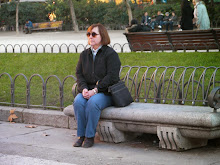
Who's that lady?  Outside the Temple Debod's
beautiful grounds in Madrid.

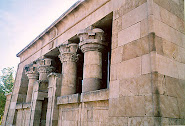
This is a shot of the one of the pools alongside the Temple Debod
built upon an escarpment overlooking part of Madrid.  It is hard to
describe how incredibly beautiful the surroundings of the Temple are.

More on the Temple Debod:

Sacred Destinations
Wikipedia

Related Posts Plugin for WordPress, Blogger...