Published 15:36 30.05.10
Latest update 15:36 30.05.10
Scholar's Ark of the Covenant claims spark African storm
Tudor Parfitt claims 700-year-old bowl-shaped relic is a copy of the sacred object made by one of Israel's lost tribes that may have wound up in Southern Africa.
By The Associated Press

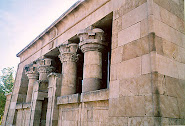
The subject at hand is this British scholar's contention that the remains of a 700-year-old bowl-shaped relic which he tracked down in a Zimbabwe museum storeroom in 2007 could be a replica of the Ark of the Covenant that carried the Ten Commandments. (Image source).
According to African legend, white lions of God and a two-headed snake guarded the "drum that thunders" in a cave in southwestern Zimbabwe's sacred Dumbwe mountains. Parfitt's theory has sparked fierce reactions from some Zimbabwean scholars, who suspect a plot to superimpose foreign origins on what is purely a product of African culture.
Having long disappeared from public view since its discovery in the 1940s, the artifact is now on display at the Harare Museum of Human Sciences. It is about 45 inches by 24 inches in diameter and 27 inches tall with a pattern of shallow engraving on the outside that could have held gold threads. Scorch marks on the base inside were possibly left by primitive gun powder.
Parfitt, a professor of Modern Jewish Studies at the University of London's prestigious School of Oriental and African Studies, says he first heard of the vessel during his two-decade search for Jewish tribes lost in Africa.
At the center of that research is a southern African ethnic group variously called Lemba, Remba or waLemba. Parfitt says 52 percent of them carry a Y chromosome known as the Cohen Modal Haplotype (CMH) - unique to ancient priestly Jewish communities and raising the possibility they are descended from Aaron, Moses' brother. Other groups in Zimbabwe have no CMH.
The waLemba are also set apart from other tribes by such Jewish customs as observing a weekly Sabbath, practicing circumcision, shunning pork and slaughtering animals by methods similar to Jewish kosher rules.
Parfitt acknowledges that theories counter to his are "wholly plausible," and the museum is careful not to take sides. The materials accompanying the exhibit that opened this year outline both the theories behind the relic.
One says the original Ark of the Covenant may have been destroyed when the Babylonians invaded Jerusalem in 586 B.C., that several copies likely were made and that one was taken to Ethiopia by Prince Menelik, the son of Solomon and the Queen of Sheba. Another could have found its way to ancient Zimbabwe, says the exhibit.
The other posits that it is a purely African relic, and that according to legend, was made by waLemba craftsmen for royal elders to give them magical powers.
In the Zimbabwean Shona language, the artifact is called "Ngoma Lungundu," the "drum that thunders," while the waLemba call it "the voice of God." Parfitt says that according to oral tradition, the waLemba could have been among peoples who left Judea in biblical times and migrated through Yemen to east Africa, Ethiopia and beyond, bringing the ark with them.
Eminent Zimbabwean historian Rob Burrett disputes Parfitt's theories.
"He is on the wrong track. Wooden drums - ceremonial drums and war drums with great powers similar to those attributed to the ark — are an integral part of African culture," Burrett said. The genetic test "doesn't prove anything," he said, noting that early European explorers of the east African coast found a strong presence of Arab and Jewish traders moving into the African interior. "These people were certainly not celibate and would have created mixed-blood communities along the way," Burrett said.
African traditionalists believe the Ngoma is a royal drum so powerful that it imploded and was rebuilt on the original wooden base 700 years ago. Indeed, a splinter from the top of the artifact has been carbon-dated to about 1300, making it probably the oldest surviving wooden object in southern Africa.
Only carbon-dating of the entire object, including its scorched base, would resolve the debate, but Zimbabwe authorities are reluctant to let that happen. In a nation striving to eradicate tribalism, a result favoring Parfitt's claims might stir tribal divisions by implying the waLembas' origins are not truly African.
"Everyone has placed this object in a context of their own," conceded Giles Mutsekwa, co-minister of home affairs, the body in charge of archives and antiquities.
One context that arouses anger in Zimbabwe is race. During the colonial era, Europeans defended white-supremacist ideas by arguing - wrongly - that Africans could not have built advanced civilizations such as the massive citadel of stone houses called Great Zimbabwe. Harald von Sicard, the Swedish-German missionary who discovered the Ngoma, theorized in the same vein — that the artifact couldn't have been crafted by Africans. Burrett describes von Sicard as "an old-fashioned, Old Testament" preacher whose views bordered on racism.
Parfitt says he spent weeks living in a waLemba community looking for clues about the ark and getting nowhere. He says he was about to give up when he met a retired train driver in a bar in the southern city of Bulawayo. The man said he recalled hauling a boxcar of artifacts 440 kilometers (275 miles) from Bulawayo to the capital, Harare, for safekeeping during the country's war of independence.
Parfitt searched the Harare museum in 2007, and there it was - in a dusty storeroom littered with mouse droppings. But after he published his findings a year later, controversy flared.
"Some people thought it was all a sinister plot and I was interfering. There was open hostility," he said.
Tempers erupted at a February meeting on the topic at the main Zimbabwe university, with one Zimbabwean academic, historian and former education minister Aenias Chigwedere, storming out of the discussion, denouncing the presence of the British scholar.
Ken Mufuka, a professor of history from Zimbabwe who teaches at Lander University in South Carolina, called Parfitt a "publicity-monger" and "a charlatan" in a newsletter published in Harare.
Burrett, who is also an associate researcher at the Bulawayo museum, said the furor is rooted in the nation's more recent political history.
"There is a fear of undermining the post-independence myth that we are one people, not divided by tribe or origin," he said. "It's as though we are in denial of having a multicultural society."
**********************************************************
Here is an article on the subject from a few years ago: article from Time Magazine, published on February 21, 2008.