Monday, July 4, 2011

Commonwealth and South African Open 2011 (Open Section)

Total of 389 players, of which 54 were females, for a percentage participation rate of just under 14%.  Very good - roughly double the world average of female chess players.  The 11 round Open was won by GM Gawain Jones (ENG 2596) with 9.5, a close second was GM Nigel Short (ENG 2682) also with 9.5.

Chess femmes and their final standings:

11INDIMKaravade EeshaWIND23438.548.558.251992
14INDIMHarika DronovaliWIND25208.053.557.002164
16INDWGMGhate SwatiWIND23178.052.055.752099
19INDWGMSubbaraman MeenakshiWIND23178.049.054.501980
29INDIMSachdev TaniaWIND24167.550.050.751953
53INDWFMIvana Maria FurtadoU14WIND19997.049.540.001979
61RSAWFMIrving LauraWRSA17337.045.540.751817
77INDGochhikar AparajitaU18WIND19157.040.537.501716
81RSAWIMTlale TshepangU14WRSA17397.038.532.501649
105RSASelkirk Rebecca JU18WRSA16096.539.533.501623
106INDBhuvaneshwari RU20WIND16756.539.531.751788
123RSAHoek Adriana JWRSA17516.044.029.001787
152INDWCMSavant RiyaU14WIND17086.038.528.001643
154RSAWCMJansen van Rensburg MonicaU14WRSA16996.038.031.001572
164RSAJoubert (Braille) LucelleWRSA15066.034.526.251624
169RSATlale SeadimoU18WRSA15586.033.524.001522
170RSAWFMdu Toit SuneU14WRSA17376.033.027.251579
174RSAvan de Venter SandraWRSA16665.544.027.751678
176MOZVilhette VaniaWMOZ05.541.527.501699
181RSAde Waal IngridWRSA18895.540.027.501699
194BOTWFMMudongo BoikutsoWBOT18645.536.027.001598
195RSASutil YolandiWRSA15915.536.026.001700
201RSADevnarrian AshviraU20WRSA12375.535.025.251581
208RSAMarais SibylieWRSA14685.531.021.001545
234RSAvan Zyl CharlizeU14WRSA14735.037.521.001482
238INDAparna RajaU20WIND18935.035.523.001533
247RSAWCMBreedt Shade DU14WRSA15575.033.520.501400
249RSAGrobbelaar JacquiU18WRSA14675.033.516.501511
262BOTWCMBotlhole KgalaleloU20WBOT15154.539.520.751628
265BOTWCMFrancis ThapeloU18WBOT04.538.020.251614
273BOTFrancis OnkemetseU20WBOT04.535.022.751619
274RSAVoges Rachelle MariU16WRSA15974.535.020.251435
276RSABernstein OliviaU14WRSA13914.534.517.501501
278RSAWilke Eljeanie GU16WRSA15294.534.018.251566
281RSAKolver MichelleU14WRSA12734.531.516.501475
296RSAAgulhas TiffanyU16WRSA14884.035.514.501414
304RSAQanqa Noxolo SWRSA14764.033.014.251443
307PAKSiddiqui NidaWPAK17384.032.018.251489
309INDKankanala SrishtiU20WIND14204.031.512.251468
315RSASurujhlal KyalaU14WRSA13244.025.57.501331
321RSAFisher Michelle MU14WRSA14833.534.515.001573
322RSACalitz HanankeU14WRSA13993.534.512.001452
324RSAManganye Mihloti FWRSA13633.533.012.751564
352RSABester YvonneU16WRSA02.525.58.001291
358RSAManthata Salphy MWRSA10802.024.51.501337
360RSAMashabela BuhleWRSA02.024.04.001328
368INDSatpathy SunyaWIND19250.024.50.001917
372RSAWitbooi Elisma VU16WRSA12270.024.50.001674
374RSAMabunda GiyaniU20WRSA10000.024.50.001646
375RSAAucamp CindyWRSA00.024.50.001637
377INDMohanty SamrakiWIND00.024.50.001584
379INDBodda PratyushaWIND21170.024.50.001565
387BOTWCMLopang TshepisoWBOT18610.024.50.001347
388BOTWCMMokgacha KeitumetseWBOT18860.024.50.001336

Sunday, July 3, 2011

I can't resist this daredevil squirrel!

Daredevil California Squirrel Somehow Outfoxes Speeding Lamborghini

Saturday, July 2, 2011 8:58 pm
Written by: Eric Adelson

You need guts to take your Lamborghini onto a racetrack. But all the big shots who took part in the Ultimate Lamborghini Experience have nothing on a Southern California squirrel with serious nerve.

The annual event, held in late June at California Speedway in Fontana, invites Lambo owners to test their skills on a two-and-a-half-mile open track. It promises "an incredible rush of speed and sound that will quicken the pulse and stir the soul."

Well, it sure lived up to that billing for this squirrel:


The squirrel was just fine, having somehow made it through untouched!

Saturday, July 2, 2011

The "Prince" of Leubingen

Here is a fascinating article from Der Spiegel that further explores and examines a burial discovered in 1877 in the light of recent discoveries from further current excavation of the area surrounding the burial mound.

Here is a drawing/overview of the tomb structure, which was discovered to have been untouched since antiquity when first excavated:

Note the child laid across the man's pelvis, clothed in what appears to be a dress. Does this denote that the child (about aged 10 per the article, below) was a female?

07/01/2011
The Pharaoh of Thuringia
Archaeologists Puzzle Over Opulent Prehistoric Burial Find
By Matthias Schulz

In 1877, when archeology was still in its infancy, art professor Friedrich Klopfleisch climbed an almost nine-meter (20-foot) mound of earth in Leubingen, a district in the eastern German state of Thuringia lying near a range of hills in eastern Germany known as the Kyffhäuser. He was there to "kettle" the hill, which entailed having workers dig a hole from the top of the burial mound into the burial chamber below.

When they finally arrived at the burial chamber, everything lay untouched: There were the remains of a man, shiny gold cloak pins, precious tools, a dagger, a pot for food or drink near the man's feet, and the skeleton of a child lying across his lap.

The "prince" of Leubingen was clearly a member of the elite. Farmers who had little to eat themselves had piled up at least 3,000 cubic meters (106,000 cubic feet) of earth to fashion the burial mound. They had also built a tent-shaped vault out of oak beams and covered it with a mound of stones, as if he had been a pharaoh.

For years, scholars have puzzled over the source of the prince's power. But Thuringia's state office of historical preservation has now come a step closer to solving the mystery. Agency archeologists used heavy machinery to excavate 25 hectares (62 acres) of ground in the mound's immediate surroundings, exposing a buried infrastructure. They discovered the remains of one of the largest buildings in prehistoric Germany, with 470 square meters (5,057 square feet) of floor space; a treasure trove of bronze objects; and a cemetery in which 44 farmers were buried in simple, unadorned graves.

A Mysterious Cache

With its unearthed remains of huts and palaces, of humble living next to ostentatious luxury, the Leubingen site provides an example of stark social differences. But the dig also sheds light on the moment in history when mankind lost its economic innocence.

In the Neolithic age, farming communities were still egalitarian because everyone was equally poor. But then came the Bronze Age, which saw the emergence of a privileged upper-class caste of chieftains. They lived relatively luxurious lives, were buried in even greater opulence, and adorned their wives with gold jewelry and amber necklaces.

Archeologists are particularly excited about the cache of weapons they publicly unveiled on Monday. The weapons are still packed in dirt within a ceramic pot. Tests conducted with a particle accelerator have already shown that the pot contains roughly 100 bronze hatchet blades.

This strange practice of burying valuable items is typical for the era. But the reason for doing so remains a mystery. "It's as if someone had buried 100 Mercedes sports cars," says project director Mario Küssner.

The cache was buried directly along the exterior of the recently discovered giant house. Trees as thick as telephone poles were felled to build the 44-meter-long (144-foot-long) house. The roof was covered with reeds or wood shingles and was about eight meters high. The structure apparently never contained livestock.

The Dawning of the Bronze Age

Some scholars have hypothesized that the building was a temple and have interpreted the hatchets as offerings to the gods of the underworld. But Küssner believes the building was the residence of the "prince," who lived there with a group of his minions and extorted duties and fees from long-distance traders.

It is known that merchants brought salt and amber through the region at the time. The trade in bronze, a new luxury material, also flourished. The technology of mixing copper with tin or arsenic to make bronze, which had been developed in the Orient, became widespread in Europe after about 2,200 B.C. For the first time, a hard material was available that could be poured into molds.

The blacksmiths stoked their furnaces with blowing irons and poured the molten metal into their crucibles. Meanwhile, miners searched for ore veins. The raw material was scarce. Caravans brought bars of unprocessed copper from as far away as the Carpathian Mountains and the Alps. Most of the tin came from Cornwall.

Blacksmiths gradually forged harder and harder weapons, better tools and more beautiful jewelry -- but only for those who could afford it. Thus, the world became divided into rich and poor.

A Valuable Location on a Trade Route

Küssner estimates that the "prince" and his guards kept watch over a "radius of 80 kilometers" and profited exorbitantly as a result. He believes that chieftain's gang of extortionists provided the hatchet blades in the valuable cache as a sign of their loyalty.

Another item found in his tomb, a small anvil, suggests that the man had something to do with metallurgy. It is possible that he was a blacksmith himself. But, either way, it is clear that he controlled others through the use of force.

In the end, a child followed him into the grave as a bloody sacrifice. The child was only about 10.

Translated from the German by Christopher Sultan

Christiane Desroches Nobelcourt Saved Egyptian Antiquities from Aswan Flooding

Obituary from the telegraph.co.uk:
6:21PM BST 01 Jul 2011

Christiane Desroches Noblecourt

Christiane Desroches Noblecourt, who died on June 23 [2011] aged 97, was a French Egyptologist and played a critical role in one of archaeology's most breathtaking feats – the wholesale relocation of many spectacular ancient temples due to be flooded by the Aswan High Dam.

The project to rescue the Nubian sites got under way in 1959, after the governments of Egypt and Sudan appealed for international help in moving them away from the vast reservoir that was to be created by the dam. Despite the Cold War tensions of the day, 50 nations responded.

Christiane Desroches Noblecourt, a passionate Egyptologist who had overcome the sexual discrimination of the pre-war era to establish herself as a leading expert on the treasures of the pharaohs, had already identified 32 sites that were threatened by the rising waters.

Having alerted Nasser and his government to the crisis, she promised to liaise with Unesco, based in Paris, to coordinate the uniquely ambitious rescue operation. Working with the newly appointed Unesco director, René Maheu, and the Egyptian Minister for Culture, Sarwat Okacha, Christiane Desroches Noblecourt began a race against time to save as much as possible before the temples and their secrets were inundated for ever deep beneath the Aswan reservoir.

Their greatest concern was Abu Simbel, the monument erected by Rameses the Great around 1250BC to glorify himself and his queen, Nefertari. The complex, covered in magnificent carvings, was guarded by four 20-metre high statues of Rameses sculpted directly into a mountainside. Attempting to shift it seemed impossible.

There were other problems, too. The temple had been located specifically so that, twice a year, the rays of the sun would penetrate its depths and illuminate statues of the gods Amun-Ra and the falcon-headed Ra-Horakhty, while leaving the god of the underworld, Ptah, shrouded in darkness.

Some suggested building a barrage around the site, but this was abandoned when it became clear that, despite lying 180 miles south of Aswan, the temple would be submerged beneath 60 metres of water following the dam's construction.

The only option was to saw it into pieces, and rebuild it, like a vast Lego set. So, after assembling huge teams of workers in the sparsely populated region, an eight-year effort began to slice 1,042 blocks, some weighing 20 tonnes, from the mountainside and reassemble them 90 metres higher on an artificially created mound. Today, Abu Simbel remains one of Egypt's most celebrated sites, though the sun's rays now strike Amun-Ra a day later than they used to.

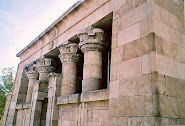
Other sites proved equally challenging. The temple of Kalabsha features several immaculate relief carvings and was the second-largest site to be relocated. The German team in charge of saving it dismantled it stone by stone, and moved them almost 30 miles, near to Aswan.

On the island of Philae, 104 metres above sea level and home to a vast archaeological complex, the new dam was having a different, if equally destructive, effect. The problem was that the island had been submerged, by and large safely, by an earlier dam. But the Aswan High dam was to lower the waters at Philae, partially revealing the island's marvels. It was forecast that fluctuations in the reservoir between 102 and 110 metres above sea level would create a tidal effect that would soon sweep the ancient buildings away.

To save them, a ring of steel was built around the island, with the remaining water pumped out. After cleaning, each structure was dismantled into tens of thousands of bricks, and relocated on higher ground.

Perhaps the trickiest rescue of all, however, was that overseen by the French themselves at Amada, where three pharaohs, including Amenhotep II, had created one of Egypt's most richly-decorated sites – a temple covered with brightly-coloured, painted reliefs. It was evident to Christiane Desroches Noblecourt that block-by-block dismantling that had been successful at other sites would destroy the reliefs at Amada.

Instead the temple was encased in a superstructure and hewn from the desert floor in its entirety. This vast relic was then placed on three railway lines, and rolled gently away to safety, two miles distant, over a period of six months. Such was the slowness of its progress that, as the temple inched forward, the rails left behind were lifted up and placed in front of it again.

Eventually, the principal treasures of the region were saved. For Christiane Desroches Noblecourt it was a personal triumph. For Egypt it was an archaeological necessity. For Unesco, however, the mammoth project had sown the idea that certain monuments were not the property of individual countries, but of humanity itself, as "world heritage" sites. Four years after the Nubian temples were saved, the UN introduced a convention protecting such sites. Today 187 countries have ratified it, with 35 campaigns currently under way to save monuments considered "endangered".

Christiane Desroches was born on November 17 1913 in Paris, to intellectual parents who encouraged her to learn and widen her horizons. Howard Carter discovered the tomb of Tutankhamen in 1922 and, as a child, Christiane was fascinated by the treasures of the pharaohs. Her grandfather often took her to the obelisk at Place de la Concorde to inspect the hieroglyphs inscribed upon it.

After she left the lycée, her father wanted Christiane to study 18th-century drawings but, she said, "that bored me stiff". So instead he took her to see the director of the Louvre, who recommended a course in hieroglyphics run by a Father Drioton. Signing up to the course, as well as for lessons in archaeology and philology, Christiane Desroches completed a thesis at the Ecole du Louvre, and was then appointed to the department of Egyptian antiquities at the museum.

From there she left for the French Institute of Oriental Archaeology in Cairo (IFAO) where, as a woman in her mid-20s, she was unwelcome. "I had encountered a certain amount of misogyny at the Louvre," she said later. "But nothing like at the IFAO. The men there didn't want to share the library or even the dining room with me; they said I would collapse and die in the field. The director of the school then dispatched me to a particularly tough site, at Edfou, south of Luxor." In 1938 she became the first Frenchwoman to lead a dig.

But war soon intervened, and Christiane Desroches returned to Paris. There she was approached by Jean Cassou, former director of the Museum of Modern Art, who asked her cryptically "if I listened to the radio". This she took to be a reference to the BBC, and soon she joined Cassou in the Resistance – performing mundane, but potentially fatal, courier missions, as well as hiding those on the run.

In December 1940 she was arrested, at which point she claimed to have shouted at her interrogators for putting their boots on the table while questioning her. She was released, and in 1942 married a childhood friend, with whom four years later she had a son.

After the war Christiane Desroches Noblecourt's settled family life disinclined her to return to the field, but following Nasser's coup in 1952 a great deal of Egypt's archaeological service was thrown into chaos. In 1954 she was asked to return by the French culture ministry and set up the Centre for Documentation of Scientific Research in Cairo, training a new generation of Egyptian archaeologists.

"We made them learn about and understand the monuments," she said. "We concentrated on the Nubian temples as I learned that they were about to be submerged under the waters of the Aswan dam that was still then at the planning stage."

But just as Christiane Desroches Noblecourt realised the gravity of the situation, Nasser privatised the Suez Canal, prompting the invasion by Israeli, French and British forces. She was forced to evacuate as relations between Egypt and France collapsed. Such was her stature, however, that soon she was sent a telegram inviting her to return – one of the few Westerners tolerated after the crisis.

By 1959 the dam project was well under way, and Sarwat Okacha approached Christiane Desroches Noblecourt, complaining that Egypt would be forced to sell the ancient temples to foreign buyers. Having proposed that they organise a rescue plan through Unesco, she promised help in the name of France.

On her return to Paris, however, she discovered that this promise was most unwelcome. At the Elysée palace, she was confronted by President Charles de Gaulle, famous for his quick temper. "How dare you engage France in this without the authorisation of my government?" he shouted at her.

After reflecting for a moment, she replied: "And you, did you demand the authorisation of Pétain's government on June 18 1940? No! You judged the circumstances required you to take a stand. Well, that's what I've done." Weeks later she had the funding she needed.

She was reunited with de Gaulle eight years later, when the Egyptian government, partly as a gesture of thanks for Christiane Desroches Noblecourt's efforts, allowed the treasures of Tutankhamen to be exhibited in Paris. It was the first time a substantial number of pieces of the treasure had been displayed in Europe. "The English weren't pleased," she recalled. "They had discovered the treasure in 1922, and then a French woman had the temerity to exhibit it in her country. But they had forgotten that England had refused to help save the Nubian temples."

Christiane Desroches Noblecourt was allotted 20 minutes to guide de Gaulle around the exhibition. But he peppered her with questions and after that time they were still only in the second room, at which point he instructed his principal secretary to allot another hour to the visit. Of particular interest, apparently, was the ancient symbolism of the scarab, or dung beetle.

In later life Christiane Desroches Noblecourt lived in a richly-decorated apartment in Paris. But she never added an Egyptian object to the furnishings: "Everybody would think I'd stolen it from some tomb." When not making field trips, she worked on one of the host of books that she wrote on ancient Egypt, publishing well into her 90s. The Fabulous Heritage of Egypt was a bestseller as recently as 2005.

A tiny, driven woman, Christiane Desroches Noblecourt received many awards, and was appointed Grand Officer of the Légion d'honneur in 2005. Her husband predeceased her.

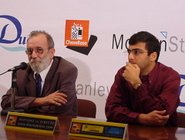
AAI International Grandmaster Chess Tournament 2011

Final standings:
RankNameRtgFED123456PtsRes.SB
1GMCaruana Fabiano2714ITA* *1 ½½ 0½ ½1 11 17029.75
2GMSasikiran Krishnan2676IND0 ½* *1 10 ½1 ½1 ½6026.75
3GMLaznicka Viktor2681CZE½ 10 0* *1 01 ½1 ½025.25
4GMSo Wesley2667PHI½ ½1 ½0 1* *½ 0½ ½5026.25
5GMNegi Parimarjan2622IND0 00 ½0 ½½ 1* *1 0016.25
6GMHou Yifan2612CHN0 00 ½0 ½½ ½0 1* *3014.25
Hou Yifan had a tough tournament, scoring only 3.0/10. I think she needs to take a break before entering another mixed event.  No women only events, though!

Friday, July 1, 2011

More on Sacred Wells

A follow-up to yesterday's post:  Possible Sacred Well Discovered in Wales.

In addition to the information/links contained in Robur's comments about the Gihon spring and Hobbs Well:

http://weavingandmagic.blogspot.com/2011/04/asherah-eve-and-shekhinah.html#gihon
http://weavingandmagic.blogspot.com/2011/01/lady-godiva-and-her-priest-king.html#hobbswell

here is a prior post on sacred wells from Barbara G. Walker's The Woman's Encyclopedia of Myths and Secrets that I made in 2009. 

Here's a post on (Saint) Dwyn or Dwynwen, who became a patron saint of the love lorn and also sick animals!  She is connected with a sacred well or spring in Wales.

Interestingly, "visiting sacred wells" used to be part of "pious practices" in the honoring of Saint Brigid of Ireland.  I posted about her in 2008 (emphasizing her connection to birds and as an aspect of the Mother Goddess who was often represented as a bird in various cultures and religions through the ages.)

Another interesting legend concerning a "witches' well" in Tuhala, Estonia, that I posted about in 2009.  In it, I wondered if there could be a connection to old Celtic legends of "water horses" that were often associated with springs, wells, rivers and - in the case of the "selkies" the ocean itself.

St. Winifrede's Well at Holywell, Flintshire, North Wales
Back to the post from yesterday about the discovery of a possible sacred well in Wales, three names were noted in the article in connection to an old Welsh legend about a sacred well:  St. Winefride, her suitor, Caradog and St. Winefride's uncle, said to be St. Beuno. 

Having refreshed my memory by reading over the prior posts, it seems there are similarities in at least some of the legends associated with sacred or holy wells in Ireland and Wales.

There is a lot of information online about the legend of St. Winefride (also Winefred, Winifred, Gwenfrewi) and Caradog (also Cardoc).  You can see representations of St. "Gwenfrewi" and St. Beuno in the stained glass window (last photo) at the website of  "St. Winifred's Well" by Jeffrey L. Thomas

Evidently Winefrede's holy "well" (a spring that was enclosed), has been a place of pilgrimage practically since the time of her death, allegedly in 660 CE.  Information at Wikipedia.  

I checked Walker's book and found no entry for St. Winefride but I found a very similar name to Gwenfrewi and Dwynwen - you may recognize it - Guinevere.  Guinevere, of course, was the famous lady of the triangle with King Arthur and his favorite young, handsome knight, Lancelot.  (Notice how "triangles" of people are also involved in many of the legends noted above: daughter/wife; father/uncle/saving or guardian angel/husband; and lover/rejected suitor.)

Here is what Walker has to say about Guinevere:

In Germany, Guinevere was Cunneware, "female wisdom"(1)  According to the Welsh Triads, she was the Triple Goddess, Gwenhwyfar, "the first lady of these islands," at times one queen, at times three queens, all named Gwenhwyfar, all of whom married King Arthur.(2) 

Arthur was born of the same Goddess when he was cast ashore on the ninth wave.  The Welsh called breaking waves the Sheep of the Mermaid, and the Mermaid was Gwenhidwy, or Gwenhwyfar.  The ninth wave represented the "god born of nine maidens," also known as The Ram.(3)  Nine maidens signified the triplicated Triple Goddess, like the nine Muses in Greek myth.

Guinevere embodied the sovereignty of Britain. No king could reign without her.  Thus, in story after story, she was abducted by would-be rulers.  Melwas, Melegant, Artur, Lancelot; and Mordred all took Guinevere away from the incumbent ruler when they wished to make themselves kings.  When a king lost Ginevere, he lost the kingship. [Emphasis added.]  Some myths suggest that she was a sacred statue, like the Fortuna Regia of Roman Caesars.(4)  Yet she was also a living woman, who impersonated the Destroyer when she gave the apple of death to Patrick, and was nearly burned at the stake when she was accused of witchcraft.  Early legends said she disappeared into the castle of Joyous Gard, the earthly paradise, where she reigned each spring as May Queen.

Notes:

(1)  Campbell, C.M., 448.
(2)  Malory 1, xxiv.
(3)  Turville-Petrie, 152.
(4)  Encyc. Brit., "Guinevere."


Hmmmm, "when a king lost Guinevere, he lost the kingship" - a man might get very angry about such a turn of events, evoking the equivalent of the raging "IF I CAN'T HAVE YOU, NOBODY WILL."  We see this ethos at work in an unending epidemic of female spouses, ex-spouses and girlfriends being violently killed by former male intimates. 

Summer of China: Milwaukee Art Museum Special Exhibitions 2011

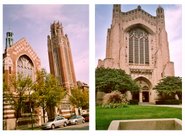
We really lucked out scoring this tremendous exhibition.  It seems that the Chinese contingent here to inspect the city and the museum absolutely fell in love with the museum/war memorial center's great architecture.  The Summer of China is actually five separate exhibitions but paid admission (or membership admission) allows you to roam at leisure and see as little or as much as you wish.  In addition, there will be a series of special lectures throughout the time of the exhibition.

Website.

Summer of CHINA
June 11September 11, 2011
Milwaukee Art Museum

This summer, enter a realm of majesty and mystery. Experience three thousand years of Chinese art and culture in five exhibitions at the Milwaukee Art Museum. This ambitious series, titled the Summer of CHINA, is part of a year-long celebration honoring the ten-year anniversary of the Museum’s Santiago Calatrava–designed Quadracci Pavilion.

A broad range of CHINA-related programs will accompany the exhibitions throughout the summer, including children’s activities, adult lectures on Chinese art and culture, and a Chinese-themed MAM After Dark. In July, the Museum partners with the Milwaukee Chinese Cultural Community Center to unveil the city’s first Chinese Cultural Fest. Everyone is invited to join the Museum in learning about and celebrating this very old—yet very modern—civilization.

Here's the deal - if you become an individual member for a mere $60 a year, you get free admission to ALL exhibitions and ALL lectures and special showings, as many times as you want.  In addition, if you have children and grandchildren under the age of 17, they get in free if accompanied by you. 

Museum membership


Milwaukee Art Museum membership not only provides you with exclusive Member-only benefits but access to countless opportunities that engage and delight. Our doors are open Tuesday–Sunday and holiday Mondays; please, come as often as you like. Membership makes it that much easier to pop in over lunch for an Express Talk or to explore the Collection galleries, or to bring the entire family for a day of fun-filled activities on the weekend. Be a part of the community that supports the Museum’s mission to inspire and educate.

Standard Member benefits:


  • Free admission, including Members' children and grandchildren 17 and under, when accompanied by an adult Member
  • Unlimited access to feature exhibitions
  • Free admission to Kohl’s Art Generation Family Sundays, gallery talks, and lectures
  • Invitations to Member-only preview days, exhibition openings, and special programs
  • Reduced rates on classes, screenings, and pre-purchased parking passes
  • The opportunity to join Museum support groups
  • A one-year subscription to our quarterly Member magazine
  • A 10% discount on Museum Store purchases plus seasonal double discounts
  • A 10% discount at Café Calatrava
  • Member extras
Memberships can be purchased at the Milwaukee Art Museum or by phone from our Membership Hotline 414-224-3284, or online.

If  you are tight on funds, first Thursdays every month are FREE, courtesy of Target!!!  Details:

Museum Hours


Museum Admission


Thursday, June 30, 2011

Possible Sacred Well Discovered in Wales

From BBC News

29 June 2011 Last updated at 08:25 ET
Possible holy well discovered in Cwmbran woods
Amateur archaeologists have uncovered what they say may be a holy well in woodland in Cwmbran, Torfaen.

They were working on a dig to discover more about a settlement that dates back to the 16th Century that they already knew about.
But they came across the well at Green Meadow Woods and believe it is much older.
Richard Davies from the Ancient Cwmbran Society said it may shed light on the area's religious history.
Mr Davies said between 15 and 20 volunteers had been working hard at the site for the last week.
He said the settlement they were originally investigating dated back to around 1520, but the well was older.
"We are relatively certain its purpose was not for watering animals," he said.

"We are not sure whether its a holy well, a baptism pool or something else."
Holy wells can date back to the second and third centuries and there are fewer than 20 across Wales. The water in holy wells was said to have healing qualities.
Field archaeologists Roger Burchill said: "It is comprised of packed stones that are all placed with the front forming a face to the well itself.
"Who would use it is the $64m question. All we can say about it at the moment is the structure is totally different to what we have on the bank.
"We have a wall, we have some paths, we have a possible building up on the bank and we have this well. Connecting them together is the trick."
The volunteers are taking a break on Thursday but will be returning to the excavation site on Friday and Saturday when members of the public are welcome to join them.
Sidebar information:

Holy wells in Wales
There are less than 20 holy wells in Wales with most in the north - including St Winefride's Well in Holywell which gives the town its name.
Legend has it a well sprung from the ground at the place where St Winefride, a noblewoman who lived during the 7th Century, was murdered by a local chieftain after she spurned his advances.
Her suitor, Caradog, is said to have cut off her head with a sword but she was restored to life by her uncle, St Beuno, and dedicated herself to holy works, becoming a nun and abbess.


Well...

The Indus Script Back in the News

At the guardian.co.uk - posted at Punctuated Equilibrium
A Rosetta Stone for the Indus script
Posted by Thursday 30 June 2011 09.43 BST

How would you solve the world's oldest and most difficult crossword puzzle? Watch this video to learn how one man is approaching this challenge (over 17 minutes in length, but very well put together and paced)

Do you love a good mystery and ancient texts? Rajesh Rao sure does. He is a computational neuroscientist at my alma mater, the University of Washington in Seattle. He has devoted much of his professional life to cracking "the mother of all crossword puzzles": How to decipher the 4000 year old Indus script (example pictured; public domain). To do this, Dr Rao uses computational modeling to understand the human mind in two ways: first, he develops computer models to describe how human minds think, and then second, he applies these models to the task of deciphering the 4,000-year-old script of the Indus valley civilization. This interesting video provides a glimpse into his methods and logic:


Some of the questions that motivate Dr Rao's research include: How does the brain learn efficient representations of novel objects and events occurring in the natural environment? What are the algorithms that allow useful sensorimotor routines and behaviors to be learned? What computational mechanisms allow the brain to adapt to changing circumstances and remain fault-tolerant and robust?

You can learn more about Dr Rao's work by visiting his official departmental website.
Related Posts Plugin for WordPress, Blogger...