R2 results:
Foisor/Rohonyan 0-1
Baginskaite/Zatonskih 0-1
Krush/Abrahamyan 1-0
Melekhina/Marinello 1-0
Zenyuk/Marshall 1-0
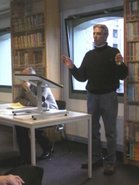
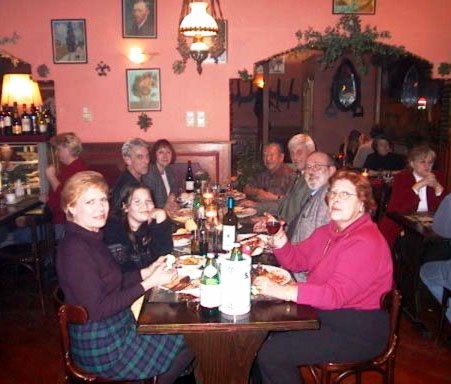
The streak of all-decisive games continues. GM Nakamura, who has done commentary the first two rounds of the Women's and Junior's Championships, seems somewhat perplexed and, perhaps, even astonished by this. But darling, it's just women's fighting chess :) He's just not had much exposure to it, the young'n.
Not sure about this since the standings after completion of R2 have yet to be updated at the official website, but I think things stand (in no particular order):
Zatonskih 2.0/2
Krush 2.0/2
Melekhina 2.0/2
Zenyuk 2.0/2
Abrahamyan 1.0/2
Rohonyan 1.0/2
Foisor 0.0/2
Marshall 0.0/2
Marinello 0.0/2
Baginskaite 0.0/2
I can't believe I have to work tomorrow - yech - not when Krush and Zatonskih are facing off against each other in Round 3! Melekhina said in her post R2 comments that her game tomorrow with Abrahamyan could decide which way the Championship will go for her. I'll be trying to take peeks at the live action while I work, and will have my headphones on, but honestly, the office isn't the best place to follow what's going on, LOL!
There's a long way to go yet. I do not expect Baginskaite, Foisor, Marshall or Marinello to stay at 0.0 for the next 7 rounds. Can Zatonskih repeat? She doesn't seem so sure of herself this time around. Krush, Melekhina and Zenyuk seem in fine form, but can they maintain the pace? I think Abby Marshall is a wild card. I think she's much better than her results have shown thus far, and she could catch fire at any time, causing some upsets. I agree with Melekhina - my gut tells me her game tomorrow with Abrahamyan will be important, in ways I'm sure I haven't even thought about!
Exhaustion will take its toll as the rounds grind on, even with one free day. Being a 'spectator' is hard enough watching from 2 p.m. through beyond 6 p.m. as has been the case the past 2 days. I can't even begin to imagine sitting down and playing such intense games as a Championship for 9 straight games, up to 6 hours each day, and then trying to prep for the next day's game and get a good night's sleep (yeah, right, har!)
And with that, I'm signing off for the night - at least with respect to chess! I've updated Chess Femme New's coverage of the 2010 U.S. Women's Chess Championship. Please visit and give me some stats :)
Sunday, July 11, 2010


2010 U.S. Women's Chess Championship - Some R2 Notes

I wanted to show you this great photo from the official website (St. Louis Chess Club) - it's a group shot of the women's Round 1 action (This still image, Group shot of the Women, by Chess Club of Saint Louis is licensed under a Creative Commons Attribution-Share Alike license.) You can get a good feel for how nice the playing venue/surroundings are.
Zatonskih/Baginskaite: I can't tell you a think about whose position is better but I can tell you that the players are only on move 18! Zatonskih has 39 minutes left on her clock and Baginskaite 21. They need to make move 40 to reach time control. Hmmm, not much time left to make all those moves. A critical mistake might be made -
Foisor/Rohonyan: They're in even worse time trouble - only on move 15; Foisor has 20 minutes, Rohonyan 36. After yesterday's loss, Foisor seems to be playing a little too cautiously today, which I can totally understand except when playing in a chamipionship, one is not allowed to react like a young human being! Rohonyan has to really be fuming after that loss yesterday - she HAD the game, she was SOOOOOO close - aaaaccchhhh!
Krush/Abrahamyan: White has made move 23; Krush has 24 minutes on her clock, Abrahamyan 34. Interesting Abrahamyan and Rohonyan (game above) both with the black pieces, have way more time than white.
Melekhina/Marinello: Both players have completed move 23. Melekhina is WAY down on time, 9:55 to Marinello's 48 minutes? Is that right? How can that be right? Melekhina is up a pawn.
Zenyuk/Marshall: Both players have completed move 14. Unbelievably slow. Zenyuk has only 11 minutes on her clock, Marshall 35. Hmmm - it's now a few moves later, Zenyuk seems to be playing somewhat inaccurately.
This just does not seem normal to me. Is every single game going to go down in flames during a scramble to make time control?
Ivory 'Maskette' Uncovered at Arctic Canadian Site
Hmmmm, perhaps the cross-hatching on this beautifully preserved 5 centimeter ivory 'maskette' aren't just meant to represent "tatooes"... What follows here is an excerpt. For the full article, please see Archaeologists discover ancient ivory maskette on Canadian Arctic island
Submitted by owenjarus on Thu, 07/08/2010 - 22:14
 The Nuvuk Islands lie off the northern tip of Quebec, close to the modern day settlement of Ivujivik. A team of archaeologists from the Avataq Cultural Institute and Laval University, including nearly a dozen local high school students learning about archaeology, have been exploring the islands.
They have uncovered two Dorset houses [the full article explains what the Dorset culture was], each of them nine meters long, that date to somewhere between 1,500 and 800 years ago. Constructed of stone and sod they were sunk partly into the ground to help insulate them.
One of the most intriguing artefacts they’ve found is a 5 centimetre long ivory maskette that may have been used by a shaman – a person who would have connected the people with the spiritual world. It’s the first complete maskette found in northern Quebec (an area also known as Nunavik) in more than 50 years.
“It’s quite possible that it had some kind of shamanic connection, there was some kind of religious or spiritual side to it,” said archaeologist Susan Lofthouse, in an interview with Heritage Key.
It has a hole near the top which means it probably would have been worn like an amulet. It was cut out of walrus ivory and crafted with great skill as shown by the small details.
Two nostrils (representing the nose) are cut into the centre. Mouth, ears and eyes were also depicted. The maskette has an “x-ray motif” – lines that run across it. It’s something commonly seen in art from this time period.
“A lady from Nunavik suggested to me that the lines represent tattoos – indicating that the face represents a woman,” wrote Lofthouse in a recent paper.
There is more evidence that this maskette represents a woman.
At the top of the mask there is a round shape that looks like a bun. “Historically Inuit women would wear top knots on top of their heads,” said Lofthouse. “Their hair would be kind of tied up into a bun on top of their head – it looks quite similar to that.”
So could this maskette have been used by a female shaman? “Traditionally shamans were more often men (however) there have been accounts of female shamans,” said Lofthouse. “It could have been related to magic that pertains to women.”
Submitted by owenjarus on Thu, 07/08/2010 - 22:14

They have uncovered two Dorset houses [the full article explains what the Dorset culture was], each of them nine meters long, that date to somewhere between 1,500 and 800 years ago. Constructed of stone and sod they were sunk partly into the ground to help insulate them.
One of the most intriguing artefacts they’ve found is a 5 centimetre long ivory maskette that may have been used by a shaman – a person who would have connected the people with the spiritual world. It’s the first complete maskette found in northern Quebec (an area also known as Nunavik) in more than 50 years.
“It’s quite possible that it had some kind of shamanic connection, there was some kind of religious or spiritual side to it,” said archaeologist Susan Lofthouse, in an interview with Heritage Key.
It has a hole near the top which means it probably would have been worn like an amulet. It was cut out of walrus ivory and crafted with great skill as shown by the small details.
Two nostrils (representing the nose) are cut into the centre. Mouth, ears and eyes were also depicted. The maskette has an “x-ray motif” – lines that run across it. It’s something commonly seen in art from this time period.
“A lady from Nunavik suggested to me that the lines represent tattoos – indicating that the face represents a woman,” wrote Lofthouse in a recent paper.
There is more evidence that this maskette represents a woman.
At the top of the mask there is a round shape that looks like a bun. “Historically Inuit women would wear top knots on top of their heads,” said Lofthouse. “Their hair would be kind of tied up into a bun on top of their head – it looks quite similar to that.”
So could this maskette have been used by a female shaman? “Traditionally shamans were more often men (however) there have been accounts of female shamans,” said Lofthouse. “It could have been related to magic that pertains to women.”
Linguistic Link Between Old and New Worlds Now Being Recognized
From The Ottawa Citizen
Words for 'canoe' point to long-lost family ties
Canwest News Service July 8, 2010
An obscure language in Siberia has similarities to languages in North America, which might reshape history, writes Randy Boswell.
A new book by leading linguists has bolstered a controversial theory that the language of Canada's Dene Nation is rooted in an ancient Asian tongue spoken today by only a few hundred people in Western Siberia.
The landmark discovery, initially proposed two years ago by U.S. researcher Edward Vajda, represents the only known link between any Old World language and the hundreds of speech systems among First Nations in the Western Hemisphere.
The collection of articles by Vajda and other experts details a multitude of clear connections -- nouns, verbs and key grammatical structures -- between the language spoken by the Ket people of Russia's Yenisei River region and dozens of languages used by North American aboriginal groups.
The newly recognized link has prompted the Yukon-based Arctic Athabaskan Council to begin forging cultural and political ties with Russia's tiny population of Ket speakers. They live 8,000 kilometres west of Whitehorse and are separated from their linguistic cousins in North America by some 10,000 years of history.
University of Alberta linguist Jack Ives writes in the essay collection that "the question of just how such a distribution arose -- with a separation between Siberia and northwestern North America involving thousands of kilometres -- is simply fascinating."
University of Alaska linguist James Kari, co-editor of the book, titled The Dene-Yeniseian Connection: Bridging Asia and North America, said the discovery could rewrite the story of when, where and how ancient Asian migrants arrived in North America at the end of the last Ice Age. He said it should also trigger new avenues of research "across several disciplines," including archeology, anthropology, paleo-ecology, biology and genetics.
In April, representatives of some of the North American nations believed to share a root language with the Ket travelled to Moscow for a "historic meeting" with their new-found linguistic kin.
Vajda, a linguistics professor at Western Washington University, told Canwest News Service in 2008 how years of research with the Ket culminated with a dramatic insight involving words associated with the canoe.
He found that the few remaining Ket speakers in Russia and the Dene, Gwich'in and other Athapaskan speakers in North America used almost identical words for canoe and such component parts as the prow and cross-piece.
"Finally, here was the beginning of a system that struck me as beyond the realm of chance," Vajda wrote at the time. "At that moment, I think I realized how an archeologist must feel who peers inside a freshly opened Egyptian tomb and witnesses what no one has seen for thousands of years."
Currently, only the Eskimo-Aleut family of aboriginal languages spoken by the Inuit of Canada, Alaska, Greenland and Russia straddle the hemispheric divide between Asia and the Americas. Those connections aren't surprising, given the relatively recent arrival of the Inuit to North America.
But linguists had never definitively linked any ancient, Old World language to those spoken by the Indian nations of North and South America. Their ancestors are believed to have migrated from Asia to the New World -- across what was then a dried-up Bering Strait -- at least 13,000 years ago.
© Copyright (c) The Ottawa Citizen
See also February 12, April 9 and April 20, 2010 press releases by the Athabascan Council from earlier this year.
Words for 'canoe' point to long-lost family ties
Canwest News Service July 8, 2010
An obscure language in Siberia has similarities to languages in North America, which might reshape history, writes Randy Boswell.
A new book by leading linguists has bolstered a controversial theory that the language of Canada's Dene Nation is rooted in an ancient Asian tongue spoken today by only a few hundred people in Western Siberia.
The landmark discovery, initially proposed two years ago by U.S. researcher Edward Vajda, represents the only known link between any Old World language and the hundreds of speech systems among First Nations in the Western Hemisphere.
The collection of articles by Vajda and other experts details a multitude of clear connections -- nouns, verbs and key grammatical structures -- between the language spoken by the Ket people of Russia's Yenisei River region and dozens of languages used by North American aboriginal groups.
The newly recognized link has prompted the Yukon-based Arctic Athabaskan Council to begin forging cultural and political ties with Russia's tiny population of Ket speakers. They live 8,000 kilometres west of Whitehorse and are separated from their linguistic cousins in North America by some 10,000 years of history.
University of Alberta linguist Jack Ives writes in the essay collection that "the question of just how such a distribution arose -- with a separation between Siberia and northwestern North America involving thousands of kilometres -- is simply fascinating."
University of Alaska linguist James Kari, co-editor of the book, titled The Dene-Yeniseian Connection: Bridging Asia and North America, said the discovery could rewrite the story of when, where and how ancient Asian migrants arrived in North America at the end of the last Ice Age. He said it should also trigger new avenues of research "across several disciplines," including archeology, anthropology, paleo-ecology, biology and genetics.
In April, representatives of some of the North American nations believed to share a root language with the Ket travelled to Moscow for a "historic meeting" with their new-found linguistic kin.
Vajda, a linguistics professor at Western Washington University, told Canwest News Service in 2008 how years of research with the Ket culminated with a dramatic insight involving words associated with the canoe.
He found that the few remaining Ket speakers in Russia and the Dene, Gwich'in and other Athapaskan speakers in North America used almost identical words for canoe and such component parts as the prow and cross-piece.
"Finally, here was the beginning of a system that struck me as beyond the realm of chance," Vajda wrote at the time. "At that moment, I think I realized how an archeologist must feel who peers inside a freshly opened Egyptian tomb and witnesses what no one has seen for thousands of years."
Currently, only the Eskimo-Aleut family of aboriginal languages spoken by the Inuit of Canada, Alaska, Greenland and Russia straddle the hemispheric divide between Asia and the Americas. Those connections aren't surprising, given the relatively recent arrival of the Inuit to North America.
But linguists had never definitively linked any ancient, Old World language to those spoken by the Indian nations of North and South America. Their ancestors are believed to have migrated from Asia to the New World -- across what was then a dried-up Bering Strait -- at least 13,000 years ago.
© Copyright (c) The Ottawa Citizen
See also February 12, April 9 and April 20, 2010 press releases by the Athabascan Council from earlier this year.
2010 U.S. Women's Chess Championship
R1 women's games in PGN:
[Event "2010 U.S. Women's and Junior Closed Championships"]
[Site "St. Louis"]
[Date ""]
[Round "round 1"]
[White "WIM Iryna Zenyuk"]
[Black "WGM Sabina Foisor"]
[Result "1-0"]
[Board "1"]
[Input "DGT6645"]
[Owner "St. Louis Chess Club"]
1. d4 d5 2. c4 c6 3. Nf3 Nf6 4. Nc3 a6 5. cxd5 cxd5 6. Bg5 Nc6 7. Bxf6 exf6 8.
e3 Be6 9. Be2 Bd6 10. O-O O-O 11. Rc1 f5 12. Na4 f4 13. Nc5 Qe7 14. exf4 Bxf4
15. Rc3 Rae8 16. Nd3 Bb8 17. Re1 f6 18. Bf1 Qd6 19. g3 Bg4 20. Rxe8 Rxe8 21.
Nf4 Re4 22. Be2 b5 23. h3 Bd7 24. Bd3 Re8 25. Bc2 Ne7 26. Kg2 Qb6 27. Qd2 b4
28. Rc5 Bd6 29. Nxd5 Nxd5 30. Rxd5 Bc6 31. Rf5 Rf8 32. d5 Bd7 33. Rh5 f5 34.
Ng5 h6 35. Ne6 Bxe6 36. dxe6 Qc6+ 37. Kg1 Rd8 38. Rxf5 Be7 39. Qe2 Rc8 40. Bb3
Rd8 41. Rf7 Re8 42. Qg4 Qc1+ 43. Kg2 Qxb2 44. Qg6 Bc5 45. e7 Kh8 46. Bc2 1-0
 This game is my pick for game of the day. Marshall, who opened well, made an inaccurate move and Melekhina turned the tide in less than 30 moves. Nice!
[Event "2010 U.S. Women's and Junior Closed Championships"]
[Site "St. Louis"]
[Date ""]
[Round "round 1"]
[White "WFM Abby Marshall"]
[Black "WIM Alisa Melekhina"]
[Result "0-1"]
[Board "2"]
[Input "DGT4964"]
[Owner "St. Louis Chess Club"]
1. e4 e5 2. f4 Nc6 3. Bc4 Nf6 4. Nc3 Nxe4 5. Nf3 Nxc3 6. dxc3 exf4 7. O-O Bc5+
8. Kh1 O-O 9. Bxf4 Be7 10. Qd5 d6 11. Qh5 Be6 12. Bd3 f5 13. Rae1 Qd7 14. Qh3
Rae8 15. Re2 Bd5 16. Nd4 g6 17. Bh6 Rf7 18. Nxc6 Qxc6 19. Rfe1 Be4 20. Kg1 d5
21. c4 dxc4 22. Bxe4 fxe4 23. Bd2 Bc5+ 24. Kh1 Ref8 25. g3 e3+ 26. Qg2 Rf1+ 27.
Rxf1 Rxf1+ 0-1
[Event "2010 U.S. Women's and Junior Closed Championships"]
[Site "St. Louis"]
[Date ""]
[Round "round 1"]
[White "WIM Beatriz Marinello"]
[Black "IM Irina Krush"]
[Result "0-1"]
[Board "3"]
[Input "DGT4948"]
[Owner "St. Louis Chess Club"]
1. d4 Nf6 2. e3 d5 3. c4 e6 4. Nf3 Be7 5. Be2 O-O 6. O-O b6 7. Nc3 c5 8. b3 Bb7
9. Bb2 Nbd7 10. Rc1 Rc8 11. cxd5 Nxd5 12. Nxd5 Bxd5 13. Ba6 Rc7 14. Qe2 Bd6 15.
Rfd1 cxd4 16. e4 Ba8 17. Bxd4 Rxc1 18. Rxc1 Nc5 19. Bxc5 Bxc5 20. Rd1 Qb8 21.
Bd3 Rd8 22. Bc2 h6 23. Rxd8+ Qxd8 24. Qd3 Qc7 25. h3 Kf8 26. Kf1 Ke7 27. Qc3
Bd6 28. Qxc7+ Bxc7 29. Ke2 Kd6 30. Kd3 Bb7 31. Kd4 b5 32. Ke3 Kc5 33. a3 a5 34.
Ne1 Bb6 35. Bd3 g5 36. Nc2 Kd6+ 37. Ke2 Ke5 38. f3 Bc6 39. b4 a4 40. Kf1 h5 41.
g3 h4 42. Kg2 Ba7 43. Be2 f5 44. exf5 exf5 45. Bd3 g4 46. hxg4 fxg4 47. gxh4
Kf4 48. Ne1 gxf3+ 0-1
[Event "2010 U.S. Women's and Junior Closed Championships"]
[Site "St. Louis"]
[Date ""]
[Round "round 1"]
[White "WFM Tatev Abrahamyan"]
[Black "WGM Camilla Baginskaite"]
[Result "1-0"]
[Board "4"]
[Input "DGT4950"]
[Owner "St. Louis Chess Club"]
1. e4 e5 2. Nf3 Nc6 3. Bc4 Bc5 4. c3 Nf6 5. d3 d6 6. O-O Bb6 7. Nbd2 O-O 8. h3
Ne7 9. Bb3 c6 10. Re1 Ng6 11. Nf1 Be6 12. Ng3 d5 13. Bg5 h6 14. Bxf6 Qxf6 15.
Nh5 Qd8 16. exd5 Bxd5 17. Nxe5 Qh4 18. d4 Bxb3 19. axb3 Nxe5 20. Rxe5 Bc7 21.
Re3 g6 22. Ng3 f5 23. Re6 Kg7 24. Qd3 a6 25. Rae1 Rf7 26. c4 Rd8 27. d5 cxd5
28. cxd5 Qb4 29. Rc1 Bd6 30. Rc4 Qb5 31. Qd4+ Kh7 32. Nf1 Qxb3 33. Ne3 Qb5 34.
Qh4 Qd7 35. Rc2 Be7 36. Qc4 Bd6 37. Qd3 Re8 38. Rd2 b5 39. Qd4 Rfe7 40. Rxe7+
Qxe7 41. Rc2 h5 42. Rc6 f4 43. Nf1 f3 44. g3 Rf8 45. Rxa6 Qe5 46. Ra7+ Kg8 47.
Qd3 Qf5 48. Qxf5 Rxf5 49. Ne3 Rf7 50. Ra6 Rd7 51. Rb6 Kf7 52. Rxb5 Rc7 53. Rb3
Ke7 54. Rc3 Rb7 55. Nc4 Rb5 56. Re3+ Kd7 57. Rxf3 Rxd5 58. Nb6+ 1-0
Zatonskih says she only won this game because of mutual time trouble when both had under 1 minute left. I admire her honesty.
[Event "2010 U.S. Women's and Junior Closed Championships"]
[Site "St. Louis"]
[Date ""]
[Round "round 1"]
[White "IM Anna Zatonskih"]
[Black "WGM Katerina Rohonyan"]
[Result "1-0"]
[Board "5"]
[Input "DGT4947"]
[Owner "St. Louis Chess Club"]
1. d4 d5 2. c4 c6 3. e3 Nf6 4. Nf3 g6 5. Bd3 Bg7 6. O-O O-O 7. Nc3 Bg4 8. h3
Bxf3 9. Qxf3 e6 10. Rd1 Nbd7 11. Rb1 a6 12. e4 e5 13. dxe5 Nxe5 14. Qe2 d4 15.
Bc2 Nfd7 16. f4 dxc3 17. fxe5 Qe7 18. bxc3 Nxe5 19. Be3 Rad8 20. c5 Rxd1+ 21.
Rxd1 Nd7 22. Qc4 Be5 23. Bb3 Bb8 24. Qd4 Ne5 25. Bh6 Re8 26. Rf1 Rf8 27. Bxf8
Qxf8 28. Rd1 Bc7 29. a4 Qe7 30. Ba2 a5 31. Kh1 h5 32. Rf1 Bb8 33. Qf2 Kg7 34.
Rb1 Qc7 35. Qd4 Qe7 36. Rd1 Bc7 37. Rf1 Kg8 38. Qe3 Kg7 39. Qf2 Bb8 40. Rb1 Qc7
41. Qd4 Qe7 42. Bc4 Kg8 43. Ba6 Bc7 44. Rxb7 Kh7 45. Be2 Kg8 46. Qe3 Kg7 47.
Rb1 Nd7 48. Rf1 Nxc5 49. Qd4+ Be5 50. Qc4 Bf6 51. Bf3 Be5 52. Rd1 Kh7 53. Rf1
Kg7 54. Bd1 Bf6 55. Bc2 h4 56. Rf3 Qe5 57. Bb1 Qe7 58. Bc2 Qe5 59. Qf1 Ne6 60.
Qd3 Be7 61. g4 hxg3 62. Rxg3 c5 63. Qe3 Bd6 64. Rg2 Nf4 65. Rf2 Qg5 66. Bb3 Qh4
67. e5 c4 68. Rxf4 Qxf4 69. Qxf4 cxb3 1-0
[Event "2010 U.S. Women's and Junior Closed Championships"]
[Site "St. Louis"]
[Date ""]
[Round "round 1"]
[White "WIM Iryna Zenyuk"]
[Black "WGM Sabina Foisor"]
[Result "1-0"]
[Board "1"]
[Input "DGT6645"]
[Owner "St. Louis Chess Club"]
1. d4 d5 2. c4 c6 3. Nf3 Nf6 4. Nc3 a6 5. cxd5 cxd5 6. Bg5 Nc6 7. Bxf6 exf6 8.
e3 Be6 9. Be2 Bd6 10. O-O O-O 11. Rc1 f5 12. Na4 f4 13. Nc5 Qe7 14. exf4 Bxf4
15. Rc3 Rae8 16. Nd3 Bb8 17. Re1 f6 18. Bf1 Qd6 19. g3 Bg4 20. Rxe8 Rxe8 21.
Nf4 Re4 22. Be2 b5 23. h3 Bd7 24. Bd3 Re8 25. Bc2 Ne7 26. Kg2 Qb6 27. Qd2 b4
28. Rc5 Bd6 29. Nxd5 Nxd5 30. Rxd5 Bc6 31. Rf5 Rf8 32. d5 Bd7 33. Rh5 f5 34.
Ng5 h6 35. Ne6 Bxe6 36. dxe6 Qc6+ 37. Kg1 Rd8 38. Rxf5 Be7 39. Qe2 Rc8 40. Bb3
Rd8 41. Rf7 Re8 42. Qg4 Qc1+ 43. Kg2 Qxb2 44. Qg6 Bc5 45. e7 Kh8 46. Bc2 1-0

[Event "2010 U.S. Women's and Junior Closed Championships"]
[Site "St. Louis"]
[Date ""]
[Round "round 1"]
[White "WFM Abby Marshall"]
[Black "WIM Alisa Melekhina"]
[Result "0-1"]
[Board "2"]
[Input "DGT4964"]
[Owner "St. Louis Chess Club"]
1. e4 e5 2. f4 Nc6 3. Bc4 Nf6 4. Nc3 Nxe4 5. Nf3 Nxc3 6. dxc3 exf4 7. O-O Bc5+
8. Kh1 O-O 9. Bxf4 Be7 10. Qd5 d6 11. Qh5 Be6 12. Bd3 f5 13. Rae1 Qd7 14. Qh3
Rae8 15. Re2 Bd5 16. Nd4 g6 17. Bh6 Rf7 18. Nxc6 Qxc6 19. Rfe1 Be4 20. Kg1 d5
21. c4 dxc4 22. Bxe4 fxe4 23. Bd2 Bc5+ 24. Kh1 Ref8 25. g3 e3+ 26. Qg2 Rf1+ 27.
Rxf1 Rxf1+ 0-1
[Event "2010 U.S. Women's and Junior Closed Championships"]
[Site "St. Louis"]
[Date ""]
[Round "round 1"]
[White "WIM Beatriz Marinello"]
[Black "IM Irina Krush"]
[Result "0-1"]
[Board "3"]
[Input "DGT4948"]
[Owner "St. Louis Chess Club"]
1. d4 Nf6 2. e3 d5 3. c4 e6 4. Nf3 Be7 5. Be2 O-O 6. O-O b6 7. Nc3 c5 8. b3 Bb7
9. Bb2 Nbd7 10. Rc1 Rc8 11. cxd5 Nxd5 12. Nxd5 Bxd5 13. Ba6 Rc7 14. Qe2 Bd6 15.
Rfd1 cxd4 16. e4 Ba8 17. Bxd4 Rxc1 18. Rxc1 Nc5 19. Bxc5 Bxc5 20. Rd1 Qb8 21.
Bd3 Rd8 22. Bc2 h6 23. Rxd8+ Qxd8 24. Qd3 Qc7 25. h3 Kf8 26. Kf1 Ke7 27. Qc3
Bd6 28. Qxc7+ Bxc7 29. Ke2 Kd6 30. Kd3 Bb7 31. Kd4 b5 32. Ke3 Kc5 33. a3 a5 34.
Ne1 Bb6 35. Bd3 g5 36. Nc2 Kd6+ 37. Ke2 Ke5 38. f3 Bc6 39. b4 a4 40. Kf1 h5 41.
g3 h4 42. Kg2 Ba7 43. Be2 f5 44. exf5 exf5 45. Bd3 g4 46. hxg4 fxg4 47. gxh4
Kf4 48. Ne1 gxf3+ 0-1
[Event "2010 U.S. Women's and Junior Closed Championships"]
[Site "St. Louis"]
[Date ""]
[Round "round 1"]
[White "WFM Tatev Abrahamyan"]
[Black "WGM Camilla Baginskaite"]
[Result "1-0"]
[Board "4"]
[Input "DGT4950"]
[Owner "St. Louis Chess Club"]
1. e4 e5 2. Nf3 Nc6 3. Bc4 Bc5 4. c3 Nf6 5. d3 d6 6. O-O Bb6 7. Nbd2 O-O 8. h3
Ne7 9. Bb3 c6 10. Re1 Ng6 11. Nf1 Be6 12. Ng3 d5 13. Bg5 h6 14. Bxf6 Qxf6 15.
Nh5 Qd8 16. exd5 Bxd5 17. Nxe5 Qh4 18. d4 Bxb3 19. axb3 Nxe5 20. Rxe5 Bc7 21.
Re3 g6 22. Ng3 f5 23. Re6 Kg7 24. Qd3 a6 25. Rae1 Rf7 26. c4 Rd8 27. d5 cxd5
28. cxd5 Qb4 29. Rc1 Bd6 30. Rc4 Qb5 31. Qd4+ Kh7 32. Nf1 Qxb3 33. Ne3 Qb5 34.
Qh4 Qd7 35. Rc2 Be7 36. Qc4 Bd6 37. Qd3 Re8 38. Rd2 b5 39. Qd4 Rfe7 40. Rxe7+
Qxe7 41. Rc2 h5 42. Rc6 f4 43. Nf1 f3 44. g3 Rf8 45. Rxa6 Qe5 46. Ra7+ Kg8 47.
Qd3 Qf5 48. Qxf5 Rxf5 49. Ne3 Rf7 50. Ra6 Rd7 51. Rb6 Kf7 52. Rxb5 Rc7 53. Rb3
Ke7 54. Rc3 Rb7 55. Nc4 Rb5 56. Re3+ Kd7 57. Rxf3 Rxd5 58. Nb6+ 1-0
Zatonskih says she only won this game because of mutual time trouble when both had under 1 minute left. I admire her honesty.
[Event "2010 U.S. Women's and Junior Closed Championships"]
[Site "St. Louis"]
[Date ""]
[Round "round 1"]
[White "IM Anna Zatonskih"]
[Black "WGM Katerina Rohonyan"]
[Result "1-0"]
[Board "5"]
[Input "DGT4947"]
[Owner "St. Louis Chess Club"]
1. d4 d5 2. c4 c6 3. e3 Nf6 4. Nf3 g6 5. Bd3 Bg7 6. O-O O-O 7. Nc3 Bg4 8. h3
Bxf3 9. Qxf3 e6 10. Rd1 Nbd7 11. Rb1 a6 12. e4 e5 13. dxe5 Nxe5 14. Qe2 d4 15.
Bc2 Nfd7 16. f4 dxc3 17. fxe5 Qe7 18. bxc3 Nxe5 19. Be3 Rad8 20. c5 Rxd1+ 21.
Rxd1 Nd7 22. Qc4 Be5 23. Bb3 Bb8 24. Qd4 Ne5 25. Bh6 Re8 26. Rf1 Rf8 27. Bxf8
Qxf8 28. Rd1 Bc7 29. a4 Qe7 30. Ba2 a5 31. Kh1 h5 32. Rf1 Bb8 33. Qf2 Kg7 34.
Rb1 Qc7 35. Qd4 Qe7 36. Rd1 Bc7 37. Rf1 Kg8 38. Qe3 Kg7 39. Qf2 Bb8 40. Rb1 Qc7
41. Qd4 Qe7 42. Bc4 Kg8 43. Ba6 Bc7 44. Rxb7 Kh7 45. Be2 Kg8 46. Qe3 Kg7 47.
Rb1 Nd7 48. Rf1 Nxc5 49. Qd4+ Be5 50. Qc4 Bf6 51. Bf3 Be5 52. Rd1 Kh7 53. Rf1
Kg7 54. Bd1 Bf6 55. Bc2 h4 56. Rf3 Qe5 57. Bb1 Qe7 58. Bc2 Qe5 59. Qf1 Ne6 60.
Qd3 Be7 61. g4 hxg3 62. Rxg3 c5 63. Qe3 Bd6 64. Rg2 Nf4 65. Rf2 Qg5 66. Bb3 Qh4
67. e5 c4 68. Rxf4 Qxf4 69. Qxf4 cxb3 1-0
Saturday, July 10, 2010
2010 U.S. Women's Chess Championship
Believe it or not - I've actually got a 2010 coverage page up at Chess Femme News, hooray! Now I'm waiting for results. I'll be adding more photos, links and PGN games as they become available.
Am now following the commentary at the official website, which you can get to by going to http://www.uschesschamps.com/ and clicking on "live coverage." It's very early days yet - the games will go on for probably 3-4 more hours. At the moment, Melekhina, who seemed to play out of her preparation after some moves by Abby Marshall, seems to have gotten back to her groove. We'll see what happens in that game - I think it is being keenly watched.
The first draw of the game has occurred - in the Closed Junior Championship, between FM Conrad Holt and NM Tyler Hughes - after 18 1/2 moves. Okay, typical dude game. Leave it to the chess femmes to bring us fighting chess :) And you can tweek my oinky female nose for that statement, LOL!
Am now following the commentary at the official website, which you can get to by going to http://www.uschesschamps.com/ and clicking on "live coverage." It's very early days yet - the games will go on for probably 3-4 more hours. At the moment, Melekhina, who seemed to play out of her preparation after some moves by Abby Marshall, seems to have gotten back to her groove. We'll see what happens in that game - I think it is being keenly watched.
The first draw of the game has occurred - in the Closed Junior Championship, between FM Conrad Holt and NM Tyler Hughes - after 18 1/2 moves. Okay, typical dude game. Leave it to the chess femmes to bring us fighting chess :) And you can tweek my oinky female nose for that statement, LOL!
2010 U.S. Women's Chess Championship
The first report is already up and running at the website for the Chess Club and Scholastic Center of St. Louis, site of the 2010 U.S. Women's Chess Championship! Check it out!
I'm going to be revving up Chess Femme News for coverage of the Championship - I wanted to do that tonight, but it's already 10:45 p.m. and I haven't even eaten supper. A phone call from a friend and an unexpected matter that arose from a family tree thing communique took WAY too much time and darlings, I'm tired, hungry, and just about done for this evening. I was going to updatge Chess Femme News tonight - that's just a pipe dream now.
After I cut the front and back yards tomorrow before the next wave of uber-heat and uber-uber-humidity hits here tomorrow afternoon, I will update. I've been meaning to get back to Chess Femme News for months - and it's a bad bad girl I am for letting it slide for so long. Oh well - such is life, at least, such is my life. Too many pots cooking on too few burners, and only these two hands to try and shuffle all those pots around so they don't burn.
Round one of the Women's Championshp begins tomorrow, July 10, at 2 p.m. CDT. A treat for Round 1 - commentary by GM Hikaru Nakamura and WGM Jennifer Shahade during round one (not sure if they are also going to be commentating on the Juniors' Closed Championship, which is taking place concurrently). GM Ben Finegold will provide commentary with Nakamrua during round two, and Finegold and Shahade will take over for the remainder of the live broadcasts.
Okay - so now all I have to do is create a new page at Ches Femme News for the Championship and fill it with information and links - photographs of the lovely players too - make my predictions - and get the front yard and back yard cut and trek to the grocery storey and back and figure out just what the heck time the games actually start Milwaukee time (I'm no good at this time zone stuff) and have it all done before then so I can sit down and turn on the live commentary and pretend I actually understand what's happening on the boards. LOL!
Abby Marshall cut her hair! I like it short but like, holy wow! She used to wear it down to practically her ankles. Well, okay, maybe that's a bit of an exaggeration. I just saw a photograph of her at the website for - you know, why don't they just change the name to the St. Louis Chess Club and be done with it? Back to Abby Marshall's hair. I like it, I like it! Stylish, slick, flattering. She doesn't look so determinedly teenaged any more - which is a ridiculous statement because she is what, all of 18 years old!
In fact, it seems so many of the players are teenagers - darlings, the future has arrived and they are among us NOW!
Here are the R1 match-ups and my comments:
WIM Iryna Zenyuk vs. WGM Sabina Foisor: I will be keeping my eye on this game. Zenyuk hasn't played much, while Foisor is a member of the Texas Tech Chess Team and has been playing regularly as well as receiving tutoring from the Texas Tech coaches, including GM Susan Polgar. Both players have been playing since they were in diapers (almost) and bring lots of international experience to the board. Foisor outrates Zenyuk but Zenyuk has more experience and has white. Now here I go, getting all "feely", but the truth is that my feelings are telling me that both of these players are entering this Championship thinking they have some things to prove - to themselves, and to the audience. Although both players have been playing international tournament chess for years, Foisor is poised at the beginning of what might be an outstanding career. On the other hand, Zenyuk has her college education behind her, and stands at a cross-roads. The demands of developing a career and earning actual money, which most chessplayers just can't do in this country, are prodding her in one direction, and her love for chess is tugging her in a different direction. If she has a good showing in this Championship, what might she do? In 2009's Championship she gave a good effort but finished near the bottom of the rankings. But she came back for another try in 2010 and qualified by winning the U.S. Women's Open. Her zeal for the game clearly has not diminished - but -- If I were Foisor, I would be going all the way for a win.
WFM Abby Marshall vs. WIM Alisa Melekhina: Holy Goddess! As far as I'm concerned, this is one of the key match-ups of the entire Championship and here it's smacking us in the face right in R1. I don't know what kind of record, if any, Marshall and Melekhina have against each other. Yaah yaah, some commentator I am. Well, I don't pretend to be. I fly mostly by the seat of my pants and instinct, and what I remember from what I've read about each of the players in the past. Marshall, the first female to win the prestigious Denker Tournament, makes her first appearance in the Championship. She's going to be looking to make her mark and establish herself firmly in the "bigs." Melekhina is a seasoned veteran at what - 19 years old? - of the U.S. Women's Chess Championship! This is her third appearance, her first being in 2007. I think the game will be intense, deep, and - relatively short. Both players will have in mind that they've got to play the rest of the field in turn, and they can't drain themselves down during the very first game. Well, that's what rational thought says. Actually, I think this will be a knock-down, drag-out fight that will end in a grudging draw.
WIM Beatriz Marinello vs. IM Irina Krush: If Krush doesn't win this game, something is terribly wrong, like a bad case of PMS or an even worse hang-over.
WFM Tatev Abrahamyan vs. WGM Camilla Baginskaite: Abrahamyan has stick-to-it-ness. I love her stubborness, and she can be absolutely relentless, literally grinding out the smallest advantage that she eeks out of nowhere until her opponent drops over from exhaustion or runs out of time - and we'll never guess what's going on behind that sleepy-eyed facade. Dangerous. But Baginskaite. There's a reason she's been in the top ranks of U.S. female players for years, played on so many Olympiad teams, played in so many Championships. She was in great form in the 2009 Championship. Slight edge to Baginskaite.
IM Anna Zatonskih vs. WGM Katerina Rohanyan: Honestly, I cannot tell you a single event that either of these players have played in during 2010. Just by sheer dint of experience and rating, Zatonskih should win this game.
While typing this I have stuffed myself full of cheeseburger casserole and I'm really sleepy, I have a dozen emails to answer yet and I need to go to the bathroom really badly - so - goodnight.
I'm going to be revving up Chess Femme News for coverage of the Championship - I wanted to do that tonight, but it's already 10:45 p.m. and I haven't even eaten supper. A phone call from a friend and an unexpected matter that arose from a family tree thing communique took WAY too much time and darlings, I'm tired, hungry, and just about done for this evening. I was going to updatge Chess Femme News tonight - that's just a pipe dream now.
After I cut the front and back yards tomorrow before the next wave of uber-heat and uber-uber-humidity hits here tomorrow afternoon, I will update. I've been meaning to get back to Chess Femme News for months - and it's a bad bad girl I am for letting it slide for so long. Oh well - such is life, at least, such is my life. Too many pots cooking on too few burners, and only these two hands to try and shuffle all those pots around so they don't burn.
Round one of the Women's Championshp begins tomorrow, July 10, at 2 p.m. CDT. A treat for Round 1 - commentary by GM Hikaru Nakamura and WGM Jennifer Shahade during round one (not sure if they are also going to be commentating on the Juniors' Closed Championship, which is taking place concurrently). GM Ben Finegold will provide commentary with Nakamrua during round two, and Finegold and Shahade will take over for the remainder of the live broadcasts.
Okay - so now all I have to do is create a new page at Ches Femme News for the Championship and fill it with information and links - photographs of the lovely players too - make my predictions - and get the front yard and back yard cut and trek to the grocery storey and back and figure out just what the heck time the games actually start Milwaukee time (I'm no good at this time zone stuff) and have it all done before then so I can sit down and turn on the live commentary and pretend I actually understand what's happening on the boards. LOL!
Abby Marshall cut her hair! I like it short but like, holy wow! She used to wear it down to practically her ankles. Well, okay, maybe that's a bit of an exaggeration. I just saw a photograph of her at the website for - you know, why don't they just change the name to the St. Louis Chess Club and be done with it? Back to Abby Marshall's hair. I like it, I like it! Stylish, slick, flattering. She doesn't look so determinedly teenaged any more - which is a ridiculous statement because she is what, all of 18 years old!
In fact, it seems so many of the players are teenagers - darlings, the future has arrived and they are among us NOW!
Here are the R1 match-ups and my comments:
WIM Iryna Zenyuk vs. WGM Sabina Foisor: I will be keeping my eye on this game. Zenyuk hasn't played much, while Foisor is a member of the Texas Tech Chess Team and has been playing regularly as well as receiving tutoring from the Texas Tech coaches, including GM Susan Polgar. Both players have been playing since they were in diapers (almost) and bring lots of international experience to the board. Foisor outrates Zenyuk but Zenyuk has more experience and has white. Now here I go, getting all "feely", but the truth is that my feelings are telling me that both of these players are entering this Championship thinking they have some things to prove - to themselves, and to the audience. Although both players have been playing international tournament chess for years, Foisor is poised at the beginning of what might be an outstanding career. On the other hand, Zenyuk has her college education behind her, and stands at a cross-roads. The demands of developing a career and earning actual money, which most chessplayers just can't do in this country, are prodding her in one direction, and her love for chess is tugging her in a different direction. If she has a good showing in this Championship, what might she do? In 2009's Championship she gave a good effort but finished near the bottom of the rankings. But she came back for another try in 2010 and qualified by winning the U.S. Women's Open. Her zeal for the game clearly has not diminished - but -- If I were Foisor, I would be going all the way for a win.
WFM Abby Marshall vs. WIM Alisa Melekhina: Holy Goddess! As far as I'm concerned, this is one of the key match-ups of the entire Championship and here it's smacking us in the face right in R1. I don't know what kind of record, if any, Marshall and Melekhina have against each other. Yaah yaah, some commentator I am. Well, I don't pretend to be. I fly mostly by the seat of my pants and instinct, and what I remember from what I've read about each of the players in the past. Marshall, the first female to win the prestigious Denker Tournament, makes her first appearance in the Championship. She's going to be looking to make her mark and establish herself firmly in the "bigs." Melekhina is a seasoned veteran at what - 19 years old? - of the U.S. Women's Chess Championship! This is her third appearance, her first being in 2007. I think the game will be intense, deep, and - relatively short. Both players will have in mind that they've got to play the rest of the field in turn, and they can't drain themselves down during the very first game. Well, that's what rational thought says. Actually, I think this will be a knock-down, drag-out fight that will end in a grudging draw.
WIM Beatriz Marinello vs. IM Irina Krush: If Krush doesn't win this game, something is terribly wrong, like a bad case of PMS or an even worse hang-over.
WFM Tatev Abrahamyan vs. WGM Camilla Baginskaite: Abrahamyan has stick-to-it-ness. I love her stubborness, and she can be absolutely relentless, literally grinding out the smallest advantage that she eeks out of nowhere until her opponent drops over from exhaustion or runs out of time - and we'll never guess what's going on behind that sleepy-eyed facade. Dangerous. But Baginskaite. There's a reason she's been in the top ranks of U.S. female players for years, played on so many Olympiad teams, played in so many Championships. She was in great form in the 2009 Championship. Slight edge to Baginskaite.
IM Anna Zatonskih vs. WGM Katerina Rohanyan: Honestly, I cannot tell you a single event that either of these players have played in during 2010. Just by sheer dint of experience and rating, Zatonskih should win this game.
While typing this I have stuffed myself full of cheeseburger casserole and I'm really sleepy, I have a dozen emails to answer yet and I need to go to the bathroom really badly - so - goodnight.
Friday, July 9, 2010
Al-Ahram Article on Marriage in Ancient Egypt
I am keeping in mind that there are probably millions of people in he world who would be shocked and offended, even angered, by the contents of this article. Women having rights? Women being able to divorce freely? Women being able to work independently outside the home and have their own property? Abominations! Al-Ahram was quite gutsy to publish this article.
Published in Cairo by AL-AHRAM established in 1875
8 - 14 July 2010
Issue No. 1006
Donkey dowry
How did the ancient Egyptians manage their marital life? Nevine El-Aref ponders on the gender role of the ancient wife
 Marriage and family were the core of ancient Egyptian society, and their practice of early marriage stemmed from their belief that a committed and happy family would lead to secure and contented children who would be the future adults of a stable society. (Image from article - Tutankhamun a/k/a King Tut and his wife, Ankhsenamun. In the article [click link above], if you click on the caption beneath the image you will be taken to a larger one which shows much more detail. The love and tenderness between this young couple that radiates from this image, even within the confines of Egyptian art, speaks even after 3,200 years.)
"Although we don't have any texts that mention marriage formalities, legal documents show clearly that married men and women had well-defined responsibilities," Secretary-General of the Supreme Council of Antiquities Zahi Hawass says.
According to the history books, husbands and wives had several joint and separate marital activities. The bride might bring with her into the marriage domestic equipment, textiles and sometimes a donkey -- the main means of transport at the time. The groom built the house and gave his wife commodities and items of jewellery.
"Contracts defined property rights within the marriage, like qayma nowadays, were among the marriage rituals from the Third Intermediate Period and the New Kingdom," Hawass told Al-Ahram Weekly. Such contracts were between a husband and his father-in-law. There were also other contracts recording the material rights of the wife, sometimes even the amount of food and clothing her husband should provide her with annually. In the case of divorce, the wife usually received a third of the joint property as well as whatever she brought with her into the house. By the Late Period the wife as well as the husband could initiate divorce. "This right shocked the misogynist Greeks of that time," Hawass points out.
While a woman was allowed only one husband, a man could have more than one wife if he could afford it. "But perhaps because of the influence of the ideal example of the divine couple Isis and Osiris, most marriages were monogamous," Hawass suggests, adding that a man or a woman could remarry in case of divorce or widowhood.
Although not uncommon, divorce was a private matter between a married couple. The causes of divorce might be inability to conceive, abuse, adultery, infertility, or wanting to marry another woman. If the divorce were contested, the partner was interrogated before the local court. Property contracts detailing a woman's share of joint property in the case of divorce were safeguards so that she would not be left destitute or a burden on her father's household, to which she would presumably return. "They also must have been a deterrent to the hasty repudiation of a spouse," Hawass says.
Women were not forced to sit at home and raise children. On the contrary they had the right to work and did so in several domains, except for the military and government. Spinning, weaving and domestic work were common jobs among ancient Egyptian women, and when Hawass discovered the Pyramid builders' necropolis on the Giza Plateau he discovered that women played their role in the construction of the Pyramids. He told the Weekly that according to objects found there women cooked for the builders, ground grain and baked bread. They also nursed sick or injured workmen and dealt with field operations and broken limbs. Throughout the course of history women sought employment as wet nurses, manicurists, musicians, singers and priestesses.
"In fact," Hawass says, "women were silent but very well interpreted."
© Copyright Al-Ahram Weekly. All rights reserved
Published in Cairo by AL-AHRAM established in 1875
8 - 14 July 2010
Issue No. 1006
Donkey dowry
How did the ancient Egyptians manage their marital life? Nevine El-Aref ponders on the gender role of the ancient wife

"Although we don't have any texts that mention marriage formalities, legal documents show clearly that married men and women had well-defined responsibilities," Secretary-General of the Supreme Council of Antiquities Zahi Hawass says.
According to the history books, husbands and wives had several joint and separate marital activities. The bride might bring with her into the marriage domestic equipment, textiles and sometimes a donkey -- the main means of transport at the time. The groom built the house and gave his wife commodities and items of jewellery.
"Contracts defined property rights within the marriage, like qayma nowadays, were among the marriage rituals from the Third Intermediate Period and the New Kingdom," Hawass told Al-Ahram Weekly. Such contracts were between a husband and his father-in-law. There were also other contracts recording the material rights of the wife, sometimes even the amount of food and clothing her husband should provide her with annually. In the case of divorce, the wife usually received a third of the joint property as well as whatever she brought with her into the house. By the Late Period the wife as well as the husband could initiate divorce. "This right shocked the misogynist Greeks of that time," Hawass points out.
While a woman was allowed only one husband, a man could have more than one wife if he could afford it. "But perhaps because of the influence of the ideal example of the divine couple Isis and Osiris, most marriages were monogamous," Hawass suggests, adding that a man or a woman could remarry in case of divorce or widowhood.
Although not uncommon, divorce was a private matter between a married couple. The causes of divorce might be inability to conceive, abuse, adultery, infertility, or wanting to marry another woman. If the divorce were contested, the partner was interrogated before the local court. Property contracts detailing a woman's share of joint property in the case of divorce were safeguards so that she would not be left destitute or a burden on her father's household, to which she would presumably return. "They also must have been a deterrent to the hasty repudiation of a spouse," Hawass says.
Women were not forced to sit at home and raise children. On the contrary they had the right to work and did so in several domains, except for the military and government. Spinning, weaving and domestic work were common jobs among ancient Egyptian women, and when Hawass discovered the Pyramid builders' necropolis on the Giza Plateau he discovered that women played their role in the construction of the Pyramids. He told the Weekly that according to objects found there women cooked for the builders, ground grain and baked bread. They also nursed sick or injured workmen and dealt with field operations and broken limbs. Throughout the course of history women sought employment as wet nurses, manicurists, musicians, singers and priestesses.
"In fact," Hawass says, "women were silent but very well interpreted."
© Copyright Al-Ahram Weekly. All rights reserved
Birthday Blessings to the World's Oldest Woman: Antisa Khvichava

I believe I've read over the years about several other 100 year old plus people from Georgia, particularly in the more remote isolated villages up in the mountains. Mrs. Khvichava looks fabulous! It probably figures that a person who has lived to be over 100 has some special kind of genetic mix that predisposes to warding off the ill-effects of old age. Anyway, what is a 130 year old woman supposed to look like? Goddess blessings on Antisa Khvichava! (AP Photo/George Abdaladze)
Georgian matriarch celebrates 130th birthday
Fri Jul 9, 5:47 am ET
SACHINO, Georgia (Reuters Life!) – Antisa Khvichava spends most of her time in bed these days, but she rose on Thursday to greet guests for a birthday party -- her 130th, according to relatives and official documents.
"I feel a bit weak, but I don't want to stay in bed," Khvichava said, her eyes shining as she spoke to visitors to her modest stone house in a remote Georgian mountain village.
Neighbors and local officials gathered at the well-kept home where she lives with her son Mikheil and several grandchildren.
"I wish all the best to my Mom. My mother will be my mother, even if she is 300 years old," said Mikheil.
Not quite yet. But numerous documents, including her Soviet-era passport, pension book and notes in archives, say that she was born on July 8, 1880.
A Japanese woman who was the world's oldest person died a week before her 115th birthday in May, Guinesss World Records said. That made Eugenie Blanchard, born on the Caribbean island in Guadeloupe on February 16, 1896, the world's oldest person, according to the Gerontology Research Group, which maintains a registry of the oldest people.
Khvichava's husband died in 1949 and she outlived an older son, but she has 10 grandchildren, 11 great grandchildren -- and great great grandchildren whose exact number confuses even members of the family.
Khvichava, whose schooling ended after fourth grade, spent her life growing tea, corn and vegetables and looking after cattle.
"I always worked, cultivated my plot. My husband died and I tried to bring up my children as well as I could," she said.
Then, on the fifth try, she blew out the candles on her big white birthday cake -- three candles in the shape of the numerals '130'.
(Reporting by Nino Ivanishvili; Writing by Margarita Antidze; Editing by Steve Gutterman)
Treasure Trove! Unbelievable Hoard of Ancient Coins
Amateur unearths 52,000 Roman coins worth $1m
By Thair Shaikh, CNN
July 9, 2010 11:23 a.m. EDT
 London, England (CNN) -- An amateur treasure hunter armed with a metal detector has found over 52,000 Roman coins worth $1 million buried in field, one of the largest ever such finds in the UK, said the British Museum.
Dave Crisp, a hospital chef, came across the buried treasure while searching for "metal objects" in a field near Frome, Somerset in southwestern England.
Initially, Crisp found 21 coins, but when he unearthed the pot, he knew he needed archaeological help to excavate them.
The hoard contains 766 coins bearing an image of the Roman general Marcus Aurelius Carausius, who ruled Britain independently from AD 286 to AD 293 and was the first Roman emperor to strike coins in Britain.
Somerset County Council archaeologists excavated the pot -- a type of container normally used for storing food -- it weighed 160kg (350 pounds) and contained 52,500 coins. The hoard was transferred to the British Museum in London where the coins were cleaned and recorded.
The coins date from AD 253 to 293 and most of them are made of debased silver or bronze.
Roger Bland, Head of Portable Antiquities and Treasure at the British Museum, told CNN: "Dave [Crisp] did the right thing, he didn't try to dig it all out. This is the largest ever find in a single pot and the second largest ever [in the UK].
"We think that whoever buried it didn't intend to come back to recover it. We can only guess why people buried treasure, some buried savings, others because they feared an invasion, perhaps this was an offering to the Gods."
Bland said the coins were probably worth about $1 million.
Dave Crisp, from Devizes in Wiltshire, told CNN: "At the time when I actually found the pot I didn't know what size it was but when the archaeologists came and started to uncover it, I was gobsmacked, I thought 'hell, this is massive.'"
Crisp, who describes himself as a "metal detectorist," unearthed the pot in April, although the discovery was officially announced on Thursday. Crisp told CNN he would have to split the value of the find with the farmer who owns the field in which he discovered the treasure.
Somerset Coroner Tony Williams is scheduled to hold an inquest on July 22 to formally determine whether the find is subject to the Treasure Act 1996. This would help towards determining a value of the hoard should any individual or organization want to buy it.
Staff member displays handfuls of coins of Tetricus ...
A staff member displays handfuls of coins of Tetricus I (AD271-4 ) on display at the British Museum in London, Thursday, July 8, 2010. About 52,500 Roman coins were found in a large pot by a British treasure hunter Dave Crisp using a metal detector in a field in southwest England, one of the largest treasure hoards ever found in Britain. Crisp found the coins dating from the third century AD, and is valued at 3.3 million pounds ($5 million), includes hundreds of coins bearing the image of Marcus Aurelius Carausius, the Roman naval officer who seized power in 286 and proclaimed himself emperor of Britain and northern France, ruling until he was assassinated in 293. (AP Photo/Sang Tan)
By Thair Shaikh, CNN
July 9, 2010 11:23 a.m. EDT

Dave Crisp, a hospital chef, came across the buried treasure while searching for "metal objects" in a field near Frome, Somerset in southwestern England.
Initially, Crisp found 21 coins, but when he unearthed the pot, he knew he needed archaeological help to excavate them.
The hoard contains 766 coins bearing an image of the Roman general Marcus Aurelius Carausius, who ruled Britain independently from AD 286 to AD 293 and was the first Roman emperor to strike coins in Britain.
Somerset County Council archaeologists excavated the pot -- a type of container normally used for storing food -- it weighed 160kg (350 pounds) and contained 52,500 coins. The hoard was transferred to the British Museum in London where the coins were cleaned and recorded.
The coins date from AD 253 to 293 and most of them are made of debased silver or bronze.
Roger Bland, Head of Portable Antiquities and Treasure at the British Museum, told CNN: "Dave [Crisp] did the right thing, he didn't try to dig it all out. This is the largest ever find in a single pot and the second largest ever [in the UK].
"We think that whoever buried it didn't intend to come back to recover it. We can only guess why people buried treasure, some buried savings, others because they feared an invasion, perhaps this was an offering to the Gods."
Bland said the coins were probably worth about $1 million.
Dave Crisp, from Devizes in Wiltshire, told CNN: "At the time when I actually found the pot I didn't know what size it was but when the archaeologists came and started to uncover it, I was gobsmacked, I thought 'hell, this is massive.'"
Crisp, who describes himself as a "metal detectorist," unearthed the pot in April, although the discovery was officially announced on Thursday. Crisp told CNN he would have to split the value of the find with the farmer who owns the field in which he discovered the treasure.
Somerset Coroner Tony Williams is scheduled to hold an inquest on July 22 to formally determine whether the find is subject to the Treasure Act 1996. This would help towards determining a value of the hoard should any individual or organization want to buy it.
***********************************************************
I don't know why the discrepancy - notice the value stated in this caption from the photo image above, from Yahoo News:Staff member displays handfuls of coins of Tetricus ...
A staff member displays handfuls of coins of Tetricus I (AD271-4 ) on display at the British Museum in London, Thursday, July 8, 2010. About 52,500 Roman coins were found in a large pot by a British treasure hunter Dave Crisp using a metal detector in a field in southwest England, one of the largest treasure hoards ever found in Britain. Crisp found the coins dating from the third century AD, and is valued at 3.3 million pounds ($5 million), includes hundreds of coins bearing the image of Marcus Aurelius Carausius, the Roman naval officer who seized power in 286 and proclaimed himself emperor of Britain and northern France, ruling until he was assassinated in 293. (AP Photo/Sang Tan)
To Stop Adultery in Iran...
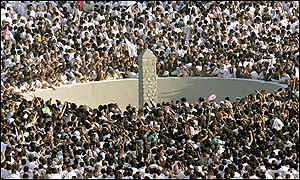
Iran appears to back down on woman's stoning
AFP at Yahoo
by Alice Ritchie Alice Ritchie – Fri Jul 9, 12:05 pm ET
LONDON (AFP) – Iran appeared Friday to have backed down over the stoning of a woman for adultery amid an international outcry, although her lawyer said she remained in jail and could still be executed by other means.
The Iranian embassy in London said in a statement reported by The Times that Sakineh Mohammadi-Ashtiani would no longer be stoned to death, a practice condemned by Western governments as "medieval" and tantamount to torture.
The embassy said that "according to information from the relevant judicial authorities in Iran, (Mohammadi-Ashtiani) will not be executed by stoning."
Her lawyer in Iran, however, said he had yet to receive any confirmation of the news, and bemoaned the vagueness of the statement which did not say whether she might be killed by other means.
"I have yet to be told of any stay in implementation of the sentence," Mohammad Mostafavi told AFP by telephone. "My client remains in prison."
The embassy did not elaborate on whether her conviction had been quashed or the sentence had been commuted to an alternative form of capital punishment -- in Iran normally hanging from a crane inside prison walls.
"It didn't say the verdict had been overturned, so is she going to face some alternative punishment, is she going to be released or will there be a retrial?" Mostafavi said.
Mohammadi-Ashtiani, 43, was convicted in 2006 of having an "illicit relationship" with two men and received 99 lashes, before being convicted of adultery and sentenced to death, according to Amnesty International.
The rights group warned on July 1 that the mother-of-two's execution may be "imminent" and in the past week, the European Union, Britain, France and the United States have urged the Iranian authorities to stay the execution.
An open letter condemning the execution has also been signed by figures such as former US secretary of state Condoleezza Rice, three ex-British foreign ministers, Nobel peace laureate Jose Ramos-Horta and actor Robert De Niro.
Hassiba Hadj Sahraoui, Amnesty International's Middle East and North Africa deputy director, urged Iran to spare Mohammadi-Ashtiani's life, saying a "mere change" in the method of execution was not enough.
"To punish -- and in some cases execute -- people for being in consenting relationships is no business of the state," the Amnesty official said.
The rights group said it was aware of at least 10 other people -- including seven women -- under sentence of stoning.
On Thursday, British Foreign Secretary William Hague said that if the "medieval" execution went ahead it would "disgust and appal" the world.
"I think that stoning is a medieval punishment that has no place in the modern world and the continued use of such a punishment in Iran demonstrates in our view a blatant disregard for human rights," he said.
In Washington the same day, US State Department spokesman Mark Toner told reporters: "Stoning as a means of execution is tantamount to torture. It's barbaric and an abhorrent act."
EU foreign affairs chief Catherine Ashton said stoning was "a particularly cruel method of execution which amounts to torture", while French Foreign Minister Bernard Kouchner said the case "offends the universal conscience".
A host of prominent names from the worlds of politics and arts, including actor Robert Redford and philosopher Bernard Henri Levy, signed an open letter Friday in The Times.
"On top of what she has already endured, Ms. Ashtiani faces a gruesome and agonising death," said the letter. "We urge the Iranian government to overturn this unjust sentence and reconsider Ms. Ashtiani's case."
**********************************************
Notice there was no mention of any punishment meted out to the guilty penises - er - men. You know as well as I that Ms. Ashtiani will end up dead - accidentally, of course. Ms. Ashtiani's lawyer will probably turn up dead, too, for daring to try and represent her.
Thursday, July 8, 2010
4,300 Year Old "Double Tomb" Discovered at Saqqara
From Isis via her cell phone - thanks Sis.
For real-time mobile news, go to http://m.discoverychannel.com.
Pyramid Construction Supervisor's Tomb Found
(More coverage on the story can be found at Yahoo News)
Egyptian archaeologists unveiled on Thursday two rock-hewn painted tombs belonging to a man who had a supervising role in the construction of pyramids -- and his son.
It's considered among the most distinguished Old Kingdom tombs.
 Dating from around 4,300 years old, the burials feature vividly colored wall paintings -- as fresh as if they were just painted. They were found in the ancient necropolis of Saqqara near Cairo by an Egyptian team working in the area since 1986.
Dr. , Secretary General of the Supreme Council of Antiquities (SCA) and the leader of the excavation, said that the tombs belonged to a father, Shendwa, and his son, Khonsu.
Consisting of a false door with paintings depicting scenes of the deceased seated before an offering table, Shendwa’s tomb featured inscriptions with the different titles of the tomb’s owner. (Caption: The false door of the unearthed tomb of Shendwas, father of Khonsu who both served as heads of the royal scribes during the Old Kingdom, is decorated with a painting depicting the owner sitting at a sacrifice table, in Saqqara near Cairo, Egypt, Thursday, July 8, 2010. I don't recall seeing an offering table with this kind of monolithic BLOCK on it before! What on earth is that? Offering tables are usually either laid out with tall "bread" that is a take-off on the board game of Senet, or piled high with fruits, joints of meat, bread, dishes, bowls, etc.)
According to the inscriptions, Shendwa was a top governmental official during the Sixth Dynasty (2374-2191 B.C.). He was the head of the royal scribes and the supervisor of the missions managing the materials used for pyramid construction.
Beneath the false door, 20 meters below the ground level, the archaeologists found the burial chamber.
“When Dr. Hawass descended into the tomb he realized that it was intact and had not previously been plundered by tomb robbers. Unfortunately Shendwa’s wooden sarcophagus had disintegrated due to humidity and erosion,” Egypt’s Supreme Council of Antiquities said in a statement.
In the burial chamber, Hawass found a collection of limestone jars which included five offering vessels carved in the shape of a duck.
“The bones of the ducks were still intact,” said Hawass.
The most important object found in the burial chamber was a 30-centimeter-high limestone obelisk. “This obelisk is a symbol of worshiping the sun god Re,” said Hawass, adding that during the Old Kingdom, a period also known as the age of pyramids, the Egyptians used to erect small obelisks in front of their tombs.
Next to Shendwa’s tomb, the archaeologists found the burial of his son Khonsu. Beautifully painted, it also featured a false door inscribed with Khonsu’s titles. “It appears that Khonsu inherited the same titles as his father,” Hawass said.
The tomb also contained an offering table and a stone lintel engraved with 6th Dynasty symbols.
Above the false door, there was was a brightly colored relief showing of the deceased Khonsu in different poses, Hawass said.
The tombs lie in an area known as“Gisr El-Mudir,” west of Saqqara's famous pyramid, the Step Pyramid of King Djoser. According to the archaeologists, the discovery of the two tombs could lead to unearthing a vast cemetery in the area.
For real-time mobile news, go to http://m.discoverychannel.com.
Pyramid Construction Supervisor's Tomb Found
(More coverage on the story can be found at Yahoo News)
Egyptian archaeologists unveiled on Thursday two rock-hewn painted tombs belonging to a man who had a supervising role in the construction of pyramids -- and his son.
It's considered among the most distinguished Old Kingdom tombs.

Dr. , Secretary General of the Supreme Council of Antiquities (SCA) and the leader of the excavation, said that the tombs belonged to a father, Shendwa, and his son, Khonsu.
Consisting of a false door with paintings depicting scenes of the deceased seated before an offering table, Shendwa’s tomb featured inscriptions with the different titles of the tomb’s owner. (Caption: The false door of the unearthed tomb of Shendwas, father of Khonsu who both served as heads of the royal scribes during the Old Kingdom, is decorated with a painting depicting the owner sitting at a sacrifice table, in Saqqara near Cairo, Egypt, Thursday, July 8, 2010. I don't recall seeing an offering table with this kind of monolithic BLOCK on it before! What on earth is that? Offering tables are usually either laid out with tall "bread" that is a take-off on the board game of Senet, or piled high with fruits, joints of meat, bread, dishes, bowls, etc.)
According to the inscriptions, Shendwa was a top governmental official during the Sixth Dynasty (2374-2191 B.C.). He was the head of the royal scribes and the supervisor of the missions managing the materials used for pyramid construction.
Beneath the false door, 20 meters below the ground level, the archaeologists found the burial chamber.
“When Dr. Hawass descended into the tomb he realized that it was intact and had not previously been plundered by tomb robbers. Unfortunately Shendwa’s wooden sarcophagus had disintegrated due to humidity and erosion,” Egypt’s Supreme Council of Antiquities said in a statement.
In the burial chamber, Hawass found a collection of limestone jars which included five offering vessels carved in the shape of a duck.
“The bones of the ducks were still intact,” said Hawass.
The most important object found in the burial chamber was a 30-centimeter-high limestone obelisk. “This obelisk is a symbol of worshiping the sun god Re,” said Hawass, adding that during the Old Kingdom, a period also known as the age of pyramids, the Egyptians used to erect small obelisks in front of their tombs.
Next to Shendwa’s tomb, the archaeologists found the burial of his son Khonsu. Beautifully painted, it also featured a false door inscribed with Khonsu’s titles. “It appears that Khonsu inherited the same titles as his father,” Hawass said.
The tomb also contained an offering table and a stone lintel engraved with 6th Dynasty symbols.
Above the false door, there was was a brightly colored relief showing of the deceased Khonsu in different poses, Hawass said.
The tombs lie in an area known as“Gisr El-Mudir,” west of Saqqara's famous pyramid, the Step Pyramid of King Djoser. According to the archaeologists, the discovery of the two tombs could lead to unearthing a vast cemetery in the area.
Early Hominids in Britain More Than 800,000 Years Ago
Well, this article is not the best written in the world, leaving more questions than it answers. It is also incredibly misleading and scientifically irresponsible to refer to whatever beings these researchers think they found evidence of as "humans." There were no humans more than 800,000 years ago - no beings even remotely close to being a human. By the way - that photo in the article - the man is holding up a petrified piece of poop - not a tool. Duh! Not exactly encouraging.
From Yahoo.news:
Early humans [not humans, hominids] ventured farther north than thought
By RAPHAEL G. SATTER, Associated Press Writer Raphael G. Satter, Associated Press Writer – Wed Jul 7, 7:04 pm ET
LONDON – Ancient man (not man - hominids) ventured into northern Europe far earlier than previously thought, settling on England's east coast more than 800,000 years ago, scientists said.
It had been assumed that humans (not humans - hominids) — thought to have emerged from Africa around 1.75 million years ago (whatever emerged from Africa 1.75 million years ago was NOT human) — kept mostly to relatively warm tropical forests, steppes and Mediterranean areas as they spread across Eurasia.
But the discovery of a collection of flint tools some 135 miles (220 kilometers) northeast of London shows that quite early on man (not humans - hominids covered in fur who would do just fine in the "cold") braved colder climes.
"What we found really undermines traditional views about how humans (not humans - hominids) spread and reacted to climate change," said Simon Parfitt, a University College London researcher. "It just shows how little we know about the movement (of hominids) out of Africa."
 About 75 flint tools have been found at the site near Happisburgh, a seaside hamlet in Norfolk, Parfitt and colleagues report in Thursday's issue of the journal Nature. (No explanation was given as to how these flint pieces were identified as 'tools.') (Just to be clear - what the man is holding in the photo, above, from the article, is petrified hyena poop, as identified in the slide show accompanying the article.)
 (The photo, above, shows actual pieces of flint identified by these researchers as "fragments of tools." I can definitely see that these look nothing like the piece of petrified hyena poop.)
The researchers dated the artifacts to somewhere between 866,000 to 814,000 years ago or 970,000 to 936,000 years ago. That's at least 100,000 years before the earliest known date for British settlement (notice use of the loaded term "settlement" - implying it was humans; but these were not humans, and whatever "settled" in Britain 100,000 years later weren't humans, either), in nearby Pakefield.
Exactly what kind of humans (not humans - hominids) made these tools is unknown. (Not actually established by discussion of any evidence that these WERE tools. Did hominids use tools 800,000 years ago?).
"It is impossible to guess who those people (not people - hominids) were without fossil evidence," said Eric Delson, an anthropologist at Lehman College of the City University of New York, who was not involved in the research. (So these researchers just assume, with no actual evidence, that these animals were people. Now THAT is a leap in logic I just do not buy!)
Mammoths and saber-toothed cats roamed the area at that time, and the River Thames flowed into the sea there — about 150 kilometers (90 miles) to the north of where its mouth is today. The climate was a little colder than now, at least during the winter.
The Natural History Museum's Chris Stringer, another of the paper's authors, said living in such an environment would have been challenging. Thick forests meant a poor supply of edible plants and dispersed prey. In the winter, there would be less daylight for hunting and foraging. Then, of course, there was the cold.
"For humans (not humans, hominids) that have not long emerged from the tropic and the subtropics, that is something," Stringer said. "There's always been the view that that the cold was holding them back."
But the find suggests that it didn't. So how did these humans (not humans - hominids) adapt? The researchers said the mix of a tidal river, marshes and coastline at the site might have helped, providing seaweed, tubers, and shellfish when prey was scarce. (What "prey?" What, exactly, did hominids eat?)
"We could imagine these people (not people - hominids) exploiting the slow-flowing banks of the Thames, just as today," Stringer said.
Co-author Nick Ashton, with the British Museum in London, said there was still considerable uncertainty about how they adapted.
"Have they got effective clothing? (they didn't need clothing - they were covered in fur) Have they got effective shelters? (sleep in trees) Have they got controlled use of fire?" he said, adding that the find "provides more questions than answers." (What - not even evidence of fire??? Ohmygoddess, LOL! I'm sorry - I keep visualizing a monkey with a book of matches...)
Delson said that the discovery helped complete Europe's patchy prehistoric record. (Oh, that is rich!)
"We don't know much (you said it, Mister), but we're increasing our knowledge of the earliest phases of what went on in Europe," he said. "It's one more piece of the puzzle."
Stringer, meanwhile, said he hoped more discoveries could be made along the coastline. He noted that he had already seen the chronology of human (not human - hominids) habitation in Britain pushed back, and then pushed back again.
"Now I'm thinking: 'Who knows, can we go back even further?'" (Further back to what - the very first ape? The very first single-celled creature that slimed away in the primordeal soup? LOL!)
From Yahoo.news:
Early humans [not humans, hominids] ventured farther north than thought
By RAPHAEL G. SATTER, Associated Press Writer Raphael G. Satter, Associated Press Writer – Wed Jul 7, 7:04 pm ET
LONDON – Ancient man (not man - hominids) ventured into northern Europe far earlier than previously thought, settling on England's east coast more than 800,000 years ago, scientists said.
It had been assumed that humans (not humans - hominids) — thought to have emerged from Africa around 1.75 million years ago (whatever emerged from Africa 1.75 million years ago was NOT human) — kept mostly to relatively warm tropical forests, steppes and Mediterranean areas as they spread across Eurasia.
But the discovery of a collection of flint tools some 135 miles (220 kilometers) northeast of London shows that quite early on man (not humans - hominids covered in fur who would do just fine in the "cold") braved colder climes.
"What we found really undermines traditional views about how humans (not humans - hominids) spread and reacted to climate change," said Simon Parfitt, a University College London researcher. "It just shows how little we know about the movement (of hominids) out of Africa."


The researchers dated the artifacts to somewhere between 866,000 to 814,000 years ago or 970,000 to 936,000 years ago. That's at least 100,000 years before the earliest known date for British settlement (notice use of the loaded term "settlement" - implying it was humans; but these were not humans, and whatever "settled" in Britain 100,000 years later weren't humans, either), in nearby Pakefield.
Exactly what kind of humans (not humans - hominids) made these tools is unknown. (Not actually established by discussion of any evidence that these WERE tools. Did hominids use tools 800,000 years ago?).
"It is impossible to guess who those people (not people - hominids) were without fossil evidence," said Eric Delson, an anthropologist at Lehman College of the City University of New York, who was not involved in the research. (So these researchers just assume, with no actual evidence, that these animals were people. Now THAT is a leap in logic I just do not buy!)
Mammoths and saber-toothed cats roamed the area at that time, and the River Thames flowed into the sea there — about 150 kilometers (90 miles) to the north of where its mouth is today. The climate was a little colder than now, at least during the winter.
The Natural History Museum's Chris Stringer, another of the paper's authors, said living in such an environment would have been challenging. Thick forests meant a poor supply of edible plants and dispersed prey. In the winter, there would be less daylight for hunting and foraging. Then, of course, there was the cold.
"For humans (not humans, hominids) that have not long emerged from the tropic and the subtropics, that is something," Stringer said. "There's always been the view that that the cold was holding them back."
But the find suggests that it didn't. So how did these humans (not humans - hominids) adapt? The researchers said the mix of a tidal river, marshes and coastline at the site might have helped, providing seaweed, tubers, and shellfish when prey was scarce. (What "prey?" What, exactly, did hominids eat?)
"We could imagine these people (not people - hominids) exploiting the slow-flowing banks of the Thames, just as today," Stringer said.
Co-author Nick Ashton, with the British Museum in London, said there was still considerable uncertainty about how they adapted.
"Have they got effective clothing? (they didn't need clothing - they were covered in fur) Have they got effective shelters? (sleep in trees) Have they got controlled use of fire?" he said, adding that the find "provides more questions than answers." (What - not even evidence of fire??? Ohmygoddess, LOL! I'm sorry - I keep visualizing a monkey with a book of matches...)
Delson said that the discovery helped complete Europe's patchy prehistoric record. (Oh, that is rich!)
"We don't know much (you said it, Mister), but we're increasing our knowledge of the earliest phases of what went on in Europe," he said. "It's one more piece of the puzzle."
Stringer, meanwhile, said he hoped more discoveries could be made along the coastline. He noted that he had already seen the chronology of human (not human - hominids) habitation in Britain pushed back, and then pushed back again.
"Now I'm thinking: 'Who knows, can we go back even further?'" (Further back to what - the very first ape? The very first single-celled creature that slimed away in the primordeal soup? LOL!)
Book Review: America and the Pill
One thing my genealogical research has brought home to me is that for the most part, my female ancestors married as late as they could - usually around 28 to 30 - because they knew they faced upwards of 20 years of producing a child every year, year in and year out, if they survived that long. Those who did live into their 50s faced the prospect of losing as many as half of their children to childhood diseases as well as stillbirths and miscarriages, one after another after another. It is no wonder to me that these women married as late as they could - it was a wonder to me that they married at all! But such was the communal and social pressure that, eventually, they were forced out of the home of their parents into wedlock. There were few other honorable options open to women in those times, particularly to women in rural communities, where there was little call for house and ladies' maids, cooks, teachers and ladies' companions!
"Good" women were not supposed to know anything about birth control and husbands were not expected to exercise any self-restraint - or use any form of birth control (even the "rythym method") when it came to sexual relations with his wife who was, basically, a chattel with no individual rights of her own. Marriage could be a death sentence by childbirth. In many places in the world today, unfortunately, it still is.
I am now all the more in awe about the incredible revolution that took place in the 1960's with the introduction of the female birth control pill - in societies where women had access to it.
I may have already posted a review of this book - I don't remember seeing this one. A friend tipped me to it - thanks, P!
From The Washington Post
In "America and the Pill," Elaine Tyler May traces the pill's influence on women
Sunday, May 30, 2010
AMERICA AND THE PILL
A History of Promise, Peril,
and Liberation
By Elaine Tyler May
Basic. 214 pp. $25.95
"I would be perfectly happy if not for the same old thing -- too many babies too close together," wrote a young mother to birth control pioneer Margaret Sanger in a letter Sanger included in her 1928 book "Motherhood in Bondage." Like many women seeking Sanger's advice about contraception, this mother was probably poor, uneducated and, by her own admission, desperate. One pictures her at her kitchen table, pen in hand, a child in each arm and on a knee. "My third baby was born a week after the first one's third birthday," she went on. "Just three babies in three years and I am only twenty-two years old. . . . I am also so nervous sometimes I don't know what to do."
Sanger is one of the heroes of "America and the Pill," a new cultural history of the birth control pill written by Elaine Tyler May, a professor of American studies and history at the University of Minnesota. Throughout her long career as a nurse and activist, Sanger was a tireless advocate for an oral contraceptive, calling as early as 1912 for a "magic pill." By the time this dream was realized in 1960, six years before Sanger's death, other contraceptives were widely available, but the pill stood out for three main reasons: First, it was the only form of contraception that was not directly linked to the act of sex (that is, no coitus interruptus necessary). Second, it was nearly 100 percent effective. Third, and most important for Sanger, women controlled it. Unlike with condoms or the rhythm method, men's cooperation didn't matter at all. They didn't even have to know.
Despite these benefits, from its inception the pill was shrouded in controversy and in some senses doomed to fail. May argues succinctly -- at just over 200 pages, the book is as compact and powerful as the pill itself -- that expectations for it were too high. "When the oral contraceptive arrived on the market, its champions claimed that the tiny pill promised to end human misery and eradicate the causes of war by controlling population." This ambition led to the messy business of separating humanitarians who were truly concerned about world poverty from politicians and corporations (and, shamefully, Sanger herself to an extent) who wanted to use eugenics to weed out "undesirables." Smaller, wealthier families were considered a plus for the Cold War fight against communism as they bolstered capitalism by buying more consumer goods. The pill was further promoted as a key ingredient to happy, nuclear families, and women were expected to use it despite many concerns about negative side effects.
May devotes many pages to delineating the moral and physical risks posed by the pill, and rightfully so. But there are lots of reasons to celebrate the pill, and she is at her best when allowing herself to do that. She gives a wonderful account of Sanger's advocacy and of Katharine McCormick, a women's rights activist who bankrolled the pill's development. Likewise, she skillfully shows how women fought for access to the pill, as well as for a safer pill, against some pretty big contenders, pharmaceutical companies and the Catholic Church among them.
May stops short of arguing that the pill triggered the women's movement of the 1960s and '70s, but she does rightly claim that it was a very useful tool for women's rights advocates, who saw the ability to control one's fertility as essential to securing educational and economic opportunities. The pill may not have cured world poverty or unhappy marriages, but it's safe to say that -- on the 50th anniversary of its approval by the FDA -- it has been a great boon to women. The ability to organize key events in their lives is now a right most women hold dear -- 82 percent of American women have used the pill, making it the nation's most popular form of birth control. As May shows, they frequently do this despite opposition from familial, political and religious sources, suggesting that authority over their own bodies is something women from all backgrounds can agree on.
Ashley Sayeau writes regularly on women, politics and culture for the Guardian and other publications.
"Good" women were not supposed to know anything about birth control and husbands were not expected to exercise any self-restraint - or use any form of birth control (even the "rythym method") when it came to sexual relations with his wife who was, basically, a chattel with no individual rights of her own. Marriage could be a death sentence by childbirth. In many places in the world today, unfortunately, it still is.
I am now all the more in awe about the incredible revolution that took place in the 1960's with the introduction of the female birth control pill - in societies where women had access to it.
I may have already posted a review of this book - I don't remember seeing this one. A friend tipped me to it - thanks, P!
From The Washington Post
In "America and the Pill," Elaine Tyler May traces the pill's influence on women
Sunday, May 30, 2010
AMERICA AND THE PILL
A History of Promise, Peril,
and Liberation
By Elaine Tyler May
Basic. 214 pp. $25.95
"I would be perfectly happy if not for the same old thing -- too many babies too close together," wrote a young mother to birth control pioneer Margaret Sanger in a letter Sanger included in her 1928 book "Motherhood in Bondage." Like many women seeking Sanger's advice about contraception, this mother was probably poor, uneducated and, by her own admission, desperate. One pictures her at her kitchen table, pen in hand, a child in each arm and on a knee. "My third baby was born a week after the first one's third birthday," she went on. "Just three babies in three years and I am only twenty-two years old. . . . I am also so nervous sometimes I don't know what to do."
Sanger is one of the heroes of "America and the Pill," a new cultural history of the birth control pill written by Elaine Tyler May, a professor of American studies and history at the University of Minnesota. Throughout her long career as a nurse and activist, Sanger was a tireless advocate for an oral contraceptive, calling as early as 1912 for a "magic pill." By the time this dream was realized in 1960, six years before Sanger's death, other contraceptives were widely available, but the pill stood out for three main reasons: First, it was the only form of contraception that was not directly linked to the act of sex (that is, no coitus interruptus necessary). Second, it was nearly 100 percent effective. Third, and most important for Sanger, women controlled it. Unlike with condoms or the rhythm method, men's cooperation didn't matter at all. They didn't even have to know.
Despite these benefits, from its inception the pill was shrouded in controversy and in some senses doomed to fail. May argues succinctly -- at just over 200 pages, the book is as compact and powerful as the pill itself -- that expectations for it were too high. "When the oral contraceptive arrived on the market, its champions claimed that the tiny pill promised to end human misery and eradicate the causes of war by controlling population." This ambition led to the messy business of separating humanitarians who were truly concerned about world poverty from politicians and corporations (and, shamefully, Sanger herself to an extent) who wanted to use eugenics to weed out "undesirables." Smaller, wealthier families were considered a plus for the Cold War fight against communism as they bolstered capitalism by buying more consumer goods. The pill was further promoted as a key ingredient to happy, nuclear families, and women were expected to use it despite many concerns about negative side effects.
May devotes many pages to delineating the moral and physical risks posed by the pill, and rightfully so. But there are lots of reasons to celebrate the pill, and she is at her best when allowing herself to do that. She gives a wonderful account of Sanger's advocacy and of Katharine McCormick, a women's rights activist who bankrolled the pill's development. Likewise, she skillfully shows how women fought for access to the pill, as well as for a safer pill, against some pretty big contenders, pharmaceutical companies and the Catholic Church among them.
May stops short of arguing that the pill triggered the women's movement of the 1960s and '70s, but she does rightly claim that it was a very useful tool for women's rights advocates, who saw the ability to control one's fertility as essential to securing educational and economic opportunities. The pill may not have cured world poverty or unhappy marriages, but it's safe to say that -- on the 50th anniversary of its approval by the FDA -- it has been a great boon to women. The ability to organize key events in their lives is now a right most women hold dear -- 82 percent of American women have used the pill, making it the nation's most popular form of birth control. As May shows, they frequently do this despite opposition from familial, political and religious sources, suggesting that authority over their own bodies is something women from all backgrounds can agree on.
Ashley Sayeau writes regularly on women, politics and culture for the Guardian and other publications.
Computer Labs for Kids: South Central Los Angeles - Class 2 and EXTRA!
You can read the latest at Shira's blog. Here is a short video clip from the first class last week.
Please visit Computer Labs for Kids to learn more about Shira and the Foundation.
There is exciting news!
Computer Labs for Kids is happy to announce we are preparing a new project in Pakistan.
We have a donor who has agreed to match the funds you donate towards getting Computer Labs for Kids in Pakistan. This same donor has also agreed to build a school for us. Computer Labs for Kids will be responsible for teaching the instructors, providing the curriculum, organizational structure, and computers. The first class will be 100 kids and each one will receive their own computer as part of the course.
As we deliver a full The Way to Happiness ® course as part of our curriculum, these children will be receive not just computer training, but life-changing values that will help them develop into responsible and moral adults.
We are budgeting for the tablet computer coming in 2011 by One Laptop per Child. We are estimating the entire project will cost $20,000 for all expenses which includes flights, materials, taxes and shipping costs.
Every dollar you donate towards this project will be matched by our sponsor!
If you would like to make a donation, please visit Computer Labs for Kids, click on the link near the top of the page Pakistan, and at the bottom of the new page is a Google Donate. You can also make a donation at Causes to Computer Labs for Kids.
One thing about Shira - she dreams BIG!
Please visit Computer Labs for Kids to learn more about Shira and the Foundation.
There is exciting news!
Computer Labs for Kids Will Have a School in Pakistan!!!
Computer Labs for Kids is happy to announce we are preparing a new project in Pakistan.
We have a donor who has agreed to match the funds you donate towards getting Computer Labs for Kids in Pakistan. This same donor has also agreed to build a school for us. Computer Labs for Kids will be responsible for teaching the instructors, providing the curriculum, organizational structure, and computers. The first class will be 100 kids and each one will receive their own computer as part of the course.
As we deliver a full The Way to Happiness ® course as part of our curriculum, these children will be receive not just computer training, but life-changing values that will help them develop into responsible and moral adults.
We are budgeting for the tablet computer coming in 2011 by One Laptop per Child. We are estimating the entire project will cost $20,000 for all expenses which includes flights, materials, taxes and shipping costs.
Every dollar you donate towards this project will be matched by our sponsor!
If you would like to make a donation, please visit Computer Labs for Kids, click on the link near the top of the page Pakistan, and at the bottom of the new page is a Google Donate. You can also make a donation at Causes to Computer Labs for Kids.
One thing about Shira - she dreams BIG!
Wednesday, July 7, 2010
Famed Chessplayer Fischer's Body Exhumed for DNA Sample and Reburied
I wasn't going to report this but Sis was right, this is important news regarding a world-renowned chessplayer - the first modern-day World Chess Champion who was an American, excluding Paul Morph. Morphy, a young troubled American (sound familiar?) was considered World Chess Champion by some before the title became 'officially' established and before there was anything called FIDE which is something like d' Federicion Internationale d'Echecs. It should be called the World Chess Federation. English IS still the language of international trade and exchange, is it not? So why is the name of the international chess federation in French instead of English? Who knows? I sure don't.
People will be interested in this news. Here's the report that she sent me a few days ago, from CNN - I have since seen that it was one of the briefest and most factual available, with a minimum of sensationalism:
Chess icon's body exhumed in paternity case
By the CNN Wire Staff
July 6, 2010 11:42 a.m. EDT
The body of chess legend Bobby Fischer was exhumed Monday (July 5, 2010) in Iceland, law enforcement officials have told CNN. His body was reburied shortly after DNA samples were taken, the officials said.
Iceland's supreme court ruled last month in favor of a request by Jinky Young, Fischer's alleged daughter, to exhume his remains in order to settle a paternity question.
A doctor, a priest and other officials were present during the procedure, according to the police department in Selfoss, Iceland.
Fischer was 64 when he died in January 2008.
Fischer was a child prodigy and chess master by the time he was 15. He achieved international fame in 1972 when he defeated chess grandmaster Boris Spassky of Russia during the height of the Cold War, to become world champion.
The tournament was considered a symbolic battle between the two greatest powers in the world. It was held in Iceland, midway between the U.S. and the Soviet Union. Soviet chess masters had held the title since World War II -- until Fischer won. The victory, unequaled by an American since, was followed by tens of millions of chess fans around the world.
But Fischer's genius proved eccentric. Years after his historic win, Fischer gave up the title in 1975 and refused to defend it. He vanished and lived in a self-imposed exile for decades. He resurfaced in Yugoslavia in 1992 for a rematch against Spassky. It was another victory for Fischer, one that earned him $3.5 million.
But the U.S. government claimed Fischer's participation had violated UN sanctions against Yugoslavia, imposed to punish Serb leader Slobodan Milosevic, and revoked his U.S. passport.
Fischer again disappeared.
He was not heard from again until 2004, when he was arrested in Japan for traveling on an expired passport. When Iceland granted Fischer citizenship in 2005, he moved to that country and lived there until his death in a hospital.
People will be interested in this news. Here's the report that she sent me a few days ago, from CNN - I have since seen that it was one of the briefest and most factual available, with a minimum of sensationalism:
Chess icon's body exhumed in paternity case
By the CNN Wire Staff
July 6, 2010 11:42 a.m. EDT
The body of chess legend Bobby Fischer was exhumed Monday (July 5, 2010) in Iceland, law enforcement officials have told CNN. His body was reburied shortly after DNA samples were taken, the officials said.
Iceland's supreme court ruled last month in favor of a request by Jinky Young, Fischer's alleged daughter, to exhume his remains in order to settle a paternity question.
A doctor, a priest and other officials were present during the procedure, according to the police department in Selfoss, Iceland.
Fischer was 64 when he died in January 2008.
Fischer was a child prodigy and chess master by the time he was 15. He achieved international fame in 1972 when he defeated chess grandmaster Boris Spassky of Russia during the height of the Cold War, to become world champion.
The tournament was considered a symbolic battle between the two greatest powers in the world. It was held in Iceland, midway between the U.S. and the Soviet Union. Soviet chess masters had held the title since World War II -- until Fischer won. The victory, unequaled by an American since, was followed by tens of millions of chess fans around the world.
But Fischer's genius proved eccentric. Years after his historic win, Fischer gave up the title in 1975 and refused to defend it. He vanished and lived in a self-imposed exile for decades. He resurfaced in Yugoslavia in 1992 for a rematch against Spassky. It was another victory for Fischer, one that earned him $3.5 million.
But the U.S. government claimed Fischer's participation had violated UN sanctions against Yugoslavia, imposed to punish Serb leader Slobodan Milosevic, and revoked his U.S. passport.
Fischer again disappeared.
He was not heard from again until 2004, when he was arrested in Japan for traveling on an expired passport. When Iceland granted Fischer citizenship in 2005, he moved to that country and lived there until his death in a hospital.
Squirrels Make The New York Times!

From The New York Times
SCIENCE
Basics
Nut? What Nut? The Squirrel Outwits to Survive
By NATALIE ANGIER
Published: July 5, 2010
I was walking through the neighborhood one afternoon when, on turning a corner, I nearly tripped over a gray squirrel that was sitting in the middle of the sidewalk, eating a nut. Startled by my sudden appearance, the squirrel dashed out to the road — right in front of an oncoming car.
Before I had time to scream, the squirrel had gotten caught in the car’s front hubcap, had spun around once like a cartoon character in a clothes dryer, and was spat back off. When the car drove away, the squirrel picked itself up, wobbled for a moment or two, and then resolutely hopped across the street.
You don’t get to be one of the most widely disseminated mammals in the world — equally at home in the woods, a suburban backyard or any city “green space” bigger than a mousepad — if you’re crushed by every Acme anvil that happens to drop your way.
“When people call me squirrely,” said John L. Koprowski, a squirrel expert and professor of wildlife conservation and management at the University of Arizona, “I am flattered by the term.”
The Eastern gray tree squirrel, or Sciurus carolinensis, has been so spectacularly successful that it is often considered a pest. The International Union for Conservation of Nature includes the squirrel on its list of the top 100 invasive species. The British and Italians hate gray squirrels for outcompeting their beloved native red squirrels. Manhattanites hate gray squirrels for reminding them of pigeons, and that goes for the black, brown and latte squirrel morphs, too.
Yet researchers who study gray squirrels argue that their subject is far more compelling than most people realize, and that behind the squirrel’s success lies a phenomenal elasticity of body, brain and behavior. Squirrels can leap a span 10 times the length of their body, roughly double what the best human long jumper can manage. They can rotate their ankles 180 degrees, and so keep a grip while climbing no matter which way they’re facing. Squirrels can learn by watching others — cross-phyletically, if need be. In their book “Squirrels: The Animal Answer Guide,” Richard W. Thorington Jr. and Katie Ferrell of the Smithsonian Institution described the safe-pedestrian approach of a gray squirrel eager to traverse a busy avenue near the White House. The squirrel waited on the grass near a crosswalk until people began to cross the street, said the authors, “and then it crossed the street behind them.”
In the acuity of their visual system, the sensitivity and deftness with which they can manipulate objects, their sociability, chattiness and willingness to deceive, squirrels turn out to be surprisingly similar to primates. They nest communally as multigenerational, matrilineal clans, and at the end of a hard day’s forage, they greet each other with a mutual nuzzling of cheek and lip glands that looks decidedly like a kiss. Dr. Koprowski said that when he was growing up in Cleveland, squirrels were the only wild mammals to which he was exposed. “When I got to college, I thought I’d study polar bears or mountain lions,” he said. “Luckily I ended up doing my master’s and Ph.D. on squirrels instead.”
The Eastern gray is one of about 278 squirrelly species alive today, a lineage that split off from other rodents about 40 million years ago and that includes chipmunks, marmots, woodchucks — a k a groundhogs — and prairie dogs. Squirrels are found on all continents save Antarctica and Australia, and in some of the harshest settings: the Himalayan marmot, found at up to 18,000 feet above sea level, is among the highest-living mammals of the world.
A good part of a squirrel’s strength can be traced to its elaborately veined tail, which, among other things, serves as a thermoregulatory device, in winter helping to shunt warm blood toward the squirrel’s core and in summer to wick excess heat off into the air. Rodents like rats and mice are nocturnal and have poor vision, relying on whiskers to navigate their world. The gray squirrel is diurnal and has the keen eyesight to match. “Its primary visual cortex is huge,” said Jon H. Kaas, a comparative neuroscientist at Vanderbilt University, A squirrel’s peripheral vision is as sharp as its focal eyesight, which means it can see what’s above and beside it without moving its head. While its color vision may only be so-so, akin to a person with red-green colorblindness who can tell green and red from other colors but not from each other, a squirrel has the benefit of natural sunglasses, pale yellow lenses that cut down on glare.
Gray squirrels use their sharp, shaded vision to keep an eye on each other. Michael A. Steele of Wilkes University in Pennsylvania and his colleagues have studied the squirrels’ hoarding behavior, which turns out to be remarkably calculated and rococo. Squirrels may be opportunistic feeders, able to make a meal of a discarded cheeseburger, crickets or a baby sparrow if need be, but in the main they are granivores and seed hoarders. They’ll gather acorns and other nuts, assess which are in danger of germinating and using up stored nutrients, remove the offending tree embryos with a few quick slices of their incisors, and then cache the sterilized treasure for later consumption, one seed per inch-deep hole.
But the squirrels don’t just bury an acorn and come back in winter. They bury the seed, dig it up shortly afterward, rebury it elsewhere, dig it up again. “We’ve seen seeds that were recached as many as five times,” said Dr. Steele. The squirrels recache to deter theft, lest another squirrel spied the burial the first X times. Reporting in the journal Animal Behaviour, the Steele team showed that when squirrels are certain that they are being watched, they will actively seek to deceive the would-be thieves. They’ll dig a hole, pretend to push an acorn in, and then cover it over, all the while keeping the prized seed hidden in their mouth. “Deceptive caching involves some pretty serious decision making,” Dr. Steele said. “It meets the criteria of tactical deception, which previously was thought to only occur in primates.”
Squirrels are also master kvetchers, modulating their utterances to convey the nature and severity of their complaint: a moaning “kuk” for mild discomfort, a buzzing sound for more pressing distress, and a short scream for extreme dismay. During the one or two days a year that a female is fertile, she will be chased by every male in the vicinity, all of them hounding her round and round a tree with sneezelike calls, and her on top, refusing to say gesundheit. A squirrel threatened by a serious predator like a cat, dog, hawk or wayward toddler will issue a multimodal alarm, barking out a series of loud chuk-chuk-chuks with a nasally, penetrating “whaa” at the end, while simultaneously performing a tail flag — lifting its fluffy baton high over its head and flicking it back and forth rhythmically.
Sarah R. Partan of Hampshire College in Amherst, Mass., and her students have used a custom-built squirrel robot to track how real squirrels respond to the components of an alarm signal. The robot looks and sounds like a squirrel, its tail moves sort of like a squirrel’s, but because its plastic body is covered in rabbit fur it doesn’t smell like a squirrel. Yet squirrels tested in Florida and New England have responded to the knockoff appropriately, with alarm barks of their own or by running up a tree. Human passers-by have likewise been enchanted. “People are always coming over, asking what we’re doing,” said Dr. Partan. “We’ve had to abandon many trials halfway through.” An iSquirrel? Now that’s something even a New Yorker might love.
Southwest Chess Club: 2010 Championship!
Hola darlings!
The members of the SWCC take their championship very seriously, evidenced by the number of players who participate each year in an event that, because of the Club's meeting schedule, is carried out over several weeks!
The 2010 SWCC Championship begins tomorrow, and this year is named in honor of the Club's recently deceased President, Joe Crothers.
6-Round Swiss in One Section. Game/100. USCF Rated.
EF: $7. (must be a member to participate). SWCC Membership $10 (can join prior to first round).
(Two ½-point byes available in rounds 1 through 5 if requested at least 2 days in advance; no byes available for round 6.)
TD is Becker; ATD is Grochowski.
The members of the SWCC take their championship very seriously, evidenced by the number of players who participate each year in an event that, because of the Club's meeting schedule, is carried out over several weeks!
The 2010 SWCC Championship begins tomorrow, and this year is named in honor of the Club's recently deceased President, Joe Crothers.
The Joe Crothers Memorial SWCC Championship
July 8, 15, 22, 29 & August 5 & 12
6-Round Swiss in One Section. Game/100. USCF Rated.
EF: $7. (must be a member to participate). SWCC Membership $10 (can join prior to first round).
(Two ½-point byes available in rounds 1 through 5 if requested at least 2 days in advance; no byes available for round 6.)
TD is Becker; ATD is Grochowski.
Monday, July 5, 2010
Evidence of Early Successful Amputation
Another fascinating article.
When Mr. Don and took a special guided tour at the Met during our last visit in 2009 that focused on ancient Egyptian medicine, it was impressive to learn just how much practical wisdom the Egyptians had acquired in prevention of certain conditions (such as using khol around the eyes, which had chemical properties that repelled a species of fly that carried a virus that could cause blindness) and considerable expertise in other areas. From the treatment of wounds to birth control, the Egyptians had solutions that worked. They also performed various surgeries, as surviving collections of sophisticated and delicate medical instruments and medical texts attest.
Egyptian physicians (who were of both sexes, females were not excluded from the profession) knew about what we today call sepsis, that is, infection, which kills a person who otherwise would likely survive a surgery. They had various precautions against it, such as the use of vinegar, which kills bacteria. But what the survival rate of surgeries was? I cannot tell you. Even today, in what we consider our advanced times, patients die after surgery by the thousands every year, many of them from sepsis!
And so this article is particularly impressive. Mind, I don't know if it actually represents that neolithic people were routinely carrying out successful amputations! But at least in this instance, someone did, and the patient evidently received excellent care and was treated over a period of time in order to prevent the development of infection while the wound left by the surgery healed. How long would that have taken? It sounds as if the patient was rather 'old' at the time, suffering from advanced arthritis. We know that older people take longer to heal - so the effort to keep this patient alive and infection-free was quite an undertaking. Wow, I'm impressed just thinking about it --
From The Epoch Times
Sophisticated Amputation Methods Used During Stone Age
By Zubyre Parvez
Epoch Times Staff Created: Jun 28, 2010
Stone Age doctors prove to be more medically advanced than we first imagined, as new evidence of surgery undertaken almost 7,000 years ago comes to light. Confirming advanced medical knowledge in 4900 B.C., the findings challenge the existing history of surgery and its development.
In a Neolithic site excavated in 2005 at Buthiers-Boulancourt, 40 miles south of Paris, scientists found the skeleton of an old man buried almost 7,000 years ago. Tests showed an intentional and successful amputation in which a sharpened flint was used to cut the man’s humerus bone above the trochlea indent.
Impressively, the patient was even anesthetized. The limb was cleanly cut off, and the wound was treated in sterile conditions. It has been common knowledge that Stone Age doctors performed trephinations (that is, cutting through the skull), but amputations have been unheard of up until now.
According to a research paper published in the Antiquity Journal, the macroscopic examination has not revealed any infection in contact with this amputation, suggesting that it was conducted in relatively aseptic conditions.
Scientists found that the patient survived the operation, and although he suffered from osteoarthritis, he lived for months if not years afterward.
According to the Daily Mail, researcher Cécile Buquet-Marcon said that pain-killing plants such as the hallucinogenic Datura were possibly used, and other plants such as sage were probably used to clean the wound.
The loss of the patient’s forearm did not exclude him from the community. His grave measures an above average 6.5 feet and contains a schist axe, a flint pick, and the remains of a young animal, which point to a high social rank.
When Mr. Don and took a special guided tour at the Met during our last visit in 2009 that focused on ancient Egyptian medicine, it was impressive to learn just how much practical wisdom the Egyptians had acquired in prevention of certain conditions (such as using khol around the eyes, which had chemical properties that repelled a species of fly that carried a virus that could cause blindness) and considerable expertise in other areas. From the treatment of wounds to birth control, the Egyptians had solutions that worked. They also performed various surgeries, as surviving collections of sophisticated and delicate medical instruments and medical texts attest.
Egyptian physicians (who were of both sexes, females were not excluded from the profession) knew about what we today call sepsis, that is, infection, which kills a person who otherwise would likely survive a surgery. They had various precautions against it, such as the use of vinegar, which kills bacteria. But what the survival rate of surgeries was? I cannot tell you. Even today, in what we consider our advanced times, patients die after surgery by the thousands every year, many of them from sepsis!
And so this article is particularly impressive. Mind, I don't know if it actually represents that neolithic people were routinely carrying out successful amputations! But at least in this instance, someone did, and the patient evidently received excellent care and was treated over a period of time in order to prevent the development of infection while the wound left by the surgery healed. How long would that have taken? It sounds as if the patient was rather 'old' at the time, suffering from advanced arthritis. We know that older people take longer to heal - so the effort to keep this patient alive and infection-free was quite an undertaking. Wow, I'm impressed just thinking about it --
From The Epoch Times
Sophisticated Amputation Methods Used During Stone Age
By Zubyre Parvez
Epoch Times Staff Created: Jun 28, 2010
Stone Age doctors prove to be more medically advanced than we first imagined, as new evidence of surgery undertaken almost 7,000 years ago comes to light. Confirming advanced medical knowledge in 4900 B.C., the findings challenge the existing history of surgery and its development.
In a Neolithic site excavated in 2005 at Buthiers-Boulancourt, 40 miles south of Paris, scientists found the skeleton of an old man buried almost 7,000 years ago. Tests showed an intentional and successful amputation in which a sharpened flint was used to cut the man’s humerus bone above the trochlea indent.
Impressively, the patient was even anesthetized. The limb was cleanly cut off, and the wound was treated in sterile conditions. It has been common knowledge that Stone Age doctors performed trephinations (that is, cutting through the skull), but amputations have been unheard of up until now.
According to a research paper published in the Antiquity Journal, the macroscopic examination has not revealed any infection in contact with this amputation, suggesting that it was conducted in relatively aseptic conditions.
Scientists found that the patient survived the operation, and although he suffered from osteoarthritis, he lived for months if not years afterward.
According to the Daily Mail, researcher Cécile Buquet-Marcon said that pain-killing plants such as the hallucinogenic Datura were possibly used, and other plants such as sage were probably used to clean the wound.
The loss of the patient’s forearm did not exclude him from the community. His grave measures an above average 6.5 feet and contains a schist axe, a flint pick, and the remains of a young animal, which point to a high social rank.
Was Armenia the Cradle of Civilization?
Well, I've always thought so :) Regardless of whether you believe the biblical account of a great flood that wiped out nearly everyone except a chosen few who took to a large vessel with animals and supplies and survived to land somewhere in the mountains of Ararat (the biblical account does NOT say that the vessel landed on Mount Ararat), there is plenty of archaeological evidence to show that agriculture got it's start in the highlands of that borderland region between Turkey and Armenia and that grapes were first grown there, about 11,500 years ago or so. The pattern of the spread of agriculture, and civilization, shows a steady southwards progression, eventually creating a great arc called the Fertile Crescent. That Crescent, which is what most people concentrate on when they think of ancient civilizations, ignores evidence of other equally ancient civilizations northwest of the Caucusus Mountains and those areas settled to the West, in the area called "old Europe."
Armenia was the site of development of the first spoke-wheel and light-weight but sturdy chariot chasse. The people were expert horse-breeders and horse-trainers, who were in demand all across the Fertile Crescent to staff the fledgling calvary corps of potentates in Anatolia, Egypt and Mesopotamia with the spread of this new technology beginning about 1850 BCE. If I remember my linguistics correctly, the Armenian language, along with ancient Sanskrit, are the 'purest' remaining examples of the ancient proto-Indo-European language. So, I found this article interesting.
From panarmenian.net
Mesopotamia’s civilization originated in Armenia
July 2, 2010 - 15:43 AMT 10:43 GMTPanARMENIAN.Net - Unique discoveries revealed as a result of excavations at Shengavit (4000-3000 B.C.) confirm that Armenia is the motherland of metallurgy, jeweler’s art, wine-making and horse breeding.
A group of archaeologists studying the ancient city concluded that 4000-3000 B.C. Armenia was a highly developed state with exclusive culture. The excavations are carried out by an Armenian-American archaeological expedition.
Director of the Scientific and Research Institute of Historical and Cultural Heritage of the RA Ministry of Culture Simonyan said that for example, the glass beads discovered at the territory of Shengavit are of a higher quality than the Egypt samples.
Meanwhile, the amount of revealed horse bones at the territory has exceeded all expectations of the researchers. With respect to this, German paleozoologist Hans Peter Wertman stated that he has not observed such a quantity of horses in the entire Ancient East.
A great number of stone tools have been found in workrooms. While the discovered evidences of copper production prove that a systematized iron production was established in Armenia, said Simonyan, adding that many surprises are still awaiting us.
For his part, Mitchell S. Rothman, a Professor of Anthropology and Archaeology and founder of the Anthropology Department at Widener University in Chester, Pennsylvania, said that all the discoveries prove that around 6,000 years ago the culture of Shengavit has spread over the ancient world. “All that was known in Mesopotamia came from Armenia. Armenia is the absent fragment in the entire mosaics of the ancient world’s civilizations construction. Shengavit has supplemented the lacking chains, that we had been facing while studying the ancient culture of Mesopotamia,” concluded Rothman.
Armenia was the site of development of the first spoke-wheel and light-weight but sturdy chariot chasse. The people were expert horse-breeders and horse-trainers, who were in demand all across the Fertile Crescent to staff the fledgling calvary corps of potentates in Anatolia, Egypt and Mesopotamia with the spread of this new technology beginning about 1850 BCE. If I remember my linguistics correctly, the Armenian language, along with ancient Sanskrit, are the 'purest' remaining examples of the ancient proto-Indo-European language. So, I found this article interesting.
From panarmenian.net
Mesopotamia’s civilization originated in Armenia
July 2, 2010 - 15:43 AMT 10:43 GMTPanARMENIAN.Net - Unique discoveries revealed as a result of excavations at Shengavit (4000-3000 B.C.) confirm that Armenia is the motherland of metallurgy, jeweler’s art, wine-making and horse breeding.
A group of archaeologists studying the ancient city concluded that 4000-3000 B.C. Armenia was a highly developed state with exclusive culture. The excavations are carried out by an Armenian-American archaeological expedition.
Director of the Scientific and Research Institute of Historical and Cultural Heritage of the RA Ministry of Culture Simonyan said that for example, the glass beads discovered at the territory of Shengavit are of a higher quality than the Egypt samples.
Meanwhile, the amount of revealed horse bones at the territory has exceeded all expectations of the researchers. With respect to this, German paleozoologist Hans Peter Wertman stated that he has not observed such a quantity of horses in the entire Ancient East.
A great number of stone tools have been found in workrooms. While the discovered evidences of copper production prove that a systematized iron production was established in Armenia, said Simonyan, adding that many surprises are still awaiting us.
For his part, Mitchell S. Rothman, a Professor of Anthropology and Archaeology and founder of the Anthropology Department at Widener University in Chester, Pennsylvania, said that all the discoveries prove that around 6,000 years ago the culture of Shengavit has spread over the ancient world. “All that was known in Mesopotamia came from Armenia. Armenia is the absent fragment in the entire mosaics of the ancient world’s civilizations construction. Shengavit has supplemented the lacking chains, that we had been facing while studying the ancient culture of Mesopotamia,” concluded Rothman.
Subscribe to:
Posts (Atom)