Showing posts with label Attis. Show all posts

Saturday, December 21, 2013

Christmas According to Barbara Walker's "A Woman's Encyclopedia of Myths and Secrets"

Happy Winter Solstice, everyone!  Woo woo!  The image below depicts a sacred tree of Attis -- a pine tree, from which "decorations" are hanging.  Not sure, but I think the bull in this 4th century image is meant to be a substitute for the blood sacrifice of Attis.  The use of evergreens during this time of year has come down to us from ancient pagan practices. But then, you knew that :)

Source.
It's so damn dark and dreary out there, I can't stand it.  But I look forward to this otherwise generally dark, dank, cold, snowy (or icy, had freezing rain starting Thursday night and I couldn't even go out on my front porch Friday morning without bear claws on my shoes and tossing salt out before me) time of year precisely because I know after Winter Solstice, the days begin to get longer by a few minutes each day.  Woo woo!

Unfortunately we're under that massive storm system and somewhere between 5 to 9 inches of snow is expected between 6 p.m. tonight and 6 p.m. tomorrow night.  Sigh.  I can't shovel like I used to; indeed, I'm not supposed to do it at all according to my former Heart Doctor #2 (I fired him last month).  I do it anyway, just not as much :)

I was surprised that Walker's encyclopedia didn't have an entry for the winter solstice.  But it does have an entry on Christmas and within it is information on the winter solstice.  As always, absolutely fascinating, so here we go:

Christmas

For its first three centuries, the Christian church knew no birthday for its savior.  During the 4th century there was much argument about adoption of a date.  Some favored the popular date of the Koreion, when the divine Virgin gave birth to the new Aeon in Alexandria.(1)  Now called Twelfth Night or Epiphany, this date is still the official nativity in Armenian churches, and celebrated with more pomp than Christmas by the Greek Orthodox.(2)

Roman churchmen tended to favor the mithraic winter-solstice festival called Dies Natalis Solis Invictus, Birthday of the Unconquered Sun.(3)  Blended with the Greek sun festival of the Helia by the emperor Aurelian, this December 25th nativity also honored such gods as Attis, Dionysus, Osiris, Syrian Baal, and other versions of the solar Righteousness, and Savior.(4)  Most pagan Mysteries celebrated the birth of the Divine Child at the winter solstice.  Norsemen celebrated the birthday of their Lord, Frey, at the nadir of the sun in the darkest days of winter, known to them as Yule.  The night of birth, Christmas Eve, was called Modranect, Latin matrum noctern, the Night of the Mother --  originally a greater festival than Christmas Day.(5)

Early in the 4th century the Roman church adopted December 25 because the people were used to calling it a god's birthday.  But eastern churches refused to honor it until 375 A.D.(6)  The fiction that some record existed in the land of Jesus's alleged birth certainly could not be upheld, for the church of Jerusalem continued to ignore the official date until the 7th century.(7)

Trappings such as Yule logs, gifts, lights, mistletoe, holly, carols, feasts, and processions were altogether pagan.  They were drawn from worship of the Goddess as mother of the Divine Child.  Christmas trees evolved from the pinea silva, pine groves attached to temples of the Great Mother.  On the night before a holy day, Roman priests called dendrophori or "tree-bearers" cut one of the sacred pines, decorated it, and carried it into the temple to receive the effigy of Attis.(8) [Attis castrated himself and died beneath the boughs of a pine tree. Some artistic renditions of his death show him tied to a tree or a stake -- crucified.]  Figures and fetishes attached to such trees in later centuries seem to have represented a whole pantheon of pagan deities on the World Tree.

Attis' sacred tree.  (Henderson & Oakes). Source.

Christmas celebrations remained so obviously pagan over the years that many churchmen bitterly denounced their "carnal pomp and jollity."  Polydor Virgil said: "Dancing, masques, mummeries, stage-plays, and other such Christmas disorders now in use with Christians, were derived from these Roman Saturnalian and Bacchanalian festivals; which should cause all pious Christians eternally to abominate them."(9)  Puritans in 17th-century Massachusetts tried to ban Christmas altogether becausse of its overt heathenism.(10)  Inevitably, the attempt failed.

A curious mistake in the Christmas mystery play of the Towneley cycle shows a Great Mother image not fully assimilated to that of Mary.  Before their attention was arrested by the annunciatory angel, idly chatting shepherds complained of their cruel overlords, and prayed "Our Lady" to curse them.(11)  Considering that they were not acquainted with the Mother of Christ, a rather different "Lady" must have been intended.

Among many other superstitions connected with Christmas were some that were typical of pagan holy days, such as the belief that animls could speak human words at midnight on Christmas Eve, or that divinatory voices could be heard at crosroads at the same time.(12)  Also at midnight on Christmas Eve, ater in wells and springs was supposed to turn into blood, or its sacramental equivalent, wine.  The miracle was not to be verified, however, for all who witnessed it would die within the year.(13) [One does not mess with the sacred rivers, wells and springs of the Goddess!]

Notes:

(1)  Campbell, M.I., 34.
(2)  Miles, 22.
(3)  Reinach, 282.
(4)  H. Smith, 130; Hyde, 92; Miles, 23.
(5)  Turville-Petre, 227.
(6)  Frazer, G.B., 416.
(7)  Miles, 22.
(8)  Vermaeren, 115.
(9)  Hazlitt, 118-19.
(10)  de Lys, 372.
(11)  Miles, 135.
(12)  Summers, V., 157.
(13)  Miles, 234.

Sunday, April 27, 2008

Temple of Cybele at Balchik

More Unique Findings Unearthed in Cybele Temple in Bulgaria's Balchik 23 April 2008, Wednesday A total of four antique statues were unearthed in the temple of the Phrygian Goddess Cybele in Bulgaria's coastal town of Balchik on Wednesday. The team of the archaeologists Igor Lazarenko, Elina Mircheva and Radostina Encheva discovered two Cybele's statues and two other, believed to be statues of Aphrodite and Dionysus. During the excavation works, there have been found also two relieves and a limestone slab with a lion embossment. The first finding in the temple, believed to be the biggest one in Bulgaria, was discovered at the end of April last year, when archaeologists found a 30-centimeter-long marble statue of Cybele. "The statue has no head and part of the goddess' palm is also missing," the curator of the local museum Radostina Encheva said. It emerged that a column with a Latin inscription and an architectural element with bulls' heads were discovered on the same spot. Among the other precious findings, discovered on the spot is a 50-centimeter-high Doric column with a well-preserved inscription addressed to the Roman emperor Valerius Licinianus Licinius. The temple's walls were at least 2.5 meters high, and the base of the building is huge, compared to other important buildings of the same age. A huge fire or a disastrous earthquake destroyed the temple, the archaeologists believe. Originally a Phrygian goddess, Cybele was a deification of the Earth Mother who was worshiped in Anatolia from Neolithic times. Like Gaia (the "Earth") or her Minoan equivalent Rhea, Cybele embodies the fertile earth, a goddess of caverns and mountains, walls and fortresses, nature, wild animals. Her title "potnia theron", which is also associated with the Minoan Great Mother, alludes to her ancient Neolithic roots as "Mistress of the Animals". She becomes a life-death-rebirth deity in connection with her consort, her son Attis. *********************************************************************************** From Barbara Walker's "A Woman's Encyclopedia of Myths and Secrets." Cybele Great Mother of the Gods from Ida - Magna Mater Deum Idea - brought to Rome from Phrygia in 204 B.C. Her triumphal procession was "later glorified by marvelous legends, and the poets told of edifying miracles that had occurred during Cybele's voyage."(1) Her holy aniconic image was carried to Rome by order of the Cumaean Sybil, a personification of the same cave-dwelling Goddess herself. As the Great Mother of all Asia Minor, she was worshipped especially on Mt. Ida, Mt. Sipylus, Cyzicus, Sardis, and Pessinus in Galatia.(2) Her festivals were called ludi, "games."(3) A highlight of her worship was the Taurobolium, baptism in the blood of a sacred bull, who represented her dying-god consort, Attis. Her temle stood on the Vatican, where St. Peter's basilica stands today, up to the 4th century A.D. when Christians took it over.(4) She was one of the leading deities of Rome in the heyday of the mystery cults, along with Hecate and Demeter of Eleusis.(5) Variations of Cybele's name - Kubaba, Kuba, Kube - have been linked with the Ka'aba stone at Mecca, a meteoric "cube" that bore the Goddess's symbol and was once known as the Old Woman.(6) Other names for Cybele assimilated her to every significant form of the Great Goddess. She was the Berecynthian Mother (genetrix Berecynthia). She was Rhea Lobrine, Goddess of sacred caves, known as her "marriage bowers."(7) She was called Augusta, the Great One; Alma, the Nourishing One; Sanctissima, the Most Holy One. Roman emperors like Augustus, Claudius, and Antoninus Pius regarded her as the supreme deity of the empire. Augustus established his home facing her temple, and looked upon his wife, the empress Livia Augusta, as an earthly incarnation of her.(8) The emperor Julian wrote an impassioned address to her: Who is then the Mother of the gods? She is the source of the intellectual and creative gods, who in their turn guide the visible gods; she is both the mother and the spouse of the mighty Zeus; she came into being next to and together with the great crator; she is in control of every form of life, and the cause of all generation; she easily brings to perfection all things that are; she is the motherless maiden, enthroned at the side of Zeus, and in very truth is the Mother of all the Gods.(9) Fathers of the Christian church vehemently disagreed. St. Augustine called Cybele a harlot mother, "the mother, not of the gods, but of the demons."(10) One of her names, Antaea, made her the mythical mother of the earth-giant Antaeus, who was invincible as long as his feet remained in contact with his Mother's body, the earth. Heracles conquered him by holding him up in the air. Churchmen believed the powers of witches came from the same sort of contact with Mother Earth. Arresting officers often carried witches to prison in a large basket, so their feet would not touch the ground.(11) There was a Christian sect founded in the 2nd century A.D. by Montanus (Mountain man), a priest of Cybele, who identified Attis with Christ. [Indeed, the similarities in the myths of both gods are compelling]. Montanus maintained that women were agents of the Goddess, and could preach and prophesy as well as men. This contradicted the orthodox Pauline sect, which followed St. Paul's rule that women must never speak publicly on holy subjects.(12) During the 4th century, Montanist Christianity was declared a heresy, and many of its adherents were slain. Some Montanists in Asia Minor were locked in their churches and burned alive.(13) Notes: (1) Cumont, O.R.R.P., 47. (2) Encyc. Brit., "Great Mother of the Gods." (3) James, 246. (4) Clodd, 79; Frazer, G.B., 408. (5) Angus, 143. (6) Vermaseren, 22; Harding, 41. (7) Gaster, 609. (8) Vermaseren, 27, 53, 83, 85, 177-78. (9) Vermaseren, 86-87. (10) Vermaseren, 181. (11) Robbins, 334; Lea unabridged, 814. (12) Reinach, 278. (13) Chamberlin, A.M., ch. 1. Related: Bibi Nani (Cult of Nania). Compare: Kubaba.

Tuesday, March 4, 2008

The Cult of Attis

From Archaeology Magazine online

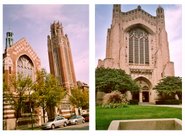
Images: An Augustan-era fresco, left, in Rome depicts a chair with details similar to one recently found in Herculaneum, below. (Courtesy Soprintendenza archeologica di Pompei)


Cult Chair
Volume 61 Number 2, March/April 2008
by Jarrett A. Lobell

Archaeologists have unearthed a wealth of information on the ancient villas of the Bay of Naples, but they know almost nothing about the furniture that filled the sumptuously decorated homes. Most pieces were destroyed by the eruption of Mt. Vesuvius. Now excavators working in Herculaneum, near the famous Villa of the Papyri, have uncovered parts of a remarkable chair.

Made of wood and ivory, the chair is the first of its type ever found. Although fragmentary, its decorations depict scenes of the cult of Attis, a Near Eastern deity who was driven mad by the goddess Cybele and castrated himself, only to be reborn as a pine tree. On the chair are scenes of a pine tree with offerings at its base, Dionysos leaning on a pine, and a satyr with a pine, as well as cupids playing cymbals. The images allude to the celebration of the death and rebirth of Attis, who was introduced to the Romans under the reign of the emperor Claudius (r. A.D. 41-54).

© 2008 by the Archaeological Institute of Americawww.archaeology.org/0803/trenches/chair.html
*****************************************************************************************
What are the odds these chairs are related to the much earlier chairs/goddess thrones that I posted about:

http://goddesschess.blogspot.com/2007/08/chess-lessons-from-ancient-history.html

http://goddesschess.blogspot.com/2008/01/more-chess-lessons-from-ancient-history.html

And then, there is the connection to the goddess Cybele, with the Attis/Cyble redux of the earlier Osiris/Isis and Damuzi/Inanna legends. There is also the connection of the goddess to the tree (sacred tree, sacred poles, sacred groves, for instance) in the forms of Hathor, Asherah and Inanna - iconography that dates back (working from memory, don't have my notes or prior posts in front of me!) about 5,500 years. What is the symbol of the pine tree, except the "delta" of the goddess depicted upside down? Take a look at the goat/ibex leaping to eat the leaves of the "trees" on the earlier post tonight. Aren't those nothing but "upside down" pine trees?

Attis being "reborn" in the form of a pine tree is, I think, a metaphor for the eternal union of the male and female goddesses who, through their union, create something greater than either.
Related Posts Plugin for WordPress, Blogger...