From Novinite.com
Bulgaria Archaeologists, Architects Move to Save Cybele Temple
Archaeology | March 12, 2010, Friday
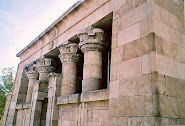
A commission of archaeologists and architects is set on securing a National Monument status for the temple of Greek goddess Cybele in Bulgaria’s Balchik.
The absolutely unique Cybele temple was uncovered by accident in April 2007 at the construction site of a hotel owned by a local entrepreneur.
The special commission has been appointed by Culture Minister Vezhdi Rashidov in order to figure out how to preserve the temple.
The status of a National Monument is going to bring a total ban of any construction activities in the area of the Cybele temple.
Currently, the invaluable archaeological site lies in the open as it has not been properly conserved because of the dispute of the local authorities with the owner of the plot. The commission plans to build a temporary shelter over the temple.
“We agree to finance the conservation of the temple as long as the Ministry of Culture gives us the legal right to claim it. If we are delayed a bit more, next year there might be no temple to conserve,” the Balchik Mayor Nikolay Angelov has said.
In 2009, he came up with an initiative to expropriate the Cybele temple. However, the owner demanded EUR 1 000 per square meter, or a total of EUR 680 000. The construction of the hotel was halted, and the situation resulted in a stalemate as neither the Municipality, nor any private investor wanted to buy the plot.
The extremely rich temple of goddess Cybele is dated back to the 4th century AD. It is believed to have been shattered, though still well preserved, by an earthquake, or set on fire by barbarian invaders during the reign of Emperor Valens (364-378 AD).
Showing posts with label Cybele. Show all posts
Sunday, March 14, 2010
Sunday, October 25, 2009
The Snake Goddess of Khubala
What makes this story so fascinating is that this snake goddess is not ancient; she died 11 years ago. Of equal interest - Khubala (a/k/a (Kubile, Kubala, Kubaba, Kubabat - Cybele), the Great Mother.
Story from The Times of India (Nagpur)
TNN 25 October 2009, 05:59am IST
KHUBALA (SAONER): She may have passed away 11 years ago of a snake bite, but the memories of Sarika Dhakne are still alive in the minds of the villagers of Khubala, about 50 km away from Nagpur. Not only that, Sarika has been quite literally idolized by the villagers who say that no one has died of a snake bite ever since.
On June 26 every year, the day Sarika had died, her family organizes a pooja at a shrine they built in her memory. A green field, where Sarika was bitten by the snake, serves as the backdrop of the shrine. A fleeting glimpse at the idol in the shrine, that stands on the bank of a narrow stream, may leave an onlooker foxed as Sarika's idol, in a bluish attire with a snake head rising above her head, may appear like Lord Shiva, whose temples are commonplace in the lanes and bylanes of the country.
"Villagers generally visit the fields to relieve themselves. Sarika had also gone there for the same reason and got bitten by a snake on her right ankle," recalled Sarika's distant relative Bapurao Pradhan. "We rushed her to a temple as villagers have more faith on the miraculous powers of sacred places and holy persons than anything else. It was in my lap that she breathed the last," said Pradhan who said he wanted to bring Sarika home as a daughter-in-law. "My wife passed away when our children were young. After that, Sarika used to take care of my house. I would have liked to have Sarika marry my elder son Sachin," said Pradhan. "She was the most beautiful of her siblings," he added.
The story of Sarika deification is also quite strange. Pradhan and other villagers recalled that there would be snakes spotted at the Dhakne's residence daily after Sarika's last rites were performed. "The family members were baffled and scared by the occurrence. But, gradually they started placing a diya in front of the snakes, perceiving it as a manifestation of her spirit," said neighbour Lakshmi Kolte. The Dhaknes soon took a pilgrimage to Nagdwar to appease the snake goddess and its lord (Shiva).
"However, it was a hair-raising experience that prompted the Dhaknes to build the shrine. One day, the family members spotted two snakes mating on a ceiling beam inside the house. This incident shook up the Dhaknes who took this as a sign and decided to build a shrine in Sarika's memory," said another villager.
Pradhan's son Ashok recalled how Sarika was a good student who scored well in her board exams. "A feast in her memory is organized after the annual ritual at the shrine every year," said Ashok. The family members, who regularly visit the shrine to light lamps and incense sticks, say they dream of building a bigger shrine one day.
Sunday, August 9, 2009
Goddess: Maize Goddess Chicomecoatl - Follow-up
Prior post. Following-up on my comment to Carlos in response to his comment under the original post, I am not able to post images in a comment, so I thought I would post some images here, to show the remarkable coincidence of imagery between the old world and the new.
When I first saw Chicomecoatl, I was very much struck by the "tower"-like crown she wears. It reminded me of other Goddesses I've seen wearing similar headdresses/crowns.
Here is an image of the Goddess Cybele (which may be from Pergamum) - I was wrong in the information in my post - this is NOT the image of Cybele sent to Rome in c. 204 BCE. That Cybele was a sacred Black Stone that fell from the sky (a meterorite), similar to many other sacred Black Stones from Heaven worshipped as the Goddess -- Diana of Ephesus, for instance, and the sacred Black Stone in the Kabala at Mecca, which pre-dates the foundation of Islam. I do not have a date on this Cybele. By the way, Diana of Ephesus was also often depicted with a tower-like crown, many-breasted, and with cornucopias of fruit and grains.
There are many sculptures and icons, going back as far as Catyl Hoyuk, showing a Goddess seated on a throne flanked by two lions, often wearing a towering crown or an actual tower as a crown. Here is an image of the Syrian goddess Atargatis, also known as Dea Syria by the Romans: Goddess wearing an impressive mural crown and flanked by doves, probably Artargatis identified with Aphrodite/Venus. Relief from the temple of Adonis at Duro-Europos. Dated to around the 1st century BCE. (Bilde attributes it to Khirbet Et-Tannur.)Drawing © S. Beaulieu, after Bilde 1990: 175, fig. 7.
More tomorrow - got to show down now - another severe thunderstorm with a lot of lightning is rolling through now. I can see this is going to be a sleepless night. Time to pull out a good book.
Labels:
Atargatis,
Chicomecoatl,
Cybele,
Dea Syria,
Diana,
Goddess Diana,
Mother Goddess
Sunday, December 7, 2008
Blast from the Past: Priest of Cybele Gravesite Found
The headline of this article from the Independent.uk is rather tastelessly sensational (what's new), but the article itself is extremely informative. It's a blast from the past that showed up in my weekly archaeological search today:
Pagan transvestite priest? died after ritual castration?
By David Keys Archaeology Correspondent
Wednesday, 22 May 2002
Romano-British clergymen from exotic religious cults ministered to their congregants while dressed as transvestites weighed down with stone and bronze jewellery.
A research report, published by the Council for British Archaeology yesterday, reveals that a pagan priest from Yorkshire was buried in the late 3rd century wearing what was probably full ritual regalia including a five-strand necklace of 600 jet beads, a jet bracelet, a brown shale armlet and a bronze anklet.
He was buried immediately opposite a large stone building – possibly a temple.
Investigations have been run by English Heritage and other archaeological organisations at the site, Bainesse near Catterick in North Yorkshire, over the past 20 years. They suggest that the building lay at the heart of a settlement strung out along more than half a mile of the ancient Roman Dere Street, which is now the A1 trunk road.
Experts in Roman religion believe that the Yorkshire cleric belonged to the officially sanctioned and important religious cult of a mother goddess called Cybele, who originated in Anatolia, present-day Turkey.
The cult was based on the great mother goddess and her toy-boy lover Attis who, guilt-ridden for having sexually betrayed her, went mad, castrated himself and, consequently, died.
The cult's tradition dictated that its priests had similarly to mutilate themselves in painful solidarity with Attis, often using a piece of flint or a sharp fragment of pottery. Ritual clamps were then used to staunch the blood, but Cybelean priests often died in the process.
Indeed, the Romano-British transvestite eunuch from Yorkshire probably perished from the wounds inflicted in just such an act. Osteological examination of his skeleton shows he died in his early 20s.
The ritual self-castration, which was performed in a state of dance-induced ecstasy, was known in the Roman calendar as the "day of blood" and described by at least one Roman emperor as the "sacred harvest".
The deity Cybele eventually became a universal goddess, viewed as mother of the gods, the goddess of everything from peace to war, from fertility to nature and from law to disease.
In some respects, the cult of Cybele had certain similarities with early Christianity. Attis sacrificed himself and was resurrected from the dead. In the 4th century Attis became identified as a sun god, as was Christ at the time. And through Attis and Cybele, as in Christianity, the cult's followers were guaranteed immortality of the soul. The concept of priestly celibacy was also a common feature.
Some 40 metres (130ft) from where the Yorkshire priest was buried was the substantial stone building. Its proximity to the burial, as well as an important feature of the structure – a subterranean chamber reached by a flight of stone stairs – suggests the building may well have been a temple of Cybele. Cybelean temples were unusual in having underground rooms, one for secret rites and another in which individuals wishing to achieve spiritual immortality bathed in the blood of ritually slaughtered sacred bulls.
Other religious objects found near by include a bronze statue of a Roman god, a pair of bone dolphins, symbolising immortality, three small altars and a potentially ritual whetstone for sharpening cutting implements found immediately adjacent to the underground chamber. Inside the underground room itself were the remains of feasts held at least 16 centuries ago.
Sunday, April 27, 2008
Temple of Cybele at Balchik
More Unique Findings Unearthed in Cybele Temple in Bulgaria's Balchik
23 April 2008, Wednesday
A total of four antique statues were unearthed in the temple of the Phrygian Goddess Cybele in Bulgaria's coastal town of Balchik on Wednesday.
The team of the archaeologists Igor Lazarenko, Elina Mircheva and Radostina Encheva discovered two Cybele's statues and two other, believed to be statues of Aphrodite and Dionysus.
During the excavation works, there have been found also two relieves and a limestone slab with a lion embossment.
The first finding in the temple, believed to be the biggest one in Bulgaria, was discovered at the end of April last year, when archaeologists found a 30-centimeter-long marble statue of Cybele.
"The statue has no head and part of the goddess' palm is also missing," the curator of the local museum Radostina Encheva said. It emerged that a column with a Latin inscription and an architectural element with bulls' heads were discovered on the same spot.
Among the other precious findings, discovered on the spot is a 50-centimeter-high Doric column with a well-preserved inscription addressed to the Roman emperor Valerius Licinianus Licinius. The temple's walls were at least 2.5 meters high, and the base of the building is huge, compared to other important buildings of the same age. A huge fire or a disastrous earthquake destroyed the temple, the archaeologists believe.
Originally a Phrygian goddess, Cybele was a deification of the Earth Mother who was worshiped in Anatolia from Neolithic times. Like Gaia (the "Earth") or her Minoan equivalent Rhea, Cybele embodies the fertile earth, a goddess of caverns and mountains, walls and fortresses, nature, wild animals. Her title "potnia theron", which is also associated with the Minoan Great Mother, alludes to her ancient Neolithic roots as "Mistress of the Animals".
She becomes a life-death-rebirth deity in connection with her consort, her son Attis.
***********************************************************************************
From Barbara Walker's "A Woman's Encyclopedia of Myths and Secrets."
Cybele
Great Mother of the Gods from Ida - Magna Mater Deum Idea - brought to Rome from Phrygia in 204 B.C. Her triumphal procession was "later glorified by marvelous legends, and the poets told of edifying miracles that had occurred during Cybele's voyage."(1)
Her holy aniconic image was carried to Rome by order of the Cumaean Sybil, a personification of the same cave-dwelling Goddess herself. As the Great Mother of all Asia Minor, she was worshipped especially on Mt. Ida, Mt. Sipylus, Cyzicus, Sardis, and Pessinus in Galatia.(2)
Her festivals were called ludi, "games."(3) A highlight of her worship was the Taurobolium, baptism in the blood of a sacred bull, who represented her dying-god consort, Attis. Her temle stood on the Vatican, where St. Peter's basilica stands today, up to the 4th century A.D. when Christians took it over.(4) She was one of the leading deities of Rome in the heyday of the mystery cults, along with Hecate and Demeter of Eleusis.(5)
Variations of Cybele's name - Kubaba, Kuba, Kube - have been linked with the Ka'aba stone at Mecca, a meteoric "cube" that bore the Goddess's symbol and was once known as the Old Woman.(6) Other names for Cybele assimilated her to every significant form of the Great Goddess. She was the Berecynthian Mother (genetrix Berecynthia). She was Rhea Lobrine, Goddess of sacred caves, known as her "marriage bowers."(7) She was called Augusta, the Great One; Alma, the Nourishing One; Sanctissima, the Most Holy One. Roman emperors like Augustus, Claudius, and Antoninus Pius regarded her as the supreme deity of the empire. Augustus established his home facing her temple, and looked upon his wife, the empress Livia Augusta, as an earthly incarnation of her.(8) The emperor Julian wrote an impassioned address to her:
Who is then the Mother of the gods? She is the source of the intellectual and creative gods, who in their turn guide the visible gods; she is both the mother and the spouse of the mighty Zeus; she came into being next to and together with the great crator; she is in control of every form of life, and the cause of all generation; she easily brings to perfection all things that are; she is the motherless maiden, enthroned at the side of Zeus, and in very truth is the Mother of all the Gods.(9)
Fathers of the Christian church vehemently disagreed. St. Augustine called Cybele a harlot mother, "the mother, not of the gods, but of the demons."(10)
One of her names, Antaea, made her the mythical mother of the earth-giant Antaeus, who was invincible as long as his feet remained in contact with his Mother's body, the earth. Heracles conquered him by holding him up in the air. Churchmen believed the powers of witches came from the same sort of contact with Mother Earth. Arresting officers often carried witches to prison in a large basket, so their feet would not touch the ground.(11)
There was a Christian sect founded in the 2nd century A.D. by Montanus (Mountain man), a priest of Cybele, who identified Attis with Christ. [Indeed, the similarities in the myths of both gods are compelling]. Montanus maintained that women were agents of the Goddess, and could preach and prophesy as well as men. This contradicted the orthodox Pauline sect, which followed St. Paul's rule that women must never speak publicly on holy subjects.(12) During the 4th century, Montanist Christianity was declared a heresy, and many of its adherents were slain. Some Montanists in Asia Minor were locked in their churches and burned alive.(13)
Notes:
(1) Cumont, O.R.R.P., 47.
(2) Encyc. Brit., "Great Mother of the Gods."
(3) James, 246.
(4) Clodd, 79; Frazer, G.B., 408.
(5) Angus, 143.
(6) Vermaseren, 22; Harding, 41.
(7) Gaster, 609.
(8) Vermaseren, 27, 53, 83, 85, 177-78.
(9) Vermaseren, 86-87.
(10) Vermaseren, 181.
(11) Robbins, 334; Lea unabridged, 814.
(12) Reinach, 278.
(13) Chamberlin, A.M., ch. 1.
Related: Bibi Nani (Cult of Nania).
Compare: Kubaba.
Tuesday, March 4, 2008
The Cult of Attis
From Archaeology Magazine onlineImages: An Augustan-era fresco, left, in Rome depicts a chair with details similar to one recently found in Herculaneum, below. (Courtesy Soprintendenza archeologica di Pompei)

Cult Chair
Volume 61 Number 2, March/April 2008
by Jarrett A. Lobell

Archaeologists have unearthed a wealth of information on the ancient villas of the Bay of Naples, but they know almost nothing about the furniture that filled the sumptuously decorated homes. Most pieces were destroyed by the eruption of Mt. Vesuvius. Now excavators working in Herculaneum, near the famous Villa of the Papyri, have uncovered parts of a remarkable chair.
Made of wood and ivory, the chair is the first of its type ever found. Although fragmentary, its decorations depict scenes of the cult of Attis, a Near Eastern deity who was driven mad by the goddess Cybele and castrated himself, only to be reborn as a pine tree. On the chair are scenes of a pine tree with offerings at its base, Dionysos leaning on a pine, and a satyr with a pine, as well as cupids playing cymbals. The images allude to the celebration of the death and rebirth of Attis, who was introduced to the Romans under the reign of the emperor Claudius (r. A.D. 41-54).
© 2008 by the Archaeological Institute of Americawww.archaeology.org/0803/trenches/chair.html
*****************************************************************************************
What are the odds these chairs are related to the much earlier chairs/goddess thrones that I posted about:
http://goddesschess.blogspot.com/2007/08/chess-lessons-from-ancient-history.html
http://goddesschess.blogspot.com/2008/01/more-chess-lessons-from-ancient-history.html
And then, there is the connection to the goddess Cybele, with the Attis/Cyble redux of the earlier Osiris/Isis and Damuzi/Inanna legends. There is also the connection of the goddess to the tree (sacred tree, sacred poles, sacred groves, for instance) in the forms of Hathor, Asherah and Inanna - iconography that dates back (working from memory, don't have my notes or prior posts in front of me!) about 5,500 years. What is the symbol of the pine tree, except the "delta" of the goddess depicted upside down? Take a look at the goat/ibex leaping to eat the leaves of the "trees" on the earlier post tonight. Aren't those nothing but "upside down" pine trees?
Attis being "reborn" in the form of a pine tree is, I think, a metaphor for the eternal union of the male and female goddesses who, through their union, create something greater than either.
Subscribe to:
Posts (Atom)