Showing posts with label Xi Wang Mu. Show all posts

Sunday, October 2, 2011

Goddess Durga Festivities

It's that time of year and festivities for the Goddess Durga are in full swing in India and elsewhere around the world wherever there are Hindus. 

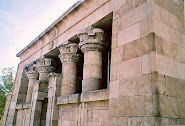
Durga represents the raw, creative force of the Universe; "She" can be benign and benevolent, "She" can be fearsome and destructive.  "She" is often depicted riding a feline -- either a lion or a tiger.  In this, "She" shares similarities with the Goddess Hat-hert (Hathor) of ancient Egypt and the ancient Chinese Goddess Xi Wangmu (Hsi Wang Mu), both of whom, in their earliest forms (before they were "tamed" down over the centuries) displayed feline characteristics and could, in the blink of an eye, turn into fear-inspiring destructive creatures of death.  Hat-hert was the roaring lioness; Xiwangmu had tiger's teeth and claws and leopard's tail. 


From Washington Bangla Radio
The Old Sobhabazar Rajbari Puja | WBRi Kolkata Bonedi Barir Pujo Report
Sun, 10/02/2011 - 09:57   

Calcutta, October 1, 2011 (Washington Bangla Radio) Kolkata embraces few of the best known traditional house hold pujas that can be found in the entire nation. One such puja is of course the Sobha Bazar Rajbari Durga Puja. The puja is celebrated in two houses adjacent to each other.
"Baghbari" owned by Gopimohon Deb was constructed after the original residence was made by Raja Nabakrishna Deb.

Raja Nabakrishna Deb was the famous exponent of Hinduism during the Brahmo Samaj Movement by Raja Rammohon Roy. It was in the year 1757 after the famous Battle of Plassey that this Durga Puja was organized.

Like most of the families this one too has their own sets of rituals. The arrangement for the puja starts from the day of 'Rath Yatra' itself when the the wooden frame work of the idol is worshipped. The Durga idol is made inside the household and the ritual of bodhon starts 15 days before Nabami. For the Deb family, Goddess Durga is nothing else than the daughter of their household idol, Gopinath Jeu.

The devi is placed in 'Ek Chala', decked with silver ornaments. The silver foils which were imported from Germany came through post meaning 'dak' and thus the decoration came to be known as 'Daker Saaj'.

The idol of Sobha Bazar Raj Bari is adorned with gold ornaments like nose ring and 'bindi' which are the only metal used to decorate the goddess. Considered to be one of the oldest pujas in the city now, it is said that canons used to be fired in the initial days of the festival as a part of the celebration. But now, gun shots have replaced them.

Debs' perform a ritual called "Kanakanjali". Gold coins dating to the time of Akbar's reign were thrown at married women with children.

The immersion ceremony is very special and dazzling.

The ritual called 'Tarpan' is performed to let the dead ancestors know of the Puja is performed in the Dashami morning.

The Bisarjan ceremony (Immersion) is a spectacular affair.Women dress in red and white saris while men wear dhotis carrying seven golden umbrellas.
A musical band play along and two Nilkantha birds are released. Around 60 men lend their shoulders to the goddess on her way to the river. Previously the band was hired from Scotch Highlander (Gorar Baddi). The myth behind the release of Nilkantha Birds is quite interesting.

The first Nilkantha is set free to go to Kailash to convey the message of Devi Durga's departure to Shiva.

The other Nilkantha bird is set free in the middle of the river to ensure the message has been conveyed in case the first one fails. After the goddess is immersed in the water then the holy water collected which is called "Gana shanti jal" and it is sprinkled on everyone present.

So get ready for the next five days of fun and merry-making and amid visiting the famous club pujas of the city one should also squeeze some time and taste the cultural past of Kolkata by visiting one of these few ancient households that still worships the goddess of shakti with equal pomp and glory.


This article provides some explanation regarding the different aspects of the Goddess Durga and the rituals involving her celebration (puja):

From The Times of India
Nine leaves make goddess-devotee bond stronger


Friday, January 1, 2010

The Peach of Immortality

(Image: The God of Longevity or Sau, is probably the most popular deity out of the three star Gods Fuk Luk Sau. He represents good health, longevity and a quality and smooth life. He is depicted carrying the Peach of Immortality, itself an auspicious symbol for long life and excellent health. The God of Longevity is also seen carrying a Dragon staff with a Wu Lou. The Wu Lou is believed to be filled with nectar of immortality.)
Many cultures have stories about a magic elixir or a fruit, the drinking or eating of which can reverse aging and grant eternal life to the partaker. Xi Wang Mu, the Queen Mother of the West in ancient Chinese mythology, lives far to the west (from ancient Chinese capitals in the east), high in the mountains, in a hidden garden where she grows peaches that give eternal life. Although the exact location of Xi Wang Mu's sanctuary/fortress is unknown, I think it is somewhere in the mountains ringing the Tarim Basin where there was west-east contact more than 4,500 years ago. Xi Wang Mu predates Daoist thought (under which she became 'civilized') and was originally a fierce tiger-goddess, a creator and destroyer of life. In that way, she resembles many other original goddesses whose origins reach back in the mists of time, long before writing, long before "history" as we think of it today.

The Silk Road was responsible for introducing the peach, a native of China, to other areas of the world, notably ancient Persia, in the earliest days of trade between those two countries. From Wikipedia: The scientific name persica, along with the word "peach" itself and its cognates in many European languages, derives from an early European belief that peaches were native to Persia (now Iran). The modern botanical consensus is that they originate in China, and were introduced to Persia and the Mediterranean region along the Silk Road before Christian times.
Ironic, isn't it. China introduced the peach to the rest of the world, although it was accepted "history" that the peach was introduced into China from Persia. Accepted history was WRONG. Today, westerners (laypeople and scholars alike), are generally uninformed when it comes to ancient Chinese sources that talk about early chess. The problem is further compounded by translation issues - not only are those ancient Chinese sources not translated into other languages, Chinese scholars have problems translating the archaic Chinese into modern idiom. The equivalent is a little like me attempting to read Beowulf in its original "English " -- which doesn't seem like English at all!
One has to wonder - what if historians are wrong about the way chess was transmitted, too? According to most of them, chess came to China from Persia, after Persia got it from Hind (formerly northwest India, today part of Pakistan). But what if, just like peaches, chess came into Persia from China and was then introduced to Hind via Persia?
Here is what Barbara Walker's The Woman's Encyclopedia of Myths and Secrets has to say about peaches:
Peach
Female genital symbol, in China regarded as the source of the ambrosia of life which game gods their immortality; corresponding to the apple in western Europe. Great Mother Hsi Wang Mu ruled the magic peach gardn in the west, where the gods were reborn.(1)
Peach Blossom meant a virgin in Taoist symbolism, while the fruit stood for a mature woman whose juices were essential to man's health. China's patron saint of longevity Shou Lou was an old man with a high bulging forehead, bursting with "yhin juice" he had absorbed and sent up to his head through sexual coupling with many woman To reveal his mystical secret, Shou Lou always held up a peach with one of his fingers stuck into its cleft.(2)
Chinese wizards made magic wands from peach twigs. These might be compared to magic wands made in the west from other woods sacred to the Goddess, such as witch hazel, witch-willow, apple boughs, or holly.(3)
Western writers sometimes confused the Oriental peach with the apricot, because abricot was once a European word for the vulva. Sculptures from the pagan period at Nimes showed examples of this fruit in conjunction with phalli.(4)
Notes:
(1) Larousse, 382.
(2) Rawson, E. A., 234.
(3) de Lys, 397.
(4) Knight, D. W. P., 136, pls. XV, XVI.
Related Posts Plugin for WordPress, Blogger...