Tuesday, September 2, 2008

Fascinating Neolithic Carvings

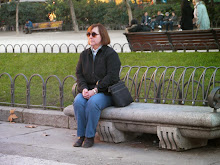
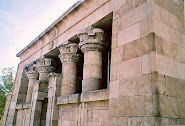
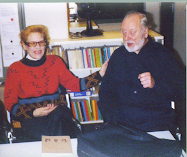
This is from a blog at http://www.for-ua.com/. The photographs are not the best. The first one does remind me of a Trypillian culture iconic motif - also known as a "bird" goddess (the pointy head is indicative of this type of carving - some people call them "lizard" heads, a headdress or dressed hair? but this could just be erosion too - looks like there are the remnants of ears and some kind of face) - also looks rather Cyclaic. It's hard to tell what else the first photo is attached to - it's just a head shot. Shot #2 is okay, but is shot #3 a close-up of the face of #2 - or a different rock carving? How close are the rock carvings of shots #1 and #2? So many questions! Stonehenge Found in Carpathians August 28, 2008 There are more than ten prehistoric rocky sculptures in Carpathians. Scientists compare them to English Stonehenge. Scientists do not know who and when cut out these sculptures, but they are sure that such historic evidences are rare for Europe. Sculptures were found in village Snidavka, Kosov region. Archeologists always knew that there were rare sculptures in the mountains. However, any explorations were forbidden during the Soviet time. But when the exploration was allowed there were no money. Research started only three years ago, and ten rocky rarities were immediately found. This sculpture could have become the gold mine for tourist business. But it has never become. 14-meter sculpture of a pregnant woman is the most valuable discovery of archeologists. It might not have analogs in the whole world. According to archeologist Mykola Kogutyak, the sculpture is 5-6 thousand years BC old. “It is the interweaving of north Black Sea civilizations,” he said. Scientists do not know who and when cut out these sculptures. Ones say they belong to Trypillya culture, others mention more ancient civilizations, but both camps are sure that these are heathen symbols. In August scientists are holding international conference to define the fate of the mountain treasures. Archeologists stand for creation of historic and cultural reserve in Carpathian. Then it will change completely not only the tourist map of Ukraine, but of the whole Europe.

Chess News

I've updated my coverage of the Women's World Chess Championship at Chess Femme News. I've stuck my neck way out and made predictions about who I think will make it through the Round 2 play-offs to Round 3. Gulp. Goddesschess' latest edition of Random Round-up is also up and running for the next week. I sent off my September, 2008 edition of Chessville's L'echecs des Femmes yesterday, but it hasn't been published yet, maybe not until this weekend. Enjoy!

Aztlan on a Pacific Island?

An interesting article about the mythical Aztlan and how the concept has been warped by Mexicans who want to migrate (legally or illegally) to the United States. Pacific island claims to be the roots of Mexico Location of Aztec homeland has been sought and debated By JEREMY SCHWARTZ Cox News Service Aug. 30, 2008, 5:34PM MEXCALTITÁN, MEXICO — In the pre-dawn darkness, the fishermen return with nets brimming with plump shrimp and tie up their canoes behind homes of mud and wood. It's a way of life that's hardly changed over the past 1,000 years in Mexcaltitán, an isolated Pacific coastal island that's been dubbed the Venice of Mexico because its sunken streets become canals during the rainy season. But embedded in that humble daily ritual may lie clues to one of the hemisphere's great historical mysteries: Where did the mighty Aztec civilization come from? For local officials and some historians, Mexcaltitán is nothing less than the mythical Aztlán, birthplace of the ancient Aztecs. Immigration flashpoint According to legend, the Aztecs left an island in 1091 and wandered for two centuries before settling in what is now Mexico City. There, they founded the legendary city of Tenochtitlan, an island city of canals and floating gardens, and lorded over an empire that stretched from Guatemala to northern Mexico before the Spanish conquered them in 1521. But the location of Aztlán is no mere academic exercise: the term has become a flashpoint in today's raging U.S.-Mexico immigration debate. Entering "Aztlán" in an Internet search is to be immersed in a fierce, often nasty, ideological battle over immigrant rights. Historians and archeologists are bitterly divided over the location of Aztlán, or even over whether the place ever existed. With some theories placing the Aztec homeland in the U.S. Southwest, Utah or California, the notion has become fraught with political overtones. For decades, the idea of an Aztlán located within the United States was an important part of the growing Chicano pride movement. Anne Martinez, a University of Texas history professor, said the embrace of Aztlán reflected a desire by Mexican-Americans to forge a clear geographical link, and thus a belonging, to the United States. "It was also the idea that wherever Mexicans are outside of Mexico that that is Aztlán," she said. "That we take Aztlán with us." 'Powerful idea' Today, the term is more likely to be used by anti-immigration groups warning of a reconquista, or reconquering, of the Southwest U.S. by Mexican immigrants. The Just Build the Fence blog defines Aztlán as "the enemy encamped within our own borders." "(Aztlán) is a very powerful idea," said Mexican archeologist Jesús Jáuregui, a leading expert on Aztlán theories. "It can mean something different to each person." In Mexcaltitán, located in the Pacific state of Nayarit, clues that this was once Aztlán are tantalizing. In Nahuatl, the language of the Aztecs (who called themselves the Mexica), Aztlán means "place of whiteness" or "place of herons." And the village is indeed a favorite haunt of white herons, which nest in the surrounding lagoon, as well as seasonal blooms of white water lilies. Héctor Apodaca, a guide at the village's museum, argues that local fishing holes have the same names as Aztec places like Toluca. Apodaca says that Cora Indians, who were among the last indigenous groups to be subdued by the Spanish and speak a version of Nahuatl, still come to the island every year to make offerings. "That's because they believe that this was a ceremonial center of the Mexica," Apodaca said. A living replica Others point to Mexcaltitán's striking physical resemblance to Tenochtitlan, the Aztec capital whose ruins sit under Mexico City. Some historians say Mexcaltitán's circular shape and cruciform design are similar to that of Tenochtitlan, which Spanish conquistador Bernal Diaz described as "an enchanted vision." Tenochtitlan was destroyed in 1521, long before the invention of the camera, and officials in Mexcaltitán say their village is the closest thing to a living replica. Local officials are so certain that Mexcaltitán is Aztlán that they've dubbed the state of Nayarit the "cradle of Mexicaness" and changed the state's official seal to include a diagram of the Aztecs' departure from Mexcaltitán. But despite the local certainty, historical debate rages on. No definitive archeological evidence has yet been uncovered to prove Mexcaltitán's connection to Tenochtitlan. Jáuregui, the Mexican archeologist, believes Aztlán is more myth than place and says the official sanctioning of Mexcaltitán as Aztlán stemmed from political, rather than historical reasons. He said that during the 1960s and 1970s, Mexican officials grew alarmed by Chicano and Mexican-American assertions that the ancient homeland actually sat outside the boundaries of Mexico. He argues that such a possibility embarrassed and potentially undermined what has become Mexico's creation myth. And the state of Nayarit, traditionally one of the poorest in Mexico, was in need of a tourism boost. "Mexcaltitán is a beautiful place," he said. "But that's a lot different than saying it's Aztlán." In Mexcaltitán, any collective memory of the Aztecs' presence there seems to have been lost. Antonio Osuna Carbajal, a Mexcaltitán fisherman, smiles slyly when asked if his home is Aztlán. "That's what they tell us," he said. "But the bad thing is that the older generations didn't leave us any writings or anything like that."

Ingushetia Web Site Owner Killed by Russian Police

Another way to get rid of all opposition - label them "terrorists." The true terrorists are running things from the Kremlin. Hey, Kirsan, real safe region you chose to hold the Women's World Chess Championship in! Story from Theage.com.au Russian police kill anti-government website owner September 1, 2008 The owner of an independent website critical of authorities was shot and killed by police today in a volatile province in southern Russia, his colleague said. The killing of Ingushetiya.ru owner Magomed Yevloyev could incite tensions in the province of Ingushetia west of Chechnya, which has been the site of frequent attacks on police and other officials. Police arrested Yevloyev today, taking him off a plane that had just landed in Ingushetia province near Chechnya, said the site's deputy editor, Ruslan Khautiyev. Police whisked Yevloyev away in a car and later dumped him on the road with a gunshot wound in the head, Khautiyev said. He said Yevloyev died in a hospital shortly afterward. In Moscow, Investigative Committee spokesman Vladimir Markin said in a statement that Yevloyev was detained by police and died in an "incident" while being taken to police headquarters for an interrogation. Markin did not elaborate, saying a check to clarify the circumstances of Yevloyev's death had begun. The committee is under the Prosecutor-General's office. Yevloyev has angered regional authorities with bold criticism of police treatment of civilians in the region. A court in June ordered him to shut his site on charges of spreading "extremist" statements, but it reappeared under a different name. Khautiyev said Yevloyev arrived in Ingushetia from Moscow on the same plane with regional president Murat Zyazikov. Police blocked the jet on the runway after it landed in Ingushetia's provincial capital, Magas, entered the plane and took Yevloyev out. Yevloyev's death is likely to further stir up passions in Ingushetia, which has been plagued by frequent raids and ambushes against federal forces and local authorities. Government critics attribute the attacks to anger fuelled by abductions, beatings, unlawful arrests and killings of suspects by government forces and local allied paramilitaries. In June, Human Rights Watch accused Russian security forces of widespread human rights abuses in Ingushetia, saying it has documented dozens of summary and arbitrary detentions, acts of torture, enforced disappearances and extrajudicial executions. It said officials in Ingushetia persecuted peaceful Muslims and government critics, marginalised opposition groups and stifled independent media. The New York-based rights group warned that the "dirty war" tactics against insurgents would likely further destabilise the situation in Ingushetia and beyond in the North Caucasus. Many in Ingushetia are intensely unhappy with Zyazikov, a former KGB officer and a close ally of Russian Prime Minister Vladimir Putin. An anti-government rally in Ingushetia in January drew hundreds of people who clashed with police. Immediately after Yevloyev's detention, his website urged Ingushetia's residents to gather outside the headquarters of a leading opposition group. AP
********************
Coverage of the story from The Wall Street Journal:
A Muckraker's Slaying Leaves Russian Province Fearing Crackdown By ALAN CULLISONSeptember 1, 2008; Page A20
MOSCOW -- For months, the owner of a muckraking news Web site had stayed away from his home after receiving warnings to tone down his critique of Kremlin-backed authorities in the Russian province of Ingushetia, friends said.
But Magomed Yevloyev finally boarded a plane to return to Ingushetia this week, and there he encountered a surprise: The local governor was riding on the same plane, a few seats away from him in business class.
When the plane landed in Ingushetia, the governor was met by a Mercedes that whisked him away. And Mr. Yevloyev was arrested at the airport, deposited into a jeep and shot in the head. Local authorities say the killing was an accident.
Mr. Yevloyev's killing Sunday shocked the southern region of Ingushetia, where the local opponents of the Kremlin are already anxious because of years of kidnappings and violence that they blame on federal authorities. Now, with Russia projecting its might outside its borders with its military foray into Georgia, fears abound that the Kremlin's rule within Russia, and specifically in the restless North Caucasus, could get tougher.
Authorities say Mr. Yevloyev was shot in the head during a struggle, after he tried to grab a policeman's gun as they were bringing him to the local capital to be questioned about a bombing there.
The governor, Murat Zyazikov, issued a statement promising an investigation. "I personally didn't know him," Mr. Zyazikov said. "I think in this case what we're talking about is a human tragedy."
Over the past four years, Mr. Yevloyev had turned his Web site, Ingushetiya.ru, into the main source for news in Ingushetia, a predominantly Muslim province bordering on war-ravaged Chechnya. Mr. Yevloyev had emerged as a vociferous critic of Mr. Zyazikov, a security-service veteran. Mr. Yevloyev charged that Russia's FSB, the successor to the KGB, was operating with impunity in Ingushetia, rubbing out opposition members with hit squads that carried out extrajudicial executions.
Mr. Yevloyev's death casts a spotlight on a region where ethnic strife and brutal crackdowns by security services remain the norm despite Russia's claims that it has subdued Islamic separatists in Chechnya. Hundreds of demonstrators marched Monday in the Ingush capital to protest what they called his murder, demanding the ouster of the governor, Russian news agencies reported.
In an interview last year, Mr. Yevloyev said he started the news service as a hobby, when he worked in Ingushetia's prosecutor's office and began posting news items on a Web page. Mr. Yevloyev often gathered his real-time reports of firefights, killings and arrests from freelance contributors and residents who phoned in, and he carried with him four mobile phones to support the service. One mobile phone was for text messages, a second was for socializing, and a third was for business, he said. The fourth mobile phone, he said, was for "special friends."
Mr. Yevloyev claimed that some of his Web site's reports derailed some official abuses before they could come to fruition. In 2006, he said, contributors helped him document how Russian federal authorities had sent a special "liquidator" squad to Ingushetia that was preparing to assassinate people who had been identified as insurgents. The squad left Ingushetia, he said, after his Web site posted several items about its movements.
Ingushetia also been a hotbed for separatism. In June, Human Rights Watch accused Russian security forces of widespread abuses in the region against local Muslim groups as well as opposition activists and media. The group said it documented dozens of summary and arbitrary detentions, acts of torture, enforced disappearances and extrajudicial executions.
Mr. Yevloyev's Web site was a chronicler of many of the alleged abuses. The government tried to shut it down by labeling it as "extremist" under Russia's toughened antiterror laws.
Last year, Mr. Yevloyev's site focused on Russia's parliamentary elections and accused the governor of overseeing vote fraud to curry favor with the Kremlin. The site posted observers at polling stations who estimated that turnout was about 8% -- far below the official tally of the regional government, which said that 98% voted overwhelmingly for the Kremlin-backed party.
The next week, the governor told a Russian magazine that the election-fraud allegations were "nonsense." He played down the kidnappings and killings, saying they only got attention because of an information war being waged against his administration by "those who want to weaken Russia."
With pressure rising this year, especially after a court ruled the site extremist, Mr. Yevloyev had stayed away from Ingushetia, according to his lawyer, Kaloy Akhilgov.
Mr. Akhilgov he said he spoke to Mr. Yevloyev by phone Saturday night, trying dissuade him from returning to Ingushetia. "I told him not to go there, that anything could happen to you," he said. "He said he wasn't a coward, and that his parents were there and his brother and sister and needed to see them." Aboard the flight to Ingushetia, Mr. Yevloyev and the governor didn't speak to one another, said Vasily Likhachev, a member of Russia's parliament from Ingushetia who spoke to Mr. Zyazikov on Monday. Mr. Zyazikov and Mr. Yevloyev "did indeed fly together on the same plane, but there were no arguments or any kind of conversation between them," he told the Interfax news agency.
An entourage of friends were awaiting Mr. Yevloyev at the airport in Ingushetia. The governor got off first, and was whisked away in a Mercedes, said Magomed Khazbiyev, a personal friend of Mr. Yevloyev and a leader of opposition to the local government. Then Mr. Yevloyev was escorted to an armored jeep of Russia's Interior Ministry, he said. A short time later, he turned up at a local hospital with a single bullet wound through the head, he said.
Mr. Khazbiyev said that Mr. Yevloyev was in police custody for 20 minutes at most.

Sunday, August 31, 2008

Exhibit of Egyptian Queens

From Artdaily.org Exhibition Spotlights Women Who Were Queens of Egypt at Grimaldi Forum Monaco (Image - not from exhibit - Nefertiti, wife of Akhenaten, the "heretic" Pharaoh, from the Berlin Museum) August 31. 2008 MONACO.- Although endless exhibitions have been devoted to the subject, the Grimaldi Forum Monaco is going one unprecedented step further by being the first to turn the spotlight on those women who were Queens of Egypt through a 4000m² exhibition. The exhibition curator, Christiane Ziegler has collected together nearly 250 incomparable exhibits to illustrate the subject exhibits loaned by the world's most important museums in Cairo, New York, Berlin, Munich, London, Turin, Moscow etc and of course by the Louvre, where until May 2007 Ms Ziegler ran the prestigious Egyptian antiquities department. The spectacular display is designed by François Payet, who recreated Imperial Saint Petersburg for the Grimaldi Forum's 2004 exhibition chronicling the city's history from the reign of Peter the Great to that of Catherine the Great. The story unfolds theme by theme as visitors advance through the exhibition. Although the function of Egypt’s queens changed over the centuries, some features were unvarying: the status of women, the status of the royal family, women's living environment, their religious role, the symbols used in portrayals of them. These are the themes around which the main sections of the exhibition are built. But exhibition curator Christiane Ziegler also wanted to spotlight major figures such as Hatshepsut, Tiy, Nefertari and Cleopatra. They have found their place in the exhibition, along with the mythical aspect of Egypt's queens that still sets us dreaming. The exhibition starts with Cleopatra, the most popular Egyptian queen although she was actually of Greek origin. From the mythical image of Cleopatra now so familiar from films and advertising we move on to the historical figure revealed by archaeology and documents. The exhibition ends with another queen, less familiar to the general public: Queen Tausert whose tomb can now be visited in the Valley of Kings. She was the inspiration for Théophile Gautier’s well-known novel The Romance of a Mummy. Between these two, the exhibition takes visitors on a fabulous journey of discovery through Ancient Egypt and the many facets of its royal women. First, their social status. Their titles were based on their relationship to the reigning king: they were called “mother of the king” or “wife of the king”; in some cases a pharaoh gave the title of “wife of the king” to a daughter, otherwise princesses were “daughters of the king”. Visitors are shown how the pharaoh’s close links with several generations of women probably derive from Egyptian mythology, the mother/wife/daughter association being a symbol of perpetual creation. Thus the Egyptian queens played a fundamental role in the renewal of royal power and in the pharaoh’s survival in the afterlife. We then enter one of the most famous harems, at Gurob. Christiane Ziegler has entrusted this section to her assistant Marine Yoyotte, who is writing a doctorate thesis on the subject. The king had many secondary wives, some of whom were foreign princesses taken in marriage to strengthen alliances with neighbouring powers. Most of the royal household’s women and children lived together in institutions usually referred to as harems. A harem was both a centre of social activity and an economic hub, by no means shielded from the turbulence of political life. Echoes of palace plots hatched there from the age of the pyramids on have come down to us through the centuries. The next section focuses on the image of the queen. Portrayals of queens extol their beauty according to an aesthetic ideal that varied from one era to another. With very few exceptions the queens are shown in the bloom of youth, the luxury and refinement that surrounded them reflected in their clothing, an abundance of jewellery and the toiletry items with which they enhanced their beauty. Like the pharaoh, the queen mother and the pharaoh’s “great royal wife” were distinguished from common mortals by symbols borrowed from the gods. The exhibition then shows the queens’ religious role. Scenes of worship show queens performing rites alongside their pharaohs; using all their charms to please the gods, they shake sacred musical instruments rhythmically to create sounds pleasing to divine ears. Their presence reflects a theology in which the royal wife is truly the “other half” of the pharaoh, guarantor of balance in the world. We discover the particular importance of the queens and princesses known as “divine adoratrices of the god Amun”. These priestesses of Amun in Thebes became increasingly important over time. In the first millennium BC they were the primary religious authority and possessed considerable wealth. At that period they took a vow of celibacy and the succession was passed down by adoption; each conqueror appointed his daughter to this strategic position. Lastly, some queens, including Ahmes Nefertari whom we meet here, were deified after death. Nefertari was worshipped during the time of the Ramses, mainly on the left bank at Thebes. She was often worshipped in the company of her son, Amenhotep I. Did the queens exert a real influence on the governance of the country? This is the theme of the next section in the exhibition, addressed through several examples. Queen Tiy’s royal husband Amenhotep III seems to have listened to her advice and she conducted diplomatic correspondence with the greatest sovereigns of her time. Aahhotep, mother of Ahmose, probably acted as regent during a time of political upheaval. Hatshepsut is one of the few queens to have held absolute power, adopting the titles and appearance of a pharaoh. The Nubian example of the Kandakes, or “black queens”, of Meroe in modern Sudan shows that during some periods there was genuine power-sharing in the Nile valley. I. The myth: Cleopatra In the Western imagination, the Queen of Egypt is incarnated in Cleopatra. Why has she remained the most famous of all? The Romans have handed her story down to us in which all the ingredients of success are combined: love, power, wealth, dramatic death….Numerous artists have elaborated on this theme, taking inspiration from Pharaonic models popularised by scientific publications, but often situating the scenes in a dreamed Orient. Even today, the cinema, advertising and comics successfully exploit this mythical figure. Paradoxically, however, the best-known Queen of Egypt is a Greek descendant of Alexander’s generals. She is heir to a long line of attested sovereigns from the end of the fourth millennium before Christ - at the time when the Pharaonic institution was born. Very few of the Queens of Egypt are familiar to the public: Hatchepsout, Nefertiti, Nefertari, etc. Cleopatra was the last Queen of Egypt and also the last Pharaoh, since she exercised personal power, which was very rare for women. II. Mother, Wife or Daughter of the King: The Status of the Queens of Egypt The title of Queen is composed in relation to the reigning king: she is “mother of the king” or wife of the king.” Some “daughters of the king” (a title we would translate as “princess”) were given the title “wife of the king” by their father. All belong to this female galaxy surrounding the Pharaoh in which each daughter of the king can become wife and sister of the king, then mother of the king. Clearly, the Pharaoh’s intimate ties with several generations of women of the royal family must be sought in myths: the mother-wife-daughter association was conceived as a symbol of perpetual creation. For this reason, the Egyptian queens played a fundamental role in the renewal of royal power and in the survival of the Pharaoh in the beyond. II.1. The Mother of the King She has a very important place, is often seen at his sides and benefits from a specific cult. This major role appears starting from the time of the pyramids. At this time, theologians worked out the dogma of the divine nature of the sovereign, born of the union of a god with a woman. This is what is reported in a tale from the Westcar papyrus narrating the birth of three kings whose father is the sun god Rê and the mother a mere priestess: this wonder inaugurated a new dynasty. In the New Empire, the scenes of the theogamy sculpted on the walls of the temples (Deir el Bahari, Luxor, etc.) show the union of the queen and the god Amon who comes to visit her by borrowing the appearance of her husband, then the birth of the new king born of this mystical marriage. II.2. The Grand Royal Wife “She who sees Horus and Seth.” She is the mother of the heir prince. In principle, there is only one at a time. She can be seen beside the sovereign for the purpose of performing rites: sister or daughter of the king (problem of incest and of consanguine marriages). It is now known that royalty was not handed down by women, even though consanguine marriages strengthened the throne. According to the epoch and to personalities, the grand wife was more or less influential, and many of them remain unknown to us. Example: Nefertari, grand wife of Ramses II, to whom a small temple in Abou Simbel was consecrated. III. Secondary Wives, Harems and Concubines Many Pharaohs married princesses of foreign origin, thus strengthening alliances with their neighbours. A rich treasure of gold plate coming from the tomb of three secondary wives of Thoutmosis III bears witness that they bore names of Syrian origin. Documents from the New Empire, the Annals of Thoutmosis III and diplomatic correspondence from Amarna show that a large number or oriental women – daughters of the Pharaoh’s vassals – were delivered to the Court as a pledge of their country’s loyalty. They were accompanied by an army of servants. There were thus a great number of women in the king’s entourage. What became of this multitude or women? The grand wives no doubt lived in the capitals with the Pharaoh. Queen mothers and grand wives had rich domains at their disposal with their own personnel. It is probable that favourites benefited from similar endowments. And most of the women in the household were grouped together in institutions customarily known as “harems.” In our contemporary acceptance, the term is not suitable, but we shall use it for want of a precise translation. Judging by older examples, the “harem” (ipet nesout) formed the private apartments of the king. Contrary to what might be imagined, it was not a place of reclusion for eunuchs and concubines. Queens, princes and princesses lived there freely in the company of ladies of the Court or as “royal ornaments” together with an army of servants, nannies, private tutors, hairdressers and musicians who lived there with their families. The harem of Gourob was also an economic centre where linen was weaved and where wood, ivory, earthenware and vividly coloured glass were worked. It was also in the harem that, from the time of the pyramids, plots were woven, echoes of which have been handed down to us. The gamble was to conquer power. IV. The image of the queen: feminine beauty and divine attributes Representations of queens exalt their beauty in keeping with an ideal that changed over the epochs. Aside from very rare exceptions, they are portrayed in the bloom of youth in keeping with a convention peculiar to all Egyptian art. The luxury and refinement with which they are surrounded can be seen in the clothes, numerous jewels and toilet articles intended to enhance their beauty. Like the Pharaoh, the mother of the king and his “royal grand wife” are distinguished from the rest of humanity by emblems borrowed from the gods. They wear the neret crown (vulture remains), the cobra-ureus, the double feather and the sign of life ankh, marking their divine aspect. Do these attributes simply reflect the exceptional intimacy shared by the women of the royal family with the sovereign, son of the gods? Or do they demonstrate that there existed a feminine counterpart to the divine concept of Pharaonic royalty? It is the latter aspect that has been brought to light by recent studies. V. The Religious Role Cult scenes frequently show queens performing rites alongside the Pharaoh. Using their charm to conciliate the gods, they wave musical instruments about rhythmically: sistrums and sacred rattles whose music pacified and thrilled the divinities; the menat, whose rows of pearls banging together produced a rustling sound soothing to divine ears. Offered to the gods, these objects were a token of renewal and strengthened the seduction of their owner, which the texts describe as “mistress of the sistrum,” “lady of the menat” and “whose pure hands hold the sistrum to charm her father Amon with her voice […].” A major religious event was the feast of Sed or royal jubilee. The rare representations that have been kept of bas reliefs in Thebes and in Soleb for Amenhetep III, another series in Bubastis for Osorkon III, grant an important place to the Grand royal wife. Thus, Tiy appears there behind her husband Amenhetep III “like the goddess Maât before the god Rê,” the texts tell us. The comparison between the royal couple and the divine couple that presided over the creation of the world is strengthened several years later in the Amarnian epoch during which the beautiful Nefertiti is omnipresent with Akhenaton: in religious scenes where the cult seems to be co-celebrated by the king and the queen accompanied by their daughters; in official scenes where the couple receives homage from foreign countries; in scenes from private life where the royal couple is shown tenderly embracing or exchanging a kiss. The ostentatious demonstration of love that unites the couple here takes on a universal value and becomes a manifestation of the creative energy of the demiurge – a token of renewal of the terrestrial world. V.1. Queens or princesses: the divine worshippers Whether queens or princesses, the divine worshippers of the god Amon saw, their importance grow with time. Priestesses of Amon and of Thebes, they represented the principal religious authority during the first millennium and owned considerable wealth. They were then sworn to celibacy and succeeded one another by adoption, each conqueror placing his daughter in this strategic position. V.2. Deified queens: example – Ahmes Nfertari Evocation of this queen to whom a cult was devoted during the epoch of Ramses, mainly on the left bank of Thebes. She is often worshipped in the company of her son, King Amenophis I. VI. The Counsellor: example – Queen Tiy Queen Tiy has a personality out of the ordinary. Her rather disdainful pout and her wilful expression give charm to a number of her statues. She is included in numerous monuments in the company of her husband, Amenophis III. A lettered queen (an ex-libris from papyri having been included in her library), she maintained diplomatic correspondence with the greatest sovereigns of her time. A temple was dedicated to her in Sedeinga in Nubia as a counterpart to the one erected in Soleb for Amenophis III. Having outlived her husband, she stayed in the new city of Amarna where she is shown in bas reliefs sharing the life of Akhenaton and Nefertiti. VI.1. The Queen Regent: example – Queen Iahhotep Amosis, sovereign founder of the 19th dynasty, exalts the merits of his mother, Iahhotep. The text, inscribed on a stele of the temple at Karnak, sheds light on the decisive role played by the queen when Amosis was quite young: beyond doubt, his mother exercised the regency during a troubled period. Archaeology confirms the written tradition: in the tomb of Iahhotep I, discovered during the 19th century, were included gold pendants in the form of flies – supreme reward ordinarily reserved to the most valorous combatants. VI.2. The monarch: example – Queen Hatchepsout She is one of the rare sovereign women to have exercised absolute power, borrowing the titles and appearance of the Pharaoh. VI.3. Sharing of power The Nubian example: the “candaces” or “black queens” of Meroe (Sudan). VII . Epilogue: The novel of the mummy Few tombs of queens have been found, and most of them have been pillaged. The only funerary trousseaux that remain intact are those of Hetepheres, mother of Cheops, which, it seems, were buried once again in the vicinity of the grand pyramid, and of Iahhetep I, whose sarcophagus was discovered by Mariette on the left bank of Thebes. However, archaeologists have unearthed burial places of concubines and of secondary wives: the princesses of Illahun and of Dachour in the Middle Empire; Thoutmosis III in the New Empire. Nefertari’s tomb with magnificent painted décor has revealed only insignificant vestiges. Thus, it’s vain to try to reconstitute the furniture of a queen’s tomb. We prefer to conclude with a reference to Queen Taousert, whose tomb was found in the Valley of the Kings and which inspired Théophile Gautier for his famous “Novel of the Mummy.”


Serving the Goddess

A lengthy but worthwhile read from The New Yorker.com Letter from India Serving the Goddess The dangerous life of a sacred sex worker. by William Dalrymple August 4, 2008 “Of course, there are times when there is pleasure,” Rani Bai said. “Who does not like to make love? A handsome young man, one who is gentle . . .” She paused for a moment, looking out over the lake, smiling to herself. Then her face clouded over. “But mostly it is horrible. The farmers here, they are not like the boys of Bombay.” “And eight of them every day,” her friend Kaveri said. “Sometimes ten. Unknown people. What kind of life is that?” “We have a song,” Rani said. “ ‘Everyone sleeps with us, but no one marries us. Many embrace us, but no one protects.’ ” “Every day, my children ask, ‘Who is my father?’ They do not like having a mother who is in this business.” “Once, I tried to open a bank account with my son,” Rani said. “We went to fill in the form, and the manager asked, ‘Father’s name?’ After that, my son was angry. He said I should not have brought him into the world like this.” “We are sorry we have to do this work. But what is the alternative?” “Who will give us jobs? We are all illiterate.” “And the future,” Kaveri said. “What have we to look forward to?” “When we are not beautiful, when our bodies become ugly, then we will be all alone.” “If we live long enough to be old and to be ugly,” Kaveri said. “So many are dying.” “One of our community died last week. Two others last month.” “In my village, four younger girls have died,” Kaveri said. “My own brother has the disease. He used to be a truck driver, and knew all the girls along the roads. Now he just lies at home drinking, saying, ‘What difference does it make? I will die anyway.’ ” She turned to face me. “He drinks anything he can get,” she said. “If someone told him his own urine had alcohol in it, he would drink that, too.” She laughed, but harshly. “If I were to sit under a tree and tell you the sadness we have to suffer, the leaves of that tree would fall like tears. My brother is totally bedridden now. He has fevers and diarrhea.” She paused. “He used to be such a handsome man, with a fine face and large eyes. Now those eyes are closed, and his face is covered with boils and lesions.” “Yellamma never wanted it to be like this,” Rani said. “The goddess is sitting silently,” Kaveri said. “We don’t know what feelings she has about us. Who really knows what she is thinking?” “No,” Rani said, firmly shaking her head. “The goddess looks after us. When we are in distress, she comes to us. Sometimes in our dreams. Sometimes in the form of one of her children.” “It is not the goddess’s doing.” “The world has made it like this.” “The world, and the disease.” “The goddess dries our tears,” Rani said. “If you come to her with a pure heart, she will take away your sadness and your sorrows. What more can she do?” We had come to Saundatti, in the southern Indian state of Karnataka, to see the goddess Yellamma—Rani Bai, Kaveri, and I. (The names of the two women have been changed.) We had driven over that morning from the town of Belgaum, through the rolling green plains of cotton country. The women, who had been dedicated to Yellamma when they were children, normally took the old slow bus to visit her temple, so they had jumped at the chance to make the journey in the comfort of a taxi. It was hot and muggy, not long after the end of the rains, and the sky was bright and cloudless. The road led through long avenues of ancient banyan trees, each with an intricate lattice of aerial roots. As we neared Saundatti, however, the green tunnel came to an end, and the fields on either side gave way to drier, poorer country. Trees, cane breaks, and cotton fields were replaced by strips of sunflowers. Goats picked through dusty stubble. Women in ragged clothing sold onions laid out on palm-weave mats set along the side of the road. After some time, a long red stone ridge appeared out of the heat haze. The ridge resolved itself into the great hogback of Saundatti, and at the top, rising from near-vertical cliffs, was the silhouette of the temple of Yellamma. Below, and to one side, stretched a lake of almost unearthly blue. It was here, according to legend, that the story had begun. Yellamma was the wife of the powerful rishi Jamadagni. The couple and their four sons lived in a simple wooden hermitage by the lake. Here the sage punished his body and performed great feats of austerity. After the birth of his fourth child, these included a vow of chastity. Every day, Yellamma served her husband, and fetched water from the river for her husband’s rituals. She used a pot made of sand, and carried it home in the coils of a live snake. One day, as Yellamma was fetching water, she saw a heavenly being, a gandharva, making love to his consort by the banks of the river. It was many years since Yellamma had enjoyed the pleasures of love, and the sight attracted her. Watching from behind a rock, and hearing the lovers’ cries of pleasure, she found herself longing to take the place of the beloved. This sudden rush of desire destroyed her composure. When she crept away to get water for her husband, she found, to her horror, that she could no longer create a pot from sand, and that her yogic powers of concentration had vanished. When she returned home without the water, Jamadagni guessed what had happened, and in his rage he cursed his wife. According to Rani and Kaveri, within seconds Yellamma had become sickly and ugly, covered with boils and festering sores. She was turned out of her home, cursed to wander the roads of the Deccan, begging for alms. Jamadagni belongs to that class of irascible holy men who fill Sanskrit literature with their fiery and unforgiving anger. In contrast, the goddess Yellamma, like Sita in the Ramayana, is a victim, suspected of infidelities she never committed, rejected by all. Though the story is full of sadness and injustice, devadasis—as those who have been dedicated, or “married,” to a god or a goddess are known—believe that the tale shows how the goddess is uniquely sympathetic to their fate. After all, their lives often resemble hers: they are cursed for crimes of love outside the bonds of marriage, rejected by their children, condemned like Yellamma to live on the roads, begging for favors, disfigured by sadness, and without the protection of a husband. I got a glimpse of the tensions in the devadasi’s life when we arrived in Saundatti. We had gone to a tea shop near the lake, at my suggestion. Devadasis are a common sight in Saundatti, where they often beg in the bazaars on Yellamma’s holy days of Tuesday and Friday. But they don’t usually brave the tea shops on the main street. Long before the glasses of hot sweet chai arrived, the farmers at the other tables had started pointing at Rani Bai, and gossiping. They had come from their villages to sell cotton at the market, and, having got a good price, were now in a boisterous mood. Although Kaveri and Rani Bai had the red tikka of a married woman on their foreheads, Rani Bai’s muttu—the necklace of red and white beads that a devadasi wears—and her jewelry, her painted face, and her overly dressy silk sari had given her away. Kaveri had once been beautiful, but the difficulties of her life, and the suffering she had endured, had aged her prematurely, and she no longer attracted attention. Rani Bai was different. She was in her late thirties, at least ten years younger than Kaveri, and was still, undeniably, lovely. She was tall and long-limbed, and had a large mouth, full lips, a firm brown body, and a lively manner. She did not keep her gaze down, as Hindu women generally do in the villages; instead, she spoke in a loud voice, and every time she gesticulated about something—and her hands were constantly dancing about as she talked—her bracelets rattled. She wore a bright-lavender silk sari, and had rings sparkling on each of her toes and up the curve of each ear. The farmers sat there as we sipped our tea, looking at her greedily. Before long, they were noisily speculating about the relationship she might have with me, the firangi, and her cost, what she would and would not do, and wondering where she worked and whether she gave discounts. Rani had been telling me in the car about the privileges of being a devadasi, about the way people respected her, how she was regarded as auspicious and was called even to upper-caste weddings to give her blessings. So when we finally fled the chai shop, to a chorus of laughter and bawdy remarks, her mood changed. As we sat under a banyan tree beside the lake at the edge of the town, she became melancholy, and she told me how she had come to this life. “I was only six when my parents dedicated me,” she said. “I had no feelings at the time, except wondering: why have they done this? We were very poor and had many debts. My father was desperate for money, as he had drunk and gambled away all that he had earned and more, and he said, ‘This thing will make us rich, it will make us live decently.’ “At that age, I had no devotional feelings for the goddess, and dreamed only of having more money and living a luxurious life in a pucca house with a tile roof and concrete walls. So I was happy with this idea, though I still didn’t understand where the money would come from, or what I would have to do to get it. “Soon after I had had my first period, my father sold me to a shepherd in a neighboring village for five hundred rupees”—about thirty-eight dollars at the time—“a silk sari, and a bag of millet. By that stage, I knew a little of what might lie ahead, for I had seen other neighbors who had done this to their daughters, and saw people coming and going from their houses. I had asked my parents all these questions, and repeated over and over again that I did not want to do sex work. They nodded, and I thought they had agreed. But, one day, they took me to another village on the pretext of looking after my sister’s newborn baby, and there I was forcibly offered to the shepherd. I was only fourteen years old. Rest of article.

Researcher: Ancient green beads were fertility amulets

From The Jerusalem Post.com By JUDY SIEGEL-ITZKOVICH August 24, 2008 Residents of this part of the Middle East started making jewelry out of green-colored beads when they made the major transition from hunter-gatherers to farmers 10,000 to 12,000 years ago, and they chose the color - instead of white, red, yellow, brown or black - specifically as an amulet for human and agricultural fertility. So claims new research by Dr. Daniella Bar-Yosef of the University of Haifa who said the beads' green hue - which had previously been used for making trinkets - became a symbol of renewal. Bar-Yosef, of the university's department of maritime civilizations, said archeological evidence collected by Naomi Porat of the Israel Geological Survey of Israel that large amounts of green-colored beads from this era have been found at eight sites around the country; beads of this color were not evident in previous eras. But the material from which the beads were made had to be brought in from distant locations about 100 kilometers away from where the beads were made. Their study has just been published in the Proceedings of the [US] Academy of Sciences (PNAS). Bar-Yosef said the green color was meant to symbolize the green of plants and trees in nature. The cultural change to farming, she continued, brought about higher human fertility rates, but the number of babies who died in infancy also increased. Thus it is also logical, she suggested, that green beads turned into amulets for female fertility and their delivery of healthy, viable babies. "Even today," concluded Bar-Yosef, "There are many cultures in which green jewels symbolize fertility and health. On the basis of our findings, we can suggest that the course of these beliefs is the beginning of the transition to an agricultural society."

Supporting Local Chess: Some Announcements

TEXAS Northeast Tarrant community calendar September 2, 2008 NORTH RICHLAND HILLS — Watauga Chess Club, 7 p.m., North Richland Hills Parks and Recreation, 6720 N.E. Loop 820. Free. www.wataugachess.thinkhost.com. WATAUGA — Chess club, 3-5 p.m., Watauga Public Library, 7109 Whitley Road. Ages 5-18. 817-831-6465. September 4, 2008 KELLER — Chess and other board games, 2-3:30 p.m., Keller Public Library, 640 Johnson Road. 817-743-4841. ILLINOIS Southtown Star September 6, 2008 chess/scraBble Homewood Public Library, 17917 Dixie Highway, hosts open chess and Scrabble for participants of all ages and abilities from noon to 4 p.m. the first and third Saturdays of every month. Information: (708) 798-0121, Ext. 222. FLORIDA OrlandoSentinel.com September 1, 2008 Fruitland Park Chess Club, 7 p.m., Fruitland Park Community Room, next to the fire station. Details: Virgil Bell, 352-365-0750 or 352-326-5009. SunSentinel.com August 31, 2008 Chess Club, 1:30-3 p.m. at Weston Library, 4205 Bonaventure Blvd., Weston. Free. Call 954-389-2098.

Dylan McClain Gets It

Georgia Conflict Resounds at Chess Championships By DYLAN LOEB McCLAIN Published: August 30, 2008 Russia’s military action in Georgia this month is having repercussions in an unexpected realm: the world of chess. Nine of the 64 women who qualified for the women’s world championship, being held in the Russian city of Nalchik in the Caucasus, did not appear at the start of the tournament on Thursday in protest of the war. The nine, including six from Georgia, were disqualified. In an Aug. 12 letter to the World Chess Federation, the Georgian women, including Maya Chiburdanidze, a former world champion, asked the federation to move the tournament to a different location, saying that Georgia was in a “state of war.” A day later, Kirsan Ilyumzhinov, the president of the federation, who is also president of Kalmykia, a Russian republic on the Caspian Sea, responded in a letter that the championship could not be moved for logistical reasons. He wrote that the war was “a terrible tragedy,” but that “in the current situation I appeal to all not to mix politics and sport.” He added, “All the issues should be settled at a chess board, and not beyond its limits.” In addition to the six Georgian women, three others who signed their letter — Marie Sebag of France, Irina Krush of the United States and Tea Lanchava of the Netherlands — are boycotting the tournament. Ms. Sebag is ranked No. 7 in the world among women, Ms. Krush is No. 24 and Ms. Lanchava is No. 99. Five other women who signed the letter did show up and played their first matches. Karen Zapata of Peru and Ekaterina Korbut of Russia also were no-shows. No explanation was given for their forfeits. In a welcoming letter to the competitors posted on the tournament Web site, President Dmitri A. Medvedev of Russia spoke of the ways the championship could bring people together. “I am confident that the World Championship will become a festival for all admirers of this fascinating sport and contribute to the development and strengthening of international relations,” he wrote. This is not the first time that a world championship tournament has been embroiled in controversy. In 2004, the federation held the championship in Libya, and three Israelis, believing that they would not receive visas to enter the country — and concerned about their safety if they did — declined to play. A Swiss player who held an Israeli passport did not participate because, he said, he received his visa too late to make it to his first match. In solidarity and also out of security concerns, three American players, including Boris Gulko, a former dissident in the Soviet Union, refused their invitations, as did Viswanathan Anand of India, the [current] world champion.

Horror Stalks Women in Baluchistan

Legislators indifferent to sorry end of women buried alive Wednesday, August 27, 2008 By Rauf Klasra ISLAMABAD: As the government remained indifferent towards the sorry end of the five women who were buried alive in a desert of Balochistan last month, it has been revealed that the influential man who had killed the women is a "serial killer" and loves to kill women. The alleged serial killer had reportedly killed three persons, including one girl, before killing the five women. But he has never been captured or punished for his acts against humanity. Even parliamentarians who had raised hue and cry over the issue of Dr Aafia Siddiqui and passed a joint resolution in this regard remained silent on the sorry fate of the five women. The women were killed in a remote village Baba Kot, some 80 kilometres from Usta Mohammad, Jafferabad. It is believed that a PPP minister used his influence and position to hush up the matter. Information Minister Sherry Rehman only issued a one-line statement that the killers would be arrested, which never happened. The five women include Fatima, Jannat Bibi, Fauzia and two others girls, aged between 16 to 18 years. They were living at the house of one Chandio at Baba Kot village and were set to leave for a civil court at Usta Mohammad, so that three of them could marry the men of their choice. But news of their plan leaked out and Abdul Sattar Umrani, the brother of the PPP minister, came with more than six persons and abducted them at gun point. They were taken in a Land Cruiser jeep, bearing a registration number plate of the Balochistan government, to Nau Abadi, in the vicinity of Baba Kot. Abdul Sattar Umrani and his companions took the three girls out of the jeep and thrashed them before allegedly spraying them with bullets. The girls were seriously injured but still alive when they were buried. The two older women — one was an aunt of Fauzia while the other was the mother of one of the girls — were later buried along with the three girls when they resisted. After completing the burial, they fired several shots in the air. When The News contacted Sadiq Umrani, a provincial minister, he confirmed the incident, saying only three women were killed by unknown persons. He denied his or brother's involvement. He went on to say that the police would not disclose any information on the case as it would implicate them. There are reports that the alleged perpetrator, Abdul Sattar Umrani, was also involved in murder of three other persons, including one young woman, in January 2006. A school teacher, Mohammad Aslam, was going with his would-be wife in a taxi to a civil court to marry. They were intercepted at Manjo Shori, Tumboo, Naseerabad. The accused reportedly killed the two along with the taxi driver, Jabal Aidee. The police did not institute a murder case until the intervention of Iftikhar Chaudhry, the deposed chief justice, and also that of the deputy speaker of the Senate. But only one person was arrested and the accused Abdul Sattar Umrani remained at large. *************************** From The International Herald TribunePakistani lawmaker defends honor killings Associated Press August 30, 2008 ISLAMABAD, Pakistan: A Pakistani lawmaker defended a decision by southwestern tribesmen to bury five women alive because they wanted to choose their own husbands, telling stunned members of Parliament this week to spare him their outrage. "These are centuries-old traditions and I will continue to defend them," Israr Ullah Zehri, who represents Baluchistan province, said Saturday. "Only those who indulge in immoral acts should be afraid."
The women, three of whom were teenagers, were first shot and then thrown into a ditch. They were still breathing as their bodies were covered with rocks and mud, according media reports and human rights activists, who said their only "crime" was that they wished to marry men of their own choosing. Zehri told a packed and flabbergasted Parliament on Friday that Baluch tribal traditions helped stop obscenity and then asked fellow lawmakers not to make a big fuss about it. Many stood up in protest, saying the executions were "barbaric" and demanding that discussions continue Monday. But a handful said it was an internal matter of the deeply conservative province. "I was shocked," said lawmaker Nilofar Bakhtiar, who pushed for legislation calling for perpetrators of so-called honor killings to be punished when she served as minister of women's affairs under the last government. "I feel that we've gone back to the starting point again," she said. "It's really sad for me." The incident allegedly occurred one month ago in Baba Kot, a remote village in Jafferabad district, after the women decided to defy tribal elders and arrange marriages in a civil court, according to the Asian Human Rights Commission. They were said to have been abducted at gunpoint by six men, forced into a vehicle and taken to a remote field, where they were beaten, shot and then buried alive, it said, accusing local authorities of trying to hush up the killings. One of perpetrators was allegedly related to a top provincial official, it said. Accounts about the killings have varied, largely because police in the tribal region have been uncooperative. Activists and lawmakers said a more thorough investigation needed to be carried out. The Asian Human Rights Commission, however, said the two older women may have been related to some of the teenage girls and were apparently murdered because they were sympathetic to their wishes. ___ Associated Press reporter Munir Ahmad contributed to this report.

2008 Women's World Chess Championship

News from Chessdom's coverage of the R1 playoffs: Katherine Rohonyan, playing for USA, is through to the second round, after having scored against Natalia Zhukova 1,5:0,5. Congratulations to Rohonyan, who joins Anna Zatonskih (USA) going through to Round 2 by default.

Saturday, August 30, 2008

USCF Speaks About the WWCC!

Well - sort of. There is a report up now after the conclusion of Round 1 indicating that Rohonyan must go to a play-off against Zhukova while Zatonskih "got two days extra rest!" Whooppee! Mentioned at the end was the fact that America's best hope for earning a WWCC title, IM Irina Krush, declined to participate in the Championship because of security concerns (like, yeah, why would anyone in their right mind want to go to an area where bombs could fly at any second, separatist terrorists could attack at any second, or you could be abducted by bandits on a city street - or even out of your hotel room). Seems to me the chess femmes who showed up have placed very little value on their lives: $3,750, exactly, for surviving the first round; and only $5,500 for surviving the second round. That's a rather sad commentary on the state of women's chess, isn't it.

2008 Women's World Chess Championship

I have updated my coverage at Chess Femme News through the end of second game of the first round. The following players are advancing to the next round: CHN Xu, Yuhua IND Koneru, Humpy CHN Hou, Yifan BUL Stefanova, Antoaneta (by default) SWE Cramling, Pia POL Gasik, Anna (by default) CHN Zhao, Xue RUS Kosintseva, Tatjana RUS Kosteniuk, Aleksandra LTU Chmilyte, Viktorija SLO Muzychuk, Anna VIE Nguyen, Thi Thanh An (by default) HUN Hoang Thanh Trang UKR Ushenina, Anna ITA Sedina, Elena (by default) UKR Gaponenko, Inna ARG Amura, Claudia (by default) IND Harika, Dronavalli RUS Kosintseva, Nadezhda USA Zatonskih, Anna (by default) CHN Shen, Yang CHN Tan, Zongyi MGL Mongontuul, Bathuyang RUS Matveeva, Svetlana (by default) Players denoted "by default" did not have to play either of their two games because of the absence of 11 top players from the WWCC - the Georgian "team" of 6 players and five other players, including USA's IM Irina Krush and France's GM-elect Marie Sebag, who recently earned her third GM norm by her excellent performance in the "Men's" European Individual Chess Championship held earlier this year. In my opinion, these four players received an automatic pass to the next round who might not have made it otherwise: Anna Gasic, POL 2211; Nguyen, Thi Thanh An VIE 2323; Sedina, Elena ITA 2344; Amura, Claudia ARG 2345. It is also my opinion that these three players obtained an unfair advantage over the rest of the field by not having to play the first or second games and because they didn't have to expend time to prepare for the second game: Stefanova, Antoaneta BUL 2550; Zatonskih, Anna USA 2446; Matveeva, Svetlana RUS 2412. Also in my opinion, THIS IS NOT FAIR TO THE OTHER PLAYERS. There is no way to compensate for some players having to play two full chess games while other players did not! The following players will play-off tomorrow: UKR Zhukova, Natalia v. USA Rohonyan, Katerine AZE Kadimova, Ilaha v. GER Paehtz, Elisabeth ROM Foisor, Sabina-Francesca v. POL Socko, Monika ARM Mkrtchian, Lilit v. AUT Moser, Eva SRB Bojkovic, Natasa v. CHN Ju, Wenjun

Gold Wreath Found in Puzzling Burial

Ancient gold treasure puzzles Greek archaeologistsBy NICHOLAS PAPHITIS – 22 hours ago ATHENS, Greece (AP) — A priceless gold wreath has been unearthed in an ancient city in northern Greece, buried with human bones in a large copper vase that workers initially took for a land mine. The University of Thessaloniki said in a statement Friday that the "astonishing" discovery was made during its excavations this week in the ruins of ancient Aigai. The city was the first capital of ancient Macedonia, where King Philip II — father of Alexander the Great — was assassinated. Gold wreaths are rare and were buried with ancient nobles or royalty. But the find is also highly unusual as the artifacts appear to have been removed from a grave during ancient times and, for reasons that are unclear, reburied in the city's marketplace near the theater where Philip was stabbed to death. "This happened quite soon after the original burial; it's not that a grave robber took it centuries later and hid it with the intention of coming back," excavator Chryssoula Saatsoglou-Paliadeli told The Associated Press. "It probably belonged to a high-ranking person." The "impressively large" copper vessel contained a cylindrical golden jar with a lid, with the gold wreath of oak leaves and the bones inside. "The young workman who saw it was astounded and shouted 'land mine!'" the university statement said. Saatsoglou-Paliadeli, a professor of archaeology at the university, said the find probably dates to the 4th century B.C., during which Philip and Alexander reigned. "Archaeologists must explain why such a group ... was found outside the extensive royal cemetery," the university statement said. "(They must also) work out why the bones of the unknown — but by no means insignificant — person were hidden in the city's most public and sacred area." During the 4th century B.C., burials outside organized cemeteries were very uncommon. In a royal cemetery at Vergina, just west of Aigai, Greek archaeologists discovered a wealth of gold and silver treasure in 1977. One of the opulent graves, which contained a large gold wreath of oak leaves, is generally accepted to have belonged to Philip II. The location of Alexander's tomb is one of the great mysteries of archaeology. The sprawling remains of a large building with banquet halls and ornate mosaics at Aigai — some 520 kilometers (320 miles) north of Athens — has been identified as Philip's palace. Aigai flourished in the 6th and 5th centuries B.C., attracting leading Greek artists such as the poet Euripides, who wrote his last tragedies there. The Macedonian capital was moved to Pella in the 4th century B.C., and Aigai was destroyed by the Romans in 168 B.C.

Friday, August 29, 2008

Kasparov Comments on Miniputin's Misstep in Georgia

This article points out how Putin cut off his nose to spite his face. Tsk tsk. Fears of isolation as investors flee Russia By CATRINA STEWART – 6 hours ago MOSCOW (AP) — At the outset of this year, Russia proudly proclaimed itself an island of stability at the annual economic gathering in Davos, setting itself apart from the tumult of the global financial crisis. Then came the war with Georgia, which some here regard as Russia's 9/11. Within hours of Russia's retaliation to Georgia's move to take back its breakaway republic of South Ossetia, Russia had attracted widespread condemnation and threats of isolation and expulsion from the international community. "For the first time since the Crimean War, Russia has no allies," said Garry Kasparov, chess grandmaster turned opposition politician. "We are encircled by countries that are either suspicious or alienated and very angry." On the economic front, investors are hightailing out of Russia, while Western politicians have hinted at sanctions, visa restrictions and even the denial of Russia's right to host the 2014 Sochi Winter Olympics. Increasingly cut off from the global world, Russian President Dmitry Medvedev risks undoing many of the successes of the past 10 years, ranging from the country's robust economic growth to a growing sense of national prestige and purpose. Stock markets plunged, and Russian Finance Minister Alexei Kudrin said more than $7 billion was pulled out of the country in just two days, exposing the fragility of Russia's nine-year economic boom. Stock markets plunged, and more than $7 billion was pulled out of the country in just three days, exposing the fragility of Russia's nine-year economic boom. The economy was already under strain. The five-day war followed months of bad news on Russia's corporate front, led by a high-profile shareholder tussle for control at TNK-BP, the Anglo-Russian joint venture. In early summer, Bill Browder's Hermitage Capital blew the lid on a catalog of intimidation and corporate theft at the hands of Interior Ministry officials, and in July Prime Minister Vladimir Putin publicly attacked steelmaker Mechel, sending its shares into a tailspin. Inflation was running at nearly 15 percent. But while the storm clouds gathered, investors clung on. The war was the tipping point, said James Fenkner, managing partner at Red Star Asset Management. French investment bank BNP Paribas has estimated that more than $25 billion has been withdrawn from the country since the outbreak of the conflict, and Russian stock markets have plunged more than 30 percent since May. It's a far cry from last December, when investors and analysts said 2008 was the year that Russia's stock markets would recover from the previous year's mediocre performance, even in light of the global turmoil. Now investors are pulling their money out in droves. "Very few investors have to be here now," said Fenkner. "Unless they are Russia-dedicated, they will move to friendlier environments. Sentiment is just very bad." To many, Russia's fundamentals look very attractive. "Russia is extremely cheap, and most of the growth dynamics are still in place," said Peter Halloran, whose hedge fund Pharos Fund has $150 million under management in Russia. "If I look forward 12 months, I want to own Russia." But as the uncertainty continues, Russia could be seen as a high-stakes geopolitical gamble. "If there is a perception of Russia as a risky place or as an undesirable place to invest, then the damage will be more long term," said Chris Weafer, chief strategist at UralSib. "It will restrict the development of the economy and hurt the government's plans to create a more diversified the economy." The war has played well at home. Russians have rallied to the government's decision to punish Georgia for what it calls aggression and recognize the independence of South Ossetia and another separatist-controlled region, Abkhazia. Alexander Konovalov, president of Moscow's Institute of Strategic Assessment, said many in Western countries see a "big, strong, unmanageable Russia" attacking "a small, democratic, innocent Georgia." "In Russia," he said, "it is big, aggressive, undemocratic and irresponsible Georgia who took small and innocent South Ossetia." As Western politicians warn of sanctions and consequences, many ordinary Russians feel increasingly isolated — and blame the Western media for painting a distorted picture of the conflict. Russians "are sad about the situation and I have had many e-mails from people asking why the media is reporting the situation only from one side," said Lioudmila Siegel, chairman of an organization for Russians in Sweden. A minority of Russians, though, have denounced the government's decision to use military force in the conflict. The Union of the Committee of Soldiers' Mothers, for instance, has railed against the use of conscripts in Georgia, despite promises by the Defense Ministry that it would not do so. Boris Nemtsov, an opposition politician, has said the invasion was a blunder, and that ordinary Russians will pay for it. "This is a strategic and long-term mistake, the effects of which will be felt by virtually all Russians," Nemtsov wrote. "This is the beginning of a new arms race." It could, he predicted, also mean visa restrictions, expulsion from the G8 group of countries, discrimination against Russian business abroad and a reversal of the decision to give Russia the 2014 Winter Olympics. But for the most part, liberal opposition to Russia's actions has been relatively subdued. "The liberals have been extremely quiet," said Konovalov. To stand up for "democratic values and cooperation with the West ... will be seen as a betrayal." David Cameron, head of Britain's Conservative opposition party, called for the British government to suspend visas for some Russian nationals and even, possibly, suspend Russia's membership of the G8 club of rich nations. Since the murder of Alexander Litvinenko on British soil nearly two years ago, relations between London and Moscow have deteriorated, and British tabloids were quick to pick up on anti-Russian sentiment. On Thursday, the Daily Mirror tabloid newspaper condemned British foreign secretary David Miliband for allowing "hundreds of Russian oligarchs who prospered under Vladimir Putin" to use "Britain as a bolthole." But while there is some popular bashing of Britain's very rich Russians — who the tabloids have long loathed because they benefit from Britain's relatively generous expat tax laws — the overwhelming political and business view of Russians in Britain is still positive. But analysts warn that, even if Russians themselves are welcomed abroad, it may become more difficult for Russian big business to expand there — especially in sensitive areas such as defense and energy. In a fit of pique two years ago, then-President Putin canceled foreign participation in the Shtokman gas project after European objections to a move by VTB, a major Russian bank, to acquire a minority stake in Europe's EADS aerospace and defense group. "This Russia phobia is nothing new," said Fenkner. "But it's going to turn up a couple of notches. It's not a trend reversal." ___ Associated Press writers Emily Flynn Vencat in London and Malin Rising in Stockholm contributed to this story. (This version CORRECTS SUBS 7th graf to correct time span.)

Good News for Peru Chess Champion!

29 August, 2008 [ 17:27 ] Peru company donates $10,000 to young chess champ Living in PeruIsrael J. Ruiz Martín Seminario, a young chess player from Chiclayo - the capital city of the Lambayeque region, will be able to fulfill his dream of traveling to a world chess championship in October in Vietnam. After reading reports of the help Martin and his father were seeking, Peruvian businessmen from Topy Top clothing company have offered to pay all of the expenses necessary for the chess champ to travel to Vietnam. Over the past weeks, Martin and his father were going to soccer matches in Chiclayo to ask for people's support. Many of the city's citizens were touched by the cause and donated money to help Martin, who recently won the Pan American title. With 1,500 soles donated by the governor of Lambayeque and 2,500 raised by Martin and his father, the father-son duo had managed to raise just over $1,000. $10,000 were needed for the trip.Topy Top representatives contacted Martin and his family on Friday afternoon and offered to pay the cost of the trip to Vietnam.

Howard Industries BUSTED!

I got a large laugh reading this article in this morning's Journal/Sentinel. Found it in full here: AP Factory had tension between union, immigrants By HOLBROOK MOHR Associated Press Writer LAUREL, Miss. Friday, August 29, 2008 11:46:48 AM PT Union bosses in this region of rural Mississippi have long grumbled that the largest factories here hire illegal immigrants, and that the immigrants were starting to get more overtime and supervisory positions. Friction between the union and immigrant workers, along with a tipoff at an electrical manufacturing plant, boiled over this week into the biggest workplace immigration raid in the nation's history. When the first of the 595 suspected illegal immigrants was taken into custody Monday, some fellow workers broke into applause. A spokeswoman for U.S. Immigration and Customs Enforcement said the investigation started three years ago after agents received a tip from a union member. In interviews with The Associated Press, both union members and immigrants spoke of a simmering tension. At least one immigrant said scare tactics were used to pressure people to join the union. Union members said they resented immigrants, who were often allowed to work as much as 80 hours of overtime a week when other workers were discouraged from doing so. All declined to give their names, saying they feared for their jobs. [Gee, I wonder why the illegal aliens were allowed to work as much overtime as they wanted???] Howard Industries, which makes dozens of products from electrical transformers to medical supplies, is in Mississippi's Pine Belt region, an area known for commercial timber and chicken-processing plants. Robert Shaffer, head of the Mississippi AFL-CIO, said Wednesday that members have long complained that companies in southern Mississippi hire illegal immigrants. "Jackson, Hattiesburg, Laurel and all areas along the coast, it's a little Mexico," Shaffer said. "I'm not against people trying to make living. I have a compassion for those folks. But at the same time, the taxpayers of Mississippi shouldn't be subsidizing a plant that won't even hire their own workers." In 2002, Mississippi lawmakers approved a $31.5 million, taxpayer-backed incentive plan for Howard Industries to expand. The company, with 4,000 workers, is the largest employer in Jones County, which includes Laurel. About 2,600 of Howard Industries' workers are in the union. Shaffer said he did not know whether any of those picked up in the raid were union members, or if nonunion workers were offered overtime while union workers were not. Shaffer said offering immigrant workers union membership would depend on the situation, but he doubted it could be done if immigrants were in the country illegally. Those detained in the raid came from Brazil, El Salvador, Germany, Guatemala, Honduras, Mexico, Panama and Peru. Contacted Wednesday, Howard Industries referred reporters to the statement it issued Monday, which said the company "runs every check allowed to ascertain the immigration status of all applicants for its jobs. It is company policy that it hires only U.S. citizens and legal immigrants." No executives were detained in Monday's raid, but a spokeswoman said the raid was just the first part of an ongoing investigation. A 30-year-old immigrant from Mexico who has worked at the transformer plant for three years said union representatives pressured immigrants to join the union, sometimes visiting their homes, offering gifts such as shirts and indicating that if they joined the union they would make more money. [Oh, boo hoo! Here's an illegal alien complaining about UNION treatment??? Gag me!] The immigrant, who was not caught in the raid because he works the night shift, spoke on the condition that he be identified only by his first name, Jose, because he was concerned about being detained. [I certain hope they hunt this a-hole down and deport his butt - after detaining him in jail for five years or so.] "The union uses the tactic of saying immigration was coming and the members of the union would not be taken," he said through a translator. Jose said he did not join the union because he wasn't convinced it would come to his side if he were detained, and he felt his dues would not be returned. [Just like our income taxes are not returned - DUH.] At least eight of the workers caught in the raid face criminal charges for allegedly using false Social Security and residency identification. On Wednesday, hundreds of people lined up outside the plant to apply for jobs as news of the raid spread. A billboard had gone up last week, before the raid, saying the company was hiring. "I need a job and got kids. I heard that they need some help now," said Willie Keys, 20, who applied Wednesday. "All them Mexicans got fired because they didn't have a pass ... All these businesses have been taking Americans' jobs." [Willie Keys, you do not know how right you are]. The unemployment rate in Jones County was 6.5 percent in July, slightly higher than the national rate of 6 percent but below the state's 8.5 percent rate. William Gunther, an economics professor at the University of Southern Mississippi, said Mississippi has a labor shortage because people aren't moving there, which could explain why companies might hire illegal immigrants. [Yeah, right. Can everyone say BULLSH*T altogether now! What did the paragraph above say - hundreds of people lined up to apply for jobs once the word was out that the illegal aliens had been arrested. These people take away jobs from Americans. Is there any wonder why there was "tension" at the plant? Hooray and BRAVO for whoever it was who turned in these illegals.] "That leaves businesses with a serious problem," he said. "That doesn't justify, but it certainly explains why they might be hiring individuals who show up and say, 'I'll work for you.'" He said businesses could face higher wage costs and consumers could face higher costs for products and services if immigrants are taken out of the economy. [What is it the Republicans are so fond of saying - a rising tide raises all boats??? Ditto here, folks. Ditto here.] Ruben Castro, who owns La Fiesta Brava Mexican restaurant, is already seeing the effects. He had to bring in workers from a store in another town [ILLEGALS???] because he was so short-handed after the raid, when five other Mexican restaurants in Laurel closed because employees were afraid to come to work. [Do we really need MORE Mexican restaurants in the USA???] "It hurts the community," he said, because the town will lose 600 people who frequented stores like Wal-Mart [WAL-MART! Oh yes, that BASTION of American enterprise - gag me - locking workers in their buildings against the law, depriving workers breaks they are entitled to under state laws, depriving workers of health insurance, shifting hours so no worker can claim "full time" status", etc. etc. Oh yes, by all means, let's bow down and worship at the dregs of Wal-Mart] and paid sales taxes [the most regressive form of tax there is, hits the poor the hardest - but don't tell the "middle class" (fast disappearing) that - they may panic because, percentage wise, they pay the next highest in sales taxes!]. ___ Associated Press writers Shelia Byrd and Emily Wagster Pettus in Jackson and Eileen Sullivan in Washington, D.C., contributed to this report. ********************** Oh yes, Howard Industries absolutely abided by the law in every respect in VETTING 595 ILLEGAL ALIENS. They ran "every check." And not a red flag to be found. Anywhere. Among 595 illegal aliens with illegal social security numbers. Yeah, right.

China Sends Two Old Women to "Re-education Camp"

I saw this article this morning on the "editorial/opinion" page of the local Journal/Sentinel newspaper and tracked it down online. I think this says all that has to be said about the regime in China - sending two old women to jail for a year. The rotten dirty filthy slimeballs. Will people remember this - or the fake fireworks and the fake singer and the drugged-up Chinese athletes hijacked from their parents at age 2 to go to "training school" and forced to perform on the world stage at ages 10 and 12 for the greater glory of China? Or will they remember the greater glory of the Borg showing their "superiority" over the rest of the world??? This photo was not part of the online article. There was a photo in the hard-print newspaper showing the two ladies, but I could not locate it online. I found this photo of the two grandmothers here. Web Posted: 08/24/2008 12:00 CDT Human spirit wins in Beijing Jonathan Gurwitz The Beijing Olympics have provided spectators with many inspiring individual achievements: Michael Phelps' eight gold medals, Nastia Liukin's graceful pantomime and Usain Bolt's superhuman speed among them. The most powerful performance in Beijing this fortnight was not, however, delivered by athletes. Not by the young and spry. Not by the swift or strong. Wu Dianyuan is 79. Wang Xiuying is 77. Both, reports the New York Times, walk with the help of a cane. Wang is blind in one eye. Neither had ever expressed any public discontent with the Chinese government. But they dared to apply to hold a legal protest in one of three zones designated for limited demonstrations during the Olympic Games. China's authoritarian leaders created the zones under pressure from the International Olympic Committee. Though strictly controlled, they were a nod to Olympic ideals about human dignity. On Monday, Beijing police announced they had received a total of 77 applications for protest. None was approved. The New China News Agency quoted a government spokesman as saying that 74 applications were withdrawn because the issues being raised were “properly addressed by relevant authorities.” Two applications were rejected because they were incomplete, one because the proposed protest violated rules. In China, the worlds of Orwell and Kafka seem to intersect. This is a small measure of the kinds of insults to human dignity that 1.3 billion Chinese people suffer on a daily basis. The spectacle of the Olympic Games can't disguise those indignities. The glare from digitally enhanced fireworks can't obscure them. The Chinese people deserve our admiration for economically, educationally and technologically raising their nation into the 20th century, in spite of oppressive and corrupt leaders. The oppressive and corrupt Chinese government deserves our disdain. Little Yang Peiyi is admirable. If you watched the opening ceremonies, it was her seven-year-old voice you heard singing the patriotic anthem, “Ode to the Motherland.” The Chinese authorities who deemed her to be insufficiently beautiful to serve the state are loathsome. They forced the little girl to sing backstage while a nine-year-old model of socialist perfection lip-synched before the audience of 90,000 at the Bird's Nest and millions more television viewers around the world. Yet another insult to human dignity. Presumably, the application to protest filed by Wu and Wang was among those that were “properly addressed.” They wanted to demonstrate against the limited compensation they received when the government seized their homes for redevelopment. Another insult to human dignity. For their effort, Beijing police sentenced the frail women to one year of “re-education” at a labor camp. Is it any wonder, then, that the authoritarian rulers who fear the strength of their small protest also fear the strength of “unofficial” churches, temples and mosques? Is a government that sentences old women to labor camps really deserving of the world's admiration? No crowd cheered Wu and Wang as they wrote out their application for protest. No high definition camera captured the moment when they filed it with authorities. No one saw their triumph. But Wu and Wang captured the gold in Beijing for the human spirit.
****************
I have one word for the current Chinese regime: PUKE! Sad to say, I wonder how many Americans, upon reading this, will even understand the allusions to Kafka and Orwell?

2008 Women's World Chess Championship

It's official. Eleven (11) players have "withdrawn" from the WWCC: Maya Chiburdanidze (2489), Georgia (#18 on FIDE Top 100 Women) Lela Javakhishvili (2461), Georgia (#31 on FIDE Top 100 Women) Maia Lomineishvili (2414), Georgia (#55 on FIDE Top 100 Women) Nino Khurtsidze (2413), Georgia (#57 on FIDE Top 100 Women) Sopio Gvetadze (2355), Georgia Sopiko Khukhashvili (2408), Georgia (#62 on FIDE Top 100 Women) Irina Krush (2470), USA (#24 on FIDE Top 100 Women) Karen Zapata (2180), (Peru) Marie Sebag (2529), (France) (#7 on FIDE Top 100 Women) Ekaterina Korbut (2459), (Russia) (#35 on FIDE Top 100 Women) Tea Bosboom Lanchava (2358), (Netherlands) I believe that GM Nona Gaprindashvili (GEO 2376), ranked 83rd on the FIDE list of Top 100 Women, also declined to attend the WWCC due to its location. Although Gaprindahsvili was not playing, she was named on the official website as a member of the appeals committee. Hmmmm, so now the appeals committee only has 2 people on it. So how do they break "ties"? There is no denying that there are some very powerful chessplayers on this list - including some former SOVIET champions. Do you hear laughter, Miniputin? Nearly 20% of the total amount of players having withdrawn will certainly skew the results of the remaining players, giving easy victories to some players to pass to Round 2 who would not otherwise have done so. This affects prize money awards too. I wonder what the other players will think about this after the fact??? By its obstinate refusal to move the WWCC to a safer venue, FIDE has single-handedly made a laughing-stock and total joke of the WWCC. Why did FIDE not just cancel the event outright rather than go through and put its official "stamp" on this mockery of an event? FIDE and Fearless Leader Kirsan have thus signalled their obvious contempt for female chessplayers of all nationalities, while kow-towing to the Russians. Shame, shame on you FIDE and Kirsan. Here are the "results" from the first game of Round 1. Second game is tomorrow, and then 2 days of tie-breaks if needed, before Round 2 starts. 1 1-64 Xu, Yuhua (CHN) 1 0 Solomons, Anzel (RSA) 2 63-2 Alaa El Din, Yorsa (EGY) 0 1 Koneru, Humpy (IND) 3 3-62 Hou, Yifan (CHN) 1 0 Khaled, Mona (EGY) 4 61-4 Zapata, Karen (PER) - + Stefanova, Antoaneta (BUL) 5 5-60 Cramling, Pia (SWE) 1 0 Sanchez Castillo, Sarai (VEN) 6 59-6 Gasik, Anna (POL) + - Sebag, Marie (FRA) 7 7-58 Zhao, Xue (CHN) 1 0 Zuriel, Marisa (ARG) 8 57-8 Muminova, Nafisa (UZB) 0 1 Kosintseva, Tatjana (RUS) 9 9-56 Kosteniuk, Alexandra (RUS) 1 0 Pourkashiyan, Atousa (IRI) 10 55-10 Golubenko, Valentina, CRO) 0 1 Cmilyte, Viktorija (LTU) 11 11-54 Muzychuk, Anna (SLO) 1 0 Velcheva, Maria (BUL) 12 53-12 Zakurdjaeva, Irina (RUS) 0 1 Ruan, Lufei (CHN) 13 13-52 Zhukova, Natalia (UKR) 0 1 Rohonyan, Katherine (USA) 14 51-14 Nguyen, Thi Thanh An (VIE) + - Chiburdanidze, Maya (GEO) 15 15-50 Hoang Thanh Trang (HUN) 1 0 Arribas Robaina, Maritza (CUB) 16 49-16 Kadimova, Ilaha (AZE) 1 0 Paehtz, Elisabeth (GER) 17 17-48 Ushenina, Anna (UKR) 1 0 Le Thanh Tu (VIE) 18 47-18 Foisor, Sabina-Francesca (ROM) 1/2 1/2 Socko, Monika (POL) 19 19-46 Krush, Irina (USA) - + Sedina, Elena (ITA) 20 45-20 Zhang Jilin (CHN) 1/2 1/2 Gaponenko, Inna (UKR) 21 21-44 Javakhishvili, Lela (GEO) - + Amura, Claudia (ARG) 22 43-22 Nebolsina, Vera (RUS) 0 1 Harika, Dronavalli (IND) 23 23-42 Kosintseva, Nadezhda (RUS) 1 0 Mohota, Nisha (IND) 24 41-24 Gvetadze, Sopio (GEO) - - Korbut, Ekaterina (RUS) 25 25-40 Zatonskih, Anna (USA) + - Bosboom Lanchava, Tea (NED) 26 39-26 Kachiani-Gersinska, Ketino (GER) 1/2 1/2 Shen, Yang (CHN) 27 27-38 Mkrtchian, Lilit (ARM) 1/2 1/2 Moser, Eva (AUT) 28 37-28 Tan Zongyi (CHN) 1/2 1/2 Tania, Sachdev (IND) 29 29-36 Bojkovic, Natasa (SRB) 1/2 1/2 Ju, Wenjun (CHN) 30 35-30 Mongontuul, Bathuyang (MGL) 1 0 Rajlich, Iweta (POL) 31 31-34 Lomineishvili, Maia (GEO) - - Khukhashvili, Sopiko (GEO) 32 33-32 Matveeva, Svetlana (RUS) + - Khurtsidze, Nino (GEO) I invite my readers to do the math for themselves. The red marked players didn't show up. Some players got free passes to the next round, and FIDE didn't do a thing to change things, although it certainly had ample notice that some players, at least, would not appear. FARCE! How is FARCE spelled in Russian? I feel very sorry for the other players who showed up to play.

Thursday, August 28, 2008

Fair Decision?

Friday, August 29, 2008 Pestaño: An unfair decision By Frank “Boy” Pestaño Chessmoso MY BARKADA and drinking buddy in college Rogelio “Tata” Morelos who, belongs to a family of chess players, just gave me a handwritten note criticizing the showdown between grandmasters Eugene Torre and Joey Antonio that was dubbed as the QC Chess Road Show. “Dear Chessmoso, Just recently, two top Filipino grandmasters had a showdown with a reported P200,000 as prize money offered by the sponsors. I was eagerly waiting for the result of the seven-game confrontation, which to my dismay ended in a draw. What left a bad taste to my gin and tonic-watered mouth was that the two, who tied on the sixth game, did not play the tiebreak seventh game, but instead, decided by themselves to divide the pot money. I find this to be beggarly and highly impolite for the GMs to do. It is like Pacquaio and De La Hoya stopping at the 10th round of a scheduled 12 rounds and deciding to call it a draw after being informed by the judges that both have the same scores. Are the actions of the two GMs allowed in chess tournaments? If so, the people who drafted the rules should be made to swallow the chess pieces of that tournament and add the board as dessert. The tournament was supposed to be a showdown on who is the master of whom.” I personally would like to know who the better player is, as I have been following their careers for a long time. Now, after much hype and publicity, there is no decision. I don’t know the inside story but isn’t it unfair to the chess-playing community?
*******************
Interesting. I wonder what the reaction of the "chess world" would have been if Irina Krush and Anna Zatonskih had decided amongst themselves to stop playing and split the prize money at the 2008 U.S. Women's Chess Championship - and declare themselves de facto "co-winners." Would that have generated as much screaming, hair-pulling and collective angst (mostly among male players, it seems) as the Armageddon play-off that actually place did?

Koneru Humpy a Favorite at Women's World Chess Championship

Assuming she doesn't get injured or killed by a terrorist bomb or arrested by Russian forces because she is deemed a "threat" to the local peace (not to mention Alexandra Kosteniuk). This isn't exactly a solo article on the Indian GM Koneru, more like a review of the team of Indian women participating in the WWCC at Nalchik. All of them are armed - and dangerous OTB. By the way, I don't know where the newspaper dug up that ancient picture of Koneru - she has grown into a quite lovely young lady these days. I think that photo was taken when she was about 15 and experiencing lots of growing pains personally, professionally, and with her image. How well I remember being that age. Eek! Story from Zeenews.com Nalchik, Aug 28: Grandmaster Koneru Humpy will have a chance to make history for India and put the nation on top of the chess world when she starts her campaign in the World Women's chess championship here. Humpy, who spearheads the Indian challenge, is the top-rated player in the event. If she lives up to her billing and come out triumphant in the tournament, India will rule the game as Viswanathan Anand already enjoys the World champion tag in the men's section and D Harika and Abhijeet Gupta are the world junior champions in the men's and women's category respectively. Apart from Humpy, much is also expected from International Master Harika who is fresh from her triumph in the World junior girls' championship. However, with a busy schedule in the recent past the Andhra-girl candidly admitted that she did not get enough time to prepare herself for the World Championship. Another Indian, expected to make her presence felt in the tournament that kick starts later today, is Asian women champion and IM Tania Sachdev. However, it might turn out to be a tough going for Woman Grandmaster Nisha Mohota. The only thing that might work in her favour is the experience of playing at the big league. "It's never easy to participate in such big events and one has to play consistently to make an impact here," said Nisha, who was the only Indian to make it to the second round of the 2001 World Championship. Meanwhile, defending champion Xu Yuhua of China, her 14-year old compatriot Yifan Hou, Antoaneta Stefanova of Bulgaria and Alexandra Kosteniuk of Russia are the main contenders in the premier women's event that has come first time to Nalchik. For the records, 64 participants will take part in a knock out event spread over three-weeks. There will a mini-match of two games in each round with both white and black pieces and the final will be spread over four games. In the event of a tie in mini-matches, the result will be decided in games of shorter duration. Indian players: Koneru Humpy, D Harika, Tania Sachdev and Nisha Mohota. Bureau Report
**************
Well, darlings, not exactly 64 players. Earlier today Chessdom.com reported that 53 players will participate in Round 1.
Related Posts Plugin for WordPress, Blogger...