Saturday, November 16, 2013

2013 Univ Open

Hola Darlings!

It's a drab, dark, dreary day here in Milwaukee, WI and I HATE this time of year.  Each year the dark and gloom seems to affect me more and more, and I soooo fully appreciate why ancient cultures devoted so much time to feasting and spending time around massive fires and/or hearths and burning lots of torches, candles and oil lamps when they were each invented in their turn.  I've followed suit and done much the same as the ancients.  I've been cooking cooking cooking incredible foods since the third week of October. I pulled out all the stops, so to speak, in this room fully decorated for the Autumnal Equinox and the harvest, Hallo'een and Thankgiving days that follow, all leading up to the darkest, dreariest time of year, the Winter Solstice!  I've been burning candles and using battery-operated candles and running my gas-powered fireplace, and turning on "accent" lights in every nook and cranny of this house during the dreary days!


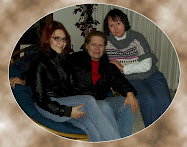
The photo above makes the room look brighter than it actually was and it's a bit blurry because of the time auto time delay when I use it on "scene" setting.  Now it's 4:32p.m. and if I didn't have this computer monitor on and Mr. Don's votive candle going (I have a photo of him on this desk and when I'm working here I keep a votive candle lit before his image in his Goddesschess memory) I would not be able to see my hand before my face, ach, as I turned off battery-operated or blew out fire-lit candles until it got a little darker!  BTW, that's my view of this front room when I turn my head to the right while at my desk working.  I love this room and spend most of autumn and winter evenings here (or days like this, when it never gets brighter outside than evening). 

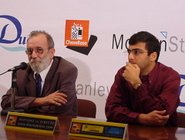
I was disappointed that the Unive (Hoogeveen) invitational tournament did not have a female player this year, so I'm not paying any attention to it.  There was a large Open event run concurrently, and some female players took part.  I've tried to pick out the top finishers among a very large field!

17th Unive Chess Tournament 2013 (Hoogeveen NED) Fri 18th Oct 2013 - Sat 26th Oct 2013

It was a 9 round Swiss.  The official site no longer gives the option of an English translation, alas, and my Dutch is non-existent.  I figured out enough (well, actually no, I didn't, I just clicked on every single fricking link until I got to the place I wanted to go!) to be able to give you these results from the Open -- winner and the female players -- not even a hand-full! -- who played in a field of 77 players:

1:    GM Maim Rodshtein, ISR 2664, 7.5 TPR 2740 (winner of Open)
13:  IM Tania Sachdev, IND 2438, 5.5 TPR 2428
20:  WIM Lorena Sepada, ESA 2156, 5.5 TPR 2374 (well done!)
45:  WIM Ilena Krasenkova, RUS 2133, 4.0 TPR 2213
72:  WFM Caroline Slingerland, NED 2084, 2.5 TPR 1987 (oops!  Methinks she may have fallen prey to "males are superior" syndrome)

And that's it, darlings!  Four females out of a field of 77 players. That is sad.

Official website (it stinks, BTW).  I could not find what the prize list was.  WTF?  Is it a state secret or something?

Tuesday, November 12, 2013

2013 Women Grandmaster Tournament (Chennai)

This is a great event, and I'm so happy to see it.

Here are the standings after R9, two more rounds to go!  Results from Chess-Results.com.  Official website

Rank after Round 9

Rk.SNoNameFEDRtgClub/CityPts. TB1 TB2 TB3
13WGMGomes Mary AnnIND2414AAI7.549.043.543.25
22WGMBatsiashvili NinoGEO24257.048.043.539.75
311WGMTsatsalashvili KetiGEO22667.045.040.536.75
413WGMSwathi GhateIND2242MAH7.043.039.035.00
54IMVijayalakshmi SubbaramanIND2399TN6.548.042.536.75
67WGMIvakhinova InnaRUS23156.547.042.036.00
714WGMMeenakshi SubbaramanIND2240TN6.543.539.031.25
812IMMohota NishaIND2260WB6.543.538.534.50
99WGMKulkarni BhaktiIND2288GOA6.541.036.531.50
108WGMAmbartsumova KarinaRUS23106.048.544.031.50
115IMPurtseladze MakaGEO23746.046.541.532.75
10WGMMuminova NafisaUZB22806.046.541.532.75
136WGMSoumya SwaminathanIND2348MAH6.046.041.533.25
141IMGuramishvili SopikoGEO24416.046.041.530.00
1515WGMKiran Manisha MohantyIND2237ODI6.045.541.029.75
1626Lasya.GIND2065AP6.043.539.529.25
1727Harini S.IND2023TN5.548.544.029.75
1820WFMGevorgyan MariaARM21475.547.543.529.50
1919WFMMonnisha GkIND2150TN5.544.540.027.50
2025WFMSwati MohotaIND2067WB5.544.040.026.25
2117Pratyusha BoddaIND2159AP5.544.039.527.25
2221WFMTokhirjonova GulrukhbegimUZB21115.544.039.526.75
2328WFMVaishali RIND2019TN5.544.039.525.75
2423Azimova KarinaRUS20945.543.039.024.75
2534Tan Li TingMAS19365.542.539.023.50
2618WIMKharmunova NadezhdaRUS21525.542.538.024.25
2716WIMDrljevic LjiljaSRB21815.542.037.525.75
2831WFMSultana ZakiaBAN19765.540.536.525.75
2954Priyanka NutakkiIND1736AP5.539.536.023.00
3047Aparajita GochhikarIND1801ODI5.537.534.022.50
3142Supriya JoshiIND1888MAH5.537.033.522.50
3222WFMMahalakshmi MIND2107TN5.044.540.524.75
3339WCMTejaswini SagarIND1898MAH5.041.037.521.75
3445Meghna C HIND1847KER5.041.037.020.25
3557Priyanka KIND1717TN5.039.035.021.25
3629WIMHamid RaniBAN19945.038.534.521.75
3737Ashwini UIND1918TN5.038.035.519.00
3855Vantika AgrawalIND1728DEL5.037.535.018.75
3940Anjana Krishna SIND1897KER5.037.033.519.25
4056Harshita GuddantiIND1723AP5.036.032.520.75
4179Raga Jyothsna RIND1378AP5.034.031.517.00
4278Sneha G P SIND1384PUD5.032.529.517.00
4341Sunyasakta SatpathyIND1893ODI4.544.040.020.25
4424WFMSaranya JIND2081TN4.541.538.518.75
4546Anigani KavyaIND1836AP4.540.536.519.25
4633WIMJennitha Anto K.IND1961TN4.540.536.519.00
4730WFMSrija SeshadriIND1991TN4.539.535.518.75
4859WFMLakshmi CIND1697TN4.539.036.017.75
4948Divya GargIND1774MAH4.539.036.016.50
5044WCMAnanya SureshIND1860KAR4.539.036.015.50
5152WFMBidhar RutumbaraIND17494.539.035.018.25
5262Sunyuktha C M NIND1677TN4.536.033.514.75
5349Sandhya GIND1774AP4.535.532.014.00
5466Harshini AIND1635TN4.535.032.514.00
5550Pushpalata MangalIND1767MAH4.535.032.015.00
5660Toshali VIND1683AP4.531.529.013.50
5774Jasper Jothi PIND1468TN4.531.028.514.75
5838Shweta GoleIND19074.042.538.517.50
5936Parnali S DhariaIND1924MAH4.041.538.515.50
6053Potluri Saye SrreezzaIND1746AP4.038.535.014.50
6165Saughanthika AsIND1639TN4.038.034.515.25
6267Tulsi MIND1549KAR4.037.033.014.25
6361Harivardhini IIND1678TN4.036.533.514.00
6496Krishnaa Jahagirdar SudhakarIND0TN4.035.031.514.00
6577Thorat AishwaryaIND1431GOA4.034.532.09.50
6688Khandelwal KhushiIND1218MAH4.034.531.015.00
6743Begum MasudaBAN18624.034.031.513.25
6870Kavya. SIND1516TN4.034.031.512.50
6972Ahmed SimranIND1509ASSM4.030.528.011.50
7090Lasani H KothariIND1211GUJ4.030.027.511.50
7163Jahanara HaqueBAN16693.538.034.514.25
7251Chowdhury Mahmuda HoqueBAN17663.538.034.010.50
7364Sowmia AIND1650TN3.535.032.510.75
7471WCMFernandes KrystalIND1509GOA3.535.032.510.00
7568Akshita DIND1546TN3.533.531.59.25
7669Srinidhi SridharanIND1522TN3.533.531.09.00
7782Supriya ShanbhagaIND1328GOA3.533.531.08.75
7883Kowshika SIND1321TN3.532.029.58.75
7985Pooja S (2002)IND1306TN3.531.529.08.75
8075Kavya Srishti KIND1456KAR3.530.528.08.50
8173Tejasvi MIND1490TN3.037.033.011.50
82100Swathi Priyadharshini SIND0NGM3.032.529.59.50
8389Malleswari PIND1217TN3.030.028.55.50
8492Vinotha SIND1111TN3.029.527.07.50
8584Abirami B SIND1315TN3.027.025.06.50
8697Ngangom Nongleima ChanuIND0MANI3.026.524.56.00
8732Varshini VIND1966TN2.537.033.510.00
8887Priyadarshini BIND1254TN2.531.530.03.75
8995DevishreeIND0TN2.531.028.07.00
9080Srimathi RIND1349TN2.530.528.05.75
9186Akshayaa MIND1303TN2.530.528.05.25
9291Yuti Mayur PatelIND1193MAH2.529.026.55.50
9358Meera DIND1710TN2.034.531.57.50
9494Arivukkarasi LoganathanIND0TN2.025.524.02.00
9593Shivani SIND1012TN2.025.023.52.00
9698Panjammal NIND0TN2.023.021.02.00
9799Smrithika SIND0TN1.024.523.00.50
9835Radha S. R.IND1929TN0.026.024.50.00
76Niveditha KIND1439TN0.026.024.50.00
81Adishree KrishnanIND1345MAH0.026.024.50.00
Annotation:
Tie Break1: Buchholz Tie-Breaks (variabel with parameter)
Tie Break2: Buchholz Tie-Breaks (variabel with parameter)
Tie Break3: Sonneborn-Berger-Tie-Break variable

Where Have India's Females Gone?

This article is dated September 11, 2013, three days before the Indian court that held the rape trials of men accused of the horrific rape of a female college student on a bus, the injuries from which caused her death, handed down death penalties for the defendants (death by hanging).

I've written about the Indian (and Chinese) practice of aborting female fetuses.  A culture that refuses to change is a culture that WILL die, and it cannot happen soon enough as far as I'm concerned.  I hope it will happen before I die, sometime in the next 30 years or so. 

At CNN.com

Where have India's females gone?

By Carl Gierstorfer, Special to CNN
updated 5:01 PM EDT, Wed September 11, 2013
 
(CNN) -- The New Delhi rape case left the whole world wondering why India is treating its women so badly. In fact, discrimination against women already starts in the womb: India has some of the most distorted sex-ratios in the world. There are regions where fewer than 800 girls are born for every 1,000 boys. For many reasons Indian culture prefers sons. An expensive bride-price, or dowry, is only one of them.
 
So day-by-day, thousands of parents circumvent rarely enforced laws and have their baby daughters aborted after an ultrasound scan has revealed the sex of the fetus. It is estimated that India has been losing [aborted] up to 12 million baby girls over the last three decades.
 
I wanted to find out what it means for a society if such a significant number of women are missing.
In one village just two hours drive outside Delhi, I met Narinder, a schoolteacher, and his family. He had three brothers and only one of them got married. There weren't enough brides, because the village has been aborting their daughters for decades.
 
Narinder told me that he had already reached out to an agent who would find him a bride from afar. In fact, he planned to share this bride with his brothers.
 
I felt sorry for Narinder, because he totally understood that his misery was due to the fact that his village has been actively selecting for sons. Still, in a quiet moment, he confided to me, that if his purchased wife would be pregnant, he'd make sure it was a son. I was perplexed. Everyone in this village knew it was wrong to prefer sons over girls, everyone experienced the problems firsthand.
 
And still, like sleepwalkers, they continued their way, because culture dictates that sons are a blessing and daughters a curse. [Let them die off! Narinder, looking for a wife, plans to "share" his wife with his brothers? Get bent, dude! Go find a goat or a sheep and "share" it with your brothers. It's better for the perpetuators of this culture to die once and for all, and with it this sick culture - from Mother Earth once and for all. They will be the cause of their own demise.]
 
After the Delhi rape case, the whole world looked at India in disbelief, its urban middle class took to the streets. I returned to India to meet Shafiq Khan, a former Maoist rebel, who realized that violence is not the way forward. Shafiq now uses his wit and bravery to make inroads into rural India's patriarchal societies. 
 
We hit the dusty streets, down to Haryana where Shafiq introduced me to women who do not have a voice, women for whom nobody demonstrates. They are abused and raped and sold like cattle and nobody cares. They are called Paro, or strangers. They are the sort of women Narinder will buy -- those who make up for the scores who are never born.
 
Akhleema and Tasleema, two sisters from Kolkata, were born into a poor family, before her aunt sold them via an agent to two brothers in Haryana, who could not find a bride. Within weeks, Akhleema was beaten so hard by her husband, that she lost hearing in her left ear. Both spend their time cooking, cleaning and tending the fields. They have no rights, no voice and, most shockingly: there is no way back. They have children with their men and it is culturally unacceptable to leave them behind.
 
But where are all these trafficked women coming from? In a cruel paradox, it's the poor northeastern states of India, like West Bengal or Assam, where sex-ratios aren't that skewed, that make up for large parts of all the missing women.
 
Assam is beautiful, even during the dry season. The Brahmaputra winds its way through the plains, quietly and peacefully.
 
"But don't be mistaken", Shafiq says. Because during the rainy season, the river erupts over its banks, destroys fields and villages. In these already poverty-stricken regions, flooding takes away the little people have. Thousands of families are pushed into poverty and helplessness. They end up in flood shelters, vulnerable and easy prey for traffickers, like Saleha and her husband Husain. Their daughter Jaida went missing two years ago. They saw a man entering the hamlet and talking to Jaida. She vanished without a trace.
 
In a remote village on the dusty floodplains we meet Halida. She had just turned 14, when a man kidnapped her while fetching water. For two days he raped Halida, told her that he would bring her to Delhi in order to sell her. Halida could escape, but now she cannot go to school anymore, because all the children know of the rape and tease her. The parents, day-laborers, cannot find work anymore, because they are ostracized by the whole village. The rape destroyed the family.
 
While the trafficker may have lost his prey, it's unlikely that he will ever be punished. The police are corrupt and the more destruction there is, the easier it will be for him to find new victims.
 
Thus closes a vicious circle in which millions of India's women are trapped. The prejudices against women are so deeply engrained in the cultural fabric, that only a combined effort, old and young, urban and rural, will be able to break it once and for all.

Simultaneous Domestication of Cattle in China and the Middle East

Interesting...

At Nature World News Online

Man Domesticated Cattle in Ancient Northwest China 10,000 Years Ago
By James A. Foley
Nov 08, 2013 11:21 AM EST

After excavating the jawbone of a cow in northern China with telltale characteristics of being a domesticated animal, a multidisciplinary team of researchers report that humans may have started domesticating cattle around the same time in more regions of the world than previously believed.

A little more than 10,000 years ago, early humans had already begun domesticating cattle in the Near East, according the research team, which was co-led by scientists from University of York and Yunnan Normal University. Early domestication efforts gave rise to humpless, or taurine, cattle, followed about 2,000 years later by the domestication of humped, or zebu, cattle in South Asia.

However, this latest research, which is published in the journal Nature Communications, points to both morphological and genetic evidence that there was an effort to domesticate cattle in northeastern China about 10,000 years ago, around the same time as the earliest evidence of taurine cattle husbandry in the Near East.

The researchers came to their conclusions after excavating a cow's jawbone at a site in northeastern China. Carbon dating placed the specimen at 10,660 years old. But the jaw also displayed a unique pattern of wear on the molars, which the researchers contend is the result of of long-term human management of the animal. A DNA analysis of the ancient jaw revealed that the animal did not not belong to the same cattle lineages that were domesticated around the same time in the Near East and South Asia.

"The combination of the age of the jaw, the unique wear and genetic signature suggests that this find represents the earliest evidence for cattle management in north-east China; a time and place not previously considered as potential domestication center for cattle," the University of York said in a statement.

Michi Hofreiter, a professor in the department of biology at York, said the specimen is "unique and suggests that, similar to other species such as pigs and dogs, cattle domestication was probably also a complex process rather than a sudden event."

Read more at the University of York website. 

Monday, November 11, 2013

Americans Honor Military Families by Cutting Food Aid

In honor of Veterans' Day -- gee thanks, Republicans, and shame shame on you:

DoD: 5,000 Military Families Losing Food Stamps

Jul 13, 2013
The House action that stripped food stamp funding from a massive farm bill would threaten vital assistance for about 5,000 military families, mostly from the junior enlisted ranks, Pentagon officials said Friday.

A Department of Agriculture report last year showed that more than 5,000 of the 48 million Americans receiving Supplementary Nutritional Assistance Program (food stamps) listed their employment status as "active duty military," the Pentagon officials said.

"Military members who receive SNAP tend to be made up of members in junior pay grades with larger than average household sizes," said Navy Lt. Cmdr. Nate Christensen, a Defense Department spokesman.
********************************************************************************

From The New York Times letters to the Editor:

Military Families and Food Stamps

So when Paul Ryan of the House Budget Committee says, as Mr. Krugman reported, that the safety net is “a hammock that lulls able-bodied people to lives of dependency and complacency,” I would counter that it is his congressional salary and his security that has lulled him into a sense of arrogance and insensitivity.
      
Peter Ripley, Tokyo
********************************************************************************
Opposing Views
Veterans Nationwide Hit By Food Stamp Cuts, 5,000 Active Military Families Also Hurt By Benefit Rollback

While some congressmembers are repeatedly quoted deriding and ridiculing people in need of assistance under the Supplemental Nutrition Assistance Program (SNAP), more commonly called food stamps, the cuts that went into effect Friday will hit military veterans in every state, according to the Center on Budget and Policy Priorities, an independent, non-profit fiscal research group.

The food stamp cuts would also slam the families of 5,000 active-duty servicemembers, the Department of Defense said in July.

“Military members who receive SNAP tend to be made up of members in junior pay grades with larger than average household sizes," Defense Department spokesperson Navy Lt. Cmdr. Nate Christensen told the web site Military.com.

Military pay at the junior levels is so low that such families must use food stamps, but generally are able to forego the assistance once the servicemember in the household receives a promotion, Christensen said.

In 2012, just under $100 million in food stamps were spent at military commissaries. That trend is rising, with $53 million already used at commissaries in the first six months of 2013.

According to the CBPP report, the states with the highest number of military veterans who receive SNAP assistance are Florida, with 109,500 and Texas with 105,700. No state has fewer than 2,200 veterans needing food assistance, with most states showing numbers in the five-figure range.

“Veterans who participate in SNAP tend to be young, but their ages range widely,” the CNPP said in a statement. “57 percent of the veterans in our analysis are under age 30, while 9 percent are aged 60 or older.”

Veterans on food stamps cover the gamut of wars, going back to those who served in World War II, as well as in peacetime.

During the recent government shutdown, Republicans in congress vociferously supported veterans who attempted to gain access to then-closed war memorial sites.

“Our veterans should be above political games,” said Texas Senator Ted Cruz at a rally in support of the veterans who wanted to visit memorial sites during the shutdown.
One Republican congressmember, Rep. Kevin Cramer of North Dakota, recently responded to a constituent’s question about the food stamp cuts by saying, “If anyone is not willing to work, let him not eat.”

Oklahoma Republican Rep. Markwayne Miller also covered the food stamp topic at a meeting with his constituents in August. He characterized food stamp use, based on his observations at a local supermarket, as “fraud. Absolute 100 percent, all of it is fraud."

Honoring Our Veterans

Hola everyone!

Today is Veterans' Day in the United States, a federal (national) holiday in remembrance of the men and women who have served in our armed forces.

In the course of researching and recording my family's history, I discovered that my family have a record of American service that goes back all the way to the Revolutionary War (the War for Independence). 

There were, of course, those fighting Forsyths!  I've posted about them here and at my other blog, Maison Newton.  Three brothers from Granard, County Longford, Ireland enlisted in the British Infantry in October 1813 at Monmouth and fought in the Napoleonic Wars, and after that war ended their various regiments served in Canada.  John Forsyth and James Forsyth mustered out at the completion of their "bare term", and settled in upper New York state. My direct ancestor, Andrew "the Soldier" Forsyth (as I call him), also evidently mustered out of the British Army at the completion of his "bare term" (around 10 years) sometime in 1823 and in 1830 he enlisted in the United States Calvary, where he continued to serve until being wounded in the Mexican War in the 1843.  He died in 1861, months before the outbreak of the Civil War.

Andrew the Soldier's sons, Andrew Jr. and Jerome, both served in the U.S. Calvary in the "band," being enlisted by Andrew the Soldier initially when he entered the U.S. Calvary.  Think of the players of fife, horn and drum with the flag bearers of the Revolutionary War -- an image of the battered, bandaged and weary musicians and flag bearer bravely accompanying the troops into battle.  Often the "band" members were not even teenagers.  This tradition continued all the way through the Civil War, and sometimes encompassed large orchestras accompanying troops to the battlefield and playing while the fighting went on all around them!  I was utterly astounded when I read about this practice. 

Uncle Andrew Jr. served several terms in the "band"  but retired from the military after he moved to the family homestead near Green Bay, Wisconsin and got married. (Andrew the Soldier had bought acres of land near Green Bay, Wisconsin in the early 1830s, and the clan settled there, except for Aunt Josephine once she was married). 

This photo is from the Barlament family, descendants of Benjamin Forsyth, the youngest son
of Uncle Andrew Forsyth, Jr. and Ann McGinnis.  Date unknown.  This is Uncle with his
three surviving daughters: Josephine born 1845; Catharine born 1848; and Amanda born 1849.
 Matilda, born 1847, died in 1854 at the age of 7.  My direct ancestor, Jerome Forsyth, Uncle Andrew, Jr.'s
brother, also had a daughter named Matilda, who grew up to marry Edward Belanger, Jr.  Matilda and
Edward were the parents of Ida Belanger, who married Frank Chester Newton, and became
the parents of Francis John Newton, my dad. 

My direct ancestor, Jerome Forsyth, continued to serve in the military as a band member and, near the end of the Civil War, as band captain for one of the Wisconsin regiments, a singular honor.  He was wounded in the Civil War, recovered, and went back to his duties.  Aunt Josephine Forsyth, the youngest and only female sibling of the three offspring of Andrew the Soldier, married military men, her first when she was only 14, and was widowed - three times.  She followed the drum including accompanying husband #2 to the Mexican War and, after he died from complications of wounds received, a year or so later she married Michael "Smith" (Schmidt), perhaps a close acquaintance, a hero of the Mexican War who had retired from the military and set up a smithy in Green Bay.  Two of Aunt Josephine's sons fought in the Civil War.

Uncle Andrew, Jr. lost a son, Jerome (repeated use of family names gets confusing), in the Civil War. Jerome son of Uncle Andrew, Jr. (who, in turn, is the son of Andrew the Soldier) enlisted in the Wisconsin Militia, 12th Regiment Infantry, Company H, as a private, at Green Bay, Wisconsin on 10 Feb 1861, and mustered in 02 Oct 1861.  He died during an outbreak of an unspecified disease at Fort Leavenworth on March 30, 1862 at the age of 19.

Jerome Forsyth, my direct ancestor (son of Andrew the Soldier), had two sons who fought in the Civil War: Andrew (Andre) Henry Nelson Forsyth (I believe the Nelson was in honor of the famous British naval hero Admiral Nelson, who was created a peer of the British Empire for his service to the Crown), and George Forsyth.  Andrew/Andre Forsyth had an arm amputated as a result of a wound or wounds incurred in the war.  As far as I can tell, George Forsyth was not wounded.  I believe it may be George Forsyth upon whom an old family story is based about a soldier sneaking home during the Civil War to rest and get "fattened up" before going back to battle.  The family "hid" him in a hay loft in one of the barns until he recovered. Okay, I don't know how much of that is true - it was a story that my dad told several times when we were very young, as told to him by Matilda Forsyth(e) (dad's grandmother).  Yep, George Forsyth was AWOL, but as I learned by reading articles about the Civil War, this was not an uncommon occurrence at the time; soldiers would skip out and then report back to their old regiments months later and carry on as if nothing had happened!

Although I have not yet done follow-through research, there are records indicating that one or more of the sons of James Forsyth and John Forsyth (Andrew the Soldier's older brothers) also served in the Civil War.

It is not only the Fighting Forsyths, however, who served their country in the military service.

It is in the Bailey family line where ancestors who fought in the Revolutionary War appear.  Laura Ruth Bailey was my paternal great-grandmother.  She married David Villeneuve, who changed his surname to Newton sometime either before or after he emigrated from Prescott, Ontario, Canada to the Marinette area in northeastern Wisconsin in 1881.  I have just begun my research into the Bailey family line, having spent years working almost exclusively on my French-Canadian ancestors on dad's side of the family and my Polish ancestors on mom's side of the family.  Perhaps I may learn enough to establish that I am eligible for membership in the Daughters of the American Revolution, har!

Laura Ruth Bailey and my great-grandfather, David Antoine Villeneuve/Newton, had a large family, among whom was my paternal grandfather, Frank Chester Newton.  Grandpa Newton served in WWI, as did his brothers, Uncle Fred (Frederick Albert) Newton and Uncle Leonard Newton. 

My dad, Francis John Newton, WWII.
As regular readers here may already know, my dad, Francis John Newton, served in WWII and received the Purple Heart and Bronze Star.  He achieved the rank of Sergeant and was honorably discharged on 27 Jan 1946 at Camp Grant, Illinois.  He served in the U.S. Army,  63rd Armored Infantry Battalion, 11th Armored Division in Europe from September 1944 to August 1945.  He was a squad leader of a group of 12 riflemen.  He was wounded in action in Belgium on 5 Jan 1945.  He also suffered severe frostbite on his feet, a condition he never claimed for and which caused him much pain in his later years.

Dad would have loved to go on one of the Honor Flights to tour the Veterans' Memorials in Washington, D.C., but he died in early November, 2002, years before the Honor Flights began.  Dad's funeral was featured in an article in the Milwaukee Journal/Sentinel in November, 2002, that talked about the increasing number of WWII vets who were dying and the shortage of live bugle players who could play "Taps" at veterans' funerals.  I've posted about dad's service and veterans several times (some posts below):

May 28, 2012:  Memorial Day
June 1, 2009:  [President] Obama Goes to Bat for the Queen
November 11, 2007:  Some Thoughts This Veterans' Day
November 7, 2010:  The Top Secret "Rosies" of World War II

To all who have served our country in military roles (in uniform or not), today we honor you.  Let us never forget your sacrifices and what we owe to you and to your families.

Tuesday, November 5, 2013

Cap d'Agde 2013: Final Results

Cap D'Agde rapid tournament, "Second Anatoly Karpov Trophy"
Location: Cap d'Agde, France
Dates: October 25 - November 2, 2013
Tournament mode: A double round-robin qualifying four players into a knockout phase.
Time control: 25 minutes plus 10 seconds increment per move.
One chess femme, GM Mariya Muzychuk, had a chance to make it through to the "final" among four players, by defeating France's top chess femme, GM Marie Sebag, who impressed the hell out of me a few years back when she earned her third and final GM norm by doing very well at the European Individual Chess Championships, not the women-only event!

Muzychuk did not breeze through to the second part of the tournament, though.  First, she had to go through a play-off with two other formidable players to settle the final two spots: Vassily Ivanchuk and Yannick Pelletier!  I mean, come on!

From Chessbase.comThe tiebreaker was a double round-robin between the three players, played at three minutes plus two seconds increment, and the very first game threw the mathematical predictions out the window as Muzychuk, playing her Ukrainian compatriot and idol, Vassily Ivanchuk, overcame him in a crazy game in which he overstepped the time. Midway into the game, with a minute left, the transmission broke down, and the low resolution video was all that was left. The live commentators were trying to guess what was happening based solely on the player expressions. When Mariya was seen pointing to the clock, while Ivanchuk displayed a face of despair and dismay, there was no need to be a poker player to surmise what had happened. A couple of minutes later, the verdict was confirmed.

REALLY? Ivanchuk lost a game ON TIME?  What?

Muzychuk went on in Game 2 to defeat Pelletier.  After Game 4, Muzychuk and Ivanchuk both qualified for the final, but - and I'm fuzzy on this - they needed to do another round of play-off to determine who was in 3rd place and who was in 4th place.  Those places were important because 4th place would face Karpov in the first game of the final-final. Got that?  I sure don't!

So, Muzychuk had to face Ivanchuk (or Ivanchuk had to face Muzychuk) AGAIN.  The upshot was that Muzychuk finished in 4th place.

In the final-final, Muzychuk proved herself a worthy opponent against Karpov's vastly superior experience.  She didn't go down for the count until move 103 in the second fricking game, people!  Ivanchuk, meanwhile, had crashed and burned against Bacrot.

This information is also from Chessbase which has several photos of the players and Muzychuk shines in many of them. You can also play through the second killer game between Karpov and Muzychuk at the link.  103 moves?  OHMYGODDESS. 


Report on final games between Karpov and Bacrot.

New Take on Persian Silk Found in Viking Ship

From Apollon Research Magazine
The University of Oslo

By Yngve Vogt
PublishedNov 1, 2013 09:42 AM - Last modified Nov 5, 2013 12:40 PM

Norwegian Vikings purchased silk from Persia

The Vikings did not only go West to pillage and plunder. Most of the silk found in the Oseberg ship may have been purchased by honest means from Persia.

PERSIAN PATTERNS: Silk textiles from the Persian region were found in the Oseberg ship. Among the motifs,
we can see parts of special birds associated with Persian mythology, combined with clover-leaf axes, a Zoroastrian
symbol taken from the Zodiac. The textiles have been cut into thin strips and used for adornment on clothing.
Similar strips have also been found in other Viking Age burial sites. Photo: KHM- UiO
 
The Norwegian Vikings were more oriented towards the East than we have previously assumed, says Marianne Vedeler, Associate Professor at the Museum of Cultural History, University of Oslo in Norway. After four years of in-depth investigation of the silk trade of the Viking Age, she may change our perceptions of the history of the Norwegian Vikings. The silk trade was far more comprehensive than we have hitherto assumed.

The Norwegian Vikings maintained trade connections with Persia and the Byzantine Empire. A network of traders from a variety of places and cultures brought the silk to the Nordic countries. Her details are presented in the book “Silk for the Vikings”, to be published by Oxbow publishers this winter, but in this article you can glimpse some of her key findings.

In the Oseberg ship, which was excavated nearly a hundred years ago, more than one hundred small silk fragments were found. This is the oldest find of Viking Age silk in Norway.

At the time when the Oseberg silk was discovered, nobody conceived that it could have been imported from Persia. It was generally believed that most of it had been looted from churches and monasteries in England and Ireland.

Lots of Viking silk

Since the Oseberg excavation, silk from the Viking Age has been found in several locations in the Nordic countries. The last finding was made two years ago at Ness in Hamarøy municipality, Nordland county. Other Norwegian findings of silk from the Viking Age include Gokstad in Vestfold county, Sandanger in the Sunnmøre district and Nedre Haugen in Østfold county.

The highest number of burial sites containing silk from the Viking Age have been found at Birka in the Uppland region, a few miles west of Stockholm.

– Even though Birka has the highest number of burial sites containing silk, there are no other places where so much and such varied silk has been found in a single burial site as in Oseberg, says Marianne Vedeler to the research magazine Apollon.

In Oseberg alone, silk from fifteen different textiles, as well as embroideries and tablet-woven silk and wool bands were discovered. Many of the silk pieces had been cut into thin strips and used for articles of clothing. The textiles had been imported, while the tablet-woven bands most likely were made locally from imported silk thread.

Marianne Vedeler has collected information on silk and its trade in the Nordic countries. She has also studied manuscripts on silk production and trade along the Russian rivers as well as in Byzantium and Persia.

– When seeing it all in its totality, it’s more logical to assume that most of the silk was purchased in the East, rather than being looted from the British Isles.

Waterways

Vedeler believes that in the Viking Age, silk was imported from two main areas. One was Byzantium, meaning in and around Constantinople, or Miklagard which was the Vikings’ name for present-day Istanbul. The other large core area was Persia.

The silk may have been brought northwards along different routes.

– One possibility is from the South through Central Europe and onwards to Norway, but I believe that most of the silk came by way of the Russian rivers Dnepr and Volga.

The Dnepr was the main route to Constantinople, while the Volga leads to the Caspian Sea. The river trade routes were extremely dangerous and difficult. One of the sources describes the laborious journey along the Dnepr to Constantinople:

– A band of traders joined up in Kiev. Along the river they were attacked by dangerous tribesmen. They needed to pass through rapids and cataracts. Then, slaves had to carry their boat.

Persian patterns

On the basis of the silk that has been found, there are indications that more silk came to Norway from Persia than from Constantinople.

– Large amounts of the Oseberg silk have patterns from the Persian Empire. This silk is woven using a technique called samitum, a sophisticated Oriental weaving method. Many of the silk motifs can be linked to religious motifs from Central Asia.

Another pattern depicts a shahrokh, a bird that has a very specific meaning in Persian mythology; it represents a royal blessing. In the Persian myth, the shahrokh bird is the messenger that brings the blessing to a selected prince. In a dream, the bird visits the prince holding a tiara, a tall head adornment, in its beak. The prince then wakes up and knows that he is the chosen one. The image of the imperial bird was popular not only in silk weaving, but also in other art forms in Persia. The motif gained widespread popularity in Persian art.

– It’s an amusing paradox that silk textiles with such religious and mythological images were highly prized and used in heathen burial sites in the Nordic countries as well as in European churches.

Exclusive

In the Orient, silk was essential for symbolizing power and strength. There was an entire hierarchy of different silk qualities and patterns reserved for civil servants and royalty.

Even though silk was a prominent status symbol for the Vikings, they failed to get their hands on the best silk.

– Most likely, the bulk of the silk imported to Scandinavia was of medium or below-medium quality.

In Byzantium, major restrictions were imposed on the sale of silk to foreign lands. The punishment for illegal sale of silk was draconian. The Persian lands also imposed strict restrictions on the sale and production of silk.

In Byzantium, it was illegal to buy more silk than what could be bought for the price of a horse. A foreign trader was allowed to buy silk for ten numismata, while the price of a horse was twelve numismata.

– However, several trade agreements that have been preserved show that traders from the North nevertheless had special trade privileges in Byzantium.

Silk was not only a trade commodity. Certain types of silk were reserved for diplomatic gifts to foreign countries, as described in Byzantine as well as Persian sources. In Europe, silk became especially popular for wrapping sacred relics in churches.

– Some of the silk found in Norway may be gifts or spoils of war, but archaeological as well as written sources indicate that silk was traded in the Nordic countries.

– So the Vikings were more honest than has been assumed?

– We may safely assume that the Vikings engaged in trade, plunder, exchange of gifts and diplomatic relations in equal measure.

A possible example of loot found in the Oseberg ship is a piece of silk with an image of a cross.

– This was long before the introduction of Christianity. The silk piece may have been sewn locally, but it is also highly likely that it was purloined from an Irish church.

Possibly China

At Gokstad, thin strips of hammered gold wrapped around silk threads were among the findings.

– These threads are highly exclusive. We do not know their origin, but we suspect that they may have come from even further east, in the direction of China, says Vedeler, who will now travel to China to find out more.

As yet, Vedeler must draw conclusions regarding the origin of the silk by investigating weaving technologies and patterns. With time, she wishes to make use of a new method which is being developed at the University of Copenhagen and which will be able to reveal the geographic origin of artefacts.

Sidebar:

Saturday, November 2, 2013

The True Size of Africa

Well, this is very interesting!  And a great reminder that what we see when we're looking at maps isn't necessarily reality.

At Global Post


Ever notice how huge Greenland looks on a map? It's because most maps use the Mercator Projection. On it, Greenland looks to be the same size as Africa. In reality, Africa is actually 14 times larger. Replicating the globe onto a flat surface distorts the sizes of the countries yet many have no idea.


Computer graphics designer Kai Krause created the illustration above showing the true size of Africa. Yes, we know Africa is a continent being compared to countries but it's fascinating to see its sheer size next to common references.

Writers at The Economist created a similar map below using Gall's Stereographic Cylindrical Projection. Even though the result is different, they still draw a similar conclusion. Africa is much bigger than we thought:


Or as the West Wing so aptly explains, "Nothing is where you think it is":


The Sheep and the Horses

Chess - oh yeah, that game with the little horseheads...

This is very cool!  One of the few words I recognized in the audio was "ekwhos" (horse/horses; L: equus; OHG: hros) -- but it is not spelled in the English transcription ("akvams," "akvasas, "a vavakat") anything like it sounds in the audio or as I've seen it traditionally transcribed in P-I-E.

Side note: From Wikipedia regarding Sanskrit word for "horse:"

Aśvaḥ (अश्व) [Ashvah] is the Sanskrit word for a horse, one of the significant animals finding references in the Vedas as well as later Hindu scriptures. The corresponding Avestan term is aspa. The word is cognate to Latin equus, Greek ίππος (hippos), Germanic *ehwaz and Baltic *ašvā all from PIE *hek'wos.

I found the English transcription (below) undecipherable as I tried to link the words I was reading on the page to what I was hearing on the audio.  Fortunately, the article does provide a pronunciation guide at the end that appears in the format with which I am more familiar, so I was able to match up some of the words I was hearing in the audio more easily in the English transliteration of the P-I-E.   

The audio clip is - well, I just find it utterly intriguing. See what you think:

At Archaeology Magazine online
Telling Tales in Proto-Indo-European
By ERIC A. POWELL

By the 19th century, linguists knew that all modern Indo-European languages descended from a single tongue. Called Proto-Indo-European, or PIE, it was spoken by a people who lived from roughly 4500 to 2500 B.C., and left no written texts. The question became, what did PIE sound like? In 1868, German linguist August Schleicher used reconstructed Proto-Indo-European vocabulary to create a fable in order to hear some approximation of PIE. Called “The Sheep and the Horses,” and also known today as Schleicher’s Fable, the short parable tells the story of a shorn sheep who encounters a group of unpleasant horses. As linguists have continued to discover more about PIE, this sonic experiment continues and the fable is periodically updated to reflect the most current understanding of how this extinct language would have sounded when it was spoken some six thousand years ago. Since there is considerable disagreement among scholars about PIE, no one version can be considered definitive. Here, University of Kentucky linguist Andrew Byrd recites his version of the fable using pronunciation informed by the latest insights into reconstructed PIE.


Schleicher originally rendered the fable like this:

Avis akvāsas ka

Avis, jasmin varnā na ā ast, dadarka akvams, tam, vāgham garum vaghantam, tam, bhāram magham, tam, manum āku bharantam. Avis akvabhjams ā vavakat: kard aghnutai mai vidanti manum akvams agantam. Akvāsas ā vavakant: krudhi avai, kard aghnutai vividvant-svas: manus patis varnām avisāms karnauti svabhjam gharmam vastram avibhjams ka varnā na asti. Tat kukruvants avis agram ā bhugat.

Here is the fable in English translation:

The Sheep and the Horses

A sheep that had no wool saw horses, one of them pulling a heavy wagon, one carrying a big load, and one carrying a man quickly. The sheep said to the horses: "My heart pains me, seeing a man driving horses." The horses said: "Listen, sheep, our hearts pain us when we see this: a man, the master, makes the wool of the sheep into a warm garment for himself. And the sheep has no wool." Having heard this, the sheep fled into the plain.

And here is the modern reconstruction recited by Andrew Byrd. It is based on recent work done by linguist H. Craig Melchert, and incorporates a number of sounds unknown at the time Schleicher first created the fable:

H2óu̯is h1éḱu̯ōs-kwe

h2áu̯ei̯ h1i̯osméi̯ h2u̯l̥h1náh2 né h1ést, só h1éḱu̯oms derḱt. só gwr̥hxúm u̯óǵhom u̯eǵhed; só méǵh2m̥ bhórom; só dhǵhémonm̥ h2ṓḱu bhered. h2óu̯is h1ékwoi̯bhi̯os u̯eu̯ked: “dhǵhémonm̥ spéḱi̯oh2 h1éḱu̯oms-kwe h2áǵeti, ḱḗr moi̯ aghnutor”. h1éḱu̯ōs tu u̯eu̯kond: “ḱludhí, h2ou̯ei̯! tód spéḱi̯omes, n̥sméi̯ aghnutór ḱḗr: dhǵhémō, pótis, sē h2áu̯i̯es h2u̯l̥h1náh2 gwhérmom u̯éstrom u̯ept, h2áu̯ibhi̯os tu h2u̯l̥h1náh2 né h1esti. tód ḱeḱluu̯ṓs h2óu̯is h2aǵróm bhuged.

Wednesday, October 30, 2013

Le trophee Anatoly Karpov 2013

Ooh la la, what an interesting line up!  I like the format too -- a 14 double round to whittle the players down before a final rapid knock-out.  Holy Tough! 

Information from The Week in Chess and the official website:

Le trophee Anatoly Karpov takes place in Cap D'Agde 25th October to 2nd November 2013. Ivanchuk, Karpov, Bacrot, Pelletier, Muzychuk, Maisuradze, Zhao Xue and Sebag play in a 14 round double preliminary event. 4 players advance to the knockout. 25 mins + 10 seconds a move.

Official website (in French, but with Google "translation" to English provided - hilarious!)

Current standings:

Le classement après la ronde 12

JoueurEloPaysPtsSB
Anatoly KARPOV(2619)RUS1052
Etienne BACROT(2730)FRA834
Yannick PELLETIER(2578)SUI7,532,5
Vassily IVANCHUK(2733)UKR6,532,25
Mariya MUZYCHUK(2491)UKR6,531,5
Marie SEBAG(2510)FRA5,532,25
Xue ZHAO(2579)CHN3,510,75
Nino MAISURADZE(2302)FRA0,53,25

As I understand the rules, only the top 4 finishers will go into the knock-out rounds.  Looks like the ladies are going to be shut out unless one or more can pull some miracle chess out of their handbags...
Related Posts Plugin for WordPress, Blogger...