Showing posts with label "The Fire". Show all posts

Saturday, December 12, 2020

Author Katherine Neville on "The Queen's Gambit"

 Hola everyone!  I meant to post this much earlier, but this time of year finds me very busy.  Christmas is one of my favorite times of the year and I go all out decorating my tree, my mantel, and my dining room, shopping for new ornaments (I swear every year I'm not going to do it and every year I do it anyway), etc. 

I especially want to share author Katherine Neville's November 30, 2020 Newsletter with you, about "The Queen's Gambit." I can't help but note that Neville was prescient in her September 21, 2020 newsletter about the United States being in a state of "flux" (you can read about it here, as well as my political rant in which I didn't pull my punches against Donald J. Trump and his enablers).  Perhaps Netflix's production of "The Queen's Gambit" during this particular time in our history will rejuvenate chess in the United States, particularly when it comes to female players, like Bobby Fischer's success did for chess more than 40 years ago.

Katherine Neville's Queen's Gambit Newsletter
November 30, 2020

The Black Queen

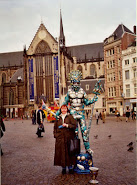
Here I am [photo not included from Newsletter], with Chess Grandmaster and World Champion, Susan Polgar, at our book launch party for The Fire (sequel to The Eight) held in Washington DC!  Grandmaster Polgar was one of our co-hosts for that event; she also found for us the great Black Queen that appears with us here.  And Susan's husband Paul Truong took many of the wonderful photos of that evening, which appear on my web site, in my Author section.

Hundreds of you–my friends and fellow readers, from every age and every walk of life–have been writing to me, asking if I’ve seen the new television miniseries, The Queen’s Gambit, which is based on the novel of the same name by Walter Tevis (author of The HustlerThe Color of Money.) I read the book long ago, as well as every piece of fiction ever written about chess, since I was about to write my book–The Eight–where the entire plot, a swashbuckling adventure story, is based on a major chess game taking place over a period of two hundred years, all around the world.

By contrast, Walter Tevis’ book is the story of a troubled young woman, obsessed with chess, who overcomes all obstacles and goes on to become World Champion. Not only have I watched the series, but seeing it converted to screen was a real inspiration to me. In short, the screenwriters, actors, and director really did a great job, and they have even improved upon Walter Tevis’s original book! The screenplay sparkles with adventure, suspense, and action that’s hard to convey in such a cerebral story.

It is also of genuine interest to me, that not only the original author, Walter Tevis, but nearly all of the film’s developers–producers, director, and screenwriters–are men. This goes to show that really intelligent men can see inside a woman’s mind–at least in fiction! 

This story also shows that a strong, intelligent woman can benefit by the gallantry and support of the men around her–even when competing against them! Chess, like the Kama Sutra, originated in India as a cosmic dance. From medieval times–in literature like Roman de La Rose, to Shakespeare’s The Tempest–women played chess with men as a romantic courting ritual. 

It’s an Alchemy that we need to bring back, today!

(Go to the link to read the rest of the Newsletter and see the photographs included in the article).

**********************************************************

I am inclined not to agree with Ms. Neville's statement that chess originated in India.  This is, in my opinion, a myth that has been accepted by chess historians as truth rather than the unproven supposition it is, based on no actual physical (archaeological) evidence of which I am aware directly linking an ancient form of chess to India, and even more questionable reasoning and rationalizing by H.J.R. Murray, author of the famous (infamous) "History of Chess" written at the end of the 19th century.  There is more physical evidence for chess or a forerunner of the game actually being played in ancient Persia (today's Iran) or at the very least, along the ancient trade route from China to the Middle East and beyond (the Silk Road) in the form of actually excavated identifiable chess pieces from Afrasiyab, a ruined city said to have been founded by one of Persia's ancient kings in then Persian territory (northeast Persia).  The ruins, surrounded in part by the modern city of Samarkand (Samarqand), are in the country now called Uzbekistan along the now long gone ancient Silk Road route.  

But I agree with Neville that the true beauty of chess is to be found in the dance of the pieces on the board, and the intellectual and emotional acrobatics and interaction that takes place when two players sit across from each other to match wits, skill, and spirit.  The dance can become particularly interesting when it is a female and male sitting across the board from each other, for many different reasons.  

The ancient Egyptians called their gaming pieces jbAw, pronounced something like ebau (abau) or ebou (abou) - "dancer."  The ancient Egyptians, who loved their word play, carved their oldest gaming pieces out of elephant ivory (bw), pronounced something like ab "elephant," and abu, "elephant's tooth."  Our English word "ivory" comes from the Latin  ebor or ebur, which came directly from the Egyptian word(s) for "elephant."  

History bit:  The Mitre, the headdress worn by Bishops in the Catholic Church, is an ancient symbol of power and authority which was adopted from the even older use of a horn or horns in a headdress that was worn only by those who held great positions of power, such as Kings and their closest advisors.  Interestingly, ancient depictions of shamans and what some archaeologists have suggested may be "gods" depicted in ancient cave art and on ancient rock carvings appear to be wearing horns, so the link between "power" and the horn or horns from a mighty animal is extremely ancient, pre-dating writing by thousands of years.  The Egyptian word "Pharaoh" which is generally translated as "great house" began life as some form of tent/hut which was ornamented above the door with a set of elephant tusks or bovine horns.  I assume that as the climate along the Nile changed over the millennia and elephants moved further south in Africa, bovine horns (Hathor, anyone?) replaced the elephant tusks.  

Of course, chess pieces dance!  Even I, not even a competent enough player to call myself a patzer, know that.  Here's an interesting article from 2018 from the Southwest Journal (a Minneapolis, Minnesota based publication) entitled "A Dance of Chess Pieces."  Fantastic article by Nate Gotlieb.  

And I always go back to one of my favorite videos from the 1980s musical "Chess," One Night in Bangkok sung by Murray Head.


Sunday, February 8, 2009

"The Eight" and "The Fire" Now Audiobooks

A review of Katherine Neville's "The Eight" and "The Fire" audiobooks: From Boston.com On Audio
Neverlands made real February 8, 2009 We all have a stack of audiobooks (and books) collected over the years that taunt us from the shelves, knowing we don't have time for them. Turning a blind eye and a deaf ear to the new audiobooks vying for attention, I decided to adhere to at least one New Year's resolution and clear my shelves of some titles. Thankfully, "The Eight" was worth the wait. Originally published in 1988, 25 years before "The Da Vinci Code," it has the same conspiratorial vibe. A chess set made for Charlemagne is at the heart of two stories, centuries apart but intertwined. Chess becomes an allegory for the dangerous game played among characters as one young woman hunts for the missing chess pieces in 1972, while in 1790 a nun finds herself crossing paths with Napoleon and the conspirators of the French Revolution as she tries to hide and protect those same pieces. They had been buried for hundreds of years in a French abbey and, if united with the board, supply a magic formula that could help a player attain world domination, thanks to everything from alchemy and numerology to the supposed mystical powers of the Freemasons. Even if that sounds like a lot of hokum, Katherine Neville pulls it off, blithely rewriting history and making it sound realistic. The audiobook is read with great elan by Susan Denaker, who manages a cast of men and women of varied nationalities and centuries. The sequel, sadly, is less enjoyable. It took Neville 20 years to come out with "The Fire," also read with great enthusiasm and talent by Denaker. However, the story is overwritten, overthought, and consequently not as interesting. The daughter of the protagonist in "The Eight" is now chasing the same chess pieces, but Neville spends less time on each character, cramming in more detail but not allowing us to get to know any one character until about halfway through. 'The Fire" is so bloated that you may actually be better off with the abridgement. ____________________________________________________________________ Confession: I have yet to finish "The Fire." I'm presently on page 334 and the story seems to have run out of steam for me. Months have passed since I so eagerly started the book and power-read my way through the first 300 pages or so. I will finish it, though. I want to know what happens - I have projected an ending, I'll see if I'm correct :)

Sunday, January 11, 2009

Bare Bones Bedroom!

I have the essentials in place in my new bedroom (formerly the guest room). The curtains have been ironed and hung (I found my iron!!!), the dust ruffle was ironed and put in place, the mattress rotated and freshly-laundered mattress pad put on, and the bed made up with new sheets, new pillowcases and new comforter. Old artwork has come off the walls, leaving spots where I need to scrub and nail holes to patch! My clock radio has been installed on the bookcase (what is a bedroom without a bookcase and a clock radio?) The bed is now acceptably comfy, although the room is bare bones. The red floral print draped over the wing chair is one of the valances for the windows, but since the windows in my new room are smaller than the windows the valances were meant for, I do not think I will install them - also, the curtains I put up already have their own attached valances. I may experiment and use them for a mini canopy on the wall over the bedstead... By the way, that IS a copy of Katherine Neville's "The Fire" on top of the bookshelf next to the lamp. I need a slipcover for my wing chair, which has pink, maroon and dark blue stripes (goes with the decor of the former guest room) - or a new chair, which is easier said than done! It's not so easy finding a comfortable chair small enough to fit in the space I have. My old lamp on the dresser (not in the photos) is pink and white. I need to repaint the base (what color?) and get an updated shade (what style, size and color?) - the shade that I have at present has definitely seen better days! I bought it at Woolworth's so long ago I can't even remember how old it is anymore - Woolworth's has been gone from Milwaukee for at least 10 years! I have no artwork to coordinate with the new color scheme, and no area rugs to go down over the carpet. I don't really need area rugs, although I like the look and extra plushness and warmth of a rug on top of a rug in the winter (they are taken up during the summer months when all curtains and accessories in the house are swapped out for more "summery" fare) and they also help protect my nearly 20 year old(!) carpeting from wear and tear. I feel another shopping trip coming on...Jan single-handedly trying to keep the economy going through deficit spending!

Tuesday, November 11, 2008

Katherine Neville "The Fire": Another Review

I've lost count! Book - The Fire: A Novel By Elizabeth de Jager Nov 11, 2008, 9:20 GMT Twenty years ago, Katherine Neville's book, The Eight was published to great acclaim. It defied genre - it was a swashbuckling adventure, it had romance, the epic worldwide settings, intricate mysteries, strong female characters and sexy Russian chess masters. I have tried reading The Eight at least once every two years since I first picked it up in high school. If I had to choose a book that changed the way I saw authors and their skill, it would be The Eight. Because of The Eight, I learned to play chess (badly), my love for adventure and mystery novels were born, and importantly my obsession with quest novels - I can't get enough of them. The long wait for the sequel has been worth it. We are introduced, from the very first pages, to Alexandra, Cat and Sasha's daughter. Through Alexandra we take each step forwards to uncovering the mystery surrounding her mother's disappearance. The Game has begun again - pieces of the mysterious and beautiful Montglane Service has reappeared, triggering the start of a new adventure for the various players. The author deftly describes far-flung places as if it is her habit to take weekend jaunts there. She pulls us effortlessly into the past and history comes to life as she uses real events to elaborate on her storyline. Ms. Neville has always excelled in drawing vibrant characters and in The Fire she reprises the roles of many of the characters from The Eight. Favourites are Lily Rad, Alexandra's one-time chess tutor and the other is Ladislaus Nim, Alexandra's uncle, enigmatic recluse and computer genius. Ms. Neville is also one of the best dialogue writers I've ever seen. The dialogue rolls and characters' stories are told in flashbacks that do not detract from the existing urgency in the novel - and that in itself is hard to do! (Read ANY book on writing and you will see that they warn aspiring writers about flashbacks/back stories - they slow the story down, they are boring and should be used sparingly, etc. etc. ) Ms. Neville flies in the face of all of this and comes out trumps. The action is relentless. Intermingled with chess analogies you are taught bits of history, alchemy, the occult, poetry, religion and cooking and you are never bored by any of the characters as they all manage to hold their piece of stage by being plotted and created with a deft hand. If you've not had the chance to read The Eight, but you would like to get stuck into The Fire, do so - although it would be an advantage to have read The Eight, The Fire is very much its own creature and stands alone very nicely. The Fire is a feast - it delves deep into mythology and legend and demands your attention - there are no skipping scenes here, because if you do, you will miss crucial information to help uncover the new players of The Game. The story is multi-layered and it a strong compelling read.

Sunday, November 9, 2008

Review of Katherine Neville's "The Fire"

Another review of "The Fire." I'm a little more than half-way through the book now, savoring a section of a chapter at a time, usually wrapped in an afghan with a glass of wine near by, late at night, when the house is creaking and groaning with noises you never hear during the day. Great read - and, yes, even more complex as far as "puzzle" and working one's way through the symbolism to get to the truth of the matter. Neville is a few years older than I am and may want to retire - can she write a sequel to the sequel? I'm not ready to say goodbye to this "never-ending" game on the global chessboard and the unique insights she brings to her readers! Please, KN, bring us more! 'Fire' more complicated than 'Eight' By OLINE H. COGDILLSouth Florida Sun-Sentinel Published: November 09. 2008 12:01AM Before "The Da Vinci Code," there was Katherine Neville's "The Eight." More than 20 years ago, this ambitious debut by a computer consultant mixed a magical chess set dating back to Charlemagne with mythology, music and math. Set during 1972 and 1790, "The Eight" flitted from New York and Algeria back to the French Revolution. It featured more than 60 characters, many of them historical figures such as Robespierre and Napoleon. With such far-flung settings and a plot that at first blush would seem to be a mess, "The Eight" should not have worked. Yet it became a cult classic, one of the finest, most original examples of historical thrillers, opening the door for novels steeped in mythology, before it all got tangled up with Dan Brown. While Neville has written two other novels, "The Fire" (Ballantine Books, $26) is the long-awaited sequel to "The Eight." Just as ambitious and far-reaching as its predecessor, Neville re-creates her fresh approach to storytelling. In "The Fire," the search for the chess set is now up to Alexandra Solarin, the daughter of "The Eight's" heroine Catherine Velis, and her mother's best friend, Lily Rad. The story smoothly moves from contemporary Colorado, Washington, D.C., Russia and Algeria, then back to the 1800s Rome, the Loire Valley and Morocco. Lord Byron, Keats and Napoleon make cameo appearances. A chess set has never been more exciting than this one created by Neville. Characters and the scenery are vividly portrayed. However, "The Fire" is even more complicated than "The Eight" and it is easy to get lost in the story's various mythologies and myriad of characters. The plot lags in the middle before Neville gets her elaborate chess game back on track. A 20-year wait for a sequel is too long, though "The Fire" nicely wraps up some secrets and twists that were never solved in "The Eight." Readers will want to first learn what "The Eight's" fuss was all about before tackling "The Fire."

Friday, November 7, 2008

Katherine Neville "The Fire"

Nov. 7, 2008 BOOK REVIEW: 'The Fire': A Powerful Sequel to Katherine Neville's Genre-Twisting 'The Eight' By David M. Kinchen Huntingtonnews.net Book Critic Twenty years is a long time for Katherine Neville's fans to wait for a sequel to her genre-bending historical thriller "The Eight," but her devotees will find that "The Fire" (Ballantine Books, $26, 464 pages) was worth the wait. When "The Eight" was published in 1988, it combined elements of romance novels, historical novels and thrillers -- long before Dan Brown's "The Da Vinci Code" (2003) and Elizabeth Kostova's "The Historian." (2005). It was part of Ballantine's entry into hard-cover books by an imprint -- owned by the world's largest publisher, the Random House group -- that had long been noted for publishing mass-market paperbacks. With a massive first printing and a main selection of the Book of the Month Club, "The Fire" is review proof. The only thing that could hold back sales of this novel is the recession, but fans of this genre are a loyal bunch, so I predict a top position on all the bestseller charts. It was No. 12 on the New York Times Nov. 2 fiction list. The world-wide chess game that was the centerpiece in "The Eight" has started in "The Fire" as Alexandra "Xie" Solarin, a now grown-up child chess prodigy, is invited to her mother's birthday party in a remote Colorado lodge in the Four Corners area where New Mexico, Arizona, Colorado and Utah converge. It's the spring of 2003 and the U.S.-led invasion of Iraq is underway. Ancient Mesopotamia -- today's Iraq -- was where the legendary Montglane Service chess set was made almost 1,500 years ago, so the timing is crucial. Cat's birthday, April 4, is the direct opposite of Xie's Oct. 4 birthday and it's been almost 10 years since Xie's father, Alexander Solarin, has been slain at a chess tournament in Russia. One of her opponents at the tournament shows up at the party, along with other unlikely -- to Xie -- guests. Xie blames the opponent, Vartan Azov, a handsome twenty-something Ukrainian, for the tragic events at the tournament held in the autumn of 1993 in the remote Russian monastery of Zagorsk. Cat Velis, who's been estranged from Xie for at least five years, doesn't appear at her own party and the game is afoot, as Arthur Conan Doyle would have written. I'm not going to divulge the twists and turns of the plot, but it hinges on Xie finding Cat Velis and the remaining pieces of the Montglane Service that have been scattered around the world. Among the historical figures in the novel are Thomas Jefferson, his friend (and possible lover) in 18th Century Paris, English painter Maria Cosway; Talleyrand, the ultimate French survivor; Napoleon's sister; Charlemagne; Lord Byron and his friend and fellow poet Percy Shelley, and many more -- along with dozens of eccentric characters created by Neville. One of the most intriguing figures in "The Fire" is a Basque restaurant owner named "Rodo" Boujaron, who employs Xie as a sous chef at his open hearth restaurant, Sutalde (the Hearth) in the Georgetown district of Washington, DC. He's a perfectionist who treats his employees like slaves, but they seem to love it. Another is Xie's friend since she was a child, Nokomis Key, a geothermal scientist and bush pilot who has Francis Scott Key, the composer of the national anthem, as one of her ancestors, along with American Indian roots. Nokomis is named after a character in Henry Wadsworth Longfellow's epic poem "The Song of Hiawatha": By the shores of Gitchie Gumme,By the shining Big-Sea-Water,Stood the wigwam of Nokomis,Daughter of the Moon, Nokomis.Dark behind it rose the forest,Rose the black and gloomy pine-trees,Rose the firs with cones upon them;Bright before it beat the water,Beat the clear and sunny water,Beat the shining Big-Sea-Water. Although Neville provides plenty of help deciphering the puzzles and mythological references -- as well as heaping quantities of numerology -- in headnotes and in the narrative of "The Fire," I found my well-thumbed copy of Hans Biedermann's "Dictionary of Symbolism" helpful as I read the novel. Each chapter ends with a "ka-ching" surprise, which could be off-putting to some readers. But formulaic writing didn't affect the sales of books by Michael Crichton ("The Andromeda Strain," "Jurassic Park," "State of Fear" and many more techno thrillers) who just died at the age of 66, and I don't think it will hurt the sales of "The Fire." I read the book as a guilty pleasure and enjoyed it immensely. About the Author: Born in the Midwest in 1945, Neville is the author of "A Calculated Risk," and "The Magic Circle," in addition to "The Eight" and "The Fire." She has been an international computer consultant, a vice president of the Bank of America, a restaurant wait person, a model and a commercial photographer -- all careers that have contributed to her writing. She lives in Washington, DC, and the Blue Ridge Mountains of Virginia. Publisher's web site: www.ballantinebooks.com
*******************
Yeah, 20 years was a hell of a long time to wait for a sequel, but it took me that long to learn and grow in knowledge in symbolism and feminine mythologies to the point where I am now savoring nearly every word in "The Fire" as one would savor a wine that comes along once in a thousand years.

Friday, October 31, 2008

Hola! Thoughts on Voting, Etc.

No Friday Night Miscellany tonight - I'm just too wound up by the non-ending "news" about the election. Pray Goddess it all ENDS on Tuesday, I'm so sick of it all. The commercials are the worst - some are outright lies, others are blatant distortions, still others are almost relevant by pointing out differences in potential policy approaches (those are few and far between). I've had enough of both Presidential candidates in the U.S. running large frigging pep rallies all around the country. It's like - snore - so what? I'm tired of hearing John McCain's "My Friends," sick of Sarah Palin's phoney corn-pone accent, bored with Biden's too-wide smile (does he wear a toup???), and impatient with Obama's equanimity. I want to see a little PASSION, Mister! And what if I'm one of the millions of people in this country who does NOT own a computer or have internet access? How do I find out about the candidates' stands on issues then, heh? Someone who wants to know will NOT generally find in-depth analysis of the candidates' respective stands in their local newspapers (unless one happens to subscribe to The New York Times, The Chicago Tribune, or The Washington Post), and certainly not from political hack ads on television and radio being paid for by the campaigns, the respective national party organizations for the Democrats and Republicans, and various private organizations. On the plus side, I have been extremely pleased to see as much as one-third of the potential electorate casting early ballots during this election. I did the same. I voted early in 2004 but I had to do so in person at City Hall - not a pleasant experience, as there were several hundred other people already standing in a snaking line in City Hall's small atrium when I got there at 4:00 p.m. after taking off work an hour early on purpose just to vote. It took hours! I didn't get home until 7:30 p.m. that night - I live less than a mile away from City Hall. I suppose I waited too long and I confess I had not educated myself enough on the process, so I don't know if it would have been possible THEN to send in an application for an "absentee ballot" (they don't call it "early voting" here) and vote by mail, which is exactly what I did this year - convenient, painless, easy. I downloaded the "application" from the internet from the City Clerk's website, filled it out and mailed it in. I could have faxed it but - call me old-fashioned - I felt uncomfortable with the idea of doing so. Yeah, I know, doesn't make sense - can't explain it, it was just one of those things, darlings! In Wisconsin, one does not have to provide a "reason" for casting an early ballot, so one does not have to come up with a "dog ate my homework" type of excuse. I got my ballot a week ago last Thursday in the mail and mailed back to City Hall on Monday of this week. It's done, and I feel glad, happy - and relieved - to have done my citizen's duty. Only silly thing - you need a WITNESS! Yeah - I mean - how silly is that - as if one couldn't cheat about the witness? There was an enclosure with the official ballot along with a postage-paid return envelope (taxpayer dollars at work, finally an expenditure I benefit from!!!) explaining that I had to exhibit my BLANK ballot in front of my witness, then vote in secret (I made my witness cover her eyes and swear she wasn't peeking), I filled out the ballot in #2 pencil, folded it up, placed it in the envelope and sealed it. Then I signed and then my witness signed and provided her address as requested. I wonder - do they check those addresses of every "absentee ballot" witness to see if they're valid or not? How would they do it if, say, a person is a renter and not a property owner (so no property tax bill data base), not a driver, as I am not (therefore no drivers' license data base to check from), and not a person who has voted in the past several elections - or ever voted, for that matter (therefore does not show up in any state-wide canvass of local voter registration lists). Hmmmm...would that mean my absentee ballot would be thrown out? Oh oh, now I'm getting paranoid. Hmmm... At any rate, I am glad for the early voting opportunity and the ease of execution to vote early in Wisconsin. Thank you, Wisconsin! In other states the process has been much more problematic, and I'm worried about that. If people come to vote early and are confronted with long lines that will take hours to work through, will they be daunted and just go back home without voting? And if they do go home without voting from early voting, will they show up at the polls next Tuesday? I live in a suburb of Milwaukee; Milwaukee has opened a large early voting center downtown, where a lot of people work and, I have to say, readily accessible by bus from any part of the city. I understand, on average, 1500 people a day have been voting since this center became available - but I don't know how long it has been available. But you know, any amount of congestion that early voting relieves from the polls next Tuesday is a triumph; as I understand it, "experts" are predicting the largest nationwide voter turnover - over 63%! - in more than 40 years. I suppose I'm being naive, though, in praying that there will be no legal challenges filed by partisans of Republicans and Democrats caused by legitimate and illegitmate reasons for discarding votes, or sending people home without voting, or mysteriously disappearing ballots or - oh Goddess, this is all giving me a headache. You'd think we were living in a third world country where stealing elections is commonplace! Geez! I'm going to go relax in one of my comfy wing chairs now, with a glass of wine, and open up "The Fire" where I left off a few days ago. I'm doing my first pass through Neville's novel slowly, savoring every moment...

Review of Katherine Neville's "The Fire"

From the Sun Sentinel.com Cult classic author Katherine Neville makes next move By Oline Cogdill Mystery Fiction Columnist 11:18 AM EDT, October 31, 2008 Before The Da Vinci Code, there was Katherine Neville's The Eight. More than 20 years ago, this computer consultant's ambitious debut mixed a magical chess set dating back to Charlemagne with mythology, music and math. Set during 1972 and 1790, The Eight flitted from New York and Algeria back to the French Revolution. It featured more than 60 characters, including historical figures. With such far-flung settings and a plot that at first blush would seem to be a mess, The Eight should not have worked. Yet, it became a cult classic, one of the finest, most original examples of historical thrillers, opening the door for novels steeped in mythology, before it all got tangled up with Dan Brown. While Neville has written two other novels, The Fire is the long-awaited sequel to The Eight. Just as ambitious as its predecessor, Neville re-creates her fresh approach to storytelling. In The Fire, the search for the chess set is now up to Alexandra Solarin, the daughter of The Eight's heroine Catherine Velis, and her mother's best friend, Lily Rad. The story smoothly moves from contemporary Colorado, Washington, D.C., Russia and Algeria, then back to the 1800s Rome, the Loire Valley and Morocco. Lord Byron, Keats and Napoleon make cameo appearances. A chess set has never been more exciting than this one created by Neville. However, The Fire is even more complicated and it is easy to get lost in the story's various mythologies. The plot lags in the middle before Neville gets her chess game back on track. A 20-year wait for a sequel is too long, though The Fire nicely wraps up some secrets and twists that were never solved in its predecessor. Readers will want to first learn what The Eight's fuss was all about before tackling The Fire.

Thursday, October 16, 2008

Katherine Neville "The Fire"

I started reading "The Fire" on the bus ride to the office this morning. Read some more on the ride home tonight. Wow! Unbelievably, I guess I won't be giving too much away to say it starts out with a bang. So, for the next few days as I snatch time to read, I won't be here much!

Tuesday, October 14, 2008

Katherine Neville "The Fire"

Whoa! My copy of Neville's long-awaited seqel to "The Eight" is on its way from Borders online, yippee! Saw this - an excerpt from USA Today!!! Excerpt from 'The Fire' 9/4/2008 11:33 AM By Katherine Neville EXCERPT... THE BLACK LAND Wyrd oft nereth unfaegne eorl, ponne his ellen deah. (Unless he is already doomed, fortune is apt to favor the man who keeps his nerve.) –Beowulf Mesa Verde, Colorado Spring 2003 BEFORE I'D EVEN REACHED THE HOUSE, I KNEW SOMETHING was wrong. Very wrong. Even though on the surface, it all seemed picture-perfect. The steep, sweeping curve of drive was blanketed deep in snow and lined with stately rows of towering Colorado blue spruce. Their snow-covered branches sparkled like rose quartz in the early morning light. Atop the hill, where the driveway flattened and spread out for parking, I pulled up my rented Land Rover in front of the lodge. A lazy curl of blue-gray smoke rose from the moss rock chimney that formed the center of the building. The rich scent of pine smoke pervaded the air, which meant that–although I might not be warmly welcomed after all this time–at least I was expected. To confirm this, I saw that my mother's truck and jeep were both sitting side-by-side in the former horse stable at the edge of the parking area. I did find it odd, though, that the drive had not yet been plowed and there were no tracks. If I were expected, wouldn't someone have cleared a path? Now that I was here at last, in the only place I'd ever called home, you would think I could finally relax. But I couldn't shake the sense that something was wrong. Our family lodge had been built at about this same period in the prior century, by neighboring tribes, for my great-great-grandmother, a pioneering mountain lass. Constructed of hand-hewn rock and massive tree trunks chinked together, it was a huge log cabin that was shaped like an octagon–patterned after a hogan or sweat lodge–with many-paned windows facing in each cardinal direction, like a vast, architectural compass rose. Each female descendant had lived here at one time or another, including my mother and me.. .. So what was wrong with me? Why couldn't I ever come here without this sense of impending doom? I knew why, of course. And so did my mother. It was the thing we never spoke about. That's why–when I had finally left home for good–my mother understood. She'd never insisted, like other mothers, that I come back for familial visits. That is, not until today. But then, my presence today hadn't exactly been by invitation–it was more of a summons, a cryptic message that Mother had left on my home phone back in Washington D.C., when she knew very well I'd be off at work. She was inviting me, she said, to her birthday party. And that, of course, was a big part of the problem. You see, my mother didn't have birthdays. She'd never had birthdays. I don't mean she was concerned about her youth or appearance or wished to lie about her age–in fact, she looked more youthful each year. But the strange truth was, she didn't want anyone outside of our family even to know when her birthday was. This secrecy, combined with a few other idiosyncracies–like the fact that she'd been in hermetic retreat up on top of this mountain for the past ten years, ever since. .. the thing we never spoke about–all went far to explain why there were those who may have perceived my mother, Catherine Velis, as a pretty eccentric duck. The other part of my current problem was that I hadn't been able to contact my mother for an explanation of her sudden revelation. She'd answered neither her phone nor the messages I'd left for her, here at the lodge. The alternate number she'd given me was clearly not right–it was missing some final digits. With my first true inkling that something was really wrong, I'd taken a few days off work, bought a ticket, caught the last flight into Cortez, Colorado, in a blizzard, and rented the last four-wheel-drive vehicle in the airport lot. Now I left the engine running as I sat here for a moment, letting my eyes graze over the breathtaking panoramic view. I hadn't been home in more than four years. And each time I saw it afresh, it smacked the wind out of me. I got out of the Rover in knee-deep snow and let the engine run. From here on the mountaintop, fourteen thousand feet atop the Colorado Plateau, I could see the vast, billowing sea of three-mile-high mountain peaks, licked by the rosy morning light. On a clear day like this, I could see all the way to Mount Hesperus–which the Diné call Dibé Nitsaa: Black Mountain. One of the four sacred mountains created by First Man and First Woman. Together with Sisnaajinii, white mountain (Mt. Blanca) in the east; Tsoodzil, blue mountain (Mt. Taylor) in the south, and Dook'o'osliid, yellow mountain (San Francisco Peaks) in the west, these four marked out the four corners of Dinétah–"Home of the Diné," as the Navajo call themselves. And they pointed as well to the high plateau I was standing on: Four Corners, the only place in the U.S. where four states–Colorado, Utah, New Mexico, and Arizona–come together at right angles to form a cross. Long before anyone ever thought to draw dotted lines on a map, this land was sacred to everyone who ever walked across it. If my mother was going to have her first-ever birthday party in the nearly twenty-two years I had known her, I could understand why she wanted to have it here. Regardless of how many years she had lived abroad or away, like all the women in our family she was part of this land. For some reason, I knew that this connection with the land was somehow important. I knew that was why she had left a message strange enough to bring me to this spot. And I knew something else, even if no one else did. I knew why she'd insisted I come here today. For today–April fourth–actually was my mother, Cat Velis's, birthday. I YANKED MY KEYS FROM THE IGNITION, GRABBED MY hastily packed duffle bag from the passenger seat, and plowed my way through the snow to our hundred-yearold front doors. These huge doors–two massive slabs of heart pine ten feet high, cut from ancient trees–were carved in bas-relief with two animals that seemed to be coming right at you. On the left, a golden eagle soared straight at your face. And from the right door burst an angry, upright female bear. Despite the weathering of these carvings, they were pretty realistic–with glass eyes and real talons and claws. The early twentieth century had loved clever inventions, and this one was a doozy: If you pulled the bear's paw, her jaw dropped open to reveal very real and frightening teeth. If you had the nerve to stick your hand into her mouth, you could twist the old-fashioned door chime, to alert those within. I did both and waited. But even after a few moments, there was no response. Someone must have been inside–the chimney was active. And I knew from practice that stoking that fire pit took hours of tending and a Herculean effort to haul the wood. But with our hearth, which was capable of receiving a log of fifty caliper inches, a fire could have been laid days ago and still be burning. My situation suddenly dawned on me: Having flown and driven a few thousand miles, I was standing in the snow on top of a mountain, trying to get access to my own house, desperate to know if anyone was inside. But I didn't have a key. My alternative–wading through acres of deep snow to peep through a window–seemed a poor idea. What would I do if I got wetter than I already was and still couldn't get inside? What if I got inside and no one was there? There were no car tracks, ski tracks–even deer tracks–anywhere near the house. So I did the only intelligent thing I could think of: I yanked my cellphone out of my pocket and dialed Mother's number, right here at the lodge. I was relieved when her message machine picked up after six rings, thinking she might have left some clue as to her whereabouts. But when her recorded voice came on, my heart sank: "I can be reached at. .. " and she rattled off the same number she'd left on my D.C. phone–still missing the very last digits! I stood before the door, wet and cold, and fuming with confusion and frustration. Where did one go from here? And then I remembered the game. My favorite uncle, Slava, was famed throughout the world as the noted technocrat and author Ladislaus Nim. He'd been my best friend in my childhood, and though I hadn't seen him in years, I felt he still was. Slava hated telephones. He vowed he would never have one in his house. Telephones, no–but Uncle Slava loved puzzles. He'd written several books on the topic. Through my childhood, if anyone received a message from Slava with a phone number where you could reach him, they always knew it wasn't real–it must be some kind of encrypted message. That was his delight. It seemed unlikely, though, that my mother would use such a technique to communicate with me. For one thing, she wasn't even good at deciphering such messages herself, and she couldn't invent a puzzle if her life depended upon it. More unlikely still, was the idea that Slava had created a message for her. As far as I knew, she hadn't talked to my uncle in years, not since. .. the thing we never spoke about. Yet I was sure, somehow, that this was a message. I jumped back up into the Land Rover and switched on the engine. Decrypting puzzles to locate my mother sure beat all hell out of the alternatives: breaking into an abandoned house, or flying back to D.C. and never learning where she'd gone. I called her machine again: I jotted down the phone number she'd left there, for all the world to hear. If she was in real trouble of some kind and trying to contact only me, I prayed that I would decipher it first. "I can be reached at 615-263-94.. ." my mother's recorded voice said. My hand was shaking as I wrote out the numbers on a pad. I'd been provided eight numbers, rather than the ten numbers required to make a long-distance call. But as with Uncle Slava's puzzles, I suspected this had nothing to do with phones. Here was a ten-digit code, of which the final two numbers were missing. Those two numbers themselves were my hidden message. It took about ten minutes to figure it out–much longer than when I was running neck and neck with my crazy but wonderful uncle. If you divided the string of numbers into twos (hint: we were missing the last two digits), then you ended up with: 61-52-63-94 If you reversed those numbers, as I quickly saw, you ended up with two-digit square numbers, starting with the square of four. That is, the products of four, five, six, and seven when multiplied by themselves: 16-25-36-49 The next number in the sequence–and the missing number–was eight. So the missing last two digits of the series were the square of eight–that is, 64. In the real puzzle, of course, if you reversed the number, the answer would have been 46–but that wasn't it. I knew–and so did my mother–that 64 had another meaning for me. It was the number of squares on a chess board, with eight squares on each side. In a nutshell: the thing we never talked about. My distraught and intractable mother had refused ever to speak of the game of chess–even to permit it into her house. Since my father's death (the other thing which we never talked about), I was forbidden ever to play the game–the only thing I'd ever known how to do, the only thing that helped me connect with the world around me. I might as well have been ordered, at the age of twelve, to become autistic. My mother was opposed, in every way imaginable, to the idea of chess. Though I'd never been able to follow her logic–if indeed, it was logic–to my mother's mind, chess would prove as dangerous to me as it had been to my father. But now it seemed that by bringing me here on her birthday, by leaving that cryptic phrase with its encrypted message, she was welcoming me back to the game. I TIMED IT: IT TOOK ME TWENTY-SEVEN MINUTES AND– since I'd left the engine running–a gallon of hog-guzzling gas, until I figured out how to get inside. By now, anyone with half a brain would have guessed that those two-digit numbers were also combinations on a tumbler. But there were no locks on the house. Except there was one in the barn. On a lock box. The keys to the cars were kept there. Would I be justified in saying "Duh"? I switched off the Rover, plowed through the snow to the barn–and voil?!–a few tumblers dropped, the door to the lock box opened, and the door key appeared on a chain. Back at the house, it took a moment to recall that the key was inserted into the eagle's left claw. Then the ancient doors groaned open a crack. I scraped my boots on the rusty old fireplace grille we kept beside the entrance, shoved open the heavy front doors of the lodge, and slammed them shut behind me, causing a flurry of sparkling snowflakes to sift through the slanted morning light. Within the dim interior of the mud room–an entry not much bigger than a confessional that kept the cold winds out–I kicked off my dripping boots and pulled on a pair of the fuzzy sheepskin apr?s-ski booties that always sat there atop our frozen-food locker. When I'd hung up my parka, I opened the inner doors and stepped into the vast octagon, warmed by the giant log that was burning in the central hearth. The octagon was a room perhaps one hundred feet across and thirty feet high. The fire pit took up the center, with a copper hood above it, hung with pots, rising to the moss stone chimney that pulled smoke upward to the sky. It was like an enormous teepee, except for the massive furniture scattered everywhere. My mother had always been averse to things one might actually sit on, but there was our ebony parlor grand piano, a sideboard, an assortment of desks, library tables, and revolving bookcases, and a billiard table that no one ever played on. The upper floor was an octagonal balcony that overhung the room. There were small chambers there where people could sleep and even, sometimes, bathe. Molten light poured through the lower windows at every side, glittering across the dust that draped the mahogany. From the ceiling skylights, rosy morning light sifted down, picking out the features of the colorfully painted heads of animal totems that were carved into the enormous beams supporting the balcony: bear, wolf, eagle, stag, buffalo, goat, cougar, ram. From their lofty perspective, nearly twenty feet high, they seemed to be floating timelessly in space. Everything seemed to be frozen in time. The only sound was the occasional cracking of fire from the log. I walked around the perimeter, from one window to another, looking out at the snow: There was not one print to be seen, anywhere. I went up the spiral stairs to the balcony and checked each partitioned sleeping space. Not the slightest trace. But how had she done it? It appeared that my mother, Cat Velis, had vanished into thin air. A jarring noise broke the silence: A telephone was ringing. I dashed down the steep, twisted stair and snatched the receiver from atop mother's British campaign desk, just before the machine kicked in. "Good Lord, what were you thinking, darling, choosing this god forsaken spot?" came the throaty voice, tinted with a bit of British accent, of a woman I knew only too well. "And for that matter, where on earth are you? We've been driving around this wilderness for what seems like days!" There was a pause, when she seemed to be speaking to someone else. "Aunt Lily?" I said. For it was surely she–my aunt, Lily Rad–my first chess mentor, and still one of the top women grandmasters in the game. Once, she'd been my mother's best friend, though they hadn't touched base in years. But what was she doing calling here now? And driving around–what on earth did that mean? "Alexandra?" said Lily, confused. "I thought I was phoning your mother. What are you doing there? I thought you and she weren't. .. on the best of terms." "We've reconciled," I said hastily, not wanting to open that can of worms again. "But mother doesn't seem to be here right now. And where exactly are you?" "She's not there?! You can't be serious," Lily said, fuming. "I've come all the way from London just to see her. She insisted! Something about a birthday party– God knows what that means. As for where I am right now, it is anyone's guess! The satellite positioning system on my automobile keeps insisting that I'm in Purgatory–and I'm fully able to accept that judgment. We haven't seen anything resembling civilization for hours." "You're here? In Purgatory?" I said. "That's a ski area; it's less than an hour from here." But it seemed crazy: The top female British-American chess champion came from London to Purgatory, Colorado, to attend a birthday party? "When did mother invite you?" "It wasn't so much an invitation as an edict," Lily admitted. "She left the news on my cellphone, with no means to reply." There was a pause, then Lily added, "I adore your mother–you know that, Alexandra. But I could never accept–" "Neither could I," I agreed. "Let's drop it. So how did you know how to find her?" "I didn't! Good God, I still don't! My car's by the road someplace near a town that promotes itself as the next stop from Hell; there's no edible food; my driver refuses to budge without being given a pint of vodka; my dog has disappeared into some. .. dune of snow, chasing some local rodent. .. and–I might add–I have had more trouble locating your mother by phone, this past week, than the Mossad had in tracking down Doctor Mengele in South America!" She was hyperventillating. I considered it was time to intervene. "It's okay, Aunt Lily," I told her. "We'll get you here. As for food, you know I can whip something up. There's always plenty of tinned food here and vodka for your driver–we can put him up, too, if you like. I'm too far away; it would take me too long to reach you. But if you'll give me your satellite coordinates, I've a friend quite near there who can escort you here to the lodge." "Whomever he may be, bless him," said my aunt Lily, not a person normally given to gratitude. "It's a she," I said. "And her name is Key. She'll be there in half an hour." I took down Lily's cellphone number and left a message at the airstrip to arrange for Key to pick her up. Key had been my best friend since childhood, but she'd be more than surprised to learn that I'd turned up here with no warning after all this time. As I hung up the phone, I saw something across the room that I hadn't noticed before. The top of Mother's parlor grand piano–which was always raised, in case she got the urge to play–had been lowered flat. Atop was a piece of paper with a round, dark weight set upon it. I went over to look, and I felt the blood flooding into my brain. The paperweight was overt enough: Propped on a metal key ring, to keep it from rolling, was the eight ball from our billiard table. The note itself was definitely from my mother; the code was so simplistic that no one else could have invented it. I saw how hard she'd worked to communicate cryptically, clearly with no help. The note, in large print, read: –Washington –Luxury Car –Virgin Isles –Elvis Lives –As Above So Below The Elvis part was simple: My mother's last name– Velis–was spelled two different ways to show it was from her. As if I needed that helpful clue. The rest was a lot more upsetting. And not because of the code. Washington was, of course, "DC"; Luxury Car was "LX"; Virgin Isles was "VI." Together, in Roman numerals (as they clearly were), their numeric value was: D = 500 C = 100 L = 50 X = 10 V = 5 I = 1 Tally them up, and it's 666–the Number of the Beast from the apocalypse. I wasn't worried about that Beast–we had plenty of those protecting us, scattered about the lodge as our animal totems. But for the first time, I was truly worried about my mother. Why had she used this hackneyed pseudomillennial ruse to grab my attention? What about the paperweight on top–another standard bunkum, "Behind the eight ball"–what on earth did that mean? And what should one make of that old alchemical drivel, "As Above, So Below"? Then, of course, I got it. I removed the eight ball and the bit of paper, setting them on the keyboard music stand, and I opened the piano. Before I could set the strut in place, I nearly dropped the lid. There, inside the hollow body of the instrument, I saw something I thought I would never, ever see again inside my mother's house as long as she lived. A chess set. Not just a chess set–but a chess set with a game set up, a game that was partially in play. There were pieces that had been removed from the field of play and set out upon the keyboard strings at either side–black or white. The first thing I noticed was that the Black Queen was missing. I glanced over at the billiard table–good heavens, Mother, really!–and saw that the missing queen had been placed in the rack where the eight ball was supposed to be. It was something like being drawn into a vortex. I began to feel the game in play. Good Lord, how I had missed this. How had I been able to leave it behind? It was nothing like a drug at all, as people sometimes said. It was an infusion of life. I forgot the pieces that were off the board or behind the eight ball; I could reconstruct everything from the patterns that were still there. For several long moments, I forgot my missing mother, my aunt Lily lost in Purgatory with her chauffeur, her dog, and her car. I forgot what I'd sacrificed–what my life had become against my will. I forgot everything except the game before me–the game cached away like a dark secret, in the belly of that piano. But as I reconstructed the moves, dawn arose through the high glass windows–just as a sobering realization dawned within my mind. I could not stop the horror of this game. How could I stop it, when I had replayed it over and over again in my mind, these past ten years? For I knew this game quite well. It was the game that had killed my father. THE FIRE ISBN: 978-0-345-50067-0 On Sale: October 14, 2008 $26.00 Publisher: Ballantine Books

Thursday, September 4, 2008

I'm Jealous!

Readers here know I'm a HUGE fan of Katherine Neville's best-selling novel, "The Eight," from which I've posted some interesting chess-related passages. It was "The Eight" that got me started on this path 10 years ago, and I still shake my head in wonder over how it all came about. Alas, Katherine! I saw last night that Neville's formerly very user-friendly website that was filled with interesting tid-bits on her research and details of her life has been transformed into a corporate bloggy-type thing that I don't care for. All the really GOOD stuff has disappeared! Eek! What happened to the research on the centaurs and volvos? This has been a fairly recent development I think, because I last visited her website in June, looking for news of the much-anticipated sequel to "The Eight" - called "The Fire" and it was still the same then. How disappointing. How sad. Now "The Fire" has been announced to much hoo-ha, which is great, but I feel the former Katherine her fans all knew and admired all these years between best sellers has been lost forever. What the hell happened? On the other hand, I am looking forward to the release date of October 14 and I eagerly pre-ordered my hard copy of "The Fire" last night online through Barnes & Noble. It was only this morning that I realized that I had already pre-ordered the book back in June. Eek! So now I will receive two volumes of "The Fire." Not to worry - I have just the person in mind to receive an unexpected gift... Like many of my other favorite books, I've read "The Eight" several times now and I get something new out of it every time. My Ballantine paperback edition, published in 1990, is yellowed, dog-earred, heavily underlined and filled with coffee and wine stains. LOL! And so, to be able to continue the story after all these years - twenty years! I await "The Fire" with even more anticipation than I did the release of the next Harry Potter novel, and that's saying a lot. Last night I saw at Susan Polgar's chess blog that she will be a special guest/hostess of a very special occasion introducing "The Fire" to the reading public to be held in Washington, D.C. and Katherine Neville is the guest of honor. I'm so jealous! Of course, I couldn't afford what I'm sure would be a hefty contribution to attend. Sigh. Oh well. I'll pacify myself with reading "The Fire" by the fireplace with several bottles of fine wine and lots of candles, smooth jazz playing in the background. The best news of all, though, is this announcement at the bottom of the invitation SP published last night: A portion of the first edition proceeds of THE FIRE are donated to SPICE, Grandmaster Susan Polgar's Institute for Chess Excellence at Texas Tech. This is really a coup for Susan Polgar and for SPICE and Texas Tech. I believe it will result in a nice financial dividend for SPICE.

Thursday, June 19, 2008

Katherine Neville "The Eight" Sequel Soon!

A search here under "The Eight" will bring up 11 prior posts - I think that's the most posts I've ever done on one subject. I tested it - if you click on a label that will bring up all posts that are labeled the same. Pretty cool. I won't go on and on yet again about how it was "The Eight" that brought me to chess - I would say "back to chess" but, you see, I'd never been "in chess" to begin with, so there was nothing to which to be brought back! Suffice to say that I was pleased as punch to read this evening (after a long, hard day at the office, and after two glasses of wine out on the deck after I got home, just decompressing) at Susan Polgar's blog that the long-awaited sequel to "The Eight" will be released in October! Of course I pre-ordered my copy IMMEDIATELY, lol! It's called "The Fire" and picks up 30 years after the sequence of events that transpired in "The Eight." I hope it turns into a series. KN must therefore live at least another 40 years - I think we're about the same age and I want her to continue writing sequels as long as I live, and I intend to live into my nineties. Here's the info from the publisher. For fans of Katherine Neville, no further explanation is necessary. For people unfamiliar with "The Eight," I recommend reading through some of my postings of materials related to chess from the novel (see search info above). You'll either find it intriguing - or boring. It's up to you, darlings. But before you dismiss it - "The Eight" has everything that's worthwhile: intelligence, sex, beautiful men, sex, beautiful women, sex, love, sex, chess, chess, chess, sex sex sex, an all involving-mystery, sex, did I say chess? - and, not least, the Great White Goddess in all her untold glory. All done with exquisite taste and balance. No raunch, no porn, no cheap shots. Did I mention I can't wait for the sequel?

Related Posts Plugin for WordPress, Blogger...