Wednesday, March 9, 2016

2016 FIDE Women's World Chess Championship Match

How did I miss this?  Maybe because I find it insulting and ridiculous, but female chessplayers are as hungry for decent money to be made as male chessplayers are, so I don't fault the players for buying into the continuation of an utterly sexist structure that condemns female players to the eternal ELO ghetto of women's chess.

FIDE came up with a sponsor in Lviv, Ukraine.  The "match" features GM Mariya Muzychuk versus defending champion GM Hou Yifan.

Here's the official website.  Excellent coverage at the Week in Chess and Chessdom. You can find full games, photos, and analysis at these (and other) websites and Chessdom has live coverage.

March 2 - 18, 2016.

Six games have already been played and Yifan leads 4.0 to 2.0 with four more games to go.  Table below from The Week in Chess:

WCh Women Lviv
Muzychuk, Mariya-Hou, Yifan½-½31C50Giuoco Piano
Hou, Yifan-Muzychuk, Mariya1-032C80Ruy Lopez Open
Muzychuk, Mariya-Hou, Yifan½-½36E01Catalan
Hou, Yifan-Muzychuk, Mariya½-½21C83Ruy Lopez Open
Hou, Yifan-Muzychuk, Mariya½-½33A11Reti Opening
Muzychuk, Mariya-Hou, Yifan0-138C50Giuoco Piano

WCh Women Lviv (UKR), 2-18 iii 2016
NameTiNATRtng12345678910TotalPerf
Hou, YifangCHN2673½1½½½1....42679
Muzychuk, MariyagUKR2554½0½½½0....22548

10th Annual Grand Pacific Open

Goddesschess has provided funds for the Grand Pacific Open since 2011, and now here we are, with the 10th annual tournament coming up fast!

Here's the website for all the details, registration info, hotel info, etc.

This year's GPO will be held once again in beautiful Victoria, BC, Canada, over the Easter weekend, March 25 - 28, 2016.  Six-round FIDE and CFC rated Swiss tournament.  Guaranteed prize fund of $5,000.  Goddesschess prizes for the chess femmes are in addition to any other prizes for which female players may qualify.

This year WGM Nino Maisuradze is returning to Victoria, hooray! She won the event in 2011 and came in second the next year (2012) when GM Hikaru Nakamura made an unexpected appearance and took the top spot.

WGM Maisuradze together with GM Alexandr Fier will be participating in a simul on Thursday, March 24, 2016 at 6:30 p.m., cost is $10/person, on-site registration at 6:15 p.m. -- come one, come all!  It's not often you get to test your mettle against such high calibre players.

Organizers have told me that registration has already broken their record and this event promises to be he largest ever, hooray!

We are always thrilled to see how many chess femmes come out to play in great local events like the Grand Pacific Open.  This is why we direct our funding toward such events, three events annually in my hometown of Milwaukee that are organized by my adopted chess club (Southwest Chess Club located in Hales Corners, Wisconsin), the annual GPO in BC organized by Victoria Chess, and the annual Montreal Open Chess Championship in Quebec, this year organized by the Association des E'tudiant de l'ETS.

Ladies, let's make this the best turn-out year ever for chess femmes at all our Goddesschess sponsored events!

The Destruction of the Lion of Al-Lat at Palmyra by Islamist Terrorists

From BBC News Magazine

Museum of Lost Objects: The Lion of al-Lat

    March 4, 2016
Two thousand years ago a statue of a lion watched over a temple in the ancient Syrian city of Palmyra. More recently, after being excavated in the 1970s, it became an emblem of the city and a favourite with tourists. But it was one of the first things IS militants destroyed when they moved in last year.
Michal Gawlikowski and Khaled al-Asaad
Michal Gawlikowski and the late Khaled al-Asaad, Palmyra's director of antiquities
It's said that there are more than 300 words for lion in Arabic. That's a measure of the importance of the lion in the history of the Middle East. For Bedouin tribes, the lion represented the biggest danger in the wild - until the last one in the region died, some time in the 19th Century.
The animal was feared and admired and this must explain why a statue of a lion twice as high as a human being, weighing 15 tonnes, was fashioned by artists in ancient Palmyra.

With spiralling, somewhat loopy eyes, and thick whiskers swept back angrily along its cheek bones, the lion was clearly a fighter, but it was also a lover. In between its legs, it held a horned antelope. The antelope stretched a delicate hoof over the lion's monstrous paws, and perhaps it was safe. The lion was a symbol of protection - it was both marking and protecting the entrance to the temple.

But no-one could protect the lion when IS arrived and wrecked it in May 2015.

"It was a real shock, because you know, in a way, it was our lion," says Polish archaeologist Michal Gawlikowski, whose team unearthed it in 1977.


The "Adventuring" of Katharine Menke Keeling Woolley

Excellent post from the Penn Museum Blog.

191522 
Katharine helping Leonard record measurements of drain pipes at Ur.

By: Kyra Kaercher
Ur Project February 2016

Life on a dig is always exciting, and particularly when it is the life of a woman on a dig in the 1920s. Many women travelers went to the East to escape the restrictive roles that European society had assigned to them. Women like Gertrude Bell (1868-1926), who helped to write the Iraqi antiquities law of 1924, Jane Dieulafoy (1851-1916), who excavated at Susa in Iran, or Isabelle Eberhardt (1877-1904) who traveled throughout North Africa, turned to the East and a life of adventure. Katharine Menke Keeling Woolley (1888-1945) was no different. Raised in Germany and educated at Oxford, she became a nurse during WWI where she met and married her first husband, Colonel Bertram Keeling. He worked as a surveyor in Egypt and they moved to Cairo. Not long after their marriage, he committed suicide on the Giza Plateau, in a supposed fit of temporary insanity (Henrietta McCall Lecture 2012). Multiple theories have been put forth as to the reason for this insanity; one being that Katharine had Complete Androgen Insensitivity Syndrome, and would not be able to have children (Henrietta McCall Lecture 2012).


Sunday, February 28, 2016

A Rambling Post About the Nimrud Ivories

Hola!

I've been pounding away on my ginormous family tree, trying to clean up various things, adding things, trying to figure out a logical way to begin to print off, scan and email its contents to awaiting relatives, and not thinking about the Goddesschess blog at all (don't worry, we are still providing funding for various chess femmes in events and 2016 will see five such events).

While digging around on my now antique but trusty Toshiba laptop with Vista installed on it (which I do NOT want to give up but support is going to end for the Vista operating system next year some time - those Microsoft BASTARDS!) in my photos searching for a family portrait of one of my paternal great-uncles (couldn't find the damn thing to save my life),  I happened upon this gorgeous beauty who was next in the row after the last family tree image:


I've got her labeled as "Nimrud Syrian Court Beauty."  But no date on her, no ID information of where I'd copied her from. 

Hmmmm.  I checked the properties of the image and found I had saved it on June 25, 2011.  Holy Hathor!  That didn't tell me anything, though, other than I'd saved her nearly five years ago. Try to remember an image I saved 5 years ago - when I cannot remember what the hell I hate for supper last night.  Hmmm, come to think of it, I was so busy doing this and that, I did not eat any supper last night.  No wonder my stomach has been growling relentlessly since 3 a.m. 

I wondered where I had found her.  I am pretty sure I saved her because she reminds me of a chess piece!  Could be a Queen, could be a forerunner of the "Vizier" who eventually turned into our mitre-hatted and exclusively male "Bishop."  This image reminds me of another image that, of course - now - I cannot find, it's so old it is probably one of the images I moved from my old Windows XP desktop.  I believe it is now residing on a newer Windows 7 laptop to which I had transferred everything (other than emails) sometime in 2014.  Alas, I subsequently spilled a glass of wine on that Windows 7 Toshiba one day sometime in 2014 and now the keyboard only types backwards when the keys work at all and it is impossible to use it for internet purposes.  I've been intending ever since to take it into a repair place, just have not gotten around to it yet.  It's probably a hopeless cause in any event, and I should just transfer everything from THAT laptop to my current Toshiba laptop that has Windows 10 on it.  I hate that damn Windows 10, though, and so I am hanging back doing any such thing.  Do you think I have attachment issues to "old" operating systems and even older computers?

Back to the image that I can't find:  It is a carving of a goddess with a tower (that looks like a medieval castle tower or keep) upon her head.

I always think of the goddess Car when I think of walls and fortifications, but I do not think the image I recall is a carving of Car.  I believe I found her at an obscure archaeology magazine website whose url I cannot recall.  I will probably find her 10 years from now somewhere in the thousands of images I have stored on my various computers when none of this really matters anymore, because people will have figured out by then for themselves that Chess Is The Game Of The Goddess after mucho new archaeological discoveries and several fresh looks at existing evidence and archaeological finds leads to that inevitable conclusion.

Okay, I can see this post is going to turn into one of my semi-epic journeys into JanXena's Twilight Zone, so get yourself a bottle of wine and a big bowl of munchies and settle in.

Back to attempting to write the meat of this post:  Had I written a post about the Nimrud ivory court beauty pictured above and that was why she was among my saved photos?  I don't remember and right now I'm just too damn lazy to try and do a blog search for her.  Instead, I did an online quicky search for "Nimrud Syrian court beauty" - the lazy person's method, LOL!

Lo and behold -- I found not an eurudite and scholarly post written at Goddesschess but a 2011 article from The UK's "Daily Mail" (I confess, it is one of my favorite places to browse).

I'd no idea - but it turns out famous mystery writer Agatha Christie was married at one time to a famous British archaeologist (in archaeological circles, that is), and she used to help him on his digs.  Among them was a dig or digs that took place in Iraq at the ancient site of Nimrud where they uncovered thousands of fragments of small ivory carvings.  Agatha used her cold cream to gently clean them of muck and dirt.  (Does anyone remember's Ponds's Cold Cream?  I do.  Holy Hathor, I'm getting OLD).

I did a quick perusal of the article I discovered online, but I did not see my particular "Syrian ivory court beauty" although there are so many  ivories in a group photo, it would be difficult to pick her out.  At the very end of the article -- I saw two images that are distinctly Egyptian. 

So - I think to myself - you are getting older Jan, you could be losing your marbles to senility.  Maybe these are not Egyptian at all:

British Museum artefactAgatha Christie artefact 

 Naaaaah, I assured myself.  Those ivories pictured directly above are definitely Egyptian, NOT Assyrian. The art style, the iconography, cannot be mistaken. They were found in Nimrud and were also sold to the British Museum as part of Agatha Christie's collection of thousands of ivories collected from there. But they are not Assyrian. 

The answer lies in the March 8, 2011 article from The Daily Mail.  Cartloads of these ivories (some gold-covered) were hauled to Nimrud as tribute over years and years, and at the time some parts of Egypt or Egypt-centric settlements were included in the Assyrian empire. Sadly for gold treasure hunters, the Babylonians got to the hoards first, and melted off the gold ages ago.  What archaeologists discovered are what was left behind.

British Museum buys 3,000-year-old ivory carvings Agatha Christie cleaned with her face cream


  • 6,000-piece collection to go on display in London
She revealed in her autobiography that her face cream was invaluable in cleaning finds on her husband's archaeological digs. 

And now some of the 3,000-year-old carved ivory pieces that the author helped preserve will go on show for the first time.

Almost 6,000 pieces have been bought for £1.17million by the British Museum in London.

They were discovered between 1949 and 1963 at Nimrud in what is now northern Iraq, in an excavation led by Sir Max Mallowan, one of Britain's most celebrated archaeologists.

His first wife, murder-mystery writer Christie, was in the excavation team and is known to have help clean and preserve some of the objects.

'I had my own favourite tools; an orange stick, a very fine knitting needle... and a jar of cosmetic face cream for gently coaxing the dirt out of the crevices, ' she wrote in her autobiography published in 1977, the year after her death.

The ancient objects include decorative ivories for use on wooden furniture, as well as fragments of ivories used on horse trappings, statues and decorative boxes.  Most of the pieces, which date from the 9th to the 7th Century BC, would have been covered with gold leaf and inlaid with prized semi-precious stones such as lapis lazuli.  They were discovered in a royal arsenal within Fort Shalmaneser palace in Nimrud, which was once the capital of the Assyrian empire.

The empire covered swathes of the Middle East, including Iraq, Lebanon, Kuwait, Syria and Jordan, even stretching to cover half of modern-day Egypt. [End of article]

****************
The mystery of where I found the image of my "Nimrud Syrian court beauty" remains.

UPDATE: March 9, 2016

Hola everyone.  I received a comment responding to this post but it was directed to a different post than this one.  I am publishing it here:


Blogger Musicalbard said...
Hi, I noticed your "Nimrud" artifact and came up with this site for you to check out. http://www.d-alyasmen.com/alhalm/part2/013.htm I hope it helps place and date the artifact for you.
Sincerely
Elizabeth

After at first typing it in wrong and wondering why I could not get the link to work (duh), I corrected the url and was taken to a link with a foreign language article about Gilgamesh.  I vaguely remember something about the epic from high school, but have never read it in full (English translated version).  A picture of my ivory court beauty is used in the article, but without credit or source information so I cannot back-track it.  The epic of Gilgamesh date to approximately 1800 BCE, which would make it quite a bit older than the circa 1000 BCE date for the creation of the Nimrud ivories.  So, I'll need to add this to my list of never-to-be-accomplished research project, learning more about the Nimrud ivories.  Somehow, the ivory court beauty just doesn't seem to be of the same genre as the examples shown in The Daily Mail article.

Friday, February 26, 2016

Is This the Oldest Depiction of the Virgin Mary?

The Virgin Mary/Maria is a Christian incarnation of the ancient Mother Goddess, She who has gone by various names throughout written and unwritten history: Mariah/Maya/Mari/Mare/Amaya/Astarte/Ishtar/Inanna/Isis/Hathor/Mut, etc.

The myth of a virgin giving birth to a "god" or demi-god through an "incarnation" is nothing new -- having shown up throughout the ages in various forms and cultures around the world (not just the Middle East). What I find most fascinating about this article is the association of the ancient Mother Goddess with water symbolism which means, essentially, She is the giver and sustainer of life itself.  No water - no life. Thus, she is feared above all others because she controls life itself, and her representatives on Earth -- females -- are feared above all else by the males of all species, and by male homo sapiens sapiens most of all.

Article at The New York Times:

Is This the Oldest Image of the Virgin Mary?

By MICHAEL PEPPARD
JAN. 30, 2016

THE Virgin Mary, the mother of Jesus, is the most revered woman in the Christian tradition. In the history of art, she appears almost as frequently as Jesus himself. But for the past 80 years, one of the oldest paintings of her may have been hiding in plain sight.

At the Yale University Art Gallery hang wall paintings from one of the world’s oldest churches. Buried by the middle of the third century, this house-church from eastern Syria had images of Jesus, Peter and David. The gallery showcases a well-preserved procession of veiled women that once surrounded its baptistery, a room for Christian initiation.

Off to the side, seldom noticed among the likes of Jesus and Peter, stands a different wall fragment, faded but still discernible: a woman bent over a well. Holding the rope of her vessel, she looks out at the viewer or perhaps over her shoulder, seemingly startled in the act of drawing water.

A detail of the baptistery painting from Deir ez-Zor, Syria, that may portray the Virgin Mary.CreditTony De Camillo/Yale University Art Gallery
Who is she? The museum’s identification is certainly plausible: “The painting most likely depicts a scene from the encounter between Christ (not shown) and a woman from Samaria,” as recorded in the Gospel of John.

But historians also know that the Samaritan Woman, a repentant sinner who conversed at length with Jesus, was usually depicted in dialogue with him. This woman appears to be alone. Is it possible that a painting from a building excavated in 1932 and publicized around the world has not been correctly identified?

These murals come from the eastern frontier of the Roman Empire, a military outpost variously called “Dura” or “Europos” in antiquity. Perched high above the Euphrates in the region that is now called Deir ez-Zor, the ruins of Dura-Europos have yielded more distinct artifacts than almost any other ancient archaeological site: an intact Roman shield, a lavishly painted synagogue, a temple to the gods of nearby Palmyra. It is the “Pompeii of the Syrian desert,” declared Michael Rostovtzeff, director of Yale’s excavations at the site.

 But no Vesuvius buried this Pompeii. Portions of Dura-Europos were buried intentionally, to bolster a rampart against a Sasanian army invading from the east in the 250s. The misfortune of the Roman garrison, which lost the battle, would become good fortune for historians. The earthen rampart sealed cross-sections of many buildings, including the house-church, so that both contents and date were secure.

The church’s painted baptistery remains a unique discovery. Outside of funerary contexts, such as the catacombs in Rome, there are precious few Christian paintings from before Emperor Constantine’s conversion to Christianity in the fourth century. These also offer a glimpse into the beliefs and rituals of Syrian Christians, a community currently in peril.

While the Samaritan Woman at the Well was a respected biblical figure for early Christians, there was actually a more prominent “woman at the well” in Syria: the Virgin Mary during the Annunciation, when an angelic visitor informed her of her miraculous pregnancy. Where does this episode take place? The setting of the canonical account, in the Gospel of Luke, is not specified. But the second-century biography of Mary’s early life, usually called the Protevangelium of James, describes how one day, during a break from her work, “she took the pitcher and went forth to draw water, and behold, a voice said: ‘Hail, you are highly favored, the Lord is with you, blessed are you among women.’ And she looked around on the right and on the left to see from where this voice could have come.”

During this first encounter, at a well or spring, the angel was heard but not seen. Mary appeared to be alone. Most people, when they imagine the Annunciation, have in mind some western Renaissance masterpiece: a studious, cloistered Mary welcoming the angel from the comfort of home. But Byzantine images of the scene, though coming centuries later than the figure from Dura-Europos, bear an arresting formal resemblance to it.

An annunciation scene from a Byzantine 12th-century illuminated manuscript.CreditBibliothèque Nationale de France
The brilliant illumination in James of Kokkinobaphos’s “Homilies on the Virgin” and the grand mosaic from the Byzantine monastery at Chora in Istanbul both demonstrate the importance in eastern Christianity of placing Mary at the well.

Some manuscripts even depict this type among illuminations of the Gospel of Luke itself, showing that artists preferred the evocative iconographic traditions of the noncanonical text over the unspecified setting of the canonical one. At Chora, Mary’s figure can also be contrasted with the portrayal of the Samaritan Woman in the same church, who looks across a well at a pictured Jesus.

The woman at Dura-Europos has yet more secrets to reveal. Archival photographs and drawings made by the archaeologists on site show that the supposed absence behind the female figure is not totally silent — it speaks a couple of lines. That is to say, a field sketch of the wall done “to show additional details” depicts two painted lines touching the woman’s back, along with a kind of starburst on the front of her torso, features described as “unexplained” in the archaeological report. But with the new interpretation of the figure, in connection with the Eastern iconography that came later, the lines invite a rather evident meaning. They appear to represent a motion toward the woman’s body and a spark of activity within it, as if something invisible were approaching and entering her — an incarnation. If correct, this woman at a well is the oldest securely datable image of the Virgin Mary. [Ed. Note: Absolutely major!  There will be vehement scholarly protests, let's see if they trickle down into The NYT in future editions!]

Devotees of the Roman catacombs may demur, since a few female figures there are often presented as Mary. But these are challenging to date with certainty, and many scholars argue that the proposed examples have insufficiently specific iconographic signifiers.

Identifying the oldest image of Mary isn’t an end in itself. Re-identifying this woman helps us to ponder anew the distinctive emphases of early Christians in Syria, who in this baptistery celebrated salvation through images of marriage, pregnancy and birth — as much or more than through participation in a ritualized death [the symbolic eating of the corpse and drinking of its blood]. This is not to undermine the power of Jesus’ passion and resurrection accounts, but rather to rebalance the perspective of modern Western viewers, looking back after centuries of art focused on the cross. In the extant art from Dura-Europos, we see the hope of new spiritual birth, but the death of Christ is not pictured once.

Today the paintings from this church are safe. But further opportunities to understand early Syrian Christianity are slipping away, as the archaeological sites of Deir ez-Zor are being systematically plundered under the auspices of the Islamic State. According to satellite images and reports from the ground, the looting pits at Dura-Europos are innumerable. Even while the human tragedy of the refugee crisis justifiably occupies our attention, the destruction of cultural heritage tells a parallel narrative. Images from this ancient Syrian church are thus much more than museum pieces. They illuminate a people and heritage that need salvation — and not the kind of salvation found in a baptistery. [Ed. Note: And thus damn good reason to NEVER REPATRIOT ANY ARTIFACT THE WEST HAS REMOVED from the Middle East or elsewhere.  There are ISIR/Daesh lurking around every corner, every era.]

Michael Peppard is an associate professor of theology at Fordham University and the author, most recently, of “The World’s Oldest Church: Bible, Art, and Ritual at Dura-Europos, Syria.”

I Am SICK OF SPOILED ROTTEN DUDES Getting Their Way

From The New York Times

She Was Asked to Switch Seats. Now She’s Charging El Al With Sexism.

JERUSALEM — Renee Rabinowitz is a sharp-witted retired lawyer with a Ph.D. in educational psychology, who escaped the Nazis in Europe as a child. Now she is about to become a test case in the battle over religion and gender in’s public spaces — and the skies above — as the plaintiff in a lawsuit accusing El Al, the national airline, of discrimination.

Ms. Rabinowitz was comfortably settled into her aisle seat in the business-class section on El Al Flight 028 from Newark to Tel Aviv in December when, as she put it, “this rather distinguished-looking man in Hasidic or Haredi garb, I’d guess around 50 or so, shows up.”

The man was assigned the window seat in her row. But, like many ultra-Orthodox male passengers, he did not want to sit next to a woman, seeing even inadvertent contact with the opposite sex as verboten under the strictest interpretation of Jewish law. Soon, Ms. Rabinowitz said, a flight attendant offered her a “better” seat, up front, closer to first class.
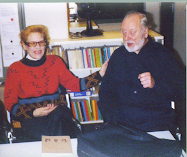
Reluctantly, Ms. Rabinowitz, an impeccably groomed grandmother of 81 who walks with a cane because of bad knees, agreed. ”Despite all my accomplishments — and my age is also an accomplishment — I felt minimized,” she recalled in a recent interview in her elegantly appointed apartment in a fashionable neighborhood of Jerusalem.

“For me this is not personal,” Ms. Rabinowitz added. “It is intellectual, ideological and legal. I think to myself, here I am, an older woman, educated, I’ve been around the world, and some guy can decide that I shouldn’t sit next to him. Why?”

That is just what many feminists and advocates of religious pluralism in Israel and abroad have been asking in what by all accounts is a growing phenomenon of religious Jewish men refusing to sit next to women on airplanes. Several flights from New York to Israel, on El Al and other airlines, have been delayed or disrupted as women refused to move, and there have been social media campaigns including a protest petition.


Thursday, January 28, 2016

Special Clay Used by First Nations People Proven to REALLY Work

Interesting news today -- see the press release below.

If only so-called "modern" people paid more attention to what their ancestors and "less civilized" inhabitants of this Earth co-existing with us did and do today to treat infections and various illnesses and diseases  -- if only.  Sadly, there is already a FOR PROFIT corporation involved in developing potential "drugs" from this miracle clay given freely to us by Mother Nature. I believe it will just be a matter of time before the Heiltsuk First Nation People who entered into this compact with the Devil are swindled fully out of whatever they think they have retained of their rights by the people behind this corporation.  We, who think we are so damn smart, continue to ignore Culpeper, author of English Physician and Complete Herbal in the mid-17th century:  Culpeper believed medicine was a public asset rather than a commercial secret, and the prices physicians charged were far too expensive compared to the cheap and universal availability of nature's medicine.  Wikipedia.  So what if people die?  It's all about the filthy lucre, darlings.

Press Release issued by the University of British Columbia

First Nations’ ancient medicinal clay shows promise against today’s worst bacterial infections

Naturally occurring clay from Kisameet Bay, B.C. — long used by the Heiltsuk First Nation for its healing potential — exhibits potent antibacterial activity against multidrug-resistant pathogens, according to new research from the University of British Columbia.
The researchers recommend the rare mineral clay be studied as a clinical treatment for serious infections caused by ESKAPE strains of bacteria.
The so-called ESKAPE pathogens — Enterococcus faeciumStaphylococcus aureusKlebsiella pneumoniae,Acinetobacter baumanniiPseudomonas aeruginosa, and Enterobacter species — cause the majority of U.S. hospital infections and effectively ‘escape’ the effects of antibacterial drugs.
“Infections caused by ESKAPE bacteria are essentially untreatable and contribute to increasing mortality in hospitals,” said UBC microbiologist Julian Davies, co-author of the paper published today in the American Society for Microbiology’s mBio journal.
“After 50 years of over-using and misusing antibiotics, ancient medicinals and other natural mineral-based agents may provide new weapons in the battle against multidrug-resistant pathogens.”
The clay deposit is situated on Heiltsuk First Nation’s traditional territory, 400 kilometres north of Vancouver, Canada, in a shallow five-acre granite basin. The 400-million kilogram (400,000 tonne) deposit was formed near the end of the last Ice Age, approximately 10,000 years ago.
Local First Nations people have used the clay for centuries for its therapeutic properties—anecdotal reports cite its effectiveness for ulcerative colitis, duodenal ulcer, arthritis, neuritis, phlebitis, skin irritation, and burns.
“We’re fortunate to be able to partner with UBC on this significant research program” said Lawrence Lund, president of Kisameet Glacial Clay, a business formed to market cosmetic and medicinal products derived from the clay. “We hope it will lead to the development of a novel and safe antimicrobial that can be added to the diminished arsenal for the fight against the ESKAPE pathogens and other infection-related health issues plaguing the planet.”
In the in vitro testing conducted by Davies and UBC researcher Shekooh Behroozian, clay suspended in water killed 16 strains of ESKAPE bacteria samples from sources including Vancouver General Hospital, St. Paul’s Hospital, and the University of British Columbia’s wastewater treatment pilot plant.
No toxic side effects have been reported in the human use of the clay, and the next stage in clinical evaluation would involve detailed clinical studies and toxicity testing. Loretta Li, with UBC’s Department of Civil Engineering, is conducting mineralogical and chemical analyses of the clay as well. MITACS, Kisameet Glacial Clay Inc. and the Tally Fund supported the work.
Kisameet Clay Exhibits Potent Antibacterial Activity against the ESKAPE PathogensmBio American Society for Microbiology
January/February 2016 Volume 7 Issue 1 e01842-15

Those Clever Babylonians and Astronomical Geometry

Hola darlings!

Saw this on my round of online newspaper reading, article at The Washington Post:

Clay Tablets Reveal Babylonians Discovered Astronomical Geometry 1,400 Years Before Europeans

By Joel Achenbach
January 28, 2016

The medieval mathematicians of Oxford, toiling in torchlight in a land ravaged by plague, managed to invent a simple form of calculus that could be used to track the motion of heavenly bodies. But now a scholar studying ancient clay tablets suggests that the Babylonians got there first, and by at least 1,400 years.
The astronomers of Babylonia, scratching tiny marks in soft clay, used surprisingly sophisticated geometry to calculate the orbit of what they called the White Star — the planet Jupiter.
These tablets are quite incomprehensible to the untrained eye. Thousands of clay tablets — many unearthed in the 19th century by adventurers hoping to build museum collections in Europe, the United States and elsewhere — remain undeciphered.

But they are fertile ground for Mathieu Ossendrijver of Humboldt University in Berlin, whose remarkable findings were published Thursday in the journal Science. Ossendrijver is an astrophysicist who became an expert in the history of ancient science.

For a number of years he has puzzled over four particular Babylonian tablets housed in the British Museum in London.
“I couldn’t understand what they were about. I couldn't understand anything about them, neither did anyone else. I could only see that they dealt with geometrical stuff," he said this week in a phone interview from Germany.
Then one day in late 2014, a retired archaeologist gave him some black-and-white photographs of tablets stored at the museum. Ossendrijver took notice of one of them, just two inches across and two inches high. This rounded object, which he scrutinized in person in September 2015, proved to be a kind of Rosetta Stone.
Text A. (Trustees of the British Museum/Mathieu Ossendrijver)
Officially named BH40054 by the museum, and dubbed Text A by Ossendrijver, the little tablet had markings that served as a kind of abbreviation of a longer calculation that looked familiar to him. By comparing Text A to the four previously mysterious tablets, he was able to decode what was going on: This was all about Jupiter. The five tablets computed the predictable motion of Jupiter relative to the other planets and the distant stars.


Tuesday, January 26, 2016

Latest Research Shows Simultaneous Domestication of Cats

Hola darlings!

Oh yeah - simultaneous inventions, simultaneous developments of animal domestication, simultaneous invention of agricultural practices that led to the establishment of permanent settlements and a new way of life, not to mention the simultaneous invention of CHESSLIKE games in different areas of the world, etc. etc.  The old argument -- was it diffusion or was it simultaneous inventions and developments by cultures and peoples separated by thousands of miles from each other?  The wise answer is:  It was both.

This latest research demonstrates that when it comes to the domestication of cats, it was simultaneous in different parts of the world, and diffusion of certain breeds that became dominate only took place with the introduction of cross-cultural trade routes thousands of years later.

Paris, 22 January 2016

Cats domesticated in China earlier than 3000 BC

Were domestic cats brought to China over 5 000 years ago? Or were small cats domesticated in China at that time? There was no way of deciding between these two hypotheses until a team from the 'Archéozoologie, Archéobotanique: Sociétés, Pratiques et Environnements' laboratory (CNRS/MNHN), in collaboration with colleagues from the UK and China1, succeeded in determining the species corresponding to cat remains found in agricultural settlements in China, dating from around 3500 BC. All the bones belong to the leopard cat, a distant relation of the western wildcat, from which all modern domestic cats are descended. The scientists have thus provided evidence that cats began to be domesticated in China earlier than 3 000 BC. This scenario is comparable to that which took place in the Near East and Egypt, where a relationship between humans and cats developed following the birth of agriculture. Their findings2 are published on 22 January 2016 in the journal PLOS ONE.

The cat is the most common domestic animal in the world today, with over 500 million individuals. All of today's domestic cats descend from the African and Near Eastern form of the wildcat (Felis silvestris lybica). According to work published in 2004, humans and cats first started to form a close relationship in the Near East from 9000 to 7000 BC, following the birth of agriculture.  
In 2001, researchers from the Chinese Academy of Sciences in Beijing discovered cat bones in agricultural settlements in northern China (Shaanxi province) dating from around 3500 BC. Was this evidence of a relationship between small Chinese cats and humans in the fourth millennium BC in China? Or was it the result of the arrival in China of the first domestic cats from the Near East? There was no way of deciding between these two hypotheses without identifying the species to which the bones belonged. Although there are no less than four different forms of small cat in China, the subspecies from which modern cats are descended (Felis silvestris lybica) has never been recorded there. 
To try to settle the question, a collaboration of scientists principally from CNRS, the French Natural History Museum (MNHN), the University of Aberdeen, the Chinese Academy of Social Science and the Shaanxi Provincial Institute of Archaeology undertook a geometric morphometric analysis3, which, in the absence of ancient DNA, is the only way of differentiating the bones of such small cats, which have very similar morphologies whose differences are often imperceptible using conventional techniques. The scientists analyzed the mandibles of five cats from Shaanxi and Henan dating from 3500 to 2900 BC. Their work clearly determined that the bones all belonged to the leopard cat (Prionailurus bengalensis). Still very widespread in Eastern Asia today, this wildcat, which is a distant relation of the western wildcat (Felis silvestris lybica), is well-known for its propensity to frequent areas with a strong human presence. Just as in the Near East and Egypt, leopard cats were probably attracted into Chinese settlements by the proliferation of rodents who took advantage of grain stores. 
These conclusions show that a process comparable to the one that took place in the Near East and in Egypt developed independently in China following the birth of agriculture in the eighth millennium BC. In China it was the leopard cat (P. bengalensis) and not the western wildcat (F. silvestris) that started to form a relationship with humans. Cat domestication was, at least in three regions of the world, therefore closely connected to the beginnings of agriculture. 
Nevertheless, domestic cats in China today are not descended from the leopard cat4 but rather from its relation F. silvestris lybica. The latter therefore replaced the leopard cat in Chinese settlements after the end of the Neolithic. Did it arrive in China with the opening of the Silk Road, when the Roman and Han empires began to establish tenuous links between East and West? This is the next question that needs to be answered. 

Notes:

1 Principally from the University of Aberdeen, the Chinese Academy of Social Science and the Shaanxi Provincial Institute of Archaeology.
2 This work was supported in particular by Labex Bcdiv.
3 Geometric morphometrics is used to study and analyze the shape of a structure (for instance, it enables skulls of different species with very similar morphologies to be compared).
4 The leopard cat was again domesticated in the nineteen sixties, producing, by hybridization with domestic cats from the silvestris species, a cat breed known as the Bengal breed.

Bibliography:

Earliest “domestic” cats in China identified as Leopard cat (Prionailurus bengalensis). Vigne J.-D., Evin A., Cucchi T., Dai L., Yu C., Hu S., Soulages N., Wang W., Sun Z., Gao J., Dobney K., Yuan J. PLOS ONE. 22 January 2016.

Saturday, January 23, 2016

Another Ancient Eqyptian Queen Discovered, Another "History" as "Wife" Blown Up

Hola darlings!

Here is an article forwarded from Michelle, daughter of Georgia, my cohort here at Goddesschess, about the unmasking of yet another historical myth about the role a female played in the ancient Egyptian hierarchy of rulers.  When Mr. Don was alive he fondly referred to us as "his" three Goddesses :)

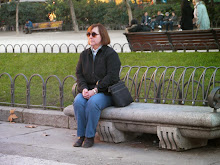
Georgia, Michelle and Yours Truly, New York en route to Statue of Liberty, 2009.
Chess Goddesses :)
Yet another one down (historic myth accepted as fact) and another one down, another one bites the dust...

Early Egyptian Queen Revealed in 5,000 Year Old Hieroglyphs
from Yahoo, as reported at Live Science by Owen Jarus

January 21, 2016:

About 60 drawings and hieroglyphic inscriptions, dating back around 5,000 years, have been discovered at a site called Wadi Ameyra in Egypt’s Sinai Desert. Carved in stone, they were created by mining expeditions sent out by early Egyptian pharaohs, archaeologists say.

They reveal new information on the early pharaohs. For instance, one inscription the researchers found tells of a queen named Neith-Hotep who ruled Egypt 5,000 years ago as regent to a young pharaoh named Djer.
Archaeologists estimate that the earliest carvings at Wadi Ameyra date back around 5,200 years, while the most recent date to the reign of a pharaoh named Nebre, who ruled about 4,800 years ago.
The "inscriptions are probably a way to proclaim that the Egyptian state owned the area," team leader Pierre Tallet, a professor at Université Paris-Sorbonne, told Live Science.
He explained that south of Wadi Ameyra, the ancient expeditions would have mined turquoise and copper. Sometime after Nebre's rule, the route of the expeditions changed, bypassing Wadi Ameyra, he said.
Early female ruler
The inscriptions carved by a mining expedition show that queen Neith-Hotep stepped up as ruler about 5,000 years ago, millennia before Hatshepsut or Cleopatra VII ruled the country.
While Egyptologists knew that Neith-Hotep existed, they believed she was married to a pharaoh named Narmer. "The inscriptions demonstrate that she [Neith-Hotep] was not [emphasis added] the wife of Narmer, but a regent queen at the beginning of the reign of Djer," Tallet said.
 'The White Walls'
An inscription found at Wadi Ameyra shows that Memphis, an ancient capital of Egypt that was also called "the White Walls," is older than originally believed.
Ancient Greek and Roman writers claimed that Memphis was constructed by a mythical king named Menes, whom Egyptologists often consider to be a real-life pharaoh named Narmer, Tallet explained.
The new inscription shows that Memphis actually existed before Narmer was even born.
"We have in Wadi Ameyra an inscription giving for the first time the name of this city, the White Walls,and it is associated to the name of Iry-Hor, a king who ruled Egypt two generations before Narmer," Tallet said. The inscription shows that the ancient capital was around during the time of Iry-Hor and could have been built before even he was pharaoh. [Could "The White Walls" be a reference to the prehistoric White Goddess, who later cropped up in culture after culture, in many different forms?]

Board Game Pieces Found in Ancient Roman Settlement in Germany

Board game pieces found in ancient Roman settlement

The remnants of ancient water wells, pearls and hairpins are proof that a group of villagers set up a settlement on top of a military fort in ancient Roman times.
About 1,900 years ago, a group of Roman soldiers lived in a fort in what is now Gernsheim, a German town located on the Rhine River about 31 miles (50 kilometers) south of Frankfurt. Shortly after the soldiers left the fort in about A.D. 120, another group of people moved in and built a village literally on top of the settlement, researchers found.
Archaeologists have known about the site itself since the 1800s, but the new finding sheds light on its inhabitants and what they did for fun. (An ancient die and game piece were among the discoveries.) 
Image credit: Thomas Maurer

Chess, Gambling, and Cards: Tudor Indoor Pasttimes

Maybe the Saudi Mufti read this article before he issued his condemnation of chess as "gambling" (typical silly male religious nonsense -- see post below).

From BBC History Magazine online:


Hundreds of years before the invention of radio or television, how did the Tudors occupy themselves of an evening, or during long, winter nights? Melita Thomas, the editor of 
Tudor Times, investigates…
Wandering around a Tudor house or garden on a sunny day is a delightful experience. We can imagine the lady of the house in her velvets and French hood picking flowers and herbs, or the maid turning those herbs into cooking ingredients or medicine. Visiting during the day, we seldom think of what the evenings must have been like – long hours, with no entertainment other than what the household could provide. How did they while away the evenings? The answer is board games – some of which we still play to similar rules today, and some that have been adapted over time. 

Chess

The most enduring game of all is chess, which has been played in western Europe since the early Middle Ages – witness the beautiful Lewis Chessmen (chess pieces of walrus ivory, found on Lewis in 1831, but likely made in Norway in around AD 1150–1200). The rules of chess, however, underwent a significant change in the mid-to-late 15th century when the queen, originally a weak piece, became the most dominant figure on the board. 
From The Book of Chess and Games commissioned by
King Alphonso X of Castile, c. 1283.  Two ladies playing.
Hand/finger positions indicate clues to moves.  Source.
The romantic among us might date the change to the emergence of powerful  female rulers, such as Isabella I of Castile or Anne of Beaujeu, regent of France from 1483-91.
Chess-playing was an essential social skill for the upper classes in the Tudor period. The inventory of goods belonging to Catherine of Aragon, taken after she had been banished from court in 1531, revealed two ivory chess-boards with pieces; a set of red and ivory chess men; and a further box of ivory chessmen. These were all commandeered by Henry VIII.
Katherine Parr, Mary, Queen of Scots and Elizabeth I are also known to have played chess. The game was so much a part of court life that Henry VIII’s accounts show a payment made to a cook for creating two chessboards and men of sugar, decorated with gold, for a banquet. 

Again? Islam Prohibits Playing Chess

Let's see, how many times, over the course of Herstory have males in their long flowy feminine robes from various "religions" attempted to outlaw/ban chess as somehow "sinful?"  Need you any further proof that chess is, indeed, The Game of the Goddess?  But try as they might, the religious patriarchs have not succeeded in abolishing Her, and they never will.

Checkmate: Saudi grand mufti makes move against chess

By Don Melvin, CNN
January 22, 2016

(CNN)   So does everyone need to roll up their rooks and box up their bishops?  Maybe not, but some people in Saudi Arabia might be wondering.
    Saudi's grand mufti, the kingdom's top cleric, was appearing on a religious TV channel, taking questions about faith and sin and that sort of thing.  And he got one about chess.
    Not one to hesitate, Sheikh Abdul Aziz bin-Abdullah al-Sheikh said chess and similar games are "forbidden" in Islam because they're a form of gambling.  He supported his statement with a verse from the Quran: "Indeed wine, gambling, idols and the divining arrows are abominations of Satan's doing, so avoid them, so that you may be felicitous." [But dressing pre-puberty boys like girls and making them dance for adult males and then sexually assaulting them with anal intercourse is just fine.]
    The grand mufti called chess "a waste of time, money and a reason for the enmity between players."
    The clip was posted on YouTube last month. It is unclear when it aired on TV; CNN was trying to reach the channel, Saudi station Al-Majd, for comment.
    A member of the Saudi Chess Association said the group was surprised by the video but had received no formal notification, and the group is hoping for clarification.  The chess association began a two-day championship in Mecca on Friday. Another two-day tournament, the Riyadh Chess Championship, is scheduled for early June.
    Twitter users reacted to the comments with humor and sarcasm. [Comments omitted.]
    CNN's Hamdi Alkhshali and Melissa Gray contributed to this report.
    Related Posts Plugin for WordPress, Blogger...