Monday, June 30, 2008

This and That

Hola darlings! I'm exhausted. I ran home from work tonight and spent an hour trying to get the front lawn cut before I dashed inside to watch - okay, control your gag reflex now - The Bachelorette! I almost got it all finished too - whew! But I ran out of gas - didn't put quite enough in to finish. I think I need to give the mower an oil transfusion too. I think I shamed my next store neighbors into cuting their grass tonight - it's dark out now and they're out there shoving the mower around, lol! Well, they didn't cut last week at all and with all the rain we've had and the sun and the humidity, their grass is tall! Particularly in contrast to the line I cut along the lot line tonight, ha! Tomorrow I'm having the rain gutters cleaned out. They are absolutely clogged and the back deck has been under Niagra Falls during all the rain this month. And I'm finally going to get some of those gutter covers, the permanent kind that supposedly are guaranteed to keep all the crap out FOREVER! Tonight, though, I'm taking a bubble bath and going to dreamland early. 'night.

Chess News Update

I spent the weekend putting together the June Chessville column and it's up and running, hooray!

The Sirius Lore

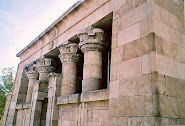
From Al-Alhram 26 June - 2 July 2008 Issue No. 903 To the earliest Egyptians, Sirius/Sothis was the home of departed souls. Assem Deif* shows how the triad Osiris-Isis-Nephthys affected other cultures The place is the Isis-Hathor Temple of Denderah, where the priests hasten along the columned aisle to witness an important event. The principal temple is dedicated to Hathor, whereas a small adjacent one is dedicated to Isis in which a statue of the goddess is located at the end of the aisle. It is a little before 5am on 22 July, 700 BC, the summer solstice; the priests wait to watch Sirius rise and its rays penetrate the temple to fall on Isis's gem. As they arrive the sun is still below the horizon, and they gaze impatiently for the apparent heliacal rising of the Dog Star. For the priests already knew that the appearance of Sepdet lasts only for a brief moment before Ra brightens the sky. When the star begins to flicker low on the horizon it marks the beginning of a New Year in Ancient Egypt. The festivities will soon begin. The Egyptians referred to the heliacal rising and its associated festival as prt spdt, "the going forth of Sepdet". The star hid for 70 days, and now it has returned from the duat (underworld) to bring welfare to the land and to allow its people to bury their dead. The 70 days of the star's invisibility is due to the dominance of sunlight in this period. When it starts its heliacal rise from the east it is ahead of the sun by about 11 degrees, moving across the celestial sphere to set in the west. On subsequent nights, it distances itself from the sun by appearing earlier and spending longer in the night sky until it eventually becomes out of phase with the sun, rising just when the sun is setting over the western horizon. It again approaches the sun on successive nights until it disappears totally from view, obscured by the sun's brilliance for 70 days before reappearing again for a few minutes just before sunrise -- the heliacally rising. Not only does the star herald the flooding of the Nile, but the shade of the blue-white star is also important. If the star appears bright and clear, the Egyptians expect an abundant harvest. If it is dull and reddish, a poor harvest results. In the second century AD the Egyptian astronomer Ptolemy described the star as being red, and the less red it was the better the harvest. The Arabs too revered the star ,which they called "Al-Shi'ra Al-Yamaniyyah", referring to Yemen, south of Mecca; for it was this star which guided them in this direction. Many nations paid homage to its goddess, Isis. Her fame spread to all corners of the Roman Empire, and the last recorded festival of Isis took place in Rome in 394 AD. There was even a temple of Isis on the River Thames in London. To the Egyptians she was the caring mother and the symbol of fertility. She also owned magical powers; as she restored her husband to life after he was murdered by his brother Set. Some scholars believe the River Nile took its name, Siris, from Sirius. Not only was it the foundation of the Egyptian religious system, but its celestial movement determined the Egyptian calendar. Another bright star is Canopus (Arabic Suhayl), the second brightest star in the sky after Sirius and similarly located in the southern hemisphere. It is used nowadays to guide spaceships. Both stars disappear for an almost equal amount of time and rise heliacally at the summer solstice. Sirius is the brightest star in the night sky, 20 times brighter than our Sun and twice as massive. It is called the Dog Star because of its prominence in the constellation of Canis Major . Since it is the star of Isis, it was supposedly married to Orion, or her brother Osiris. The Arabs, however, made Sirius the sister as well as the wife of Canopus, "Alpha Carina" rather than Orion. Scholars say "Sah" in the Pyramid Texts, with whom the soul of the king was to be united, resembles the name Suhayl. They also say that Sirius, as a star, was married to another star and not to a constellation. Rest of article.

11th Vins du Medoc International Open

22nd-29th June 2008 51 players (results reported only through player 27 at The Week in Chess) 1 FOMICHENKO Eduard m RUS 2492 8.0/9 4 FOMICHENKO Svetlana gf UKR 2269 6 – wife of #1? Sister? 8 TRABERT Bettina gf GER 2272 5,5 12 ARMAS Lara-Maria FRA 1891 5,5 18 ZICKELBEIN Eva-Maria ff GER 2135 5 24 ARMAS Lena FRA 1748 4,5

Sunday, June 29, 2008

Supporting Local Chess: Some Announcements

The Katonah Library in Lewisboro, New York is sponsoring chess classes this summer: Reading, chess programs at Katonah Library Written by Matt Dalen Sunday, June 29, 2008 “Learn How to Play Chess” is for second grade students and older. John Gallagher will teach the basic rules and strategies of chess. All levels of experience are welcome and there will be a number of practice games. The library is at 26 Bedford Road in Katonah. There is some street parking and, on weekends, nearby municipal parking. Information: 232-3508 or katonahlibrary.org. ****************************************************************************************** The Aiken County Chess Club (Aiken, South Carolina) was featured in the Carolina Chronicle: Aiken County Chess Club Special Sunday, June 29, 2008 MEETS: Every other Saturday from 10 a.m. to 3 p.m. at the Stoplight Deli on Laurens Street in downtown Aiken. MEMBERSHIP: Anyone may join the group; membership is free.

MISSION: The Aiken County Chess Club is a forum where chess enthusiasts can participate in friendly competition. Anyone interested in the game of chess is urged to come out and play.

QUOTE: "Chess brings back the art of conversation," said David Whatley, the secretary of the club. INFORMATION: Contact Mr. Whatley at whatleydavid@bellsouth.net.

Here is the website for the Aiken County Chess Club! ************************************************************************************************ Want to pick up a casual game of chess in Portland, Oregon? Visit Anna Banannas. Love the name! Here are the details from the PortlandMercury.com:

Anna Bannanas 1214 NW 21st Avenue Portland, OR 97209 503.274.2559 Website Hours: Mon-Thu 7:30am-11pm, Fri 7:30am-midnight, Sat 8am-midnight, Sun 8am-11pm

Women Who Ruled: Salome Alexandra

A fascinating article from Biblical Archaeology Review online about a female ruler I haven't heard of before (now I realize just how many I haven't heard of!) By way of sychronicity, as one of my christmas presents Mr. Don purchased a book for me "Women Who Ruled." I had a chance to relax and read the preface and introduction yesterday - fascinating information! The book itself is similar to a dictionary-encyclopedia, with short biographical/informational entries in alphabetical order. Another great addition to my library. As I read the BAR article, in the back of my mind was the information I've learned from Barbara Walker and her "A Woman's Encyclopedia of Myths and Secrets" so I cast a jaundiced eye on the patriarchal gloss given to the history of Salome Alexandra and her feminine compatriots. Still and all, I think this article shows without a doubt just how important it was in the Middle East (just before Roman times) to be married to a female of rank in order to exercise power as a king - and how women of rank could and did change the course of history by exercising their own inherent power at strategic points. There is no doubt that these women were king-makers. BAR 34:04, Jul/Aug 2008 The Salome No One Knows Long-time Ruler of a Prosperous and Peaceful Judea Mentioned in Dead Sea Scrolls When people hear the name Salome, they immediately think of the infamous dancing girl of the Gospels. Herod Antipas—the man Jesus denounced as a “fox”—had married his brother’s wife, Herodias. When John the Baptist denounced this illicit union, Herod Antipas cast him into prison. It was Herodias’s daughter, Salome, who danced before Herod at his drunken birthday gala. Her performance so pleased Herod that he promised her anything she wished: up to half his kingdom! At her mother’s urging, Salome asked for the head of Herod’s most famous prisoner on a platter. Fearful of breaking his word before his guests, Herod granted ­Salome’s request and ordered John the Baptist beheaded.1 In antiquity there was a considerably more famous Salome, however, who was revered for centuries. She was so admired that generations of mothers, Herodias apparently among them, named their daughters Salome in her honor. This Salome was the only woman ever to govern Judea as its sole ruler. She is even mentioned in the Dead Sea Scrolls: the sole woman, and one of only 18 people named in the scrolls.2 She presided over a number of religious reforms that shaped the Judaism of Jesus’ day as well as our own. During a time of chaos, men chose her to lead their nation and fight their battles. Centuries later, the authors of the Talmud regarded her reign as a golden age. Yet this remarkable woman has been largely erased from history. Her name is Queen Salome Alexandra.a Salome Alexandra’s world was a time of uncertainty and confusion. It had been this way since the conquests of the great Macedonian general Alexander the Great (356–323 B.C.E.), who brought Greek culture, foreign ways and new religions to the Middle East. Alexander spread Greek civilization throughout the territories he conquered. As a result, many people in Salome Alexandra’s Judea had adopted Greek culture: a phenomenon known as Hellenism, whose chief hallmark is not only cultural but also religious tolerance. For many pious Jews, Hellenism constituted nothing less than a threat to Judaism’s very survival, since God had commanded, “You shall have no other gods before me.”5 In 167 B.C.E. Antiochus IV Epiphanes, the Hellenistic Greek king of Syria and heir to a portion of Alexander’s empire, in effect declared war against Judaism. Forsaking the tolerance that had come to define Hellenism, Antiochus banned circumcision, Sabbath observance, dietary laws and Temple sacrifices. In reaction, a Jewish priest named Mattathias ignited a resistance movement to expel the Syrians. His son Judas—nicknamed Maccabee (“the Hammer”)—eventually recaptured Jerusalem and rededicated the Temple. After Judas’s death, his brothers Jonathan and Simon continued the struggle for independence. Each became not only Judea’s secular ruler, but also its high priest. They and their descendants became known as the Hasmoneans, a name that refers to Mattathias’s great-grandfather, Hasmon. These were Salome Alexandra’s illustrious ancestors, whose deeds are still recounted at the Jewish festival of Hanukkah.6 Mattathias’s son Simon was followed by his son John Hyrcanus (Hyrcanus I). With Hyrcanus a new, less-illustrious chapter of Judean history begins that involves palace intrigues, dysfunctional families and even matricide. Most of what we know of this period comes from the first-century Jewish historian Josephus (37–100 C.E.), a contemporary of New Testament figures like Paul and Jesus’ brother James. But as regards our heroine Salome Alexandra, Josephus is often uncharacteristically brief, omitting important details and even providing contradictory accounts in his two great works, The Antiquities of the Jews and The Jewish War (about the great Jewish revolt against Rome in 66–70 C.E.). Although he is not particularly sympathetic to Salome Alexandra (unlike the later rabbis of the Talmud), even he had to acknowledge her remarkable achievements. Salome Alexandra’s story really begins with John Hyrcanus, son of Simon, son of Mattathias. Hyrcanus had four sons (actually five, but we don’t even know the name of the fifth son, and he does not figure in our story), whether by more than one wife we are not told. Hyrcanus’s two elder sons, warriors like him, were named Judah Aristobulus (Aristobulus I) and Antigonus. At some point in his life, Hyrcanus intended them to succeed him. In the end, however, he designated his wife (whose name we don’t know) to be his successor. Upon his death, however, John Hyrcanus’s son Judah Aristobulus ignored his father’s will and proclaimed himself both king and high priest. According to Josephus, his mother “disputed [Judah Aristobulus’s] claim to authority,” which suggests that she had considerable support. So Aristobulus had her imprisoned, where he allowed his mother to die of starvation. Next, Aristobulus turned to his brother Antigonus, ordering him to appear before him unarmed—a test of loyalty to determine whether there was any truth to the persistent rumors that Antigonus was about to seize power. Aristobulus’s wife, Salina Alexandra, intercepted the message, however, and changed its contents: Antigonus is ordered to appear before the king arrayed in his new armor. Antigonus literally walked into a trap. Aristobulus’s bodyguards, acting upon standing orders to prevent anyone carrying weapons from approaching the king, killed him. Upon hearing this news, Aristobulus was consumed with remorse. The physical symptoms from which he had been suffering worsened. He became weakened by intense pain; he vomited blood. Aristobulus died shortly afterward, ending a reign of less than a year. [He killed his brother and felt remorse, yet he starved his mother to death and felt nothing. From his symptoms it sounds to me that someone close to him poisoned him to death with arsenic - good riddance. It is said that poison is a woman's weapon... Perhaps his own wife knocked him off - ] At this point, unloved Alexander Jannaeus, the other brother and son of John Hyrcanus, becomes the focus of the story. Hyrcanus never saw his son Jannaeus. When Jannaeus was still in utero Hyrcanus had a dream or a vision in which God told him that neither of his two beloved sons, Aristobulus and Antigonus, would be his successor. Instead, his future son (Alexander Jannaeus) would become heir to all his possessions. When Jannaeus was born, Josephus tells us, Hyrcanus (hoping to thwart his dream) ordered the young child to be raised in the distant Galilee while his family lived in Jerusalem. Aristobulus’s death left a power vacuum in the state. What happens next is truly remarkable. Aristobulus’s wife, Salina Alexandra, takes charge of the situation. She quickly frees Jannaeus, who had been imprisoned by her husband, and selects him as Judea’s new king and high priest. Never before had a woman chosen the monarch and high priest! Alexander Jannaeus subsequently reigned for 27 years. Upon his death, his wife and our heroine, Salome Alexandra, became Judea’s sole ruler for nine years (76–67 B.C.E.): the most prosperous and peaceful time in her nation’s history. Within four years of her death, however, Judea lost its independence. Long under Roman influence, Judea was now ruled by Rome directly. It would not become a sovereign nation again for more than two thousand years. [The article does not say and so I am left to wonder: was Salina Alexandra, wife of the late Aristobulus, related to Salome Alexandra, wife of Alexander Jannaeus?] But that was four years after Salome Alexandra died. In her lifetime, she defied the odds to become the most powerful woman in Judea’s history. Salome Alexandra’s marriage to Alexander Jannaeus, through whom she acquired the throne, was a September-May match. If the dates Josephus gives are correct, she was 29 years old at the time and he was between 14 and 16.7 It is highly unlikely that a young man of 14 or 16 would have chosen a 29-year-old woman as his wife. The marriage of Salome Alexandra and Alexander Jannaeus was almost surely arranged by their parents, which was the custom of the time. It was clearly an unhappy union. [No evidence is given for this statement, and for all we know, young Alexander J. may have been quite eager to get his hands on a hot, older experienced woman, who clearly also came with "extras" - such as familial power to rule.] Salome Alexandra’s rule contrasted sharply with that of her late husband Alexander Jannaeus, who was one of the most ruthless kings in Judea’s history. His youth and inexperience nearly brought his nation to ruin. His foolish attack on the Mediterranean port city of Ptolemais (Acco) led to an invasion of Judea by an Egyptian pretender, Ptolemy Soter, whose forces were in Cyprus. Soter easily defeated Jannaeus’s forces and wiped out between 30,000 and 50,000 Judeans. According to Josephus, as Soter’s men ravaged Judea they boiled women and children—and ate them.8 [Yeah, right. A classical example of media bias!] Jannaeus’s reign continued to be filled with violence and endless warfare. Although he considerably expanded his kingdom in nearly every direction, his people abhorred him. Josephus reports a telling episode that occurred on Sukkoth (the Feast of Tabernacles), one of the three pilgrim festivals when Jews flocked to Jerusalem in droves. Sukkoth observance involves waving a palm frond and carrying a lemon-like fruit called a citron (etrog in Hebrew). As high priest, Jannaeus presided over the Temple ceremonies. On this occasion, the festival pilgrims pelted Jannaeus with their etrogim. Jannaeus’s retaliation was brutal. Over the next six years he killed more than 50,000 of his own people. Once, while he publicly feasted with his concubines, he crucified 800 Jews after slaughtering their children and wives before their eyes. The people of the Dead Sea Scrolls viewed this atrocity as such an unprecedented act of cruelty that, as was their custom, they looked to Scripture for an explanation. How could God allow this to happen? The commentaries they wrote looking to Scripture for an explanation of current events are called pesharim (plural of the Hebrew pesher, meaning “interpretation”). A pesher cites a scriptural verse and then connects the sacred text to a current event. The pesharim rarely name individuals, however; they prefer epithets that describe the personalities of the people they denounce. The Nahum Pesher contains a number of historical allusions that allow us to identify Alexander Jannaeus as “the Lion of Wrath.” The pesher also alludes to his wife Salome Alexandra as a prostitute. For the author of the pesher, Scripture had predicted the deeds of both Salome and her husband. The pesher mentions by name the Syrian king Demetrius who, with the support of the Pharisees, had invaded Judea in an ill-fated effort to remove Alexander Jannaeus from power. The pesher then quotes the Book of Nahum 2:12: “The lion catches enough for his cubs, and strangles prey for his mates.” The ancient reader would know that Nahum continued, “?‘I am going to deal with you,’ declares the Lord of Hosts” (Nahum 2:14 [verse 13 in English]). The pesher text then refers to the lion in the Nahum text as “the Lion of Wrath” who kills some of his people by “hanging them alive” (i.e., crucifixion). Because Alexander Jannaeus crucified the Pharisees who had invited Demetrius to invade Judea, it is clear that Jannaeus must be the “Lion of Wrath.” In subsequent passages the Nahum Pesher quotes additional verses from Nahum to describe a change in government and the reign of a woman: “Because of the countless fornications of the prostitute, the alluring mistress of sorcery, who ensnares nations with her harlotries and people with her sorcery” (Nahum 3:4). Again the ancient reader would know that this passage was followed by: “?‘I am going to deal with you,’ declares the Lord of Hosts” (Nahum 3:5). The pesher is clearly alluding to Salome Alexandra and her reign. The Dead Sea Scroll sectarians denounce her simply because they rejected all Hasmonean monarchs. The pesher also seems to have had difficulty accepting the reign of a woman since they wanted the reader to equate the evil “prostitute” denounced by Nahum with Salome Alexandra. Josephus tells us very little about Salome Alexandra during her husband’s reign of terror. In Jannaeus’s last three years in power (79–76 B.C.E.), he suffered from the effects of a lifetime of heavy drinking and quartan fever or malaria, yet he continued to wage war to expand Judea. At this time, and during the many years he spent campaigning outside Judea, Salome Alexandra must have acted as regent. This is suggested by the manner in which she became queen. When Jannaeus was across the Jordan besieging the city of Ragaba, she was there.9 Jannaeus realized he was dying. In Josephus’s words: Alexander [Jannaeus therefore] bequeathed the kingdom to his wife [Salome] Alexandra, being convinced that the Jews would bow to her authority as they would to no other, because by her utter lack of his brutality and by her opposition to his crimes she had won the affections of the populace. Nor was he mistaken in these expectations; for this frail woman firmly held the reigns of government, thanks to her reputation for piety.10 When Jannaeus died, Salome Alexandra continued his military campaign, successfully captured Ragaba and returned home to Jerusalem as the nation’s new monarch. Judea’s future was now in the hands of a woman. The Judeans willingly accepted a female ruler even though Salome Alexandra had two grown sons! Salome Alexandra appears to have made peace with her husband’s enemy, the Nabatean king Aretas, and apparently undertook a military expedition to help him regain Damascus from a strongman named Ptolemy Mennaeus. By this action, Salome Alexandra brought peace to Judea’s eastern and northern frontiers, long a scene of conflict during her husband’s reign. Salome Alexandra realized that she had to adopt some of her husband’s policies and keep a strong military, lest neighboring powers seek to annex Judea now that a woman held the reins of power. According to Josephus: [She] took thought for the welfare of the kingdom and recruited a large force of mercenaries and also made her own force twice as large, with the result that she struck terror into the local rulers round her.11 Josephus also remarks that she “proved to be a wonderful administrator in larger affairs,” doubling the size of Judea’s army and hiring additional foreign troops. In a later expedition to Ptolemais—scene of her husband’s disastrous expedition—she confronted the Armenian king Tigranes, who abandoned his plan to invade Judea and left the region. He apparently realized that a fight with the powerful Queen Salome Alexandra, and her considerable military force, was not worth the trouble. Unlike her husband, Salome Alexandra successfully used the mere threat of violence to prevent conflict and bring peace and stability to the region. Salome Alexandra not only made peace with her husband’s foreign enemies, but also with his religious foes. It was during the Hasmonean period that the Pharisees and Sadducees—both familiar to readers of the New Testament for their encounters with Jesus—became prominent religious parties. Both struggled for the hearts and minds of ordinary Judeans. Unfortunately, we do not have any document that we can definitively say was written by a Pharisee or a Sadducee of Salome Alexandra’s day. Scholars must rely upon later, often-inaccurate, sources to learn about them. According to the New Testament: “The Sadducees say that there is no resurrection, or angels, or spirit; but the Pharisees acknowledge all three” (Acts 23:8). Although Jesus called the ­Pharisees “hypocrites” (Matthew 12:13) and “a brood of vipers” (Matthew 23:23), these references are unfair. Because Jesus and the early Christians believed in resurrection, they viewed the Pharisees as their greatest rivals; for this reason, the New Testament accounts cannot always be trusted to present a fair and balanced portrayal of the Pharisees. The Pharisees were greatly respected by the people of Jesus’ day. This was because they promised the masses the hope of an afterlife. Moreover, unlike the aristocratic Sadducees, a group largely composed of upper-class priestly families, the Pharisees were ordinary Judeans. In keeping with their common roots, the Pharisees emphasized simple, pious living and devotion to the Torah. Most important, the Pharisees believed in the Oral Law: teachings that were purportedly passed down from the time of Moses until their day. They considered these laws binding along with the written laws of Scripture. The Oral Law was popular among the masses since it often made life easier. This was especially true of the Sabbath. For example, in Salome Alexandra’s day the Sadducees taught a more rigid adherence to the prohibition against work on the Sabbath. The Hasmoneans had once been Pharisees. But Salome Alexandra’s father-in-law, John Hyrcanus, became a Sadducee. When the Pharisees challenged his right to serve a high priest, he not only abrogated the Pharisaic interpretation of the Law, he persecuted those who continued to observe and teach it. The people had no choice but to accept the Sadducean way; otherwise they would be banned from worshiping in the Temple. When the Sadducees took control of the Temple, they disregarded the Oral Law. This made them very unpopular with most Judeans who already distrusted them for their ties to the government. Salome Alexandra alone among the Hasmoneans recognized that the Sadducees were immensely unpopular and that the Hasmonean monarchy faced an uncertain future until it made peace with the Pharisees. Although Hyrcanus’s sons Judah Aristobulus, Antigonus and Salome Alexandra’s husband, Jannaeus, remained Sadducees, Salome Alexandra was a committed Pharisee. The Talmud, the compendium of Jewish Law and lore, preserves several stories about Salome Alexandra that suggest she openly supported the Pharisees during her husband’s reign. During her own reign, with the help of a leading Pharisee named Simeon ben Shetah, the court system was reformed, and the ketubah—the woman’s marriage contract that specified the obligations of the groom toward his bride—was introduced. A continuous stream of tradition from the first century B.C.E. to the redaction of the Mishnahb at the end of the second century C.E. associates wealthy influential women with the Pharisees. In exchange for their financial support, the Pharisees gave these women greater religious and legal rights than the Saducees did. Also during her reign, children were required to attend school, a decree that presumably included young girls. The Talmud preserves a charming story about Salome’s reign that reflects the high regard in which she was held: The story is told that in the days of Simeon b[en] Shetah and in the days of Salome the Queen, that the rains would come down from Sabbath eve to Sabbath eve, until the wheat became like kidneys, the barley like olive pits, and the lentils like golden denars. The sages gathered some of them and put them aside for the coming generations.12 Because the rabbis who wrote the Talmud were the spiritual heirs of the Pharisees, modern Judaism is, to a great extent, the direct descendant of the Pharisaic Judaism developed in part through Salome Alexandra’s patronage of the Pharisees. What about Salome Alexandra’s children—Hyrcanus (II) and Aristobulus (II)? After all, in the normal course of things, they could expect to succeed their father. Again, we rely on Josephus: Of these sons, the one, Hyrcanus [II], was too weak to govern and in addition much preferred a quiet life, while the younger, Aristobulus [II], was a man of action and high spirit. As for the queen [Salome] herself, she was loved by the masses because she was thought to disapprove of the crimes committed by her husband. [Salome] Alexandra appointed Hyrcanus [II] as high priest because of his greater age but more especially because of his lack of energy; and she permitted the Pharisees to do as they liked in all matters, and also commanded the people to obey them; and whatever regulations, introduced by the Pharisees in accordance with the tradition of their fathers, had been abolished by her father-in-law Hyrcanus [I], these she again restored. And so, while she had the title of sovereign, the Pharisees had the power.13 Although Josephus wanted to portray Salome Alexandra as a pawn of the Pharisees, a close reading of his accounts suggest that she was a strong-willed and independent monarch. She had, after all, remained a Pharisee at the time when her husband had persecuted, and even crucified, members of this religious movement!14 Salome Alexandra’s only failure was, perhaps, her younger son Aristobulus. She apparently never won his loyalty. He was too much like his father; he was a military man and a Sadducee. Moreover, the two sons hated one another. When archaeologists excavated the magnificent winter palace of the ­Hasmoneans in the warm desert oasis of Jericho, they uncovered two identical adjacent complexes that Salome Alexandra had built: one for her son Hyrcanus, the other for her son Aristobulus.15 Salome Alexandra must have loved both of her sons, but she apparently realized that she had to keep her two sons apart from one another even in their leisure time! Although she sought to provide both with the same comforts and amenities, the elder one, Hyrcanus, was clearly her favorite: She had chosen him to be Judea’s high priest. According to Josephus, the younger Aristobulus, “let it be plainly seen that if only he should get the opportunity, he would not leave his mother any power at all.”16 In 67 B.C.E., Salome Alexandra became ill. She was 73 years old and had ruled Judea for nine years. Aristobulus took advantage of her physical limitations and staged a coup. She ordered her son Hyrcanus and her officials to use any means necessary to quell the rebellion. Salome Alexandra spent her final hours leading the nation. Before her death, she likely appointed Hyrcanus as king. His reign lasted only three months, however, before he relinquished the throne to his bellicose brother. Unfortunately, at the urging of his friend Antipater—father of Herod the Great—the inept Hyrcanus tried to regain his former titles. The Romans took advantage of this sibling rivalry and, in 63 B.C.E., invaded Judea. Hyrcanus was restored to his position as high priest, but not as king. Judea was now declared a Roman possession. The Hasmonean age was over. Direct Roman rule had begun. The last word belongs to Josephus: [Salome Alexandra] was a woman who showed none of the weakness of her sex; for being one of those inordinately desirous of the power to rule, she showed by her deeds the ability to carry out her plans, and at the same time she exposed the folly of those men who continually fail to maintain sovereign power.17 Although largely forgotten today, Salome Alexandra was likely the greatest Hasmonean ever to have sat upon the throne. Additional Reading from the BAS Library: Salome’s Dance BR 18:01, Feb 2002 Footnotes: I'm not going to copy all of them here, but I wanted to make sure this gets translated. It's footnote 'a', about Salome's name: But she is also known by several other names—Shel-Zion, Shalmonin, Shalmza and Shlamto. The esteemed historian of ancient Judaism Jacob Neusner has called her “a queen whose name no one can get straight.”3 The Dead Sea Scrolls have now revealed for the first time in more than 2,000 years her real name: Shelamzion. Its shorter version is Salome.4.

Supporting Local Chess with $$$: Houston Chess Club

Kudos to Glenn Wilson, who has donated a prize fund of $50 for an upcoming July 4th event at the Houston Chess Club: $25 to the first player to promote a pawn, and $25 to the last player to promote a pawn. Glenn was much struck with delion's idea for and funding of a $100 prize at the 2008 Canadian Open to the first player (no class or rating limitation) to promote a pawn, and he has taken it one step further with his funding of two prizes for the Houston Chess Club event. Hey darlings, that just goes to show, the old song lyrics are right "it's never too late, never too late, baby..." Here are the particulars about the special Pawn Promotion Prize for the Houston Chess Club's July 4th event, from Glenn's chess blog. Here's some information about the Houston Chess Club.

Friday, June 27, 2008

Jael

Prior post mentioning Jael (and giving the biblical account). I was looking in Barbara Walker's "A Woman's Encyclopedia of Myths and Secrets" for other information when I came across an entry on Jael! Jael (var. Jaala) "Wild She-Goat," alternate name for the Israelite queen Deborah as a mate of the scapegoat-god, Baal-Gad or Pan. Ja-El was the same as the Persians' primal Goddess Jahi, adopted by tribal queens of the pre-patriarchal period. Jael sacrificed Sisera in a strange way, nailing his head to the ground (Judges 4:21), which may be likened to the priestesses of Artemis Tauropolos nailing the head os their victims to crosses.(1) Notes: (1) Graves, G.M., 2, 78. ************************************************************************************* Hmmmm, well, I don't know about that. I'm skeptical of the definition Walker gives for Ja-El. "El" is "god" - but no "god" is mentioned in "Wild She Goat." If "El" means god, than Ja means goat woman (as "Ba" means goat man)? So Jehovah (Jah) was actually a female goat goddess - or some hybrid form of goat and woman? Well, that's an interesting supposition, but I'd like to know more about the meanings of these words. The conflating of Deborah and Jael is also interesting. In the biblical account they are definitely two distinct women, although it certainly is possible that the death of Sisera was at the hands of Deborah, the "queen," rather than Jael. Deborah, it will be recalled, prophesied the death of Sisera at the hands of a woman rather than her general, Barach, who evidently showed some doubt about Deborah's prophecy that the Israelite army would be victorious over Sisera's forces! Walker's Encyclopedia also has an entry on Jahi the Whore. What a title, oh my! Persian patriarchal epithet for the Great Mother who brought forth, then mated with, the serpent Ahriman, as Lilith or the pre-Adamic Eve was supposed to have done with the biblical serpent. Zoroastrian scriptures said Jahi brought menstruation into the world, for she menstruated for the first time after mating with her serpent. Jahi also brought sex into the world by seducing the first man in the primal gardne. Jewish patriarchs probably derived their notions of the sinfulness of women (by virtue of their descent from Eve) from Persian ascetics who claimed all women were "whores" because they were descendants of Jahi. [Would this have been during the 70-Year Exile in Babylonia?] Oddly enough, some of the earliest forms of the name of the Jewish God seem to have been masculinized versions of the name of Jahi. Variations included Jahu, Jah, Yahu, Yahweh, Iau, Jaho. Some myths indicate that this God like Ahriman once had a serpent form and may have played the part of the Great Mother's serpent. *************************************************************************************** A serpent and a mother-creator-goddess are among the oldest deities (if not the oldest) in Chinese iconography and myth. The pre-dynastic serpent goddess of Egypt is also extremely old. I'm not too familiar with the religious legends of Sumer, but she's probably there, too.

Supporting Local Chess: Some Announcements

Hola darlings! I have a vacation day today - a three day weekend stretches before me like the Promised Land, ahhhhh.... I have lots to do around this house. I am seriously thinking about hiring a cleaning service. I have hired a landscape contractor to come in and tame the wilderness that is my back yard, now even more overgrown than usual due to the record rains we had this month. Today I must cut the grass, vacuum, visit the supermarket and do some laundry. Yech. Normally I don't mind yard work, but with the record rainfall came a record crop of mosquitoes, and they are all thirsting for my blood. They bite even through the strongest insect repellant - and the way I sweat in this heat and humidity the stuff runs off of me in rivulets anyway, leaving me unprotected. Oh, I forgot, I'm not supposed to mention that I sweat - har :) A retirement to Las Vegas (despite the lack of potable water issues) is looking more and more appealing all the time... By choice, I spend so much time doing Goddesschess-related things (including this blog) that the normal things in life (such as housework and grocery shopping and sleeping) fall by the wayside. But - what the heck. Once the trees have been trimmed and the weeds whacked out of the flower beds and everything properly edged and half a ton of mulch laid down, things will begin to look semi-civilized around here, and my economic stimulus check will pay for it all... I'm also seriously considering buying one of those large screened tents and affixing it so that I can once again sit on my deck without a spray can of RAID in hand. So, as I'm girding myself and building up the resolution to go outdoors and face the swarming hungry hordes of skeeters, I'm checking out the chess news.
LOCAL CHESS LOCAL CHESS LOCAL CHESS LOCAL CHESS
  • Susan Polgar blogged on June 26th about giving a plug for your local chess club and (thus far) 15 people have posted about their chess clubs. Robin posted about the Hales Corners, Wisconsin Southwest Chess Club.
  • The SWCC has a convenient email service that announces upcoming events. Casual chess was hosted last night at the Barnes & Noble bookstore not too far from where I live - I can actually get to it from here using public transportation and footpower (I don't own an automobile and never learned to drive - talk about being an ANTIQUE!) I've yet to meet any of the folks from the SWCC and would love to do so - and there's a perfect opportunity coming up September 4th when Barnes & Noble will once again be the site of an evening of SWCC chess. If you see a gorgeous slightly-overweight woman of a "certain age" with dark chin length hair (I had my Xena length tresses chopped off for the summer) in sunglasses - that's me.

I love libraries. For some strange reason - strange since none in my family were great readers - I developed a love of reading as a wee child and as far back as I can remember, made heavy use of the local book mobiles that used to regularly visit the neighborhoods when I was a kid; later, when I was old enough to venture out several blocks away from home, I walked to neighborhood branch libraries (all of which, sadly, were closed over the years due to budgetary constraints and the often wonderful buildings with rotundas and corinthian columns were sold off, one by one) to spend blissful hours in the card catalogs and the stacks. This was when I first developed a taste for science fiction, historical romances and tomes on ancient history!

Those local library branches that have survived to this day are the situs of much chess activity, which is logical given that the distinctive smell of books and the generally quite atmosphere is conducive to concentration and thought, two hallmarks of chess. Here are some announcements of local chess activities centered in libraries:

  • The Batavia Library in Batavia, Illinois is hosting a summer series of chess events as part of a reading promotion program, a great idea and sounds like a lot of fun: "Chess Knights" will be offered from 7 to 8:30 p.m. Tuesdays through Aug. 5 at the library, 10 S. Batavia Ave. Participants may attend as many game nights as they'd like. Tables will be set up in different areas on the library's lower level, including the outdoor Reading Garden, weather permitting. Players are welcome to bring a friend or relative, or they may come alone. Library staff will make sure everyone who wants to play has an opponent. Participants may bring their own chess set, or use one provided by the library. The program is free and registration is not required. "After July 4, the library will host a chess tournament with prizes. Tournament play is optional," Zillman said. Tournament information will be available at the end of June. For details, call (630) 879-4775.
  • The Burlinginton, Massachusetts Public Library is also featuring Chess Basics for children and teens begins Monday, June 23, 7 to 8:45 p.m. Burlington High School graduate, Peter Hovey, teaches chess. Registration encouraged but drop-ins welcome. Also, July 7 and 21, and Aug. 4. This program is sponsored by The Friends of the Burlington Public Library and is free and open to the public.
  • From Berkeley, California - aaaahhhhh, Berkeley, Goddess bless you! An announcement in the Berkeley Daily Planet: The Berkeley Chess Club meets every Sun. at 7 p.m. at the Hillside School, 1581 Le Roy Ave. 843-0150.
  • From Tuscon, Arizona, an announcement at AZstarnet.com (Community Calendar): Chess Club — Oro Valley Public Library, 1305 W. Naranja Drive. For adults and serious youth players. 1-5 p.m. Fridays except July 4. Free. 229-5300.

Thursday, June 26, 2008

Egypt: Continuing Discoveries

From AFP Egypt archaeologists find ancient painted coffins
8 hours ago
CAIRO (AFP) — A team of Egyptian archaeologists have discovered several painted wooden coffins, including some dating back to the 13th century BC rule of pharaoh Ramses II. (Photo: 19th Dynasty Beauty: The remains of a painted sarcophagus belonging to Maayi).

"These coffins were found in the tombs of senior officials of the 18th and 19th dynasties," near Saqqara, Zahi Hawass, the director of Egypt's Supreme Council of Antiquities said on Thursday.

"Some coloured unopened coffins dating back to the sixth century BC were found as well as some coffins dating back to the time of Ramses II," who ruled from 1279 to 1213 BC, he said.

Several statues were also found in the tombs which represent the owners of the coffins, said Ahmed Said who heads the Cairo University archaeological team that found the coffins.

The Saqqara burial grounds which date back to 2,700 BC and are dominated by the massive bulk of King Zoser's step pyramid -- the first ever built -- were in continuous use until the Roman period, three millenniums later.

The vast cemeteries have yielded numerous discoveries from the Old and New Kingdoms.

There is NOTHING Sacred Anymore...

Thefts from mosques in Egypt. Wonder what the Taliban and Mr. Rotting Away Hiding in Caves in Afghanistan have to say about that? And the pissing and moaning continues as nothing is done and "pious" Muslims sell their own cultural heritage to illegal antiquities dealers. Bwwwwaaahhhhh! From news aggregator Archaelogy News (Story from Al-Ahram online 26 June - 2 July 2008 Issue No. 903 Unholy thefts Squabbles between the Supreme Council of Antiquities and the Ministry of Awqaf (religious endowments) are wreaking havoc on the fate of Egypt's Islamic monuments, reports Nevine El-Aref Thefts from Islamic monuments in the Darb Al-Ahmar area have highlighted the problem of security at Cairo's historic mosques. Inlaid wooden panels from the minbars of Ganim Al-Bahlawan and Altinbuga Al-Maridani mosques have been stolen, and a marble relief from the Blue Mosque. Thieves were also caught red handed, attempting to make off with a magnificent ironwork grill window from the sabil kuttab of Rokaya Dudu. Residents of Darb Al-Ahmar suspect a professional local gang, which operates at night, between night and dawn prayers. Ahmed Hassan, who owns a perfume shop in the vicinity of several targeted mosques, said the minbar at Al-Maridani was removed in three phases over 10 days, raising questions as to how seriously the authorities take their responsibility to guard historic sites. The theft of the minbar 's right hand panel was discovered at the time of dawn prayer. A week passed before the left hand panel was removed, and a further two days before the thieves returned to remove the ivory inlaid hood of the minbar. At Ganim Al-Bahlawan robbers removed the decorative elements of the minbar, leaving a plain wooden frame. At Rokaya Dudu sabil kuttab they succeeded in dismantling the iron grill from a window only to be apprehended by local residents who alerted the police. The window is now being held by the Supreme Council of Antiquities (SCA) inspectorate, to be returned to its original location following restoration work. "It's a terrible loss," says Gamal Abdel-Rehim, professor of Islamic monuments at Cairo University's Faculty of Archaeology. The minbar of Ganim Al-Bahlawan was among the most important in any of Cairo's monumental mosques. Abdel-Khaleq Mokhtar, director of monuments in south Cairo, told Al-Ahram Weekly that the SCA was able to abort the theft of the window at the sabil kuttab of Rokaya Dudu because the monument is under the complete supervision of the SCA, which provides a 24-hour security, while the mosques are under the control of the Ministry of Awqaf. "Securing archaeological sites is the responsibility of the authority to which the site is affiliated," he says. Quite how 24-hour security allowed the window to be dismantled in the first place remains a mystery. Yet Abdel-Khaleq insists the SCA secures its own site round the clock, while monuments such as mosques, under bilateral supervision, are guarded only until 4pm. Abdel-Khaleq says the SCA has repeatedly requested that the Ministry of Awqaf tighten security at mosques or else hand over responsibility to the SCA. "Currently the role of the SCA is to restore mosques and then hand them back to the Awqaf. The SCA then makes only periodic checks on the buildings' archaeological features." Sheikh Kamal Abdel-Nasser, director of Awqaf in Cairo, argues that the SCA is shirking its responsibilities. "Why does the SCA refuse to admit responsibility for their own security shortcomings and seek, instead, to blame the mosque guards?" he asks. Abdel-Nasser points out that legally monuments and archaeological sites are all the responsibility of the SCA and not the Awqaf. Furthermore, he adds, the mosque of Ganim Al-Bahlawan has been closed now for two years while restoration work is carried out under the supervision of the SCA and its contractors. "These accusations addressed to the Ministry of Awqaf are an attempt by the SCA to deny its responsibility for what happened." Zahi Hawass, secretary-general of the SCA, will hold a meeting next week with the head of the Awqaf to draw up a security plan for archaeological mosques. "Millions of pounds have been spent restoring these mosques which are then handed back to the Ministry of Awqaf," says Hawass. To tighten security, Hawass believes that the Ministry of Awqaf must provide the names of guards to both the SCA and security forces, and the SCA and Ministry of Awqaf need to cooperate more closely in an attempt to provide 24-hour security. "Securing and preserving Egypt's Islamic monuments is not only the responsibility of the ministries of culture, awqaf, interior, the SCA and the relevant governorate. It is the responsibility of all Egyptians who want to protect their heritage and their history," says Hawass.

Mary Ann Gomez Scalps a GM

News from the Hindu online.com Mary outwits Abhijeet Friday June 27, 2008 NEW DELHI: Mary Ann Gomes stunned Grandmaster Abhijeet Gupta in the second round of the Sort Open chess tournament on Wednesday. The results (involving Indians): Second round: Nidjat Mamedov (Aze, 2) bt Swapnil Dhopade (1); Vishnu Prasanna (1.5) drew with Rasul Ibrahimov (Aze, 1.5); Abhijeet Gupta (1) lost to Mary Ann Gomes (2); M. Shyam Sundar (1.5) drew with Manuel Leon Hoyos (Mex, 1.5); Aryam Abreu Delgado (Cub, 1.5) drew with K. Priyadarshan (1.5); Soumya Swaminathan (1) lost to Rashad Babaev (Aze, 2); Sergey Kasparov (Blr, 1.5) drew with M. R. Lalith Babu (1.5). Prasanna Rao (1) lost to Deep Sengupta (2); Matthias Roeder (Ger, 2) bt P. Uthra (1); Tatiana Kasparova (Blr, 1.5) drew with S. P. Sethuraman (1.5); C. P. Aatirah (1) lost to B. Adhiban (2); S. Nitin (1.5) bt Kruttika Nadig (0.5); S. V. Sathya Priya (0) lost to T. Abhay (1); Josep Ferrer Dalmau (Esp, 0) lost to R. Preethi (1); Aaron Rodriquez Adell (Esp, 0.5) drew with Bhakti Kulkarni (0.5); Pon N. Krithika (1) bt Ricardo Menchon Lopez (Esp, 0); Antonio Viani D’cunha (1) bt Javier Fernandez Alvarez (Esp, 0); Yeva Kasparova (Blr, 0) lost to Shalmali Gagare (1); Jordi Corominas Garrido (Esp, 1) bt Devangi Patankar (0); A. Niji (1) bt Oscar Vela Martinez (Esp, 0).

Wednesday, June 25, 2008

Supporting Local Chess with $$$

Goddesschess has lots of friends and contributors who have supported and aided our efforts for the past nine years. As in every other organization, though, the day to day nuts and bolts work of running the Goddesschess website and this blog are in the hands of three people: delion (a/k/a Pimander a/k/a Don McLean), Isis (a/k/a Georgia Albert), and yours truly (Jan a/k/a JanXena a/k/a Jan Newton). One of the things Godesschess would like to do more on is supporting local chess initiatives. We thought it would be a fitting thing to support some local chess events in each of the respective hometowns of the three mainstays that keep things at Gchess running: Montreal (delion), Las Vegas (Isis), and Milwaukee (Jan). To that end, Goddesschess has cooked up some modest monetary prizes for the following local events: FIRST: The Canadian Open Chess Championship will be held in Montreal, Quebec (Canada) this year from July 19-27, 2008. Goddesschess has funded a $100.00 CAD special prize that is open to all players in all sections. However, the local chess federation has now requested (as of July 7, 2008) that we keep it a secret until after the tournament is completed. dondelion would have loved to attend the Canadian Open - but he's going to be in Milwaukee with yours truly, instead :) That's just the way it worked out. The vacation was planned months ago; the Goddesschess prizes for local chess events was of recent origin. Okay, quit smirking. We are engaged. The Canadian Open isn't exactly a "local" event with total prizes of $25,000 CAD, but it is being held in Montreal and it seemed a natural fit for what delion had in mind prize wise. More information about the 2008 Canadian Open can be found at the website for the Quebec Chess Federation. SECOND: The Southwest Chess Club headquartered in Hales Corners, Wisconsin (a small community just to the southwest of where I live, in southwest Milwaukee County, Wisconsin) will be hosting a USCF Grand Prix event: Hales Corners Challenge VIII USCF (on page 2 of Bulletin) Grand Prix Points: 10. October 4, 2008. 4SS, G/60. 2 Sections: Open & Reserve (under 1600). Village Hall, 5635 S. New Berlin Rd., Hales Corners, WI (Milwaukee Area). EF: $35-Open, $25-Reserve, both $5 more after 10/1. Comp EF for USCF 2200+, contact TD for details. $$ Open (b/25)=1st-$325 (guaranteed), 2nd-$175 (guaranteed), A-$100, B & Below-$75; $$ Reserve b/25) =1st-$100, 2nd-$75, D-$50, E & Below-$40. Reg: 8:30-9:30, Rds: 10-1-3:30-6. Ent: Payable to SWCC, c/o Allen Becker, 6105 Thorncrest Drive, Greendale, WI 53129 ( allenbecker@wi.rr.com ). Questions to TD Gary Wright 414-226-5753. Goddesschess is funding $100 worth of special prizes as part of the Hales Corners Challenge VIII: $50 to the top female finisher; $25 to the game selected as the best woman's game; and $25 to the game selected as the best man's game. THIRD: Las Vegas, Nevada. Well - this is a bit disturbing, since I haven't been able to find much information online about local chess in Las Vegas. We know that people play chess in Las Vegas, but it's mostly either in organized casino teams (none of which advert for themselves) or totally casual meetings at restaurants and bookshops. It seems the events in Las Vegas are either mega events that seem out of our league, or are so small and casual they don't award prizes. The Nevada state chess organization's website has not been recently updated. I could not locate a separate website for Nevada scholastic chess. Soooo - readers out there, can you help us out? Goddesschess wants to fund $100 in prize(s) for a local Las Vegas chess event. Any information you can give and particularly contacts will be appreciated! Just like with the Goddesschess prize for the U.S. Women's Chess Championship, we intend to fund these local initiative prizes annually, so stay tuned!!!

Frozen Scythian Mummies May Melt Away

Parzinger fears global warming may soon put an end to the search for Scythians. Rudenko’s dig diaries contain reports of weather far colder than what modern archaeologists experience in the Altai. “When you read descriptions from the 1940s and compare them with the climate of today, you don’t need to be a scientist to see there’s been a change,” Parzinger says. Geographer Frank Lehmkuhl from the University of Aachen in Germany has been studying lake levels in the Altai region for a decade. “According to our research, the glaciers are retreating and the lake levels are rising,” Lehmkuhl says. With no increase in the region’s rainfall, the change “can only come from melting permafrost and glaciers.” As the permafrost thaws, the ice that has preserved the Scythian mummies for so many centuries will thaw too. In the Olon-Kurin-Gol grave, the ice that once crushed the mummy against the roof of the burial chamber had receded nine inches by the time the chamber was opened. Within a few decades, the ice lenses may be completely gone. “Right now we’re facing a rescue archaeology situation,” Parzinger says. “It’s hard to say how much longer these graves will be there.” You can read the entire article at Discover Magazine Online: 06.25.2008 Frozen Siberian Mummies Reveal a Lost Civilization Global warming may finally do in the bodies of the ancient Scythians By Andrew Curry

Albanian Custom Fades: Woman as Family Man

I read about this custom years ago was absolutely fascinated by it. Story from The New York Times. By DAN BILEFSKY Published: June 25, 2008 KRUJE, Albania — Pashe Keqi recalled the day nearly 60 years ago when she decided to become a man. She chopped off her long black curls, traded in her dress for her father’s baggy trousers, armed herself with a hunting rifle and vowed to forsake marriage, children and sex. For centuries, in the closed-off and conservative society of rural northern Albania, swapping genders was considered a practical solution for a family with a shortage of men. Her father was killed in a blood feud, and there was no male heir. By custom, Ms. Keqi, now 78, took a vow of lifetime virginity. She lived as a man, the new patriarch, with all the swagger and trappings of male authority — including the obligation to avenge her father’s death. She says she would not do it today, now that sexual equality and modernity have come even to Albania, with Internet dating and MTV invading after the fall of the Berlin Wall. Girls here do not want to be boys anymore. With only Ms. Keqi and some 40 others remaining, the sworn virgin is dying off. “Back then, it was better to be a man because before a woman and an animal were considered the same thing,” said Ms. Keqi, who has a bellowing baritone voice, sits with her legs open wide like a man and relishes downing shots of raki. “Now, Albanian women have equal rights with men, and are even more powerful. I think today it would be fun to be a woman.” The tradition of the sworn virgin can be traced to the Kanun of Leke Dukagjini, a code of conduct passed on orally among the clans of northern Albania for more than 500 years. Under the Kanun, the role of a woman is severely circumscribed: take care of children and maintain the home. While a woman’s life is worth half that of a man, a virgin’s value is the same: 12 oxen. The sworn virgin was born of social necessity in an agrarian region plagued by war and death. If the family patriarch died with no male heirs, unmarried women in the family could find themselves alone and powerless. By taking an oath of virginity, women could take on the role of men as head of the family, carry a weapon, own property and move freely. They dressed like men and spent their lives in the company of other men, even though most kept their female given names. They were not ridiculed, but accepted in public life, even adulated. For some the choice was a way for a woman to assert her autonomy or to avoid an arranged marriage. “Stripping off their sexuality by pledging to remain virgins was a way for these women in a male-dominated, segregated society to engage in public life,” said Linda Gusia, a professor of gender studies at the University of Pristina, in Kosovo. “It was about surviving in a world where men rule.” Taking an oath to become a sworn virgin should not, sociologists say, be equated with homosexuality, long taboo in rural Albania. Nor do the women have sex-change operations. Known in her household as the “pasha,” Ms. Keqi said she decided to become the man of the house at age 20 when her father was murdered. Her four brothers opposed the Communist government of Enver Hoxha, the ruler for 40 years until his death in 1985, and they were either imprisoned or killed. Becoming a man, she said, was the only way to support her mother, her four sisters-in-law and their five children. Ms. Keqi lorded over her large family in her modest house in Tirana, where her nieces served her brandy while she barked out orders. She said living as a man had allowed her freedom denied other women. She worked construction jobs and prayed at the mosque with men. Even today, her nephews and nieces said, they would not dare marry without their “uncle’s” permission. When she stepped outside the village, she enjoyed being taken for a man. “I was totally free as a man because no one knew I was a woman,” Ms. Keqi said. “I could go wherever I wanted to and no one would dare swear at me because I could beat them up. I was only with men. I don’t know how to do women’s talk. I am never scared.” When she was recently hospitalized for surgery, the other woman in her room was horrified to be sharing close quarters with someone she assumed was male. Being the man of the house also made her responsible for avenging her father’s death, she said. When her father’s killer, by then 80, was released from prison five years ago, Ms. Keqi said, her 15-year-old nephew shot him dead. Then the man’s family took revenge and killed her nephew. “I always dreamed of avenging my father’s death,” she said. “Of course, I have regrets; my nephew was killed. But if you kill me, I have to kill you.” In Albania, a majority Muslim country in the western Balkans, the Kanun is adhered to by Muslims and Christians. Albanian cultural historians said the adherence to medieval customs long discarded elsewhere was a byproduct of the country’s previous isolation. But they stressed that the traditional role of the Albanian woman was changing. “The Albanian woman today is a sort of minister of economics, a minister of affection and a minister of interior who controls who does what,” said Ilir Yzeiri, who writes about Albanian folklore. “Today, women in Albania are behind everything.” Some sworn virgins bemoan the changes. Diana Rakipi, 54, a security guard in the seaside city of Durres, in west Albania, who became a sworn virgin to take care of her nine sisters, said she looked back with nostalgia on the Hoxha era. During Communist times, she was a senior army officer, training women as combat soldiers. Now, she lamented, women do not know their place. “Today women go out half naked to the disco,” said Ms. Rakipi, who wears a military beret. “I was always treated my whole life as a man, always with respect. I can’t clean, I can’t iron, I can’t cook. That is a woman’s work.” But even in the remote mountains of Kruje, about 30 miles north of Tirana, residents say the Kanun’s influence on gender roles is disappearing. They said erosion of the traditional family, in which everyone once lived under the same roof, had altered women’s position in society. “Women and men are now almost the same,” said Caca Fiqiri, whose aunt Qamile Stema, 88, is his village’s last sworn virgin. “We respect sworn virgins very much and consider them as men because of their great sacrifice. But there is no longer a stigma not to have a man of the house.” Yet there is no doubt who wears the trousers in Ms. Stema’s one-room stone house in Barganesh, the family’s ancestral village. There, on a recent day, “Uncle” Qamile was surrounded by her clan, dressed in a qeleshe, the traditional white cap of an Albanian man. Pink flip-flops were her only concession to femininity. After becoming a man at the age of 20, Ms. Stema said, she carried a gun. At wedding parties, she sat with the men. When she talked to women, she recalled, they recoiled in shyness. She said becoming a sworn virgin was a necessity and a sacrifice. “I feel lonely sometime, all my sisters have died, and I live alone,” she said. “But I never wanted to marry. Some in my family tried to get me to change my clothes and wear dresses, but when they saw I had become a man, they left me alone.” Ms. Stema said she would die a virgin. Had she married, she joked, it would have been to a traditional Albanian woman. “I guess you could say I was partly a woman and partly a man,” she said. “I liked my life as a man. I have no regrets.”

Queen Strips Mugabe of Knighthood

Story from The New York Times June 25, 2008 Queen Elizabeth II has stripped Robert Mugabe, Zimbabwe’s strongman president for nearly 30 years, of his honorary knighthood as a “mark of revulsion” at the human rights abuses and “abject disregard” for democracy over which he has presided, the British Foreign Office announced Wednesday. The rebuke showed the extent of international frustration over Mr. Mugabe’s insistence to go ahead with a presidential runoff on Friday, even though his sole opponent, Morgan Tsvangirai, pulled out of race on Sunday because of the persistent violence and intimidation against him, his party and their supporters. Mr. Mugabe’s government has had a long history of human rights abuses, but he was granted an honorary knighthood during an official visit to England in 1994 when, the foreign office contends, “the conditions in Zimbabwe were very different.” But with the widespread attacks against the opposition, the foreign office said the honor could no longer be justified. Stripping a dignitary of an honorary knighthood is exceedingly rare. A foreign office spokesman could think of only one other time it had been done — in 1989 to the Romanian dictator Nicolae Ceaucescu. Mr. Tsvangirai, the beleaguered opposition leader, called on the United Nations on Wednesday to send a peacekeeping force to bring calm to the country and help pave the way for new elections in which he could participate as a “legitimate candidate.” “Zimbabwe will break if the world does not come to our aid,” he said in an op-ed in The Guardian newspaper in London. After weeks of mounting political violence against the opposition and its supporters, Mr. Tsvangirai withdrew from Friday’s runoff and took refuge Sunday in the Dutch Embassy in Harare. He emerged from the embassy briefly on Wednesday to hold a news conference at his home in which he challenged President Robert Mugabe to cancel the runoff and open negotiations. But, he said, he was not prepared to deal with a government validated by an election in which Mr. Mugabe is by default the only candidate. Mr. Mugabe has insisted Friday’s voting will go ahead. “We have said we are prepared to negotiate on this side of the 27th, not the other side of the 27th,” Mr. Tsvangirai said, according to Reuters. He listed four demands: an end to political violence; the resumption of humanitarian aid; the swearing in of legislators elected in the first round of voting on March 29; and the release of political prisoners. “We have always maintained that the Zimbabwean problem is an African problem that requires an African solution,” he said, referring to continent-wide and regional African bodies including the Southern African Development Community. “To this end, I am asking the African Union and S.A.D.C. to lead an expanded initiative, supported by the United Nations, to manage the transitional process. “The transitional period would allow the country to heal,” he said. “Genuine and honest dialogue amongst Zimbabweans is the only way forward.” He said he wanted the African Union to endorse his proposals at a forthcoming summit meeting in Egypt. Mr. Tsvangirai’s demands coincided with a scramble of regional and international diplomacy with many African and Western institutions saying the vote on Friday will be neither free nor fair. A critical group of southern African countries opened a meeting Wednesday in Swaziland to seek a way out of the crisis. The meeting grouped leaders or ministers from Swaziland, Angola and Tanzania — the so-called troika charged with responsibility for the region’s political, defense and security issues. The group said it had also invited the leaders of Zambia and South Africa to attend, but President Thabo Mbeki of South Africa, the regional mediator on the crisis in Zimbabwe, said through a spokesman that he would not attend. The spokesman, Mukoni Ratshitanga, said in a telephone interview that South Africa was not a member of the troika and had not been invited. Amid the international outcry over his government’s handling of the crisis, Mr. Mugabe, 84, was reported Tuesday as hinting that he might be open to talks with the opposition, but only after Friday’s vote confirmed his power. He remained defiant about going ahead with the runoff. “They can shout as loud as they like from Washington or from London or from any other quarter,” Mr. Mugabe said in televised broadcasts. “Our people, our people, only our people will decide and nobody else.” Taken together, his remarks were the most explicit affirmation that he intended to go through with an election widely condemned as illegitimate. Rest of article.

Tuesday, June 24, 2008

Goddess Kamkhaya

Story reported at Daily India.com
Ambubasi Mela at Kamakhya Temple draws a huge turnout of devotees
(Image: Queen Mahamaya, dreamed that a young white elephant entered her womb, and later she gave birth to Prince Siddhartha, who became Buddha.)

Guwahati, June 24: Tens of thousands of devotees from different parts of the country thronged the Kamakhya Temple for the three-day traditional fair, 'Ambubasi Mela' held here.

As per ritual, during the Ambubasi Mela, the main door of the temple remained closed for three days and all the religious activities were brought to a standstill.

The temple priests are forbidden to step into the temple leave alone the sanctum sanctorum following the belief that during this period, the presiding deity Goddess Kamkhaya undergoes her menstrual cycle.

"During this time all Hindu temples remain closed during this time. At this time no kind of farming work is undertaken. Be they Shudras, Kshatriya, Vaishyas or Brahmins, none of them cooks food at home and remain on a fruit diet. This is the significance of the Ambumasi," said Nayan Sharma, the priest of the Kamhakya Temple.

At the conclusion of three days, the temple's doors are reopened after Devi Kamakhya is bathed and other rituals are performed religiously by the priests. It is described as the Mother Earth retrieving her purity.

The devotees are allowed to enter the temple to worship Devi Kamakhya only on the fourth day.

The ceremony that lasted till Tuesday this year is believed to be purely a ritual of the Tantrik cult and observed to fulfill certain obligations.

Sadhu Surpanj Baba, a hermit said: "Some visit the temple for devotion, some come to fulfill their promises and to all the Devi Kamhakya showers Her blessings for their aspirations to come true."

Kamakhya is an aspect of the Goddess Sati or the wife of Lord Shiva. The temple in her honour exists in the Kamrup district here. The temple is one of the 51 holy Shakti Peethas related to Sati.

Copyright Asian News International
***********************************************************************************
The following information is from Barbara Walker's "A Woman's Encyclopedia of Myths and Secrets" under Sati. There was no separate entry under "Kamkhaya."

Sati
Kali as the dangerous Virgin Bride of India's svayamara ceremony. The same name was applied to Egypt's similarly archaic Virgin Huntress, once the ruler of the first nome of Upper Egypt (on modern maps, this means southern Egypt), called "The Land of Sati." Her holy city was Abu, the City of the Elephant (the Greeks' Elephantine), where she was worshipped in conjunction with the elephant god, who also mated with the Hindu version of Sati under her "magic" name of Maya, to beget the Enlightened Son of God, Buddha.(1)

India still has pilgrimage centers known as Footprints of Sati, memorials of the time when the Goddess waled the earth.(2)

Notes:
(1) Larousse, 37, 348.
(2) Ross, 49.
************************************************************************************
Ah ha! Enter the elephant - ancient playing piece of the Indian game Chaturanga, ancient playing piece of the Persian game Chatrang, and ancient playing piece in the Chinese game Xiang-qi - which to this day some people insist is called "Elephant Game." In modern Western chess, the elephant piece became our Bishop.

The two tusks depicted on 1000 year old (and older) Islamic chess pieces of the "vizier," "farzin" or "wazir" evolved into the Bishop's mitre (in Western chess) as the Arabic version of chess spread into Europe and was adopted by the European royal courts.

The history of the Bishop's mitre and its symbolism adapted from the ancient sacred "horn" is interesting in and of itself! Suffice to say for purposes of this post, it also represents an ancient symbol of authority and power. If you can visualize what a modern Bishop's headdress (Mitre) looks like, you can readily find examples in the great White Crown of ancient Egypt and in simultaneously ancient (and perhaps even earlier) representations of the elongated pointed crown (sometimes shown as a pointed "fish head") in Sumerian iconography.

Keep your eyes on the tusks and horns...

In archaic Egypt, sacred structures of worship were constructed of wood and woven reeds/grass. Elephant tusks were hung above the primary entrance. These structures were called (working from memory so this may not be 100% accurate) per-u, per-wu, per-wer, from which the term "Pharaoh" was later derived. It means something like "house of ..." or "house."

Is there a connection between ancient Egypt and the ancient Indian civilizations as Walker confidently asserts in her information about Sati? Consider this:

Ancient Egyptian (extinct Afro-Asiatic language family) word(s) for elephant: abu, ebu, yebu

Sanskrit: ibha

Notice the similarity in the ancient Egyptian word abu, ebu, yebu (Coptic ebou, from ancient Egyptian ‘bw) and Sanskrit ibha. This lends credence to Walker’s assertion that the Indian Goddess Sati (an aspect of Kali) was also the Goddess of Egyptian Elephantine! According to Easton’s 1897 Bible Dictionary, the word _habbim_ is derived from the Sanscrit _ibhas_, meaning "elephant," preceded by the Hebrew article (ha); and hence it is argued that Ophir, from which it and the other articles mentioned in 1 Kings 10:22 were brought, was in India.

Sati is also Kali. And I found two separate sources that state another Sanskrit word for elephant is kali, kari, karii. As I’ve no knowledge of ancient Sanskrit, this is just a guess – that the distinction between ibha and kali/kari/karii may be the distinction between male elephant (ibha) and female elephant (kali). This makes sense, since it would take a female elephant (kali) to give birth to a savior god in the form of a white elephant – thus kali (female elephant) also known as Maya, gives birth to Buddha.

Microwaves Frying Brains?

Hasn't this kind of thing been in the news since cell phones first came into use - and even before then? Wasn't it in the 1980's that it was first noted that Sheriff's deputies and policemen who used radio transmitters to communicate suffered greater percentages of brain cancer than in the general population? I don't know - what's the truth? We know now that plastics poison and kill us, as does the water we drink, the food we eat and the very air we breathe. Why not radio waves and microwaves? Story from The Daily Express, the World's Greatest Newspaper (Okay...) SUICIDES ‘LINKED TO PHONE MASTS’ Sunday June 22,2008 By Lucy Johnston THE spate of deaths among young people in Britain’s suicide capital could be linked to radio waves from dozens of mobile phone transmitter masts near the victims’ homes. Dr Roger Coghill, who sits on a Government advisory committee on mobile radiation, has discovered that all 22 youngsters who have killed themselves in Bridgend, South Wales, over the past 18 months lived far closer than average to a mast. He has examined worldwide studies linking proximity of masts to depression. Dr Coghill’s work is likely to trigger alarm and lead to closer scrutiny of the safety of masts, which are frequently sited on public buildings such as schools and hospitals. It is also likely to fuel more campaigns against placing masts close to public places on health grounds. Dr Coghill said last night there was strong circumstantial evidence that the masts may have triggered depression in those from Bridgend who took their lives. They include Kelly Stephenson, 20, who hanged herself from a shower rail in February this year while on holiday in Folkestone, Kent. Dr Coghill said: “There is a body of research that has over the years pointed to the fact that exposure to mobile radiation can lead to depression. There is evidence of higher suicide rates where people live near any electrical equipment that gives off radio or electrical waves.” Rest of story.

Update on Esther Elizabeth Reed Criminal Case

Story from Greenvilleonline.com Lawyers for woman charged in ID theft seek change of venue By Eric Connor • STAFF WRITER • June 24, 2008 Attorneys for a high-school dropout accused of assuming a missing Upstate woman's identity and several others to con her way into prestigious universities asked a Greenville federal judge today to either dismiss charges that she submitted fraudulent loan applications or move her high-profile case to Columbia or Atlanta. Esther Elizabeth Reed, 30, is accused in a federal indictment of stealing the identity of 20-year-old Brooke Henson, who disappeared in 1999 from her Travelers Rest home, to swindle at least $40,000 in student loans to attend Columbia University. Henson is believed to be dead, though police have said they don't believe Reed had a hand in her disappearance. Prosecutors say the Reed assumed other women's identities to secure more than $100,000 in student loans and used her intellect to claim a false career as a chess champion and dupe professors into helping her attend prestigious universities across the country. Reed's case has attracted the attention of both local and national media -- and Reed's attorneys argue in a motion to dismiss filed that the connection with Henson's highly publicized disappearance has spawned "extreme" Upstate publicity before the trial that makes it difficult for a judge to seat an impartial jury in Greenville. In arguing to have the case moved to either Columbia or Atlanta from the Greenville division of South Carolina district court, attorneys Ann Marie Fitz of Atlanta and Ryan Beasley of Greenville wrote that "the inherently prejudicial pre-trial publicity will deprive the defendant of her right to a fair trial." Rest of article.

2008 New England Checkers Championship

I haven't played checkers in years, but it's still one of my favorite games. Once you learn, like riding a bike, you never forget. My Grandpa Newton taught me to play when I was about 6, and we played lots of games while listening to Cubs games on the radio until he died in 1964, when I was 13. While chess reminds me of being a girl turning into a woman (as I was 18 when I first learned the game), checkers reminds me of being and kid, and lazy summer days on Grandma and Grandpa Newton's truck farm in Sturtevant, WI, sleeping in the attic bedroom with the windows wide open, listening to the crickets and the distant whine of train whistles in the night, of incredibly starry skies and the smell of fresh-mown grass, of cow-pie fights on the 40 acre dairy farm of one of my best childhood friends in Sturtevant, of watching Grandma Newton make the most incredible food from scratch (all from memory) on a square butcher's block table at which I sat on a bar stool and watched - with awe and respect. How I miss those days. How glad I am I had them. And so, this news about checkers caught my eye tonight: Championship draws checkers fans to Dover By Bev Wax/Correspondent Tue Jun 24, 2008, 05:11 PM EDT Dover - Dover was home to the 2008 New England Checkers Championship last Saturday with more than a dozen people competing. Playing the classic game in tournament play means following a set of strict rules designed to challenge and encourage strategic play. Many of those attended had traveled from New York or New Jersey to have the chance to play with some of their talented peers at the home of Richard and Catherine White. Since it was an open tournament, anyone was able to participate, but only New England players were able to win a title. Turns out the overall winner was Jimmy O’Grady of Yonkers. The 53-year-old Grady has been playing for about 15 years and says the game “keeps the mind alert.” The oldest player there that day, 88-year-old Gordon Sharp couldn’t agree more. Other players joked he must have really wanted to play checkers … he was in a wheelchair and had gotten up quite a steep driveway with the help of his daughter. O’Grady said his checkers history comes in two sections. As a young boy, he learned the game in Scotland playing with an ill boyhood friend who lived next door: “Checkers took his mind off his sickness.” He moved to the United States in 1937 and played checkers with a Russian barber. Quick-witted, he chuckled, “He wasn’t busy. There was no work at the time!” After getting discharged from the Navy, he didn’t rediscover the game until three years ago when he started playing online. While online games hone his skills, O’Grady said, “Once you start winning, they walk away.” He along with everyone else prefers playing face-to-face. White’s wife, Catherine, agreed, “There is nothing that substitutes sitting across the table.” Her husband, a three-time New England champion and five-time Massachusetts champion, plays every year at Dover’s Old Home Day while she co-chairs the event. “One year, 22 kids played with him, including a boy who had a broken arm,” she said. Catherine White said checkers is wonderful for the children who are not interested in or cannot play sports due to physical limitations, such as her nephew with cerebral palsy: “All you need is a board and a flat surface.” The couple met at Dickinson College playing competitive chess. However, they became more interested in the game of checkers. In fact, Richard wrote “How to Lose at Checkers” in 1994. The book describes lessons from the masters and what the top-notch players did wrong. The Whites have a whole collection of books on the game’s history and strategy. Richard brings up the quote from Marion Tinsley, considered to be the greatest checkers player who ever lived, “Playing chess is like looking out over a limitless ocean; playing checkers is like looking into a bottomless well.” Players enjoyed socializing with each other during breaks at the full-day event, but were silent when facing each other across the board. The first round began at 10 a.m. and the event continued into the early evening. The format was round-robin with no entry fee or prize money. According to the Whites, “The first-place finisher gets bragging rights and their name on the championship plaque.” Mike Magnelli’s name is listed on the traveling plaque many times. He again is this year’s co-New England champion with Steve Kelly. “Checkers is a great hobby. It takes you away from the day-to-day world. Playing face-to-face is much more congenial” than playing online against a computer,” said Magnelli. Richard chimed in, “It’s pretty clear that we are all real people here!” One of the younger players, 39-year-old Alex Weaver, came up from New Jersey to strengthen his skills. Wearing Red Sox gear, he noted he was brought up “with flying kings. I needed to learn this particular style and lost a lot of games when I first started.” A friend of O’Grady’s, Bill Hozak, admitted he was a novice and was there playing for fun “and making the same mistakes over again.” He did learn a trick was to keep pieces in a triangle as a defense so that your competitor “was not able to double jump.” The tournament was dedicated to renowned checkers player Freeman T. Frank, a high school history teacher in Melrose, who died in October 2007. Checkers or draughts, as it is called in Great Britain, has a long history. It is believed that the earliest form of checkers was a similar game discovered in an archeological dig in the Middle East dating around 3000 B.C. Around for centuries, it has been enjoyed by billions. According to the New York Times, in July 2007, Jonathan Schaeffer, a computer scientist at the University of Alberta in Canada, “announced that after running a computer program almost nonstop for 18 years, he had calculated the result of every possible endgame that could be played, all 39 trillion of them. He also revealed a sober fact about the game: checkers is a draw. As with tic-tac-toe, if both players never make a mistake, every match will end in a deadlock.” This seems unlikely to happen in an imperfect world playing against fallible human beings. If last weekend is any indication, checkers will continue to be a popular social activity for generations to come for children and adults of all ages. And the winners are… Richard emailed me saying he might have a slight change…I need to go out but maybe he will send directly to you! Overall winner - Jimmy O’Grady of New York Co-New England champions - Mike Magnelli and Steve Kelly Massachusetts champion - Steve Kelly Rhode Island champion - Mike Magnelli Connecticut champion - Al Darrow
Related Posts Plugin for WordPress, Blogger...