Wednesday, February 6, 2013

Kosintseva Sisters Leave Russian National Women's Chess Team

HOLY HATHOR!  The Kotsintseva sisters have quit the Russian National Women's Chess Team because they refuse to play under the leadership of team coach Sergei Rublevsky.

I haven't read about the specific issues that may have arisen with this male GM trying to coach an all-female chess team, but I know that issues have come up in the past regarding male coaches with other women's teams, including a medal-women U.S. Women's Olympiad Team the one and only time GM Susan Polgar played for a United States women's team.  So it's not exactly like these issues haven't come up before -- of course they have!

I am left wondering - what the hell did Rublevsky do to "emotionally shake up" the Russian Women's Team during the last Olympiad.  It's not sexist to say that a coach cannot treat a woman like he would treat a man.

In any event, the Kotsintseva sisters are OFF THE RUSSIAN TEAM, and the resulting team is left seriously weakened in their absence.  No ifs, ands or buts about it!  There is an article at Chessbase that sensationalistically exclaims:

Kosintseva sisters abandon the Russian women's team
06.02.2013– From 2-13 March 2013 the Women's World Team Championship will be held in Astana, Kazakhstan. The Russian team, which won the Chess Olympiad last September, has lost it two top players, Nadezhda and Tatiana Kosintseva. The sisters say they refuse to play for the team under the leadership of trainer Sergei Rublevsky, citing 'psychological incompatibility'. News and interview.

That article title, of course, is complete bullshit.  I suspect it would be more accurate to say that the Russian Chess Federation has abandoned two of its highest-rated female chess stars in order to support a mysoginistic bully because, well, that's sure what this looks like, dudes.

One can depend on GM Polgar to report all the chess news, and her blog picked up the radio interview of Nadezhda Kosintseva.

I am waiting to see if any of the remaining members of the Russian National Women's Chess Team, including popular players who have blogs, will comment on this development.  They may feel restrained from or refrain from doing so because of chess politics. 

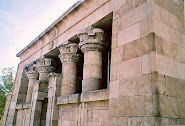
3rd Century CE Temple of Mithras Awaits New Home

This very large dig (one square city block!) is taking place in the heart of London.  Oh, how I wish I could see it!

From thelondonist.com

Temple Of Mithras Stays Boxed As City’s Big Dig Continues
February 6, 2013 at 9:27 am

British archaeology has enjoyed a surge of interest of late, with the recent unearthing of Richard III in a certain Leicester car park. However, one London archaeological site remains in limbo: the Temple of Mithras is still waiting for its new home, as one of the City’s biggest ever digs continues.

The temple, dating from 240AD, has been dismantled and is currently in storage with the Museum of London. It’s awaiting a permanent home in the rebuilt Bucklersbury House on Queen Victoria Street, which is set to be the European headquarters of media giant Bloomberg LP.

Bloomberg was granted planning permission in 2010 to uproot the temple’s remains and incorporate them into its new corporate base. However, work on the £300m project, designed by Foster + Partners, hasn’t yet begun. The site, occupying a huge city block, is still a big hole in the ground. Museum of London Archaeology (MOLA), which is leading the project to move the temple, says it will be “a matter of years” before it is once again visible to the public.

Part of the delay has to do with ongoing excavation work on the Queen Victoria Street site, which has evolved into the Walbrook Discovery Programme, one of the largest digs undertaken in the City of London, according to MOLA, with more than 50 archaeologists combing through the mud of the Roman River Walbrook.

“The ground conditions are perfect for preserving organic remains and hundreds of metal, wood, bone and leather artefacts and wooden structures are being recovered and recorded,” MOLA says. “These finds will contribute to our understanding of life in this part of Roman London and will help to tell the story of the development of the Mithras site.”

The dig has uncovered the original foundations of the Temple of Mithras, which will inform a more accurate reconstruction. “Bloomberg LP will restore the temple to its original Roman location and in a more historically accurate guise,” says MOLA. “Upon completion of Bloomberg’s new development, the new reconstruction of the Temple of Mithras will be housed in a purpose-built and publicly accessible interpretation space within their new building.”

There’s still no word on what that space will look like, or whether it will take any cues from a similar space designed to display the nearby London Stone, which is also awaiting removal to new premises in a corporate building. The City of London Corporation did tell us, however, that the temple will be in a new display area at ground and basement level with a separate entrance as part of the new building.

The Temple of Mithras was dedicated to the Mithraic cult, which spread across the Roman Empire between the 1st and 4th centuries AD. The temple was a low, cave-like building and was in use for about 100 years. It was later rebuilt and dedicated to the god Bacchus.
The temple was rediscovered by chance in 1952 by the archaeologist WF Grimes, and caused something of a stir at the time, with crowds of Londoners queuing up to see the dig. On the final day of excavations, in 1954, the team discovered the marble head of a sculpture of Mithras, one of the biggest finds from the site and a key artefact of Roman London.

The temple’s history has been somewhat chequered since then: put into storage for the first time from the mid-50s until 1962, the remains were reconstructed (badly) 90 metres from the original site, nine metres above the original level and set in modern cement mortar. Chipping away that mortar has complicated efforts to rehouse it: Bloomberg had to hire expert stone masons to free the remains, according to the Museum of London.

So, it seems that the temple might be in limbo a little while longer, but it is at least furthering the cause of British archaeology. The Walbrook Discovery Programme has set up a blog to keep people up to date with the dig’s progress. And if you can’t wait for the site’s redevelopment, treasures from the Temple of Mithras – including the sculpture of the head of Mithras – are on display in the Museum of London’s Roman galleries.

Author Jon Yeomans writes a London/travel blog called Vida London.

2013 Moscow Open

Hola darlings!

The Moscow Open is back!  (January 31 - February 10, 2013).

This year, a large contingent of female players from India are playing in Tournament A ("Men's") along with several other chess femmes.  Altogether, 225 players are registered.  Now, will all of them play to the end?  Likely not. 

Because of the size of this event and my sparse "spare" time (nonexistent these days!), I will only report the final standings, unless I happen to read of some incredible femme chess feat during this event.

The Top Ten of Tournament A features some heavy-hitters in the male world of chess, but this year the field has been denuded of several of the creme de la creme players participating in other tournaments or just taking a break.  That being said, though, these top ten men are nothing to sneeze at and I doubt any of the chess femmes will be meeting any of them OTB.  Nope.  This is the kind of tournament a lower-rated player enters in the hope of gaining (1) great experience and (2) ELO points if one can manage to beat up on a lower rated competitor.  We'll see how the ladies do.  They may mostly end up playing each other!

Here are the chess femmes playing in Tournament A (by rank order):

42GMHarika Dronavalli IND2514
106WGMGomes Mary Ann IND2394
108IMKaravade Eesha IND2391
150IMMohota Nisha IND2327
162WGMCherednichenko Svetlana UKR2307
163WGMPadmini Rout IND2307
171WGMSoumya Swaminathan IND2291
197WIMAbdulla Khayala AZE2203
201WGMKiran Manisha Mohanty IND2188
210Zizlova Sofia RUS2129
215Michelle Catherina P IND2105
217 WFM Pujari Rucha IND 2100
218 WFM Bharathi R. IND 2099
219 WFM Monnisha Gk IND 2055


Tournament B is the "Women's" event.  This year, while I haven't checked to see what the prizes are for the chess femmes, I suspect that the prize fund has been greatly diminished, and the field of players therefore reflects this.  There are not what I would call any top female chess "stars" participating in Tournament B.  Here is the list of participants by rating.  Disappointing.

There are several other events as well, Veterans', Amateurs, Students' competitions, etc. If the next big star(s) emerge(s), I'm sure we'll read about it sooner or later at Chessbase :)

Monday, February 4, 2013

Ju Wenjun Stuck in Gibraltar Due to Visa Mix-Up

Chinese chess grandmaster stranded in Gibraltar after being blocked from UK

Women's world No 15 Ju Wenjun refused permission to board flight to London as she did not hold a transit visa
 
guardian.co.uk,

A top Chinese chess player has found herself stuck between the Rock and a hard place after an airline refused to allow her to board a flight to London following a tournament in Gibraltar because she did not hold a transit visa to enter the UK.

Ju Wenjun found herself stranded after taking part in the 11th annual Tradewise chess festival held in Gibraltar, having travelled there on 19 January via London from Hong Kong on a British Airways flight. However, when she went to board her return flight to China via Heathrow on 1 February, the day after her 22nd birthday, she was denied entry onto the flight.

"I don't have a UK transit visa and they let me board (in Hong Kong). When I arrived in the UK, I told them I was going to play in Gibraltar at the Tradewise festival. I showed them my airline ticket and they let me pass through. They let me show my tickets and my invitation," said Ju on the telephone from Gibraltar.

Ju is a grandmaster, ranked No 15 in international women's chess and No 3 in China. The
tournament organisers, who have been rallying on her behalf, said she has been told she must send her passport to the UK to be issued a transit visa and then have it sent back to Gibraltar. But Ju doesn't understand why she should have to go through this when she was allowed to pass through the UK in January on her way to the chess tournament.

"I don't want to send my passport to the UK. It takes time, and my parents are worried about me," she said. "I hope this will end soon."

The tournament director, Stuart Conquest, said Ju is growing increasingly distressed about her extended stay on the Rock. "I think they should use a bit of compassion and let this girl go home. What is the point of making her send her passport to the UK? Everyone's waiting for her in China," he said.

A spokeswoman for the Home Office said that the UK Border Agency was not responsible for visa checks made by airline carriers outside the country. "It has nothing to do with us," she said.
At the time of publication, British Airways was unavailable for comment.

Conquest says this is the first time any incident like this has happened to international players participating in the tournament in the 11 years it has been running.

In the meantime, Ju is being looked after by Conquest and others in Gibraltar, even being treated to a meal out - at Kowloon Chinese restaurant.

Revisiting the Peopling of the Americas

I thought this was funny, The Smithsonian Online doing a gigantic article on a site that is, after all, merely dated 1,000 years before Clovis.  I mean - really

When Did Humans Come to the Americas?

Recent scientific findings date their arrival earlier than ever thought, sparking hot debate among archaeologists

  • By Guy Gugliotta
  • Illustration by Andy Martin
  • Smithsonian magazine, February 2013


  • Any artifacts that scholars said came before Clovis, or competing theories that cast doubt on the Clovis-first idea, were ridiculed by the archaeological establishment, discredited as bad science or ignored.

    Take South America. In the late 1970s, the U.S. archaeologist Tom D. Dillehay and his Chilean colleagues began excavating what appeared to be an ancient settlement on a creek bank at Monte Verde, in southern Chile. Radiocarbon readings on organic material collected from the ruins of a large tent-like structure showed that the site was 14,800 years old, predating Clovis finds by more than 1,000 years. The 50-foot-long main structure, made of wood with a hide roof, was divided into what appeared to be individual spaces, each with a separate hearth. Outside was a second, wishbone-shaped structure that apparently contained medicinal plants. Mastodons were butchered nearby.

    The excavators found cordage, stone choppers and augers and wooden planks preserved in the bog, along with plant remains, edible seeds and traces of wild potatoes. Significantly, though, the researchers found no Clovis points. That posed a challenge: either Clovis hunters went to South America without their trademark weapons (highly unlikely) or people settled in South America even before the Clovis people arrived.

    There must have been “people somewhere in the Americas 15,000 or 16,000 years ago, or perhaps as long as 18,000 years ago,” said Dillehay, now at Vanderbilt University.

    Of the researchers working sites that seemed to precede Clovis people, Dillehay was singled out for special criticism. He was all but ostracized by Clovis advocates for years. When he was invited to meetings, speakers stood up to denounce Monte Verde. “It’s not fun when people write to your dean and try to get you fired,” he recalled. “And then your grad students try to get jobs and they can’t get jobs.”

    Saturday, February 2, 2013

    Pamirs Yield More Fascinating Burials

    For whatever reason, some Chinese authorities and academics feel very uncomfortable in admitting that non-Asian people - gasp - once settled and lived for thousands of years in an area that China claims for itself today, until those people (1) left (2) died off (or were killed off by the Han Chinese invaders) (3) were absorbed into some of the other Asian populations living around and in the area, which today continue to exhibit the genetic residue of their intermingling with these non-Asian people in the occasional blue-eyed, freckled child, the occasional blonde, the occasional redhead. 

    You have no doubt heard or read about the Tarim Basin mummies, the Beauty of Loulan, etc.  These were fair-skinned, sometimes tall lanky people who wore tall pointed hats crafted from felt (think of a witch's hat), pointy-toed felt shoes soled in leather, and colorful, intricately and expertly woven plaid garments.  They sometimes had blue eyes, sometimes had fair hair, sometimes had red hair. The women held powerful positions within the society, but it would be unfair to say it was matriarchal, as not enough is known about the people and their society to form a reasonable opinion.  They often buried their dead in elaborately contructed tombs covered in wood, which as the years went by and climate change dessicated the areas they lived in, must have been nearly impossible to find.  Access to the "mummies" of Urumchi and other remains of these distinctly non-Asian people discovered in the area over the years, is restricted.  Seems the Chinese authorities don't want them to really be seen or closely studied.  I do not believe any such restrictions are placed upon examination of much later dated Asian mummies discovered in and about the region.

    Here's a general map of the Tarim Basin.  You can see how it fits into western Asia and the far northwest of today's China.  That same area of northwest China that is the home to a great deal of "ethnic" unrest and repression of the local populations by the regional Communist authorities with the blessing of the Central Government.  In addition to mass purges of the locals, the Central Government  has undertaken a continuing policy of flooding the area with Han Chinese settlers along with wholesale disposession of the locals of their property and land.

     
    The Tarim Basin, showing ancient river beds.  These rivers are almost always dry today.  The change in the local climate started probably 5,000 - 4,500 years ago, and by 2000 BCE the area had grown increasingly hostile to supporting the people who had settled there. If I recall my history correctly, gradually the climate changes forced people further toward the east, toward the area around Lop Nor (Lop Nur on this map),  and there they stayed for at least another 2000 years as the waters of the lake gradually shrunk until there was nearly nothing left.  I understand (but could be mistaken about this) that it can flood seasonally and expand over quite an area, but one never knows if there will be water from year to year.
     
    The far western Tien Shan, an extremely rugged, inhospitable mountainous region, was reputed to be the home of the fierce tiger-woman-goddess Xiang-mu, who over the years was "gentled down" to become the Queen Mother of the West, where the worthy dead went to spend their eternity in a Paradise of blue skies, mild weather, and abundant fruit and greenery.  Does this remind you of another - a fierce lioness-woman-goddess who ruled over the Land of the Dead in the far western desert of ancient Egypt? Hathor (Hat-hert) was her name and she was also gentled down over thousands of years; eventually her attributes were absorbed into the Mother Goddess Isis.
     
    It is with this background in mind that I read the following story.  Note the location of the Pamirs on the map above and the reference in the article to a pass into the Pamir Mountains along the northern route of the Silk Road.
     
    From The Indian Express
     
    Beijing, Fri Feb 01 2013, 21:33 hrs
     
    A 1,300-year-old [circa 700 CE] unidentified cluster of 102 tombs, 40 per cent of which were made for infants, have been unearthed in China's restive westernmost province.

    The tombs, found on the Pamirs Plateau in Xinjiang Uygur Autonomous Region, contain wooden caskets with desiccated corpses, as well as stoneware, pottery and copper ware believed to have been buried as sacrificial items, said Ai Tao from the Xinjiang Archaeological Institute.

    "The cluster covers an area of 1,500 square meters on a 20-meter-high cliff, an unusual location for tombs," Ai told state-run Xinhua news agency. [Having no idea how large an area 1,500 square meters is, I checked the math and did a conversion.  1 square meter = approximately 10.76 square feet; 1,500 square meters therefore = 16,140 square feet (10.76 x 1500).]

    He added that his team was also very surprised to find such a large number of infant corpses.

    Image from the Indian Express article. Interesting -- look at what appears to be brick structures surrounding the
    graves.  Why no mention of these in the article?  What are they? 

    But further research is needed to determine why so many people from that tribe died young.

    Archaeologists said they have also unearthed a large number of well-preserved utensils made from gourds, some of which were placed inside the caskets.

    "The burial custom is the first of its kind to be found in Xinjiang," said Ai. [Poor  - I mean, materially poor - people -- in the olden days they could afford to bury their dead with copper, brass and iron artifacts, as well as other precious objects, such as carved stone goods, semi-precious stones, herbs, even horses and saddles. Here, they buried their dead with things made from gourds.  Geez.  Of course today, at least in the West, we don't even send our dead to their graves with jewelry such as a wedding ring, and often even their gold fillings are removed, due to greed! I have read that even burial dresses and suits can now be rented, and after the funeral the deceased is stripped of the fine clothes and buried covered in a cheap sheet. Yeah, the worms crawl in, the worms crawl out, the worms play pinnochel in your mouth...]

    It is believed that the cluster dates back to the Tang Dynasty (618-907).

    At that time, economic and cultural exchanges between China and the West flourished via the ancient Silk Road.

    "The shape of the felt-covered caskets show that sinic culture had a great influence on the lives of local people's some 1,300 years ago," said Yu Zhiyong, head of the Xinjiang Archaeological Institute.  [What a bunch of bunkum, FELT-COVERED CASKETS are western in origin -- just check out the burials from the Tarim Basin. Ha!] The tomb cluster was discovered amid the construction of a local hydropower project last year.

    Kezilesu Kirgiz Autonomous Prefecture was an important pass on the ancient Silk Road.

    *****************************************
    My guess is that these are Tocharian graves, but who knows?  As the Chinese authorities evidently have "infant corpses", they may be able to extract DNA and do an analysis.  A body only 1300 years old could potentially yield good DNA to analyze.  Now, will they do it?  Who the hell knows?  And if they do, will we ever hear of the results? 

    The Chinese authorities have a much more difficult problem trying to deny the existence of the Tocharians who occupied northwest China for several hundreds of years (500 years?) because their existence -- and written languages (Tocharian A and Tocharian B) are so well attested in historical accounts and archaeological remains, including many Chinese images of these white-skinned, round-eyed, large-nosed people in Chinese historical accounts. 

    The Tang Dynasty was a time of flowering in ancient China, a time of the rulers reaching out to other lands and peoples and inviting exchange.  Today's China is, however, an altogether different creature than the Tang Dynasty.  These graves might be considered an inconvenient discovery.  The authorities could just let the evidence moulder away in an unprotected storeroom somewhere and hope looters take it all away; or perhaps encourage local looters (under cover, of course) to just take it all away with little to no questions asked.

    Regarding what seems an unusually high number of infant coffins, well, look at the area they were buried in.  On a mountainside cliff approximately 656 feet high.  Now why would people put their dead up there?  Maybe because they, ah, like -- you know, lived near by?  Geez!  Not exactly "hospitable" surroundings,  heh?  Perhaps 40% mortality seems high compared to the Chinese infant mortality rate today (but who actually knows what that is, as you can't trust the Chinese government to give factual figures).  And, I have to wonder what the infant mortality rate is among the Uygur population in the so-called "Autonomous Region" today. I would be shocked if it is lower than 40%, as a genocide is actively being carried out by the Chinese Central Government to eliminate the Uygurs from "Chinese" territory once and for all time. The same thing is taking place in Tibet, too.  And we all just turn a blind eye.  Must keep those U.S. dollars flowing into China after all.  We all want those cheap Walmart goods, don't we.  The CEOs of American companies who have outsourced production of consumer goods to China pocket the difference, of course; no such thing as "trickle down to shareholders" anymore, and anyone who thinks otherwise is either extremely naive or extremely stupid, or both. Ha! 

    Anyway, all we have to do is look right here to the early days of the settling of North America by colonists. Entire colonies were wiped out by starvation and disease.  Bet the infant mortality rate in thoe colonies was a lot higher than 40%.  The ancient peoples in some ways were much more civilized than we were, then, and we are, today.

    Swabian "Lion Man" (Woman) Redated to at Least 40,000 Years Ago

    This is one of the most engaging pieces of sculpture I've ever seen, regardless of age!  This piece just speaks to me, somehow.  Prior posts on this exquisite mammoth ivory carving at the Goddesschess blogspot:

    Is the Lion a Lioness After All?  December 9, 2011
    The Reconstructed Lion Figure of Stadelhole April 5, 2012

    Ice Age Lion Man is world’s earliest figurative sculpture
    Work carved from mammoth ivory has been redated and 1,000 new fragments discovered—but it won’t make it to British Museum show
     
    The story of the discovery of the Lion Man goes back to August 1939, when fragments of mammoth ivory were excavated at the back of the Stadel Cave in the Swabian Alps, south-west Germany. This was a few days before the outbreak of the Second World War. When it was eventually reassembled in 1970, it was regarded as a standing bear or big cat, but with human characteristics. [Hint: Shaman.]


    The ivory from which the figure had been carved had broken into myriad fragments. When first reconstructed, around 200 pieces were incorporated into the 30cm-tall sculpture, with about 30% of its volume missing.

    Further fragments were later found among the previously excavated material and these were added to the figure in 1989. At this point, the sculpture was recognised as representing a lion. Most specialists have regarded it as male, although paleontologist Elisabeth Schmid controversially argued that it was female, suggesting that early society might have been matriarchal. [Oh please, just because this may be a carving of a female lion does not mean the society was "matriarchal."  Geez!]

    The latest news is that almost 1,000 further fragments of the statue have been found, following recent excavations in the Stadel Cave by Claus-Joachim Kind. Most of these are minute, but a few are several centimetres long. Some of the larger pieces are now being reintegrated into the figure.

    Conservators have removed the 20th-century glue and filler from the 1989 reconstruction, and are now painstakingly reassembling the Lion Man, using computer-imaging techniques. “It is an enormous 3D puzzle”, says the British Museum curator Jill Cook.

    The new reconstruction will give a much better idea of the original. In particular, the back of the neck will be more accurate, the right arm will be more complete and the figure will be a few centimetres taller.

    An imaginative sculptor
     
    Even more exciting than the discovery of new pieces, the sculpture’s age has been refined using radio-carbon dating of other bones found in the strata. This reveals a date of 40,000 years ago, while until recently it was thought to be 32,000 years old. Once reconstruction is completed, several tiny, unused fragments of the mammoth ivory are likely to be carbon dated, and this is expected to confirm the result.

    This revised dating pushes the Lion Man right back to the oldest sculptures, which have been found in two other caves in the Swabian Alps. These rare finds are dated at 35,000 to 40,000 years, but the Lion Man is by far the largest and most complex piece. A few carved items have been found in other regions which are slightly older, but these have simple patterns, not figuration.

    What was striking about the sculptor of the Lion Man sculptor is that he or she had a mind capable of imagination rather than simply representing real forms. As Cook says, it is “not necessary to have a brain with a complex pre-frontal cortex to form the mental image of a human or a lion—but it is to make the figure of a lion-man”. The Ulm sculpture therefore sheds further light on the evolution of homo sapiens. [This is utter nonsense.  Humans has been making jewelry and other symbolic items, including cave paintings, rock carvings and free-standing carved or sculptured objects ever since they were created or first evolved -- take your pick of "theories," approximately 100,000 years ago.]

    Conservators experimented by making a replica of Lion Man, calculating that it would take a highly skilled carver at least 400 hours using flint tools (two months’ work in daylight). This means that the carver would have had to be looked after by hunter-gatherers, which presupposes a degree of social organisation. There is an ongoing debate on what the Lion Man represents, and whether it is linked to shamanism and the spirit world. [Again, what nonsense!  Who's to say that "Lion Man" (Woman) was carved by its maker over a two-month period of time?  What if it was done by firelight at night, over a period of several years?  Put away during the summer and only worked on during the long cold winter nights?  The truth is, no one knows how long it took or what the gender was of the person who carved this piece.  All we know for sure is where it was found and what it was made from.  For my part, I think it was carved by a female who had probably raised a lion cub after the mother was killed for food, and she carried the carving to the cave where it was eventually found after she left her schmuck of a husband for a hunkier cave man. Geez!]

    Initially, it was hoped that the original of the Lion Manwould be presented at the British Museum’s exhibition, but this has not proved possible because conservators need further time to get the figure reconstructed as accurately as possible. The Ulm Museum now plans to unveil it in November.

    "Ice Age Art: Arrival of the Modern Mind", British Museum, London, 7 February-26 May and “The Return of the Lion Man: History, Myth, Magic”, 16 November-9 June 2014, Ulmer Museum, Ulm.

    2013 Tradewise Gibraltar Chess Festival

    Hola darlings!

    Yes, it's all over now.  The top-rated ladies did, overall, rather well this year.  Once again Stefanova, top finisher female, proved that she still has the goods.  The big winner was a male, and the rest I'm reporting are chess femmes. 247 players in this Masters Event.  I apologize to any femmes I may have omitted.  It is vey difficult to try to differentiate the gender of players when the names used are not within my limited "western" realm of familiarity and I do not want to spend all night at Fide.com looking up names.  Organizers could solve this problem quite simply by writing either F or M next to a player's name.  One would think for any successful tournament the organizers would want such information. Ha, who am I kidding?

    Updated February 3, 2013:  Oops!  I thought that Stefanova was the top female winner, but I was wrong.  Good thing for double-checks, because tonight darlings, I discovered that it was GM Zhao Xue who took top female honors by finishing overall in 13th place, and kudos to her for doing so well in a VERY tough field.  See what I mean about not recognizing non-western style player names?  Didn't recognize Zhao Xue as a female player.  Should have, but didn't.

    13Zhao XueGMCHN25547.526212620 - takes top female prize of £12,000

    Final Ranking after 10 Rounds

    Rk.NameFEDRtgPts.TB1 Rpwwew-weKrtg+/-
    1GMVitiugov NikitaRUS26948.02830282186.231.771017.7
    19GMStefanova AntoanetaBUL25167.02611261175.621.381013.8    2nd place F: £8,000
    20IMGunina ValentinaRUS24907.02593259375.461.541015.4     3rd place F: £5,000
    21GMMuzychuk AnnaSLO25827.02589258676.750.25102.5       4th place F: £3,500
    28GMDzagnidze NanaGEO25556.5257225716.56.120.38103.8           5th place F: £2,500
    37IMMuzychuk MariyaUKR24716.5251625166.55.720.78107.8   6th place F: £2,000
    38GMHoang Thanh TrangHUN24696.5251225106.55.770.73107.3   7th place F: £1,500
    39GMCramling PiaSWE25186.5250925006.56.320.18101.8   8th place F: £1,000
    40IMPaehtz ElisabethGER24826.5250425046.56.010.49104.9   9th place F:    £600
    41GMHarika DronavalliIND25146.5247524756.56.80-0.3010-3.0 10th place F:  £400
    43IMTania SachdevIND24036.5246124536.55.401.101011.0
    48IMHouska JovankaENG24166.5239823986.56.56-0.0610-0.6
    54IMMelia SalomeGEO24036.02504250464.451.551015.5
    55GMCmilyte ViktorijaLTU25156.02495249566.09-0.0910-0.9
    56WGMJu WenjunCHN25056.02486247565.990.01100.1
    72IMMilliet SophieFRA24036.02329232955.72-0.7210-7.2
    73GMArakhamia-Grant KetevanSCO24056.02326232666.81-0.8110-8.1
    76WGMVojinovic JovanaMNE23596.02294229466.65-0.6515-9.8
    85WGMDolzhikova OlgaNOR22395.5235323215.53.991.511522.6
    86IMKaravade EeshaIND23915.5235123505.55.86-0.3610-3.6
    87IMZatonskih AnnaUSA24915.5232723185.57.25-1.7510-17.5
    97WGMRudolf AnnaHUN23125.5221822175.56.60-1.1015-16.5
    153WFMGrigoryan MeriENG20254.5212421314.53.501.001515.0
    199Iasman InnaFRA20193.5197419272.53.11-0.6115-9.1
    203Agbabishvili LaliCAN19543.5193219313.53.79-0.2915-4.3
    07Georgieva EmiliaBUL19493.5191418792.53.11-0.6115-9.1
    210WFMReid VanessAUS18443.5186418462.52.480.02150.3
    214Skrabakova KatarinaSVK19913.5183018233.55.43-1.9315-29.0
    220Lochte SzilviaHUN19233.01873187233.70-0.7015-10.5
    222Neumanova MonikaCZE17013.01836185431.771.231518.5
    224George Lolomari ErekosimaNGR18693.01794181123.11-1.1130-33.3
    230Chidi Lovinia SylviaGER18202.51779178822.51-0.5115-7.7
    234Kazmierczak EwaPOL15122.5167617442.51.101.401521.0

    If I'm reading the report correctly, IM Valentina Gunina also scored her third and final GM norm, and WGM Ju Wenjun (CHN 2505) scored her third and final IM norm. 

    Tuesday, January 29, 2013

    2013 Tradewise Gibraltar Ches Festival

    Top women after R8 -- I've got the top men listed for comparison.  I've gone past the top 50 because so many of the players are tied

    Rk.NameFEDRtgPts.TB1 Rpwwew-weKrtg+/-
    1GMVitiugov NikitaRUS26947.02898288775.241.761017.6
    2GMShort Nigel DENG26907.02773275476.340.66106.6

    18GMDzagnidze NanaGEO25556.02631263065.120.88108.8
    21GMMuzychuk AnnaSLO25826.02593259065.790.21102.1
    22GMZhao XueCHN25546.02551255165.810.19101.9
    26GMStefanova AntoanetaBUL25165.5262826285.54.211.291012.9
    29GMCmilyte ViktorijaLTU25155.5253925395.55.110.39103.9
    30GMCramling PiaSWE25185.5251325015.55.290.21102.1
    33WGMJu WenjunCHN25055.5249424815.55.390.11101.1
    35GMHarika DronavalliIND25145.5247924795.55.70-0.2010-2.0
    40IMMelia SalomeGEO24035.02544254453.361.641016.4
    43IMMuzychuk MariyaUKR24715.02525252454.300.70107.0
    44IMGunina ValentinaRUS24905.02519251954.540.46104.6
    47GMHoang Thanh TrangHUN24695.02498249654.600.40104.0
    51IMPaehtz ElisabethGER24825.02473247354.950.05100.5
    59IMTania SachdevIND24035.02407239754.680.32103.2
    61WGMDolzhikova OlgaNOR22395.02380234053.521.481522.2
    65IMMilliet SophieFRA24035.02353235355.36-0.3610-3.6
    67GMArakhamia-Grant KetevanSCO24055.02318231855.74-0.7410-7.4
    XXX

    Biblical Archaelogy Feud Goes to Court

    Very interesting read.

    From Time Magazine (World) Online

    A Feud Between Biblical Archaeologists Goes to Court


    In the Old City of Jerusalem, no one ever went broke underestimating the proof required to help the faithful suspend disbelief — or in a modern twist, allow the skeptical to bolster their heterodoxy. A million-dollar lawsuit in Israel has become the latest vehicle in the unending quest to redefine faith as the substance of things seen.

    Simcha Jacobovici, a Canadian documentary maker specializing in biblical archaeology, is suing a retired scientist and former archaeological museum curator named Joe Zias, who has accused him of publicizing scientifically dubious theories. Many of Jacobovici’s documentaries have focused on artifacts that purport to reveal new interpretations of early Christianity, including the notion that the remains of Jesus and his family were buried in a tomb underneath modern-day Jerusalem. Jacobovici claims that Zias’ criticisms are libelous and have cost him television contracts and money.

    The dusty world of biblical archaeology directly affects — not to say inspires — the hopes and dreams of millions of faithful people who might buy purported relics or tune in to television shows about them. And, so, there has arisen around it a thriving industry in Jesus-era coins and lamps, and pre-Christian Judaica such as seals and seal impressions from the era of the biblical kings — and in books and movies about them.
    The son of Romanian holocaust survivors, Jacobovici is an Emmy-winning journalist who has produced several films in the past decade about new finds that supposedly illuminate the true history of early Christianity. Jacobovici’s first foray into the biblical-documentary genre was a 2002 film James, Brother of Jesus that introduced the world to the James ossuary, a bone box with an ancient Aramaic inscription translated as James, son of Joseph, brother of Jesus. Even as Jacobovici’s film characterized the ossuary as an authentic archaeological discovery, scholars and the Israeli authorities claimed the inscription as a fake. Discovery Channel aired the film but, in 2008, it put the James ossuary on its list of the top 10 scientific hoaxes of all time. Last year, after an eight-year trial about biblical-relic forgery for profit, a judge acquitted two defendants of fraud (one of them had been accused of faking the inscription) but declined to rule on the alleged forgery itself.

    Jacobovici then made a film about the so-called Talpiot Tomb — named after the Jerusalem neighborhood where it was excavated — contending that 10 ossuaries found inside it had held the bones of Christ and his immediate family, including Mary Magdalene. That project had backing from Hollywood’s James Cameron, the director of Titanic and Avatar. Jacobovici then produced Nails of the Cross, a show that claimed that iron spikes excavated by the Israel Antiquities Authority (IAA) from a tomb in Jerusalem in 1990 were the very nails used to pin the Saviour to the cross. Nails of the Cross aired on Israeli TV and the History Channel.

    In all this Zias, 71, has emerged as Jacobovici’s nemesis. Retired from his job as a professional anthropologist, he now makes a living guiding bike tours around the Israeli countryside. He knows the murky world of biblical-relic trading as well as anyone, having spent 25 years working for the IAA, the tiny Israeli agency charged with overseeing excavations in 30,000 archaeological sites. He lives in a three-room house in central Jerusalem with his wife and daughter. He says he can’t afford to pay the lawyer he’s hired to defend him and claims he is on the verge of bankruptcy because of the suit.

    Zias is well known among Near East archaeologists for blasting cranky e-mails from his blog, Science and Archaeology Group, accusing filmmakers and writers of “pimping off the Bible.” He routinely writes Jacobovici’s first name with a dollar sign in place of the S. Born in Michigan, he moved to Israel in the 1960s. He told me he was first motivated to expose fakery in the biblical-relic world when he was curating archaeology for the IAA and was approached by a pair of American pastors from the Midwest who complained that their flocks were being routinely fleeced by charlatans collecting money to search underneath the stones of Jerusalem for tangible proof of Bible accounts — like Christ’s DNA.

    The contentiousness between Zias and Jacobovici came to a head in 2011. That year, National Geographic pulled out of a Jacobovici project on another early Christian relic that Zias and others were criticizing — comments that the filmmaker cites as part of the reason for his lawsuit. Reached by e-mail, Jacobovici said he is suing Zias — and not his academically affiliated critics — because Zias “crossed the line from fair comment to outright libel. Specifically, he has accused me repeatedly — verbally and in writing — of ‘forging archaeology’ … a criminal activity, and no free society allows you to accuse people of such activities, unless you can prove that what you are saying is correct. Furthermore, he has accused me of ‘planting archaeology.’ Again, free discourse does not include libelous statements such as this one.”

    The other critics, however, have not exactly been soft in their commentary about Jacobovici’s work. A panel of academic experts had also assailed the basis for the film about the so-called Jonah ossuary. The film, The Jesus Discovery, which eventually aired on the Discovery Channel in 2012 and also was published as a book, contends that the ossuary, found in a tomb underneath a Jerusalem apartment building, is the earliest known example of an object bearing a Christian symbol referring to the resurrection. The chairman of Duke University’s Religion Center for Jewish Studies, Eric M. Meyers, said of Jacobovici’s claims about the National Geographic pullback: “I was on the advisory panel of experts assessing the integrity of the claims, the appropriateness of the report and the controversial claims about the tomb in which the Jonah ossuary was found, and the panel unanimously agreed not to recommend that the project and film go forward.”

    Meyers, who is Jewish, told me he was troubled by the implication in much of Jacobovici’s work that there was no resurrection. According to Meyers, Jacobovici has claimed to have some of the bones of Jesus and his family, their DNA from ossuaries. “If the remains were reburied, then there could not have been any true resurrection,” Meyer adds. “You do not make scientific announcements of this potential significance in sensational films or in a trade book that has unsubstantiated and controversial claims in it.”

    Zias’ Israeli lawyer Jonathan Tsevi told TIME that Zias never accused Jacobovici of criminal acts. “Joe never used the terms forging archaeology or planting archaeology, although in essence this is the method Simcha is repeatedly using,” Tsevi said in an e-mail. Zias has also taken Jacobovici to task for using CGI to enhance images of an amphora in the Jerusalem tomb he believes is engraved with the first image of the Christian fish symbol. Jacobovici makes no apology for that. “I don’t think any judge is going to accept that using CGI to enhance a photograph is tantamount to ‘forging archaeology,’” he wrote.

    The bitter legal battle has also come up with a holocaust angle — albeit a rather convoluted one. “Most painful is [Zias’] accusation that I have ‘invented Holocaust stories’” Jacobovici tells TIME. “I am the child of Holocaust survivors.” Jacobovici is apparently referring to an event at a 2007 academic conference in Jerusalem, at which an award was presented to the widow of an IAA employee and Holocaust survivor named Joseph Gat. The woman said Gat knew he had found the Jesus family tomb under a Jerusalem apartment building but never told anyone about it during his lifetime for fear of Christian retribution over evidence that defies Christian beliefs about Christ’s immortality.

    Zias, who worked with Gat, said Gat never mentioned the Jesus tomb to anyone at the IAA and wasn’t trained to make such an identification in the first place. “He never published one article in his long years with the IAA,” Zias says. “He was a simple but honest guy … who could not read inscriptions, but now that he’s deceased, was the one person chosen to receive the Lifetime Achievement Award for the ‘secret he took to his grave.’” Zias has charged that the award and Mrs. Gat’s comments were orchestrated by Jacobovici as part of an ongoing media spectacle. Jacobovici denies that: “I have to tell you, in Israel, accusing people of “inventing Holocaust stories” touches a very, very raw nerve … I think the judge will throw the book at him.”

    What kind of evidence will be presented in court? Jesus and his disciples are unlikely to be coming forward to explain whether they had anything at all to do with all those nails, tombs, ossuaries and other bits of ancient history underneath Jerusalem. American biblical scholar James West, who also blogs on biblical archaeology, said of the lawsuit: “Disagreements are fine, but vendettas (which is what this seems to one outside the proceedings) are improper. Perhaps Zias and Jacobovici should settle their differences the old-fashioned way — in a public debate. Scholars disagree all the time, and they can get quite nasty at it. But I have never once heard of a scholar suing another scholar because their work was eviscerated.”

    Burleigh researched the modern-day biblical-relic industry for her book, Unholy Business: A True Tale of Faith, Greed and Forgery in the Holy Land. For more: www.ninaburleigh.com.

    Monday, January 28, 2013

    World Oldest "Portrait" Depicts a Woman -- ??

    From newscientist.com

    World's oldest portrait reveals the ice-age mind


    The question foremost in my mind after I read this article and examined the carving was "how do they know this is a woman?"  And, guess I'm not alone.  So, I typed my comment/question and submitted it, before reading what anyone else said about this carving.  Lo and behold, most of the other commenters were wondering the same thing.  Five of the six comments at the time asked the same question I did - how do you know it's a woman?

    Is it because many of the earliest ivory carvings that archaeologists have discovered are of well endowed, rotund faceless females?  Is it because of the sort of female feline look to the face?  It almost looks like a blend between a female feline and a human woman -- like a creature caught between two worlds.  And just when did felines and females become identified, so much so that even today there are slang/gross sexual terms for females and certain parts of the female anatomy that allude to the feline?  But in many cultures in later times men were often identified with lions and tigers, so -- who knows?  Is it because of the "hairdo," that looks like a woman with her hair pinned up with a "bun" on top?  But it could just as easily be a depiction of a hat, cap or headdress and how would we know? 

    I was thinking it's someone who lost an eye!  Perhaps a "hunter?"  After looking and looking, I don't see any indication that the eye on the right side (looking at the image) was damaged somehow over the years.  It looks like it was deliberately placed lower than the eye on the left, the eyebrow -- if that is an eyebrow -- is shaped a lot differently than the one on the left of the image, and it appears there is no iris, unlike the eye that is shaped on the left.

    The thing is, we have no fricking idea what the culture/life of people who lived 26,000 years ago was like in the land we today call the Czech Republic.  We should not be projecting our gender and cultural biases on this carving.

    As for what this carving reveals about the mind of the person who carved it - that's just a joke.  I've no idea, and anyone who says otherwise is just guessing.  I mean, really!  Why can we not appreciate these artifacts for their beauty and amazing stories of actually having survived all this time, against all odds, instead of trying to inject more into and upon them?  Geez! 

    Sunday, January 27, 2013

    Is China Looking to Rewrite History with Recently Discovered Korean Stele?

    China conducting closed research into ancient Korean dynasty
    Posted on : Jan.26,2013 12:36 KST

    Observers say work on the Goguryeo stele is an attempt to incorporate it into Chinese history
    By Park Min-hee, Beijing correspondent

    China continues its closed research into a recently unearthed Goguryeo stele, or memorial stone, that is attracting interest as the second Gwanggaeto Stele. The Hankyoreh confirmed that the research team includes a large number of scholars who took part in the Northeast Project, which was controversial for its distortions of Goguryeo history.

    Goguryeo was one of the three kingdoms of ancient Korea, along with Baekjae and Silla. Parts of its territory are in present day North Korea, North eastern China and Russian Far East.

    Officials in the city of Ji’an in Jilin Province, northeast China, where the new Goguryeo stele was discovered, assembled a guidance team for protection and study of the gravestone. The research team, according to an announcement posted recently by Ji’an’s Cultural Administration on a local government website, includes Wei Cuncheng, professor at Jilin University; Geng Tie-hua, professor at Tonghua Academy of Education; Zhang Fu-you, scholar of Jilin Province literature and history; Xu Jian-xin, academic advisor at the Chinese Academy of Social Sciences; Sun Ren-jie, curator of the Ji’an Museum; and Wang Zhi-min, a member of the Jilin Province Cultural Relics Evaluation Committee.

    Wei Cun-cheng, who is regarded as a leading scholar on the history of Goguryeo and Balhae and the southern and northern dynasties period in China, was one of the key figures of the Northeast Project, and he was also a member on that project’s expert committee.

    Geng Tie-hua is an expert on the history of Goguryeo, and he is also noted for his participation in the Northeast Project. In China, he is considered to be an exceptional scholar in the area of Goguryeo history, and he has published various works including one that asks the question of which country the history of Goguryeo belongs to. He also published a book titled The Ceremonial Rites of Gwanggaeto the Great in 2003, which came out of the historians’ work on the Northeast Project.

    The other scholars on the research team were also involved with the project, either directly or indirectly, reports indicate.

    Concerns are being raised that, with key figures from the Northeast Project taking part in the research, it is very likely that China will use the results of the study of the new Goguryeo stele to reinforce its argument that Goguryeo belongs to China. Earlier this month, a journal on Chinese culture published by China’s Administration of Cultural Heritage discussed archaeological research on the Goguryeo stele. The report said that the discovery is most significant because it reveals a connection between Goguryeo and China. 

The Northeast Project is part of an ongoing effort by the Chinese government to incorporate all of the history that unfolded inside the borders of present-day China into Chinese history. By isolating Goguryeo from the history of the Korean peninsula and declaring that it is part of Chinese history, China has triggered a fierce historical debate with South Korea.
    This Goguryeo stele is the third to be discovered, following the Gwanggaeto Stele and the Goguryeo Stele in Chungju. Amid appraisals describing it as the next Gwanggaeto Stele, it is attracting a large amount of attention. 

The stele, which appears to have been constructed around the same time as the Gwanggaeto Stele (around 414 CE), was discovered last July in Maxian in Ji’an, but the discovery was not announced until the beginning of January 2013.

    The new Goguryeo stele is being stored at the Ji’an Museum, reports have confirmed. In a phone interview with the Hankyoreh on Jan. 25, a museum official said, “We are continuing to research the Goguryeo Stele here at the museum.”

    The Ji’an Museum is now temporarily closed due to renovations, and no visitors are being allowed inside. The museum official said that they would not be accepting any requests for reporting by the press before the museum reopens in May 2013.

    Photo, right:  The Goguryeo stele, or memorial stone, was unearthed last year in Northeast China announced earlier this month. A closed team of Chinese researchers has been assembled to establish a link between China and all the historical events that took place within its present-day borders.
    Related Posts Plugin for WordPress, Blogger...