Thursday, July 22, 2010

Computer Labs for Kids: South Central Los Angeles - Classes 3 and 4!

Wow - my buddy Shira has been more than her usual busy the past few weeks.  She has revamped the entire website for Computer Labs for Kids - check it out! 

Classes 3 and 4 in South Central LA have been completed - only 2 more to go (I think).  How quickly the time is going, how much the kids and the volunteers are learning.  (Photo from Class 3, a beautiful smile from a beautiful young lady). 

This project is the first using the new, expanded program of intensive training over several classes with a small group of students and volunteers.  Some of the kids are older than in the past projects - also a new approach.  Too often, it seems, the older kids in foster care and orphanages are just sort of forgotten about.  But Shira loves everyone, and wants to help everyone she can. 

Kudos to the volunteers for this project, who agreed to a six-week commitment, donating precious free time each weekend, to help these kids.  And kudos to the kids - they've shown up, they're learning, they're engaged.

2010 Canadian Open

Held July 10 - 18, 2010, Toronto, Ontario

A small number of chess femmes played in the large Open (265 registered players).  The event was won by GM Luke McShane with 8.0/9 (no losses):

67 WCM Alexandra Botez 1963 D84 L85 L120 D163 W225 W194 W176 D51 W111 5.5
77 WIM Dina Kagramanov 2226 L12 L33 W171 W135 D137 D108 W159 W124 L39 5.0
95 Dalia Kagramanov 1998 L100 W183 L25 W224 W205 D49 D48 W156 L36 5.0
103 Natasa Serbanescu 1880 L102 W166 W176 D246 H--- H--- H--- L36 W165 5.0
204 Marguerite Yang 1540 W214 L189 D133 D156 L93 W182 L155 L161 D194 3.5
208 Zhanna Sametova 1428 H--- D244 D109 L133 D90 W221 L72 L164 D195 3.5
212 Louisa Qianqian Hou 1256 W240 L198 W164 D102 L66 L107 W187 L106 L154 3.5
216 Jessica Danti unr. L150 L230 L147 W259 L197 W241 L170 D209 W243 3.5

Special prizes were set aside for the chess femmes: $500 for 1st; $250 for 2nd; $125 for 3rd.  Congratulations to the ladies!  I hope I did not overlook any of them, but sometimes it is very difficult to determine gender by name alone - and I don't have time to do a FIDE search and check on gender for each player.

2010 Susan Polgar Girls' Invitational

July 25 - 30, 2010, Texas Tech University, Lubbock, Texas

There is a new format this year:

• Instead of a six day tournament, there will be a five day intense world class training program with Susan Polgar, followed by a 6 round G/30 championship tournament.
• The traditional Blitz, Puzzle Solving, Bughouse events will stay the same as previous years.
• There will be many prizes awarded, including scholarship(s) to Texas Tech University.

This year also, former participants in the SPNI for Girls are invited to the SP Girls' Invitational with the object of learning training methods so they can go back to their home states and help other young chessplayers develop their skills, too.  Great idea!  Room and board is being made available at Texas Tech campus for reasonable rates.

I don't know who all will be attending, but potentially 50 of the most promising young female chessplayers, one from each state who chooses a representative, will converge in Lubbock for five days of training, OTB competition, fun and comradery with her fellow chessplayers.

Wednesday, July 21, 2010

Sculpture of Diana Discovered

om english.blic.rs
Archeologists found sculpture of Diana, Goddess of hunt
S. Božinović | 21. 07. 2010. - 00:02h | Foto: S. Božinović

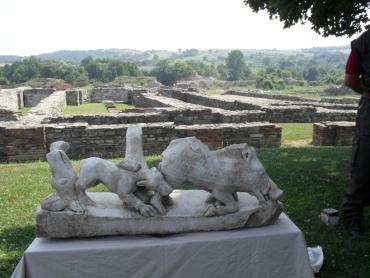
At the site of the ‘Felix Romuliana’, an imperial palace near the Town of Zajecar, German experts of the Archeology Institute in Frankfurt, together with the colleagues of the Archeology Institute in Belgrade have discovered a sensational sculpture, unique in this area of the Balkans. This marble statue originates from the first half of the third century.

As ‘Blic’ learns unofficially, it is most likely a sculpture of Diana, the Goddess of the hunt. At the National Museum in Zajecar we were told that this discovery has been the most significant one since finding of archvault in 1984 with the inscription ‘Felix Romuliana’ and a head of Galerius in 1993.

It is supposed that the sculpture symbolizes victory by Rome over barberians. Unfortunately a fragment of the sculpture (a horse and a rider) is missing. The rider is believed to be Diana.

Experts claim that this discovery is absolutely precious for studying of the ‘Romuliana’, but for the world culture as well.

Huge interest of experts from all over the world is expected.

The German archeologists using geomagnetic and geophysics method of search outside the imperial palace have discovered about fifty objects. Recently a new three-year agreement on cooperation has been signed with the Institute in Frankfurt.

The ‘Felix Romuliana’ contains numerous floor mosaics and remains of monumental temples and buildings. The Portrait of Emperor Galerius, heads of Hercules and Jupiter, mosaic presentations of Dionis, Labyrinth and Venator are the very best of the Roman art of that time.
*****************************************************************
They can tell that the rider from the missing horse/rider duo was the Goddess Diana?  How do they know the horse had any rider at all?  And how do they actually know it was a horse, since it looks like the entire thing is missing!  Based on what's shown - which looks like some kind of very large dog bringing down a miniature horse - this is hardly what I would call a sculpture of Diana the Huntress!  Guess I expect too much from my antiquities, heh?

Added July 22, 2010:

Here is a photo of the sculpture from a different perspective - it is a boar that the dog is bringing down, as was pointed out by Anthony in his comment, thank you.  A boar makes much more sense than a small horse, LOL, but I just did not see "boar" in the first photograph - it looked like a small horse with a mane, I did not see the tusks at all!  (Photo credit: Tanjug)


This article has some more information about the sculpture:

Rare Roman sculpture found near eastern town
21 July 2010 | 10:31 -> 13:54 | Source: Blic
Zaječar -- A 3rd century AD sculpture was discovered in Serbia's Felix Romuliana archaeological site in the east of the country.

The sculpture is believed to be representing Diana, the Roman goddess of the hunt.

Serbian archaeologists and their German colleagues worked on the dig near the town of Zaječar, daily Blic reports, and adds the discovery is nothing short of "sensational", and unique in the Balkans.

The marble statue was found north of the Emperor's Palace location - a settlement that was built before Romuliana itself.

The Zaječar National Museum said that the find ranks among the most important since the 1984 discovery of a tabled with the words Felix Romuliana inscribed on it.

The Roman palace on that location was built from 297 until 311 AD.

The sculpture, believed to have been made to celebrate Roman victories over barbarians, shows a wild boar pierced with a spear, a hunting dog at one of its legs, and two horse hoofs. However, the horse itself and the rider - that archaeologists believe would have been Diana - are missing.

Climate Changes - Civil Disorder, Chaos and Regime Change in China

From Discovery News
China's Wars Driven by Climate
Could 2,000 years of foreign invasions, rebellions and civil war really be boiled down to weather patterns? [As a certain tea-party person is fond of saying, "You betcha."]
July 14, 2010
Marlowe Hood, AFP

Two millennia of foreign invasions and internal wars in China were driven more by cooling climate than by feudalism, class struggle or bad government, a bold study released Wednesday argued.

Food shortages severe enough to spark civil turmoil or force hordes of starving nomads to swoop down from the Mongolian steppes were consistently linked to long periods of colder weather, the study found.

In contrast, the Central Kingdom's periods of stability and prosperity occurred during sustained warm spells, the researchers said.

Theories that weather-related calamities such as drought, floods and locust plagues steered the unraveling or creation of Chinese dynasties are not new.

But until now, no one had systematically scanned the long sweep of China's tumultuous history to see exactly how climate and Chinese society might be intertwined.

Chinese and European scientists led by Zhibin Zhang of the Chinese Academy of Sciences in Beijing decided to compare two sets of data over 1,900 years.

Digging into historical archives, they looked at the frequency of war, price hikes of rice, locust plagues, droughts and floods. For conflict, they distinguished between internal strife and external wars.

At the same time, they reconstructed climate patterns over the period under review.

"The collapses of the agricultural dynasties of the Han (25-220), Tang (618-907), Northern Song (960-1125), Southern Song (1127-1279) and Ming (1368-1644) are closely associated with low temperature or the rapid decline in temperature," they conclude.

A shortage of food would have weakened these dynasties, and pushed nomads in the north -- even more vulnerable to dips in temperature -- to invade their southern, Chinese-speaking neighbors, the authors argued.

A drop of 2.0 degrees Celsius (3.6 degrees Fahrenheit) in average annual air temperature can shorten the growing season for steppe grasses, which are critical for livestock, by up to 40 days.

"When the climate worsens beyond what the available technology and economic system can compensate for, people are forced to move or starve," they said.

The study found more droughts and floods during cold periods, but the factors that contributed most directly to wars and dynastic breakup were soaring rice prices and locust infestations.

The Roman and Mayan empires, they noted, also fell during cold periods.

Zhang and colleagues speculated that periodic temperature shifts roughly every 160 or 320 years were related to natural climate changes, namely fluctuations in solar activity and in Earth's orbit and axial spin.

The team said the findings demonstrate that climate change can lead to unrest and warfare.

"Historians commonly attribute dynastic transitions or cycles to the quality of government and class struggles," according to the paper, published in the British journal Proceedings of the Royal Society B. "However, climatic fluctuation may be a significant factor interacting with social structures in affecting the rise and fall of cultures and dynasties."

But the historical evidence they found points to global cooling, not to global warming, as the culprit.

The scientists were cautious about making projections for the future. In 2007, the UN's Intergovernmental Panel on Climate Change (IPCC) said that man-made warming this century will lead to worse droughts, floods, harsh storms and sea level rise, with the potential to inflict hunger and misery on millions.
****************************************************
Irony of ironies, China is currently undergoing a horrible monsoon season, worse than for many years it seems; so much water has accumulated in feeding rivers and tributaries that the Central Government is worried about whether the Three Gorges Dam can hold. Can you imagine? And yet drought continues to plague its cities and plains in the north.

Hmmm, well, it will be interesting to see what happens as climate changes around the globe.  With over 6 billion people, where are they going to go as desertification grows in already marginal areas as preciptation patterns shift, some areas grow much warmer, and other areas grow much colder, shortening growing seasons?  Will they be able to go anywhere?  Will people by the millions simply stay put and wait to die?  Well, in China that's already happening, but it's not due to climate change - the unrelenting pollution/poisoning of land, air, water and food supplies by unsustainable and totally unregulated growth will likely kill millions before climate change does, and I expect that to happen within what is left of my lifetime.  What will China be like in 2040, when I'm 89?  And what would we do -- what could we do -- if half a billion Chinese, or Indians, or Africans, or South Americans -- decided they're moving to what will be left of the land of the free and the home of the brave?  By 2040 we may have lost what - some 20% of our coastal lands to rising oceans due to the melting of the icecaps?  Oy!  I don't want to think about it.

Neither does Congress.

Tuesday, July 20, 2010

Scythian "Sun Lord" Discovered in Kazakhstan

From eurasianet.org
Kazakh Archeologists Discover Ancient Scythian “Sun Lord”
July 19, 2010 - 1:30am, by Joanna Lillis

Archeologists in Kazakhstan have discovered the grave of a gold-clad ancient Scythian warrior who has already earned himself a nickname: “The Sun Lord.” Researchers uncovered the find in a Scythian grave consisting of seven burial mounds in Karaganda Region east of the capital, Astana.

The opulence of the warrior’s burial indicates that he was a leader as well as a fighter, expedition leader Arman Beysenov explained. “He was probably a ruler and a warrior simultaneously,” Beysenov said in remarks quoted by the Kazinform news agency on July 16. (Here's the article - but it's in Russian. I can't read it - but it sure looks like they found a lot of gold - see photo - it's rather small but larger, it loses resolution. Amazing!) “The person’s torso was entirely covered with gold. The figure of a leader like this was associated with the sun. He was a sort of ‘sun lord.’”

The warrior was likely buried in the 4th or 5th century BC in a grave that was actually discovered half a century ago, though excavation work only started last year.

Robbers had looted the grave in ancient times, Beysenov said, but it still contained quite a horde of ancient treasure. One of the burial mounds alone yielded 130 gold objects that included the figure of a feline predator, pendants and parts of sword belts. Archeologists also found hundreds of gold beads and 14 bronze arrowheads in the grave.

Inevitably, the archeological discovery is being trumpeted as comparable to that of the Golden Man, found in the Issyk burial mound just outside Kazakhstan’s commercial capital, Almaty, in 1969. The Golden Man, who’s believed to have been a young Scythian prince who lived in the 4th or 5th century BC, was interred wearing some 4,000 gold ornaments.

He has become a national symbol -- the image of the Golden Man, with his trademark conical gold headdress, decorates the monument to independence on Almaty’s Republic Square, and in 2006 President Nursultan Nazarbayev unveiled a statue of him outside the Kazakh Embassy in Washington. The original is on display at Almaty’s Museum of Gold.

Archeologists are now hoping that their digs in eastern Kazakhstan will reveal more information about the glorious “Sun Lord,” the latest find from the Scythian past.

Antiquities Thieves Hit Sassinid Site in Southwest Iran

The key to understanding what is really going on in this article is knowing that sites known to contain pre-Islamic antiquities are deliberately left unguarded by the fundamentalist regime for two primary reasons: (1) the Revolutionary Guard makes millions each year off the illegal antiquities market and (2) the fundamentalist regime wishes to destroy all pre-Islamic sites, whether of historical significance or not, that may remind people of what Iran was like before it was hijacked by the fundy nut-cases.  What a shame.

From The Tehran Times
Wednesday, July 21, 2010 | Volume: 10923
Smugglers sack Sassanid site in southwest Iran
Tehran Times Culture Desk

TEHRAN -- Smugglers of cultural heritage have looted a Sassanid structure located in the Baghmalek region in northeast Khuzestan Province.

Members of the Baghmalek Cultural Heritage Enthusiasts Society, who recently visited the ruins of site, found shards scattered around the illegal excavations dug by the Smugglers, society director Yunes Shafiei told the Persian service of the Mehr News Agency on Sunday.  Photo: The ruins of the Dalkhuni Fort and an excavation created by smugglers at the Sassanid fort are shown in a combination photo. Notice the holes from the illegal digging. (Photos by Taryana)


The structure, known by the locals as the Dalkhuni Fort, was used by local rulers after the defeat of the Sassanid Empires.

Initial studies show that the shards date back to the Seljuk era, Shafiei said.

Since the fort lies on a hill surrounded by agricultural land, farmers do not welcome experts on cultural heritage who occasionally visit this site, he noted.

Khuzestan Cultural Heritage Enthusiasts Society (Taryana) spokesman Mojtaba Gahestuni also cofirmed the report.

The smugglers have created several digs to find artifacts at the Dalkhuni Fort, he stated.

The fort had been used as an outpost to protect caravans passing through the region in past periods, he said.

According to Gahestuni, only 6 out of 150 ancient historical sites in the Baghmalek region have been registered on the Iranian National Cultural Heritage List. Even those few on the list are not being safeguarded by the relevant governmental organizations, he lamented.

The governmental organizations lack the necessary staff to safeguard the sites and also do not allow NGOs and cultural heritage enthusiasts societies to intervene, Gahestuni added.

The Cultural Heritage, Tourism and Handicrafts Organization (CHTHO) is responsible for monuments and ancient sites in Iran.
**************************************************************
I received an education on the subject of illegal antiquities trade and what's been going on in Iran while doing background research for the article The Jiroft Gameboards, published at Goddesschess in 2005 and updated in 2007.  If you're interested, please check it out.

900 Year Old Female Figurine Found at Moundbuilders' Site in SW Illinois

Article at bnd.com - unfortunately no photo of the artifact available

Tuesday, Jul. 20, 2010

It's mind blowing': 900-year-old figurine found during work on new river bridge
BY GEORGE PAWLACZYK - News-Democrat

If just one more shovel of earth had been removed, the curious figurine of a kneeling woman carved about 900 years ago might have ended up in a 19th century curio shop.  Or lost forever.

Instead, archaeology graduate student Steve Boles found the rare, 6-inch-high artifact this spring at a massive archaeological dig now under way at the old National Stock Yards to make way for construction of a new $670 million Mississippi River bridge. The figurine and the whole excavation have caused great excitement among archaeology professionals and students.

The sheer size of the dig and the discovery of a buried city dating to around 1050 A.D. -- the same time that mound and city building also took off at nearby Cahokia Mounds -- has raised hope that an old archaeological puzzle may finally be solved: Where did the Mississippians -- a non-nomadic, warrior-based agricultural society -- come from and why did they build on such a grand scale?

Site manager and archaeologist Jeff Kruchten said that since last fall, 137 dwelling sites have been dug up or are being excavated. Another 500 to 650 are thought to exist, pushing the estimate of the city's peak population to at least 4,000.

Because the site must be fully excavated or be forever lost to construction, the usual practice of digging up only a part of a site to save it for future archaeologists -- the strict practice at Cahokia Mounds where only 1 percent of the site has been excavated -- has been dropped. Pretty much the whole stockyards site will be dug.

Joe Galloy, director of the survey's American Bottoms Field Station and overall supervisor of the dig, said simply, "This is the biggest look at a Mississippian City ever. It's really a very rare opportunity."

Boles' excavation showed that the figurine had a close call just before the turn of the century when a manure drain pipe being installed at the stockyards was placed just an inch away from where the treasure was found just 3 feet below the surface. Workmen somehow missed finding it.

Archaeologist Brad Koldehoff said that the back of the figurine was charred from a fire that probably destroyed a hut-like Mississippian home and could have produced enough heat to explode the relic -- made of flint clay, a soft, reddish substance found in Missouri that dries rock hard.

The roughly carved face of a woman, whose long hair winds down her back, stares impassively. She appears to be holding a conch shell, which were often imported from early people who lived along the Gulf of Mexico.

Like Pompeii, this 1,000-year-old buried city was basically forgotten for centuries. In the 19th century, 45 mounds that surrounded the site were carted off and used to raise certain areas in East St. Louis above flood level.

Galloy said that one important finding is that there was no clear delineation between this Mississippian city and other sites in the area.

"It was like a big urban sprawl. Well-worn trails led everywhere."

Galloy and Kruchten said a key part of learning the answers to the origin of the Mississippians may lie not only with the size and scope of the excavation, but also with the 1050 A.D. date, confirmed by cross-checking radio-carbon and pottery-dating methods. Earlier findings from Cahokia will be compared to what is learned from the stockyards city to determine the significance of the entire Mississippian habitation.

Galloy said he agrees with other archaeologists who believe that Cahokia and its surrounding towns were the beginning of and the cultural center of what became the Southeastern Ceremonial Complex of mound building stretching from Illinois south to Mississippi to Georgia.

"It was the administrative center," Galloy said.

"It's mind blowing," added Kruchten, who spends his days going from "square to square," as each digger's excavation is called.

"We are finding evidence of special buildings that could have been used for religious purposes or communal areas, and of sweat lodges," he said. The evidence of a sweat lodge is a circle of dark stains where a hut's poles once stood with a hearth in the center.

A sweat lodge, widely used among historical American Indians even today, features a small enclosure with an open fire to boil water. The steam and darkness are believed to purify body and mind.

Unlike other Mississippian sites, early, more primitive habitations were not found beneath the stockyards city.

"There was nobody there before them. So, it was kind of an empty piece of the flood plain where Mississippian developers came in and for just a hundred or two hundred years or so cut down trees, leveled things off and built mounds," said Koldehoff, cultural resource coordinator for the Illinois Department of Transportation. He formerly headed the Illinois Transportation Archaeological Research Program, known now as the Illinois State Archaeological Survey.

Koldehoff said the 1050 A.D. date is the "Big Bang" for mound building, and was popularly applied to the study of the culture by archaeologist Tim Pauketat, whose book, "Cahokia -- Ancient America's Great City on the Mississippi," chronicles this sometimes violent culture where human sacrifices were known to occur.

"It was like this big, happening place and then boom, it ends and it just sits there and then the stockyards come in," Koldehoff said. The stockyards officially opened in 1873.

Monday, July 19, 2010

2010 U.S. Women's Chess Championship - R9

It's official - Tatev Abrhamyan won with the black pieces against Katerina Rohonyan and Camilla Baginskaite won with white against Beatrice Marinello.

So, Melekhina and Rohonyan finish tied for 4th place with 4.5/9.  Unofficial rankings:

Krush 8.0/9
Abrahamyan 7.5/9
Zatonskih 7.5/9
Melekhina 4.5/9
Rohonyan 4.5/9
Zenyuk 4.0/9
Baginskaite 4.0/9
Foisor 3.0/9
Marinello 1.5/9
Marshall 0.5/9

I've no idea when or how the Goddesschess/9 Queens Fighting Chess Award will be decided.  There were many impressive performances this year:  Krush, definitely.  She had several of the shortest games of the tournament and that says something.  Zatonskih never gave up and eeked out a slight advantage in long, grinding end games seemingly out of nowhere!  Zenyuk had all decisive results - no draws:  4 wins and 5 losses.  Constantly in time trouble but always fighting.  Rohonyan got better as the tournament went on.  Perhaps most of all, I was impressed by Abby Marshall.  She never gave up, and sure as shootin' she gave the two tournament leaders a hard time!

We don't have any behind-the-scenes input into choosing the winner - that's part of the deal.  We want the judge to be totally independent in her decision.  For tonight, I'm chessed out, darlings.  I don't want to think about it anymore.

Congratulations to Irina Krush on her 3rd US Women's title. Indeed, congratulations to all of the players.  I think this has been the best women's championship ever!

And we're already planning for the 2011 U.S. Women's Chess Championship. 

2010 U.S. Women's Chess Championship - Startling Results R9!!!

Ray Robson lost!

Zatonskih's game ended in a draw!

Zenyuk won!

Looks like Krush will be clear winner and no play-off tomorrow for the women.

Now it appears Robson and Shankland are tied - Parker Zhao may win the tournament???

More later -

Updated 5:59 p.m.

Ray Robson showed great class and sportsmanship by showing up for a post-game interview and not trash talking. He is just a really great young man, has great character and heart. 

Anna Zatonskih was also very graceful in talking about her tournament and the final 2 rounds, and was surprised with a Skype call from her husband, GM Daniel Friedman, who is currently in the Ukraine.

Marshall is still battling with Krush, but it doesn't look very good for her. Actually I'm amazed that Abby was able to get the game to this point (past time control) because earlier the commentators seemed to be writing off her position.   She has put up a good fight!

Tatev Abrahamyan, currently with 7.5/9, could finish in second place.  Commentators are saying she has a better position against Rohonyan, who has the white pieces.

Baginskaite and Marinello are still slugging it out, and have made time control.  They have quite a few pieces on the board yet.

Wow!  Well, I'm pleased to be surprised and shocked - but my R9 predictions certainly seem to have been flushed down the toilet!

I'm happy that Zenyuk won her game, but I'm really sad for Melekhina because she was on the losing side of that game.  I like both players very much.

Updated 6:11 p.m.
Krush has won - Abby Marshall just resigned. Krush is the official champion, with 8.0/9.  If Abrahamyan wins her game, she and Zatonskih will be tied for second place and then the usual tie-breaks will be applied to determine position.

Updated 6:31 p.m.
Looks like 3-way tie among Parker Zhao, Robson and Shankland and play-off tomorrow - but Zhao is still playing.  If Zhao wins his game then he is clear winner.

Looks like Abrahamyan will win, in which case she will score her third IM norm, if I understood what the commentators said correctly.  That would be fantastic, another female IM and she's only 22 years old and will be going into the Olympiad next month on an emotional high along with Krush, Zatonskih, Foisor and Baginskaite.

2010 U.S. Women's Chess Championship - R9

Soon we'll know whether we have a straight-out champion or must go to the play-off tomorrow at 10:00 a.m.

I've made my predictions at Chess Femme News. 

Pairings:
1 IM Anna Zatonskih 7.0 2518 - WGM Sabina Foisor 2.5 2356
2 WGM Katerina Rohonyan 4.5 2322 - WFM Tatev Abrahamyan 6.5 2403
3 WGM Camilla Baginskaite 3.0 2387 - WIM Beatriz Marinello 1.5 2206
4 IM Irina Krush 7.0 2521 - WFM Abby Marshall 0.5 2211
5 WIM Alisa Melekhina 4.5 2323 - WIM Iryna Zenyuk 3.0 2286


And, as Mr. Don so aptly pointed out in this new graphic he put together for Goddesschess, soon we'll know who the winner of the Goddesschess/9 Queens Fighting Chess Award is, who will be selected by current Women's World Chess Champion GM Alexandra Kosteniuk.

The games start at 2:00 p.m. today.  My office door will one again be closed and my headphones firmly in place as I follow the action as closely as I can while also trying to get some work done, har!

2010 U.S. Women's Chess Championship - R8 Games in PGN

They were there last night - I was brain fogged and trying to download R9 games which, of course, do not exist yet.  Duh!

[Event "2010 U.S. Women's and Junior Closed Championships"]

[Site "?"]
[Date ""]
[Round "round 8"]
[White "WFM Tatev Abrahamyan"]
[Black "IM Anna Zatonskih"]
[Result "1/2-1/2"]
[Board "1"]
[Input "DGT6645"]
[Owner "St. Louis Chess Club"]

1. e4 c6 2. d4 d5 3. Nc3 dxe4 4. Nxe4 Bf5 5. Ng3 Bg6 6. h4 h6 7. Nf3 Nd7 8. h5 Bh7 9. Bd3 Bxd3 10. Qxd3 e6 11. Bd2 Ngf6 12. O-O-O Be7 13. Kb1 Qb6 14. Ne4 Nxe4 15. Qxe4 Nf6 16. Qe2 Qb5 17. c4 Qf5+ 18. Ka1 O-O-O 19. Be3 Ng4 20. Bc1 Rhe8 21. Ne5 Nxe5 22. dxe5 Bc5 23. f4 Qh7 24. a3 Qg8 25. Ka2 Rxd1 26. Rxd1 Rd8 27. b4 Rxd1 28. Qxd1 Be7 29. Bb2 a6 30. g4 g6 31. hxg6 fxg6 32. Qh1 Qf8 33. Bc1 g5 34. Qe4 gxf4 35. Qxf4 Qg8 36. Qe4 Bg5 37. Bb2 Qf7 38. Kb3 Qf1 39. Ka2 Kd8 40. Qd4+ Ke8 41. Qe4 Qf4 42. Qe2 Qe3 43. Qc2 Qf4 44. Qe2 Kf8 45. Kb1 Kg7 46. Kc2 Kf7 47. Qd3 Qxg4 48. Qh7+ Ke8 49. Qg8+ Kd7 50. Qg7+ Kc8 51. Qg8+ Kd7 52. Qg7+ Kd8 53. Qg8+ Kc7 54. Qf7+ Kc8 55. Qg8+ Kc7 56. Qf7+ Kb8 57. Qf8+ Kc7 58. Qf7+ Kc8 1/2-1/2

[Event "2010 U.S. Women's and Junior Closed Championships"]
[Site "?"]
[Date ""]
[Round "round 8"]
[White "WIM Beatriz Marinello"]
[Black "WGM Katerina Rohonyan"]
[Result "0-1"]
[Board "2"]
[Input "DGT4964"]
[Owner "St. Louis Chess Club"]

1. e4 g6 2. d4 Bg7 3. Nc3 d6 4. g3 Nf6 5. Bg2 O-O 6. Nge2 c6 7. O-O e5 8. h3 Nbd7 9. Re1 Qc7 10. Be3 b5 11. a3 Bb7 12. Qd2 Rfe8 13. Bh6 Bh8 14. Rad1 Rad8 15. Bg5 a6 16. d5 Nb6 17. dxc6 Bxc6 18. Qc1 Rc8 19. Rd3 Nfd7 20. Red1 Re6 21. Nd5 Bxd5 22. exd5 Ree8 23. Rc3 Qb7 24. Rc6 e4 25. Rxc8 Qxc8 26. c3 Nc5 27. Be3 Nd3 28. Qc2 Nxd5 29. Bd4 Bxd4 30. Nxd4 Nf6 31. Rd2 d5 32. Re2 Nd7 33. f3 f5 34. g4 Nf4 35. gxf5 Nxe2+ 36. Qxe2 Nf6 37. Qe3 exf3 38. Qxf3 Re1+ 39. Kf2 Re7 40. fxg6 Ne4+ 41. Kg1 hxg6 42. Qf4 Qf8 43. Qh4 Kg7 44. Qg4 Qf2+ 45. Kh2 Nd2 46. h4 Re4 47. Qd7+ Kh6 0-1

[Event "2010 U.S. Women's and Junior Closed Championships"]
[Site "?"]
[Date ""]
[Round "round 8"]
[White "WIM Iryna Zenyuk"]
[Black "IM Irina Krush"]
[Result "0-1"]
[Board "3"]
[Input "DGT4948"]
[Owner "St. Louis Chess Club"]

1. d4 Nf6 2. c4 e6 3. Nf3 c5 4. d5 b5 5. dxe6 fxe6 6. cxb5 a6 7. bxa6 Bxa6 8. g3 Nc6 9. Bh3 Be7 10. O-O O-O 11. Nc3 Qb6 12. b3 Nd4 13. Nxd4 cxd4 14. Na4 Qa7 15. Bb2 e5 16. Bg2 d5 17. Kh1 Kh8 18. Bc1 Ne4 19. f3 d3 20. exd3 Nf2+ 21. Rxf2 Qxf2 22. Nc3 Rac8 23. Nxd5 Qd4 0-1

[Event "2010 U.S. Women's and Junior Closed Championships"]
[Site "?"]
[Date ""]
[Round "round 8"]
[White "WFM Abby Marshall"]
[Black "WGM Camilla Baginskaite"]
[Result "0-1"]
[Board "4"]
[Input "DGT4950"]
[Owner "St. Louis Chess Club"]

1. e4 c5 2. Nf3 d6 3. d4 cxd4 4. Nxd4 Nf6 5. Nc3 a6 6. Qf3 g6 7. h3 Qb6 8. Nb3 Bg7 9. Be3 Qc7 10. O-O-O Nc6 11. g4 Be6 12. Qg2 h5 13. gxh5 Nxh5 14. Nd4 Nxd4 15. Bxd4 Bxd4 16. Rxd4 Rc8 17. a3 Qc5 18. Rd2 Qe5 19. Qf3 Nf4 20. h4 g5 21. Nd5 Bxd5 22. exd5 Rxh4 23. Rxh4 gxh4 24. Qg4 Rc5 25. Kb1 Qe1+ 26. Rd1 Qxf2 27. c4 Qg3 28. Qf5 Qg6 29. Qxg6 fxg6 30. Rc1 h3 31. b4 Rc8 32. Rc2 Kf7 33. c5 dxc5 34. bxc5 Rxc5 35. Rxc5 h2 36. Bg2 Nxg2 37. Rc1 Nh4 38. Rh1 Nf3 39. Kc2 Kf6 40. Kd3 Kf5 41. Ke2 Kf4 42. Kf2 g5 43. Rb1 g4 44. Rb4+ Kg5 45. Kg2 g3 46. Rxb7 Ne1+ 47. Kh1 Nd3 48. Kg2 Nf2 49. Rb1 Kf4 50. Rb4+ Ke5 51. Kxg3 h1=Q 52. Kxf2 Qxd5 0-1

[Event "2010 U.S. Women's and Junior Closed Championships"]
[Site "?"]
[Date ""]
[Round "round 8"]
[White "WGM Sabina Foisor"]
[Black "WIM Alisa Melekhina"]
[Result "0-1"]
[Board "5"]
[Input "DGT4947"]
[Owner "St. Louis Chess Club"]

1. d4 Nf6 2. c4 g6 3. Nc3 Bg7 4. e4 d6 5. Nf3 O-O 6. Be2 e5 7. Be3 c6 8. O-O exd4 9. Nxd4 Re8 10. f3 d5 11. cxd5 cxd5 12. Bf2 dxe4 13. Ndb5 Qe7 14. fxe4 Nc6 15. Bg3 Rd8 16. Qe1 Be6 17. Kh1 a6 18. Nc7 Rac8 19. Nxe6 Qxe6 20. Qf2 Rd7 21. Bf3 Ne5 22. Rad1 Nxf3 23. Qxf3 Nh5 24. Bf2 Rxd1 25. Rxd1 Bxc3 26. bxc3 Qxa2 27. Bd4 Qe6 28. g4 Ng7 29. Qf4 Re8 30. Re1 Qc6 31. Bf6 Re6 32. Bd4 Ne8 33. g5 a5 34. Kg1 a4 35. Re3 a3 36. Rf3 Qc7 37. Qh4 Ng7 38. Qh6 Nh5 39. Rh3 a2 40. Rxh5 a1=Q+ 41. Kg2 Qa2+ 42. Kf3 f5 43. gxf6 Rxe4 44. Kxe4 Qe2+ 45. Qe3 Qxe3+ 0-1

Sunday, July 18, 2010

2010 U.S. Women's Chess Championship - R8

Krush has won her game against Zenyuk well before time control.

Commentary now says that Abrahamyan v. Zatonskih looks drawish, which most likely means it will be Zatonskih and Krush facing off once again in an Armageddon play-off if they both win tomorrow.  What a pain in the you-know-what.  I never want to see another tournament decided that way again, it was awful, horrible.

Holy Goddess - Melekhina just queened a pawn!  Haven't seen that yet in this championship!  She now has TWO queens on the board!  She queened with check on move 40 just as Foisor was mounting a potential devastating checkate attack!

Update 6:14 p.m.

Melekhina won with the black pieces against Foisor.

Rohonyon defeated Marinello with the black pieces.

Two games left:  Abrahamyan/Zatonskih, where things seem to have taken a turn against Abrahamyan; and Marshall/Baginskaite, where Marshall is in big trouble and looks like a win for Baginskaite.

The battle is still for 4th place between Melekhina and Rohonyan.

The Foundations of 8x8 and 9x9 in Hindu Temples - Ancient Gameboards

I found this at an interesting website, Frithjof Schuon (no idea what it is all about), which reminded me of some equally interesting information I discovered in "Secret Games of the Gods" by Nigel Pennick.  First, the information from the website:

luni, 8 decembrie 2008
Borobudur - Ştiinţă sacră (IV)

The Tathata-Vastu Mandala at Borobudur's Summit

In ancient India, the foundations for Hindu temples were typically based on a geometrical diagram called the vastupurusha mandala. Vastu is Sanskrit for “residence” while the Purusha is the primordial male giant whose body is divided or "sacrificed" to bring the world into existence.

When serving as the underlying schematic for Hindu temples, the vastupurusha mandala typically incorporates either 64 or 81 compartments. Architects typically employed the 81-block version of this diagram in the design of those buildings that were commissioned by members of the Hindu warrior caste, while the 64-square version was typically reserved for buildings that had been commissioned by members of the Hindu religious caste.

The 64- and 81-square Vastupurusha mandalas
of Indian temple Architecture based on the Manasara

"Radiating from the center (of the vastupurusha mandala) is its effulgence, the light of all suns that ever shone and which in repeated cycles illumine this universe. This light of all suns is carried by the Regents of 12 Suns, the Adityas.... The light is carried across this inner border and to the outer rim with its four orients in the middle of each side." The central core of both versions of the diagram is called the Place of Brahman (Brahmastana). It corresponds with the Embryo of Splendour (hiranyagarbha) that is featured in various Hindu tales of creation, where it is represented as "...the primordial germ of cosmic light.... In the center is the dark source of all light, the super luminous darkness, the central point beyond all time.... It radiates from there and its radiance proceeds through all the stations of the Regents of sun and stars, placed on the body of the Vastupurusha.... From the center beyond time, and around it, is displayed cyclical time in its sections, in its units of days, months and years and in the cycles in which the different courses of sun and moon are adjusted."

The 81-square version of the diagram is often illustrated in such a way that it appears as if some of the squares have been left vacant (see illustration above). However, the Brihat Samhita clearly affirms that the 45 deities who project themselves into the mandala collectively fill all of the available space, with certain deities either occupying two or three adjacent squares.

The nine squares of the Brahmastana are surrounded by three layers consisting of 16, 24, and 32 squares, respectively. The outermost layer of 32 squares is assigned to deities associated with the 28 asterisms or "nakshatras" of Hindu astronomy and the four Great Guardians (Lokapalas) of the cardinal directions, while the interior 16 and 24 squares are reserved for squares the placement of solar deities.

"The place of realization of the Supreme Brahman, the center of the Vastupurusa, is assigned to Brahma who is the effected Brahman; this is the subtle state of manifestation, which in ontological hierarchy is prior to manifestation. The place of Brahman corresponding to Brahmapura in the universe is the Hiranyagarbha, the Embryo of Splendor--the primordial germ of cosmic light. Similarly, from the Brahmastana proceeds the light of all times and in every direction; this makes the first belt, the inner border of 12 deities. In the outer rim of 32 entities it is marked at each place at its definite time and encompasses the extent of corporeal manifestation." (53)

Borobudur's summit has been laid out in a circular form of the 81-element vastupurusha mandala, with the main stupa occupying the center over the nine squares of the Brahmastana and the three surrounding tiers of stupas and Buddha images filling the remaining receptacles of the diagram. (54)

It is clear from a few of the island's surviving stone inscriptions that Javanese Buddhists perceived no conflict in applying Hindu architectural principles to Buddhist foundations. For example, the Stone of Kerengtengah, which dates from the Borobudur period, opens with a line that pays homage to an unnamed Buddhist hero of immeasurable might who is seated on a high mountain in the Vajrasana position, which is the meditation posture both legs are crossed and the soles of both feet face upwards just like the Buddha images are seated at Borobudur. A few stanzas later, the inscription's composer states that the daughter of the Sailendra Buddhist King Samaratungga "... installed in a temple, according to the Puranas, the image of the illustrious Sri Ghananatha (Lord of the Clouds) together with others worthy of worship," which not only suggests that the "Lord of the Clouds" is the hero seated on the high mountain, but also confirms that the images had been installed according to practices outlined in Hindu religious texts. (55)

In a large number of the island's surviving inscriptions, the priest presiding over the inauguration of the temple foundation evokes the presence of Brahma by performing a ritual that involves the cracking of an egg on top of the watu sima kulumpang--the central foundation stone that may have served the material analog of the "Golden Embryo" of the vastupurusha mandala. In Existence and Enlightenment in the Lankavatara Sutra, author Florin Sutton presents several examples of how the Buddhist term Tathagata-garbha parallels the "Golden Embryo" (Hiranyagarbha) of the Hindu scriptures, where the term "...represents the first use of the word garbha in a compound with metaphysical implications. Significantly, for the purpose of our investigation, this compound was used interchangeably with Hiranyanda (literally 'golden egg'), already conveying a sense of ambiguity, or dilemma, of, of 'the chicken and the egg' type.

"Gradually, though, such naturalistic principles regarding the origins of the world were superseded by anthropomorphic ones symbolized by (the) names of divine beings--Prajapati and Brahma, who himself was born from a golden egg--and, eventually, by the thoroughly abstract principles of Brahman and atman, prana (impersonal power) and sakti (feminine power), purusa (spirit) and prakriti (matter).... The general meaning was that of all-pervasive essence, filling the air, the earth, and heaven, accounting for the unity of the universe, its vital force and the cosmic self." (56)

However, with regard to one Buddhist use for the word "garbha" as the embryo of Buddhahood the composer of the Lankavatara Sutra has elected to use the term as the preferred synonym for the Essence-of-the-Tathagata, rejecting the word for primordial substance (prakriti) as it appears in various Hindu texts. His word preference is a clear indication that the Essence-of-the-Tathagata should be regarded as an abstract cosmic "quasi-substance" rather than a real one. It not only impregnates but also envelops the universe, with its outer, manifested aspect available in the dimensions of both time and space. In the time domain of the eternal world of becoming, it is represented by the Five Skandas, "...to which the transient human personality conspicuously belongs. Its extension in space is the Dharmadhatu, the realm of the existential elements, as the most comprehensive view of the universe, including not only this visible sense-world, but all possibly conceivable ideal worlds." (57)

In my Architectural Survey of Borobudur, I have suggested that Borobudur's architect may have embedded units of solar and lunar time into the monument's plan, a practice that would in all probability have been related to the radiation of the "light of all suns" from the vastupurusha mandala at the monument's summit. Such architectural practices may also be related to even earlier rites involving the construction of the Vedic altar of sacrifice, which calls for the laying down of bricks in accordance with various Indian time cycles.
In addition, there are technical reasons for maintaining that Borobudur's summit has been laid out in conformance with the vastupurusha-mandala traditions of Hindu temple architecture. The architect had observed several technical rules during the monument's construction pertaining to the cross-over points of the diagram's horizontal/vertical lines as well as the diagonals that are inherent in the entire monument's plan. Additional information pertaining to these rules as well as examples of the compliance of other central Javanese temples with these rules will be appended to this Web site's Architectural Survey of Borobudur in the future as time permits.

If we wish to look for the earliest Mahayana Buddhist prototype for the primeval life force and the "light of all suns" that is symbolized at Borobudur, we need look no farther than the Lankavatara Sutra, which provides us with a suitable progenitor who fully accords with the parallel identifications to be found in the Hindu scriptures. The commentator of the Bhagavata states: "As the sun illuminates his own inner sphere, as well as the exterior regions, so soul (atman), shining in the body (Viraja), irradiates all without and within." (58)

The sutra's use of the word "Vastu," either coupled with the word tathata or arya, is also intriguing.

"When an objective world is no more grasped,
there is neither disappearance nor no-being
[as all these belong to a realm of relativity],
except something absolute known as tathata-vastu,
which realm belongs to the wise." (59)

While other Buddhist texts typically use the Sanskrit word Vastu to indicate a particular object of discriminating knowledge, the composer of the Lankavatara Sutra uses this word to express the absolute reality or tathata that is the "realm where the wise have their abode."

"In the first place Vastu and Tathata are synominously used; what is Tathata, that is Vastu.... Evidently in this connection where Vastu is Tathata, it must mean the highest reality. In the second case in which Arya is affixed to Vastu, the arya must be a modifier here, that is, this reality is something to be described as arya, noble, holy or worthy. The highest reality is also called 'something that has been in existence since the very first (purvadharmasthitita) or (pauranasthiti- dharmamata).' As it is the most ancient reality, its realization means returning to one's own original abode in which everything one sees around is an old familiar object.... The Buddhas, enlightened ones, are all abiding here as gold is embedded in the mine. The ever-enduring reality is above changes." (60)

In the ultimate sense, however, the name we use to refer to the Buddha at the center of Borobudur's Tathata-Vastu mandala is irrelevant, for the Buddha of the Lankavatara Sutra says that he is known "...under many names, amounting to a hundred thousand times three asamkhyeyas, and they address me by these names not knowing that they are all other names of the Tathagata.

"Of these, Mahamati, some recognize me as the Tathagata, some as the Self-existent One, some as Leader, as Vinayaka (Ganesha), as Parinayaka (Guide), as Buddha, as Rishi, as Bull-king, as Brahma, as Vishnu, as Isvara, as Pradhana (primordial matter, unmanifested prakriti), as Kapila (a sage), as Bhutanta (End of Reality), as Arishta, as Nemina, as Soma (Moon), as the Sun (Surya), as Rama, as Vyasa (a sage), as Suka, as Indra, as Balin, as Varuna, as is known to some."

"While others recognize me as One who is never born and never passes away, as Sunyata (emptiness), as Tathata (suchness), as Satya (truth), as Reality, as Limit of Reality, as the Dharmadhatu, as Nirvana, as the Eternal, as Sameness, as Non-duality, as the Undying, as the Formless, as Causation, as the Doctrine of Buddha-Cause, as Emancipation, as the Truth of the Path, as the All-Knower, as the Victor, as the Will-made Mind.... Thus in full possession of one hundred thousand times three asamkhyeyas of appellations, neither more nor less, in this world and in other worlds, I am known to the peoples, like the moon in water which is neither in it nor out of it." (61)
Publicat de dhruva la 17:26
*****************************************************************
Did you get all that?  LOL!  Yeah, some of it is pretty deep and unless you're familiar with some of the symbolism, it may not see very comprehensible - but it does relate to boardgames, for boardgames are nothing more, or less, than the incorporation of these 'abstract principles' into a format that non-initiated peopled can relate to, even if they don't necessarily "get it" - that is, get the total picture.  Of course, very few of us actually get the total picture, no matter how smart we think we are, or how advanced in religious and/or esoteric learning in which we believe we are steeped.

That's where populists such as Nigel Pennick come in and boy or boy, he sure was panned by the critics.  One must ask - why?  If he was so full of baloney, why was he so vilified? 

This is a 9x9 grid scanned from Nigel Pennick's "Secret Games of the Gods."  Sorry the image is blurry - my scanner is old.  I think you can readily see, though, the similarity in lay-out to the 9x9 mandela that is depicted in the information from the Frithjof Schuon blog, above.

Keep in mind - the 8x8 grid is none other than our 64-square chessboard; the 9x9 variation is the boad upon which Chinese chess - Xiang qi - is played.

This is what Pennick wrote:

Sacred Space

The Hindu tradition of earth harmony from India known as Vastuvidya is probably a very pure survival of the ancient geolocational art which gave rise to both the European and Chinese traditions.  an ancient Sanskrit text on temple foundation, the Manasara Shilpu Shastra, explains the geometrical techniques for laying out the basic square which is then subdivided into the sacred grid.  Having used the rules of Vastuvidya to find an appropriate location for the temple, the practitioner erects an upright or gnomon at the center of a water surface prepared at the site.  This gnomon must be of prescribed canonical dimensions, being either 12, 18 or 24 angulas in length.  From this center, using knotted rope to maintain the correct dimensions, a circle is drawn, with a radius twice the length of the gnomon.  By observing opposing limbs of the Sun, a true east-west line can be drawn.  The two positions of the sun when it is the same height above the horizon in the morning and the afternoon are maked on the circle, and a line drawn between them.  At each end of this equinoctial axis, a peg is driven into the earth, and the rope used to form arcs centered on the two pegs.  This makes a geometrical figure known as a vesica.  A line between the crossing-points of these two arcs, the extreme ends of the vesica, is true north-south, crossing the east-west line a little ot the north of the center of the original circle.  Taking this as a center, a new circle the same diameter to the original one is drawn on the ground.  From this circle, an east-west vesica is created in the same way as the first one.  The four intersection-points of the two vesicas are joined by straight lines to form a square, the basis of the sacred grid.

Ancient philosophy asserted the unity of all existence, the greater being reflected in the lesser.  Certain geometrical forms, which are capable of seemingly limitless expansion or subdivision, are a perfect way of expressing this truth.  The human form can be envisaged as a living physical reflection of the hidden patterns of the creation.  In the Jewish faith, human beings are created in the image of God, as temples ordained by the supreme creator to enshrine the divine spark, the sentient soul which elevates human beings above the animals.  The qualities inherent in the universe are reflected in the human body, which is the microscosmic mirror of the macrocosmos.  According to this viewpoint, all things present in the universe are encapsulated in each and every human person.  The so-called Hermetic Maxim, attributed to Hermes Trismegistus, the mythical founder of alchemy, state: "That which is in the lesser world (the microcosm) reflects tat of the grater world (the macrocosm)."

The geometrical form of ground-plans, expressed as the grid, manifests itself as the Yantra, a sacred image which is explained as a gathering-point or nucleus of spiritual force.  In Tantra, these geometrical patterns act as focal points upon which devotees may fix their meditative concentration.  But Yantras are much more than aid to meditation, for they are also sacred icons of specific spiritual beings, whose actual images are not present.  to practitioners of Tantra, Yantras represent the subtle bodies of these Devatas, their underlyng eternal network of energies.  Like Chladni patterns, they are connected with sound.  When the appropriate Mantram is recited, the corresponding Yantra is activitated.  The appropriate Devata manifests in the person saying the Mantram, unifying the person with the infinite. 

The similarity between the common forms of Yantra and gameboards is striking, showing their common origin in the sacred grid.  ...  In the sacred world view, every human artefact which might be seen as an image of the world - whole kingdomes, cities, sacred enclosures, temples, shrines, and even board games - were designed according to this sacred cosmic image.


Photo: Irina Krush v. Katerina Rohonyan, 2010 U.S. Women's Chess Championship.  Intense concentration upon the chessboard - one might almost say "meditative."  The best chessplayers are the ones who can attune themselves most closely with the "vibrations" of the board - the "dance of the pieces."  The ancient Egyptians called their game pieces "ibau" - dancers, also a variation of the Egyptian hieroglyphic for "ivory", from which many game pieces were made.

Notice that on the 8x8 grid - which we use for our chessboard, the power moves of the pieces most often involve moving on a diagonal - the bishops, the Queen; the pattern described by the move of a knight is a 90 degree or right triangle, the longest line of which is a diagonal.  Even the pawn takes following a diagonal line, and the lowliest piece on the board can take out the mightiest, if it be unwary. 

Saturday, July 17, 2010

Harpocrates Found in Garbage Heap in Silchester

So much for the value placed on this Roman misinterpretation of the child-figure god Horus.

From the Guardian.co.uk
Relic of Harpocrates, the god of secrecy and silence, found at Silchester
Archaeological dig at abandoned Roman city in Hampshire yields earliest representation of an Egyptian deity found in Britain
Maev Kennedy guardian.co.uk, Friday 16 July 2010 14.06 BST

A battered and corroded thumb-sized piece of bronze has turned out to be a unique find, the earliest representation of an Egyptian deity from any site in Britain – and appropriately, after almost 2,000 years hidden in the ground, it is Harpocrates, the god of secrecy and silence. (Image: An example of Egyptian Horus-as-child, Late Dynastic Period, 715-332 BCE)

The little figure was found at Silchester, site of an abandoned Roman city in Hampshire, in last summer's excavation, but his identity was only revealed in months of careful conservation work. His Greek and Roman designation as Harpocrates, the god of spymasters, is actually a transcription error.

"In Egyptian mythology the figure is known as Horus, the child of Isis and Osiris," said Professor Mike Fulford of the University of Reading, director of the Silchester excavation. "He is often shown with his finger in his mouth, a gesture that in Egypt represented the hieroglyph for his name, but was misinterpreted by the Greeks and Romans, resulting in his adoption as the god of silence and secrecy."

He was originally an ornament on an object, which is itself unique. "The figurine was attached to part of a charcoal-burning brazier which would have been used to provide heating and lighting. This brazier is the only one found in England so we are doubly excited," Fulford said. "The brazier, the sort of thing you would expect to find in Pompeii, is the first evidence of such a luxurious item from Roman Britain."

The context of the find suggests the brazier was imported, and later thrown out into a rubbish pit, in the first century AD.

Silchester is one of the most enigmatic Roman sites: after it was abandoned in the 7th century, with houses tumbled and the wells filled in, it was never reoccupied. A medieval abbey and manor farm clipped only a corner of the site; today, it remains open farmland surrounded by spectacular ruined Roman walls, still 20ft high in places.

Fulford has been digging at Silchester for half a lifetime and now returns every summer for training digs with his students and volunteers from all over the world. They are gradually peeling back the layers of an extraordinary history.

He now believes it was an iron age city of up to 10,000 people, the oldest and largest in Britain, built on the regular grid pattern which historians had believed arrived with the Romans. The evidence suggests Silchester never regained its wealth and power after the Roman invasion, and may have been burned to the ground and rebuilt in the Boudiccan rebellion of 60AD.

Among its puzzles are the dog skeletons which turned up all over the site, one found carefully buried standing upright, still on guard after 2,000 years. Other skeletons show cut marks from flaying, suggesting the inhabitants had a flourishing craft industry of making puppy-fur cloaks.
*****************************************************************
It's no mystery to me why this place was abandoned and never reinhabited.  It was cursed - by the Goddess - for the horrible abuse the residents committed against puppies and dogs.  Dogs were the special companions of the most ancient Goddess.  Puppy-fur cloaks, heh?  The Goddess finally gave them what they deserved, and they tore down their houses and filled the wells in superstitious fear as they fled, never to return.

2010 U.S. Women's Chess Championship - R 7 Results/Standings

Krush - Melekhina: 1- 0
Abrahamyan - Foisor: 1 -0
Baginskaite - Zenyuk: 0 - 1
Zatonskih - Marinello: 1 - 0
Rohonyan - Marshall: 1 -0

Pairings for R8:

1 WGM Sabina Foisor 2.5 2356 WIM Alisa Melekhina 3.5 2323
2 WIM Iryna Zenyuk 3.0 2286 IM Irina Krush 6.0 2521
3 WFM Abby Marshall 0.5 2211 WGM Camilla Baginskaite 2.0 2387
4 WIM Beatriz Marinello 1.5 2206 WGM Katerina Rohonyan 3.5 2322
5 WFM Tatev Abrahamyan 6.0 2403 IM Anna Zatonskih 6.5 2518

Now a big battle for 4th place prize money.

Games in PGN:

[Event "2010 U.S. Women's and Junior Closed Championships"]
[Site "St. Louis"]
[Date ""]
[Round "round 7"]
[White "IM Irina Krush"]
[Black "WIM Alisa Melekhina"]
[Result "1-0"]
[Board "1"]
[Input "DGT6645"]
[Owner "St. Louis Chess Club"]

1. d4 Nf6 2. c4 g6 3. Nc3 Bg7 4. e4 d6 5. Nf3 O-O 6. Be2 e5 7. O-O Nc6 8. d5 Ne7 9. Ne1 Nd7 10. Be3 f5 11. f3 f4 12. Bf2 g5 13. Rc1 Ng6 14. Nb5 Nf6 15. c5 g4 16. cxd6 cxd6 17. Nc7 g3 18. Nxa8 Nh5 19. Kh1 Qh4 20. Bg1 gxh2 21. Bf2 Ng3+ 22. Bxg3 fxg3 23. Nc7 Nf4 24. Ne6 Re8 25. Rc7 Bf8 26. Nxf4 exf4 27. Qc2 Bh3 28. gxh3 Qxh3 29. Ng2 Qh6 30. Rxb7 a5 31. Rc1 Re5 32. Qc8 Qf6 33. Qg4+ Rg5 34. Qe6+ 1-0

[Event "2010 U.S. Women's and Junior Closed Championships"]
[Site "St. Louis"]
[Date ""]
[Round "round 7"]
[White "WFM Tatev Abrahamyan"]
[Black "WGM Sabina Foisor"]
[Result "1-0"]
[Board "2"]
[Input "DGT4964"]
[Owner "St. Louis Chess Club"]

1. e4 c5 2. Nf3 g6 3. d4 cxd4 4. Nxd4 Bg7 5. Nc3 Nc6 6. Be3 Nf6 7. Bc4 Qa5 8. O-O O-O 9. Bb3 d6 10. h3 Bd7 11. Re1 Rac8 12. Qe2 a6 13. Rad1 Rfe8 14. f4 Nh5 15. Qf2 Nxd4 16. Bxd4 Bxd4 17. Rxd4 Be6 18. Bxe6 fxe6 19. e5 d5 20. g4 Ng7 21. Re2 b5 22. a3 Rf8 23. Qe3 Qb6 24. Red2 Rc4 25. Ne2 a5 26. Kg2 b4 27. axb4 axb4 28. R4d3 Qa6 29. Nd4 Qa1 30. b3 Rcc8 31. Rf2 Kh8 32. Qd2 Qa5 33. Ne2 Rc5 34. Rd4 Rb8 35. Nc1 Rcb5 36. Ne2 Rc8 37. Ng3 Rf8 38. Kh2 Qb6 39. Nf1 Rc8 40. Ne3 Ne8 41. Ng2 Qb8 42. Re2 Nc7 43. Nh4 Rg8 44. f5 exf5 45. gxf5 g5 46. Ng6+ hxg6 47. Rh4+ Kg7 48. Qxg5 Kf8 49. Rh7 Qd8 50. f6 Ke8 51. f7+ Kd7 52. fxg8=Q 1-0

[Event "2010 U.S. Women's and Junior Closed Championships"]
[Site "St. Louis"]
[Date ""]
[Round "round 7"]
[White "WGM Camilla Baginskaite"]
[Black "WIM Iryna Zenyuk"]
[Result "0-1"]
[Board "3"]
[Input "DGT4948"]
[Owner "St. Louis Chess Club"]

1. d4 Nf6 2. c4 c5 3. d5 b5 4. cxb5 a6 5. b6 g6 6. Nc3 Qxb6 7. Nf3 d6 8. Nd2 Nbd7 9. e4 Bg7 10. Be2 O-O 11. O-O Qc7 12. f4 Bb7 13. Nc4 Nb6 14. a4 Rae8 15. a5 Nxc4 16. Bxc4 e6 17. Qf3 Nxe4 18. Nxe4 exd5 19. Bxd5 Bxd5 20. Nf6+ Bxf6 21. Qxd5 Qd7 22. f5 Bd4+ 23. Kh1 Re5 24. Qc4 Rxf5 25. Qxa6 Re8 26. Bf4 Bxb2 27. Rad1 d5 28. g4 Rxf4 29. Rxf4 Be5 30. Rff1 d4 31. Qc4 Qc6+ 32. Kg1 Re7 33. Rde1 Qd6 34. Re2 d3 35. Rd2 Bd4+ 36. Kg2 Qc7 37. Qxd3 Qxa5 38. Re2 Qa8+ 39. Rf3 Rxe2+ 40. Qxe2 Qd5 41. Qb5 Kg7 42. h3 Qe6 43. Qd3 Qd5 44. Qb5 h5 45. gxh5 Qg5+ 46. Kf1 Qg1+ 0-1

[Event "2010 U.S. Women's and Junior Closed Championships"]
[Site "St. Louis"]
[Date ""]
[Round "round 7"]
[White "IM Anna Zatonskih"]
[Black "WIM Beatriz Marinello"]
[Result "1-0"]
[Board "4"]
[Input "DGT4950"]
[Owner "St. Louis Chess Club"]

1. d4 d5 2. c4 e6 3. Nf3 Nf6 4. Nc3 Be7 5. Bf4 O-O 6. e3 a6 7. Qc2 dxc4 8. Bxc4 b5 9. Bd3 Bb7 10. a4 Nc6 11. Qe2 Nb4 12. Bb1 bxa4 13. O-O a5 14. Rd1 Nfd5 15. Bg3 Ba6 16. Qd2 Bc4 17. Nxa4 Nb6 18. Rc1 Rc8 19. Nc5 Ra8 20. e4 Ra7 21. Qc3 Qa8 22. Ne5 Bb5 23. Qe3 Rd8 24. Bf4 c6 25. Qh3 Bxc5 26. dxc5 Nd7 27. Nxd7 Raxd7 28. Bd6 e5 29. Ra3 Rxd6 30. cxd6 Rxd6 31. Qc3 Qd8 32. h3 Rd1+ 33. Rxd1 Qxd1+ 34. Kh2 Qxb1 35. Rxa5 h6 36. Qxb4 Qc1 37. Ra8+ Kh7 38. Qc3 Qf4+ 39. Qg3 Qxe4 40. Re8 f6 41. Re7 Qg6 42. Qxg6+ Kxg6 43. b4 h5 44. Kg3 Kh6 45. h4 g5 46. hxg5+ Kxg5 47. Rg7+ Kh6 48. Rg8 Bc4 49. Rc8 Bd5 50. Rd8 1-0

[Event "2010 U.S. Women's and Junior Closed Championships"]
[Site "St. Louis"]
[Date ""]
[Round "round 7"]
[White "WGM Katerina Rohonyan"]
[Black "WFM Abby Marshall"]
[Result "1-0"]
[Board "5"]
[Input "DGT4947"]
[Owner "St. Louis Chess Club"]

1. d4 d5 2. c4 Nc6 3. Nf3 Bg4 4. cxd5 Bxf3 5. gxf3 Qxd5 6. e3 e5 7. Nc3 Bb4 8. Bd2 Bxc3 9. bxc3 Qd6 10. Rb1 b6 11. f4 exf4 12. e4 Nge7 13. Qf3 O-O 14. Bxf4 Qa3 15. Bg2 Ng6 16. O-O Nxd4 17. cxd4 Qxf3 18. Bxf3 Nxf4 19. Rfc1 c5 20. dxc5 Nd3 21. Rc4 Nxc5 22. a4 Rad8 23. a5 Rd6 24. axb6 axb6 25. Rcb4 Rb8 26. h4 Rf6 27. Kg2 Kf8 28. h5 Ke7 29. Rb5 Ne6 30. Bg4 Kd8 31. Rd5+ Kc7 32. Rc1+ Nc5 33. e5 Rc6 34. f4 Rd8 35. Bf3 Rh6 36. Ra1 Rxd5 37. Bxd5 b5 38. Bxf7 Nd3 39. Kf3 Nb4 40. Ke4 Kb6 41. e6 Nc6 42. Rd1 b4 43. Rd6 Rf6 44. Rxc6+ Kxc6 45. e7 Rxf7 46. e8=Q+ Rd7 47. Qe6+ Kc7 48. Qc4+ 1-0

2010 U.S. Women's Chess Championship - R7

Melekhina is going down to Krush.  Unbelievably to my eyes, she just gave up a rook early on, seeming to bet that she had a good attack king-side.  It didn't turn out that way, unfortunately.  For some time Krush-Melekhina was tracking Robson's game with Zhao and it was really wierd watching it online and listening to the commentary. 

Not much attention has been paid to the other games because of the interesting complication s of Krush-Melekhina and Zhao-Robson.  Last time there was commentary on Abby Marshall's game they thought she had a winning position.  Zatonskih is, also unbelievably, also seeming to be struggling against Marinello!  I don't know what the heck is happening, but I don't care.  The weather today got much better than expected, rather than worse!  I'm set up outside right now enjoying a breeze off the lake (from the northeast) rather than the forecasted furnace blast from the southwest; it's shady here and I've got the umbrella up; I'm also fully coated with super-duper strength bug spray because the mosquitoes are so bad. 

The back yard is raked in preparation either for cutting later this evening, although I may decide to watch a movie instead, or in preparation for the predicted severe storms that may blow through later this evening.  I don't know what's happening - perhaps I am morphing into a lizard woman.  The dew point is 61, which ordinarily makes me extremely uncomfortable, but I actually not only raked up the yard (albeit in 10 minute intervals with 20 minutes plus glasses of wine in between) and also pulled some more weeds (a never-ending battle) and I'm even thinking about chopping down that overgrown honeysuckle. 

Okay - I'm looking at the games now -- it's now 5:10 p.m. and Melekhina has resigned on move 34.  She played an extremely aggressive and risky game and paid the price when Krush found the best responsive moves.  I absolutely did not expect this from her, wow!  Tomorrow no rest for her, she's got another big game and she's battling for, probably, fourth place. 

Abrahamyan-Foisor is in big time trouble on move 27.  Foisor has 13 minutes left to whites's 4 minutes?  What the heck happened?  At one point it looked like Abrahamyan would wrap this game up with an overwhelming advantage.  Stay tuned.

Baginskaite-Zenyuk, B has like 4 minutes and Zenyuk has like 10 minutes - and they're on move 27.  Oy!  Black has a material advantage but I cannot tell you a thing about their relative board positions.  Suffice to say that whenever I think I understand a position, it turns out I was totally wrong, LOL!

Honestly, I do not understand why Zatonskih-Marinello is still going on - move 27?  What?  Zatonskih has 7 minutes and Marinello has 10 - this would be an incredible upset if Marinello can somehow pull out a draw - I'm not even going to mention the W word...

Rohonyan 6 minutes, Marshall 9 minutes, move 31 was just made by white.  Abby has an extra pawn.  Can she keep her end game technique together and pull off a win against the much more experienced Rohonyan?

Listening to the commentary, Finegold thinks Zatonskih's two bishops are really strong. 

Okay - I'm going to feed my chipmunks and squirrels now - will check back later on...

"First Contact" Painting Significant Find in Australia

The article's title is totally misleading since the 'painting' is not the oldest found in Australia - it dates only to the 17th century CE and the claim that it is Australia's oldest painting is therefore utterly ridiculous!  But it is important because it demonstrates that contact between Australian natives and southeast Asian fishermen and sailors most likely happened long before acceted history says it did. Actually, I do not see any reason why this contact would not have been going on from the time people from southeast Asia first navigated their way to Australia what - some 50,000 years ago - and settled there.  I mean, why not? 

Australia's oldest painting prompts history rethink
Posted Sat Jul 17, 2010 8:23am AEST

Archaeologists say a rock painting in Arnhem Land is the nation's oldest dated picture showing Aboriginal people's first contact with the outside world.

The rock painting is a picture of a sailing boat and it is located at a remote shelter in north-west Arnhem Land.

Archaeologist Paul Tacon says there are telling signs it is a depiction of a Perahu - a boat popular in Indonesia and Malaysia around the 17th century.

"One of the distinctive features is a tripod mast, another is a rectangular sail. And those are quite clear in this image," he said.

He says beeswax pellets stuck to the painting have been dated back to the 1620s, making it the oldest dated picture of early contact in Australia.

He also says there is clear evidence Macassars from Indonesia were sailing to north Australia to fish for trepang in the 1700s.

The painting is forcing archaeologists to rethink when outsiders first arrived on Australian shores.

"This find is extremely significant because it is our oldest reliably dated contact rock art image," Mr Tacon said.

"It's also important because it hints that Aboriginal people of northern Australia were interacting with peoples from South-East Asia on a more frequent basis and over a longer period of the past than what we've realised."

Archaeologists are also finding rock art showing early Indigenous contact with other cultures, including boats, knives, cups and even a monkey.

4th Century CE Well Preserved Mayan Tomb Discovered

An astonishingly well preserved tomb is discovered - hope they have armed guards and get all the goodies documents on site and out of there before the looters and robbers appear.  I don't know what they can do to keep the tomb paintings safe short of cuttimg them out and shipping them under guard to the nearest museum. 

Archaeologists Discover Mayan Royal Tomb
The tomb was found near the El Diablo pyramid in the city of El Zotz, in Guatemala
By Smaranda Biliuti, News Editor
July 17th, 2010, 07:56 GMT

A team of archaeologists from Brown University, lead by Dupee Family Professor of Social Science and professor of anthropology, Stephen Houston, found an ancient tomb of a Mayan king. The small room also contains remains of what are believed to be six children and a multitude of ceramics, carvings and textiles.
This tomb is dated between 350 and 400 AD and scientists believe that the Mayan king buried inside it might have been the founder of a dynasty. Houston's team knew that there was a small temple built in the locations of the diggings, a tribute to the sun god and figure of Mayan supremacy, still they were surprised by what they discovered.

“When we sunk a pit into the small chamber of the temple, we hit almost immediately a series of 'caches' -- blood-red bowls containing human fingers and teeth, all wrapped in some kind of organic substance that left an impression in the plaster. We then dug through layer after layer of flat stones, alternating with mud, which probably is what kept the tomb so intact and airtight,” remembers professor Houston.

On May 29, the team had the chance of seeing the Mayan treasures with their own eyes. After the final earthen layer was removed, a cavity was discovered and in the light of a bare light bulb they saw a rainbow of colors as the tomb was covered in paintings, pieces of wood, textiles and many organics Houston had never seen before. “When we opened the tomb,” he said, “I poked my head in and there was still, to my astonishment, a smell of putrification and a chill that went to my bones. The chamber had been so well sealed, for over 1600 years, that no air and little water had entered.”

The tomb was rather small, 6 feet high, 12 feet long and 4 feet wide. Even though Andrew Scherer, assistant professor of anthropology at Brown and bone analyst has not yet confirmed the findings inside the tomb, it appears to have held and adult male and six children, probably sacrificed at the man's death.

As for the man's identity, Houston says that “these items are artistic riches, extraordinarily preserved from a key time in Maya history. From the tomb's position, time, richness, and repeated constructions atop the tomb, we believe this is very likely the founder of a dynasty.” He added that a lot of work was still to be done. “Remember, we've only been out of the field for a few weeks and we're still catching our breath after a very difficult, technical excavation. Royal tombs are hugely dense with information and require years of study to understand. No other deposits come close,” he added.

The news of the discovery was made public two days ago (on Thursday) at a press conference in Guatemala City.

2010 U.S. Women's Chess Championship - Round 7

Hola darlings!

Huffing and puffing, I got the front lawn cut last night.  It was hot, but it was breezy too, and afterwards I was invited to join my neighbors to the north for a glass of wine out on the patio - they didn't care that I was all sweaty and funky, LOL!  They both work hard in their yard too, they know how it is.  It actually was quite lovely out last night while the breeze was still blowing, but once the sun sinks below the western horizon all goes still and I find I still need the central air conditioning on in order to get a good night's sleep.  While the air outside has been cooling off into the mid-60's at night, it does not manage to find it's way into open windows.

I was out by 8 a.m. this morning while it was still shady out front to get the trimming done.  It took about 30 minutes and I still managed to work up a bad sweat, whew!  In this weather one bathes a lot :)  The dew point is high today and will get even nastier tomorrow, but there still is a breeze so if one is just resting and not actually moving about, it is rather pleasant.  I plan on sitting out for a couple of hours in the shade after I finish this blog and catch up on a bit of reading.  I was chopping about out back earlier (removing various volunteer plants, trees, wild grape vines and thistles) while the sun was still out front; later it swings around to the south and drenches the yard in hot yellow beams except for half the deck, where I will be firmly ensconced underneath the umbrella. After about 2:30 p.m. the sun goes behind my nice tall Chinese Elms and the yard is shady and a good 10 to 15 degrees cooler than the ambient air temperature in the sun.  It stays that way all afternoon and most of the early evening.  I will cut the back grass later this evening if we don't get drenched first with one or more of the forecast thunderstorms.  I've got some cut piles of stuff to clean up.

But, you didn't tune in to read about my gardening exploits, you want to know what the heck is going on with the 2010 U.S. Women's Chess Championship, and I'm here to tell you! 

Who's playing who?

1 WFM Tatev Abrahamyan 5.0 2403 WGM Sabina Foisor 2.5 2356

2 IM Anna Zatonskih 5.5 2518 WIM Beatriz Marinello 1.5 2206
3 WGM Katerina Rohonyan 2.5 2322 WFM Abby Marshall 0.5 2211
4 WGM Camilla Baginskaite 2.0 2387 WIM Iryna Zenyuk 2.0 2286
5 IM Irina Krush 5.0 2521 WIM Alisa Melekhina 3.5 2323


I have my predictions up for R7 at Chess Femme News.  I also published the R6 games in PGN.  Click on the link at the bottom of the page for either Round 6 or Round 7 to get the updated stuff.  If you want to know my off the wall predictions, you must visit Chess Femme News today, I won't be publishing them here.  I will publish the results of my prognostications, whatever they may be, later on this evening at Chess Femme News.

I'll be watching the games beginning at 2:00 p.m. at uschesschamps live coverage and listening to the commentary by GM Ben Fengold and WGM Jen Shahade.  As this is a Saturday and therefore a mandatory nap day, I will probably zonk about somewhere around 2:00 p.m. until about 5:00 p.m. and wake up loaded with insect bites if I don't manage to make it to my recliner before ZZZZ land hits, and will probably have missed some herstorical chess games.  Sigh.  Such is my life.  Ah - time for a glass of wine and some lunch!
Related Posts Plugin for WordPress, Blogger...