I've had reason recently to dip back into Barbara G. Walker's incredibly informative "The Woman's Encyclopedia of Myths and Secrets" and I came across this entry on KINGSHIP. Here is a part of it, verbatim, that I typed word for word from my 1986 edition.
If you want to read the entirety of the lengthy and very informative/interesting entry online, you can find a scanned edition of "The Woman's Encyclopedia of Myths and Secrets" online at archive.org (also in various formats, including PDF and in various zip formats, that you can read online or download). It is the complete 2007 edition with footnotes and Bibliography. I have found this book to be an invaluable resource in doing my research over the years and it is a treasure trove of information.
Kingship
In early Asiatic civilizations, kingship depended on the choices of women. There was no law of primogeniture. Kings were rarely succeeded by their sons. Kings of Sumeria and Assyria were of unknown fatherhood. King Esakhuruna was called "the son of Nobody." (1) Women were the kingmakers in the land he ruled. (2)
Marriage with the earthly representative of the Goddess, in the form of the queen, was essential to the position of kingship; this was the original meaning of "holy matrimony" (hieros gamos). Akkadian kings apparently went on military expeditions chiefly to prove themselves worthy of the sacred marriage. (3)
Ashurbanipal said he ruled by the grace of the Goddess Ishtar, he was he king "whom her hands created." Shamash-shum-ukin of Babylon said he was chosen for kingship by the same Goddess under her title of Eura, Queen of the Gods. King Esarhaddon of Assyria said he was "beloved of Queen Ishtar, the goddess of everything, the unsparing weapon, who brings destruction to the land of the enemy." (4) Ishme-Dagan, king of Isin in 1860 B.C., said he was "he whom Inanna, queen of heaven and earth, has chosen for her beloved husband.(5) The Bronze Age King Iion of Thessalian Lapithis married the Mother of the Gods after killing her former mate, described as his father-in-law, because each king's successor was supposed to call his defeated rival "father."(6) The queens were the same as Goddess, or Mother of God. The pharaoh Amenhotep III built a temple for his wife Ti, who was worshipped as the Goddess. (7)
The goddess-queen's choice largely depended on the candidate's sex appeal. If she tired of the king's lovemaking, he could be deposed or killed, for the queen's sexual acceptance of him determined the fertility of the land. In many early societies the old king was killed by the new king, usually called a "son," though he was no blood relative. Hence the unbroken chain of Oedipal murders that puzzled modern scholars before it was known that the words "father" and "son" were used in a different sense. A Babylonian tablet says:
Haharni laid claim for himself to lordship over Dunnu. Earth raised her face to her son Anakandu, "Come let me make love to you,"she said to him; in Dunnu, which he loved, they laid him to rest. And Anakandu took over his father's lordship and Nether Sea, his sister, he took (as wife). Lahar, son of Anakandu, came and Anakandu he killed and in Dunnu in the (tomb) of his father he caused him to rest. Nether Sea, his mother, he took (as wife). (8)
After this Lahar's son killed Lahar and took his sister River as wife; he in turn was killed by his son, who married his sister Ningesh-tinna, "Lady of the Vine of Heaven," a shortened name of the Goddess Nin-gest-inanna. Sovereignty passed from mother to the daughter, beginning with Earth, the Goddess Dunnu herself, foundress of the line - the same as Crete's Danuna, Anatolia's Danu, Greece's Danae, the Gaulish Diana. Kings were expected to kill their predecessors or pseudo-fathers, "Son" meant "successwor," and "wsister" was synonymous with "wife." (9)
The length of a king's reign was often predetermined, because people thought the Goddess needed the refreshment of a new lover at stated intervals. Up to 1810 A.D., kings of Zimbabwe were ceremonially strangled to death by their wives at the moon temple every four years. (1) Kings of ancient Thebes reigned for seven years; so did kings of Canaan. Myths suggest a similar seven-year period for each king of Crete. Cretan kings were never allowed to grow old, they always died in the full bloom of youth. (11) More recently, Nigerian kings were strangled after the queen's pregnancy was established, which meant each king fulfilled his role in life by begetting one royal offspring. (12)
White explorers in Africa spoke of tribal "kings," but rarely mentioned that the real rulers of the tribes were queens. "In the oldest times there were no reigning princes in Africa, but the negroes had large kingdoms [sic] which were ruled by goddesses. (13) Ghana was governed by kings of matrilineal succession whose divine right passed through sisters' sons. The Lovedu were ruled by a female "king" who took a series of lovers but always left the government to one of the royal princesses. (14) Angola was ruled by women until the Portuguese invasions. Ashanti was ruled by queens until the British Protectorate in 1895. Its kings were subject to the queen mothers; its princesses took no husbands but kept a series of lovers. Similar customs obtained in Loango, Daura, the country of the Abrons, and other African nations. The queen of Ubemba was called Manfumer, "Mother of Kings," and did all the governing. (15)
The Gospels' "Candace queen of the Ethiopeans" (Acts 8:27) was not a single individual but the hereditary title of queen mothers who governed the Nubian states. (16) Ethiopian kings were ritually slain from the earliest times. Regicide was still the custom of Nubian Kassites of the Upper Nile in the 1st century B.C. Diodorus said only one Ethiopian monarch escaped the kingly fate because he was educated in Greece and dared to disobey tribal law. He led a party of soldiers into the sanctuary and killed all the priests before they could kill him. (17)
The Javanese Singasari dynasty had matriarchal queens similar to Candace, typified by Queen Dedes whose statues show her as a beautiful Shakti of wisdom. She married a number of new kings after they killed her previous consorts, each apparently holding office for a seven-year period. (18)
Legends consistently associate kingship with ceremonial death. A seal from Lagash shows the Goddess taking her new kin by the hand, while he raises a weapon to slay the old king, prostrate under the queen's feet. (19) King Sennacherib of Assyria was "beaten to death with stauettes of the gods," in the temple at Nineveh. Perpetrators of the deed were his "sons," one of whom succeeded him as King Esarhaddon. Upon his succession, Esarhaddon proclaimed" "I am powerful. I am omnipotent. I am a hero, I was gigantic, I am colossal!" (20)
Sometimes, kings had to proclaim they were embodiments of the Goddess herself so as to rule with the same authority as queens. Antiochus of Commagene announced that he could rule because he was the Goddess. (21) A king's investiture used to mean putting on female robes, so the king could be displayed as a transvestite Goddess (see Transvestism).
In the ancient Middle East generally, kings were not so much governing figures as ceremonial ones, primarily concerned with dedication of temples and other religious responsibilities. (22) Sometimes they were also war leaders, able to preserve their lives in time of danger by convincing the people that no one else could defeat the enemy. In such a case, a surrogate victim might be found - a real or adopted son, a prophet, a condemned criminal, or a divine animal.
A war leader of Carthage "clothed his best and most beloved son in royal robes and crucified him as a sacrifice" to secure the blessing of Baal on his military campaigns. (23) Similarly, the god-king Isra-El clothed his only-begotten son Ieud in royal robes and sacrificed him "according to the custom of the Jews," as Philo said. (24) The king became Jesus, "king" of the Jews (John 18:33). Since a king was God, any king's real or adopted son was naturally the Son of God, and Yahweh himself was embodied in the Jewish king. "In the early period of the Hebrew monarchy the central element of the annual New Year festival was the ritual enthronement of Jahveh as King. (25)
Son-killing was a habit, not only of the Jewish god-king but of many other god-kings who modified the old custom by shedding the blood of someone else in the proper season. A Swedish king named Aun extended his reign for nine years by sacrificing one of his nine sons each year to ransom his own life. (26)
Footnotes and Bibliography for the material above:
1. Assyr. & Bab. Lit., 198.
2. Bachofen, 215.
3. Hooke, S. P., 49.
4. Assyr. & Bab. Lit., 91, 114, 130.
5. Gray, 59.
6. Campbell, C. M., 422.
7. Budge, D. N., 83.
8 Albright, 94.
9. Albright, 94, 128.
10. Lederer, 132.
11. Campbell, Oc. M., 59.
12. Stone, 132.
13. Briffault 3, 26-32.
14. Hays, 296, 312.
15. Hartley, 161.
16. Briffault 3, 41.
17. Campbell, P. M., 200.
18. Campbell, M. I., 216-17.
19. Campbell, Oc. M., 42.
20. de Camp, A. E, 64.
21. Cumont, M. M., 95.
22. Hooke, S. P., 49.
23. de Lys, 450.
24. Frazer, G. B., 341.
25. Hooke, S. P., 110.
26. Frazer, G. B., 337.
1. Assyrian and Babylonian Literature, Selected Translations, New York: D. Appleton & Co., 1901.
2. Bachofen, J. J., Myth, Religion and Mother Rite, Princeton, N. J.: Princeton University Press, 1967.
3. Hooke, S. H., The Siege Perilous, Freeport, N. Y.: Books for Libraries Press, 1970.
4. Assyrian and Babylonian Literature, Selected Translations, Ibid.
5. Gray, John, Near Eastern Mythology, London: Hamlyn Publishing Group Ltd., 1963.
6. Campbell, Joseph, The Masks of God: Creative Mythology, New York; Viking Press, 1970.
7. Budge, Sir E. A. Wallis, Dwellers on the Nile, New York: Dover Publications, 1977.
8. Albright, William Powell, Yahweh and the Gods of Canaan, New York: Doubleday & Co., 1968.
9. Albright, William Powell, Yahweh and the Gods of Canaan, Ibid.
10. Lederer, Wolfgang, The Fear of Women, New York: Harcourt Brace Jovanovich Inc., 1968.
11. Campbell, Joseph, The Masks of God: Occidental Mythology, New York: Viking Press, 1964.
12. Stone, Merlin, When God was a Woman, New York: Dial Press, 1976.
13. Briffault, Robert, The Mothers (3 vols.), New York: Macmillan, 1927.
14. Hays, H. R., In the Beginnings, New York: G. P. Putnam's Sons, 1963.
15. Hartley, C. Gasquoine, The Truth About Woman, New York: Dodd, Mead & Co., 1913.
16. Briffault, Robert, The Mothers (3 vols.,) Ibid.
17. Campbell, Joseph, The Masks of God: Primitive Mythology, New York: Viking Press, 1959.
18. Campbell, Joseph, The Mythic Image, Princeton, N. J.: Princeton University Press, 1974.
19. Campbell, Joseph, The Masks of God: Occidental Mythology, Ibid.
20. de Camp, L. Sprague, The Ancient Engineers, New York: Ballantine Books, 1960.
21. Cumont, Franz, The Mysteries of Mithra, New York: Dover Publications, 1956.
22. Hooke, S. H., The Siege Perilous, Ibid.
23. De Lys, Claudia, The Giant Book of Superstitions, Secaucus, N. J.: Citadel Press, 1979.
24. Frazer, Sir James G., The Golden Bough, New York: Macmillan, 1922.
25. Hooke, S. H., The Siege Perilous, Ibid.
26. Frazer, Sir. James G., The Golden Bough, Ibid.
My Notes:
1. Frazer's The Golden Bough (my edition is a 1963 paperback issued by Collier Books of Macmillan Publishing Company, New York) has an entire chapter devoted to "The Killing of the Divine King" (Ch. XXIV) and consisting of: I. The Mortality of the Gods; II. Kings Killed When Their Strength Fails; and III. Kings Killed at the End of a Fixed Term.
There are also separate chapters devoted to: Ch. XXV -- Temporary Kings; and Ch. XXVI -- Sacrifice of the King's Son (also cited in Walker's "The Woman's Encyclopedia..."). This would be considered a form of "substitute" King sacrifice.
2. Wikipedia has an interesting entry on the ancient Egyptian Sed festival or "Jubilee," that tested the stamina and physical/mental fitness of the Pharaohs. You may want to follow-up on Footnote 4 in the Wikipedia entry:
3. For some "light" reading (har!), check out Human Sacrifice in Jewish and Christian Tradition by Karin Finsterbusch Amin Lange at Google Books online starting on page 21 under "5.3. Ritual of the Substitute King."
Monday, August 5, 2019


Wednesday, July 24, 2019
Chess Collectors International - USA News and Looking for a Webmaster
Hola darlings!
Yes yes yes, I've been very delinquent, I know. I've been consumed with gardening and traveling.
You'll see the news in the post below this one about the fantastical "discovery" and sale at auction of a genuine Lewis chess piece (a "Warder") on July 2, 2019 for nearly $1 million. Although I am a reader of The Washington Post, I somehow missed this story - but then I realized I was visiting one of the family compounds up north Wisconsin and was out of my usual routine of reading the WaPo news much more thoroughly than I do while on vacation :) Anyway, it's an incredible story. As far as I've been able to determine, the piece was sold to an "anonymous" bidder. Wonder who it was...
CCI USA is also looking for a webmaster. Here's the "ad" from the news letter/magazine:
CCI needs a web presence! Unfortunately, it's been several years since CCI has had a functioning English language website. Crazy, right? We are looking for a volunteer who can create and maintain a basic, no-frills website for the club on one of the free or inexpensive services such as Wix, Go Daddy, etc. If you have web design and development skills, and would like to be our club's new webmaster's, please contact Tom Gallegos at livinginthepast@comcast.net and let's discuss.
The other big news is the planned CCI 19th Biennial Congress set for May 27 - 31, 2020 in St. Lewis. I attended an earlier biennial, also held in St. Louis, in 2011 (how time flies!) and it was wonderful! It coincided with the Kings v. Queens chess tournament at the St. Louis Chess Club as it's popularly called, directly across the street from the lovely building housing the World Chess Hall of Fame where I was able to watch live action and also spent considerable time in the lower level listening to the live games coverage by the commentators, IM Jennifer Shahade and GM Yasser Seirawan. I also did a lot of exploring of the local neighborhood around the club, the chess museum and the hotel where I was staying and posted about it at this blog. Here's one of the posts about the Kings v. Queens Tournament.
Yes yes yes, I've been very delinquent, I know. I've been consumed with gardening and traveling.
You'll see the news in the post below this one about the fantastical "discovery" and sale at auction of a genuine Lewis chess piece (a "Warder") on July 2, 2019 for nearly $1 million. Although I am a reader of The Washington Post, I somehow missed this story - but then I realized I was visiting one of the family compounds up north Wisconsin and was out of my usual routine of reading the WaPo news much more thoroughly than I do while on vacation :) Anyway, it's an incredible story. As far as I've been able to determine, the piece was sold to an "anonymous" bidder. Wonder who it was...
CCI USA is also looking for a webmaster. Here's the "ad" from the news letter/magazine:
CCI needs a web presence! Unfortunately, it's been several years since CCI has had a functioning English language website. Crazy, right? We are looking for a volunteer who can create and maintain a basic, no-frills website for the club on one of the free or inexpensive services such as Wix, Go Daddy, etc. If you have web design and development skills, and would like to be our club's new webmaster's, please contact Tom Gallegos at livinginthepast@comcast.net and let's discuss.
The other big news is the planned CCI 19th Biennial Congress set for May 27 - 31, 2020 in St. Lewis. I attended an earlier biennial, also held in St. Louis, in 2011 (how time flies!) and it was wonderful! It coincided with the Kings v. Queens chess tournament at the St. Louis Chess Club as it's popularly called, directly across the street from the lovely building housing the World Chess Hall of Fame where I was able to watch live action and also spent considerable time in the lower level listening to the live games coverage by the commentators, IM Jennifer Shahade and GM Yasser Seirawan. I also did a lot of exploring of the local neighborhood around the club, the chess museum and the hotel where I was staying and posted about it at this blog. Here's one of the posts about the Kings v. Queens Tournament.
Ancient Lewis Chess Piece Discovered in a Drawer Sold for Nearly One Million Dollars
Holy Hathor! I found out about the discovery from the CCI-USA June 2019 news/magazine edition which is edited by Duncan Pohl (CCI is Chess Collectors International). I finally had a chance to read it while I was waiting at a doctor's office for my appointment to be called!
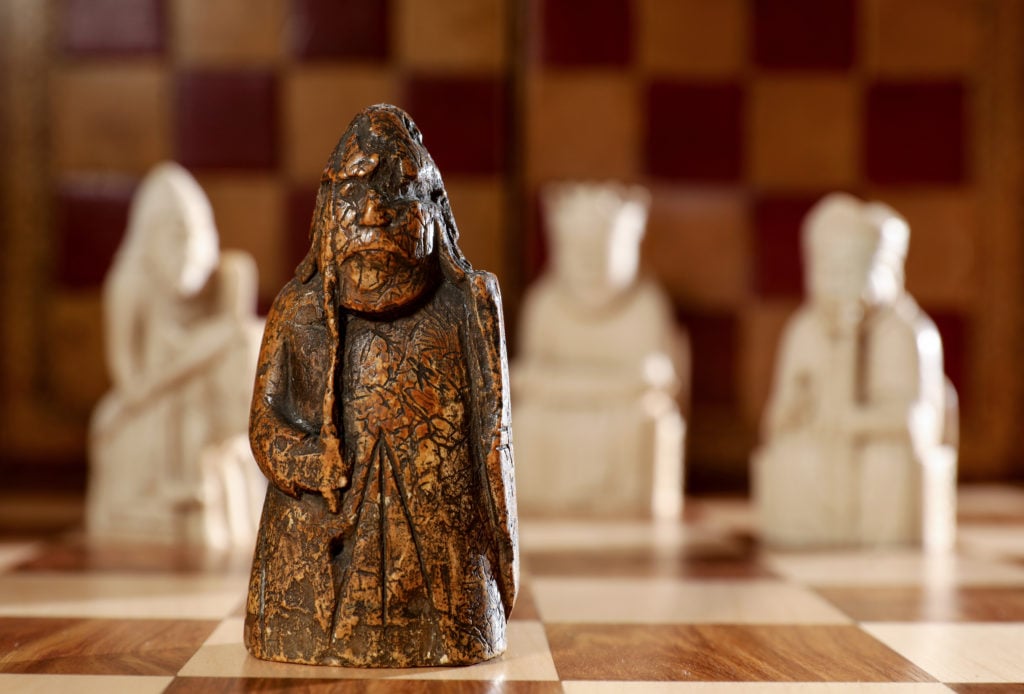
The story itself about how the piece was discovered is absolutely amazing. The piece came up for auction on July 2, 2019 at Sotheby's London, and was estimated to go for as much as $1.3 million, the first time any Lewis chess piece has been offered for auction.
The piece itself is called a "Warder" and is the equivalent of a modern Rook (Castle), carved from Walrus ivory. You can read more about the piece, it's discovery and the auction at the links below.
A Lewis Chessman, Bought for $6 and Then Tucked Away in a Drawer for Decades, Just Sold at Auction for Almost $1 Million
Sarah Cascone, July 3, 2019
ArtNet News
A Newly Discovered Lewis Chessman Comes to Auction
Jue 4, 2019
By Sotheby's
Why this single chess piece could fetch $1 million in an upcoming auction
Alex Horton, June 3, 2019
The Washington Post
Lewis Chess Piece Bought for 5 Pounds and Kept in Drawer Sells for 735,000 Pounds
Simon Johnson, 2 July 2019
The Telegraph
The story itself about how the piece was discovered is absolutely amazing. The piece came up for auction on July 2, 2019 at Sotheby's London, and was estimated to go for as much as $1.3 million, the first time any Lewis chess piece has been offered for auction.
The piece itself is called a "Warder" and is the equivalent of a modern Rook (Castle), carved from Walrus ivory. You can read more about the piece, it's discovery and the auction at the links below.
 |
| Photo by Tristan Fewings/Getty Images for Sotheby’s. |
Sarah Cascone, July 3, 2019
ArtNet News
A Newly Discovered Lewis Chessman Comes to Auction
Jue 4, 2019
By Sotheby's
Why this single chess piece could fetch $1 million in an upcoming auction
Alex Horton, June 3, 2019
The Washington Post
Lewis Chess Piece Bought for 5 Pounds and Kept in Drawer Sells for 735,000 Pounds
Simon Johnson, 2 July 2019
The Telegraph
Monday, April 29, 2019
2019 Grand Pacific Open - Final Results/Standings
Hola darlings!
Full Section standings and cross-tables.
Premier Section (49 players): (Female Players)
5. WGM Nino Maisuradze (2344): 4.5/6
14. WFM Valeria Gansvind (2119): 4.0/6
22. WFM Anne Marie Velea (2090): 3.0/6
26. Kate Jiang (1810): 3.0/6
U2100 Section (36 players): (Female Players)
18. Sophie Velea (1861): 3.0/6
21. Larysa Plostak (1750): 2.5/6
30. Stephanie Velea (1836): 2.0/6
31. Julia O'Neill (1711): 2.0/6
U1700 Section (36 players): (Female Players)
7. Yu Han (Veronica) Guo (1335): 4.0/6
15. Helen Cheng (1404): 3.0/6
34. Amanda Yang (1072): 1.5/6
U1200 Section (37 players): (Female Players)
5.0 Inna Rabinovich (1079): 4.0/6
31. Collete Eisenberg (805): 2.0/6
Goddesschess Prizes:
WGM Nino Maisuradze $125
Valeria Gansvind $100
Anne-Marie Velea, Kate Jiang $65 each
Sophie Velea $25
Section Prizes:
Premier: 3rd/4th WGM Nino Maisuradze $220
Premier (U2100): Anne Marie Velea $20; Kate Jiang $20
U1700 (U1400): Yu Han (Veronica) Guo $75
Congratulations to all of the chess femmes who played in this event. You were 8.2% of the turnout this year. We're taking a look at the Goddesschess prize structure for the top finishing female players to see how we can encourage more of you to play in next year's event.
Full Section standings and cross-tables.
Premier Section (49 players): (Female Players)
5. WGM Nino Maisuradze (2344): 4.5/6
14. WFM Valeria Gansvind (2119): 4.0/6
22. WFM Anne Marie Velea (2090): 3.0/6
26. Kate Jiang (1810): 3.0/6
U2100 Section (36 players): (Female Players)
18. Sophie Velea (1861): 3.0/6
21. Larysa Plostak (1750): 2.5/6
30. Stephanie Velea (1836): 2.0/6
31. Julia O'Neill (1711): 2.0/6
U1700 Section (36 players): (Female Players)
7. Yu Han (Veronica) Guo (1335): 4.0/6
15. Helen Cheng (1404): 3.0/6
34. Amanda Yang (1072): 1.5/6
U1200 Section (37 players): (Female Players)
5.0 Inna Rabinovich (1079): 4.0/6
31. Collete Eisenberg (805): 2.0/6
Goddesschess Prizes:
WGM Nino Maisuradze $125
Valeria Gansvind $100
Anne-Marie Velea, Kate Jiang $65 each
Sophie Velea $25
Section Prizes:
Premier: 3rd/4th WGM Nino Maisuradze $220
Premier (U2100): Anne Marie Velea $20; Kate Jiang $20
U1700 (U1400): Yu Han (Veronica) Guo $75
Congratulations to all of the chess femmes who played in this event. You were 8.2% of the turnout this year. We're taking a look at the Goddesschess prize structure for the top finishing female players to see how we can encourage more of you to play in next year's event.
Sunday, April 14, 2019
2019 Hales Corners Chess Challenge (Challenge XXIX)
Hola darlings!
The 2019 spring Hales Corners Chess Challenge has finished and prizes awarded. This year's event was brought back to Milwaukee (YAY!) at the Crowne Plaza Hotel, South 13th Street and College Avenue.
This year's Challenge hosted 31 players in the Open and 34 players in the Reserve. As you know, Goddesschess has been helping support female chess players since Challenge VIII. Our prize structure has changed quite a bit since then but our goal remains the same - to encourage more chess femmes to play in tournaments and match themselves against stronger players. That's the way to grow your skills.
This year's Challenge XXIX conflicted with the All Girls National Open in Chicago hosted over the weekend, and it seems that drew a lot of chess femmes who might have otherwise considered playing in the Challenge to Chicago to compete in the All Girls National Open. But we still had a good percentage of chess femmes attending, 9.2%.
You know the drill by now (I hope!): Goddesschess prizes are in addition to any prize a female player may earn, and the top finishing female player in each Section receives Goddesschess paid registration if she chooses to play in the next Hales Corners Chess Challenge.
The report:
Open Players; Goddesschess Prizes Awarded (if any):
Susanna Ulrich (2079) $125 (plus paid registration for next event)
Madeline Weber (1718) $100
Reserve Players; Goddesschess Prizes Awarded (if any):
Lizzie Brahin (1289) $50 (plus paid registration for next event)
Ellen Wanek (1234) $40
Sandra Hoffman 81371) $20
Katerina Tarra (375) (no prize won but scored lots of experience points!)
My chess buddy Ellen Wanek sent me a couple of photos of the chess femmes!

Ladies, you brought a smile to my face!
Okay, I probably should have used this one instead but I couldn't resist using the first one (I always make faces in photographs, too):

I LUV you all! Thanks for coming out and supporting your fellow female chess femmes at this great event. I plan on seeing you ALL in person at the Autumn Hales Corners Chess Challenge on October 5th, same time, same place (but I won't be playing - it makes my eyes cross and gives me a headache that would kill a man to play chess these days, UGH!)
The 2019 spring Hales Corners Chess Challenge has finished and prizes awarded. This year's event was brought back to Milwaukee (YAY!) at the Crowne Plaza Hotel, South 13th Street and College Avenue.
This year's Challenge hosted 31 players in the Open and 34 players in the Reserve. As you know, Goddesschess has been helping support female chess players since Challenge VIII. Our prize structure has changed quite a bit since then but our goal remains the same - to encourage more chess femmes to play in tournaments and match themselves against stronger players. That's the way to grow your skills.
This year's Challenge XXIX conflicted with the All Girls National Open in Chicago hosted over the weekend, and it seems that drew a lot of chess femmes who might have otherwise considered playing in the Challenge to Chicago to compete in the All Girls National Open. But we still had a good percentage of chess femmes attending, 9.2%.
You know the drill by now (I hope!): Goddesschess prizes are in addition to any prize a female player may earn, and the top finishing female player in each Section receives Goddesschess paid registration if she chooses to play in the next Hales Corners Chess Challenge.
The report:
Open Players; Goddesschess Prizes Awarded (if any):
Susanna Ulrich (2079) $125 (plus paid registration for next event)
Madeline Weber (1718) $100
Reserve Players; Goddesschess Prizes Awarded (if any):
Lizzie Brahin (1289) $50 (plus paid registration for next event)
Ellen Wanek (1234) $40
Sandra Hoffman 81371) $20
Katerina Tarra (375) (no prize won but scored lots of experience points!)
My chess buddy Ellen Wanek sent me a couple of photos of the chess femmes!
Ladies, you brought a smile to my face!
Okay, I probably should have used this one instead but I couldn't resist using the first one (I always make faces in photographs, too):
I LUV you all! Thanks for coming out and supporting your fellow female chess femmes at this great event. I plan on seeing you ALL in person at the Autumn Hales Corners Chess Challenge on October 5th, same time, same place (but I won't be playing - it makes my eyes cross and gives me a headache that would kill a man to play chess these days, UGH!)
2019 U.S. Women's Chess Championship - Final Standings
Congratulations to Jennifer Yu, who came out of the gate on fire and stayed on fire throughout the entire 2019 tournament, finishing with 10 out of 11 possible points. She had 2 draws and 9 wins! WHOOP WHOOP! Yu took sole first place in the Women's Championship for $25,000. Veterans to the U.S. Women's Championship Tatev Abrahamyan and Anna Zatonskih tied for 2nd place with 7.5/11 and each took home $15,500.
Final standings (11 rounds):

Here is the final cross-table:

Final standings (11 rounds):
Here is the final cross-table:

Wednesday, March 27, 2019
2019 Grand Pacific Open
Hola! The 2019 Grand Pacific Open (13th Annual Grand Pacific Open) will be here before you know it: April 19 - 22, 2019 in beautiful Victoria, BC over Easter weekend. You can find all the details and registration information/forms, etc. at the link (above).
WGM Nino Maisuradze is returning to play in the Premier Section after an absence of several years, hooray! WFM Valeria Gansvind is also returning and will play in the Premier Section as well.
Goddesschess has provided prize and sponsorship money for female chessplayers at various tournaments throughout the years. I believe we've been providing prize money and some sponsorship funds to the GPO since 2010. I can't check exactly when we first started because a few months ago I updated my email and cleaned out a whole bunch of stuff, keeping correspondence and records only since 2017. Oh well :)
We've been trying to get WGM Maisuradze back for some time, but she's married to a chessplayer and they try to schedule where there will be several events that they can play in either together or in separate events simultaneously within a certain time period and relatively close (distance wise) together. This year WGM Maisuradze's husband, GM Alexandr Fier, is playing in the 2019 GPO too!
The 2019 GPO is a FIDE and CFC rated 6-round Swiss. Top prize in the Premier Section is $1,000. Goddesschess prizes are awarded separately and do not affect any prize money awarded out of the GPO prize fund.
We're hoping for another great turnout in 2019 - especially your chess femmes!!!
WGM Nino Maisuradze is returning to play in the Premier Section after an absence of several years, hooray! WFM Valeria Gansvind is also returning and will play in the Premier Section as well.
Goddesschess has provided prize and sponsorship money for female chessplayers at various tournaments throughout the years. I believe we've been providing prize money and some sponsorship funds to the GPO since 2010. I can't check exactly when we first started because a few months ago I updated my email and cleaned out a whole bunch of stuff, keeping correspondence and records only since 2017. Oh well :)
We've been trying to get WGM Maisuradze back for some time, but she's married to a chessplayer and they try to schedule where there will be several events that they can play in either together or in separate events simultaneously within a certain time period and relatively close (distance wise) together. This year WGM Maisuradze's husband, GM Alexandr Fier, is playing in the 2019 GPO too!
The 2019 GPO is a FIDE and CFC rated 6-round Swiss. Top prize in the Premier Section is $1,000. Goddesschess prizes are awarded separately and do not affect any prize money awarded out of the GPO prize fund.
We're hoping for another great turnout in 2019 - especially your chess femmes!!!
Tuesday, March 26, 2019


Saturday, March 23, 2019
XXIX Hales Corners Challenge (Southwest Chess Club)
Hola darlings! It's that time of year once again. Goddesschess is sponsoring cash prizes for female players which are paid in addition to any prize money for which the player may qualify. Goddesschess is pleased to have provided prize money for Southwest Chess Club's Spring and Fall tournaments since Hales Corners Challenge VIII!
This year's 29th Spring Tournament will be held on Saturday April 13, 2019 - 4 rounds in one day, whew! We're back in a Milwaukee location, whoop whoop! This year's event will be held at the Crowne Plaza Milwaukee Airport Hotel at 6401 South 13th Street in Milwaukee.
US Chess Grand Prix Points: 10
A Wisconsin Tour event!
4SS, G/60;d6. 2 Sections: Open & Reserve (under 1600).
You can find further details at the Southwest Chess Club blog, as well as a link to the flyer.
Goddesschess Prizes:
Open: $50 per win/$25 per draw
Reserve: $20 per win/$10 per draw
Perfect Score Prizes for Females: $80 in Open/$40 in Reserve
This year we're scheduled at the same time as a national girl's chess competition in Chicago so some of our best female players may not be with us this spring. This may present a great opportunity for some new chess femme future stars to shine at the Hales Corners Challenge!!!!! They're great events, I hope there will be a "fabulous, dahling" turnout!
This year's 29th Spring Tournament will be held on Saturday April 13, 2019 - 4 rounds in one day, whew! We're back in a Milwaukee location, whoop whoop! This year's event will be held at the Crowne Plaza Milwaukee Airport Hotel at 6401 South 13th Street in Milwaukee.
US Chess Grand Prix Points: 10
A Wisconsin Tour event!
4SS, G/60;d6. 2 Sections: Open & Reserve (under 1600).
You can find further details at the Southwest Chess Club blog, as well as a link to the flyer.
Goddesschess Prizes:
Open: $50 per win/$25 per draw
Reserve: $20 per win/$10 per draw
Perfect Score Prizes for Females: $80 in Open/$40 in Reserve
This year we're scheduled at the same time as a national girl's chess competition in Chicago so some of our best female players may not be with us this spring. This may present a great opportunity for some new chess femme future stars to shine at the Hales Corners Challenge!!!!! They're great events, I hope there will be a "fabulous, dahling" turnout!
2019 U.S. Women's Chess Championship
It's that time of year again, darlings! Yes, once again, the "St. Louis Chess Club," whose formal name is too long for me to remember, something with Chess and Scholastic and Center in it -- is hosting the U.S. Chess Championships. It's smaller than you'd expect (at least it was in 2009 when I visited the city) in a great location on this wonderful mini-pedestrian mall area in an upscale neighborhood of St. Louis, right across the street from the World Chess Hall of Fame with its fabulous shows and displays.
This year's Championships started on March 18 and end on April 1. Not exactly an auspicious date (in my humble opinion) for ending a world-class tournament. The prize fund is $100,000, which is fabulous. Except the male players are competing for $185,000 in total prizes. And the $64,000 Fischer Award will be paid to ANY player(s) who have a perfect score. Yeah - well, you never know...
This year's field of twelve players features some "venerable veterans" and several young and eager up and comers, many with ELOs below 2400. Here's the Field:
GM Irina Krush 2533, age 35
IM Anna Zatonskih 2489, age 40
WGM Tatev Abrahamyan 2462, age 31
WGM Jennifer Yu 2398, age 17
WIM Carissa Yip 2384, age 15
WGM Sabina Foisor 2362, age 29
WIM Annie Wang 2360, age 16
WGM Anna Sharevich 2354, age 33
WIM Akshita Gorti 2352, age 16
WIM Maggie Feng 2333, age 18
WIM Emily Nguyen 2310, age 16
WIM Ashritha Eswaran 2295, age 18
Standings after Round 3 (chart courtesy of www.uschesschamps.com):
:

Cross-Table and Round 3 Pairings (chart courtesy of www.uschesschamps.com):

This year's Championships started on March 18 and end on April 1. Not exactly an auspicious date (in my humble opinion) for ending a world-class tournament. The prize fund is $100,000, which is fabulous. Except the male players are competing for $185,000 in total prizes. And the $64,000 Fischer Award will be paid to ANY player(s) who have a perfect score. Yeah - well, you never know...
This year's field of twelve players features some "venerable veterans" and several young and eager up and comers, many with ELOs below 2400. Here's the Field:
GM Irina Krush 2533, age 35
IM Anna Zatonskih 2489, age 40
WGM Tatev Abrahamyan 2462, age 31
WGM Jennifer Yu 2398, age 17
WIM Carissa Yip 2384, age 15
WGM Sabina Foisor 2362, age 29
WIM Annie Wang 2360, age 16
WGM Anna Sharevich 2354, age 33
WIM Akshita Gorti 2352, age 16
WIM Maggie Feng 2333, age 18
WIM Emily Nguyen 2310, age 16
WIM Ashritha Eswaran 2295, age 18
Standings after Round 3 (chart courtesy of www.uschesschamps.com):
:
Cross-Table and Round 3 Pairings (chart courtesy of www.uschesschamps.com):

Tani Adewumi Wins His Age Group in New York State Championship While Family Lives in Homeless Shelter
By now you would have heard the story. There is more coverage at The New York Times:
This 8-Year Old Chess Champion Will Make You Smile
Overcoming Life's Basic Truth: Talent is universal, but opportunity is not.
By Nicholas Kristol (Opinion writer)
March 16, 2019
Our Chess Champion Has a Home
The 8-year old refuge who last week was thrilled to have a trophy suddenly has so much more.
By Nicholas Kristol (Opinion writer)
March 3, 2019
This article is from The Washington Post. Tani made the big time!
Chess victory is ticket out of shelter for
8-year-old boy
From AP
March 19, 2019
This 8-Year Old Chess Champion Will Make You Smile
Overcoming Life's Basic Truth: Talent is universal, but opportunity is not.
By Nicholas Kristol (Opinion writer)
March 16, 2019
Our Chess Champion Has a Home
The 8-year old refuge who last week was thrilled to have a trophy suddenly has so much more.
By Nicholas Kristol (Opinion writer)
March 3, 2019
This article is from The Washington Post. Tani made the big time!
Chess victory is ticket out of shelter for
8-year-old boy
From AP
March 19, 2019
NEW YORK — An 8-year-old boy’s victory as New York state chess champion will be his family’s ticket out of a homeless shelter.
The New York Times reported that Tani Adewumi (TAH’-nee ah-deh-WOO’-mee) won the state chess title for his age group this month even though he learned to play only about a year ago.
Tani and his family have lived in a New York City shelter since fleeing Nigeria in 2017. The Christian family feared attacks by the militant group Boko Haram.
Tani’s chess coach Russell Makofsky (muh-KAHF’-skee) set up a GoFundMe account for the family after Tani won the championship.
Makofsky joined Tani on NBC’s “Today” show Tuesday and said that thanks to donations, the family is moving into an apartment.
Tani says he “felt surprised” by his win.
And Garry Kasparov wrote a piece for The Washington Post.
Tuesday, February 19, 2019
Trying to Stay Warm and Staying Alive, Staying Alive...
February 9, 2019 (sorry for the delay!)
Hola darlings!
Housebound yet again this snowy and super-cold winter in southeast Wisconsin. UGH! We got at least 8 more inches of snow overnight. I shoveled once yesterday, once this morning, and need to go out and do what I hope will be a final shovel a bit later on. It's still snowing although flurries now, not the wet heavy stuff that pounded us overnight and earlier this morning.
Anyway, after Polar Vortexes, and freezing sleets and ice skating on the sidewalk (not kidding!), and the snow banks reaching up so high I can't throw the snow much higher than it already is, who has time for blogging? Not moi. And now tax season is upon us.
Americans, have you seen what the IRS has NOW inflicted upon us? Not just a single page (on both sides) regular 1040 Federal Income Tax Return that has been the standard for years. The form where everybody knows what lines to fill out. NOOOOOOOOOOOOOO. Now the return is two half-pages long and you need to attach SCHEDULES. This was supposed to make the #&$@#*! process simpler, was it not? Instead, leave it to this clueless wonder of the most stupid administration ever in the entire history of the world to EFF it up even worse than it already was. The instructions for Form 1040 alone are 117 pages long. Not joking. And you have to figure out what schedules you need to fill out in order to complete your Form 1040, and what to attach. RUTSA RUCK! I've a feeling a lot of people are going to be getting letters from the IRS that will read something like this:
Dear Taxpayer: Blah blah blah you really effed up your 2018 U.S. Federal Income Tax Return and Schedules. Please remit $10,000 via wire transfer to Prince Abuki Kababoi, care of Sudanese Embassy, Hanoi, Vietnam. Please remit within ten (10) days or you will be arrested and sent to a prison camp in an undisclosed southwest desert location with no due process of law. Because - that's the way we do things in the Trump administration now. Thank you for your attention to this matter.
I started reading the instructions (no way am I printing out 117 pages on my little printer) online yesterday, a process that is driving me bonkers (can you tell?), and I think I have the Schedules I need now printed to complete the Form 1040. What a pain in the ASS! I am now enjoying a much needed glass of wine.
I am going to have to tackle my income tax return either later today or tomorrow. I want to file early this year instead of not receiving my refund check until July, LOL! Of course, with my luck, Trumpypoo will shut the government down and I won't get a refund check until July anyway. July 2020.
On a happier note, I just saw this commercial that brilliantly uses chess and thought it was great. Enjoy!
Hola darlings!
Housebound yet again this snowy and super-cold winter in southeast Wisconsin. UGH! We got at least 8 more inches of snow overnight. I shoveled once yesterday, once this morning, and need to go out and do what I hope will be a final shovel a bit later on. It's still snowing although flurries now, not the wet heavy stuff that pounded us overnight and earlier this morning.
Anyway, after Polar Vortexes, and freezing sleets and ice skating on the sidewalk (not kidding!), and the snow banks reaching up so high I can't throw the snow much higher than it already is, who has time for blogging? Not moi. And now tax season is upon us.
Americans, have you seen what the IRS has NOW inflicted upon us? Not just a single page (on both sides) regular 1040 Federal Income Tax Return that has been the standard for years. The form where everybody knows what lines to fill out. NOOOOOOOOOOOOOO. Now the return is two half-pages long and you need to attach SCHEDULES. This was supposed to make the #&$@#*! process simpler, was it not? Instead, leave it to this clueless wonder of the most stupid administration ever in the entire history of the world to EFF it up even worse than it already was. The instructions for Form 1040 alone are 117 pages long. Not joking. And you have to figure out what schedules you need to fill out in order to complete your Form 1040, and what to attach. RUTSA RUCK! I've a feeling a lot of people are going to be getting letters from the IRS that will read something like this:
Dear Taxpayer: Blah blah blah you really effed up your 2018 U.S. Federal Income Tax Return and Schedules. Please remit $10,000 via wire transfer to Prince Abuki Kababoi, care of Sudanese Embassy, Hanoi, Vietnam. Please remit within ten (10) days or you will be arrested and sent to a prison camp in an undisclosed southwest desert location with no due process of law. Because - that's the way we do things in the Trump administration now. Thank you for your attention to this matter.
I started reading the instructions (no way am I printing out 117 pages on my little printer) online yesterday, a process that is driving me bonkers (can you tell?), and I think I have the Schedules I need now printed to complete the Form 1040. What a pain in the ASS! I am now enjoying a much needed glass of wine.
I am going to have to tackle my income tax return either later today or tomorrow. I want to file early this year instead of not receiving my refund check until July, LOL! Of course, with my luck, Trumpypoo will shut the government down and I won't get a refund check until July anyway. July 2020.
On a happier note, I just saw this commercial that brilliantly uses chess and thought it was great. Enjoy!
Sunday, January 6, 2019
New Year!
Hola darlings! How are you all - hope you're doing great! I can tell you right now I'm sure enjoying this January thaw that's enveloped my home town for the past 3 days, just wonderful to not be freezing my fingers and toes off every time I step out the door. Yesterday it got up to 54 degrees F and the Sun felt fabulous!
Sad news. As the new year churns forward, we are losing more and more of the generation of my Dad (Dad passed at the age of 80 a week before Veterans' Day in November 2002). I read this morning in The Washington Post that Christine McGuire, the oldest sister of the three McGuire Sisters, had passed away. Link to article.
As part of the baby-boomer generation, the McGuire sisters were already grown up by the time I and my younger siblings came along after the end of WWII, when millions of GIs came home, got married, got jobs or went on to college, and got married in droves. And they nearly all had children, often large families. My family of six was not considered unduly large in those days and was more the norm in the neighborhoods were I grew up. One of our neighbors had 14 children in their family! The family we lived upstairs from for years had five kids.
I literally grew up watching black and white movies on television - FOR FREE! - back in those "old" days in the 1950s and 1960s.
I remember the McGuire sisters only from those old movies. One song I remember in particular was "Boogie Woogie Bugle Boy of Company B" and the McGuire sisters dancing while dressed up as WACs in WWII. I actually found an old clip of the McGuires performing the song from the 1941 movie, "Buck Privates" starring Abbott and Costello, thanks to TCM online - Turner Classic Movies. The sisters rocked out the song! Many years later, the incomparable Bette Midler featured the song in several of her shows over the years - this montage is a hoot (from Youtube):
Sad news. As the new year churns forward, we are losing more and more of the generation of my Dad (Dad passed at the age of 80 a week before Veterans' Day in November 2002). I read this morning in The Washington Post that Christine McGuire, the oldest sister of the three McGuire Sisters, had passed away. Link to article.
As part of the baby-boomer generation, the McGuire sisters were already grown up by the time I and my younger siblings came along after the end of WWII, when millions of GIs came home, got married, got jobs or went on to college, and got married in droves. And they nearly all had children, often large families. My family of six was not considered unduly large in those days and was more the norm in the neighborhoods were I grew up. One of our neighbors had 14 children in their family! The family we lived upstairs from for years had five kids.
I literally grew up watching black and white movies on television - FOR FREE! - back in those "old" days in the 1950s and 1960s.
I remember the McGuire sisters only from those old movies. One song I remember in particular was "Boogie Woogie Bugle Boy of Company B" and the McGuire sisters dancing while dressed up as WACs in WWII. I actually found an old clip of the McGuires performing the song from the 1941 movie, "Buck Privates" starring Abbott and Costello, thanks to TCM online - Turner Classic Movies. The sisters rocked out the song! Many years later, the incomparable Bette Midler featured the song in several of her shows over the years - this montage is a hoot (from Youtube):
Wednesday, December 26, 2018
Latest Developments in Chess-Playing Algorithms in Artificial Intelligence - Scares the Crap Out of Me!
Hmmmm... I find this article frightening. Rather reminds me of the beginning of the Borg, or "The Terminator." I don't want to end up worshipping a frigging computer like it is "Goddess" and switch off my brain. We have far too much of that already. Just look at what's living in the White House, and what it's got us. Article at The New York Times.
By Steven Strogatz
December 26, 2018
In early December, researchers at DeepMind, the artificial-intelligence company owned by Google’s parent corporation, Alphabet Inc., filed a dispatch from the frontiers of chess.
A year earlier, on Dec. 5, 2017, the team had stunned the chess world with its announcement of AlphaZero, a machine-learning algorithm that had mastered not only chess but shogi, or Japanese chess, and Go. The algorithm started with no knowledge of the games beyond their basic rules. It then played against itself millions of times and learned from its mistakes. In a matter of hours, the algorithm became the best player, human or computer, the world has ever seen.
The details of AlphaZero’s achievements and inner workings have now been formally peer-reviewed and published in the journal Science this month. The new paper addresses several serious criticisms of the original claim. (Among other things, it was hard to tell whether AlphaZero was playing its chosen opponent, a computational beast named Stockfish, with total fairness.) Consider those concerns dispelled. AlphaZero has not grown stronger in the past twelve months, but the evidence of its superiority has. It clearly displays a breed of intellect that humans have not seen before, and that we will be mulling over for a long time to come.
One Giant Step for a Chess-Playing Machine
The stunning success of AlphaZero, a deep-learning algorithm, heralds a new age of insight — one that, for humans, may not last long.
By Steven Strogatz
December 26, 2018
In early December, researchers at DeepMind, the artificial-intelligence company owned by Google’s parent corporation, Alphabet Inc., filed a dispatch from the frontiers of chess.
A year earlier, on Dec. 5, 2017, the team had stunned the chess world with its announcement of AlphaZero, a machine-learning algorithm that had mastered not only chess but shogi, or Japanese chess, and Go. The algorithm started with no knowledge of the games beyond their basic rules. It then played against itself millions of times and learned from its mistakes. In a matter of hours, the algorithm became the best player, human or computer, the world has ever seen.
The details of AlphaZero’s achievements and inner workings have now been formally peer-reviewed and published in the journal Science this month. The new paper addresses several serious criticisms of the original claim. (Among other things, it was hard to tell whether AlphaZero was playing its chosen opponent, a computational beast named Stockfish, with total fairness.) Consider those concerns dispelled. AlphaZero has not grown stronger in the past twelve months, but the evidence of its superiority has. It clearly displays a breed of intellect that humans have not seen before, and that we will be mulling over for a long time to come.
Monday, December 3, 2018
Catching Up: "Rare" Norman Graves Discovered in Palermo, Sicily
From Fox News
Rare 'Viking' Discovery Made in Italy
By Chris Ciaccia
July 24, 2018
Archaeologists have found a burial site with 10 skeletons near Palermo, the capital of the Italian island Sicily.
The interesting bit? The skeletons are probably the descendants of Vikings.
"Some of the dead buried in the cemetery were undoubtedly members of the elites or the clergy, as the form of some of the graves indicates," said Sławomir Moździoch, the head of the excavation and an archaeologist at the Institute of Archaeology and Ethnology of the Polish Academy of Sciences in Warsaw in a statement.
After looking at the 10 buried bodies, which were found near the medieval church of San Michele del Golfo, Moździoch and his team found that three of the bodies were female and two were children. The remaining bodies were difficult to identify and although no goods or equipment was found in the graves, the researchers noted that the cemetery associated with the hospital at San Michele del Golfo was mentioned in a document from the 12th century.
Scientists have discovered that the graves belong to Normans, descendants of Vikings.
"According to the local anthropologist, the tallness and massive build of skeletons of people buried here indicate this origin," Moździoch said.
Normans in Italy are not a surprise, as the group, which arose in the northern part of France, would eventually go on to have military conquests all over Europe, including in the southern part of Italy in the late 10th and early 11 centuries.
"In the second half of the 11th century, the island was recaptured from the Arabs by a Norman nobleman, Roger de Hauteville," Moździoch added in the statement.
LiveScience describes the discovery of the graves as "a rare finding."
Rare 'Viking' Discovery Made in Italy
By Chris Ciaccia
July 24, 2018
Archaeologists have found a burial site with 10 skeletons near Palermo, the capital of the Italian island Sicily.
The interesting bit? The skeletons are probably the descendants of Vikings.
"Some of the dead buried in the cemetery were undoubtedly members of the elites or the clergy, as the form of some of the graves indicates," said Sławomir Moździoch, the head of the excavation and an archaeologist at the Institute of Archaeology and Ethnology of the Polish Academy of Sciences in Warsaw in a statement.
After looking at the 10 buried bodies, which were found near the medieval church of San Michele del Golfo, Moździoch and his team found that three of the bodies were female and two were children. The remaining bodies were difficult to identify and although no goods or equipment was found in the graves, the researchers noted that the cemetery associated with the hospital at San Michele del Golfo was mentioned in a document from the 12th century.
Scientists have discovered that the graves belong to Normans, descendants of Vikings.
"According to the local anthropologist, the tallness and massive build of skeletons of people buried here indicate this origin," Moździoch said.
Normans in Italy are not a surprise, as the group, which arose in the northern part of France, would eventually go on to have military conquests all over Europe, including in the southern part of Italy in the late 10th and early 11 centuries.
"In the second half of the 11th century, the island was recaptured from the Arabs by a Norman nobleman, Roger de Hauteville," Moździoch added in the statement.
LiveScience describes the discovery of the graves as "a rare finding."
Catching Up: Ancient Site in Texas Adds to Debate About When Humans First Arrived Here
From The Star-Telegram
Who Were the First Americans? Ancient Tools Dug Up in Texas Add to the Debate
By Matthew Martinez
July 13, 2018; Updated July 13, 2018 12:10 p.m.

A new archaeological find suggests that humans inhabited America, specifically parts of what is known today as Texas, as far back as 21,700 years ago.
A group of scientists led by Thomas Williams of Texas State University recently unearthed more than 150,000 human-modified stones at the Gault Archaeological Site in Central Texas, about 40 miles north of Austin.
The group doesn’t claim to have nailed the answer to the question, “Who were the first Americans?” but they might have discovered another runner in that race. The find illustrates “the presence of a previously unknown projectile point technology in North America from before [16,000 years ago],” say their findings, published in the July 11 edition of the journal “Science Advances."
Williams' team of archaeologists excavated the Texas bedrock and uncovered ancient rocks shaped into bifaces — used as hand axes — blades, projectile points, engraving tools and scrapers dating to between 16,700 and 21,700 years. They refer to the tools as the Gault Assemblage.
Not much about the physical traits of those who used tools can be inferred from the material in the find, but its significance lies in how old the items are. The team used optically stimulated luminescence to age the materials, which means they were able to find how long it had been since the sediment the items were found in had been exposed to sunlight, according to Science News.
After a haul of flint spearheads near Clovis, New Mexico, was uncovered in the 1930s, popular scientific belief held that the first occupants of the Americas — referred to as the Clovis culture— arrived about 13,000 years ago, according to National Geographic. But the Gault find is one of several more recent — and deeper — digs that are putting that theory to bed.
Material attributed to the Clovis people was previously unearthed at the Gault site — finds dating to the Clovis period have also been found in Colorado and Utah, according to PBS. But what Thomas and his crew found is older, and was found — perhaps predictably — deeper in the ground.
If these Americans indeed occupied parts of Texas in the time range identified by the Gault Assemblage, they probably arrived in the Americas during the peak of the last Ice Age, about 20,000 years ago, according to the BBC. At that time, North America would have been covered with permafrost and dotted with tall glaciers, which would have made for suboptimal travel conditions during their journey across the land bridge from Asia known as Beringia.
Archaeological evidence of human habitation of the Americas before Clovis include finds at Bluefish Caves, Yukon, Canada; Topper, South Carolina; Meadowcroft Rockshelter, Pennsylvania; the Buttermilk Creek Complex in Texas; Cactus Hill, Virginia; Saltville, Virginia; Connley Caves, Oregon; several finds in Alaska; and several more in Brazil, Chile and Colombia.
Who Were the First Americans? Ancient Tools Dug Up in Texas Add to the Debate
By Matthew Martinez
July 13, 2018; Updated July 13, 2018 12:10 p.m.

A new archaeological find suggests that humans inhabited America, specifically parts of what is known today as Texas, as far back as 21,700 years ago.
A group of scientists led by Thomas Williams of Texas State University recently unearthed more than 150,000 human-modified stones at the Gault Archaeological Site in Central Texas, about 40 miles north of Austin.
The group doesn’t claim to have nailed the answer to the question, “Who were the first Americans?” but they might have discovered another runner in that race. The find illustrates “the presence of a previously unknown projectile point technology in North America from before [16,000 years ago],” say their findings, published in the July 11 edition of the journal “Science Advances."
Williams' team of archaeologists excavated the Texas bedrock and uncovered ancient rocks shaped into bifaces — used as hand axes — blades, projectile points, engraving tools and scrapers dating to between 16,700 and 21,700 years. They refer to the tools as the Gault Assemblage.
Not much about the physical traits of those who used tools can be inferred from the material in the find, but its significance lies in how old the items are. The team used optically stimulated luminescence to age the materials, which means they were able to find how long it had been since the sediment the items were found in had been exposed to sunlight, according to Science News.
After a haul of flint spearheads near Clovis, New Mexico, was uncovered in the 1930s, popular scientific belief held that the first occupants of the Americas — referred to as the Clovis culture— arrived about 13,000 years ago, according to National Geographic. But the Gault find is one of several more recent — and deeper — digs that are putting that theory to bed.
Material attributed to the Clovis people was previously unearthed at the Gault site — finds dating to the Clovis period have also been found in Colorado and Utah, according to PBS. But what Thomas and his crew found is older, and was found — perhaps predictably — deeper in the ground.
If these Americans indeed occupied parts of Texas in the time range identified by the Gault Assemblage, they probably arrived in the Americas during the peak of the last Ice Age, about 20,000 years ago, according to the BBC. At that time, North America would have been covered with permafrost and dotted with tall glaciers, which would have made for suboptimal travel conditions during their journey across the land bridge from Asia known as Beringia.
Archaeological evidence of human habitation of the Americas before Clovis include finds at Bluefish Caves, Yukon, Canada; Topper, South Carolina; Meadowcroft Rockshelter, Pennsylvania; the Buttermilk Creek Complex in Texas; Cactus Hill, Virginia; Saltville, Virginia; Connley Caves, Oregon; several finds in Alaska; and several more in Brazil, Chile and Colombia.
Catching Up: Drought In Ireland Reveals New Stonehenge-Like Site
From The Washington Post's Capital Weather Gang:
Video shows newly discovered Stonehenge-like site, revealed by extreme drought
By Matthew Cappucci
July 13, 2018
Video shows newly discovered Stonehenge-like site, revealed by extreme drought
By Matthew Cappucci
July 13, 2018
Anthony Murphy and Ken Williams were flying a drone over the Boyne Valley in Ireland on Tuesday afternoon when they spotted something interesting. Their video depicts what appears to be the footprint of nearly 50 large wood formations. Oriented much like Stonehenge, the discovery is in line with other large monuments in the area known to have been constructed around 5,000 years ago.
 |
| (Please go to actual article to view the video clip) |
Murphy said he has flown his drone on numerous occasions over the same parcel of land, but this was the first time he saw the site, which looks like a giant crop circle.
“The weather is absolutely critical to the discovery of this monument,” Murphy said, according to the Irish Times. “I have flown a drone over the Boyne Valley regularly and have never seen this.”
The newly discovered ancient site is close to the 5,000-year-old Newgrange neolithic passage tomb.
Murphy said he and Williams notified the Department of Culture, Heritage and the Gaeltacht. It has yet to decide what to do next about the curious find, the Irish Times reports:
According to Met Eireann, Ireland’s meteorological service, northeast Ireland has been in drought for around a month, following a very wet spring. No rain has fallen so far in July in Dunsany, the observing site 10 miles south-southwest of Newgrange where the discovery was made.The National Monuments Service will now be doing some further technical work to help determine the nature of the site, but from the drone images visible on social media, it is a very significant find which fits within the knowledge of large prehistoric ritual enclosures and associated ritual landscapes as at Bru na Boinne.
Last month, only 1.18 centimeters came down, and during May, a mere 3.32 centimeters. In just the past two months, the region has been running about 70 percent below where it should be. Couple this with warmer-than-normal temperatures, and it’s easy to see why all grass and vegetation has largely browned and dried out.
One characteristic of the large structures is their tendency to change the composition of the surrounding soil. The wood inevitably decayed and fertilized the soil in the process. The nutrients from the wood are great for vegetation and even help the soil retain more water, which is why these areas are greener than their surroundings. The region got plenty of rain in the spring, and the super-fertile soil is hanging on to that moisture.
If the remarkable find hadn’t been caught when it was, we might not have known about it for many years to come. The stretch of hot and dry weather facing the region is about to come to an end as remnants of Hurricane Chris ride the jet stream toward Ireland and Britain. Weather Advisories — “status yellow” — have been issued for the resulting rainfall approaching in the days ahead.
Correction: An earlier version of this story said the newly-discovered henge site was originally made of stone. It was actually made of wood.
Catching Up: Menstrual Pads Can't Fix Prejudice (or Male Fear of Blood from a Woman's Womb)
From The New York Times Opinion Page
Menstrual Pads Can't Fix Prejudice
Chris Bobel*
March 31, 2018
The period is finally having its moment.
In the last decade, the difficulties women and girls across the globe face during menstruation have inspired a raft of grass-roots campaigns. “Period poverty” activists seek to make menstrual products more affordable and available. International agencies like Plan International, Water Aid, U.N. Women and Unicef are supporting menstrual hygiene programs in dozens of countries. Access to safe, accessible bathrooms and materials to manage menstruation is now recognized as a human rights issue that involves many other areas of development, like clean water, education and gender equality.
These shifts are certainly heartening. For centuries, around the world, menstruation has been treated as a source of shame, rather than as a normal, healthy part of women’s lives. Initiatives to “make menstruation matter” are both welcome and overdue.
Why, then, after years studying these efforts, do I feel ambivalent? Because too many of them have opted to focus on providing women with new products, failing to substantively fight the core problem surrounding menstruation: cultural stigma.
Consider the humble piece of cloth. Many Westerners are horrified to learn that repurposed cloth is commonly used by women in poor countries to manage their periods. Yet cloth is absorbent, readily available, cheap and sustainable. Folded or cut to size, changed as necessary and properly washed and dried, it can be sanitary and effective.
Still, many programs are hustling to replace this traditional method with commercial products. In addition to the nongovernmental organizations that make products their priority, start-ups are seeding microbusinesses in which, say, Rwandan, Indian and Ugandan women make and sell pads. Such an approach falls under the category of a “technological fix”: a seemingly simple solution to what is, in reality, a complex problem.
Such interventions can be helpful, and in some circumstances even necessary, but they fail to address the root issues. No menstrual product is effective for a schoolgirl who lacks access to a clean, secure toilet, as is the case in many poor countries. Stigma about menstruation often undermines proper use, and a woman’s fear of inadvertently revealing she is menstruating remains a distraction and a burden.
These fears and stigmas are prevalent in the rich world, too. As the historian Joan Jacobs Brumberg has shown, in the United States at the turn of the century, menstruation became increasingly medicalized: Doctors, who were mostly men, and increasingly viewed as experts, coached mothers to socialize their daughters to keep tidy and discreet. Menarche, the first menstrual period, was effectively reduced from a sign of womanhood to a “hygienic crisis."
Even now, American girls are socialized to see menstruation, and more generally, their bodies, as problems to be solved through use of the “right” products. Today, we are exporting this view around the world.
Menstrual Pads Can't Fix Prejudice
Chris Bobel*
March 31, 2018
The period is finally having its moment.
In the last decade, the difficulties women and girls across the globe face during menstruation have inspired a raft of grass-roots campaigns. “Period poverty” activists seek to make menstrual products more affordable and available. International agencies like Plan International, Water Aid, U.N. Women and Unicef are supporting menstrual hygiene programs in dozens of countries. Access to safe, accessible bathrooms and materials to manage menstruation is now recognized as a human rights issue that involves many other areas of development, like clean water, education and gender equality.
These shifts are certainly heartening. For centuries, around the world, menstruation has been treated as a source of shame, rather than as a normal, healthy part of women’s lives. Initiatives to “make menstruation matter” are both welcome and overdue.
Why, then, after years studying these efforts, do I feel ambivalent? Because too many of them have opted to focus on providing women with new products, failing to substantively fight the core problem surrounding menstruation: cultural stigma.
Consider the humble piece of cloth. Many Westerners are horrified to learn that repurposed cloth is commonly used by women in poor countries to manage their periods. Yet cloth is absorbent, readily available, cheap and sustainable. Folded or cut to size, changed as necessary and properly washed and dried, it can be sanitary and effective.
Still, many programs are hustling to replace this traditional method with commercial products. In addition to the nongovernmental organizations that make products their priority, start-ups are seeding microbusinesses in which, say, Rwandan, Indian and Ugandan women make and sell pads. Such an approach falls under the category of a “technological fix”: a seemingly simple solution to what is, in reality, a complex problem.
Such interventions can be helpful, and in some circumstances even necessary, but they fail to address the root issues. No menstrual product is effective for a schoolgirl who lacks access to a clean, secure toilet, as is the case in many poor countries. Stigma about menstruation often undermines proper use, and a woman’s fear of inadvertently revealing she is menstruating remains a distraction and a burden.
These fears and stigmas are prevalent in the rich world, too. As the historian Joan Jacobs Brumberg has shown, in the United States at the turn of the century, menstruation became increasingly medicalized: Doctors, who were mostly men, and increasingly viewed as experts, coached mothers to socialize their daughters to keep tidy and discreet. Menarche, the first menstrual period, was effectively reduced from a sign of womanhood to a “hygienic crisis."
Even now, American girls are socialized to see menstruation, and more generally, their bodies, as problems to be solved through use of the “right” products. Today, we are exporting this view around the world.
Catching Up: Artifact Depicting Pharaoh Queen Hatshepsut Discovered in UK University in Storage!
By James Rogers, Fox News
March 26, 2018
A rare ancient artifact depicting the famous female pharaoh Hatshepsut has surfaced in the U.K., stunning experts.
 |
| The front of the artifact (The Egypt Centre, Swansea University) |
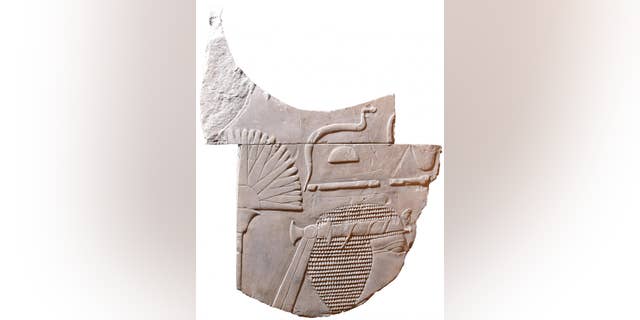
Consisting of two limestone fragments that have been glued together, the artifact had been in storage for 20 years before it was chosen for an object handling session by students of Swansea University in Wales. While the artwork was being analyzed by the students, Swansea University Egyptology lecturer Dr. Ken Griffin noticed something unusual.
Griffin recognized the artwork’s iconography as being similar to carvings within the temple of Hatshepsut at Deir el-Bahri in Luxor, Egypt. The front of the artifact depicts the head of a figure whose face is missing, with the remains of a fan. A uraeus, or cobra, is depicted on the figure’s forehead and hieroglyphics can also be seen above her head.
The decoration of the fan, the figure’s hair, the uraeus and her headband are all similar to images found at Deir el-Bahri. The hieroglyphs, which use a female pronoun, are also found in text at the temple.
The unusual artifact, which is held in Swansea University’s Egypt Centre, thrilled Griffin and his students.
Hatshepsut, who reigned from about 1478 B.C. to 1458 B.C., is one of only a handful of female pharaohs. “Early in her reign she was represented as a female wearing a long dress, but she gradually took on more masculine traits, including being depicted with a beard,” explained Swansea University, in its statement.
The University obtained the artwork in 1971 with other artifacts that once belonged to the pharmaceutical mogul Sir Henry Wellcome.
The head of a man with a short beard is depicted on the rear of the mysterious fragment. “Initially there was no explanation for this, but it is now clear that the upper fragment had been removed and recarved in more recent times in order to complete the face of the lower fragment,” explained Swansea University, in its statement. “The replacement of the fragment below the figure would also explain the unusual cut of the upper fragment."
The recent work on the fragment’s rear may have been done by an antiques dealer, auctioneer, or previous owner to increase the piece’s value or attractiveness, the University added.
Experts think that the artifact came from Deir el-Bahri but more research is needed to confirm this.
Catching Up: Museum Displays Parity of Women in Ancient Egypt
I have tons of older "saves" to post, let's see how far I get today! First up:
Museum displays parity of women in ancient Egypt

Subscribe to:
Posts (Atom)