Friday, August 17, 2007
Friday Night Miscellany
Some kind of critter was out in the yard last night rummaging around for food and was making the strangest kind of noise - it sounded sort of like "CRRAAAAKKKKEEEE" (very loud, or pehaps it just sounded loud because at that time of the early morning there was nothing else out there making noise!); there would be a couple of "crakes" and then silence for a little while, and them more "crakes." It was about 2:39 a.m. I staggered out of bed and peered out of the window but it was too dark to see anything without a moon. So I went around the upstairs and shut the windows so I wouldn't hear the "crake" noise anymore and tried to get back to sleep. I have no idea what it was. There are some juvenile raccoons who hang around, perhaps it was one of them. I figure there must have been some other critter out there rummaging around too, otherwise the first critter would not have been making the loud "crake" noises. Ah, such is life in the suburbs...
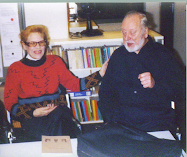
In the quickest time yet, we already have a review/summary/report or whatever you'd like to call it of our Goddesschess Eighth Anniversary get-together during my recently concluded vacation. To save download time a lot of the pics are done in minis and there is also a separate photo gallery; if you click on a mini pic it turns into a larger photo but hopefully not so large that it will take forever to download on dial-up. Now that vacation is over Random Round-up has been updated and we're back on schedule to update it every Sunday.
I don't think I mentioned that I finished David Shenk's "The Immortal Game - A History of Chess" a few weeks ago - what an excellent book, I highly recommend it. It's not dry, dull and boring like HJR Murray's tome on the origins and history of chess - and certainly not 800 plus pages - these days I only read Harry Potter novels that are that long! Shenk hits all the highlights, particularly with respect to the mysteries surrounding the origins of chess and the early days of the game's development. He frames each chapter in the book by a series of moves in the "Immortal Game" between Adolf Anderssen and Lionel Kierseritsky on June 21, 1851, in London - a game that was a throw-away, a practice game - but it didn't turn out that way... Shenk struck a good balance between writing for a non-chessly audience while providing enough meat for serious chessophiles.
Now, onto the spooky and wierdo stuff - what the heck is this I've been reading about "Mothman?" What is Mothman, anyway? Lately over at the Daily Grail there are items that refer to Mothman. At least some bloggers see a connection between this Mothman and bridge collapses (recently occurred in Minnesota and one in China), and other disasters. Is Mothman some kind of omen or harbinger?
Check out this headline (in red ink, no less) from the Gulf Daily News:
Tissir masters 42 in stimulation chess
Oh my! Well, if you live long enough, I guess you'll see just about everything... "It was a really enjoyable event, and I feel that it was very educational for the young and amateur players that took part," Tissir told the GDN afterwards. Double Oh My! Educational, heh?
Er, it turns out this was a "simultaneous" game by IM Mohammed Tissar, although it certainly may have been "stimulating!" One of those "lost in translation" things...
Ah, Viktor Korchnoi won Banja Luka 2007. I wish he had emigrated to the United States - the history of chess here might have gone a whole different path with such a player "on our side." Chessbase has a nostalgic article about the history of the Banja Luka tournament. Oh, by the way, I don't believe for a single second that the Russian Chess Federation "mistakenly" sent a 16-year old Kasparov to Banja Luka in 1979 under the assumption that it was a "junior" tournament. Ha! What a joke!
Okay, that's it for tonight. It's supposed to start raining tomorrow around 4 p.m. so I cut the grass in the backyard tonight after trudging home from a long hard day at the office; since I hadn't cut for nearly 2 weeks it was rather long, with the rain we've had lately. Yes, rain! It seems the drought is over, at least for this area of southeast Wisconsin. Unfortunately, the farmers in the northern part of the state can't say the same, and it's too late for them. We're talking about crop losses in excess of 60-70%. Anyway, since the grass in the back was rather tall, it took more effort than usual, and somewhat longer than usual, to get it cut to my exacting specifications. On the plus side, I got a real good work-out. On the minus side, I'll probably sleep until 7 a.m. tomorrow and blow half the day recuperating from overdoing it today! Tomorrow the plan is to cut the front yard as soon as it's decent enough to rev up the gas power mower without disturbing the neighbors toooo much. I do try to keep the front yard presentable for the neighbors, so it isn't nearly as shaggy and overgrown as the backyard was, as I cut it last week Saturday morning.
Then it's party party - my birthday is Sunday and I'm celebrating tomorrow night AND on Sunday, whooppee, while dodging in between thunderstorms.
'night.


Thursday, August 16, 2007
Krista Selby Wins U-18 at 4th Kasparov All Girls Open
It must have been a slow news day in Terre Haute; first NOW they're reporting a tournament result from March!!!
From the Tribune Star website (Terre Haute, Indiana)
Published: August 14, 2007 10:19 pm
South student wins girl’s chess title
Staff ReportThe Tribune-Star
TERRE HAUTE — In March, Krista Selby of Terre Haute won first place in the 18-and-under division at the fourth annual All-Girls Open National Chess Championships in Chicago.
The event was organized by the Kasparov Chess Foundation in association with USCF and Chess Wizards. One-hundred-thirty-six girls from kindergarten to 12th grade competed in the event and 19 states and one province were represented. For two years in a row — in 2005 and 2006 — she was the Indiana representative at the Susan Polgar National Invitational for Girls.
Selby, who started playing chess when she was about 5, is a senior at Terre Haute South Vigo High School this year.
*********************************************************************************
Interesting, very interesting. I'm going to check to see if Selby played in any Polgar-sponsored events this year.
Added August 17, 2007: I did a search of SP's blog for Krista Selby's name and didn't find anything, which seems very strange. Perhaps the feature isn't working correctly.
Malawi Tournament Chooses Players for the All Africa Games
This event in Malawi got Sports Page coverage in its home country, when chess in the USA can't BUY coverage! Hooray for the winners, and I wish them luck in the All Africa Games. A perennial problem for chessplayers - funding to attend important international events - is mentioned in the article, too. In Malawi, though, it seems the government may provide funding for the players to attend the All Africa Games; in the USA, we're dependent upon the USCF (ha ha!), parents, friends, and the kindness of sponsors!
From the Malawi Daily Times
Jambo wins women chess championship
BY MPHATSO MALIDADI
11:01:58 - 16 August 2007
Unheralded Linda Jambo emerged as women chess queen after shrugging off resistance from defending champion Susan Namangale during the All Africa games selection tournament that was held in Lilongwe on Saturday.
The Mzuzu University student, showing her guts and guile, accumulated five points to top the competition. The unstoppable player rounded up her impressive showing by defeating Namangale, who ended on second position with four points.
Another budding chess star Royce Msiska ended third with three points while Caroline Mwale, sister to 14-year-old national champion Joseph Mwale, finished fourth.
Women's junior champion Ellyn Mpinganjira was the notable face that failed to impress despite representing Malawi at various competitions across the southern Africa when she finished at a disappointing sixth position.
Chess Association of Malawi president Kezzie Msukwa described the event as a success but he paid more tribute to the winner, who was outstanding during the tournament.
“Her performance was very impressive," Msukwa said. "She was playing with purpose. She made some wonderful moves and most importantly she made sacrifices which in the end worked for her.”
Msukwa also believes the top two women, who will join three men - Henry Matewere, Alfred Chinthere and Kajani Kaunda in representing the nation in Namibia - can do better at the event if they get adequate preparation.
However, the Chessam president expressed his concern over the delay in passing budget following the current stand off between government and opposition parties in Parliament, saying this would greatly affecting their plans to camp the team before leaving for Namibia.
“We only hope that the budget will be allowed to pass so that our program should go as planned,” he said.
Ancient Board Game Pieces Discovered in Bulgarian Tomb
Story excerpted from Novite.com, Sofia News Agency:
Yet Another Ancient Tomb Unearthed in Bulgaria's Sozopol
14 August 2007, Tuesday
A team of Bulgarian archaeologists unearthed Tuesday an ancient stone tomb, dated back to the 4th century BC, Darik News reported.
The team, lead by Krastina Panayotova, stumbled upon the tomb during the annual archaeological excavations on the Harmani beach of the Black Sea town of Sozopol.
A man, probably an athlete, had been buried in the tomb because the team found an object used by athletes in antiquity.
Just a day earlier the archaeologists came upon the grave of another man, probably a gambler. The grave was full of dice, backgammon pieces and coins. (Emphasis added).
The team of Krastina Panayotova is working on the Harmani beach of Sozopol, a site which archaeologist have been exploring for many years now.
Sozopol is one of the oldest towns on Bulgarian Thrace's Black Sea coast. The first settlement on the site dates back to the Bronze Age.
*****************************************************************************
I am a study in frustration. A further web search failed to turn up more details about the discovery of the board game pieces the article identified as "backgammon" pieces. There are a number of things we do NOT know from the article, unfortunately, including the exact date of the discovery. All we can deduce is that it was reported in the newspaper on August 14, 2007!
We don't know how old the tomb is. Evidently it is quite a large necropolis that is being excavated, but just because one tomb is dated "Hellenic" to c. 400 BCE doesn't mean the team of the "gambler" is from the same era.
We don't know how the archaeologist(s) on site arrived at the conclusion that the gaming pieces recovered were "backgammon" pieces. For all we know, they could have been smoothed pebbles used in the Greek game of Polis, or any other petteia game, as no description of the pieces was given and no photograph was provided. The fact that dice - also no description or photograph provided - were found in the same tomb does not necessarily mean that they were related to the gaming pieces.
And the reference to coins found in the same tomb is intriguing. Does this imply that the "gambler" was buried with some of his winnings? Or perhaps the coins were meant to be a stake for his future games in Hades/the Afterworld? Or were the "coins" actually tokens from some other kind of board game? For example, ancient Xiang Qi (Chinese Chess) pieces have been mistaken for coins because they were circular, inscribed flat pieces of metal.
All I can do at this point is make a note to check in the future to see if I can find published field notes from this excavation (ruts of ruck, Jan!) Arggghhh!
Blast from the Past - Judit Wins Japfa in 2000

From the New York Times website (photo from my files)
By ROBERT BYRNE
Published: June 11, 2000
Published: June 11, 2000
Judit Polgar of Hungary surpassed a former world champion, Anatoly Karpov, and the current International Chess Federation champion, Aleksandr Khalifman, both of Russia, in winning the Japfa Classic International Tournament in Denpasar, Bali, Indonesia, recently.
In this 10-player invitational event, held April 22 to May 2 at the Bali Beach Hotel, the 23-year-old grandmaster scored 6 1/2-1 1/2 and picked up a $20,000 prize.
As the last round got under way, four players -- Polgar, Karpov, Khalifman and the Brazilian grandmaster Gilberto Milos -- were tied at 5 1/2 each.
Polgar defeated Milos to take undisputed first place as Karpov and Khalifman played to a draw and tied for second.
Control and precision were Polgar's weapons in her victory over Milos.
The attack with 6 Bc4 against the Najdorf Variation of the Sicilian was considered ridiculous half a century ago. Black simply plays 6 . . . e6, as in this game, and continues with an early . . . d5. This was thought to spoil the opponent's plan.
Actually, this line leaves Black with an isolated d pawn after ed ed, and there is no joy in that. Bobby Fischer brought 6 Bc4 to life in the 1960's.
An alternative to 7 . . . b5, namely 7 . . . Nbd7 8 f4 Nc5, worked out well for Black after 9 e5 Nfd7 10 ed Nf6 11 Be3 Bd6 12 Qf3 Qc7 13 O-O-O Bd7 in a Lanc-K. Hertel correspondence game, 1997-99. But Polgar wants something more adventurous.
After 10 . . . Qb7, the black defense has taken shape. The black queen and king knight bear down on the e4 pawn, while the queen bishop guards against a possible sacrifice on e6. This was introduced by Lubomir Kavalek against Yevgeny Vasyukov in a Moscow-Prague match in 1966.
After 11 . . . Nbd7, Milos abstained from 12 Qg7?! because 12 . . . Rg8 13 Qh6 Ne4 14 Qh7 Ndf6 15 Qh3 Nc3 16 bc e5 costs him his queen.
On 17 . . . bc, Milos could have kept material even by recapturing with 18 bc, although after 18 . . . Nb3 19 Rab1 e5 20 Nc2 f5! 21 Rb3 Qc6 22 ef Bf5, Polgar would have the advantage of the two bishops.
Instead, he chose a line that played directly into Polgar's 22 . . . Qb3, winning a pawn.
After Polgar's 35 . . . Bc4!, there was nothing for Milos to do but go into 36 Nd6 Nd6 37 Rd6 Qd6 38 Qd6 Rd6 39 Rd6, when her 39 . . . a3! set up a winning endgame.
He could not play 40 Rd1 because 40 . . . ab 41 Rb1 Rb3! 42 Bb2 Bd3! 43 Rd1 Rb2 44 Rd3 ends in 44 . . . Rb1.
After 44 . . . Rc2, Milos had to lose heavy material. For example, 45 Be1 Bc4, and there is no coping with the looming 46 . . . Rc1. He gave up at once.
Blast from the Past - A Grateful Whale
This story was confirmed true by Snopes (infamous buster of "urban legends"):
From the San Francisco Chronicle website
Daring rescue of whale off Farallones
Humpback nuzzled her saviors in thanks after they untangled her from crab lines, diver says
Peter Fimrite, Chronicle Staff Writer
Wednesday, December 14, 2005
A humpback whale freed by divers from a tangle of crab trap lines near the Farallon Islands nudged its rescuers and flapped around in what marine experts said was a rare and remarkable encounter.
"It felt to me like it was thanking us, knowing that it was free and that we had helped it," James Moskito, one of the rescue divers, said Tuesday. "It stopped about a foot away from me, pushed me around a little bit and had some fun."
Sunday's daring rescue was the first successful attempt on the West Coast to free an entangled humpback, said Shelbi Stoudt, stranding manager for the Marine Mammal Center in Marin County.
The 45- to 50-foot female humpback, estimated to weigh 50 tons, was on the humpbacks' usual migratory route between the Northern California coast and Baja California when it became entangled in the nylon ropes that link crab pots.
It was spotted by a crab fisherman at 8:30 a.m. Sunday in the open water east of the Farallones, about 18 miles off the coast of San Francisco.
Mick Menigoz of Novato, who organizes whale watching and shark diving expeditions on his boat the New Superfish, got a call for help Sunday morning, alerted the Marine Mammal Center and gathered a team of divers.
By 2:30 p.m., the rescuers had reached the whale and evaluated the situation. Team members realized the only way to save the endangered leviathan was to dive into the water and cut the ropes.
It was a very risky maneuver, Stoudt said, because the mere flip of a humpback's massive tail can kill a man.
"I was the first diver in the water, and my heart sank when I saw all the lines wrapped around it," said Moskito, a 40-year-old Pleasanton resident who works with "Great White Adventures," a cage-diving outfit that contracts with Menigoz. "I really didn't think we were going to be able to save it."
Moskito said about 20 crab-pot ropes, which are 240 feet long with weights every 60 feet, were wrapped around the animal. Rope was wrapped at least four times around the tail, the back and the left front flipper, and there was a line in the whale's mouth.
The crab pot lines were cinched so tight, Moskito said, that the rope was digging into the animal's blubber and leaving visible cuts.
At least 12 crab traps, weighing 90 pounds each, hung off the whale, the divers said. The combined weight was pulling the whale downward, forcing it to struggle mightily to keep its blow- hole out of the water.
Moskito and three other divers spent about an hour cutting the ropes with a special curved knife. The whale floated passively in the water the whole time, he said, giving off a strange kind of vibration.
"When I was cutting the line going through the mouth, its eye was there winking at me, watching me," Moskito said. "It was an epic moment of my life."
When the whale realized it was free, it began swimming around in circles, according to the rescuers. Moskito said it swam to each diver, nuzzled him and then swam to the next one.
"It seemed kind of affectionate, like a dog that's happy to see you,'' Moskito said. "I never felt threatened. It was an amazing, unbelievable experience."
Humpback whales are known for their complex vocalizations that sound like singing and for their acrobatic breaching, an apparently playful activity in which they lift almost their entire bodies out of the water and splash down.
Before 1900, an estimated 15,000 humpbacks lived in the North Pacific, but the population was severely reduced by commercial whaling. In the 20th century, their numbers dwindled to fewer than 1,000. An international ban on commercial whaling was instituted in 1964, but humpbacks are still endangered. Between 5,000 and 7,500 humpbacks are left in the world's oceans, and many of those survivors migrate through the Gulf of the Farallones National Marine Sanctuary.
Whale experts say it's nice to think that the whale was thanking its rescuers, but nobody really knows what was on its mind.
"You hate to anthropomorphize too much, but the whale was doing little dives and the guys were rubbing shoulders with it," Menigoz said. "I don't know for sure what it was thinking, but it's something that I will always remember. It was just too cool."
Humpback whales hold a special place in the hearts of Bay Area residents ever since one that came to be known as Humphrey journeyed up the Sacramento River in 1985. The wayward creature swam into a slough in Rio Vista, attracting 10,000 people a day as whale experts tried desperately to turn it around. Humphrey went back to sea after 25 days of near-pandemonium and worldwide media attention.
In the fall of 1990, Humphrey turned up again inside the bay in shallow water near the Bayshore Freeway, finally beaching on mud flats near Double Rock, just off the Candlestick parking lot. He remained stuck for 25 hours, until volunteers, helped by a 41-foot Coast Guard boat, pulled him free and sent him back to the ocean. He has not been seen since.
Humpbacks like Humphrey do seem to relate to people more than other whales, according to Stoudt.
"You do hear reports of friendly humpbacks, whales approaching boaters, especially in Baja California," Stoudt said, "but, for the most part, they don't like to be interacted with."
Wednesday, August 15, 2007
Meat Assyrian Style
Hola! I have often been met with a raised eyebrow and an indulgent smile when I tell people that I love ancient history and study it industriously for traces of hints about the origins of ancient board games and, in particular, chess. Their expressions say (in various imagined intonations from English high-brow to Boston Brown-nose) "Oh darling, how - er - interesting," with a cheesy, insincere smile.
But, the study is rewarding, sometimes in unexpected ways that have nothing whatsoever to do with ancient board games, and everything to do with fully living the kind of life that makes you happy, not what makes other people happy. This evening I came across such a wonderful little piece of - serendipity - that which makes your life spark all the more - I just have to write about it here. I promise, it's about ancient history :)
Ancient cooking, to be exact! Having just recently watched the season's grande finale of "Hell's Kitchen," a show that absolutely fascinates me, and having recently concluding hosting the Eighth Anniversary of Goddesschess Get-Together in my home and cooking up a veritable storm, this article seemed like a natural continuation of a series of events...
If you would like to read the entire article (and I highly recommend it), you can find it here. It's from (brace yourselves) the Society of Bible Literature. Okay okay, come down off the ceiling (or pick yourselves off the floor where you were rolling laughing) - it's a fine article by Dr. Alice L. Slotsky, who studied three ancient cunieform tablets from Mesopotamia that date to about 1600 BCE, containing 40 recipes, more or less - that's rather an abrupt summary, you'll get a better, richer and tastier picture by reading the actual article, darlings :)
Here are some excerpted parts:
Babylonian food has come a long way since Jean Bottéro, doyen of the cuneiform recipe tablets in the Yale Babylonian Collection, pronounced it fit for only his worst enemies. This year at Brown University, one hundred twenty-two ravenous diners grazed on fare cooked from these recipes with exclamations of amazement and satisfaction. ...
Such epicurean results would not have been possible without my initial source of inspiration, Bottéro's Textes culinaires Mésopotamiens. This book, of course, was meant to be a scholarly tome, and, to be sure, it contains his painstaking and meticulous transcriptions and translations of the difficult and cryptic clay cooking tablets inscribed in Akkadian. Still, it turns out to be so much more. The reader is treated to a rich commentary on the enigmatic recipes, their cooking methods, and the requisite utensils and equipment. As if this were not enough, there is an elegant discussion of the preparation and presentation of the finished dishes, as well as a dictionary of Akkadian culinary terms and recipe ingredients. ...
Armed with Bottéro's book as a lifeline, I decided that there was nothing else to do but dig in and put the recipes to the test with a trial-and-error approach to the translated lines of text. ...
This would not have been possible without the benefit of Bottéro's initial and keen analysis of the underlying technicalities involved in the preparation of the recipes. He observed that all of the dishes had one thing in common. Every item, be it meat, fowl, vegetables, or grain, was cooked in water or some other liquid. As he saw it, this was an enormous culinary innovation, a vast departure from the more ancient methods of baking, roasting, grilling, and broiling. What's more, not only was boiling or simmering meat and vegetables in liquid a revolutionary change in methodology but it opened up brand new opportunities to create richer, more succulent flavors than afforded by the simpler cooking of the past. The sophisticated refinements it introduced added a whole new dimension to the practice of cooking and brought Mesopotamian cuisine across the fine food frontier.
MEAT ASSYRIAN STYLE
Akkadian:
me-e shirim shi-rum iz-za-az me-e tu-ka-an li-pi-a-am ta-na-ad-di [break in tablet] karsum ha-za-nu-um te-te-er-ri me-eh-rum shuhut innu i-sha-ru-tum ash-shu-ri-a-tum shi-rum iz-za-az me-e tu-ka-an li-pi-a-am ta-na-di [break in tablet] ha-za-nu-um zu-ru-mu da-ma sha du-qa-tim tu-ma-la kar-shum ha-za-nu-um te-te-er-ri me-he-er na-ag-la-bi
English Translation:
Meat (cooked in) Water. Meat is used. Prepare water; add fat, [break in tablet], mashed leek and garlic, and a corresponding amount of raw shuhutinnû. Assyrian style. Meat is used. Prepare water; add fat [break in tablet], garlic and zurumu with [break in tablet], blood, and mashed leek and garlic. Carve and serve.
Working Recipe:
Chop/slice/dice: (many) onions, shallots, garlic, chives, leeks, scallions. Fry in oil until soft. Brown all sides of an eye round pot roast in this mixture, add salt to meat and onion mixture. Turn down heat, and simmer until done in a small amount of water to which a quarter to a half bottle of Guiness stout has been added, turning once or twice during cooking. Remove meat. Boil down onion-beer mixtures until it is reduced to a thick vegetable-rich gravy. Carve and serve.
Archaeological Terrorism by Iran's Islamist Regime
The Islamists in control of the Iranian government are evidently intent upon destroying as many vestiges of Iran's pre-Islamic past as possible, including priceless archaeological sites:
From Mehr News
6000-year-old prehistoric site totally bulldozed in central Iran
TEHRAN, Aug. 14 (MNA) -- Bulldozers working for the Ammar Yasser construction project in Qom have entirely demolished the 6000-year-old Shad Qoli archaeological site in central Iran, the Persian service of CHN reported on Tuesday.
“The license for excavation of the area was issued by the Archaeological Research Center of Iran (ARCI) two years ago at a time when approximately half of the site had already been flattened,” said Siamak Sarlak, director of the team which was to have conducted salvage operations at the location.
“According to the cultural heritage regulations in Iran, the Governor General’s Office of Qom, which is in charge of the Ammar Yasser construction project, was responsible for sponsoring salvage excavations. However, the office refused to provide the necessary funds for carrying out the excavation work and we have recently been informed that the remainder of the site has been completely destroyed by bulldozers,” he added.
The salvage team needed a sum of 50 million rials (about $5250) to excavate the site.
“A dispute arose over which organization -- the governor’s office or the ARCI -- was responsible for funding the operation. Meanwhile the bulldozers continued the process of destruction, which has resulted in total loss of the archaeological significance of the area,” Sarlak explained.
Archaeologists believe that people used to live in the Qoli Darvish Tepe, another nearby prehistoric site, but that due to the flooding of the Qomrud River they migrated to the Shad Qoli region and continued to dwell there for about a millennium.
The Qoli Darvish Tepe, one of the principal pre-historic sites situated on Iran’s central plateau, includes the remains of a number of Bronze Age and Iron Age settlements. There is evidence that Qoli Darvish was inhabited from the fourth millennium BC until the ninth century CE.
This area has also been seriously damaged over the past decade by the construction of the Qom-Jamkaran Highway, such that only ten percent of the ancient site now remains intact.
MMS/MA
END
MNA
534635
Squirrels Back in the News Again!
If this keeps up, I think we're going to have to seriously consider running a squirrel for President...
From the newscientist.com
Squirrels wield a hot, secret weapon
22:30 13 August 2007
NewScientist.com news service
Jeff Hecht
It's Californian ground squirrel versus rattlesnake in a potentially lethal showdown. But the squirrel has a secret weapon that until now has remained invisible to the human eye.
The ground squirrel heats up its tail then waves it in the snake's face - a form of harassment that confuses the rattler, which has an infrared sensing organ for detecting small mammals.
This defensive tactic remained invisible to biologists until they looked at the animals through an infrared video camera. Now they believe that many other animals might be using infrared weaponry to ward off potential predators.
Young California ground squirrels (Spermophilus beecheyi) are easy prey for snakes, so protective adults harass the predators while puffing up their tails and wagging them.
Infrared organ
Graduate student Aaron Rundus and his supervisor Donald Owings of the University of California, Davis, wondered how this might affect the snakes’ interaction with the adult squirrels. So he borrowed a $35,000 infrared camera from another scientist and spied on squirrel-snake stand-offs.
He saw the adults’ tails heat up, presumably due to increased blood flow, when they were warning rattlers away – making the squirrel appear larger to the snake’s infrared organ.
Confronted with a gopher snake, which has no infrared sensory organ, the squirrels wagged their tails but didn’t bother to warm them up first.
Tests with robotic squirrels confirmed that a warmed squirrel tail made rattlesnakes more likely to act defensively, say Rundus and Owings.
The squirrels themselves do not see in infrared, so they cannot see another squirrel's tail heating up. But the snakes can, proving that the squirrels have evolved a specific way to deter rattlesnakes.
“It taught us to focus on the perceptual world of the animal we’re studying” rather than thinking only of human perceptions, says Rundus.
Journal reference: Proceedings of the National Academy of Sciences (DOI: 10.1073/pnas.0702599104)
********************************************************************************
So, how did the squirrel know that one of the snakes was a gopher snake without an infrared sensory organ, and so heating his or her tail wouldn't do any good to scare the snake away? Explain that, Mr. Scientist!
Those squirrels are smart, I tell you, smarter than some people running things at the White House right now, I'd wager. Perhaps they're plotting behind our backs, taking my peanuts and sunflower seeds every day and laughing up their collective paws while they plan a major coup - first Milwaukee, then the nation, then the world! Hey, if they're smart enough to spy for the Americans in Iran, maybe we've got to start watching our backs...
Tuesday, August 14, 2007
Sheila Dines Goes For "Top Girl" Prize

From the Croydon Guardian
1:57pm Saturday 11th August 2007
A schoolgirl from Croydon is in with a shout of winning this year's junior UK chess challenge, after beating 74,000 rivals to reach the final.
Sheila Dines, 14, has made it to the last 65 after winning her southern final last month.
Sheila Dines, 14, has made it to the last 65 after winning her southern final last month.
And, after finishing as joint top girl in the competition last season, it is hoped the Old Palace pupil will go one better this year.
The youngster from Sanderstead will be competing against boys and girls aged between five and 18-years-old for the £2,000 first prize at the North Leamington Arts and Community College in Leamington Spa, Warwickshire.
The top girl player will also receive £1,000 - which Sheila shared after winning four of her six matches last year.
Mike Basman was the British chess champion in 1973 and organises the chess challenge. He said: "The aim of the tournament is to make chess inclusive, as it is very directed to intellectual boys at the moment. We want to get all ages playing and girls playing too.
"Sheila has always been one of the most successful girls in Surrey and has been playing since she was seven or eight years old. Last year, she won £500 for coming joint top girl and is in with a definite chance of going better this year."
The tournament is not a straight knock-out but instead sees each player play six games under the Swiss system. This means they compete against other players performing the same as them. For example, a player who has won three out of three games will face-off against someone who has done the same.
2007 World Youth U-16 Olympiad
Record 34 Teams in World Youth U-16 Olympiad in Singapore (August 4 - 12, 2007)
So says a headline at the FIDE website. Here is the official website. The event is now over and the USA sent two teams of all boys. Why two teams? The event was won by the Indian Team - good for them - although according to the scant publicity I found for this event, India was one of the favorites.
Here are the final standings for the top six places:
Final Standings:
1st - IND 28.0
2nd - HUN 27.5
3rd - PHI 25.5
4th - UZB 24.5
5th - AUS 1 24.0
6th - TUR 23.5
Players on the two U.S. teams:
19. United States of America 1 (0 / 0)
Bo. Name Rtg FED
1 Tanaka Christian T 2114 USA
2 Lau Robert 2025 USA
3 Tan Jared E 0 USA
4 Zhang Eric 0 USA
33. United States of America 2 (0 / 0)
Bo. Name Rtg FED
1 Huang Vincent 0 USA
2 Gunawan Cheston 0 USA
3 Polsky Ryan P 0 USA
4 Ambartsoumian Michael 0 USA
I hunted around at the official website for final team standings for all of the teams but couldn't find them - I checked a couple of times already, but perhaps they will be posted later. So, I have no idea how the two U.S teams did. I didn't see a story on this at the USCF website. Does anyone know if USCF paid for the teams to attend the Olympiad?
Australian Primary Principals Association - Say No to Chess in Schools
This is a rather interesting article:
From The Age.com/au
Chess at school a shrewd but contested move
Farrah TomazinAugust 13, 2007
VICTORIAN students would be offered chess coaching to boost their thinking skills under an idea being pushed from within senior State Government ranks.
Evan Thornley, Premier John Brumby's parliamentary secretary for national reform and innovation, wants the Government to provide more chess programs across the public school system.
According to the former businessman, the move would give students the chance to compete on "a pretty level playing field" against private schools or other students from wealthier backgrounds.
But while chess coaches praised the idea, others in education circles raised concerns it would clutter an already over-crowded school curriculum.
Mr Thornley declined to comment yesterday.
In a recent speech to Parliament, he said the benefits were twofold: children would learn to think more strategically and build their self-esteem, while recent immigrants from Russia or Eastern Europe, where chess is a popular sport, could be offered work as coaches.
"The game of chess is a terrific way for young people to learn skills of strategy, logic, planning and other important intellectual disciplines in a fun, friendly and mildly competitive environment," Mr Thornley said.
"It is a great way for many young people to build their self-esteem, because they quickly become capable of beating all the adults in the room … which is not something they can often achieve in many other fields until later in life."
Some schools, such as Doncaster Gardens Primary School, MacRobertson Girls High School, Flemington Primary School and Brighton Grammar School, already offer chess programs to students.
Some schools provide one-hour classes, while others offer a recreational activity outside classroom hours.
David Cordover, director of ChessKids, which offers coaching services to 430 public and private schools in Victoria, said even kindergarten children were getting lessons.
Mr Cordover said "it would go a long way" if the Government provided more resources for chess coaching right across the education system.
But Victorian Principals Association president Fred Ackerman said the school curriculum was already too crowded with "add-on" subjects.
A recent paper by the Australian Primary Principals Association called for making English, maths, science and history the only four "core" subjects in schools, with other subjects and programs to be given less status.
Monday, August 13, 2007
Blast from the Past - The Spittoons are Gone!

Love this great column by chess great Robert Byrne.
From the New York Times
By ROBERT BYRNE
Published: April 2, 2006
Not too long ago it would have been unthinkable that women en masse could compete with men and make a respectable showing. There were indeed one or two standouts. Take the mysterious sister of Louis Paulsen, who accompanied her famous brother to the United States championship in New York in 1857. She knew she would not be allowed to enter, but she got an offhand game against one of the strongest players in the competition and gave him a terrible drubbing.
She did not stay long enough to give further evidence of her great skill, but returned home immediately. In those days, chess clubs with their spittoons were not considered the proper place for women.
Another notable woman of the game was Vera Menchik, who took some potshots at the leading men of the late 1920's and throughout the 30's. She died in 1944 during an air raid in London.
After World War II, the Soviet stars Nona Gaprindashvili and Maya Chiburdanidze reached the level of male grandmasters. The greatest player among women now is Judit Polgar of Hungary. She is in the top handful of all players, men or women. She is an inspiration to all.
This year's women's winner in the United States Championship at the NTC Promenade in San Diego was Anna Zatonskih. Just observe her splendid victory in the preliminaries over Walter Browne, a six-time United States champion.
After the Nimzovich Variation of the Queen's Indian Defense, 4 ... Ba6, the most favored system is 5 b3, followed by 5 ... Bb4 6 Bd2 Be7. However, the alternative with 5 ... Bb7 6 Bg2 Bb4 7 Bd2 a5 is still played, as it was in this game.
After 9 Nc3, there is nothing wrong with 9 ... d5. Why give up the bishop pair with 9 ... Bc3? Not that there is something directly faulty about it, but one must always play so carefully afterward.
If, after 10 ... Be4, this bishop could have been kept on this central square of its main diagonal, there would have been some point to this. But it could not remain hunkered down there.
The trouble with the advance with 17 ... b5 was that it left more squares on the queenside open for the white queen bishop to use.
After 18 e4, Zatonskih had control of the center.
And with 28 cd, this passed pawn further emphasized her advantage.
After 33 ... Bg6, this poor bishop had no good vantage points.
With 40 Bf5, Zatonskih was bearing down on the black king and threatening to penetrate on the c file.
After 41 Rc8, there was nothing Browne could do but give up. If 41 . . . Bf5, then 42 Qf5 g6 43 Qe6 Nf8 44 Rf8 Rg7 45 Rcc8 g5 46 Qf5 Rg6 47 Rh8 Kg7 48 Rcg8 Kf7 49 Qe6 mate.
Want to Make a Miracle Happen?
A modern-day fairy tale.
Once upon a time, there was a small town in Massachusetts called North Adams. North Adams was once a part of Adams, but partitioned from Adams long ago. The birth of the town goes back to the 1700s.. As of the 2000 census, the city had a total population of 14,681, making it the least populous city in Massachusetts. Now perhaps best known as the home of the largest contemporary art museum in the nation, the Massachusetts Museum of Contemporary Art, North Adams has in recent years become a center for tourism, culture, and recreation.
That’s the positive spin. The truth is, times are hard for folks in North Adams. For many years, North Adams was an industrial center, first as a mill town before the Revolutionary War, and then marching along with the Industrial Revolution right up through World War II. During WWII Sprague Electric Company bought out Arnold Print Works, which specialized in printing cloth; the company had suffered greatly during the Great Depression and still had not recovered despite the advent of WWII.
Sprague physicists, chemists, electrical engineers, and skilled technicians were called upon by the U.S. government during WWII to design and manufacture crucial components of some of its most advanced high-tech weapons systems, including the atomic bomb. After the war, Sprague's products were used in the launch systems for Gemini moon missions, and by 1966 Sprague employed 4,137 workers in a community of 18,000, existing almost as a city within a city. From the post-war years to the mid-1980s Sprague produced electrical components for the booming consumer electronics market, but competition from lower-priced components produced abroad led to declining sales and, in 1985, the company closed its operations on Marshall Street.
After Sprague closed up shop, North Adams’ population gradually dropped from 18,000 to the 2000 census level of 14,681. People could not find work. The 2000 census data tells the tale of the impact of Sprague’s closing:
The median income for a household in the city is $27,601, and the median income for a family is $37,635. Males have a median income of $30,292 versus $23,012 for females. The per capita income for the city is $16,381. 18.2% of the population and 13.5% of families are below the poverty line. Out of the total population, 30.1% of those under the age of 18 and 9.9% of those 65 and older are living below the poverty line.
Chess has a place in North Adams. Jim Eade, National Chess Master and best-selling author of Chess For Dummies, was born in North Adams. As part of a fund-raiser in 2001, Eade held a simul and gave a lecture on chess in conjunction with a chess tournament held for the Massachusetts Museum of Contemporary Art located in North Adams. North Adams has two chess clubs, the Ahern Chess Club and the North Berkshire Chess Club.
And there is the YMCA. The Northern Berkshire Y in North Adams is a going concern, sponsoring swimming lessons and summer camps – and kids play chess there, too, although it’s not really advertised… The Y maintains a website. Thanks to grant money, the Y’s computer room was revamped and new computers obtained in September, 2006. This is a great accomplishment, considering that a few years ago, the North Adams Y was in financial trouble, and considered closing its doors. The Y survived, but grant money is uncertain. It’s staff recently started talking about a major fund-raising project – the goal - $1.2 million – to build a new Youth Center.
Impossible! Pipe Dream!
Back to cold hard reality – right now, Jan! How, you ask, do I happen to know about the North Adams, Massachusetts YMCA? I’ve never been to North Adams, never been to Massachusetts. I have no friends or family who live there, or visited, or have ancestors there, or any connection whatsoever. It’s just that I happen to believe in pipe dreams and, chess goddess that I am (albeit Junior Level Minus Grade 2), goddesses have a way of communicating with each other when there’s a pawn to be passed. And, so a certain Fairy God Mother let me in on the story of the North Adams YMCA. I am asking you to open your hearts and help the North Adams Y raise money for its Youth Center. I am asking you to please, if you can, if the Chess Goddess moves your heart, contribute a few dollars. Here is the address to which to send contributions:
22 Brickyard Ct
North Adams, MA 01247
Miracles do happen. Pipe dreams do come true. Be a part of it, and may the Chess Goddess bless you.
Sunday, August 12, 2007
Archaeological Trench Warfare
This article highlights just exactly the kind of dirty dealing that goes on when someone comes along with evidence and arguments that threaten cherished preconceptions and accepted theories - it could just as well be a story about politicians, or religious leaders or the corporate hierarchy at a Fortune 500 company. Because of its length, I won't publish the entire article here, but I highly recommend it!
What is most interesting - and unfortunate - is that subsequent excavations at other sites SUPPORTED the finds at Glozel as being authentic, but that got lost in the shuffle of acrimony and charges and counter-charges of fraud and duplicity.
Glozel 101: How to get ahead in archaeology
If one word could be used to describe the Glozel affair, it should be "controversial". It has been described as the "Dreyfus affair" of French archaeology, and the Dreyfus equivalent was Emile Fradin, a seventeen-year-old, who together with his grandfather Claude Fradin stepped into history on 1 March 1924. Working in a field known as Duranthon, Emile was holding the handles of a plough when one of the cows pulling it stuck a foot in a cavity. Freeing the cow, the Fradins uncovered a cavity containing human bones and ceramic fragments. So far, this could have been just any usual archaeological discovery, of which some are made every week. That soon changed.
It is said that the first to arrive the following day were the neighbours. They not only found but also took some of the objects. That same month, Adrienne Picandet, a local teacher, visited the Fradins' farm and decided to inform the minister of education. On 9 July, Benoit Clement, another teacher, this time from the neighbouring village and representing La Societe d'Emulation du Bourbonnais, visited the site and later returned with a man called Viple. Clement and Viple used pickaxes to break down the remaining walls, which they took away with them. Some weeks later, Emile Fradin received a letter from Viple, identifying the site as Gallo-Roman. He added that he felt it to be of little interest. His advice was to recommence cultivation of the field-which is what the Fradin family did. And this might perhaps have been the end of the saga, but not so.
The January 1925 Bulletin de la Societe d'Emulation du Bourbonnais reported on the findings. It brought the story to the attention of Antonin Morlet, a Vichy physician and amateur archaeologist. Morlet visited Clement and was intrigued by the findings. Morlet was an "amateur specialist" in the Gallo-Roman period (first to fourth centuries AD) and believed that the objects from Glozel were older. He thought that some might even date from the Magdalenian period (12,000-9500 BC). Both Morlet and Clément visited the farm and the field on 26 April 1925, and Morlet offered the Fradins 200 francs per year to be allowed to complete the excavation. Morlet began his excavations on 24 May, discovering tablets, idols, bone and flint tools, and engraved stones. He identified the site as Neolithic and published his "Nouvelle Station Néolithique" in September 1925, listing Emile Fradin as co-author. He argued that the site was, as the title of the article states, Neolithic in nature.
Though Morlet dated it as Neolithic, he was not blind to see that the site contained objects from various epochs. He still upheld his belief that some artefacts appeared to be older, belonging to the Magdalenian period, but added that the techniques that had been used appeared to be Neolithic. As such, he identified Glozel as a transition site between both eras, even though it was known that the two eras were separated by several millennia. Certain objects were indeed anachronistic: one stone showed a reindeer, accompanied by letters that appeared to be an alphabet. The reindeer vanished from that region around 10,000 BC, yet the earliest known form of writing was established around 3300 BC, and that was in the Middle East. The general consensus was that, locally, one would have to wait a further three millennia before the introduction of writing. Worse, the script appeared to be comparable with the Phoenician alphabet, dated to c. 1000 BC, or to the Iberian script, which was derived from it. But, of course, it was "known" that no Phoenician colony could have been located in Glozel.
From a site that seemed to have little or no importance, Glozel had become a site that could upset the world of archaeology. ...
Refreshing Change - Article on Humpy Koneru's Father
Here's a refreshing change, an article about Humpy Koneru's father, who has been her coach/trainer for the past 14 years and recently won an award for his work in that area. Interestingly, he followed the same path for Humpy that Susan Polgar's father followed for her - putting Humpy into strong international open tournaments where she took her lumps from older, experienced male players as she honed their instincts and chess-playing skills, rather than showcasing her and earning women's titles in a much weaker women-only field of events in India.
From India Times Sports
Humpy's father is a proud man
AMIT KARMARKAR
August 11: As a father, K Ashok has had a few proud moments in his life. As a coach, it's a first. The father and coach of K Humpy, the world's second-best woman chess player, has been named as one of the Dronacharya awardees.
There have been examples of husbands of reputed players winning the Dronacharya (like Bobby George in athletics and Raghunandan Gokhale in chess). But Ashok is perhaps the only father on this elite list.
"I'm happy for getting this award," said Ashok. "But I thought I would get it after Humpy won the World junior (under-20) title in 2001 or after she became men's Grand Master (youngest lady to do so at 15 years, one month, 27 days in 2002). I think the Asian Games gold medals did the trick this time. It's great to get recognition from the government."
Humpy, 20, also felt the award should have come earlier. "He deserves it a lot," she said, oozing with pride. "He has trained me for almost 14 years."
The criteria for getting the Dronacharya award is that you have to be the current coach of a player who has won international titles in the last two years. So, there could be many fathers who had trained their daughters at the initial phase of their careers. But not at this level.
"I didn't get much time to present him anything," said Humpy. "But I guess becoming a Super GM would be a fitting gift for him." Humpy is just three Elo points away (at 2597) from the coveted mark and she hopes to achieve it in Abu Dhabi this week.
Ashok has always craved for out-of-the-ordinary. "Rather than having monetary belongings, I would prefer to be remembered as father of a GM," he had remarked seven years ago. A former National 'B' player himself (he qualified as there was no donor entry during his time), he quit his job as a teacher in Vijayawada to concentrate on Humpy's coaching and career chart.
"I used to teach her for 2-3 hours a day in 1994. But when she came only fourth in the Under-8 Nationals at Madurai, I increased it to 5-6 hours."
And along the way he took two brilliant decisions: helping Humpy play in Open (competing with men) tournaments abroad and skipping Women's National 'A' for three years (2000 to 2002).
Playing with men took Humpy to another level as merely dominating the Women's National 'A' would have been a regressive step. "It could have given her titles. But she would have remained of that standard only. Playing in Open tournaments abroad made her grow."
Meanwhile, there had been whispers about authenticity of Humpy's GM norms, doubts about whether she is being trained secretly by a foreign GM. "They were just rumours," said Ashok. "I have confidence in me. I have sufficient knowledge of the chess theory, like a GM, to teach Humpy."
Learn Life Skills by Learning Chess
This week Errol Tiwari writes about an upcoming clinic in his hometown to teach kids how to play chess, and plugs the benefits of learning how to play:
Chess with Errol Tiwari
You want smarter kids? Then take them to the chess clinic
Sunday, August 12th 2007
It is said that chess is the gymnasium of the mind. We know it is the classic game of strategy. Fortunately, it can be played by anyone and everyone. It is a thinking game, and has this image of a brainy pastime. But children as young as five, six or seven, have been able to learn and grasp the basics of the game.
In selected elementary schools overseas, chess is a regular part of the maths curriculum. Why? As kids play chess they actually use logic and problem-solving skills. They learn to develop strategies because it is necessary to plan ahead, and this represents excellent training for a young, undeveloped mind. It teaches the child patience and concentration; the importance of analysis and how to draw on memory.
Chess has the virtue of being completely free of the element of luck. The result of each game depends entirely upon the skill of the player. When a child plays chess he or she soon learns that failure cannot be blamed on anyone else. Results are completely owing to a child's own abilities and efforts, and that child must take responsibility for his or her own actions. Victory is earned and savoured as a personal accomplishment.
The ancient and regrettable notion that chess is for a privileged few is false. Everyone who learns chess gets immediate benefits; and everyone decides for themselves how far chess can take them - from absolute beginner to chess master.
Beginning tomorrow, August 13 and continuing until Friday, August 17, a chess clinic will be held for kids/teenagers at the Carifesta (National Service) Sports Club on Carifesta Avenue. The committee which has been established to promote chess locally has been requested by Dr Frank Anthony, Minister of Culture, Youth and Sport to organize the programme. The committee is inviting thirty school-age kids and youths to participate in the programme. Each participant is required to complete an application form at the Oasis Café in Carmichael Street, and the first 30 applicants will enter the programme.
Participants will be taught the moves of the game and how to play. They will also be given a demonstration on how to use the chess clock. Parents, if you want your kids to be smarter, if you want them to be focused, if you want them to observe carefully and concentrate on an assignment deeply, bring them to the chess clinic. We intend to begin at 9.30 am and end at 1 pm each day. There will be a one-hour lunch break. Admission to the programme is free. The clinic is being sponsored by the Ministry of Culture, Youth and Sport.
Saturday, August 11, 2007
What if we taught chess like "School of Rock?"
Hola! The day was filled with chores, including cutting the front lawn and laying down a bug killer in an attempt (I fear, in vain) to eradicate those blasted sod web worms that have taken it over! I HATE those little grass-sucking buggers! It's been non-stop war for the past four years now - and I'm losing!
To more pleasant subjects! Last night I watched "School of Rock" on regular commercial t.v. and had a good time rocking along with the movie. I can't help but wonder what chess would be like if we could teach chess to students like "Jack Black" taught rock to his students at the preppy private school - think about it. I'm sure the predominately male players would appreciate the "groupies" - but then, so would the few and far in-between female players appreciate their own private groupies - well, maybe I'm just fantasizing now...
Against all better judgment, I've started yet another game against Crusader Scott at redhotpawn.com - did I write about this already? Sure hope not but if I did please put it down to the onset of the big ALZ.
After finishing the yard work, I spent the greater part of the day putting together a report on the Goddesschess Eighth Anniversary celebration. It includes a separate photo gallery (as in prior years), but I think this year Dondelion outdid himself taking photographs. A few were taken by me too, mostly those at the St. John's Church Festival. Well, you'll see them in due course...
Dondelion now has his laptop back (the hard drive crashed - a brand new computer purchased last November, can you believe it?) and he's just about finished rebuilding his data base (I hope), so updates should begin appearing at Goddesschess soon (I hope again). Then again, who knows? He's been re-invigorated by his recent visit and is chock-full of ideas for new projects - oh, I just got emailed, Crusader Scott has made a move, now it's my turn.
This game I'm going all out - no holds barred - I being totally illogical in my moves and am just having FUN!
Friday, August 10, 2007
Friday Night Miscellany
Hola Darlings. It's hot as hell and I have no choice but to continue to take it - unless I move, which I'm not planning on doing until I reach retirement age. Sigh.
It's Friday night and I'm feeling alright other than a mild case of heat stroke; School of Rock is on and it's tres funny - love the manic character of Jack Black.
Here's a selection of this and that. First up, Frank “Boy” Pestaño's column about King Kirzan and his abduction by aliens years ago.
Eight year old C H Meghna models herself after India's GM Koneru Humpy...
Gee - an integrated, comprehensive and cross-disciplinary approach and interpretation of archaeological finds yields - A NEW CONSENSUS on development of civilization in the Middle East? Well, DUH! One note - Jiroft IS located on a river - the Halilrood in Iran (Lawler didn't pick that up for some reason???) - and so the model of civilizations developing around rivers/alluvial plains still holds...
Lately, I've become fascinated with "Marian" apparitions. I am about to tread on some religious sensibilities here so, if you are susceptible, please DISCONTINUE READING NOW! This ties into some research I've been doing off and on for years - about sacred spaces/sacred places. In many of these ancient "places of power" (for lack of a better descriptive term), apparitions of the Virgin Mary have been seen. But, as places of power are invariably ancient, predating christianity, I believe that in those ancient places (such as Lourdes) where the "Virgin Mary" has been seen, it is actually a manifestation of an older mother goddess tradition that is "filtered" through the eyes of Christians who have seen these visions and - thus - they say it's the Virgin Mary.
I know, darlings, you think I'm full of baloney sausage but you'll humor me anyway :) I would like to point out this interesting "coincidence." The ancient Egyptian goddess, Isis (Aset), sometimes wore a star-spangled cloak or cape in some of her depictions. Isis (Aset) predates the Christian Virgin Mary by 3500 years, give or take a few years. The Virgin Mary, in her manifestation at Pontmain in 1871 for instance, also wore a star-spangled cloak. Hmmm, methinks that the Goddess doesn't change over time, but our perceptions do...
Dylan McLain writes about chess in the movies at the New York Times.
Enjoy -
Thursday, August 9, 2007
Chess Princesses in Ely!

I saw this in the news just a few moments ago and just had to publish it here:
From the online edition of the Ely Standard
CHELSEA Ward and Sierra Humbert, pupils at the Rackham Primary School in Witchford, both enjoyed success whilst competing in the finals of the United Kingdom Individual Chess Tournament. Chelsea finished equal first in the under-seven section, and Sierra grabbed the prize in the under-11s.Both girls will go on to play in their respective age groups in the grand Terrafinal at Leamington Spa, Warwickshire.
(Photograph: Chelsea is on the left, Sierra on the right).
2007 USCF Annual Awards Luncheon
Oh for goddess' sake! Some of these are just downright FUNNY! From the USCF press release which came out on August 9th, even though the luncheon was on Saturday August 4th. Yep, that's our USCF all right, right on top of things...
Chess City of the Year (1983): Stillwater, Oklahoma (accepted by Frank and Jim Berry). Oh puleeeessseee!
Chess Club of the Year (1999): Atlanta Chess Center. Wouldn't it make more sense to name Atlanta Chess City of the Year, since it's the city that olds the Chess Club of the Year???
Prepare yourselves - this is great, just great:
Committee of the Year (1982): 2007 Financial Review Committee.
Not only does the Executive Board give some of its own members an award for being committee members - a true exercise in "patting oneself on one's own back" (I wonder if anyone broke an arm attempting this exercise...), this year they really went over the top and picked the Financial Review Committee! I couldn't make this kind of stuff up if I tried. Ace Girl Reporter Alpheta Patton of the gone but not forgotten "International Chessoid" must be laughing her knickers off! No doubt swimming through all that red ink that Susan Polgar aptly pointed out on myriad occasions over the past seven plus months at her blog just tuckered the poor committee dudes out, and the other EB members gave them a merit reward rather than free popsicles. Personally, I'd rather have the popsicles.
Friend of the USCF: GM Garry Kasparov of the USSR.
Yeah, that's right, Garry Kasparov is a friend of ours. NOT! LOL! What are those EB members smoking? This is either a brand new award (not having a date of origination behind it in parantheses) or something dreamed up for this year. Is this USCF's clumsy attempt to make a "political" statement? Geez! And - hey, how come Goddesschess wasn't nominated? We gave USCF $300 for a Brilliancy Prize. If Mr. Berry got a gold medal for $50,000, why doesn't Goddesschess qualify as a "friend" for $300? We wuz robbed!
Gold Koltanowski Medal (1979): Frank K. Berry of Oklahoma for his contribution to the 2007 U.S. Championship.
If Mr. Berry comes forward with more sponsorship dollars in 2008, does he get the deed to the Crossville property or first dibs on an EB member's organs should he need a transplant in the future?
Outstanding Career Achievement (1986): Fred and Carol Kleist of Washington, Gordon Barrett of Nevada, Stephen Dann of Massachusetts. Are these people nuclear physicists or Nobel prize winners? Career in what - chess? Ha ha ha ha ha ha ha ha ha ha ha...snort...ha ha ha ha ha ha...
More Chess Lessons From Ancient History

Hola darlings! I'm exhausted. It was one of those "days from Hell" at the office and the weather is right up there supporting Hell Days. The forecast has changed - what promised to be a weekend of temperatures in the low 80's with lower dew point is now scheduled to be in the 90's with higher yet dew points. I tell you, I'm already scraping mold off my legs - and that's just after walking the half mile to the bus stop in the morning! I can see it now - Milwaukee is going to turn into Mold City and there will be sightings of "green and blue" monsters stalking the streets, should that dew point get much higher. I mean - how high can it go? Does it go on to infinity, like an irrational number?
This will be a short, sweet post. I want to continue the line about the "throne" iconography that is everywhere implied in the ancient game of chess but nowhere represented until the Islamists decided that playing with "figural" chess pieces broke a tabu against depicting living beings - or something like that. I still have not read a clear and convincing discussion of where this tabu came from and why anyone would think it could possibly apply to board game pieces. Ah well - religion never has been a very rational undertaking, has it...
When the Islamists designed their "abstract" chess pieces, the "king" and "vizier" took the form of a cylinder (the king's somewhat taller) with a cut out for what looked like a seat. In fact, many commentators have described the pieces as "thrones" - representative certainly of the king and to a lesser extent the vizier who, as the trusted royal advisor who sometimes served as "regent" when the king was absent, was the "power behind the throne." We've all seen those pieces, and variations on the theme. You can see two of those variations on the theme here (the "Nishapur" chess pieces, and also read the original 1943 article that I transcribed a few months back). Those designs, though, came late to the party, relatively speaking, first being seen in chess pieces in the mid-8th century CE.
Now, take a look at the lovely lady at the beginning of this post. She is a female figure, with an elongated neck and conical breasts, in the form of a chair. She was excavated at Ashdod in Israel, and dates to the 12th century BCE. She measures nearly seven inches tall. She was found near a site of cultic activity which, according to the November/December 2005 issue of Biblical Archaeology, may mean that it was used for votive offerings (the site, that is, not the object). Fragments of similar figurines were also found during escavations at Ekron (Israel). This "Ashdoda" figure shows Mycenaen influence, "harkening back to the Philistine homeland in the Aegean."
Now darlings, everyone knows that you don't make a chair simply to stare at it and go "oh how pretty." Chairs are made to be sat upon - and in this example of an Ashdoda (which is a replica offered for sale online by the Israel Museum, Jerusalem) we see the symbolism of the Isis "throne" now physically embodied as a female figure, incorporated into a votive. I'm not suggesting cross-cultural transfer here, although certainly that may have occurred to some extent or other; it is the overarching archetype that keeps cropping up in iconography from all around the Middle East, the Mediterranean and into Asia, crossing all cultural and religious lines and being carried on for thousands of years, that is of true importance here.
It has been said that chess is a game of archetypes. One of those archetypes is the concept of rulership, as embodied in the throne. The throne is a woman. As far back as we have datable archaeological artifacts, the throne is a woman (more on this later). This isn't a feminist manifesto of uterine power - it's just the plain ol' simple truth.
Wednesday, August 8, 2007
Chess Lessons From Ancient History

Her name is Isis, a Greek name for the ancient Egyptian Goddess, Aset (Auset), whose name literally means "throne."
Notice the shape of the "crown" upon Isis' head. It is a depiction of an Egyptian throne. It was, literally, upon the Goddess Aset that the Pharaohs of ancient Egypt sat, it was from that Goddess the Pharaohs derived their authority to rule. The Pharaoh - the "King" - sat upon the Goddess, who was the personification of the throne. Without the Goddess Isis, the King was powerless, for he lost his throne.
The depiction of Aset/Isis as a "throne" dates back to at least 3500 BCE (pre-dynastic) in Egyptian iconography. She was the mate of Osiris (Greek name), which in ancient Egyptian was variously Asar, Aser, Ausar, Wesir, or Ausare. That name "Wesir" sounds suspiciously like the much later title of "Vizier," who was the "King's" 'right-hand man,' the chess piece that later became the Bishop in western Chess.
What pieces today are placed on either side of the "King" and "Queen?" The Bishops - whose role in Medieval and Rennaisance European courts was advisor to the ruler and who, in many instances, wielded enormous power and influence despite their "godly" role as a representative of a higher power. De facto - the Vizier of old. Could Goddess Aset/Isis have been the original "King," She being the throne upon which the ruler sat - actually, the physical embodiment of the throne? And was God Asar/Wesir - Osiris - the original Vizier, who later became the "Bishop?"
Think about the tale of the relationship between Aset and Asar. Asar was killed by his jealous half-brother and cut into 14 parts, which he then scattered throughout the width and breadth of Egypt and the ancient Middle East. Isis found and reassembled 13 of the 14 pieces, but she could not find Asar's penis. And so by magic she conjured the 14th piece and thus restored Wesir/Osiris to his human form, and by magic she brought Asar back to life, but only as a God who lives in the Underworld, the King of the Dead. Asar/Wesir/Osiris was in a subsidary role, dependent upon Aset/Isis for his power, indeed, for his life.
Remember what the ancient lore teaches us. Remember the origin of "throne." We call a chess piece the "King" today, but that piece, representing the supreme throne, was originally a Goddess. Yes, to be sure, the female role of supreme throne was taken over by males in later history, but an echo of the Goddess remains down to this very day in the rules of chess; for just like the God Asar/Osiris, that piece that became the King owes His very life and existence to Aset/Isis, and as a sort of "divine" reminder, is thus severely restricted in his movements and power.
Remember.
Twenty Squares (Royal Game of Ur)

From the British Museum Website:
One of the most popular games of the ancient world
From Ur, southern Iraq, about 2600-2400 BC
From Ur, southern Iraq, about 2600-2400 BC
This game board is one of several with a similar layout found by Leonard Woolley in the Royal Cemetery at Ur. The wood had decayed but the inlay of shell, red limestone and lapis lazuli survived in position so that the original shape could be restored. The board has twenty squares made of shell: Five squares each have flower rosettes, 'eyes', and circled dots. The remaining five squares have various designs of five dots. According to references in ancient documents, two players competed to race their pieces from one end of the board to another. Pieces were allowed on to the board at the beginning only with specific throws of the dice. We also know that rosette spaces were lucky.
The gaming pieces for this particular board do not survive. However, some sets of gaming pieces of inlaid shale and shell were excavated at Ur with their boards. The boards appear to have been hollow with the pieces stored inside. Dice, either stick dice or tetrahedral in shape, were also found.
Examples of this 'Game of Twenty Squares' date from about 3000 BC to the first millennium AD and are found widely from the eastern Mediterranean and Egypt to India. A version of the Mesopotamian game survived within the Jewish community at Cochin, South India until modern times.
Examples of this 'Game of Twenty Squares' date from about 3000 BC to the first millennium AD and are found widely from the eastern Mediterranean and Egypt to India. A version of the Mesopotamian game survived within the Jewish community at Cochin, South India until modern times.
A board of identical shape but the playing spaces defined by the body of an intertwined serpent was excavated at Shar-i Sokhtah (Iran), and dates to about 2400 BCE. I wrote an article about the "serpent game board of Iran" for Goddesschess a few years ago.
Tuesday, August 7, 2007
Now Truly Fried...
Egoddess - the dew point is 75 - where am I living, the Equator? The "ambient" air temperature was 87 when I left the office at 5 p.m. I gasped my way to the bus stop (1 and 1/2 blocks away, crawling the last 25 feet) - it started to rain on my left side, while the sun was beating upon my back from the west. The bus arrived 3 minutes late; the bus driver, my "regular", instantly assessed my half-conscious condition and made the bus "kneel" so I could stagger on to it...
Headed southwest for the next 50 minutes, when I regained consciousness I observed the black storm clouds speeding to the east/northeast, headed toward Lake Michigan, and clear skies speeding up from the ridge at the county line (124th Street) in the west. When I got off the bus, much refreshed from the 55 degree air conditioning and wiping a melting icicle off my nose, I headed south into a freshening wind from the west/southwest. I believe the dew point dropped about 2.5 degrees. After I settled in home, I cleaned up the patio from the earlier storm's detritrius, and settled in for an hour. Now it's 7:29 p.m. and I've got a Johnny Cash special on PBS (they're trying to sell me a CD) - it's quite good, a conpendium of all the top level stars he had on his t.v. sh0w way back when - amazing, just amazing - watching Neil Young and Joni Mitchell, for instance, when they had no wrinkles. Goddess, were we ever all that young?
Hmmm, and now I seem to have forgotten the point about doing this particular blog entry - oh, and Carl Perkins (not particularly a fan) is on the t.v. (Johnny Cash Show) right now looking only 50 when everyone knows he's now 213 - and I have to admit, he sure could pick the electric GEE-TAR with a white twisted cord trailing on behind his behind, like a super-long piggy's tail. Oh, and the great pedophile Jerry Lee Lewis, looking all about 40 or so, doing the sqeezy-easy on the piano seat...
Okay - enough of that! Ah - now I remember - I wanted to post this, about horse sacrifice. It's a good beginner's primer, even if it was put together by fans of the Theophilosophical Society...
Ohmygoddess - now Derrick and the Dominoes are on!!!!! Wait a minute - something is wrong...Derrick is singing a country-western song... IT'S A POD PERSON - RUN, RUN FOR YOUR LIVES...
BTW, that primer was written about a late 1890's expedition to northwest Asia, a study of the Buriat peoples - complete with some photographs of the horse-killing portion of the ancient horse sacrifice ritual they practiced. Not for the weak of stomach.
Boris and the Ladies Steal the Show at U.S. Open
Veteran GM Boris Gulko beat out six other players, all with 7.5/9, on tie-break to take the title to the 2007 U.S. Open. I think Boris and some of the young ladies stole the show!
There was Alisa Melekhina (2168) (ranked 66th), turning heads with her winsome looks and poised performance OTB. Alisa came to the notice of many chess fans (guys, that is) when she played in the U.S. Women’s Championship last month. Alisa, who recently turned 16, merited a story of her own at Chess Life Online with a score of 5.5/6 at the time, although she faltered a bit afterward and ended the tournament with a score of 6.0/9 to secure 36th place.
Abby Marshall (2038), who was ranked 101st, finished in 15th place with 7.0/8. Abby is one of a crop of young female players who is gaining skills and confidence playing in various Susan Polgar-sponsored tournaments. Born in 1991, Abby won the 2006 Susan Polgar National Invitational for Girls (she also won the 2005 event). This is a great finish for Abby - and I wish her performance had received more press.
Megan Lee (I believe she is 10, but I could not find her date of birth), another “Polgar girl” (she won the $500 Ursula Foster award for top under 14 girl at the 2007 Susan Polgar National Invitational for Girls), was ranked 302nd (1571) going into the tournament and finished in 110th place with 5.5 – another outstanding performance.
I probably missed a few of the girls and women who participated in this year’s U.S. Open – I’m not always sure of the names and gender is not indicated in USCF’s player information. I’ve got a list of their final rankings and scores at Chess Femme News.
Fantasy Creatures on Display
 Here Be Monsters
Dragons, sea serpents and manatees, er, mermaids—a museum show looks at the all-too-human impulse to embellish nature.
By Susanna Schrobsdorff
Newsweek
Updated: 10:38 a.m. CT July 31, 2007
At first, it's a bit of a mystery why the humble and homely manatee was included in an exhibit of fantastical creatures, both real and imagined. Some visitors might not even notice the shapeless gray form dangling from the ceiling, what with the 17-foot dragon just behind her and a stunning white unicorn standing on a pedestal just ahead of her. Nonetheless, the matronly sea mammal might be the most evocative item at the American Museum of Natural History's "Mythic Creatures: Dragons, Unicorns and Mermaids" exhibit in New York City.
Under the manatee, there's a small video screen on a stand. Twist a knob on the device and an image of the manatee slowly becomes a pretty mermaid. It's kind of like watching a bloated Marlon Brando morph into Angelina Jolie. You can't imagine how anyone could confuse the two—even at distance and even after months at sea eating nothing but salted meat. But somehow, the minds of 15th-century sailors turned these lumpy creatures into alluring women with fish tails who called to them from rocky shores. Or at least that's what they told everyone when they got home. Such is the human need to embellish nature and turn the ordinary into the extraordinary. And that's what the exhibition is all about.
Cocurator Laurel Kendall says she considers this collection of cultural artifacts, bones and theatrical renditions of imaginary animals a continuation of the museum's exhibits on human evolution—a testament to "the unique ability of humans to tell stories, to exaggerate."
The exhibit, which took two years to create, is divided into land, air and sea; and for each legendary creature, there is an anthropological history of how the myth evolved, filled out by illustrations, models and costumes. Real animals are displayed alongside the mythic. The dim, dappled lighting in the exhibit is intentional, says Kendall: "We really wanted to distinguish this from the rest of the museum."
There are animals you are sure couldn't have existed, but did, such as the Gigantopithecus blacki, a towering King Kong-like primate that stands taller than a man and has humanoid features. It looks like an artist's rendition of Bigfoot until you read the tag and find out it lived in Southeast Asia (and is now extinct).
Then there are taxidermied animals that seem authentic, but are part of a long line of hoaxes, like the desiccated corpse of a small fish creature with arms and a round skull. It should be a missing evolutionary link, but it's just a tiny monkey's torso glued to a papier-mâché fishtail. In the mid-19th century, P. T. Barnum advertised this creature, or something like it, as a "Feejee Mermaid." Of course, the posters showed a gorgeous nymph, not the wizened Franken-fish visitors were confronted with once they paid their admission.
And don't think for a second that the modern public is any less fixated on the idea of beings that we haven't yet been able to catalog and explain. "We mapped the world, now there's a lament for the unknown," says Kendall. So we fill in the blank spaces with imagined aliens from other universes or cling to old mysteries like the Loch Ness monster.
While our collective imagination hasn't let up, kids (and adults) now find their mythic creatures on their computers more often than not. They create Neopets and other virtual animals online and invest them with human qualities.
And if a Jules Verne-style animal surfaces, as it did earlier this year when a New Zealand fishing boat caught a 33-foot colossal squid off the coast of Antarctica, the public is utterly fascinated. A mythic squid is included in the exhibit. It's called a kraken, and its head and arms rise partway from the floor of the museum as if it were emerging from the sea. Nearby there are small photos of real giant squids to remind us that sometimes the tallest tales aren't that far off.
The museum says the exhibit, which is slated to go on a world tour after it closes in New York on Jan. 6, has been a rousing success. In the peak summer period, about 300,000 people stream through the museum each month, and the $21 tickets for this exhibit usually sell out every day by early afternoon. And why wouldn't they? In the age of Harry Potter and Eragon, what could be more enticing to families traipsing the hot streets of the city than looking at unicorns and dragons in air-conditioned comfort?
Of course, the show does at times seem to pander to a topic that is popular and lucrative. After all, visitors are funneled out past the Chinese dragon into a slickly designed gift shop brimming with Disney mermaids and Harry Potter figurines. Not to worry: after navigating the trinkets, you wind up in a spectacular sunlit hall of dinosaurs, where their massive bones belittle all of our imaginations.
***********************************************************************************
As a child, I was fascinated, utterly fascinated, by the "mermaid" at the Milwaukee Public Museum. It never occurred to me for a second that it was a fake! When I took Don on a tour of the museum back in 2004, I took him right to the case that is home to the "mermaid" - it still exercises its magic over me.
Help, my brain is melting...
Starting late last night until around 6:30 this morning we were battered by loud thunderstorms – loud enough to rattle the house and wake me up several times despite the house being battened down and windows shut tight because the central air conditioning was on. I thought it was humid last week; this week it’s even worse and the rain (although welcome by my lawn and gardens) did nothing to abate the high temperatures; they’re going to climb during the rest of the week! I find it difficult to breath in this kind of weather – the air is hot, heavy, wet, mucky, icky, and nearly still. Clothes stick to you; sweat beads and then drips and does not evaporate. There is the smell of rotting vegetation in the air, which is remarkable given that we have been in drought conditions, so how can the vegetation be rotting? Whithering away into nothingness from the unrelenting heat is more like!
I usually look at the news a couple of times a day to scope out any likely blog entries on chess and subjects related to “Chess, Goddess and Everything…” but for the past couple of days nothing has resonated. Perhaps the heat and humidity have scrambled my brain – recently it seems nothing is quite relevant except trying to figure out how quickly I can walk the half mile from the bus stop to the house without dying of heat prostration and/or drowning in my own sweat. How small my world has become, focused on how quickly I can get from one air-conditioned space to the next…
Yesterday I revisited a subject I did some research on years ago – horse sacrifice and the copulation and eating rituals associated therewith, thinking perhaps I would do a couple of blog entries. Er, on second thought, no. Let me tell you, fill your brain with THAT kind of stuff long enough, and reading the entries at the Daily Grail seems an exercise in reality. Today I read about Mothman and something called (I think) Springing Jack that terrorized parts of England over 100 years ago and left strange cloven-hoofed prints in the snow, also about underground pyramids (allegedly) in the Crimea. Oh – and a repeat of the story about a giant black bird (at least, people think it’s a bird, but perhaps it’s just a hairy UFO) flying over the southwest. I took a look at the headlines at The New York Times – lo and behold, Georgia is claiming that a Russian warplane fired a missile at a Georgian village which, fortunately, did not explode. Moscow denies everything, even while the carcas of the missile is plastered all over the NYT’s front page. Of course, why would anyone ever believe any statement coming out of the Kremlin? I feel like I’m back in the pages of “Harry Potter and the Order of the Phoenix” – the Minister of Magic constantly reassures the readers of The Daily Prophet that he-who-must-not-be-named is NOT back, while that old chessnut keeps running through my brain: “denial” ain’t just a river…
I must have shorted out a circuit by reading "Deathly Hallows" too fast.
Monday, August 6, 2007
Blast from the Past: Judit Polgar Wins U.S. Open
CHESS; Polgar Is First Woman to Win the Open
By ROBERT BYRNE
Published: August 25, 1998
Judit Polgar of Hungary, in a display of dazzling sacrificial tactics as well as slow strategic maneuvering, has become the first woman ever to finish first in a United States Open.
Polgar, at 22 the highest-ranked woman in the world, and Boris Gulko, a Fair Lawn, N.J., grandmaster and former United States Invitational champion, each scored 8-1 to share a victory over some 300 entrants.
The two grandmasters were each awarded a prize of $3,750 in the tournament, which was held at the Kona Surf Resort in Kailua-Kona, Hawaii, Aug. 1 to 9.
The only time they faced each other over the board, in the seventh round, they had a respectful, carefully contested draw.
To achieve her share of the victory, Polgar had to foil many of her opponents who would have been honored to get a draw with her. In some cases, she had to grind them down in lengthy endings; in others she set sneaky snares.
Her most typical -- and most brilliant -- performance was her game against the Georgian grandmaster Georgi Kacheishvili. Polgar won with a decisive attack produced by a fascinating queen sacrifice.
In the Classical Variation of the King's Indian Defense, 7 . . . Na6 is a 10-year-old move that lacks the central challenge of 7 . . . Nc6, but in the event of 8 d5 it is well-positioned to delay c5. Unlike 7 . . . Nbd7, it does not block the black queen bishop.
After 11 f3, it would be wrong to play 11 . . . Nh2 because 12 Kh2 Qh4 13 Kg1 Bd4 14 Qd4 Qe1 15 Bh6.
Polgar had to get some open lines for counterattack with 15 . . . f5 or suffer a permanently passive position.
That's the kind of dare she never declines.
After 19 . . . Bd7, there was no immediate chance for Kacheishvili to attack on the queenside, so he tried to prevent the black pieces from sauntering into his king position by the forcing 20 f4.
But the aggressive Polgar soon let loose with the speculative pawn sacrifice 23 . . . Nc5!? 24 Nc7 Ne4 25 Be4 Re4 26 Re4 fe. [My note what is fe???]
On 27 . . . Ne5!?, the penalty for 28 fe? would have been 28 . . . Qf3 29 Qg2 Qd1.
Kacheishvili tried to kill off Polgar's threats with 31 Nf6 Qf7 32 Rd6 (32 Nd5 meets with 32 . . . Rg3! 33 hg? Qh5 34 Kg2 Qh2 35 Kf1 Qg1 mate), but Polgar set up a queen sacrifice with 32 . . . Qe7 33 Qd1 Rg6! 34 Qa1 Qd6 35 Ne8 Kg8 36 Nd6 Rd6, gaining a powerful attack with her rook and bishop.
Kacheishvili played 40 Qb1 but gave up without going further. He had no defense against 40 . . . Ne1! 41 Qe1 e3 42 Kg1 Rg2 43 Kh1 Rg3 mate. If 41 Kg1, then 41 . . . Rg2 42 Kh1 Rb2! 43 Qb2 e3 44 Kg1 Nf3 45 Kh1 (45 Kg2 Ng5 46 Kg1 Nh3 mate) Ng5 46 Qg2 e2. If 41 Ne3, then Re2 42 Nd5 (or 42 Qc1 Nf3 43 Nf1 e3 44 Qe3 Ng5 45 Kg1 Nh3 mate) Nf3.
Spying Squirrels!
Oh those squirrels - what will they be up to next? Reading an op-ed article in today's Wall Street Journal by Amir Taheri, "Domestic Terror in Iran" about the Islamic regime's internal crackdown on people mostly between the ages of 15-30, my eyes goggled at this:
"Khomeinist paranoia reached a new peak last week when the authorities announced, through the Islamic Republic News Agency, the capture of four squirrels in the Western city of Kermanshah and claimed that the furry creatures had been fitted with 'espionage devices' by the Americans in Iraq and smuggled into the Islamic Republic."
I confirmed the story by a visit to MSNBC's World Blog - here is an entry from July 20:
IRAN'S SPYING SQUIRRELS?
Posted: Friday, July 20, 2007 3:07 PMCategories: Tehran, Iran
By Ali Arouzi, NBC News Producer
You can tell that Iran is feeling a little beleaguered these days when there are reports that Tehran may be under attack from rodents!
That is what the official Islamic Republic News Agency reported this week, that police had, ahem, "arrested" 14 squirrels on charges of espionage.
The rodents were found near the Iranian border, allegedly equipped with eavesdropping devices, according to IRNA.
When asked to confirm the story, Esmaeel Ahmadi Moghadam, the national police chief, said, "I have heard about it, but I do not have precise information." He declined to give any more details.
IRNA said that the squirrels were discovered by intelligence services – but were captured by police officers several weeks ago.
'Are you serious?'The reaction to the report on Tehran’s streets was varied – from disbelief to assigning guilt for the alleged infraction.
"No, I had not heard about this, but it does not surprise me, foreign countries are always meddling in Iran," said Hassan Mohmmadi, a fast-food vendor.
Mohammadi asked me if I knew where the squirrels were from, and I told him that I didn’t know. Then he came to his own conclusions. "I bet they were British squirrels, they are the most cunning," he replied.
Meantime, an independent journalist, Sepher Sopli, was not surprised by the idea that another country would spy on Iran, so much as he was dumbfounded by their methods.
"I read this story in the papers and though it was very bizarre; what struck me as odd was that in this age of modern technology, people were relying on squirrels to do their spying," Sopli said.
But, the report was still strange enough to surprise. "That's very funny, but you’re not serious are you?" said Soraya Jafari, a student in Tehran.
Maybe not a first
Espionage not entirely foreign to animals. If true, this would not be the first time animals have been used for military endeavors.
During World War II, Allied forces used pigeons to fly vital intelligence out of occupied France.
More recently, U.S. Marines stationed in Kuwait trained chickens for a low-tech chemical detection system. It’s also well documented that dolphins have been used to seek out underwater mines.
Spying is something that is taken seriously in any country, especially in a place like Iran, where numerous people are currently being held on charges of espionage.
Still, the squirrels that breached the Iranian border carrying sensitive spying equipment must have been nuts.
Well, I have a suspicion - some of the "Kermanshah 14" may be "my" squirrels. You know I feed every critter in the neighborhood, and not junk food either, but the good stuff. It's well known that for years I've grown the smartest, biggest, sassiest and boldest squirrels in the world; within the last couple of weeks, though, I noticed a definite decline in the number of squirrely visitors to my edenic environs; where normally I can count as many as eight squirrels visiting at one time, now there are only three or four. Hmmm, I wouldn't put it past NSA to have squirrel-napped some of my squirrels, delivered them to the Iraq-Iran border area and rigged them out with spying gear with instructions to infiltrate the local parks in Kermanshah to eavesdrop on the Islamic Guard...
Sunday, August 5, 2007
Oh Goddess - Same Old Politics?
What's going on? Here is an entry tonight from Susan Polgar's blog. Is Susan Polgar, who has been elected "Chairman" of the USCF (Chairman? What does THAT mean?) already sidelined by politics as usual? Bill Goichberg is still President - oh please! If these people were attorneys in Wisconsin they'd all be disbarred for countenancing such an obvious conflict of interest.
Is this just more and more hooey going on? Perhaps next year we'll run our Brilliancy Prize Funds through Mig - that way we know for sure they'll get to the player they are supposed to get to on a timely basis and they won't be funnelled through USCF. Geez!
Subscribe to:
Posts (Atom)