| MNo | Match Score | White | FED | Res | Black | FED |
|---|---|---|---|---|---|---|
| 1 | 1-0 | Hou, Yifan | CHN | 1-0 | Ranasinghe, S D | SRI |
| 2 | 0-1 | Frick, Denise | RSA | 0-1 | Koneru, Humpy | IND |
| 3 | 1-0 | Muzychuk, Anna | SLO | 1-0 | Mezioud, Amina | ALG |
| 4 | 0-1 | Khoudgarian, Natalia | CAN | 0-1 | Zhao, Xue | CHN |
| 5 | 1-0 | Lahno, Kateryna | UKR | 1-0 | Mona, Khaled | EGY |
| 6 | 0-1 | Castrillon Gomez, Melissa | COL | 0-1 | Kosintseva, Nadezhda | RUS |
| 7 | 0.5-0.5 | Cmilyte, Viktorija | LTU | 1/2 | Aliaga Fernandez, Ingrid Y | PER |
| 8 | 0.5-0.5 | Berezina, Irina | AUS | 1/2 | Sebag, Marie | FRA |
| 9 | 1-0 | Gunina, Valentina | RUS | 1-0 | Gu, Xiaobing | CHN |
| 10 | 0-1 | Ghader Pour, Shayesteh | IRI | 0-1 | Cramling, Pia | SWE |
| 11 | 0.5-0.5 | Kosintseva, Tatiana | RUS | 1/2 | Davletbayeva, Madina | KAZ |
| 12 | 0.5-0.5 | Soumya, Swaminathan | IND | 1/2 | Harika, Dronavalli | IND |
| 13 | 1-0 | Khotenashvili, Bela | GEO | 1-0 | Arribas Robaina, Maritza | CUB |
| 14 | 0.5-0.5 | Abrahamyan, Tatev | USA | 1/2 | Kosteniuk, Alexandra | RUS |
| 15 | 1-0 | Ju, Wenjun | CHN | 1-0 | Pourkashiyan, Atousa | IRI |
| 16 | 0-1 | Romanko, Marina | RUS | 0-1 | Stefanova, Antoaneta | BUL |
| 17 | 1-0 | Zhu, Chen | QAT | 1-0 | Ziaziulkina, Nastassia | BLR |
| 18 | 0.5-0.5 | Lujan, Carolina | ARG | 1/2 | Zatonskih, Anna | USA |
| 19 | 0.5-0.5 | Pogonina, Natalija | RUS | 1/2 | Matveeva, Svetlana | RUS |
| 20 | 0.5-0.5 | Foisor, Cristina-Adela | ROU | 1/2 | Muzychuk, Mariya | UKR |
| 21 | 1-0 | Danielian, Elina | ARM | 1-0 | Khukhashvili, Sopiko | GEO |
| 22 | 0.5-0.5 | Ovod, Evgenija | RUS | 1/2 | Hoang, Thanh Trang | HUN |
| 23 | 0.5-0.5 | Krush, Irina | USA | 1/2 | Li, Ruofan | SIN |
| 24 | 0.5-0.5 | Kovalevskaya, Ekaterina | RUS | 1/2 | Galliamova, Alisa | RUS |
| 25 | 0.5-0.5 | Girya, Olga | RUS | 1/2 | Rajlich, Iweta | POL |
| 26 | 0-1 | Shen, Yang | CHN | 0-1 | Huang, Qian | CHN |
| 27 | 1-0 | Mkrtchian, Lilit | ARM | 1-0 | Arakhamia-Grant, Ketevan | SCO |
| 28 | 1-0 | Bodnaruk, Anastasia | RUS | 1-0 | Javakhishvili, Lela | GEO |
| 29 | 0.5-0.5 | Dembo, Yelena | GRE | 1/2 | Khurtsidze, Nino | GEO |
| 30 | 0.5-0.5 | Cori T., Deysi | PER | 1/2 | Ushenina, Anna | UKR |
| 31 | 0.5-0.5 | Zhukova, Natalia | UKR | 1/2 | Guo, Qi | CHN |
| 32 | 0-1 | Skripchenko, Almira | FRA | 0-1 | Socko, Monika | POL |
Sunday, November 11, 2012
2012 FIDE Women's World Chess Championship
Results from Round 1, first game, winners in bold, Americans in red:


Friday, November 9, 2012
Jon Stewart Talks About IS 318!
Katie Dellamaggiore specifcally mentions walkng into a chess class being taught by teacher Elizabeth Vicary (since married, now known as Elizabeth Spiegel) and being totally captivated, even though she had not ever played chess before, and had no idea what she was talking about...
IS 318's class president found himself in "a huge fiscal crisis" when the Brooklyn school's principal announced $1 million in cuts that would threaten the top-rated chess club's tournament travels.
Pobo Efekoro, now a student at Forest Hills High School in Queens, was juggling school, class presidency and a budget that was about to put the brakes on the IS 318 chess team, which had won more national championships than any other in the country -- and out of an inner city school populated by low-income students. The team was considered "the Yankees of chess." That was when documentary producer and director Katie Dellmaggiore sought to capture the story on film in "Brooklyn Castle."
Efekoro and Dellmaggiore appeared on The Daily Show together Thursday to tell parts of the story, shedding light on how IS 318's chess team illustrates the importance of extracurricular activities and education beyond the core four.
Stewart took the opportunity to bring up issues with the federal No Child Left Behind law and emphasis on standardized testing.
"As a student, there's a program in this school that's clearly lighting up these children's hearts and minds and bringing out the absolute best in them and the first thing we do in that situation is say, 'Well that's the thing that has to go.'" Stewart says. "You're cutting the vital appendage, and spending all that money for the tests."
Filming the documentary allowed Dellmaggiore to see first hand how chess, and other non-core subjects, allowed teachers to educate and engage kids in a different way, she said. Efekoro added that his eighth grade teacher at the school was the best he'd ever had -- and there was no teaching to the test.
"The teachers work very hard, and for them to get targeted as being demonized as the problem for why our education is bad is absurd," Efekoro said. "The teachers are fabulous. And a lot of my teachers that I had, according to the city, they're bad. But the fact of the matter is, I love them."
New York City released, for the first time, in February a list of individual ratings of thousands of the city's schoolteachers -- a move that concluded a lengthy legal battle waged by the local teachers union and media. The Teacher Dat aReports rate more than 12,000 teachers who taught fourth through eighth grade English or math between 2007 and 2010 based on value-added analysis. Value-added analysis calculates a teacher's effectiveness in improving student performance on standardized tests -- based on past test scores. The forecasted figure is compared to the student's actual scores, and the difference is considered the "value added," or subtracted, by the teachers.
Controversy surrounding the release was widespread as tales surfaced of teachers who were perhaps unfairly rated poorly. Forest Hills, where Efekoro now attends, has nearly 3,900 students, far above its intended capacity of 2,300 seats. "And thats what's going on in the schools right now," Stewart says. "And you have these incredibly intelligent, passionate young people. What you guys are doing there is incredible, I give you all the respect in the world, it's tremendous."
Evidence That Foundations of Indus Civilization Older Than Thought
Indus Valley 2,000 years older than thought
 By Nivedita Khandekar | Hindustan Times – Sun 4 Nov, 2012
New Delhi, Nov. 4 -- The beginning of India's history has been pushed back by more than 2,000 years, making it older than that of Egypt and Babylon. Latest research has put the date of the origin of the Indus Valley Civilisation at 6,000 years before Christ, which contests the current theory that the settlements around the Indus began around 3750 BC.
Ever since the excavations at Harappa and Mohenjo-daro in the early 1920s, the civilisation was considered almost as old as those of Egypt and Mesopotamia.
The finding was announced at the "International Conference on Harappan Archaeology", recently organised by the Archaeological Survey of India (ASI) in Chandigarh.
Based on their research, BR Mani, ASI joint director general, and KN Dikshit, former ASI joint director general, said in a presentation: "The preliminary results of the data from early sites of the Indo-Pak subcontinent suggest that the Indian civilisation emerged in the 8th millennium BC in the Ghaggar-Hakra and Baluchistan area."
"On the basis of radio-metric dates from Bhirrana (Haryana), the cultural remains of the pre-early Harappan horizon go back to 7380 BC to 6201 BC."
Excavations had been carried out at two sites in Pakistan and Bhirrana, Kunal, Rakhigarhi and Baror in India.
Published by HT Syndication with permission from Hindustan Times.
Published by HT Syndication with permission from Hindustan Times.
********************************************
Well, I expect this will start a good rip-roaring argument in certain circles! For myself, I'm open to the idea. Take a look at this map from Wikipedia:

It is well established that people were living in the Iranian Plateau and making beautiful pottery/clay vessels dating to as early as c. 8000 BCE. I am no expert in this area, by any means, but I don't find it impossible to imagine migration from the Caspian Sea area to the coast on the Arabian Sea. Notice the location of the Indus area in relation to the ancient areas of Baluchistan and Sind. In fact, some late 19th century writers thought that chess originated in Sind (in today's world, southeast Pakistan)
See Art of Pottery in Iran at Iran Review.

Whenever I see Baluchistan in print, I think of Shar-i Sokhtah (spelled in myriad different ways) and the wonderful miraculously preserved wooden game board of 20-squares that was about 4300 years old. Notice on the map above the location of Shahr-e-Suchte (a/k/a the Burnt City) and Mohenjo Daro of the Indus civilization. I blogged about this remarkable gameboard, formed by the bodies of interwoven serpents carved into the wood, back in 2010:

Sorry, not the best photo, but it's right out of a print report from back in the 1970s when the news was first published - unfortunately, the source below did not cite to the original report:
A well-preserved wooden 20-squares gameboard (the serpent gameboard) was excavated from Shar-i Sokhtah near the borderlands of Iran, Afghanistan and Pakistan in the late 1970's I believe, and dated to about 2400 BCE. Also known as the "Burnt City," Shar-i Sokhtah was a trading hub as well as a center of decorative arts and crafts. Image: "Evidence of Western Cultural Connections from a Phase 3 Group of Graves at Shar-i Sokhta", M. Piperno, S. Salvatori, Mesopotamien und Sein Nachbarn, Band 1, Dietrich Reimer Verlag, Berlin 1997, pgs. 79-84, Tafel XXII. The illustration (Fig. 4) is described as "The wooden gaming board found in grave IUP 731 at Shahr-i Sokhta. The board features an engraved serpent [on a rectangular board] coiling around itself for 20 times, thus producing 20 slots for the game." From June 10, 2010 blog "Author Fudging on Game Board Fragment in Article on Harappan Site".
The game of 20-squares was made famous when Woolley excavated the remains of a couple of different boards from the royal tombs of Ur, dated to roughly the same period as the gameboard from Shar-i Sokhtah.
Thursday, November 8, 2012
Brooklyn Castle
I don't know how anyone by now could not have heard of this fantastic documentary about Brooklyn IS's chess program and national championships teams! But, just in case, here's a current review which, most unfortunately, calls the school IS 314 -- not IS 318! I emailed the writer to alert her to this. Probably just a typo.
From the Seattle Times
Originally published Thursday, November 8, 2012 at 3:02 PM
The highest-ranked junior-high chess team in the country — winner of an unprecedented 30 national titles — isn't ensconced at an elite private school. Instead, it's found at Brooklyn's prosaically named I.S. 314, an inner-city edifice where, the principal estimates, 70 to 75 percent of the students live below the poverty line. In Katie Dellamaggiore's inspiring and delightful documentary "Brooklyn Castle," we meet five of the team's members and several of their teachers; by its end, you'll be rooting for them all.
Like "Mad Hot Ballroom," "Spellbound" and others, "Brooklyn Castle" follows a familiar formula: Underdog kids face obstacles as they prepare for a big competition. In this case, it's the national chess championships, and the obstacles include the students' personal stories as well as school budget cuts so severe that the chess program is in danger of extinction. Alexis' immigrant parents put immense pressure on him to succeed beyond their own achievements; Rochelle struggles with being one of the few girls in a male-dominated sport; Patrick, who has attention deficit disorder, wonders if he'll ever be good enough for nationals. Energetic, redheaded chess teacher Elizabeth Spiegel (Ms. Vicary in the movie; she married after filming) is their coach, mentor, cheerleader and giver of wisdom.
"Truth isn't quite so simple as right and wrong," she tells the kids; chess, it turns out, is a gateway to thought, and a terrific way for students to learn to focus and solve problems.
Along the way, we're treated to the irresistible sight of hundreds of kids facing off two by two over chessboards in hotel ballrooms (the students look small but tough, like T-shirt-wearing gladiators) and, ultimately, a skinny middle-schooler clutching an enormous trophy. As each student's drama gets played out, "Brooklyn Castle" pulls us in, and when it's over you find yourself still wondering about the kids, and hoping they're succeeding. It's a charmer of a movie, and a welcome reminder of the importance of inspirational teachers in kids' lives.
From the Seattle Times
Originally published Thursday, November 8, 2012 at 3:02 PM
Inspiring and delightful 'Brooklyn Castle' documents chess champs
"Brooklyn Castle," directed by Katie Dellamaggiore, is an inspiring and delightful documentary about an unlikely school in Brooklyn that breeds chess champions. The film is playing at the Harvard Exit.
Seattle Times movie critic
Like "Mad Hot Ballroom," "Spellbound" and others, "Brooklyn Castle" follows a familiar formula: Underdog kids face obstacles as they prepare for a big competition. In this case, it's the national chess championships, and the obstacles include the students' personal stories as well as school budget cuts so severe that the chess program is in danger of extinction. Alexis' immigrant parents put immense pressure on him to succeed beyond their own achievements; Rochelle struggles with being one of the few girls in a male-dominated sport; Patrick, who has attention deficit disorder, wonders if he'll ever be good enough for nationals. Energetic, redheaded chess teacher Elizabeth Spiegel (Ms. Vicary in the movie; she married after filming) is their coach, mentor, cheerleader and giver of wisdom.
"Truth isn't quite so simple as right and wrong," she tells the kids; chess, it turns out, is a gateway to thought, and a terrific way for students to learn to focus and solve problems.
Along the way, we're treated to the irresistible sight of hundreds of kids facing off two by two over chessboards in hotel ballrooms (the students look small but tough, like T-shirt-wearing gladiators) and, ultimately, a skinny middle-schooler clutching an enormous trophy. As each student's drama gets played out, "Brooklyn Castle" pulls us in, and when it's over you find yourself still wondering about the kids, and hoping they're succeeding. It's a charmer of a movie, and a welcome reminder of the importance of inspirational teachers in kids' lives.
How Did They Get Into The Well???
Bloomberg News
Murder Mystery Surrounds Skeletons in Ancient Israel Well
I think the man and the woman were sacrifices, therefore, not precisely murder as we define it today in the Western world. The clue, or should I say clues, are the presence of flint sicle blades, arrowheads and stone tools found INSIDE THE WELL. It took a lot of effort to make these tools and implements back in the Stone Age, and one did not just casually toss them into the neighborhood well for the heck of it! One did not casually toss people into wells either. As the article noted, their bodies would have contaminated the water. Now, if the locals didn't KNOW that would be the result from throwing a couple of people into their water source, perhaps many of them died from drinking contaminated water after the fact. Did they have another water source? Did they move away and this was a final propitiating sacrifice to the Goddess of the Well or the Goddess of the Waters? Wonder what future excavation will reveal...
Thracian Treasure Trove!
I have come across a good treasure trove story for awhile. Happy to see there's still treasure around, but you know the looters will now descend (if they haven't been there already!)
From Novinite.com
Bulgarian Archaeologists Find Unique Gold Thracian Treasure
November 8, 2012
From Novinite.com
Bulgarian Archaeologists Find Unique Gold Thracian Treasure
November 8, 2012
Bulgarian archaeologists have found a unique gold Thracian treasure in the famous Sveshtari tomb.

The team, led by one of the most prominent Bulgarian experts on Thracian archaeology, Prof. Diana Gergova, from the National Archaeology Institute at the Bulgarian Academy of Sciences, BAS, made the discovery during excavations at the so-called Omurtag mount.
The researchers found fragments of a wooden box, containing charred bones and ashes, along with a number of extremely well-preserved golden objects, dated from the end of the 4th and the beginning of the 3rd century B. C.. They include four spiral gold bracelets, and a number of intricate applications like one which shows the head of a female goddess adorned with beads, applications on horse riding gear and a forehead covering in the shape of a horse head with a base shaped like a lion head. The objects weigh 1.5 kg, but the excavations continue.
The precious find also contains a ring, buttons and beads. Gergova explains that it seemed the treasure was wrapped in a gold-woven cloth because a number of gold threads were discovered nearby.
The Professor says these were, most likely, remnants from a ritual burial, adding the team expects to discover a huge burial ground, probably related to the funeral of the Gath ruler Kotela, one of the father-in-laws of Philip II of Macedon. She notes this is a unique find, never before discovered in Bulgaria.
According to her, the Omurtag mount is the biggest one in the Gath center, which was their religious and political capital while the Gath were the tribe that influenced the most western tribes such as the Celts.
Gergova expects the treasure will entice the Culture Ministry to finally fund in full this emblematic Thracian site, part of the archaeological reserve Sboryanovo with the Sveshtari tomb, which is on the world cultural-historical heritage list of UNESCO.
The Professor says the Omurtag mount must be turned into a museum where the excavated segment could become an exhibit hall.

The team, led by one of the most prominent Bulgarian experts on Thracian archaeology, Prof. Diana Gergova, from the National Archaeology Institute at the Bulgarian Academy of Sciences, BAS, made the discovery during excavations at the so-called Omurtag mount.
The researchers found fragments of a wooden box, containing charred bones and ashes, along with a number of extremely well-preserved golden objects, dated from the end of the 4th and the beginning of the 3rd century B. C.. They include four spiral gold bracelets, and a number of intricate applications like one which shows the head of a female goddess adorned with beads, applications on horse riding gear and a forehead covering in the shape of a horse head with a base shaped like a lion head. The objects weigh 1.5 kg, but the excavations continue.
The precious find also contains a ring, buttons and beads. Gergova explains that it seemed the treasure was wrapped in a gold-woven cloth because a number of gold threads were discovered nearby.
The Professor says these were, most likely, remnants from a ritual burial, adding the team expects to discover a huge burial ground, probably related to the funeral of the Gath ruler Kotela, one of the father-in-laws of Philip II of Macedon. She notes this is a unique find, never before discovered in Bulgaria.
According to her, the Omurtag mount is the biggest one in the Gath center, which was their religious and political capital while the Gath were the tribe that influenced the most western tribes such as the Celts.
Gergova expects the treasure will entice the Culture Ministry to finally fund in full this emblematic Thracian site, part of the archaeological reserve Sboryanovo with the Sveshtari tomb, which is on the world cultural-historical heritage list of UNESCO.
The Professor says the Omurtag mount must be turned into a museum where the excavated segment could become an exhibit hall.
More on Tomb of Egyptian Princess Discovered at Abusir
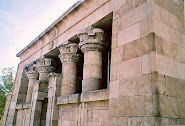
This article fills in missing details from the prior article I posted, along with a very nice photograph that gives a good overview of the excavation, the four pillars marking the entrance to the Princess' tomb and the tombs of the high officials dug into a side "wall." There is a mystery: Why was Sheretnebty buried in this spot, and not with the rest of the royal family?
From Live Science
Date: 07 November 2012 Time: 10:55 AM ET

The tomb of an ancient Egyptian princess has been discovered south of Cairo hidden in bedrock and surrounded by a court of tombs belonging to four high officials.
Dating to 2500 B.C., the structure was built in the second half of the Fifth Dynasty, though archaeologists are puzzled as to why this princess was buried in Abusir South among tombs of non-royal officials. Most members of the Fifth Dynasty's royal family were buried 1.2 miles (2 kilometers) to the north, in the central part of Abusir or farther south in Saqqara. (Saqqara holds a vast burial ground for the ancient capital Memphis and is home to the famous Step Pyramid of Djoser.)
The researchers aren't sure whether the remains of the princess are inside tomb, as the investigation is still in progress, Miroslav Bárta, director of the mission, told LiveScience. Even so, they also found several fragments of a false-door bearing the titles and the name of Sheretnebty, the king's daughter.
"By this unique discovery we open a completely new chapter in the history of Abusir and Saqqara necropolis," said Bárta, who heads the Czech mission to Egypt from the Czech Institute of Egyptology of the Charles University in Prague.
Bárta and colleagues think the ancient builders used a naturally existing step in the bedrock to create the princess' court, which extends down 13 feet (4 meters) and is surrounded by mastaba tombs above it. A mastaba is a type of ancient Egyptian tomb that forms a flat-roofed rectangular structure. A limestone staircase descends from north to south along the burial court; four limestone pillars that once supported roofing blocks hold carved hieroglyphic inscriptions reading: "King's daughter of his body, his beloved, revered in front of the Great God, Sheretnebty."
The four surrounding tombs were cut into the rock of the south wall of the court and of a corridor that runs east from the southeast corner of the court. The two tombs in the south wall, dating to the time of Djedkare Isesi, the seventh ruler of the Fifth Dynasty, belong to Shepespuptah, the chief of justice of the Great House, and Duaptah, an inspector of the palace attendants. The other pair is situated along the corridor, with one belonging to an official named Ity.
"We are very fortunate to have this new window through which we can go back in time and to follow and document step by step life and death of several historically important individuals of the great pyramid age era," Bárta said in a statement.
Tomb of Ancient Egyptian Princess Discovered in Unusual Spot
Jeanna Bryner, LiveScience Managing EditorDate: 07 November 2012 Time: 10:55 AM ET

The tomb of an ancient Egyptian princess has been discovered south of Cairo hidden in bedrock and surrounded by a court of tombs belonging to four high officials.
Dating to 2500 B.C., the structure was built in the second half of the Fifth Dynasty, though archaeologists are puzzled as to why this princess was buried in Abusir South among tombs of non-royal officials. Most members of the Fifth Dynasty's royal family were buried 1.2 miles (2 kilometers) to the north, in the central part of Abusir or farther south in Saqqara. (Saqqara holds a vast burial ground for the ancient capital Memphis and is home to the famous Step Pyramid of Djoser.)
The researchers aren't sure whether the remains of the princess are inside tomb, as the investigation is still in progress, Miroslav Bárta, director of the mission, told LiveScience. Even so, they also found several fragments of a false-door bearing the titles and the name of Sheretnebty, the king's daughter.
"By this unique discovery we open a completely new chapter in the history of Abusir and Saqqara necropolis," said Bárta, who heads the Czech mission to Egypt from the Czech Institute of Egyptology of the Charles University in Prague.
Bárta and colleagues think the ancient builders used a naturally existing step in the bedrock to create the princess' court, which extends down 13 feet (4 meters) and is surrounded by mastaba tombs above it. A mastaba is a type of ancient Egyptian tomb that forms a flat-roofed rectangular structure. A limestone staircase descends from north to south along the burial court; four limestone pillars that once supported roofing blocks hold carved hieroglyphic inscriptions reading: "King's daughter of his body, his beloved, revered in front of the Great God, Sheretnebty."
The four surrounding tombs were cut into the rock of the south wall of the court and of a corridor that runs east from the southeast corner of the court. The two tombs in the south wall, dating to the time of Djedkare Isesi, the seventh ruler of the Fifth Dynasty, belong to Shepespuptah, the chief of justice of the Great House, and Duaptah, an inspector of the palace attendants. The other pair is situated along the corridor, with one belonging to an official named Ity.
"We are very fortunate to have this new window through which we can go back in time and to follow and document step by step life and death of several historically important individuals of the great pyramid age era," Bárta said in a statement.
Tuesday, November 6, 2012
Vigilante Groups: "Enough" to Sexual Assaults in Egypt
From The New York Times
The Egyptians call this harrassment, but it's second and sometimes third degree sexual assault and it's a disgusting commentary on the state of Muslim society. People who commit second and third degree sexual assault in the United States GO TO PRISON and are branded for life as SEXUAL PREDATORS. Why would any non-Egyptian woman EVER visit such a backward, filthy place? It seems the entire Middle East is hopelessly contaminated by the macho (etymology is traced to the concept of "stupid goat man") ethic and the precepts of yet one more bogus patriarchal religion that teaches fear of females more than the Devil. Too bad the supporters of the Christian Taliban and the supporters of the Muslim Taliban can't meet at Armageddon and slug it out with their fists, the worthless schmucks. Hopefully they would all kill each other and leave females in peace.
Harassers of Women in Cairo Now Face Wrath of Vigilantes
By KAREEM FAHIM
Published: November 5, 2012
CAIRO — The young activists lingered on the streets around Tahrir Square, scrutinizing the crowds of holiday revelers. Suddenly, they charged, pushing people aside and chasing down a young man. As the captive thrashed to get away, the activists pounded his shoulders, flipped him around and spray-painted a message on his back: “I’m a harasser.”
Over the holiday, the groups staked out different parts of Cairo’s downtown. One avoided any violence, forming human chains between women and their tormentors. The other group forcefully confronted men and boys it suspected of harassment, smacking around suspects before hauling them off to a police station.
One of that group’s founders, Sherine Badr el-Din, 30, started her work as an anti-harassment activist by asking men to get off the women-only cars on the Cairo subway, regarded as a safe zone. When they refused, she videotaped them and posted their pictures on the Internet, she said.
The Egyptians call this harrassment, but it's second and sometimes third degree sexual assault and it's a disgusting commentary on the state of Muslim society. People who commit second and third degree sexual assault in the United States GO TO PRISON and are branded for life as SEXUAL PREDATORS. Why would any non-Egyptian woman EVER visit such a backward, filthy place? It seems the entire Middle East is hopelessly contaminated by the macho (etymology is traced to the concept of "stupid goat man") ethic and the precepts of yet one more bogus patriarchal religion that teaches fear of females more than the Devil. Too bad the supporters of the Christian Taliban and the supporters of the Muslim Taliban can't meet at Armageddon and slug it out with their fists, the worthless schmucks. Hopefully they would all kill each other and leave females in peace.
Harassers of Women in Cairo Now Face Wrath of Vigilantes
By KAREEM FAHIM
Published: November 5, 2012
CAIRO — The young activists lingered on the streets around Tahrir Square, scrutinizing the crowds of holiday revelers. Suddenly, they charged, pushing people aside and chasing down a young man. As the captive thrashed to get away, the activists pounded his shoulders, flipped him around and spray-painted a message on his back: “I’m a harasser.”
Egypt’s streets have long been a perilous place for women, who are frequently heckled, grabbed, threatened and violated while the police look the other way. Now, during the country’s tumultuous transition from authoritarian rule, more and more groups are emerging to make protecting women — and shaming the do-nothing police — a cause.
“They’re now doing the undoable?” a police officer joked as he watched the vigilantes chase down the young man. The officer quickly went back to sipping his tea.
The attacks on women did not subside after the uprising. If anything, they became more visible as even the military was implicated in the assaults, stripping female protesters, threatening others with violence and subjecting activists to so-called virginity tests. During holidays, when Cairenes take to the streets to stroll and socialize, the attacks multiply.
But during the recent Id al-Adha holiday, some of the men were surprised to find they could no longer harass with impunity, a change brought about not just out of concern for women’s rights, but out of a frustration that the post-revolutionary government still, like the one before, was doing too little to protect its citizens.
At least three citizens groups patrolled busy sections of central Cairo during the holiday. The groups’ members, both men and women, shared the conviction that the authorities would not act against harassment unless the problem was forced into the public debate. They differed in their tactics: some activists criticized others for being too quick to resort to violence against suspects and encouraging vigilantism. One group leader compared the activists to the Guardian Angels in the United States.
“The harasser doesn’t see anyone who will hold him accountable,” said Omar Talaat, 16, who joined one of the patrols.
The years of President Hosni Mubarak’s rule were marked by official apathy, collusion in the assaults on women, or empty responses to the attacks, including police roundups of teenagers at Internet cafes for looking at pornography.
“The police did not take harassment seriously,” said Madiha el-Safty, a sociology professor at the American University in Cairo. “People didn’t file complaints. It was always underreported.”
Mr. Mubarak’s wife, Suzanne, who portrayed herself as a champion of women’s rights, pretended the problem hardly existed. As reports of harassment grew in 2008, she said, “Egyptian men always respect Egyptian women.”
Egypt’s new president, Mohamed Morsi, has presided over two holidays, and many activists say there is no sign that the government is paying closer attention to the problem. But the work by the citizens groups may be having an effect: Last week, after the Id al-Adha holiday, Mr. Morsi’s spokesman announced that the government had received more than 1,000 reports of harassment, and said that the president had directed the Interior Ministry to investigate them.
“Egypt’s revolution cannot tolerate these abuses,” the spokesman quoted Mr. Morsi as saying.
Azza Soliman, the director of the Center for Egyptian Women’s Legal Assistance, dismissed the president’s words as “weak.” During the holiday, she said, one of her sons was beaten on the subway after he tried to stop a man who was groping two foreign women. The police tried to stop him from filing a complaint. “The whole world is talking about harassment in our country,” Ms. Soliman said. “The Interior Ministry takes no action.”
For years, anti-harassment activists have worked to highlight the problems in Egypt, but the uprising seemed to give the effort more energy and urgency.
One of that group’s founders, Sherine Badr el-Din, 30, started her work as an anti-harassment activist by asking men to get off the women-only cars on the Cairo subway, regarded as a safe zone. When they refused, she videotaped them and posted their pictures on the Internet, she said.
Last summer, one of the men attacked her. “I wanted to file a case, but the police officer refused, claiming they were only there to monitor the train schedules.” She said the group escalated its tactics out of frustration, after the police started releasing suspects the group had caught.
“Violence is not our method,” she said. “But the pressure was tremendous.”
Last week, as the group gathered near Tahrir Square, one member had what looked like a stun gun, and another shook a can of spray paint. Most participants were men, and some wore fluorescent green vests, with the words “combating harassment” written on the back.
They mused on the reasons for the frequency of the attacks on their sisters, mothers and friends, finding no sure answer in the blame often laid on poverty or religion, society’s indifference or the state’s contagious chauvinism.
They seemed more certain of the solution, as they plunged into the holiday crowds over several evenings. Some bystanders were supportive. But when violence broke out, there was less support. “I will tell the government on you,” one man screamed as the activists wrestled with a suspect.
Sometimes the patrol acted after seeing a woman being groped. At other times, it justified its attacks as preventive.
Two boys on a scooter hardly knew what hit them. One minute, they were driving along the Nile Corniche, saying something — maybe lewd, maybe not — to two girls strolling on the sidewalk. The next, they were being hauled off the scooter by the men in green vests. The melee that broke out afterward stopped traffic on one of downtown’s busiest roadways, before the police chased the patrol members off.
Afterward, Muhaab Selim, 23, a member of the group, could barely contain his anger. “Why do I have to wait until he touches them?” he yelled. “Why do people defend the harassers?”
By the end of the holidays, one of the group’s leaders, Muhammad Taimoor, 22, had been arrested after fighting with a suspect on the subway. Even so, he called the weekend a success. “We caught some harassers, sprayed them with paint and published their pictures everywhere,” Mr. Taimoor said. “The Interior Ministry wasn’t cooperating with us at all. They weren’t protecting women in the streets.”
While Mr. Taimoor and his colleagues were on patrol, another group, called Imprint, was in a nearby square. Nihal Saad Zaghloul, 27, an activist with the group, said its members stopped more than 30 men who were trying to harass women.
When the group believes someone is being harassed, some members form a wall between the attacker and the victim, while others take the woman to safety. “We don’t push back, and we don’t fight,” Ms. Zaghloul said. They ask police officers to be present, in case the woman wants to file a report.
Ms. Zaghloul, who became active after she and a friend were assaulted, was less critical of the patrol officers than some of the other activists. “They are understaffed, and at the same time, they are part of a society that always blames women, although they know it’s wrong.” She worried that the other group’s methods would alienate the public.
But she added, “No one understands their frustration better than me.”
Sunday, November 4, 2012
A Dog-Gone Discovery...
Dog's Fall Led to Archaeological Discovery
Ancient wine presses found in Jerusalem thanks to a man who walked his dog.
By Gil Ronen
First Publish: 10/30/2012, 2:56 PM
Ancient wine presses have been found in Jerusalem – and will soon be part of a new park – thanks to a resident of Ramot who walked his dog several years ago. The dog fell into a hole and had to be rescued. It later turned out that there are more holes in the vicinity, and that a meaningful archaeological discovery had been made.
Jerusalem Mayor Nir Barkat recently inaugurated the designated park, which is planned to become an open Biblical tourist park. The park, which will occupy 30,250 square meters, is located north of Jerusalem Park and northwest of Mitzpe Naftoakh nature park,
Among the discoveries at the location are wine presses from the days of the First Temple, as well as pottery shards and two bronze coins from the Second Temple times. Massive digging at the location has been carried out by the authorities with the participation of local residents and school children.
A full reconstruction of the wine presses is planned, under the supervision of renowned archaeologist Amichai Mazar.
Jerusalem Mayor Nir Barkat recently inaugurated the designated park, which is planned to become an open Biblical tourist park. The park, which will occupy 30,250 square meters, is located north of Jerusalem Park and northwest of Mitzpe Naftoakh nature park,
Among the discoveries at the location are wine presses from the days of the First Temple, as well as pottery shards and two bronze coins from the Second Temple times. Massive digging at the location has been carried out by the authorities with the participation of local residents and school children.
A full reconstruction of the wine presses is planned, under the supervision of renowned archaeologist Amichai Mazar.
Promiscuous Neanderthals: Republicans Would Hate You!
Rush Limbaugh caused controversy earlier this year when he called a female student lawyer a slut for using birth control paid for by her health insurance. What would Rush think about these slutty Neanderthals who apparently slept around enough to deposit their DNA into just about every extent human "race" known today, except for those in sub-Saharan Africa -- you know, the continent with countries everyone else except the Iranians and the Chinese pretend doesn't exist.
QUERY: How can anyone say so-called Neanderthals are "extinct" when a large majority of so-called modern humans today carry 3 to 4% of their DNA within us?
The only modern humans whose ancestors did not interbreed with Neanderthals are apparently sub-Saharan Africans, researchers say.
New findings suggest modern North Africans carry genetic traces from Neanderthals, modern humanity's closest known extinct relatives.
Although modern humans are the only surviving members of the human lineage, others once roamed the Earth, including the Neanderthals. Genetic analysis of these extinct lineages’ fossils has revealed they once interbred with our ancestors, with recent estimates suggesting that Neanderthal DNA made up 1 percent to 4 percent of modern Eurasian genomes. Although this sex apparently only rarely produced offspring, this mixing was enough to endow some people with the robust immune systems they enjoy today.
The Neanderthal genome revealed that people outside Africa share more genetic mutations with Neanderthalsthan Africans do. One possible explanation is that modern humans interbred with Neanderthals mostly after the modern lineage began appearing outside Africa at least 100,000 years ago. Another, more complex scenario is that an African group ancestral to both Neanderthals and certain modern human populations genetically split from other Africans beginning about 230,000 years ago. This group then stayed genetically distinct until it eventually left Africa.
To shed light on why Neanderthals appear most closely related to people outside Africa, scientists analyzed North Africans. Some researchers had suggested these groups were the sources of the out-of-Africa migrations that ultimately spread humans around the globe.
The researchers focused on 780,000 genetic variants in 125 people representing seven different North African locations. They found North Africans had dramatically more genetic variants linked with Neanderthals than sub-Saharan Africans did. The level of genetic variants that North Africans share with Neanderthals is on par with that seen in modern Eurasians.
The scientists also found this Neanderthal genetic signal was higher in North African populations whose ancestors had relatively little recent interbreeding with modern Near Eastern or European peoples. That suggests the signal came directly from ancient mixing with Neanderthals, and not recent interbreeding with other modern humans whose ancestors might have interbred with Neanderthals.
"The only modern populations without Neanderthal admixture are the sub-Saharan groups," said researcher Carles Lalueza-Fox, a paleogeneticist at the Institute of Evolutionary Biology at Barcelona, Spain.
The researchers say their findings do not suggest that Neanderthals entered Africa and made intimate contact with ancient North Africans. Rather, "what we are saying is that the contact took place outside Africa, likely in the Near East, and that there was a back migration into Africa of some groups that peopled North Africa, likely replacing or assimilating some ancestral populations," Lalueza-Fox told LiveScience.
This research also suggests that North African groups were not the source of the out-of-Africa migrations. Rather, other groups, perhaps out of East Africa, might have led this diaspora.
The scientists detailed their findings Oct. 17 in the journal PLoS ONE.
Charles Choi, LiveScience Contributor
Date: 01 November 2012 Time: 08:55 AM ET
QUERY: How can anyone say so-called Neanderthals are "extinct" when a large majority of so-called modern humans today carry 3 to 4% of their DNA within us?
The only modern humans whose ancestors did not interbreed with Neanderthals are apparently sub-Saharan Africans, researchers say.
New findings suggest modern North Africans carry genetic traces from Neanderthals, modern humanity's closest known extinct relatives.
Although modern humans are the only surviving members of the human lineage, others once roamed the Earth, including the Neanderthals. Genetic analysis of these extinct lineages’ fossils has revealed they once interbred with our ancestors, with recent estimates suggesting that Neanderthal DNA made up 1 percent to 4 percent of modern Eurasian genomes. Although this sex apparently only rarely produced offspring, this mixing was enough to endow some people with the robust immune systems they enjoy today.
The Neanderthal genome revealed that people outside Africa share more genetic mutations with Neanderthalsthan Africans do. One possible explanation is that modern humans interbred with Neanderthals mostly after the modern lineage began appearing outside Africa at least 100,000 years ago. Another, more complex scenario is that an African group ancestral to both Neanderthals and certain modern human populations genetically split from other Africans beginning about 230,000 years ago. This group then stayed genetically distinct until it eventually left Africa.
To shed light on why Neanderthals appear most closely related to people outside Africa, scientists analyzed North Africans. Some researchers had suggested these groups were the sources of the out-of-Africa migrations that ultimately spread humans around the globe.
The researchers focused on 780,000 genetic variants in 125 people representing seven different North African locations. They found North Africans had dramatically more genetic variants linked with Neanderthals than sub-Saharan Africans did. The level of genetic variants that North Africans share with Neanderthals is on par with that seen in modern Eurasians.
The scientists also found this Neanderthal genetic signal was higher in North African populations whose ancestors had relatively little recent interbreeding with modern Near Eastern or European peoples. That suggests the signal came directly from ancient mixing with Neanderthals, and not recent interbreeding with other modern humans whose ancestors might have interbred with Neanderthals.
"The only modern populations without Neanderthal admixture are the sub-Saharan groups," said researcher Carles Lalueza-Fox, a paleogeneticist at the Institute of Evolutionary Biology at Barcelona, Spain.
The researchers say their findings do not suggest that Neanderthals entered Africa and made intimate contact with ancient North Africans. Rather, "what we are saying is that the contact took place outside Africa, likely in the Near East, and that there was a back migration into Africa of some groups that peopled North Africa, likely replacing or assimilating some ancestral populations," Lalueza-Fox told LiveScience.
This research also suggests that North African groups were not the source of the out-of-Africa migrations. Rather, other groups, perhaps out of East Africa, might have led this diaspora.
The scientists detailed their findings Oct. 17 in the journal PLoS ONE.
5th Dynasty Tomb of Egyptian Princess Discovered
Exciting news! Wonder how long it will be before the Islamists now in power in Egypt sell the REAL artifacts on the illegal antiquities market? The original article has several photographs of impressive sculptures and statues, unfortunately mostly photographed out of context and not always specifically identified with a particular tomb. Better save them now, I expect they may soon disappear, just like the antiquities depicted in them.
Pharaonic princess's tomb found near Cairo, Egypt
(Update) November 2, 2012 by Maggie Fick
Czech archaeologists have unearthed the 4,500-year-old tomb of a Pharaonic princess south of Cairo, in a finding that suggests other undiscovered tombs may be in the area, an official from Egypt's antiquities ministry said Saturday.
Mohammed El-Bialy, who heads the Egyptian and Greco-Roman Antiquities department at the Antiquities Ministry, said that Princess Shert Nebti's burial site is surrounded by the tombs of four high officials from the Fifth Dynasty dating to around 2,500 BC in the Abu Sir complex near the famed step pyramid of Saqqara. "Discoveries are ongoing" at Abu Sir, El-Bialy said, adding that the excavation was in a "very early stage" and that the site was closed to the public. Inscriptions on the four limestone pillars of the Princess' tomb indicate that she is the daughter of King Men Salbo. [Who? Don't see him on the King List...]
"She is the daughter of the king, but only her tomb is there [does this mean her remains aren't there?], surrounded by the four officials, so the question is, are we going to discover other tombs around hers in the near future? We don't know anything about her father, the king, or her mother, but hope that future discoveries will answer these questions," El-Bialy said.
On Friday, Antiquities Minister Mohammed Ibrahim said that the antechamber to the princess' tomb includes four limestone columns and hieroglyphic inscriptions. The current excavation has also unearthed an antechamber containing the sarcophagi of the four officials and statues of men, women, and a child, he said in a statement.
The Czech team's discovery marks the "start of a new chapter" in the history of the burial sites of Abu Sir and Saqqara, Ibrahim added. The archaeologists working at the site are from the Czech Institute of Egyptology, which is funded by the Charles University of Prague. Their excavation began this month.
The discovery comes weeks after the Egyptian government reopened a pyramid and a complex of tombs that had been closed for restoration work for a decade. Egypt's vital tourism industry has suffered from the country's internal unrest in the wake of the 2011 uprising that toppled autocratic leader Hosni Mubarak. A delegation from the International Monetary Fund is currently in Egypt for negotiations over a $4.8 billion loan aimed at bolstering the country's ailing economy.
[Well, the economy wouldn't be ailing if the Islamists weren't in power. American tourists especially aren't going to be returning to Egypt in droves any time soon - not when unemployed government supported "protesters" are out daily being videotaped and broadcast on the nightly news and the internet screaming DEATH TO AMERICA! Yeah, blame Americans for everything, and then expect them to be tourists in your country spending billions of dollars? LOL!]
Copyright 2012 The Associated Press. All rights reserved.
Pharaonic princess's tomb found near Cairo, Egypt
(Update) November 2, 2012 by Maggie Fick
Czech archaeologists have unearthed the 4,500-year-old tomb of a Pharaonic princess south of Cairo, in a finding that suggests other undiscovered tombs may be in the area, an official from Egypt's antiquities ministry said Saturday.
 |
| This Oct. 11, 2012 photo released Friday, Nov. 2, 2012 by Egypt's Supreme Council of Antiquities, shows details of hieroglyphic inscriptions on one of four limestone columns in the recently discovered antechamber to the tomb of a pharaonic princess, in the Abusir region, south of Cairo, Egypt. Egyptian Minister of Antiquities, Mohammed Ibrahim said Czech archaeologists have unearthed the tomb of Shert Nebti's, a pharaonic princess, daughter of King Men Salbo, dating from the fifth dynasty (around 2500 BC) along with four other tombs of "high ranking officials." (AP Photo/Egypt's Supreme Council Of Antiquities) |
"She is the daughter of the king, but only her tomb is there [does this mean her remains aren't there?], surrounded by the four officials, so the question is, are we going to discover other tombs around hers in the near future? We don't know anything about her father, the king, or her mother, but hope that future discoveries will answer these questions," El-Bialy said.
On Friday, Antiquities Minister Mohammed Ibrahim said that the antechamber to the princess' tomb includes four limestone columns and hieroglyphic inscriptions. The current excavation has also unearthed an antechamber containing the sarcophagi of the four officials and statues of men, women, and a child, he said in a statement.
The Czech team's discovery marks the "start of a new chapter" in the history of the burial sites of Abu Sir and Saqqara, Ibrahim added. The archaeologists working at the site are from the Czech Institute of Egyptology, which is funded by the Charles University of Prague. Their excavation began this month.
The discovery comes weeks after the Egyptian government reopened a pyramid and a complex of tombs that had been closed for restoration work for a decade. Egypt's vital tourism industry has suffered from the country's internal unrest in the wake of the 2011 uprising that toppled autocratic leader Hosni Mubarak. A delegation from the International Monetary Fund is currently in Egypt for negotiations over a $4.8 billion loan aimed at bolstering the country's ailing economy.
[Well, the economy wouldn't be ailing if the Islamists weren't in power. American tourists especially aren't going to be returning to Egypt in droves any time soon - not when unemployed government supported "protesters" are out daily being videotaped and broadcast on the nightly news and the internet screaming DEATH TO AMERICA! Yeah, blame Americans for everything, and then expect them to be tourists in your country spending billions of dollars? LOL!]
Copyright 2012 The Associated Press. All rights reserved.
Saturday, November 3, 2012
Try a Little Tenderness....
I don't know what it is, darlings, but for the past few days I've got that old song in my head and it just won't fricking go away! ACH!
Probably worst of all is that I don't remember it exactly as Otis Redding originally sang it; I keep coming up with these ooozey, sexy versions belting out of my lips as I slink up (and back down) the stairs at home, pretending to sing into a mike. Oh my....
And today I was doing that at the office too. Oh oh.... Fortunately, it's Saturday, and hardly anyone is there. Those of us who do work on Saturday are usually mutual nut-cases like moi.
I made up words, I made up movie scenes over the past couple of days, LOL! Damn, I should have pursued that world of professional writing years ago. Alas. Ain't gonna do it now, darlings. But I came up with some good stuff. Really good stuff. Strangest yet, I'm in fine voice at the moment. That doesn't always happen. I've been singing true to pitch and hitting notes I haven't been able to hit in years. What the hell does it all mean? Damned if I know.
But tonight I thought I'd bring you this really wonderful version of a part of Otis' classic song, featuring Annie Potts (why was she NOT EVER a SUPERSTAR? She is fabulous in this part, just as she was in Ghost Busters) and Molly Ringwald -- with Jon Cryer in the role as the seranader... well -- I hope you love it as much as I did:
Probably worst of all is that I don't remember it exactly as Otis Redding originally sang it; I keep coming up with these ooozey, sexy versions belting out of my lips as I slink up (and back down) the stairs at home, pretending to sing into a mike. Oh my....
And today I was doing that at the office too. Oh oh.... Fortunately, it's Saturday, and hardly anyone is there. Those of us who do work on Saturday are usually mutual nut-cases like moi.
I made up words, I made up movie scenes over the past couple of days, LOL! Damn, I should have pursued that world of professional writing years ago. Alas. Ain't gonna do it now, darlings. But I came up with some good stuff. Really good stuff. Strangest yet, I'm in fine voice at the moment. That doesn't always happen. I've been singing true to pitch and hitting notes I haven't been able to hit in years. What the hell does it all mean? Damned if I know.
But tonight I thought I'd bring you this really wonderful version of a part of Otis' classic song, featuring Annie Potts (why was she NOT EVER a SUPERSTAR? She is fabulous in this part, just as she was in Ghost Busters) and Molly Ringwald -- with Jon Cryer in the role as the seranader... well -- I hope you love it as much as I did:
Friday, November 2, 2012
2012 Women's World Chess Championship
Starts soon -- November 11, 2012 in Kamsky Mansky (where?) -- you know, that place in Siberia I just can't resist poking a little fun at :)
Pairings for the first round of the knock-out are up at FIDE. There are two games, plus an extra day before the start of the next round for tie-break matches:

I've got my favorite players, of course! I'll be following Koneru Humpy, Kateryna Lahno, Harika Dronavalli, Alexandra Kosteniuk and the American players Abrahamyan, Zatonskih and Krush.
The Canadian women's champion (2012 Goddesschess Canadian Women's CC/Zonal), WIM Natalia Khoudgarian, is a sentimental favorite, but she drew an unfortunate pairing against one of the strongest Chinese players, GM Zhou Xue, and she has the black pieces too. Can a miracle happen? Nah, probably not. But I'm glad for her sake she had this opportunity and
It's an impressive female gathering: 19 GMs. A few years back there were less than a dozen, so I guess this is progress. Too bad the women's ELOs are not keeping pace with their male counterparts. Still out-classed and out-gunned in the women's chess ghetto. Sigh.
But I will be following. Frankly, most male chessplayers bore me. The women, on the other hand, present themselves as actual real people. Amazing!
This is a premiere event for the ladies. The total prize purse is $450,000. I was very surprised to read that FIDE will NOT be taking its normal 20% cut of the ladies' prizes this event. Wonder why not... Scruples never stopped FIDE from doing whatever it wanted before.
However, checks for prize money will NOT be handed out at the championship. Nope -- FIDE requires each player to submit bank account information, presumably so that the prize money can be wired at a later time. This is just damn downright ridiculous. Either FIDE has the prize money, in which case there is NO REASON TO PRESENT EACH PLAYER WITH A CERTIFIED CHECK FOR THEIR WINNINGS BEFORE they leave Kamsky Mansky. And if FIDE does NOT have the prize money in hand, why would a player ever think she would be paid, and turn over her personal banking information to - well, I won't go there...
Here is the prize structure:
3. 9. Prizes for the Women’s World Championship
3. 9. 1. Prize list
1st round 32 losers x 3.750 = 120.000
2nd round 16 losers x 5.500 = 88.000
3rd round 8 losers x 8.000 = 64.000
4th round 4 losers x 12.000 = 48.000
5th round 2 losers x 20.000 = 40.000
6th round 1 loser x 30.000 = 30.000
Women’s World Champion = 60.000
TOTAL: 450.000 USD
Full Regulations. Let the games begin!!!!!
Pairings for the first round of the knock-out are up at FIDE. There are two games, plus an extra day before the start of the next round for tie-break matches:

I've got my favorite players, of course! I'll be following Koneru Humpy, Kateryna Lahno, Harika Dronavalli, Alexandra Kosteniuk and the American players Abrahamyan, Zatonskih and Krush.
The Canadian women's champion (2012 Goddesschess Canadian Women's CC/Zonal), WIM Natalia Khoudgarian, is a sentimental favorite, but she drew an unfortunate pairing against one of the strongest Chinese players, GM Zhou Xue, and she has the black pieces too. Can a miracle happen? Nah, probably not. But I'm glad for her sake she had this opportunity and
It's an impressive female gathering: 19 GMs. A few years back there were less than a dozen, so I guess this is progress. Too bad the women's ELOs are not keeping pace with their male counterparts. Still out-classed and out-gunned in the women's chess ghetto. Sigh.
But I will be following. Frankly, most male chessplayers bore me. The women, on the other hand, present themselves as actual real people. Amazing!
This is a premiere event for the ladies. The total prize purse is $450,000. I was very surprised to read that FIDE will NOT be taking its normal 20% cut of the ladies' prizes this event. Wonder why not... Scruples never stopped FIDE from doing whatever it wanted before.
However, checks for prize money will NOT be handed out at the championship. Nope -- FIDE requires each player to submit bank account information, presumably so that the prize money can be wired at a later time. This is just damn downright ridiculous. Either FIDE has the prize money, in which case there is NO REASON TO PRESENT EACH PLAYER WITH A CERTIFIED CHECK FOR THEIR WINNINGS BEFORE they leave Kamsky Mansky. And if FIDE does NOT have the prize money in hand, why would a player ever think she would be paid, and turn over her personal banking information to - well, I won't go there...
Here is the prize structure:
3. 9. Prizes for the Women’s World Championship
3. 9. 1. Prize list
1st round 32 losers x 3.750 = 120.000
2nd round 16 losers x 5.500 = 88.000
3rd round 8 losers x 8.000 = 64.000
4th round 4 losers x 12.000 = 48.000
5th round 2 losers x 20.000 = 40.000
6th round 1 loser x 30.000 = 30.000
Women’s World Champion = 60.000
TOTAL: 450.000 USD
Full Regulations. Let the games begin!!!!!
Tuesday, October 30, 2012
A Scholarly Study of Ancient Greek Prostitutes
Well, okay. LOL! This is also a book review at Minerva online:

Many of the examples cited throughout this book create small vignettes of life in Ancient Greece and show how prostitution was fundamentally and vitally linked to many aspects of the social and economic position of the city-states.
What can be learnt from the prostitutes of Ancient Greece is evidently far more than might be expected and in many instances quite surprising – one good example of this is the madam who wrote out the rules of her brothel in 237 stanzas of high oratorical language.
Overall this highly engaging book demonstrates the need to use all the available ancient resources to build up an accurate cultural picture of the times.
As Glazebrook and Henry acknowledge, the academic study of the oldest profession is far more acceptable today than it once was.
Geoff Lowsley
Greek Prostitutes in the Ancient Mediterranean 800 BCE–200 CE
Allison Glazebrook and Madeleine M. Henry [eds.]
University of Wisconsin Press, 2011
360pp, 14 black and white photos and
12 drawings
Paperback, £23.50
University of Wisconsin Press, 2011
360pp, 14 black and white photos and
12 drawings
Paperback, £23.50

If, on finishing Jenifer Neils' Women in the Ancient World (reviewed left), you wanted to study in greater depth one of the more taboo aspects of feminine life, what is commonly referred to as 'the oldest profession in the world', then Greek Prostitutes in the Ancient Mediterranean 800 BCE – 200 CE provides the ideal scholarly assessment of the sex workers of Ancient Greece.
Glazebrook and Henry have edited contributions from 11 academics (including themselves) on this subject, and the 10 essays within this book, along with appropriate referencing glossary and indices, are very much aimed at those studying the Classical world at degree or higher level.
This is not to say, though, that the book is unapproachable or unengaging, quite the contrary in fact, as it covers such fascinating subject matter. On the other hand, this is not to say it is a vicarious peepshow into ancient sexual practices.
Much of the book focuses on the importance of Ancient Greek prostitutes to society. Among the ideas discussed are the socio-political power that prostitutes came to wield and how this sat with the lay (for want of a better term) community, the social status of women, civic endorsement of the profession and a philological study of the language associated with sex.
Architectural and archaeological evidence is also examined, with particular reference to the brothels on Delos. Coupled with liberal citations of ancient writings and fragments this makes for a pleasingly multidisciplinary approach to the subject.
Greek vase painting is a great resource for this type of study and Nancy Sorkin Rabinowitz's chapter, 'Sex for Sale?', analyses the representations of women seen (predominantly) on drinking vessels. By drawing attention to body language, rendering, attributes, and how these relate to written accounts, Rabinowitz explains that previous interpretations of rites of passage, courtship scenes, companionship and love scenes, may have been erroneous.
Glazebrook and Henry have edited contributions from 11 academics (including themselves) on this subject, and the 10 essays within this book, along with appropriate referencing glossary and indices, are very much aimed at those studying the Classical world at degree or higher level.
This is not to say, though, that the book is unapproachable or unengaging, quite the contrary in fact, as it covers such fascinating subject matter. On the other hand, this is not to say it is a vicarious peepshow into ancient sexual practices.
Much of the book focuses on the importance of Ancient Greek prostitutes to society. Among the ideas discussed are the socio-political power that prostitutes came to wield and how this sat with the lay (for want of a better term) community, the social status of women, civic endorsement of the profession and a philological study of the language associated with sex.
Architectural and archaeological evidence is also examined, with particular reference to the brothels on Delos. Coupled with liberal citations of ancient writings and fragments this makes for a pleasingly multidisciplinary approach to the subject.
Greek vase painting is a great resource for this type of study and Nancy Sorkin Rabinowitz's chapter, 'Sex for Sale?', analyses the representations of women seen (predominantly) on drinking vessels. By drawing attention to body language, rendering, attributes, and how these relate to written accounts, Rabinowitz explains that previous interpretations of rites of passage, courtship scenes, companionship and love scenes, may have been erroneous.
Many of the examples cited throughout this book create small vignettes of life in Ancient Greece and show how prostitution was fundamentally and vitally linked to many aspects of the social and economic position of the city-states.
What can be learnt from the prostitutes of Ancient Greece is evidently far more than might be expected and in many instances quite surprising – one good example of this is the madam who wrote out the rules of her brothel in 237 stanzas of high oratorical language.
Overall this highly engaging book demonstrates the need to use all the available ancient resources to build up an accurate cultural picture of the times.
As Glazebrook and Henry acknowledge, the academic study of the oldest profession is far more acceptable today than it once was.
Geoff Lowsley
Book Review: Women in the Ancient World
From Minerva online:

Small details like a map of the ancient world, a list of goddesses across different cultures and a potted history of each in the opening chapter, make this a self-contained primer on the topic for those who incline towards the aesthetic.
Neils does broach the awkward truth that the vast majority of what we know of women in the ancient world is filtered through representations left to us by men, and makes some effort to navigate round this by touching on the clues that can be drawn from biological remains, for example, preserved bodies. This is, however, clearly not the raison d'être of this book, as more space is filled by beautiful images of well photographed objects than by CAT scans.
Having accepted that male-authored accounts concerning the female members of the population are heavily biased, the book unashamedly focuses on a visual celebration of women while at the same time placing them in a socio-historic context.
The cultures under scrutiny are Ancient Greece, Rome, Egypt, and the Near East. But, by examining the subject thematically, rather than geographically, Neils allows for interesting comparisons to be drawn between the different cultures, for instance views and laws concerning the legal rights of women and approaches to marriage.
This book ambitiously covers a vast period, stretching from 4000 BC to AD 600 and involving a range of religions and cultures – particularly from the Ancient Near East. But the chapter headings: 'Female Stereotypes', 'Mothers and Mourners', 'Working Women', 'The Body Beautiful', 'Women and Religion' and 'Royal Women' allow these introductory studies to be presented in accessible portions.
The chapters are peppered throughout with comparative and supporting accounts, from myths and old textual sources, which add to our understanding of the imagery on the objects (eg. black figure pots). A few surprising examples of biased ancient thought include the fact that Aristotle thought women were no more than mutilated men.
At its close Neils concedes once more that most of what we know about women in the ancient world is seen through male eyes, but as the remit of her book is to show how art celebrates the female form, it succeeds in being an engaging, informative and beautifully presented book.
Women in the Ancient World
Jenifer Neils
British Museum Press, 2011
216pp, 200 colour photographs and one map
Paperback, £18.99
British Museum Press, 2011
216pp, 200 colour photographs and one map
Paperback, £18.99

Jenifer Neils has taught Classical Art and Archaeology at Case Western Reserve University since 1980. She has also guest-curated two major international loan exhibitions, Goddess and Polis: The Panathenaic Festival in Ancient Athens and Coming of Age in Greece: Images of Childhood from the Classical Past.
Her latest book, a handsome volume, lavishly illustrated throughout with colour photographs of objects largely drawn from the collections of the British Museum, focuses on both the role and perception of women in the past.
Her latest book, a handsome volume, lavishly illustrated throughout with colour photographs of objects largely drawn from the collections of the British Museum, focuses on both the role and perception of women in the past.
Small details like a map of the ancient world, a list of goddesses across different cultures and a potted history of each in the opening chapter, make this a self-contained primer on the topic for those who incline towards the aesthetic.
Neils does broach the awkward truth that the vast majority of what we know of women in the ancient world is filtered through representations left to us by men, and makes some effort to navigate round this by touching on the clues that can be drawn from biological remains, for example, preserved bodies. This is, however, clearly not the raison d'être of this book, as more space is filled by beautiful images of well photographed objects than by CAT scans.
Having accepted that male-authored accounts concerning the female members of the population are heavily biased, the book unashamedly focuses on a visual celebration of women while at the same time placing them in a socio-historic context.
The cultures under scrutiny are Ancient Greece, Rome, Egypt, and the Near East. But, by examining the subject thematically, rather than geographically, Neils allows for interesting comparisons to be drawn between the different cultures, for instance views and laws concerning the legal rights of women and approaches to marriage.
This book ambitiously covers a vast period, stretching from 4000 BC to AD 600 and involving a range of religions and cultures – particularly from the Ancient Near East. But the chapter headings: 'Female Stereotypes', 'Mothers and Mourners', 'Working Women', 'The Body Beautiful', 'Women and Religion' and 'Royal Women' allow these introductory studies to be presented in accessible portions.
The chapters are peppered throughout with comparative and supporting accounts, from myths and old textual sources, which add to our understanding of the imagery on the objects (eg. black figure pots). A few surprising examples of biased ancient thought include the fact that Aristotle thought women were no more than mutilated men.
At its close Neils concedes once more that most of what we know about women in the ancient world is seen through male eyes, but as the remit of her book is to show how art celebrates the female form, it succeeds in being an engaging, informative and beautifully presented book.
********************************************************
Sounds like a good read. I would love to see China and other far-eastern societies added, though, like India. They are just as old as civilizations around the Mediterranean. Why do we continue using such a narrow focus when dealing with such important themes -- like no people existed beyond these certain geographic confines? The ancients certainly knew better! There was some kind of contact and quite possibly trade going on between east-west from the early pharonic age, and certainly "westerners" were emigrating and settling in the east (in and around the Tarim Basin, for instance) by around 2500 BCE.
Monday, October 29, 2012
Rising Up the Ranks: Chess Femme Anjana Murali
From The Milwaukee Journal Sentinel online (my hometown newspaper):
Anjana Murali's family doesn't own a TV, and she said it shows.
"It frees up my time," Murali said. "I like to feel engaged."
A junior at Shorewood High School and honor roll student, Murali already has a robust résumé. Her array of commitments includes student council, several science clubs, the chess and tennis teams, the school newspaper and the Girl Scouts.
This year, Murali is vying for her Gold Award, the Girl Scouts' highest achievement. Only 5.4% of eligible Girl Scouts successfully earn the award, which honors the completion of a seven-step project that resolves a community problem in the short and long term, according to the Girl Scouts of America website.
Murali hopes to earn her award with "Queen's Game," an all-girls chess camp she has been organizing for months after receiving a $1,200 grant from Lead2Change, an organization that supports community service projects developed by young people. Inspired by an experience she had as a child at her first chess tournament, Murali hopes her efforts will help equalize the gender disparity in chess.
"A guy looked at me and said to his friend, 'I'll be out of here in 10 seconds,' " Murali said. "He did beat me quickly, but it was really discouraging that it was all boys. I wanted to get better and beat these guys who thought they were better than me."
She did get better. Two years later, Murali became the girls all-state chess champion. Since then, she has also competed and been ranked nationally. But her game slowed down as high school courses became more demanding and her father, who taught her how to play, moved to Texas for his job as a software engineer.
Although she still plays with her former chess coach every Sunday, she is now primarily concerned with leveling the playing field for girls in the sport.
"I'd love to see more female participation and show chess is not only a game," Murali said. "In chess tournaments, it's a touch-move policy - you take a long time before touching a piece because you have to think of a whole series of calculations. In life, you implement the same cause-effect procedure."
Even as many of her peers began leaving the Girl Scouts in middle school, Murali said she stayed a member because she was aware of the leadership opportunities the organization provided for older girls.
Murali took advantage of these opportunities - she has already earned her Bronze and Silver Awards, served on a team of girls charged with organizing the 2012 Girls' World Forum and was nominated to the Girl Scouts of Wisconsin Southeast's board of directors this year. Receiving her Gold Award would be the ultimate capstone to her career as a Scout.
"(Anjana is) a really great organizing force and great at bringing clarity," said Aidwa Aidoo, global action manager for the Girl Scouts of America. "She's a wonderful listener and very supportive of her group members."
"I got a call from school, and the teacher said, 'Anjana is so great and bright, but at recess, she's sitting all alone,' " said Lalitha Murali, Anjana's mother. "(Anjana) even came home one day and asked, 'Why is my skin brown? Can you take me to Wal-Mart to get me a cream to make me white like my friends?' "
The discrimination escalated to attacks, and resulted in a smashed car windshield and property damage, according to Anjana Murali.
"People didn't know how to react (to 9-11)," Anjana Murali said. "They turned to us because we were the scapegoat - the ones who were different."
The Murali family responded proactively, providing classroom presentations on Indian culture and a booth at the Helena fair featuring cuisine, dance, henna and other Indian customs, according to Lalitha Murali. She also began enrolling her daughter in social activities, which included the Girl Scouts.
"(My mom) put (me and my sister) in Girl Scouts to make friends and learn the culture - camping, movies and sleepovers - and assimilate us to the new country," Anjana Murali said.
When Anjana Murali graduates from Shorewood in 2014, she will also graduate from the Girl Scouts - Scout activities are designed for girls 18 and under - but she won't be done with the organization she has belonged to for almost a decade. She said she will be a lifelong member, and she plans on continuing to volunteer for the organization and for the chess camp she hopes to sustain as an annual event.
Girl Scouts, chess molded Murali into a leader
 |
| Anjana Murali, Susan Polgar Girls Invitational, St. Louis 2012 |
"It frees up my time," Murali said. "I like to feel engaged."
A junior at Shorewood High School and honor roll student, Murali already has a robust résumé. Her array of commitments includes student council, several science clubs, the chess and tennis teams, the school newspaper and the Girl Scouts.
This year, Murali is vying for her Gold Award, the Girl Scouts' highest achievement. Only 5.4% of eligible Girl Scouts successfully earn the award, which honors the completion of a seven-step project that resolves a community problem in the short and long term, according to the Girl Scouts of America website.
Murali hopes to earn her award with "Queen's Game," an all-girls chess camp she has been organizing for months after receiving a $1,200 grant from Lead2Change, an organization that supports community service projects developed by young people. Inspired by an experience she had as a child at her first chess tournament, Murali hopes her efforts will help equalize the gender disparity in chess.
"A guy looked at me and said to his friend, 'I'll be out of here in 10 seconds,' " Murali said. "He did beat me quickly, but it was really discouraging that it was all boys. I wanted to get better and beat these guys who thought they were better than me."
She did get better. Two years later, Murali became the girls all-state chess champion. Since then, she has also competed and been ranked nationally. But her game slowed down as high school courses became more demanding and her father, who taught her how to play, moved to Texas for his job as a software engineer.
Although she still plays with her former chess coach every Sunday, she is now primarily concerned with leveling the playing field for girls in the sport.
"I'd love to see more female participation and show chess is not only a game," Murali said. "In chess tournaments, it's a touch-move policy - you take a long time before touching a piece because you have to think of a whole series of calculations. In life, you implement the same cause-effect procedure."
Even as many of her peers began leaving the Girl Scouts in middle school, Murali said she stayed a member because she was aware of the leadership opportunities the organization provided for older girls.
Murali took advantage of these opportunities - she has already earned her Bronze and Silver Awards, served on a team of girls charged with organizing the 2012 Girls' World Forum and was nominated to the Girl Scouts of Wisconsin Southeast's board of directors this year. Receiving her Gold Award would be the ultimate capstone to her career as a Scout.
"(Anjana is) a really great organizing force and great at bringing clarity," said Aidwa Aidoo, global action manager for the Girl Scouts of America. "She's a wonderful listener and very supportive of her group members."
A rough introduction
Murali's leadership traits emerged from her family's turbulent transition to Helena, Mont., in 2001 after emigrating from India. Shortly after Murali began school there, the 9-11 attacks happened."I got a call from school, and the teacher said, 'Anjana is so great and bright, but at recess, she's sitting all alone,' " said Lalitha Murali, Anjana's mother. "(Anjana) even came home one day and asked, 'Why is my skin brown? Can you take me to Wal-Mart to get me a cream to make me white like my friends?' "
The discrimination escalated to attacks, and resulted in a smashed car windshield and property damage, according to Anjana Murali.
"People didn't know how to react (to 9-11)," Anjana Murali said. "They turned to us because we were the scapegoat - the ones who were different."
The Murali family responded proactively, providing classroom presentations on Indian culture and a booth at the Helena fair featuring cuisine, dance, henna and other Indian customs, according to Lalitha Murali. She also began enrolling her daughter in social activities, which included the Girl Scouts.
"(My mom) put (me and my sister) in Girl Scouts to make friends and learn the culture - camping, movies and sleepovers - and assimilate us to the new country," Anjana Murali said.
When Anjana Murali graduates from Shorewood in 2014, she will also graduate from the Girl Scouts - Scout activities are designed for girls 18 and under - but she won't be done with the organization she has belonged to for almost a decade. She said she will be a lifelong member, and she plans on continuing to volunteer for the organization and for the chess camp she hopes to sustain as an annual event.
***
Game on
"Queen's Game" is a free chess camp and will take place Dec. 14 and 15 at Glen Hills Middle School in Glendale. Girls ages 5 to 18 will receive instruction from Wisconsin Scholastic Chess Federation players and compete in a five-game tournament to win prizes: trophies, medals, chess sets, chess videos and more. Snacks, lunch and T-shirts will be provided.Author Paul Tough Gives Shout Out to IS 318
From mysanantonio.com
But a new best-selling book, "How Children Succeed: Grit, Curiosity, and the Hidden Power of Character" (Houghton Mifflin Harcourt, $27), concludes that there are skills more valuable than IQ in determining a child's long-term success. The book calls into question the way we teach, coach and parent.
Through scientific-research analysis and interviews with pediatricians, economists and educators of children from the wealthiest to the poorest, author Paul Tough determines that skills such as self-control, optimism and the ability to delay gratification can make all the difference.
The San Antonio Express-News sat down with Tough last week when he came to town to speak to a crowd of about 150 at Trinity University, brought here by Trinity, the San Antonio Children's Museum and the education advocacy group Generation TX San Antonio. He also spoke to a roundtable of school superintendents.
Though not familiar with the details of the local Nov. 6 ballot initiative called Pre-K 4 SA - which would provide full-day pre-kindergarten to 22,000 children - Tough noted that for low-income children, studies show a big payoff from early childhood education.
Q: Is what you're arguing counter to the whole self-esteem building trend where every kid gets a trophy?
A: It's an alternative to that. There's this one teacher I profile in the book, a chess teacher, and she is one of the best chess teachers in the country. She teaches at this school called Intermediate School 318, a regular public school in Brooklyn, a Title I school, mostly low-income population, but they are the best middle school chess team in the country. … [Elizabeth Vicary?]
What she's doing that works is she is helping kids manage failure. That's actually a theme that runs through the book, this idea that failure is actually an important part - and learning how to deal with failure is an important part - of developing these character skills, especially for school-aged kids.
Q: What should be the role of schools and policymakers?
A: The way that accountability has happened in Texas and the country as a whole over the past 20 years - there were good reasons for it, there are some good things that have come out of it - but I think the way it has become so narrowly focused on these standardized tests, which only measure these cognitive skills, is a real problem. … Those skills are not as predictive as we thought they were of long-term success.
What we should care about in any education system is kids graduating from college. There are other outcomes we could choose, but in terms of educational outcome, that's a pretty good one. So the fact that eighth-grade test scores don't necessarily correlate with college graduation rates, especially for low-income kids, I think is a real problem.
Q: You say a child needs to have "grit," or the perseverance necessary to pursue a goal. How do I build grit in my child?
A: There's not like a "great grit workbook" that you can take home. We do know two things. … They seem somewhat contradictory. One is that in the first couple of years of life, what kids need more than anything is attachment - close, nurturing support from a parent or another caregiver. It really is good for infants to have someone come every time they cry. That actually doesn't make kids more needy and whiny, the way we used to think. It makes them more secure and independent once they get out of that infancy stage. The problem is that 5- and 10- and 15-year-olds need something very different. They actually don't need someone to come every time they cry. They need parents to pull back a little bit and let them deal with their own problems, fight their own battles, fall down and not get helped back up.
Q: Your book is not a parenting book that's saying "do this" or "do that."
A: I worry there's going to be parents who want to find "failure camps" for their kids. … When I think about character-building experiences I had as an adolescent, it was working as a dishwasher. I don't feel like we need to go out of our way, to send kids on rope courses and these kinds of managed elements of adversity. There are lots of challenges out there in life. I think mostly what we need to do is let kids experience them.
Optimism, self-control are keys to child's success, author says
self-control key to child's success

By Michelle Koidin Jaffee
Updated 4:34 p.m., Monday, October 29, 2012
From the focus on standardized testing to the spread of tutoring programs in math and reading for children younger than 5, today's American society places a great deal of emphasis on a child's cognitive ability and purported ways to increase it.But a new best-selling book, "How Children Succeed: Grit, Curiosity, and the Hidden Power of Character" (Houghton Mifflin Harcourt, $27), concludes that there are skills more valuable than IQ in determining a child's long-term success. The book calls into question the way we teach, coach and parent.
Through scientific-research analysis and interviews with pediatricians, economists and educators of children from the wealthiest to the poorest, author Paul Tough determines that skills such as self-control, optimism and the ability to delay gratification can make all the difference.
The San Antonio Express-News sat down with Tough last week when he came to town to speak to a crowd of about 150 at Trinity University, brought here by Trinity, the San Antonio Children's Museum and the education advocacy group Generation TX San Antonio. He also spoke to a roundtable of school superintendents.
Though not familiar with the details of the local Nov. 6 ballot initiative called Pre-K 4 SA - which would provide full-day pre-kindergarten to 22,000 children - Tough noted that for low-income children, studies show a big payoff from early childhood education.
Q: Is what you're arguing counter to the whole self-esteem building trend where every kid gets a trophy?
A: It's an alternative to that. There's this one teacher I profile in the book, a chess teacher, and she is one of the best chess teachers in the country. She teaches at this school called Intermediate School 318, a regular public school in Brooklyn, a Title I school, mostly low-income population, but they are the best middle school chess team in the country. … [Elizabeth Vicary?]
What she's doing that works is she is helping kids manage failure. That's actually a theme that runs through the book, this idea that failure is actually an important part - and learning how to deal with failure is an important part - of developing these character skills, especially for school-aged kids.
Q: What should be the role of schools and policymakers?
A: The way that accountability has happened in Texas and the country as a whole over the past 20 years - there were good reasons for it, there are some good things that have come out of it - but I think the way it has become so narrowly focused on these standardized tests, which only measure these cognitive skills, is a real problem. … Those skills are not as predictive as we thought they were of long-term success.
What we should care about in any education system is kids graduating from college. There are other outcomes we could choose, but in terms of educational outcome, that's a pretty good one. So the fact that eighth-grade test scores don't necessarily correlate with college graduation rates, especially for low-income kids, I think is a real problem.
Q: You say a child needs to have "grit," or the perseverance necessary to pursue a goal. How do I build grit in my child?
A: There's not like a "great grit workbook" that you can take home. We do know two things. … They seem somewhat contradictory. One is that in the first couple of years of life, what kids need more than anything is attachment - close, nurturing support from a parent or another caregiver. It really is good for infants to have someone come every time they cry. That actually doesn't make kids more needy and whiny, the way we used to think. It makes them more secure and independent once they get out of that infancy stage. The problem is that 5- and 10- and 15-year-olds need something very different. They actually don't need someone to come every time they cry. They need parents to pull back a little bit and let them deal with their own problems, fight their own battles, fall down and not get helped back up.
Q: Your book is not a parenting book that's saying "do this" or "do that."
A: I worry there's going to be parents who want to find "failure camps" for their kids. … When I think about character-building experiences I had as an adolescent, it was working as a dishwasher. I don't feel like we need to go out of our way, to send kids on rope courses and these kinds of managed elements of adversity. There are lots of challenges out there in life. I think mostly what we need to do is let kids experience them.
Rising Up the Ranks: Chess Femme Rochelle Ballantyne
Brooklyn teen Rochelle Ballantyne on path to become 1st black female chess master
From Clutch Magazine: Rochelle Ballantyne, 17, of Brooklyn is taking the chess world by storm. She is on the verge of becoming the first African-American female chess master and her journey has been documented in the film, Brooklyn Castle. Brooklyn Castle tells the stories of five members of the chess team at I.S. 318 middle school in Brooklyn. The film follows the challenges these kids face in their personal lives as well as on the chessboard, and is as much about the sting of their losses as it is about the anticipation of their victories. Ironically, the biggest obstacle thrust upon them arises not from other competitors but from recessionary budget cuts to all the extracurricular activities at their school.
Ballantyne was recently profiled in Teen Vogue and talked about her rise in the chess world and her motivation. “My grandmother taught me to play when I was in the third grade. I was really active as a child, and she wanted to find a way to keep me relaxed and get my brain going,” Ballantyne told Teen Vogue. “When I first started playing, she introduced to me the idea of being the first African-American female chess master. I didn’t think about it much because for me it seemed like an impossible feat, and I didn’t think it could happen. I wasn’t as focused and dedicated as I am now. I didn’t think I was a good chess player—people told me I was, but it wasn’t my mentality at that moment. But then after she died, that really affected me, because she was the one person that always had confidence in me. She never pushed me, and she always respected me for who I was. I have to reach that goal for her.”
Read the rest of this story on Clutch Magazine.
 |
| Rochelle Ballantyne |
Read the rest of this story on Clutch Magazine.
16th Unive (2012 Hoogeveen)
Final results are in, held October 19 - 27, 2012. Official site.
Final standings in the Invitational:
In the Open, here are the final standings (top player and chess femmes):
I apologize if I've missed any chess femmes in this listing.
Final standings in the Invitational:
| Rk | Name | Ti | Rtg | 1 | 2 | 3 | 4 | 5 | 6 | Pts | TPR |
|---|---|---|---|---|---|---|---|---|---|---|---|
| 1 | Nakamura, Hikaru | GM | 2786 | 1 | ½ | 1 | ½ | ½ | 1 | 4.5 | 2858 |
| 2 | Tiviakov, Sergei | GM | 2659 | ½ | ½ | ½ | 1 | ½ | 0 | 3.0 | 2707 |
| 3 | Giri, Anish | GM | 2730 | 0 | ½ | ½ | ½ | ½ | ½ | 2.5 | 2626 |
| 4 | Hou, Yifan | GM | 2605 | ½ | ½ | 0 | 0 | ½ | ½ | 2.0 | 2600 |
In the Open, here are the final standings (top player and chess femmes):
| Rk | Name | Ti | FED | Rtg | 1 | 2 | 3 | 4 | 5 | 6 | 7 | 8 | 9 | Pts | TB1 | TB2 | TPR |
|---|---|---|---|---|---|---|---|---|---|---|---|---|---|---|---|---|---|
| 1 | L'Ami, Erwin | GM | NED | 2631 | 1 | 1 | 1 | ½ | 0 | 1 | ½ | 1 | 1 | 7.0 | 53.0 | 41.0 | 2634 |
| 2 | Nijboer, Friso | GM | NED | 2525 | 0 | 1 | 1 | 1 | 1 | 1 | 1 | 1 | 0 | 7.0 | 43.5 | 32.0 | 2550 |
| 10 | Guramishvili, Sopiko | IM | GEO | 2418 | ½ | 1 | ½ | 1 | 1 | 0 | ½ | 1 | ½ | 6.0 | 46.0 | 28.25 | 2403 |
| 24 | L'Ami, Alina | WGM | ROU | 2376 | 1 | 1 | ½ | ½ | ½ | 0 | 0 | ½ | 1 | 5.0 | 45.0 | 23.0 | 2355 |
| 51 | Kazarian, Anna-Maja | WFM | NED | 1864 | 0 | ½ | ½ | ½ | 0 | ½ | ½ | ½ | 1 | 4.0 | 34.5 | 13.75 | 2095 |
| 54 | Padurariu, Ioana-Smaranda | WIM | ROU | 2236 | ½ | ½ | 1 | 0 | ½ | 1 | 0 | 0 | 0 | 3.5 | 41.5 | 14.0 | 2093 |
| 60 | Kasparova, Tatiana | WIM | BLR | 2126 | 0 | 1 | 1 | 0 | 0 | 0 | 1 | ½ | 0 | 3.5 | 37.0 | 11.5 | 2113 |
| 66 | Slingerland, Caroline | WFM | NED | 2103 | 0 | 0 | ½ | 0 | ½ | ½ | ½ | ½ | 1 | 3.5 | 31.0 | 8.75 | 2020 |
| 77 | Van der Lende, Nathalie | NED | 1968 | 0 | 0 | 1 | 0 | 0 | 0 | 0 | 0 | + | 2.0 | 25.5 | 3.5 | 1776 | |
| 78 | Djuric, Olgica | SRB | 1880 | 0 | 0 | 0 | 0 | 0 | 0 | 1 | 0 | 0 | 1.0 | 28.5 | 1.5 | 1767 |
I apologize if I've missed any chess femmes in this listing.
Sunday, October 28, 2012
There Be Dragons....
I don't remember how long ago it was that Don McLean of Goddesschess adopted as one of his "names" Pi a/k/a Pimander; he equated it with a dragon (not the Pi from the book "The Book of Pi," who definitely was not a dragon). Until the Harry Potter movies came out, the only dragon I ever was really familiar with was Puff, the Magic Dragon, from the old song by Peter, Paul and Mary. Those lyrics are so sad, actually...
From time to time Pimander would make an appearance in our correspondence. Some years back, perhap 7 years? ago -- I met a friend for lunch at the Tea Room at Watt's in Milwaukee. Watt's has the most exquisite china, crystal, silverware and all things tableware-related. I've spent hours at Watt's exploring its displays and oohing and aahing over the beautiful items there. On the second floor, opposite the small Tea Room, is a gift shop. That particular day, after lunch, my friend and I wandered into the gift shop and I found the most equisitely crafted silver-colored dragon, cast in pewter. I instantly thought of Don, and how much he would love it. His birthday was coming up, I recall, but the cost was more than I could afford, and so I reluctantly put the dragon back down, and slowly walked away. I always regretted not buying that dragon for Mr. Don. I remember I visited Watt's a few weeks later and went straight to the table where the pewter dragon had been, but it was gone -- sold, probably. Watt's gift store often stocks one-of-a-kind items. From that day on, I had my eye out for another dragon. Alas, I did not find another one within my price range that held a candle to that Watt's dragon. I should have bought it for him then. But I didn't.
This year on the Chinese calendar is the Year of the Dragon. Turns out no good has come of it for Mr. Don, and little good for moi. I will be glad to see the Year of the Dragon go away and never show it's face again, bah! But perhaps it was fitting that Don died during the Year of the Dragon; in many ways, he shared much in common with the character of a dragon.
But when I was cutting up the limbs that came down in my backyard some weeks ago during a fierce wind storm, I ended up with this piece, which I kept, because it reminds me so much of a dragon's head and neck. I call it, fittingly, Dead Dragon:

Dead Dragon is stationed on the peninsula between my kitchen and dining area, hanging out underneath my Norfolk Pine. Unfortunately, he lost part of his ear/horn on the left when I tried to "operate" on him one day outside -- I tried to put an angle cut into his neck area instead of the straight-on cut I did when I first cut him off the large limb that crashed down from one of my trees during that storm. Alas, the ear/horn broke off, and so he doesn't look as much like a dragon as he did before. I also was not successful in making that angle cut I wanted to create; instead, you can now see a cut mark where I partially sawed through with my hand-held muscle-powered saw, but ran out of steam trying to cut through the raw wood.
Alas, poor dead dragon lost part of his face during the storm, probably why he died. But one of his eyes is still cleary visible...


Yesterday, when I was cleaning out some old frames for re-use, I came across this ad that I'd clipped years before from a decorating magazine. It was an ad from a window company and showed this spectacular photographs of storm clouds. I also saved and clipped the words that accompanied the ad:
Some see dragons.
Some see islands.
What do you see?
Well, of course, I saw two dragons. A smaller one that reminds me very much of my Dead Dragon of wood, and a much larger one. I wonder, can you see them?

I have to add that Dead Dragon was found some weeks before Mr. Don's death on October 12, 2012. So this isn't a morbid fascination. Or, maybe it is. Just one of those things? I've no idea. But tonight I came acoss this, and got a chuckle out of it. I'd never heard of Dragon Hill although of course I have featured the Uffington Horse in this blog in the past. Check it out:
Hmmmm, so maybe I really am crazy after all... Sure looks like a damn dead dragon to me!
From time to time Pimander would make an appearance in our correspondence. Some years back, perhap 7 years? ago -- I met a friend for lunch at the Tea Room at Watt's in Milwaukee. Watt's has the most exquisite china, crystal, silverware and all things tableware-related. I've spent hours at Watt's exploring its displays and oohing and aahing over the beautiful items there. On the second floor, opposite the small Tea Room, is a gift shop. That particular day, after lunch, my friend and I wandered into the gift shop and I found the most equisitely crafted silver-colored dragon, cast in pewter. I instantly thought of Don, and how much he would love it. His birthday was coming up, I recall, but the cost was more than I could afford, and so I reluctantly put the dragon back down, and slowly walked away. I always regretted not buying that dragon for Mr. Don. I remember I visited Watt's a few weeks later and went straight to the table where the pewter dragon had been, but it was gone -- sold, probably. Watt's gift store often stocks one-of-a-kind items. From that day on, I had my eye out for another dragon. Alas, I did not find another one within my price range that held a candle to that Watt's dragon. I should have bought it for him then. But I didn't.
This year on the Chinese calendar is the Year of the Dragon. Turns out no good has come of it for Mr. Don, and little good for moi. I will be glad to see the Year of the Dragon go away and never show it's face again, bah! But perhaps it was fitting that Don died during the Year of the Dragon; in many ways, he shared much in common with the character of a dragon.
But when I was cutting up the limbs that came down in my backyard some weeks ago during a fierce wind storm, I ended up with this piece, which I kept, because it reminds me so much of a dragon's head and neck. I call it, fittingly, Dead Dragon:

Dead Dragon is stationed on the peninsula between my kitchen and dining area, hanging out underneath my Norfolk Pine. Unfortunately, he lost part of his ear/horn on the left when I tried to "operate" on him one day outside -- I tried to put an angle cut into his neck area instead of the straight-on cut I did when I first cut him off the large limb that crashed down from one of my trees during that storm. Alas, the ear/horn broke off, and so he doesn't look as much like a dragon as he did before. I also was not successful in making that angle cut I wanted to create; instead, you can now see a cut mark where I partially sawed through with my hand-held muscle-powered saw, but ran out of steam trying to cut through the raw wood.
Alas, poor dead dragon lost part of his face during the storm, probably why he died. But one of his eyes is still cleary visible...


Yesterday, when I was cleaning out some old frames for re-use, I came across this ad that I'd clipped years before from a decorating magazine. It was an ad from a window company and showed this spectacular photographs of storm clouds. I also saved and clipped the words that accompanied the ad:
Some see dragons.
Some see islands.
What do you see?
Well, of course, I saw two dragons. A smaller one that reminds me very much of my Dead Dragon of wood, and a much larger one. I wonder, can you see them?

I have to add that Dead Dragon was found some weeks before Mr. Don's death on October 12, 2012. So this isn't a morbid fascination. Or, maybe it is. Just one of those things? I've no idea. But tonight I came acoss this, and got a chuckle out of it. I'd never heard of Dragon Hill although of course I have featured the Uffington Horse in this blog in the past. Check it out:
 |
| Source. Supposedly the hill got its name from where St. George slew the dragon and the white chalk showing through at the top of this cut-off tor is the "blood" left behind by the dragon.  |
Subscribe to:
Posts (Atom)